General

Random entry RSS

  • Posted in:

    How did Republicanism lose its way in the 1960s?

    The IRA in the 1960s, led by Cathal Goulding the IRA Chief and Tomás MacGiolla who chaired Sinn Féin, initiated a reform towards radical democratic politics. This was supported by Seán Cronin, later an Irish Times correspondent, who had led the 1950s armed campaign. I know this because he contacted me in around 1959 after his release from internment, to discuss left-republican ideas which I had been promoting in the Plough, an innovative Left periodical of the time with trade-union links. I had earlier been associated with the Irish Workers League, a Marxist group which I had had a hand in setting up, with student-left support via the Trinity College Dublin Fabian Society. I was however seeking broad-left alternatives, and was supporting the Plough, avoiding the basically Stalinist Irish Worker League which superseded the Communist Party here for a while and was associated with Jim Larkin. In 1960 my TCD/Dublin Institute of Advanced Studies post-graduate research period in physics ended, and I worked in London up to 1963, when I returned to a job in Dublin. In London I had worked politically with the Connolly Association and interacted with Desmond Greaves, a pioneer Marxist focusing on national questions. Greaves had come up with the need to focus, in the Irish context, on the civil rights issue in Northern Ireland, as an escape from religious sectarian politics. After my return to Dublin, I cultivated links with the republican movement, initially via the Wolfe Tone 1963 bi-centenary events, which included broad-based seminars in the Mansion House. These were manifestations of the Goulding/MacGiolla/Cronin influence on IRA reconstructive reform. I interacted with the leadership and we came up with the ‘Wolfe Tone Societies’ concept as a promotional model for democratic reform. From this I went on to cultivate an active role in the leadership of a reforming republican movement, in which the Northern IRA activists set themselves up openly as Republican Clubs and supported the Civil Rights Movement. We now have the problem: how did this evolve in the 60s and how and why did it occasion the militarist ‘Provisional’ split? I will not attempt this here and now, but I did try with my book ‘Century of Endeavour’ published initially in the US in 2003, with a revised edition in Ireland in 2006. This covers the century from my perspective and that of my father, a Tyrone Presbyterian supporter of all-Ireland Home Rule in 1913, who made his subsequent career in the Free State and in 1938 helped to set up the Irish Association to promote an all-Ireland cultural identity in the spirit of the de Valera Constitution. There are 576 pages in ‘Century of Endeavour’ and the period of 1960s activism takes up about 150 pages for the 60s decade. There is much detail in the book about the 1960s politics of republican transformation, and I feel I need help in analysing the record of how it evolved into a ‘near miss’ of what now has, I hope, been achieved by Adams et al but could have happened then. Certainly I believe the split led by O Brádaigh and MacStiofáin who resisted moves to end abstentionism from the British, Irish and Northern Ireland parliaments, to form the ‘Provisional IRA’, was a disaster! Will anyone interested in helping to research how the 1960s politics evolved into decades of mayhem, and the current complex ‘hard border’ problem, please e-mail me with some comments on the above overview; I am contactable via roy@rjtechne.org; please do not phone as my hearing aid is not phone-friendly. You can usually get the ‘Century’ book in libraries; it is also still on the market, but I have some copies here that I can donate to people interested in analysing critically how the 1960s political problems were nearly deals with without the use of the gun! Roy Johnston Dr Roy HW Johnston (born 1929) is an Irish physicist. As a Marxist member of the IRA in the 1960s he argued for a National Liberation Strategy to unite the Catholic and Protestant working classes. He wrote extensively for such newspapers as The United Irishman and the Irish Times, remaining as a member of the Official IRA after the split. Johnston left the stickies in 1972 after the assassination of Northern Ireland Senator John Barnhill and joined the Communist Party of Ireland, which he left in 1977. He was later a member of the Labour Party, serving on their International Affairs Committee, and is currently a member of the Green Party. He wrote a bi-montly science column for the Irish Times in the 1970s.

    Loading

    Read more

  • Posted in:

    Villager March 2018

    Cut off Villager is in favour of water charges so he doesn’t see why the water in the Village building was cut off for three days after the snow, even though next door is like Niagara/Poulaphouca. And why are they cutting it off anyway: it was snow not drought. Whatever, a hand hasn’t been washed in the office since the beginning of March. Tarmac on the hillsides Villager likes to bound around the hills and mountains of Wicklow when he can get out of the waterless dust and smoke of the Village office, particularly of a Sunday. Favourites are Luggala and the forgotten Kilruddery area between Bray and Greystones. He was shocked recently to see that many trees in the foothills near Kilruddery, where the Earls of Meath own the famous house, have been cut down. Just as bad, some of the verdant hillside has been tarmacked over, apparently for film studios, whose activities, being artistic you see, clearly do not concern Wicklow County Council. The same grey movie lorries and vans collected until recently on lands adjoining the JB Malone walk up above Garech de Brun’s land over Luggala, again with tarmacking the favoured terrain. Luggala Of course the Luggala estate is for sale and Denis O’Brien who famously liked to jog there with his so-called mates has been linked to a purchase, though it seems he has not bitten. Now there seem to be signals that Department of Culture and Heritage discussions with the trust that owns it may be going somewhere. An elusive Minister Josepha Madigan told Richard Boyd Barrett in the Dáil that the sticking point is price. Unfortunately it’s probably a mistake to think the State would improve this wilderness – it would probably install car-parks and other sterilising paraphernalia, though – despite Boyd Barrett’s fears – since the right of way down to Lough Dan is longstanding, any mogul buying the estate would have to observe it. Siteselfserving Taxpayers face a potential €100m bill for the investigation into the sale of building services group Siteserv to a Denis O’Brien company, according to a statement released by Mike Aynsley former IBRC chief executive – according to reports in the Irish Independent, Irish Times and RTE.ie. A commission headed by Judge Brian Cregan, apparently aided by up to 30 lawyers, is investigating the sale of Siteserv to the Denis O’Brien-controlled Millington in 2012 for €45.5 million. The State-owned Irish Bank Resolution Corporation (IBRC) wrote off a €110m loan to the company following the deal. According to, Aynsley, the inquiry’s spiralling legal costs could leave taxpayers with a €100m tab. Aynsley was CEO of IBRC when it sold Siteserv. His views seem utterly self-serving. It is a tribute to press paranoia over Denis O’Brien that anyone would even report his comments. Aynsley now runs a consultancy called Prospera Associates in London. There’s a history of this sort of agenda-driven tribunal-mongering. In February 2007 the Irish Times reported that then Minister for Justice Michael McDowell was predicting the planning tribunal would cost “€1bn”. In fact the best current guess is that it cost €159 – not of course that it was worth it. More of the same an INM The new chairman of INM, whose largest shareholder is Denis O’Brien, is Glaswegian Murdoch MacLennan, former CEO (2003-2017) of Britain’s Telegraph group. Among other baubles, MacLennan is chairman of the Scottish Professional Football League and served on the Commission on Scottish Devolution. At the Telegraph he had a reputation for speaking the jargon: “smart working”, hot-desking” and “employee-friendly working practices” while pursuing a ruthless cost-cutting and employee-shedding agenda on behalf of the avaricious Barclay Brothers who own the newspapers. He made over 100 journalists redundant in 2006, nearly, but not quite, provoking a strike. The Sunday Telegraph editor Dominic Lawson was sacked and replaced by Sarah Sands in June 2005, but she lasted just nine months. They may miss Leslie Buckley yet. Hypocr/Tical The Irish Times castigated the dubious expediture of €1.5m by the Government’s Strategic Communications Unit on ‘Project 2040’. However, it has questions to answer about its own coverage under headlines including ‘National Development Plan’, ‘A Special Report in association with Project Ireland 2040, an initiative of the Goverment of Ireland’ and (in one small-print reference, ‘A Special Report’, over a page). Readers will make their own minds up as to whether the type sizes implied complicity. Certainly the usual Irish Times smugness masked a dollop of impurity. Change in Italy Just as Germany cobbles together an unexcited national unity government, a hung parliament seems likely in Italy. The Five Star Movement (M5S) secured an impressive victory in its parliamentary elections in early March. Everyone inVillage is drilled with the mantra of equality, sustainability, accountability: Five Star’s version and the agenda underpinning it is: public water, sustainable transport, sustainable development, right to Internet access, and environmentalism – the ‘five stars’. Purporting to be neither left nor right and Euro-sceptic, it won more than 30% of the vote as the traditional centre-left and centre-right political parties flopped: Matteo Renzi’s Democratic got 19% of the vote, Silvio Berlusconi’s Forza Italia 14% though it is tied to several other right-wing parties, notably the anti-immigrant and anti-EU League, with 18%. It falls to the president, Sergio Mattarella, to knock heads together. Macau: Miaow Speaking to Parliament’s extraordinarily named ‘Exiting the EU select committee’ in Westminster, Pascal Lamy, former Director General of the WTO, the global capitalists’ trade union, said the UK’s decision to leave the customs union and single market, “will necessitate a border”. Lamy told MPs the idea the UK could operate an invisible border on the island of Ireland while also having different trade tariffs with the EU was unworkable. Lamy shot down the Government’s plan for a “virtual border”, saying such a customs arrangement does not exist anywhere in the world. He suggested one solution would be for the UK to give Northern Ireland the power to operate its own trade policy. He cited the example of

    Loading

    Read more

  • Posted in:

    NIexit will reduce protections

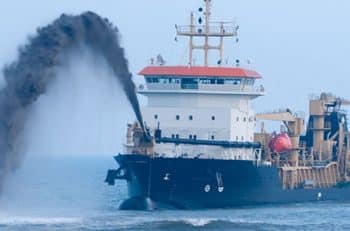
    Brexit brings a threat of the North accelerating in a race to the bottom in terms of the environment and employment, cutting costs in order to get economic advantage. In the face of this, much depends on when or if Devolution is reinstated. There is a particular concern on environmental matters because the EU has had a determining impact on the North’s environmental legislation. Even with EU membership, there is concern at a systemic failure to enforce environmental legislation. Sand has been dredged from Lough Neagh for years, without any planning process being applied. Currently about 1.5m tonnes per year is extracted. The Lough is the largest fresh-water lake in Ireland or Britain. It is a Special Protection Area. It is a Ramsar site, that is recognised as a wetland of international importance. Around 100,000 wild birds winter on and near it. It is one of only five lakes in the world where pollan are found. In June last year the North’s Court of Appeal allowed an appeal from Friends of the Earth against former Environment Minister Mark H Durkan’s decision not to order an immediate halt to the dredging. However, the Department of Infrastructure has said it is “not expedient” to stop dredging, which continues. In another regulatory failure, approximately one million tonnes of assorted waste was illegally dumped on a site at Mobuoy Road, Derry. Remediation will cost at least £20m (€22.4m), but may cost 12 times as much. The dump is beside the River Faughan, which provides drinking water for Derry City. Friends of the Earth has lodged a complaint with the European Commission against the North for systemic failure to enforce planning and environmental laws. The complaint is slowly making its way through the process. The North, like the rest of the UK, has no third-party right of appeal against planning decisions: developers have a right of appeal. That is contributing to pressures to restrict the right of appeal in the South. With this being the current situation, the North’s environmentalists are worried about developments after Brexit. They are particularly worried about the loss of the Habitats Directive. This has been key to their successes: in particular, their two biggest. These were the A5, the North’s biggest-ever road project, which was halted after a court challenge: and the court action on the Lough Neagh dredging. The Habitats Directive is particularly important because it contains the precautionary principle. Politically, there is no great will to protect the environment. The two dominant parties, the DUP and Sinn Féin, have shown little commitment. Famously the first measure the Paisley/McGuinness devolved administration introduced was a relaxation on the former Northern Ireland Minister’s restrictions on one-off housing. In 2008 Arlene Foster as Environment Minister rejected a report ‘Review of Environmental Governance. One of the recommendations was for an independent environmental protection agency, and a limited third party right of appeal. Former DUP Environment Minister Sammy Wilson has said people would “look back at this whole climate change debate and ask ourselves how on Earth were we ever conned into spending the billions of pounds” on policy changes. Sinn Féin has not denied climate change, but has been the main party pushing the A5 project. The party’s attitude to the environment is typically ad hoc. This is more worrying because the North’s environmentalists are not a major lobby group. The Assembly elected last year contains only two Greens, from 90 members. Only a handful of others have any significant interest in environmental matters. The effects on workers’ rights will partly depend on when or if devolution is restored. Certainly, trade unionists are seen as a better – organised lobby than environmentalists. They have had certain limited successes. The Executive parties rejected introducing proposed legislation further restricting the right to strike being introduced by the UK government. It did not follow the British parliament in extending the time limit for the right to claim unfair dismissal. On the other side, Northern wages are lower. The median weekly wage is £501 (€562.50), in contrast to €734.60 in South. The minimum wage, which is UK-wide, is £7.83 (€8.79) and only comes into operation at 25. In the South it is €9.55. It seems Northern Ireland is facing into a future without the threshold protections of for example the EU Working Time Directive 2003 which requires a minimum of four weeks paid holidays annually and a maximum 48-hour working week unless a worker individually consents; of the The Parental Leave Directive 2010 which prescribes four months of unpaid leave for parents to care for children before they turn eight years old, and of the Pregnant Workers Directive 1992 which creates a right for mothers to a minimum of 14 weeks paid leave to care for children. There will be continued pressure to reduce wages and protections. That will be strengthened by the tendency not to let a good crisis go by without seizing the chance to cut pay and conditions. Anton McCabe

    Loading

    Read more

  • Posted in:

    Referee!

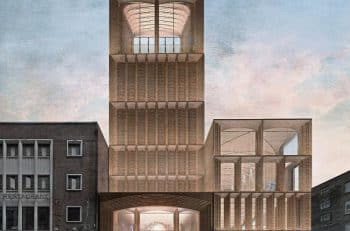
    On-side Rugby is religion for Limerick. The city mercifully did not inherit the class exclusivity associated with the sport. In the latter decades of the twentieth century Munster victories, usually over Leinster, sustained Limerick’s morale in the face of prejudice. In gratitude its City and County Council has granted permission for a rugby museum which will shoehorn a seven-storey show-stopper into a Georgian streetscape. With a rugby hero and a billionaire philanthropist tax-exile fronting the project they have the public on side. Does the new class of money and celebrity overrule our planning laws? The Players A new sports museum for Limerick, was announced in December 2016. Its applicants were Rugby World Experience Ltd set up that same year with a registered address in Lucan, Co. Dublin. It has three Directors: Chairman Paul O’Connell, Paul Foley and Sue-Ann Foley. Former Ireland, Munster and Irish Lions captain Paul O’Connell, Limerick native, basso profundo, family giant, Lidl man of squeaky cleanliness is the perfect frontman. Paul Foley is a former Limerick City Council Senior Executive Officer in the Department of Economic and Planning Development. Sue-Ann Foley is the daughter of JP McManus. Limerick’s greatest/richest son, and Chair of the JP McManus Benevolent Fund. The Coach John Patrick ‘JP’ McManus, money-trader and gambler, hails from humble beginnings but has for 30 years been resident in tax-friendly Geneva, Switzerland, while retaining a suite at the Dorchester Hotel in London. He is a doughty force in Limerick, particularly in Limerick City and County Council which even has a hall named after his most famous horse, Istabraq. His charity has funded schools, palliative care units, and every type of local sports clubs. Any criticism against a JP McManus project in Limerick is an attack on Santa Claus. It is McManus’ €10m seed funding that is making this project happen. O’Connell has said the rugby museum was a notion put to him by JP McManus during his playing days, but the idea has gained momentum since he retired. The Dashing Out-Half An unexpected dash for Rugby World Experience was the commissioning of renowned London-based, Irish-born architect Níall McLaughlin, twice shortlisted for the Royal Institute of British Architects Stirling Prize. His work includes the extension to the National History Museum London, the Carmelite Prayer room in St Teresa’s Church Dublin and college buildings in Oxford and Cambridge. Try The museum would be of scintillating contemporary design with, it is hoped, a sensitive palette of materials, mainly brick in keeping with the Georgian aesthetic. However, the architect’s report admits that “the brick selection and brickwork quality will present a challenge and it may be decided to use precast panels”. High Tackle The proposal is for a seven-storey building, 32-metres high (the architect originally intended the tower to be 36 metres in height), with a two-storey portico fronting O’Connell Street, and a two-storey block to the rear. There would be a three-storey block built over the existing Fine’s Jewellers, at the junction of O’Connell Street and Cecil Street. Inside, the development would see the existing buildings’ 1335sqm floor area increased to 2787 sqm “multi-media visitor experience, exhibition and education space”, plus retail (81sqm) and café (83sqm) at ground-floor level. The scheme is context-free: a bold attempt to subvert an aesthetic built up over centuries by breaching the established building height on Limerick’s main street, its beating heart. The design also self-consciously does not replicate the Georgian fenestration rhythm perhaps in an effort to minimise the perception of extra floors. Spear tackle The plan involves the razing of 40 and 41 O’Connell Street, and of 1 Cecil Street, a corner site on two prominent streetscapes within Newtown Pery, Limerick’s Georgian area. The Beautiful Game Lewis’ Topographical Dictionary of 1837 called Limerick’s Newtown Pery “one of the handsomest modern towns in Ireland”. The historic Georgian city is an example of ambitious eighteenth-century Italian-inspired town planning whose integrity should be respected through the retention of the characteristic continuous heights and building-frontage alignment that contributes to a quality unrivalled anywhere in the world, albeit that it has been allowed to dilapidate. Substitution The buildings that stand in the way are not protected but are listed on the National Inventory for Architectural Heritage, an indication that national government thinks they merit protection. There have been some changes to them over the second half of the twentieth century, including the cement-rendering of the façade, the replacement of an earlier shop front and the blocking up of window openings on the side elevation. These could easily be removed. The off-side rule Both sides of this site sit within an Architectural Conservation Area (ACA), protected under Section 81 of the Planning and Development Act 2000-2008 which states that an ACA is: “a place, area, group of structures or townscape, taking account of building lines and heights, that is of special architectural, historical, archaeological, artistic, cultural, scientific, social or technical interest”. ACA protections extend to the carrying out of works to the exterior of a building within the Area regardless of whether or not it’s a protected structure. The aim of designating areas is to protect their “special characteristics and distinctive features” from inappropriate actions. The ‘Statement of Character and Identification of Key Threats’ set out in Chapter 10 of the Limerick City and County Development Plan 2010-2016 notes: “This ACA constitutes the core heart of Limerick City’s Georgian Heritage within the City Centre…The streets of Newtown Pery represent a unique example of eighteenth and nineteenth-century planning in Ireland…The streets leading to The Crescent and Pery Square conform to eighteenth-century town planning, defining the streetscape by their adherence to fixed proportions and ordered harmonious symmetry. They combine to form an architectural heritage of great urbanity and considerable beauty”. This appears damning for McLaughlin’s acontextual, proportionately unfixed, asymetrical and inharmonious effort. But the ACA statement goes on: “The irregularity which emerged in relation to the treatment of heights, facades, and type of buildings combined with the rigid street pattern gives Georgian Limerick a distinct sense of place…All of these

    Loading

    Read more

  • Posted in:

    MI5 grapples with anti-nuke Corbyn

    The British Prime Minister, Theresa May, has accused Russia of meddling in elections and planting fake stories in the media in an extraordinary attack on its attempts to “weaponise information” in order to sow discord in the West, but Whitehall has been strangely quiet about past attempts by Britain’s own Intelligence Services to meddle in UK and Irish elections. 42 years ago this March the British Prime Minister, Harold Wilson, abruptly resigned from office during a whispering campaign orchestrated by elements within the British Intelligence Services alleging that he was a Soviet agent. It is highly ironic, therefore, that during the past few weeks the British media have been dominated by the ‘fake news’ story that the current Leader of the British Labour Party, Jeremy Corbyn, was an agent of the Soviet-controlled Czech Intelligence agency, the Statni Bezpecnost (ŠtB). Established in 1945, the StB was also closely linked with the Communist Party of Czechoslovakia. The media campaign against Corbyn relies entirely on claims made by a former StB officer Jan Sarkocy, who served as a diplomat in Britain under the cover name ‘Jan Dymic during the 1980s’. Despite the media frenzy, the current director of the Czech Security Forces Archive, Svetlana Ptacnikova, issued a formal statement making it clear that Corbyn was neither registered by the ŠtB as a collaborator, nor does his alleged collaboration stem from anything in the archive. She said: “The files we have on him are kept in a folder that starts with the identification number one. Secret collaborators were allocated folders that start with the number four… He stayed in that basic category – and in fact he was still described as that, as a person of interest – in the final report issued by the ŠtB agent shortly before he [Sarkocy] was expelled from the UK in 1989”. A Czech Republic Defence Ministry official, Radek Schovánek, who currently has responsibility for examining the old ŠtB files, has also gone on record saying that the allegations against Corbyn are unfounded, as were the claims that Sarkocy signed up other members of the Labour leadership. It is almost certain that a number of MPs from all the British political parties were “persons of interest” to Czech Intelligence at that time. It is a bit like saying that some MPs are persons interest to the press! The current story bears all the hallmarks of a similar disinformation exercise run by British Intelligence in the 1960s. In 1968, another Czech Intelligence officer, Josef Frolik, defected to the CIA and provided the CIA and British Intelligence with questionable revelations about operations run by the ŠtB in the West. These included the alleged recruitment, or attempted recruitment, of British members of Parliament and Labour Party leaders. In his book: ‘The Memoirs of an Intelligence Agent’ Frolik claimed that there was a plot to blackmail Edward Heath over his sexual activities. According to Frolík, another ŠtB officer, Jan Mrázek, working out of the Czechoslovakian embassy in London, had devised a plan in the mid-1960s, which aimed to expose Heath to homosexual blackmail. Frolik claimed that Mrázek had prepared a homosexual honeytrap for Heath, in the form of a personal invitation from a handsome (and sexually versatile) young Czech organist, to visit and play the famous organ of the Church of St James in Prague. But Frolik claimed that Heath was tipped off by MI5 at the last moment, and cancelled the visit. Despite these claims, the ŠtB’s archives have no record of any plot to trap Heath, nor do they contain any files on Heath. Thefakeallegation is interesting because it not only drew attention to Edward Heath’s alleged sexual orientation, but also portrayed MI5 in a good light. The strong rebuttals issued by the Current Czech Republic authorities have not stopped right-wing elements of the British press from promoting the campaign of disinformation against Corbyn. So what is behind this fake news? To understand this, it is important to look at the events in the lead up to the 1974 General Election and to an uncanny similarity between the Corbyn smear and one used against Harold Wilson. It may now seem incredible to many people, but 30 years ago there really was an attempt to undermine the Government led by Wilson. One of the prime witnesses in support of that claim is a former Assistant Director of MI5, Peter Wright, who in his bestselling memoires, ‘Spycatcher’, explains how some of his colleagues set about undermining Wilson at the election in February 1974: “In the run-up to the election which, given the level of instability in Parliament, must be due within a matter of months, MI5 would arrange for selective details of the intelligence about leading Labour Party figures, but especially Wilson, to be leaked to sympathetic pressmen. Using our contacts in the press and among union officials, word of the material contained in MI5 files and the fact that Wilson was considered a security risk would be passed around. “Soundings in the office had already been taken, and up to thirty officers had given their approval to the scheme. Facsimile copies of some files were to be made and distributed to overseas newspapers, and the matter was to be raised in Parliament for maximum effect. It was a carbon copy of the Zinoviev letter, which had done so much to destroy the first Ramsay MacDonald Government in 1928”. The Zinoviev letter was a controversial forged document published by the Daily Mail newspaper four days before the general election in 1924. It purported to be a directive from Grigory Zinoviev, the head of the Communist International (Comintern) in Moscow, to the Communist Party of Great Britain, ordering it to engage in all sorts of seditious activities. Current scholarship sug- gests it probably originated in a Russian monarchist group. In May 1976 Wright’s allegations about the plot were confirmed personally to two BBC reporters, Roger Courtiour and Barrie Penrose, by Harold Wilson. He told them that the then head of MI6, Sir Maurice Oldfield,

    Loading

    Read more

  • Posted in:

    Panoramaphosa

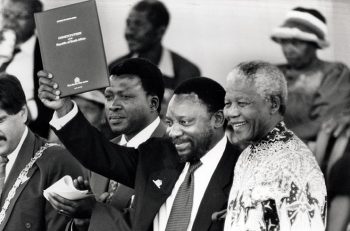
    On a recent drive to Cape Town International airport the ‘Rainbow Nation’ was nowhere to be seen. Instead it was like old times when I was the Irish Times Correspondent there in the 1990s. The scene carried a strong message of the work that faces the country’s new President Cyril Ramaphosa. Along the motorway known as ‘Settlers Way’ there was a clear run out of town to deposit the hired car and catch the early-morning flight to Lanseria north of Johannesburg. The other carriageway, the one carrying traffic into the city centre, told an entirely different story. On that side the traffic was chock-a-block and consisted almost in its entirety of white minibuses carrying black workers from the vast townships of Gugulethu, Langa and elsewhere. They were travelling in their thousands to service the needs of the white population of the city and its wealthy suburbs. Earlier that week in Franschhoek, a tourist and wine-producing town , it was also like old times. The restaurants were full of white folk of retirement age being served by waiters from the Black and Cape Coloured Communities. In Johannesburg restaurants things were different but only slightly. There were tables occupied by white clients and tables occupied by black clients but no tables at which blacks and whites dined together. These casual and anecdotal observations don’t tell the full story but they are an indication of how deeply-ingrained apartheid and its legacy have been in South African society. It will take a very long time and a great deal of patience to make significant changes but there is no doubt that the country’s new President, Cyril Ramaphosa, is a patient man. -Nelson Mandela indicated that Ramaphosa was his preferred successor but the African National Congress (ANC) was, and still is, a very complicated organisation and as in most African countries ethnic loyalties played their part in the succession stakes. Ramaphosa is a member of the small Venda nation. His opponent for the vice- presidency and eventual presidency, Thabo Mbeki, was a Xhosa, a group that produced Mandela himself, his political partners Oliver Tambo and Walter Sisulu as well as the influential churchman Archbishop Desmond Tutu. Nelson Mandela merely indicated a preference for Ramaphosa but his estranged wife Winnie mobilised the ANC Youth League behind Mbeki’s candidacy. Ramaphosa’s time for campaigning had been limited due to his involvement in negotiations on a new Constitution. All these factors: tribes, internal ANC politics and time constraints played their part in his defeat by Mbeki. Ramaphosa had to wait until December of 2017 before he could make his move. Mbeki, a small bookish man with a penchant for the poetry of W B Yeats, fell under the spell of American pseudo-scientists who peddled the theory that HIV did not cause AIDS. The result for South Africa was disastrous but the ANC’s response was predictable. As a former liberation movement, loyalty had been vital to the organisation’s very existence during the struggle against the apartheid regime but it became a hindrance to progress after the party came to power. ANC loyalty kept Mbeki in power amid a catastrophic AIDS epidemic, just as it kept Jacob Zuma in a presidency that smacked of intense corruption and maladministration. After Mbeki had won the nomination to become Mandela’s vice-president, Ramaphosa made a rare rash decision. He refused to attend Nelson Mandela’s presidential inauguration in Pretoria in 1994. From then on, however, he matured and played a political waiting game, concentrating on business opportunities that made him one of South Africa’s wealthiest men with a personal fortune of more than $550 million. During that time Zuma, a member of the Zulu nation, the country’s largest ethnicity, became entangled in a web of deals with the Guptas, a wealthy Indian business family. Corruption allegations abounded and a new glossary of political terms was spawned, the most prominent of which was ‘State Capture’ suggesting much more than personal corruption. The phrase indicates the belief that the entire State and its institutions had been ‘captured’ by the Guptas and their allies in the ANC. And Zuma was not the only ‘captured’ ANC member. In Parliament, as the popular newspaper City Press recently put it, six ministers sat in what it has been tempted to call the “Gupta Corner” of the Government front bench. Ramaphosa has recaptured the cabinet in a quick reshuffle in order to get moving but by doing so has increased tensions and enmity within his own party. The ANC’s traditional loyalty to its leader in this instance could provide a positive counteraction to its negative effects in the past. He has got off to an energetic start, setting out on early-morning exercises in his Ronald McDonald socks in various parts of the country, ranging from the promenade at the prosperous Cape Town suburb of Sea Point, to the beach at East London; and on a long walk at 5.30 am in the Cape from the black Township of Gugulethu to the ‘coloured’ community of Athlone. In each case these were exercises in building up his profile in local communities as a man of the people instead of his image as a wealthy man who loves fast cars and good wine. In parliament his State of the Nation address was delivered without interruption, a very rare happening in a place where raucous heckling is frequent. In that address he touched on the country’s problems which he has vowed to solve. The education system is in a parlous state. Poverty abounds mainly in non-white areas but also amongst Afrikaans-speaking people who have always had a “poor white” section of their community. Health services need reform. Public transport is almost non-existent with Uber taking over its role especially in white areas. There have been a number of murders of white farmers, and Ramaphosa caused raised eyebrows among them by stating in his address that he would pursue the expropriation, without compensation, of land that had been confiscated from blacks. Right-wing commentators saw their chance and

    Loading

    Read more

  • Posted in:

    Oxymoron

    By 2040 we expect that an additional one million people will live in Ireland, an additional two-thirds of a million people will work here. An ageing population and smaller family size mean that we will need an additional half a million homes to accommodate this growth. Project Ireland 2040 purports to address this. It consists of the National Planning Framework which sets out a spatial strategy for Ireland, to accommodate in a “sustainable and balanced” fashion these significant demographic changes. It is the overall Plan from which other, more detailed plans including city and county development plans and regional strategies will take their lead. Learning from past experience, the NPF is backed up by an infrastructure investment programme, the National Development Plan. This National Development Plan sets out the significant level of investment, almost €116 billion, which will underpin the NPF and drive its implementation over the next ten years. €91 billion in Exchequer funding for public capital investment has been allocated and will be supplemented with substantial investment by commercial State Owned Enterprises. This increased level of resources is expected to move Ireland close to the top of the international league table for public investment, from a low post-crash base. In short, the State’s infrastructure investment – the money – should be guided by and follow the Plan. That is what makes Project Ireland 2040 different and a significant innovation in Irish public policy. What is not different is that it does not have teeth, particularly to stop market-driven development that is incompatible with the vision. Project Ireland 2040 is about enabling all parts of Ireland to achieve their full potential. It seeks to move away from the current, developer-led, business as usual pattern of development, to one informed by the needs and requirements of society. This means seeking to disrupt trends that have been apparent over the last fifty years and have accelerated over the past twenty. It purports to aim to ensure that rather than have excessive population growth focused on Dublin – as is the current trend – that 75% of all population growth occurs in the rest of the country.The immediate priority is to increase overall housing supply to a baseline level of 25,000 homes a year by 2020, and then a likely level of 30-35,000 annually up to 2027. 112,000 households are expected to obtain social housing over the decade. A new €2 billion Urban Regeneration and Development Fund will aim to achieve sustainable growth in Ireland’s five cities – Dublin, Cork, Limerick, Waterford and Galway – and other large urban centres, incentivising collaborative approaches to development by public and private sectors. It aims to secure at least 40% of future housing needs by building and renewing within our existing built-up areas, whether they be in the many villages and towns in need of regeneration or in our cities and larger towns where there are also huge opportunities for city and town centre regeneration. Of course the corollary of this is that an unsustainable 60% of future housing need will be met on green-field sites. It targets a level of growth in the Northern and Western, and Southern, Regions combined to at least match that projected for the East and Midland Region. It will support the future growth of Dublin as Ireland’s leading global city of scale, by better managing Ireland’s growth to ensure that more of it can be accommodated within and close to the city. It supports ambitious growth targets to enable the four cities of Cork, Limerick, Galway and Waterford to each grow by at least 50% to 2040 and to enhance their significant potential to become cities of scale. It recognises the extent to which Sligo in the North West and Athlone in the Midlands fulfil the role of regional centres. It recognises Letterkenny in the context of the North-West Gateway Initiative and Drogheda- Dundalk in the context of the Dublin- Belfast economic corridor. It seeks to strengthen our rural fabric, by reversing town/village and rural population decline, by encouraging new roles and functions for buildings, streets and sites, and supporting the sustainable growth of rural communities, to include development in rural areas. That’s one- off housing. Anyone who follows this will see that there’s not much sense of anything being ruled out, and indeed almost everything seems to be ruled in. That suggests it won’t all happen. And the determinant of what happens and what doesn’t will, as usual, be the market – which will skew to Dublin and its hinterland, and of course one-off housing whose site costs are negligible (for those lucky enough to own rural land) but which pose difficulties for sustainability: economic, social and environmental. It costs more to service far-flung housing with broadband, and everything else. One might quibble with elements of the plan. Dr Edgar Morgenroth – Professor of Economics at DCU and a primary author of the document – said that plans for the €850m motorway between Cork and Limerick would undermine the proper growth of “second tier” cities in Ireland. He rejected claims by An Taoiseach Leo Varadkar that the motorway would encourage the cities to grow faster saying it would instead lead to sprawl. He told ‘Morning Ireland’ it was important “to put the infrastructure into the cities, not between them”. “Once you put the motorway between two cities what you’re doing is getting more sprawl. So you’re undermining your own strategy”, he said. Morgenroth also said that building a new motorway undermined a commitment by government to reduce carbon emissions. The NPF will also have “statutory backing” overseen, quasi-independently, by the new Office of the Planning Regulator (OPR) – a key recommendation of the Mahon Tribunal.   Unfortunately this particulator Regulator will not regulate but rather advise others whose motivation may be political and short-termist. A regulator who does not regulate. There has been much light-free heat, led by Sinn Féin which even claimed to be seeking a legal opinion, about the failure of the government to put the NPF to a parliamentary vote but instead to include

    Loading

    Read more