General

Random entry RSS

  • Posted in:

    Punker

    “Things can only get better”, went the lyrics to the hit by D:Ream which became the anthem of the incoming New Labour government in 1997, fronted by the relentlessly upbeat Tony Blair. Six years later, Blair joined the US in its illegal invasion of Iraq, a move that plunged the entire Middle East into a new era of violent instability and a refugee crisis that today, some 15 years later, shows little signs of abating. Things, it turns out, can also get worse. Statistics can, however, be schooled into presenting a beguilingly different picture of the true state of the world, and the darling of global optimism, psychologist and author Steven Pinker is a skilful inquisitor of data. His scholarship seems to have caught the zeitgeist of the latest wave of techno-optimism, and his data-fuelled Panglossian creed is being enthusiastically embraced by global influencers like billionaire Bill Gates. So excited were the editors of Time magazine that in January, for the first time in its more than 90-year history, it invited Gates to be guest editor of an edition, titled ‘The Optimists’. His editorial was essentially a re-heat of Pinker’s tome, ‘Enlightenment Now’, which, Gates gushed, was his “new favorite book of all time” and “the most inspiring book I’ve ever read”. High praise indeed. Gates’ benediction no doubt helped Pinker’s tome to become a runaway bestseller. What got the Microsoft über-nerd so excited is that: “this is not some naively optimistic view; it’s backed by data”. And Pinker cites data by the chartload, much of it undoubtedly painting an accurate picture of one species doing remarkably well. Life expectancy is a case in point. In just the last 28 years, the number of children dying before their fifth birthday has halved. Women’s and LGBT rights have made remarkable, if uneven, advances in recent decades. Fewer people are living in absolute poverty. Child labour, slavery and sexual abuse have not been eradicated globally but all indicators point towards major progress for millions of people. Catastrophic famines are rarer now; more people now live in democracies (Trump’s populism notwithstanding) than in all of human history and, while there are hundreds of deadly local and regional conflicts around the world, there are, mercifully, no full-scale wars between countries. Were an 18th or 19th century European to survey the region today, they would be astonished to find that the perpetually warring great powers – France, Italy, Spain, Germany, the Netherlands and Britain – have enjoyed more than 75 years of peace, co-operation and prosperity, with just occasional insults now being hurled at one another, where until quite recently, disputes were routinely settled with bloodbaths and pogroms. So, all’s well with the world, it seems. Another contributor to the Time special edition was the estimable investor and billionaire Warren Buffett. He waxed about the astonishing economic progress that swept across the US in the 20th century. No argument there. “The game of economic miracles is in its early innings. Americans will benefit from far more and better ‘stuff’ in the future”, he opined. At this point, it’s time to take a deep breath and a sharp step backwards. How can such heavy-hitters as Pinker, Gates and Buffett have possibly discounted or ignored the ecological train-wreck hurtling ever closer towards humanity? Pinker’s book does indeed grapple – after a fashion – with environmental limits, but it’s hardly encouraging that someone who prides himself on offering numeracy as the cure for biases then launches – unprovoked – into a biased jeremiad against the “quasi-religious ideology” that is what he disparagingly terms “greenism”. For someone regarded as among the world’s great thinkers, this is dull fare indeed. Undeterred, Pinker lashes out at this “apocalyptic creed” which he finds to be “laced with misanthropy”. Quite why it was necessary for Pinker to denigrate environmentalism becomes clear as the narrative unfolds. The vehemence of his anti-environmental rhetoric is in inverse ratio to his ability to address the profound critiques of his beloved ‘progress’ posed by the findings of climate and environmental sciences. He points out – correctly – that as countries get richer, they usually clean up their own rivers and ease local pollution. The fact that rich countries simply outsource much of their dirty heavy industries and ship their wastes to the ‘developing’ world is glossed over. Climate change of course does not respect national borders; faced with the quite over-whelming evidence from the physical sciences (and he frequently claims to be an advocate for science), Pinker baulks at what he dismissively calls the “tragic” view that humanity may well destroy both industrial civilisation and itself in the process. Pinker concedes: “humanity has never faced a problem” like climate change. Rather than ponder this existential threat, he instead brandishes the magic wand of eco-modernism and waves away the gloomy ‘eco- pessimism’ he and his billionaire fan club find so objectionable. He points out that global carbon intensity has been static or declining slightly in recent years. The atmosphere is, however, indifferent to such subtle points. All that matters are the gross numbers, and these continue to climb inexorably. Science tells us we have a finite and rapidly reducing global ‘carbon budget’. The only way of avoiding irreversibly smashing through this budget in the next 10-20 years is drastic, compulsory, permanent and deeply unpleasant cuts in carbon, starting yesterday. Per capita, the greatest carbon polluters on the planet are the global elite, billionaires like Gates and fellow Microsoft founder, Paul Allen. The latter maintains three very large ocean-going yachts at all times, so that one is always fully staffed and equipped close to wherever in the world he might happen to jet. That’s an awful lot of carbon to have to forego. The eight richest billionaires control as much wealth as the world’s poorest 3.7 billion people. Imagine then how pleased Gates will have been to read Pinker’s pronouncement that staggering and increasing wealth inequality is really not that big a deal. In common with Trump, Pinker also tries to blame the media for stoking “irrational pessimism” about the state of the world. I have long argued the opposite:

    Loading

    Read more

  • Posted in:

    Wicklow Manager bouncing Bray demolition

    Village last month reported that Wicklow County Council has agreed to sell a prime town-centre site in Bray to developer Paddy McKillen’s Navybrook Ltd for just €2.6m. The deal is contingent on Navybrook delivering a commercial development by the end of 2019. It is also a controversial sale that has raised questions about value for money. Most Councillors and most residents of Bray want the site developed. Known as the ‘Florentine’, it has been vacant for 20 years, but has also served meanwhile as a convenient car park with 225 spaces. A Council official in January told Wicklow County Council that the site is actually worth more as a paying car park than as a development site. “There’s not huge value in this for developers”, he claimed. But a related effect of the sale of that site to Navybrook is now proving controversial too. For it transpires that Council officials set aside a sum almost equivalent to the Florentine’s sale price to buy and demolish two large inhabited houses at Herbert Road nearby in order to extend another surface car park by up to 100 spaces. The proposed new spaces are seen by some residents as an incentive or subsidy to the purchaser of the Florentine site. The original Council budget for the extra spaces appears to have been only about 10% less than what that Navybrook has agreed to pay for the Florentine. Wicklow County Council might have insisted on any purchaser of the Florentine erecting a multi-storey with 356 car spaces, instead of the 256 now planned there. Had Wicklow County Council insisted on 100 more car spaces at the Florentine, it would still have been fewer than had been required as a condition, when planning permission was granted for the Florentine site to an earlier owner. One previous planning permission for an earlier proposed development on the Florentine site, one that included apartments, had required 417 parking spaces. Wicklow County Council acquired the site at a bargain-basement price during the recent crash. It believes that the Florentine will yield it commercial rates of up to half a million euros annually when completed. The County Council itself sought planning permission for the Florentine before selling the site to Navybrook. The inspector for An Bord Pleanála pointed out that objectors had stated that the Council was not making sufficient allowance for car parking, with provision being promised for just 256 spaces. The inspector’s report included a statement that applying car-parking standards in the, then-current, Wicklow county development plan 2010-2016 would have meant that “504 spaces would be required”. But Wicklow County Council insisted that 256 spaces were enough, and An Bord Pleanála accepted the Council’s assurances. Permission was granted last year. Just one month later the Council was engaged nearby in private negotiations to buy St Paul’s Lodge and another big house, both adjacent to the existing surface car park on Herbert Road which is an area zoned for mixed use. Local residents were not informed, but the prospective purchasers were told that Wicklow County Council wanted to buy their houses, and that the purpose for which the Council wanted them was additional parking. The owners first sought €1.5m each (as opposed to the€765,000 valuation that the Council’s own surveyor put on one of the houses last year). In the end, only the sale of St Paul’s Lodge went ahead, for €913,000 including the vendor’s legal and other costs (such as furniture removal to Spain). The Council thus acquired an Edwardian home and large garden that officials hope to clear for up to 47 hard-surface car spaces.   Bray residents (including myself ) oppose the Council’s proposal to destroy St Paul’s Lodge, on architectural and social grounds among others, pointing out that it was reportedly designed by the architect of Farmleigh House, and that destroying family homes during a housing shortage pushes up the cost of new homes for everyone. Hearing rumours of the Council’s wish to destroy part of their neighbourhood, residents tried between June and October last year to elicit information from Wicklow County Council. We were told by the Council simply that, “We are examining all aspects of parking in the town at this time”. In fact Council officials were then intent on closing the purchase of St Paul’s Lodge as quickly as possible. Council officials concluded the purchase of St Paul’s Lodge unconditionally, despite the fact that it was bought solely “in order to raze it to the ground and build a car park on the site”, as the vendor’s solicitor put it last July. It is an extraordinary fact of current law that Council officials have great freedom to spend public money on acquisitions without the approval of elected representatives. However, approval is required to demolish or dispose of a building, and the process of securing approval in such a case requires public consultation under a provision known as ‘Part 8’. But what kind of consultation? In this case Wicklow County Council ignored expressions of concern by local residents and inserted no provision in the contract of sale contingent on Council approval. The Council closed the sale without first completing the consultation concerning possible demolition. This has put Councillors under pressure to approve demolition. The house could be put back on the market. There is a strong demand for such houses in the immediate vicinity, and at least one older and bigger house nearby (in bad shape) was recently bought and substantially renovated. But the fact that officials paid above what their surveyor considered to be the house’s normal market value could leave the Council out of pocket from any resale. Residents had their request for a meeting ignored by Council management, and have been forced to take an appeal to the Office of the Information Commissioner to get some documents eventually released that reveal details. The first site notices of planned demolition were not clearly visible from the road and none at all was put on the property of St Paul’s itself. A new notice was published when

    Loading

    Read more

  • Posted in:

    Avoiding League Relegation

    In Ireland, North and South. In the last 50 years no pub or shop has changed its language from English to Irish. In recent years, in the last pockets of the Gaeltacht, the young people have been switching to English. Clearly, the time has come for the Gaelic League, Conradh na Gaeilge, to take its last, this time decisive, action to save Irish, our ancestral language, from becoming a revered dead language like Latin, and instead keep it for the future spoken, written and joked in by thousands. The Gaelic League’s original aim in its glory days when it nourished the mind of the Irish Revolution was to make Irish again the language of the entire nation. After Independence, as the League realised that this was not going to happen, its aim became to preserve the Gaeltacht and to ensure that through the schools system and its own classes many thousands in the rest of Ireland would be able to speak and write Irish. That last aim has succeeded and it is now time to reap the harvest and put it to use. Many individuals, North and South, in many different occupations are now able to speak and write Irish well, and because they are in many different occupations they possess the Irish language more fully than the merely rural Gaeltacht did. In many cases, North and South, these persons amount to families where Irish is the family language. The League must seek out, for a start, 1500 of these people from the general population North and South and the Gaeltacht remnants; people who would pledge to speak and write Irish with each other and, if they have children, as their family language. Each of them above the age of twelve would wear a discreet badge to identify themselves to others. That for a start. Then each year, the elected committee of this community, which might call itself Na Caomhnóirí (Guardians), would hold an all-Ireland rally to coincide with Oireachtas na Gaeilge. Spaced through-out the year. Four regional committees would organise provincial gatherings. At these various coming togethers, they would discuss and decide what joint ventures – publications etc, – they would engage in. Na Caomhnóirí would call for new applicants and hold an annual entrance examination as a big public event. That annual event would give the secondary Gaelscoileanna and the university courses in Irish a concrete and prestigious goal to aim at. The entrance exam would be held each year until the number of members would reach 10,000. In this way, whatever else happens, the future of Irish as a spoken and written language would be assured into the future – into the new civilisation which will succeed the disintegrating European civilisation. And in that achievement the Gaelscoileanna, as feeder schools, would have a concrete goal to aim at. Unless action along these lines is taken, the so-called Irish language movement will plough ahead without any concrete goal to aim at and with diminishing support from a State that has lost interest. Probably TG4 and Raidió na Gaeltachta would continue for a while to broadcast and Irish would be spoken occasionally in the Dáil and as a cúpla focal at formal dinners. Latin, too, has its news media on the internet, and English football results are broadcast on radio in Latin. At important ceremonies of the Vatican and of many universities formal Latin is spoken. But because Latin is not spoken and joked in every day by a substantial living community, it is reckoned to be a dead language. To save Irish from becoming that and the League from becoming a historical curiosity, it is necessary to act decisively now in the manner I have outlined. Desmond Fennell Dr Desmond Fennell’s latest book is his autobiography ‘About Being Normal: My Life in Abnormal Circumstances’ (Somerville Press).

    Loading

    Read more

  • Posted in:

    The Right to have Rights

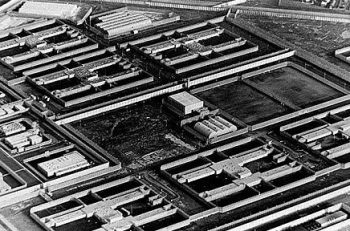
    Hannah Arendt’s famous phrase ‘the right to have rights’ was coined in her 1958 book ‘The Human Condition’. The condition of being stateless, of being a displaced person, which began its modern history in Europe with World War I, has been experienced since by untold millions who have had to listen to the claim that ‘human rights’ are universal and fundamental – but not for them. Once we had the glamorous figure of the cosmopolitan, the person who belonged to the world, the global community; that figure has been displaced by the refugee, who belongs nowhere, but is to be found everywhere in the paradigmatic settings of the modern and contemporary world – the prison camp, the internment zone, the refugee camp, the ghetto, the jail, the arena of suspension where people live in a place that is always outside the country that it is inside. Arendt pointed out that the creation of such places and conditions is a political decision, not just a terrible catastrophe. It is the prevailing form of the penal colony, the new home that we have built to house the theory of human rights. Since Arendt, and most especially in the indebted work of Giorgio Agamben, it has become clear that the concentration camp of the twentieth century was not some historical anomaly, but that it is actually one of the paradigm sites of Western modernity. The internment camp is a zone of suspension, of ‘rendition’, a place that is always outside the country it is inside – Guantanamo is the best-known example, although there many such places – our best- known example was The Maze in Northern Ireland. Those entrapped there expose the hollowness of any claim to universal human rights, to having rights just on the basis of being human. Arendt said it plainly: the refugee, the displaced person, has regularly been denied the right to have rights. The denial is a political decision. It takes its most popular form in the denial that there are any ‘political prisoners’ in the denying country, although enemy countries are full of them. Its political nature has been counterpointed more clearly since 1948, since the United Nations began its series of declarations of Human Rights, unabated since that date; rights of men, women, children, of minorities, of the disabled, of all indeed who can be characterised as having been ‘excluded’, which means that even the ‘poor’, a constituency which enlarges globally by the hour, faster than ever since the almost perpendicular rise of neo-liberalism in the decades before and after the financial crash. Reading these rights, as ‘declared’ (whatever that means), in that bland United Nations universalistic rhetoric, it is hard to know whether to laugh or cry. Such noble vacuities, such actual atrocities – produced by the same state systems that have prevailed since 1945. It was part of Arendt’s long argument, which began in 1943 with her essay “We Refugees” (about Jewish migrants who had become ‘stateless’, that condition in which they had no rights) that asked why European civilisation had so successfully produced the barbarism that made statelessness pandemic and human rights so unavailable to the millions of ‘displaced persons’ of World War II. Part of her answer was that this barbarism was so successful precisely because it was so concealed within or behind the declarations of universal rights and justice which the West, in the case of the American and the French Revolutions, had made central to the powerful ideology of what mutated into Western ‘freedom’. Arendt’s question then was: how could such an ideology be developed (as through the UN declarations) and simultaneously traduced (as in American foreign policy)? It is too feeble an explanation to put it down to hypocrisy. Hypocrisy on this scale occurs when the people who most sincerely believe in the peaceful principles are those who most regularly betray them in violent action. The British spent three centuries in perfecting their international reputation as hypocrites, a nation that believed itself to be peaceful even as it waged endless wars. Now that role has been assumed, largely, by the Americans. But, to achieve world domination is one thing; world hegemony is another. That’s what the World Wars were fought for. Arendt achieved notoriety with her reporting on the 1961 trial of the Nazi Adolf Eichmann, which was published in book form as ‘Eichmann in Jerusalem: A Report on the Banality of Evil’, where she developed the central figure of the ‘desk-murderer’, the bureaucrat who administered the death-camps. But her key point was that this was a show-trial, that pretended to be an example of universal justice triumphing over universal evil. Rather, it was in fact a national victory of the Israelis over their Nazi persecutors. In this exemplary instance, we are shown how the language of universalism can be used as a disguise for a state’s policies. The jurist who had the ambition to do that for a successful Nazi state, Carl Schmitt (1888-1985), described in his ‘Nomos of the Earth’ (1950), how the European system of international law had been replaced by an American one, with the UN as its legislature and the International Tribunal or Court as its executive. In effect, the language of universal rights was used to ratify the aims of American foreign policy; Nuremberg, Tokyo, Damascus, the Hague were, like the Moscow show trials of the 1930s, elaborate pretences that something objectively true was being defended from the current version of sectarian betrayal – war criminality, terrorism, the new terms of ‘war crime’ and its flourishing neighbourly companions, such as ‘ethnic cleansing’. Danilo Zolo has demonstrated in Victor’s Justice how the Kosovo war of 1999, that infamous intervention (to be followed by interventions in Iraq, Afghanistan , Libya and elsewhere, saving the ‘people’ of those countries for democracy, largely by killing and dispossessing them), with its International Court at the Hague, which could try anybody but Americans, is the most egregious example so far of how the language of universal rights has been perverted

    Loading

    Read more

  • Posted in:

    Keeping up with the changing times

    Those journalists of my vintage who have seen ‘The Post’ on the big screen were struck by memories of the ‘good old days’ of journalism and for once the term ‘good old days’ actually rings true. There were great performances from Meryl Streep as Katharine Graham the paper’s owner and publisher, Tom Hanks as the editor Ben Bradlee but what struck me most forcefully was how things have changed in the newspaper business since The Washington Post and the New York Times published the Pentagon Papers in 1971. ‘The Post’’s newsroom in the movie would be familiar to journalists of my age but I wonder how many of those whose by-lines appear today would have recognised it. There were clunky machines called typewriters on the desks. Reporters battered the typewriter keys to produce their articles. The occasional expletive thundering above the rat-tat-tat of the typewriters gave the impression of being on a battlefield. The resultant reams of paper went to sub-editors (copy editors in the US) to be edited and then entered the special world of highly-unionised printers. Next came the clatter of the linotype machines where the articles were cast into slugs of metal before being assembled into page forms. There was a foundry, there were big paper-cutting machines and finally from the news-room the comforting roar of the presses could be heard to confirm that the first edition was on its way. Now there are no typewriters and no copy-paper. There are no linotype machines and no foundries. The comfortable roar of the presses is not heard in the newsroom because the presses are now sited at the edge of the city. Today’s newsrooms are quiet and far more reminiscent of Banks than Battlefields but despite the outward calmness certain battles continued after the change from hot-metal to electronic publishing. In my early days in The Irish Press, Independent Newspapers and The Sunday Tribune I was barely aware of these as I was learning my trade as a reporter and, at one stage, as a sub-editor. The battles took place between two sides of management: the Commercial Side, known as ‘The Suits’ and the Editorial Side known as ‘The Hacks’. The Suits did everything they could to influence the newspaper’s content and The Hacks did everything they could to stop them. In ‘The Post’ the clear winners at the end of the day were The Hacks. The managing director, the board members, the businessmen, the accountants, the lawyers and the other Suits all tried to use everything in their power to stop publication of the Pentagon Papers. In the end the decision fell to Katharine Graham the owner and publisher. She was no Suit. Although the movie does not mention it she was trained and had worked as a journalist. She decided to publish the Pentagon Papers. As I rose through the ranks in The Irish Times I became more and more aware of the battle between the Hacks and the Suits and eventually became a soldier in the struggle. The set-up in the The Irish Times in my time was different from that of The Washington Post in the movie. There was no owner and no publisher. The paper was controlled by a Trust similar to that which runs the Guardian but closer still to that of US Newspaper The Tampa Bay Times which is owned by the non-profit organisation The Poynter Institute for Media Studies. There was a strong commercial man in the form of the chairman of the board Major Thomas Bleakely McDowell, an Edwardian-style gentleman with sculpted hair and a waxed moustache. He had his foibles but he stayed well clear of interference in editorial matters. He was not technically a Suit although he wore one of pinstriped bespoke elegance and authority. He was simply The Major. There was a strong man on the editorial side too. Robert John Douglas Gageby was known by all as Mr Gageby to his face and The Editor in general conversation. To describe him as a Hack would have been to diminish his true stature but there was no doubt as to whose side he was on. When a big story broke and space was too tight to do it justice he had been known to pull advertisements from the paper to make room. Two of my experiences with him come to mind. When I became what is known nowadays as Features Editor (News Focus Editor was the official title) I was approached by two journalists, Maev Ann Wren and John Stanley, who wanted to run a series of articles illustrating the true nature of the real-estate business. I decided it should be published in the knowledge that the Suits would raise hell since property advertising was a major, if not the major, source of the paper’s advertising income. After the first article of the series appeared I happened to be in the Editor’s office when the Managing Director arrived to complain. He was sent away with a flea in his ear. The other occasion was when a businessman threatened to stop advertising because of articles I had written on the issue of sporting contacts with apartheid South Africa. The businessman asked for a meeting with The Editor. The meeting took place and when it ended I received a phone call from Mr Gageby asking to meet him across the road which was a euphemism for the nearest pub. My worries on the subject were assuaged with the following words: “People advertise in the Irish Times because it’s good business to do so”. Any businessmen who would remove their advertising because they didn’t like someone’s articles would, he said, simply cut off their noses to spite their face. My articles opposing contacts with apartheid South Africa continued to be published and the businessman’s advertisements continued to appear. When Douglas Gageby retired as editor his place was taken by Conor Brady, the first person from the Irish Roman Catholic tradition to become Editor of the Irish Times since it was founded in 1859. Brady and I did not

    Loading

    Read more

  • Posted in:

    Irish is beyond weaponisation

    Some years ago, I read about an anonymous former participant of the blanket protest who recalled a visit from an RTÉ Irish language reporter. He remarked upon her “terrible elitist attitude toward the language” and, in particular, her claim that the brand of Irish which developed in the H-Blocks made her shudder. He quickly retorted, “When you hear the Gaelic in here you’re hearing it as a living language. It’s spoken and evolving in a natural environment. Your Gaelic is put in a glass cage as a showpiece. We have a living language. Yours is an artificial thing. For you it’s an academic achievement, while for us it’s something that lives, and that comes from our day-to-day situation”. I was reminded of this short anecdote at the beginning of the week as I, for lack of a better term, shuddered reading Ruth Dudley Edwards’ take on the politicisation of the language in the Belfast Telegraph. The inherent elitism of that unnamed RTÉ reporter from the late 1970s wafted over the words of Edwards’ column like the curried yoghurt that her headline warned us against. Yet, unlike that reporter, Edwards’ apparent lack of proficiency in Irish embraced a number of head-scratching assertions and historical blunders. Taking the liberty to speak for all Irish speakers with “southern ears”, she quipped about the ugly, harsh sound of the Ulster dialect in comparison to the more melodic sounds of Connacht or Munster. As an Irish speaker, I don’t think I’ve ever come across such rubbish from anyone who actually speaks the language regularly, no matter their location. The bulk of her ire however, tellingly appears to be reserved for Gerry Adams, whose Irish she says, “isn’t good enough to do a substantial interview”. She further points out his linguistic deficiencies by asserting that “Even Leo Varadkar, who learned it only recently, speaks it better”. Now, no disrespect to Leo Varadkar, because whatever his level of Irish may be, he has made a laudable effort recently to bring about an awareness of the language as an inclusive rather than exclusive medium. That being said, anyone with even a passing interest in the language is aware that Adams can, and indeed has, done a number of interviews in Irish-language media over the years, and is well able to hold his own. By comparison, Varadkar has given few if any off-the-cuff “substantial interviews” in Irish. To this point, a quick online search turns up a video from a 2012 session in the Dáil, in which Adams and former Taoiseach Enda Kenny engage in a back and forth completely in Irish. In the clip which lasts nearly ten minutes, Kenny commends Adams for his introduction of Irish into the debate, before lightheartedly noting that, while he agreed with his choice of language, he wasn’t so sure about his opinion on the matter at hand. This scene presents a stark contrast to Edwards’ unfounded claims that Kenny’s superior level of Irish had all but snuffed out Adams’ attempts at its use since his move to the Dáil in 2011. Furthermore, she makes an erroneous claim that Kenny and his colleagues in “the south” interpret the use of Irish as a “discourteous” attempt to “put non-Irish- speakers at a disadvantage”, which eventually resulted in Adams reserving his use of Irish for the Sinn Féin “faithful”. Though, again, this assessment doesn’t stack up factually. Surely Edwards recalls the 2015 instance in which Kenny, not Adams, was accused by TD Mick Wallace of intentionally embarrassing him by refusing to speak English during a session for Leaders’ Questions ? Kenny defiantly answered the claim of the bewildered Wallace by reminding his colleague that “this is our national language”, before reiterating that he should make use of the available translation headset if he can’t comprehend it. Yet, I suppose this example was less “discourteous” or “aggressive” because it was delivered in what she deems the “musical” sounds of Kenny’s Connacht dialect. Turning her focus to the Irish-language community more generally, Edwards went on to discuss the fact that in the Northern context, those who spent time in prison tend to have a solid working knowledge of the language. In many cases, this is true, especially for those who were on the blanket protest. Although, one thing should be made clear. Their embrace of the language was not a result of the “generosity of the Prison Service” as Ms Edwards states, but rather in spite of the abuses and inhumane treatment endured by many on a daily basis. Though perhaps her most curious claim is that in terms of Irish, “those we might call the civilians tend to have the least”. If this is the case, are the 6,000 students currently enrolled in Irish-Language-medium schools in Northern Ireland not counted among those that we “might call civilians”? Regardless, Edwards’ framing of the language along the antiquated lines of decades gone by is a gross oversimplification of the Irish-speaking community today. In the last week of February, for example, a diverse cast ranging from drag queen Ru Paul to actor John Connors showed their support for the language. But hey, maybe this quirky duo too has ‘sashayed’ its way into the IRA leadership, and is now involved in some elaborate new republican language scheme. On a hopeful note, Edwards commended Linda Ervine’s ongoing work in teaching Irish to east Belfast loyalists, remarking that this will hopefully lead to their “taking ownership” of the language. While Ervine’s efforts should undoubtedly be commended, it is time that we move past this sort of rhetoric to describe them. The language, now, belongs to no one. Contrary to what Noel Whelan said in a recent Irish Times article, it is simply incapable of being ‘weaponised’. It’s the old and native language of this island and it cannot belong to anyone more than anyone else. Has it been politicised in the past ? Absolutely. Since the time of the Fenians and the Young Irelanders before them, the language has been present in

    Loading

    Read more

  • Posted in:

    Make sure of the facts

    There are two dominant interpretations of what’s come to be known as “call-out culture”. Many see it as an effective way of holding people, particularly public figures, to account for objectionable deeds and utterances that their status might otherwise have allowed them get away with. Social media has certainly played a massive role in an accelleration of accountability that is changing the way big organisations function. For the powers-that-be many styles of “cover-up” are simply no longer possible. One individual can go viral with their story in a matter of minutes. However, many others see call-out culture as trial by mob, a return to a medieval mentality, or puritanism in another guise – particularly when applied to individuals rather than institutions. Either way, I think – I hope – everyone can agree people shouldn’t be held to account for things they haven’t actually said or done. Yet over the past year it seems there is a disturbing new trend in the now conglomerated battlegrounds of media and social media. The values of call out culture – the idea that people should be made atone for perceived offence through group-shaming – are no longer a phenomenon of those periphery cultures largely concerned with traditional arenas of cultural theory: questions of gender, minorities, and identity. In 2017, call out culture went mainstream in a big way. I’m not referring to the Hollywood purge, which did aim to address gendered issues, and seems to have been long-overdue. The culture of the call-out – its language, style, mentality – started to intrude into new domains. The standard of offence became radically expanded, and the concept of proportionality (let the punishment fit the crime) went out the window. The most depressingly ridiculous example of this has to be the career ending decision of Barry McElduff to make a short video in a local shop, pretending not to be able to find a loaf of bread which was in fact balanced on his head. The video was posted the night before the, to be fair – fairly inauspicious – date of the 42nd anniversary of the Kingsmills massacre. Kingsmills was one of the most despicable atrocities of The Troubles. A group of workers had been travelling on a bus home from a factory when they were stopped by what was ostensibly a British Army patrol. In one of the most poignant gestures of the Troubles, when the gunmen asked the single Catholic worker to identify himself, his Protestant co-workers tried to prevent him stepping forward, as they believed it to be a loyalist gang targetting Catholics. He identified himself nonetheless, but was spared. It was the 10 Protestant workers who were machine-gunned to death. Another man survived despite having been shot 18 times. After the the video was “called-out” on Twitter, condemnation of Kingsmills seemed immediately to become coterminous with condemnation of McElduff. Defence of McElduff was taken to be defence of the massacre. This is a fixture of this style of thinking – any query as to whether or not the accusation is accurate is taken as defence of the deed that has been alleged. Those who queried the likelihood the then MLA was performing some piece of bizarre Daliesque sectarian performance art, were met with rebuttals reasserting how wicked a deed the massacre was, and that it was no laughing matter. Surely true, but irrelevant to ascertaining whether or not McElduff was actually referencing Kingsmills when he put the loaf on his head. I watched in dismay as a number figures across the political spectrum – some of whom I’ve long admired – rushed to condemn McElduff, refusing to countenance the notion that this was an unfortunate coincidence. His own then ordained leader-to-be, Mary Lou-McDonald proved of the same mind-set as she condemned McElduff’s tweet as “crass”, “stupid”, and “unforgivable”. She of course had not condemned the numerous social media posts prior to this in which McElduff had balanced other comestibles on his head, although there were many – it seems to have been a running pantomime gag for the politician. When someone points me to the sectarian atrocity he was referencing when he took a photo with a Snickers balanced on his scalp, then I’ll believe there was ill-intent. It was instead his young daughter who was left to try and defend her father against the social media onslaught, explaining the photo was taken in the shop she worked in, the family always ate Kingsmills bread, etc etc, to absolutely no avail. Fixed thinking is another aspect of this praxis – no amount of evidence will exhonerate the accused, any defence offered is taken as further evidence of their guilt. What mattered to McDonald was not the facts of the matter, or loyalty to someone who dedicated their life to a political party she joined in the late 1990s, what mattered was assuaging the mob. And this has become the prime directive for many powerful people, not only in politics, but in the media and corporate world. This is regrettable, as another recurring theme is that the outrage is often so loud it entirely obfuscates the circumstances of the original incident. In another example, John Connors drew ire after tweeting that he personally wouldn’t call the police on someone for “robbing bread”. This was then completely conflated with events later that same day, when a stolen digger was used to smash and try to steal the safe from a Lidl which had earlier been looted of food and drink. No amount of clarification could convince many of the call-out crew that Connnors was not trying to downplay or justify an event that hadn’t even happened when he originally tweeted. Thankfully Connors is comparatively invulnerable to these tactics, unlike McElduff his career is not subject to the vicissitudes of political sensitivities. Lest anyone accuse me of being partisan, here’s an example of precisely the same style put to use in the opposite direction. When former Taoiseach Liam Cosgrave died, RTE presenter Sean O’Rourke retold

    Loading

    Read more