International

Random entry RSS

  • Posted in:

    Oprah No

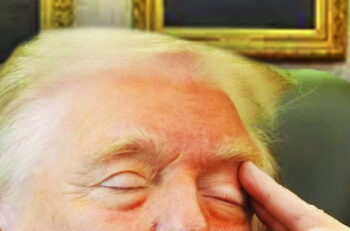
    Before she declined febrile suggestions that she run the US presidency on the grounds that she does not “have the DNA for it” Oprah Winfrey, the nation’s mother was attracting a great deal of serious political and media attention. Ireland has tried its hand at Dana, Gay Byrne and Sean Gallagher and may see some future with Miriam O’Callaghan. But Oprah is the ne plus ultra of celebrity in the land that invented it. Her tough-minded speech at the Golden Globes highlighted her potential as erasure of fellow television personality, President Trump who ironically had joked, innocent decades ago, that Oprah would be his “first choice” for vice president if, counterfactually as it could only be, he ever became President. Now it is said, in our uninnocent time, that the possibility of a Winfrey campaign could unite a divided nation. “I want her to run for president”,the ever wholesome, ever progressive Meryl Streep told The Washington Post just after the Globes. “I don’t think she had any intention [of declaring]. But now she doesn’t have a choice. It was a barnburner. She runs a major company. She could lead the country. Instead of leading the country down”. Bill Kristol, doyen of respectable mad neoconservatism and the original promoter of Sarah Palin, tweeted “Oprah. #ImWithHer…Understands Middle America better than Elizabeth Warren. Less touchy-feely than Joe Biden, more pleasant than Andrew Cuomo, more charismatic than John Hickenlooper”, he declared, almost incontrovertibly. Not a good start, it all derives from a joke. Golden Globes host Seth Meyers mentioned his 2011 White House correspondents’ dinner gig, where he had plausibly joshed that Donald Trump wasn’t qualified for the presidency. “Some have said that night convinced him to run. So, if that’s true, I just want to say: Oprah, you will never be president! You do not have what it takes. And Hanks! Where’s Hanks? You will never be vice president. You are too mean and unrelatable. Now we just wait and see”. Winfrey tittered. But an hour later, she gripped the luvvies and their world with a roustabout call to action. “I want all the girls watching here and now to know that a new day is on the horizon”. Winfrey’s longtime partner, Stedman Graham who would know, later told the Los Angeles Times that “it’s up to the people. She would absolutely do it”. And when the Los Angeles Times told Winfrey herself that “the Internet is saying Oprah for president in 2020”, Winfrey responded. “I’m just glad I got through the speech! I thought a lot about it. I wanted this to be a meaningful moment”. But would she consider a 2020 presidential run? “Okaay!” she reportedly responded souciantly. It was the okay that launched a thousand opinion pieces, a thousand and one. “Yes, we can! Am I the only one who had that feeling? It feels like Oprah 2020”, gushed ‘The Daily Show’s Trevor Noah. It has been typical. It wasn’t an accident. In a March 2017 interview, Bloomberg TV’s David Rubenstein had asked Winfrey about her 2020 plans. And, doggone, she has 2020 plans. “I never considered the question even a possibility,” she said decorously, before adding, “I just thought, ‘Oh … oh?’”. Let’s be clear in the interests of good governance, this was “Oh…oh?” not “Oh Oh!”. Rubenstein then pointed out unhelpfully that “it’s clear you don’t need government experience to be elected president of the United States”. “That’s what I thought”, Winfrey said ruminatingly. “I thought, ‘Oh gee, I don’t have the experience, I don’t know enough’. And now I’m thinking, ‘Oh’”. But this inchoate inarticulacy is also arrogant. Republican consultant Ana Navarro explicates this perspective: “Are we really asking ourselves whether a political neophyte, billionaire, media-savvy TV star can become president? America answered that already. I don’t know how much she knows about foreign policy or some domestic policy issues. But hell, it’s not like she’d be running against Churchill. She’d be running against Trump”. But if you could have Churchill you’d take him without a sidewards glance (actually you mightn’t rush to choose Churchill but that’s not really the point here). There is an elementary flaw in the logic. What would we do if Oprah ran and then someone less celebrated but more ideological, and with a lifetime commitment to appropriate policy ran? What would we do if Bernie Sanders ran again, buoyed by a resurgent radical wing of the Democrat Party? Serious progressives would feel they’d let themselves down with the shiny diversion. Trump doesn’t have the seriousness of purpose to be President but nor does Winfrey. Trump being exposed the way he has been – as wrong, dangerous, life-and-welfare threatening, mad – doesn’t mean billionaire Oprah is qualified to take on the job of the world’s most powerful politician. In reality the Trump circus shows that celebrity and alleged acumen aren’t enough. The main difference between Trump and Winfrey is that he is sociopathic and she is comprehensively empathetic. But who said empathy was the key qualification for the Presidency? It is political judgement. And Oprah’s is totally untested. For example there is no evidence she is willing to do anything that might risk making her unpopular, ‘unempathetic’. Empathy is her essence and her selling point. Republican strategist Rick Wilson, an antiTrump diehard, put it succinctly: “Arguably Donald Trump is the most famous man in the world. Maybe you can only beat a celebrity with another celebrity”. Perhaps the best way to political office is to appeal with music, art, chat-showery, and then collect votes. But surely this demeans the intrinsic value of some of these media. Not everybody awaits beyond all else their first blast of fame viewing it as a vehicle to wealth and power. Integrity is about how one deals with the task in hand, not how one manipulates one’s way to bigger or better tasks, and rewards. Indeed it’s not so long ago that John McCain’s most effective attack ad against the insurgent Barack Obama was called “Celebrity” which

    Loading

    Read more

  • Posted in:

    Maddie: Did the BBC bend the truth?

    On a cold May night in 2007, Martin Smith and his family were walking home after an evening out in the Portuguese resort of Praia da Luz. A retired businessman from Drogheda, Co Louth, he co-owned an apartment there and was a regular visitor to the Algarve town. The crowds of summer had yet to arrive and the normally bustling streets of the old quarter lay quiet. It was approaching 10pm when some members of the family of nine were suddenly struck by the sight of a man walking quickly towards them holding a small child uncomfortably in his arms. As he passed close by them on the narrow street, the child appeared to be in a deep sleep, her head placed over his shoulder and arms suspended down her body. She was blonde, aged around four and wearing pyjamas. Despite the chill in the air, her feet were bare. Martin and his daughter Aoife noted that her skin was very white. The man carrying the girl was middle-aged and more formally dressed than the average tourist, in beige trousers and a dark blazer-like top. A member of Martin’s family made a comment towards him that the child was sleeping but he did not respond or make eye contact, keeping his head down as he hurriedly headed in the direction of the coast. At the time, Martin did not realise the sighting had the potential to change the course of the world’s most high-profile missing-person case. The following morning, he got a text from his daughter in Ireland to tell him that a three-year old girl had gone missing in the resort. The approximate time frame and location he had witnessed the man and child appeared to match. By now, the mystery of what happened to Madeleine McCann was beginning to grip the world. Martin brought his mind back to the evening before and wondered if the child he saw could have been her. The girl certainly matched Madeleine’s description and the sighting had taken place at Rua da Escola Primaria, just 500 yards from the McCanns’ apartment. In time, Martin would become convinced he was correct. Over a decade has passed since Madeleine McCann went missing on May 3, 2007 yet the case of the British three-year-old remains mired in more questions than answers. The mainstream media, who have by and large backed Gerry and Kate McCann’s version of events with the support of several A-list celebrities and politicians, appear to have lost interest in a story they once could not get enough of. The very opposite is true on social media. The internet swirls with allegations and theories that the McCann story is littered with holes and does not stack up. Countless videos have been posted on YouTube by armchair detectives challenging the parents’ seemingly at times bizarre behaviour, in particular their reactions in certain interviews when the finger of blame shifts towards them. Some are compelling to watch and have highlighted what appear to be discrepancies and confusion in certain accounts given by the McCanns and some of their friends about what happened in the period before and after Madeleine disappeared.   “It was like watching an action replay” Gerry McCann, a consultant cardiologist from Scotland, and his Liverpool wife Kate, a GP and anaesthetist, said they had put their daughter and two-year-old twins Sean and Amelie to bed at around 7pm, had drinks together for almost an hour and then left the children alone to go to a tapas bar 50 yards from their apartment. There they met seven friends with whom they were on holiday. They told police that they and their friends checked on the children every half hour. Gerry said he went to the apartment at 9.05pm and all the children were sleeping soundly. He said Madeleine was lying on her left-hand side in exactly the same position she was in when they had left her. At 9.25pm, his friend, Dr Matthew Oldfield told police he went to check on the McCann children. He said afterwards he could not be certain that he saw Madeleine on that check. Kate McCann said she went back to the apartment at around 10pm, entering through the patio doors that they had left unlocked. She said she noticed that the door of the children’s bedroom was “completely open” and that the window was also open and the shutters raised. She said she scoured the apartment, then left the twins asleep in their beds before running back to her friends in the tapas bar and claiming Madeleine had been taken. At 10.41pm, her disappearance from Apartment 5A of the Ocean Club resort was reported to police by hotel staff. Overnight the story made headlines around the world. Several days after Madeleine disappeared, the Smith family flew back home, but the sighting remained at the back of Martin’s mind. He discussed it with his wife Mary, son Peter and daughter Aoife who were with him that night. When they tallied the time and location, and the fact that the man they had seen had come from the direction of the Ocean Club complex where the McCanns were staying, they were convinced that it could have been Madeleine they had seen. They decided to inform investigating police, and at the end of May 2007, Martin, Aoife and Peter flew back out to Portugal to make statements. They gave similar accounts of the man they had witnessed: average build, short brown hair, beige trousers; and the child: blonde, around four, and wearing pyjamas. As the summer passed, the mystery of what happened to Madeleine McCann continued to perplex the world but life returned to normal for the Smiths. Then one Sunday evening in September, it came back to haunt Martin again. He was sitting at home watching TV when a report came on the BBC ‘News at Ten’ about the McCanns’ return to Britain. As he watched Gerry coming down the steps of the plane, carrying his two-year-old son in

    Loading

    Read more

  • Posted in:

    Brexit: Dunkirk or D-Day?

    Standing beside Britain’s much-maligned Prime Minister, Theresa May, European Commission President Jean-Claude Juncker on the morning of the 8 of December announced that “sufficient progress” has been made on Phase I of the Brexit talks to move onto Phase II, and the integral future trading relationship between the United Kingdom and European Union. Brought to the point of parliamentary collapse by the steadfast border standoff between Leo Varadkar and her own supply and confidence partner in Arlene Foster, Theresa May had no choice but to accept an agreement that posits that if there is a failure of the parties to reach a suitable solution to the problem of the Irish border, Northern Ireland and therefore the entire UK would in essence maintain regulatory alignment with the European single market and customs union. The final text, comprising paragraph 45 of the agreement, read: “In the absence of agreed solutions, the United Kingdom will maintain full alignment with those trade rules of the internal market and customs union which, now or in the future, support North-South cooperation, the all-island economy and the protection of the 1998 Agreement”. [The italicised portion of this sentence was originally omitted for simplicity’s sake, and because it tends only to reinforce the editorial allegation that the UK/Tories are getting a better deal than is being reported in other media. See in particular, Editorial in current edition which explicates the issue.] It will probably be, in a word, the softest of soft Brexits. President of the European Council Donald Tusk pushed even further on the back of the agreement, proposing “that during [the transition] period the UK will respect the whole of EU law, including new law” and would “respect judicial oversight”. In the round of back-slapping congratulations that followed in the halls of power in Brussels and Dublin (and the dejected, glassy-eyed resignation that descended like a pall over Westminster that same day), the narrative remained fixed on the upshot for Ireland and the EU as a whole that the British surrender was seen as representing. After months of negotiating, Britain has been brought to terms on an agreement – that has since been declared as binding – that would tie their hands on trade alignment with Europe. So complete was the Tory rout, on the surface, that nobody took a second to question where this left the rest of Europe’s initiatives. The precise wording of the agreement neglects to broach any of the EU’s areas of responsibility outside the trade regulations necessary to ensure the all-Ireland economy is not dissected by a north-south border postBrexit. In essence, in omitting mention of other EU regulations such as those governing social, labour, environmental and consumer rights, the wording of the current agreement leaves the door open for the UK and Northern Ireland to undercut European single market members on all those issues, while retaining the right to export into the EU and take advantage of its market supply chains. Neale Richmond, a Fine Gael Senator and its Seanad Spokesperson on European Affairs, argues that this outlook is purely “hypothetical”. “The deal secured, to be ratified shortly, is a base of ground-rules” he says, “the agreement of which will allow the second phase of negotiations to take place”. In other words, “Nothing is agreed until everything is agreed”. There is, Richmond states, “no practical difference” between the phrases “regulatory alignment” and “avoidance of regulatory divergence” bandied about by all sides during the negotiations. “It is a use of language”, he said, designed to win the support of the DUP for an agreement to maintain standards between the Republic and Northern Ireland. But those standards remain vested in economic issues. “The final agreement”, Richmond promises, “will tie together all working parts”. Should Westminster become alerted to the inadvertent outmanoeuvring of Ireland and Europe afforded them by the wording of the current agreement, however, they are under no obligation to concede alignment on social and environmental matters which would probably require oversight by the European Court of Justice anyway. The Phase I agreement has passed muster in good faith on both sides without reference to areas of regulatory responsibility outside trade and the economy. Through Phase II negotiations, therefore, London is under no obligation to subscribe to the Social Chapter of the European Union, an agenda successive Tory governments have derided since the 1990s. Whether a future Labour government under the radical Jeremy Corbyn might prove more amenable on these issues, Senator Richmond was not inclined to opine on. “We are negotiating as part of the European side in good faith with the current British government”, he said, adding that the government “cannot entertain” speculation as to the motives of any hypothetical future Labour party. As Village goes to press, the media on both sides of the Irish Sea remain silent as to the possibility of an opportunity opening up for the UK post-Brexit. It remains to be seen what role the Social Chapter and other noneconomic regulatory concerns will play in Phase II of negotiations, when they begin next March.

    Loading

    Read more

  • Posted in:

    EU(S)

    Books on the European Union generate glaze-over and are certainly neither written nor read for fun dinner-party conversation, trading as they do in institution-making and bureaucracy. The EU is an incomplete experiment in international co-operation brought about by the catastrophic decline in imperialism, with its consequences for European nations, and two major world wars. But who made it what it is? Success, it is often said has many patrons, but failure is an orphan. Professor Berend’s book lucidly identifies the major patrons who have sponsored European integration and how roll of sponsors has changed over the years. The true extent of US sponsorship of integration in the years following World War II is laid bare by his detailed investigation of the archival documents. In 1948 the American Committee on United Europe was established, supported by the Rockefeller and Ford Foundations. As Professor Anthony Coughlan gleefully pointed out in Village last year, for years the CIA channelled money to the European Movement whose national chapters became the main non-governmental lobbyists for ever further integration in the different European countries and have remained so to this day. Britain, France, and even the US – initially at least, wanted to punish Germany after World War II. De Gaulle wanted to seize the industrial assets of Germany’s Ruhr and Saar to prevent a German resurgence but also to help revive France’s industrial capacity. Fear of the Soviet Union soon crystallised into a new US plan for the continent which saw the ditching of the Morgenthau plan to punish Germany. In the Spring of 1948 France was bankrupt and desperately in need of US Marshall Aid to rebuild its industrial capacity and infrastructure. The Americans made Marshall Aid conditional on French support for Western European integration. It is a lesson on how big countries use their influence. The French performed a quick about-turn on their policy of confiscating and gelding German industrial capacity. Fear of the Soviet Union destabilising Germany seems to have been the motive for the US supporting western European integration. Support for German leader Willy Brandt was also crucial and in particular his espousal of Ostpolitik, or an opening to the East, as an alternative to hard military conflict with the Soviet Bloc. British support for the EU has always been ambivalent. Churchill set the tone by advocating a United States of Europe mainly because of a fear of Soviet expansionism. He felt that Britain might not be part of it. At this stage, even with the American eclipse of its role, and the end of its Empire Britain still nurtured ideas (or delusions ) that it could be a stronger global force in the world without being part of a European political structure, in particular because of its fabled relationship with the wider English-speaking world. Eisenhower was sold on European integration and even boasted privately that it would allow America to sit back a bit with the Europeans doing their bidding – in other words being active in the world without actually rubbing up the isolationists in America the wrong way. Britain was eventually sold on the idea but again had to be pushed a bit to actually join the EU. The British reluctance about its role in Europe is probably best explained in a classic episode of the comedy series ‘Yes Minister’. The perplexed minister (Jim Hacker) expresses genuine surprise about the attitude of his senior civil servant Sir Humphrey which hints at opposition to the European idea. Sir Humphrey explains the policy to Hacker by stating that the real reason why the UK is in the EU is to break up the possibility of them (the continentals) getting together and having unity of purpose on virtually any issue. Balance-of-power preoccupations, rather than zeal, has been the leitmotiv of British involvement in the continent of Europe for hundreds of years. The irony of US support for Europe shines clear for Berend who is a professor in the University of California. By allowing Germany to return to full industrial strength America was allowing a potential rival to develop on the world stage. Henry Kissinger was the first person in the US to point this out, in a book published in 1965. He subsequently advised Nixon not to deal with Brussels but rather the nation-state governments. The French Foreign Minister in 1973 told Kissinger: “You wish to divide Europe to strengthen your mastery”. The inclusion of such spicy quotes energises Professor Berend’s book beyond a limited academic purview. The waxing and waning of the assiduousness of US sponsorship of the EU was rapidly followed by the rapid and rather desperate sponsorship of the European ideal by large European corporations whose motivations were very different. In the late 1970s and 1980s it had begun to dawn on the business elite in Europe that Europe’s economy was threatened by the extraordinary dominance of both the U.S. and Asian companies in the area of consumer electronics amongst other things. This existential fear for survival led European cormpanies to push for the creation of an enlarged and bigger regional market for their products and services within the European area. Professor Berend underlines the importance of three figures in this regard – Helmut Kohl in Germany, Francois Mitterand in France and Jacques Delors as President of the European Commission. The campaign to instigate and complete a single European market and eventually a currency were all the work of Delors; and the clearest beneficiaries were Europe’s big industrial companies who used it as an opportunity to mimic US merger and acquisition culture. Mitterand in France was critical to this success. His early domestic enthusiasm for more and bigger state enterprises was quickly jettisoned in favour of privatisation in his second term. In fairness he saw, as other European countries did, that building national champions, some of which were not long-term competitive, would not be enough to raise European industry off its knees. Currency instability, widespread immigration from the Mediterranean basin, as well as Africa, and the global

    Loading

    Read more

  • Posted in:

    On Visiting Bosnia 25 Years Later

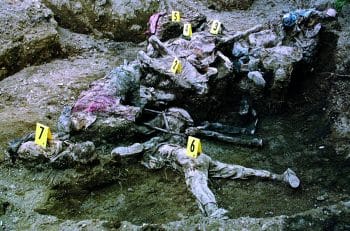
    2017 marks 25 years since the start of the Bosnian war which followed the breakup of the formerly Communist Socialist Federal Republic of Yugoslavia. After Slovenia and Croatia seceded from Yugoslavia in 1991, the multi-ethnic Socialist Republic of Bosnia and Herzegovina passed a 1992 referendum for independence. Nearly half of its citizens were Bosnian Muslims. Nearly a third were Orthodox Serbs and the rest mostly Croatian Catholics. Independence was rejected by the political representatives of the Bosnian Serbs, who had boycotted the referendum though it gained international recognition. The Bosnian Serbs, led by roly-poly poet Radovan Karadžic and supported by the Serbian government of Slobodan Miloševic and the Yugoslav People’s Army (JNA), mobilised their forces inside Bosnia and Herzegovina to secure ethnic Serb territory. War and ethnic cleansing followed. Around 100,000 people were killed, 2.2 million people were displaced, and an estimated 12,000–20,000 women – mostly Bosnian Muslims – were raped. These were Crimes against Humanity. It was the worst conflict in Europe since World War II. The concept of Crimes against Humanity had its apotheosis in the Nuremberg Tribunal, of which more later, but its inception may derive from the discourse in Sophocles ‘Antigone’ as to whether an immoral law is a law. In that play, the Rosetta stone of modern natural law, the heroine Antigone observes to the harsh positivist King of Thebes Creon who will not allow her brother, who has fought against him, to be buried properly, allegedly violating the principles of the Natural Law that: “Yes; for it was not Zeus that had published me that edict; not such are the laws set among men by the justice who neither dwells with the gods below; nor deemed I that thy decrees were of such force, that a mortal could override the unwritten and unfailing statutes of heaven. For their life is not of to-day or yesterday, but from all time, and no man knows when they were first put forth…”. Therefore Antigone asserts that the positivistic law of Creon is not a law as it is immoral; or perhaps that an immoral law is not a law; or that if a law so violates humanitarian principles it cannot be deemed a law. This, in my view, is the source of Crimes against Humanity. Later for the Roman orator, statesman and part-time Natural Lawyer, Cicero, positive laws that contravened the natural law could be struck down. Cicero indicated that a legislature which determined that theft or adultery were lawful would be not be making laws, but rather acting as a band of robbers. From Cicero’s perspective, an unjust law is not a law: “Those who formulated wicked and unjust statutes for nations, thereby breaking their promises and agreements, put into effect anything but laws”. Most famous of all early Christian lawyers, St Augustine of Hippo said “lex iniusta non est lex” (an unjust law is not a law). But still, immorality as such was not deemed a crime against humanity though the ground has been laid. In jurisprudential terms the last century saw a considerable revival in natural law thinking. The World Wars, the horrors of the Holocaust, the aftermath of colonialism, the nuclear age, economic instability and scientific doubt all cumulatively led to the emergence of human rights from 1945 onwards which I think has morphed into a form of secular religion and all of it related to Crimes against Humanity. A crucial juristic figure was the German Gustav Radbruch (1878-1949), both a law professor and a government minister during the Weimar Republic. It is often argued that his earlier writings were positivistic – based on the philosophical system that recognises only that which can be scientifically verified or which is capable of logical or mathematical proof, and therefore rejecting metaphysics, natural law and theism. In 1932 he was a relativist in terms of the question as to whether or not moral standards existed in law. He wrote that a judge had an obligation to uphold an unjust law. However, after the Second World War he changed his mind. In his famous Radbruch’s Formula (Radbruchsche Formel) he argued that where statute law was incompatible with positivist law to an intolerable degree, and where it negated the principle of equality which is central to justice, it could be disregarded. In 1946 he wrote: “[P]reference is given to the positive law, duly enacted and secured by state power, even where it is unjust and fails to benefit the people unless it conflicts with justice to so intolerable a level that a statute becomes in effect false law and must therefore yield to justice…where there is not even an attempt at justice. Where equality, the core of justice, is deliberately betrayed in positive law then the statute is not merely false law it lacks completely the very nature of law”. Radbruch suggested that where there is intolerance and betrayal by government, the law ceases to be valid and must yield to justice. For Radbruch justice (Gerechtigkeit) was linked to human rights. Thus in Funf Minuten Rechtsphilosophie he argued for “justice as moral equality – applying the same measure to all or guaranteeing human rights to all”. As legal philosopher HLA Hart indicates: “His considered reflections led him to the doctrine that the fundamental principles of humanitarian morality were part of the very concept of Recht or legality and that no positive enactment or statute, however clearly it was expressed and however clearly it conformed with the formal criteria of validity of a legal system, could be valid if it contravened basic principles of morality”. Radbruch had a broad conception of such fundamental laws. He contended that there was a law which was above statute: “However one may like to describe it: the law of God, the law of nature, the law of reason”. Such a law rendered invalid positive laws that did not conform to justice; he argued that Nazi laws did not “partake of the character of law at all; they were not just wrong law,

    Loading

    Read more

  • Posted in:

    Myanmarmy Genocide

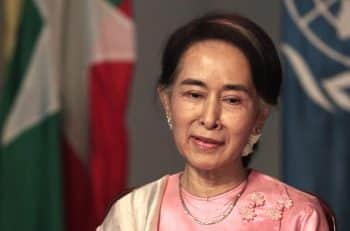
    Irish observers of the Rohingya refugee crisis will find disturbing similarities between Myanmar’s mistreatment of the Rohingya and formative aspects of Ireland’s own history. Today the Rohingya are victims of a brutal Myanmar military crackdown that has led more than 600,000 to flee the country on foot since August. The UN High Commissioner for Human Rights describes this forced displacement as a “textbook example of ethnic cleansing”. Human Rights Watch released satellite images showing almost 300 Rohingya villages razed and there are reports these burnings are ongoing. Amnesty International calls the crisis a “humanitarian catastrophe”. This is no exaggeration. I recently visited the Rohingya refugee camps on the Bangladesh/ Myanmar frontier and what I saw and heard there was heartbreaking. The scale and speed of the displacement is difficult to comprehend. Within eight weeks a shanty city of bamboo and tarpaulin has become home to more people than Dublin. These refugees have lost every material possession including their homes. Children, the old, and sick were carried by family members to these camps over mountains, through rivers and across a now land mined border. Their situation is dreadfully bleak. The weather is stiflingly hot and punctuated by the monsoon season’s torrential rain. They are wholly reliant on aid agencies for food, water and medicine. Providing adequate sanitation is an ongoing challenge making the threat of disease ever-present. There is mud and desperation everywhere. For the Rohingya this is the sad culmination of decades of discrimination by Myanmar’s authorities who deny the Muslim group’s centuries-long heritage in Buddhist-majority Myanmar. Myanmar’s authorities deny the Rohingya citizenship, making them stateless, but also limit their human rights including by restricting their freedom to marry, practise their religion, obtain education and healthcare, and even to travel freely from one village to another. The Rohingya’s right to vote was taken away in 2015. Researchers at the International State Crime Initiative (ISCI) in 2015 rightly concluded this was a process of genocide. The interviews I conducted with male residents of unregistered camps and at the registered Kutupalong Camp confirm this. They told heartbreaking stories of loss, violence and forced migration that no one should be forced to endure. One young man in his 20s explained his journey to the refugee camp involved being forced from village to village by the military who used a helicopter to burn homes: “When our village was burned we moved to another village, and then they came to burn that village, and we moved another village, and when they came to burn that village and we moved, and that’s how we came here at last. They used the helicopter to burn the villages”. I heard frequently how the military used helicopters to burn Rohingya villages and now young children in the refugee camps are drawing heartbreaking pictures with crayons of helicopters raining fire on their former homes. One elderly man, recently arrived in Kutupalong Camp, told me ten men were arrested in his village and their families had not heard from them since. He said the military bluntly told Rohingya villagers to leave: “they openly told us to go to Bangladesh – otherwise you will be killed”. This too was a depressingly familiar story among those I interviewed – the military arrived, fired their guns, killed some, arrested mostly young men but sometimes the young women too, and instructed the others to go to Bangladesh. More than 600,000 did. A 60-year-old man from Buthidaung township showed me his bandaged leg, a bullet injury he said. His story is disturbing: “Among my four sons, one was killed by the military in front of me, and one arrested, and one of my daughters – my adult daughter – was arrested but I don’t know where she is”. An understandably emotional farmer tells me: “I lost my two sons, and two daughters. At midnight the military come in my house and burnt the house, but first they raped my two daughters and they shot my two daughters in front of me. I have no words to express how it was for me to suffer to look at my daughters being raped and killed in front of me. My two sons were also killed by the government. I was not able to get the dead bodies of my daughters, it is a great sorrow for me”. These individual stories of recent abuses are heartbreaking, but camp residents talked too about years of discriminatory practices that will be all too familiar to readers of Ireland’s history – restrictions on education and religious practice, and land confiscations. Now Myanmar’s authorities plan to confiscate all burnt Rohingya villages and settle them with new residents. A plantation. It’s little wonder tens of thousands of Rohingya annually boarded dangerous boats to flee their homeland, knowing they would probably never return. Another experience all too common in Ireland’s history. Despite this, Myanmar’s civilian leader, Aung San Suu Kyi has shown little sympathy towards the Rohingya. It took ten weeks of crisis before she set foot in the state from where 600,000 of Myanmar’s Rohingya fled. Suu Kyi has delivered two televised addresses to the nation since the crisis began and each could have been scripted by the military. In her most recent address she told Myanmar, “no one can fully understand the situation of our country the way we do” echoing military claims they have not committed atrocities but are instead unfairly maligned by international media and the UN. Suu Kyi’s words ring hollow and she is increasingly seen as acting as a political shield for the military’s crimes – using her international reputation to hold back the tide of international condemnation. Suu Kyi also stubbornly denies visas to UN human-rights investigators to enter Myanmar. As Foreign Minister she could grant UN investigators access with the stroke of a pen. She chooses not to. Dr Thomas MacManus, an ISCI researcher from Dublin, is appalled by the behaviour of Aung San Suu Kyi and said, “She is a huge disappointment. Not only is

    Loading

    Read more