International

Random entry RSS

  • Posted in:

    Uncool Britannia

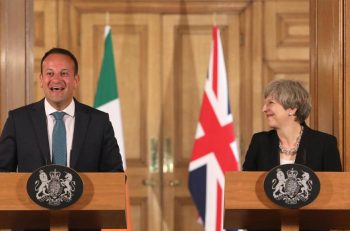
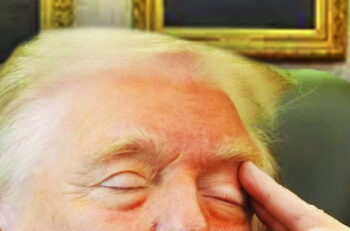
    This magazine took a surprisingly benign stance on the mediocre legacy of Enda Kenny, despite the facts that he embraced neither the substantive equality nor the sustainability that animate this magazine. The main reason for this was that it is clear that our times have thrown up much worse. In Donald Trump and the Brexiteers the two most influential Anglophone countries let themselves down and opened their hearts to dangerous fools at the centres of their mature body politics. Our politicians have not yielded to intolerant populism. In the US, Donald Trump’s Presidency will, on the basis that character is destiny, end in a morass of shaftings, leaks, groundless policies and decisions, corruption, impeachment, and disgrace. The UK is more tragic. While Trump’s ascendancy symbolised an enormous and intolerant malaise, the UK’s muddle is more fragile, less personal, more endemic and not so easily solved. It’s about the British predicament. England has for centuries been riven by a class system, sustained by those at the top as it provided fodder for their estates and their Empire, and now prolonged because… well who knows why. Latterly it has denigrated education and aggrandised a boorish press, reaping a whirlwind in moronism and intolerance. Britain has struggled with its post-colonialising identity. Particularly in England many people are convinced of their country’s specialness, by which they may mean superiority. This is not something which has yielded much to the objective analyst. Few can doubt that it is now manifesting as a fullblown identity crisis. The UK’s external relations are now egregiously compromised. The reclaiming of coastal waters for the national fishing fleet is merely symbolic of the divisiveness of unilateral exit. Too many failed to register either the historic or the economic significance of the EU. Cynical propagandists in the press and Tory party created a myth of over-zealous regulation emanating from Johnny foreigner in Brussels, when as the tragic Grenfell fire only underlines, regulations are easily denigrated as fodder for bonfires, until you see what they prevent. Last year the UK voted to leave the EU. Village still predicts it will relent. But it still has a great deal of pain to go through. It will be humiliating to be outmanoeuvred at the start of the negotiation process by a bloc that has the upper hand, simply by dint of the nature of international trade and international-trade agreements which depend on complex long negotiations and which deliver benefits from mutuality, and disbenefits to those who cede. It will be humiliating to ask for a reversal of the Article 50 process which allows countries to leave the Union. The UK will decline economically though politically this is disastrous as the country is reeling from years of austerity, post-industrial decline and social discrimination. It will continue to experience loss of international investment as the markets indulge their fears of uncertainty, of the adversity generated by less trade and less favourable trade, and less immigration with the economic dynamism it generates; but worse of the reality of Brexit, of a hobbled financial sector centred in London, of a declining industrial base, separated from its natural trading partners. It seems unlikely these pervasive sectors with outlets in the principal political parties will not register their discontent in ways that will resonate. The country is also imperiled by fissiparous demography. Over-65s were more than twice as likely as under-25s to have voted to Leave (71% as against 29%). Disenfranchised young people already suffer relative to their parents in terms of jobs. The proportion of working 16- to 20-year-olds in low pay rose from 58% in 1990 to 77% in 2015. Their opportunities to obtain quality housing are inferior. Half of the people living in homeless supported accommodation are aged 16-24. And young people cannot look forward to the retirement and pension terms their parents were privileged with. The State pension which was payable from 65 (60 for women) is rising to 67. Disenfranchising their views on the economy and international place of their country will inevitably engender civil fracture. More humdrumly, Britain’s politicians are dangerously deficient. Theresa May is stiff, petty and unimaginative, and played a cynical card for one who initially was pro-Remain. Her Tory successors, Boris Johnson and David Davis are unrealistic and buffoonish. Jeremy Corbyn is latterly being feted noisily by an anaesthetised electorate but he lacks a clear, positive and modern vision, most of all about the EU.   None of these people will unite their country. Their personalities, backgrounds and policies clearly prefigure divisiveness. But in any event even if they were skilful, and they are not, the situation is irredeemable: the country doesn’t know if it wants Brexit (it voted it 52:48% and though constitutional foibles mean they are reluctant to revisit a referendum, they seem fast to have changed their minds after they’d googled to see what it would involve. Moreover if it wants Brexit it’s not clear if it wants a Hard Brexit defined as embracing extraction from the single market and the customs union or a Soft Brexit. There is also a systemic constitutional difficulty. The UK will struggle to provide a solution to Northern Ireland. Despite ample opportunity nobody has outlined a satisfactory border arrangement between it and this Republic. Moreover, the pressures exercised by the DUP, apparently the Tories’ chosen partners in government, may breach the Good Friday Agreement, an international treaty, which requires the impartiality of the British Government in its dealings between nationalists and unionists. Perhaps the UK will leave but if it does it will soon come back. Economics dictates. Economically everybody benefits from trade. In the end it is to be hoped a chastened but wiser UK takes a more comfortable place in world affairs, with its sense of its specialness diminished and its concomitant sense of superiority sundered. For without it, the UK is a great country, with a history of rare genius and a post-war tradition of magnanimous tolerance. To have Britain functioning dynamically and progressively will be a relief,

    Loading

    Read more

  • Posted in:

    Varoufakup

    Michael Smith reviews ‘Adults in the Room: My Battle With Europe’s Deep Establishment’, by Yannis Varoufakis. Yanis Varoufakis is (or was) “the most interesting man in the world” according to Business Insider; a “very, very clever person” according to Martin Wolf of the Financial Times. After all he landed Danae Stratou, allegedly the inspiration for Jarvis Cocker’s breathtaking song Common People, and challenged the deep global establishment. If he failed in the cut-throat bailout drama which he accepts as tragedy, in Greece, at least he came closer to undermining global capitalism, a system above all designed to be unassailable, than anyone else, both politically and intellectually. Village readers, above all, will be familiar with the background: having held only university posts, mostly in Leftie bastions – Essex, Birmingham, East Anglia, Varoufakis was elected to the Greek parliament (Larry Summers calls this his big mistake!), collecting the largest number of votes (more than 142 thousand) of any Greek MP and became Syriza’s new government’s finance minister in early 2015 armed with ‘A Modest Proposal’, a plan to deal with Greece’s debt without vicious austerity, while staying in the EU. He’d been working on it for years with Stuart Holland, a former British Labour Party MP and the American economist, Jamie, son of JK, Galbraith. In the end it was supported by numerous economists including Larry Summers, Thomas Piketty and Joseph Stiglitz. Varoufakis considers the Greek state became insolvent in early 2010 and that the bailouts that followed were attempts to “extend and pretend” – to take on the largest loan in history (in order to keep making repayments on older loans) on condition of austerity measures that would shrink the incomes from which the old, un-serviceable loans, and the new bailout debts would be repaid. Taking on the “bailout” loans in 2010 and 2012 would lead to deeper bankruptcy and even harder default in the future, and therefore defies fundamental laws of economics and mathematics. This is still playing out. Meanwhile, by the end of June 2015 having been deprived of funds, Greece was no longer able to make payments on its debts, and came close to declaring default. As queues formed at ATMs, ‘Marxist’ prime minister Tsipras called a referendum on the Troika’s demand for more austerity in exchange for additional funds to bail out Greek banks. Over 61% of the 62.5% turnout recorded their solid NO to the Troika’s demands. Tsipras was appalled by the implications of the vote. That same night, having panickingly abandoned his back-up plan, Tsipras rejected the result, capitulated to the Troika, and Varoufakis was out, on his bike. The government had overthrown the people. Tsipras had been deMarxified and Varoufakis went back to rhetoric without power.     Paul Tyson says ‘Adults in the Room’ is “a reflection on the nature and meaning of power in our times”. In the Theological Review he writes that Varoufakis “chronicles what happens when an able theologian of modern political economics points out that our priests are heretics in the terms of their own doctrines. For if austerity is meant to heal the Greek economy then 1 + 1 = 17; but if austerity is not about healing the Greek economy, then what is really going on in the Eurozone? In response, our priest guild simply asserts that 1 + 1 obviously = 17, and they see no reason why they should tell anyone what is really going on. Who can know divine truth but the priest guild? Trust and obey, for there is no other way”. Less benign to Varoufakis, The system-defending Financial Times says the book is “a lesson in how not to negotiate with Europe’s power brokers”. Elected politicians have little power; stock markets and a network of hedge funds, billionaires and media owners have the real power, and the art of politics is to recognise this and achieve as much as possible without disrupting the system. That recognition was the universal norm. Varoufakis rejected it and, by describing it in frank detail, is now arming us against the stupidity of the electorates’ occasional fantasies, not least in an Ireland enjoying a smooth return to boom-and-bust, that the system built by Neoliberalism can somehow bend or compromise to our desire for social justice. That is what makes this book special, politically beautiful. The honesty of the outsider with the knowledge of the former quasi-insider. The insider/outsider question is the key. Varoufakis opens the book with his arrival as Finance Minister in Washington for a meeting with Larry Summers, the former US treasury secretary and conduit to Obama. Summers asks him: “do you want to be on the inside or the outside? Outsiders prioritise their freedom to speak their version of the truth. The price is that they are ignored by the insiders, who make the important decisions”. Apparently Larry understood that Yanis would not sign surrender “at the price of becoming a bona fide insider…and he believed that this would be a pity, for me at least”. A lot, maybe the future of Europe, depends on how you read this conversation, according to The Theological Review. Some might consider that the pity was much more marked for his country and that his own was scarcely worth registering. It’s all about power and its networks. The 2008 crisis, which continues. “is due to the terminal breakdown of the world’s super black boxes – of the networks of power”. Believing the solutions to the crisis will stem from the same networks is “touchingly naïve”. “The key to such power networks is exclusion and opacity”, Varoufakis asserts. As sensitive information is bartered, “two-person alliances forge links with other such alliances … involving conspirators who conspire de facto without being conscious conspirators”. Before he went into government as he notes he believed we could open the black boxes: “each one of us may very well be a node in the network…if we can get inside the network…and disrupt the information flow, if we can put the fear of

    Loading

    Read more

  • Posted in:

    Interview: Ronit Sela, Israeli human-rights activist in Palestine

    June marked 50 years since the Six Day War between Israel and the neighboring states of Egypt, Jordan, and Syria. Since then the region has been in turmoil. The Association for Civil Rights in Israel (ACRI) is the oldest civil society organisations in the region. Its work is to promote human rights in both Israel and the occupied Palestinian Territories. Ronit Sela is the Director for The Human Rights in the Occupied Palestinian Territories Unit with ACRI. She was in Ireland recently on a trip sponsored by Christian Aid Ireland. When you meet Ronit the first thing you notice is how measured and calm she is, presumably a prerequisite for this job. When we meet she is dealing with the loss of her phone with superhuman serenity. It’s no surprise to learn from her that for a long time she thought about a career in diplomacy. She tells me about ACRI: “It was set up to protect and promote Human Rights in Israel and the Occupied Territories in 1972. We feel it’s our mandate to protect and to promote the rights of everyone one who is affected by the Israeli government. A lot of the work we do is with Israeli citizens, the largest group of people who are affected by Israeli policies, but we also work with communities who are not citizens, so in the Occupied Territories we protect the rights of Palestinians who are under military occupation”. She’s the head of the department that deals with the Occupied Territories and she works in the West Bank and East Jerusalem. “We don’t work in the Gaza strip, we only get involved with Gaza issues when there is a war and unfortunately there were three. There we look at any action taken by the Israeli military and determine whether it’s in breach of international law”. East Jerusalem has been annexed and even though ACRI’s official stance is that its occupation is illegal and Israeli law shouldn’t be applied there, it’s a reality that has to be dealt with. She notes that, “if people don’t have access to health services in the region we’re going to go to the Health Ministry and say according to Israeli law, they should have access to these services and we demand it. It’s the part of the occupation that we have to play along with”. East Jerusalem suffers from extreme discrimination, the infrastructure is very poor on every level, especially when you compare it to West Jerusalem, which has become more western. There are parks, the streets are clean and everything is nice. But in the East of the city, it’s a world apart. Sela says, “East Jerusalem is full of border police. We always joke that they need to have so many border police because they need to figure out where the border is, everyone is still looking for the border, especially in Jerusalem, where the border is so unclear!”. Her work in the West Bank focuses in part on Area C – a district that’s under full military control, where all the settlers live, with some Palestinians who are the hardest hit: “Especially the people who are living in places that Israel would like to annex in the future. Israel is applying very harsh measures to limit or diminish the Palestinian presence here and Palestinians are not allowed to develop the land. The longest-standing case in ACRI is 17 years. We submitted a petition on behalf of Palestinians living in a location that Israel strategically wants in the south Hebron hills. People were put on trucks and were forced to flee – they were herding communities out, because Israel declared it a firing zone for military training”. ACRI have been petitioning on this since 2000. “We’ve had success but my overall sense after having worked in ACRI for eight years, is that for now the door is open but it may not be in the future. We go to committee meetings at parliament, we sit down with their officials. We are invited to very high-profile meetings, we go to the high court, but at the end of the day none of our victories are complete”, she declares sadly. “For 17 years people have continued to live in a firing zone under horrendous conditions. Detention periods were shortened but they are still too long. Our principal position is that if there are Israelis and Palestinians living in the same territory, they need to have the same detention periods: you can’t have two systems! At this point I don’t know what it feels like to be working on something where you have clear victories. We have moments, but in the West Bank and East Jerusalem all our victories, all our positive verdicts and all the advocacy success is only partial. You go to sleep happy and you wake up in the morning and there’s another thing”. I ask her about the pressures faced by organisations like Acri. “One of the things that has characterised the three Netanyahu governments is that they have been gradually cracking down on civil society and on anyone who has been a critic of Israeli policy that relates to the conflict, so not just what we do in the West Bank specifically, but also on the Netanyahu approach to negotiation or to peace deals. One of the strategic things that they have done which I think they have succeeded in, is that they have equated any anti-government policies in the West Bank with being anti-Israel and anti-Semitic”. In the case of an organisation like Christian Aid Ireland it’s hardly surprising that it might say Israeli policies in Area C are harming Palestinians and are in violation of Human Rights. But, she notes, “That’s not just a criticism of the current government; according to the Netanyahu government that’s being anti-Israel and anti-Semitic; and people buy it. Jewish people have endured such a hard history of anti-Semitism that it’s easy to convince us that things are bad. Organisations that support anti-occupation work

    Loading

    Read more