International

Random entry RSS

  • Posted in:

    Islamophobia

    In the great pantheon of aggrieved minorities in the US, no other has been open to such unrestrained media hostility and acts of violence against its people and property, as the nation’s Arab-American community. Muslims have been repeatedly singled-out by successive presidential administrations for attacks against civil liberties, covert surveillance by the sprawling intelligence apparatuses and heightened security checks on spurious national security grounds. This is despite the fact that the 54 fatalities caused by Muslim-American extremists in 2016 (123 since since 9/11) is dwarfed by the more than 240,000 Americans murdered over the same period. Between 2001 and 2015, more Americans were killed by homegrown right-wing extremists than by Islamist terrorists. President Trump is attempting indefinitely to suspend entry to the US from seven Muslim-majority countries. However, since 9/11, only 23 percent of Muslim-Americans involved with violent extremist plots had family backgrounds in these seven countries and in fact there has not been a single death caused by extremists with family backgrounds in any of them. Clearly the new regime is driven by something more than the need for a proportionate and necessary response. Inherent racism towards Muslims is now such an ingrained feature of US life that any president need only mention the word “Islam” and the public mind convulses with images of bearded men and Kalashnikovs intent on destroying all that is beautiful in the world. Media outlets have spent the last 40 years subjecting people of Muslim faith to repeated attack, endlessly broadcasting, as Gore Vidal once put it, “images of monstrous figures from Hieronymus Bosch staring out at us, hellfire in their eyes”, thus laying the groundwork for a public bedrock of anti-Arab sentiment now firmly established. The path has always been littered with the rose petals of electoral success for any politician willing to espouse crude anti-Muslim rhetoric. The fact that Donald Trump has capitalised off the back of these now withered leaves is unsurprising given the history of religious racism in the country. The core of Trump’s support comes, as it did with Reagan and Bush, from right-wing Evangelical Christians. These voters have enormous financial power, are overwhelmingly white and devoted to Israel, or rather what that State represents according to their religious beliefs. To such voters who take a literal interpretation of the bible, Armageddon is scheduled to take place in Israel at a date unspecified when the forces of good (white, Christian) will defeat the forces of evil (guess who?). In the eyes of the good book’s holy warriors, Israel, as bastion against evil, must be protected at all costs, thus explaining the fundamentalist Christian love of the Jewish State. Religiosity is therefore key. According to a 2016 Gallup Poll 41% of all respondents in the US regarded themselves as ‘Born Again’. In the same poll 72% believed in Angels and 47% believed that the Bible was the “inspired word of God”, up from 45% in 1976. This voter class is highly suspicious of outsiders, especially foreigners from the Middle East whom they view as attempting to subvert their Christian country (happily renamed the ‘Homeland’ since Bush) through the utterly implausible tool of Sharia law. They are thus easy prey for the passive-aggressive racism of Trump. The absurd belief among many of Trump’s followers that Muslims are little more than a fifth column in the US, intent on destroying freedom’s land from within, resonates freely. The roots of this anti-immigrant racism stretch back far to the nineteenth century and anti-Catholic bigotry that swept the country during the flood of immigration from Ireland after the Great Famine in the 1840s. Contemporary accounts reported shiploads of ragged, starving Irish disembarking onto the piers of Castle Clinton – forerunner to Ellis Island – to the hostility of the mainly Protestant merchant elites. Alarmed at the influx of Catholic Irish and German immigration which they perceived as undermining pure “Republican” ideals because such immigrants would owe loyalty not to the United States but to the Pope, native-born White Anglo-Saxon Americans formed the ‘Know-Nothing’ political party, devoted to extending the citizenship term to 20 years and deporting all immigrants with criminal convictions. The hatred would not die easily. When Al Smith, the first Irish American Catholic to hold the position of Governor in the country, became the Democratic candidate for president in 1928, the anti-Catholic hatred was so violent that Smith’s campaign train, passing fiery crosses on the hills of Kansas and Oklahoma, was turned back in some Western and Midwestern stops for fear that the police could not protect him. The bigotry was so intense that Smith campaigner Simon Rifkind would later comment that “I had not been aware of the intense anti-Catholicism that prevailed in this country… When I came to mid-America, it really hit you in the face”. Smith, hero to the working man in New York, was crushed in the general election. Perhaps most blatantly infamous was the racist incarceration during World War II of 110,000 people of Japanese ancestry who lived on the Pacific coast. Sixty-two percent of the internees were United States citizens. These actions were ordered by President Franklin D Roosevelt shortly after Imperial Japan’s attack on Pearl Harbor. Citizens who were as little as 1/16 Japanese and orphaned infants with “one drop of Japanese blood” could be placed in internment camps. Spiro Agnew once sagely noted that “the United States, for all its faults, is still the greatest nation in the country”. After Martin Luther King was assassinated Agnew berated Baltimore’s black leaders, in person, for the riots that followed. He once called an Asian American reporter a “fat Jap”. Fabulously corrupt and someone for whom books were only ever used to remedy uneven table legs, Agnew was of course Vice-President under Richard Nixon and it was Nixon, ever fascinated with secrecy, who initiated Operation Boulder, a visa-screening programme targeted against Arabs entering the US in the wake of the massacre of 11 Israeli athletes at the Munich Olympics in September, 1972. Ever since Arabs would prove

    Loading

    Read more

  • Posted in:

    Trump: the text

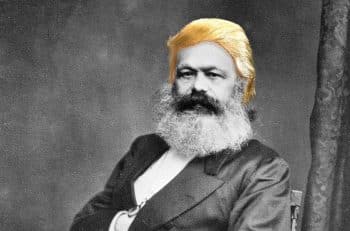
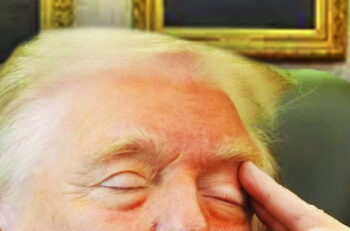
    Jacques Derrida had a reputation for being one of the world’s most obscure philosophers, but if he had been alive during the rise of Trump, I think he would have had a lot to share. In his 1994 work ‘Spectres of Marx’, Derrida attacked the clichéd view that the collapse of the communist state meant the consignment of Marxism to the dustbin of history. Our current “new world disorder”, he quipped, of “neo-capitalism”, has not managed “to rid itself of Marx’s ghosts”. However, Marxism now exists in different flavours. Derrida was heavily influenced by another French philosopher Blanchot who spoke of the “multiple forms” of Marx. Though the wheels have fallen off the old Marxist express train, the machinery of neo-capitalist globalisation is still haunted, Derrida claimed, by the spirit of Marx. Given that Trump has threatened to slap import tariffs on corporations, such as Ford Motors, for moving their factories to Mexico, might Derrida have found the Marxist ghost, lurking? Trump it would appear is protecting workers from losing their jobs, as well as confronting the greed of the corporate capitalists seeking to exploit low-wage foreign workers. Yet Trump – a critic would reply – is also one of the most famous stars of modern neo-capitalism with vast property holdings in the US, and around the world. Derrida might have retorted that it is this very mix of contradictory ideologies that explained Trump’s unlikely rise: a bold defence of workers’ rights – the ghost of left-wing revolution, from a person who is the very culmination of neo-liberalism. The Economist magazine says Donald Trump favours proposals loved by the right and backs ideas favoured by the left. “He sounds European”, it concludes. Derrida called this Marxism of the Right. In short Trump’s business and political career is itself a destruction of traditional, but now antiquated left/right political distinctions. But in breaking these ideological differences, Trump has married the best of both worlds – the adulation of the struggling workers left behind by an exploitative capitalism, and a self-promoted reputation as a savvy player in the high-stakes world of international capitalism, who (Trumps claims) might be able to bring jobs, formerly outsourced by American corporations, back to America. As to whether Derrida, given his sympathy for immigrants and critique of the free market, would have found anything favourable to say about the anti-immigrant Trump as channelling the ghost of Marx, Derrida might have recalled that there is no hegemonic reading of Marx – nor for that matter a hegemonic reading of Trump (given his numerous conflicting opinions over the years). Derrida, in fact, might have added another reading of Trump based on passages from ‘Spectre of Marx’: the celebrity businessmen is actually not really human, instead exemplifying – in Derrida’s take on Marxism – the weird neo-capitalist creature who emerged from the hyper-globalist market place. Derrida vividly described this monster: “[T]he inert thickness of its ligneous body and autonomy is no more than the mask of automatism. A mask, indeed a visor that may be hiding no living gaze beneath the helmet. The automaton mimes the living. The Thing is neither dead nor alive, it is dead and alive at the same time. It survives. At once cunning, inventive, and machine-like, ingenious and unpredictable, this war machine is a theatrical machine”. In brief Trump is a kind of zombie or robot. Derrida would, in support of this assertion, cite this psychological profile of Trump, which described Trump’s eyes as affectless, what we would call cold, or eerily blank. Derrida might have also enjoyed the phrase “no living gaze beneath the helmet” – a nice allusion to Trump’s large unnatural hair thing, while all the other images and tropes also seem entirely a propos, in describing Trump’s maniacal energy, weird unpredictability, and baroque public image. Fascinated by these contradictory and bizarre aspects of Trump, we can imagine Derrida announcing to the world that he will write a new study: ‘Trump: the Text’. By Thomas White

    Loading

    Read more

  • Posted in:

    Protectionism dressed as free trade

    Donald Trump is pulling out of the Transpacific Partnership (TPP). He is also likely to abandon the TTIP (Transatlantic Trade and Investment Partnership) and NAFTA (the North American Free Trade Agreement). You would be forgiven for thinking that organised labour in Ireland might be pleased about this. After all, we have engaged in several campaigns in opposition to TTIP. To be clear: we do not mourn the probable passing of TTIP, but Donald Trump is tearing it up for all the wrong reasons and, what’s more, he wants to replace it with something that may be even worse. To understand where we’re coming from, let me first refresh your memory as to why we opposed TTIP in the first instance. This point is not moot given that TTIP is still alive; CETA, its sister agreement, continues to progress; and our opposition to TTIP is the context in which we oppose Trump’s new vision. We opposed TTIP because, despite what its cheerleaders might say, it is not a ‘free trade agreement’ in any meaningful sense. Rather, TTIP (along with TPP and NAFTA) are, as Noam Chomsky has pointed out, investor rights agreements for US corporations. It’s no coincidence that these giant agreements (beginning with NAFTA in 1994) come about just as the emerging economies of the so-called BRIC countries (Brazil, Russia, India and China) begin to gain some leverage within the World Trade Organisation. Competition from these regional powers is intolerable to the US superpower, and so its government embarks on a mission to set up a parallel global trading and investment system specifically aimed at strangling these emergent challenges. NAFTA is designed to isolate Brazil, TPP to isolate China and TTIP to isolate Russia. Both the TPP and TTIP have negative effects on India. Immediately, then, it is obvious that these agreements are not interested in facilitating open, free trade. In fact, their main purpose is to protect wealthy, powerful US incumbents. They are protectionist agreements. ‘Moving the beans’ Part of the key to understanding this is to realise what percentage of what is called ‘global trade’ is actually just intra-firm transfer, and helps to facilitate some very large -scale tax avoidance operations. That is to say, one arm of company ‘X’ shifting goods over to another arm of company ‘X’ and happening to cross a border in the process (a grocer moving a tin of beans from one shelf to another is often used as an analogy). An OECD working paper from 2011 states that, in 2009, intra-firm transfers accounted for 48% of US goods imports and 30% of US goods exports. 58% of US imports from OECD countries were made up of intra-firm transfers. The working paper concedes that the actual figures are likely to be higher as the data do not capture various forms of intra-industry transfers in which very closely related (though not identical) firms transfer goods among themselves. So, it’s likely that in more than half the cases we refer to as ‘international trade with the US’ we are talking about multinational corporations shifting goods around internally in their organisations. Tactical advantages and buying elections We should consider why it is that multinational corporations split up their operations and locate parts of themselves in various places around the globe. The idea is that, as long as there are no penalties for shifting capital across borders, these corporations can locate the various sections of their enterprise in the places most advantageously set up to receive those particular parts. For example, a company may locate manufacturing in a low-wage, high-repression environment where it relies on the state to bust unions through violence. It might locate waste disposal in West Africa, having ensured there are no environmental regulations to contend with. It might choose to pay its tax in Ireland, where it can be sure Government will mobilise state resources to defend its low corporate-tax rate against external upwards pressure. It might also locate its research and development somewhere where it can rely on the taxpayer to fund it through subsidies to universities’ science departments. Finally, it might use the population of the United States as its consumer base: it can rely on the US government to bailout the financial system when it collapses, meaning that US citizens can continue to consume on credit. In order to ensure this state-support these corporations buy elections for pro-business candidates. Market distortion There is risk involved in globalising a business though. All of a sudden, the corporation has to contend with numerous different electorates, regulatory systems, leaders and so on, who may disrupt business activities. In order to mitigate this risk, the corporation designs these investor right agreements that transfer power away from the state and into their hands. The agreements do away with tariffs – economic barriers to entry that enrich the state – and replace them with (as in TTIP) extremely strict patent protections – economic barriers to entry that enrich incumbent private enterprise. They also include detailed rules of origin which offer preferential treatment to US incumbents and prevent BRIC competitors from entering the market. These are not free trade measures, they are highly protectionist measures aimed at protecting US incumbents from competition and state interference. These measures demonstrate a contempt for the principles of the free market – they are market distortions on a grand scale. These are not conspiracy theories. Of course agreements like TTIP have to contain complex regulations and much of the detail has to be agreed upon behind closed doors in order to allow for serious negotiation. Unregulated free trade is not a good alternative. Regulation is good – what’s important is making sure that the regulation included in these agreements is the right regulation for workers, the environment and wider society. A one-stop-shop for corporate exploitation In the most recent American election, two major candidates ran on anti-TTIP/TPP/NAFTA platforms: Bernie Sanders and Donald Trump. Unsurprisingly, neither received any significant corporate financial support. Sanders was crowd-funded through micro-donations from individuals, while Trump

    Loading

    Read more

  • Posted in:

    EU of Nations must stick together

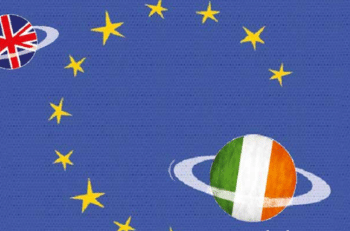
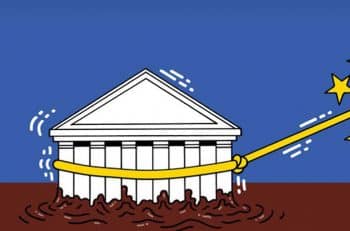
    The beginning of 2017 doesn’t look good for the European Union. But things are at least becoming clearer. In light of attacks from both the US and the UK, the choice between unity and disintegration is registering for Europeans. This is a good thing. Disintegration would result in accelerated poverty and maybe even war, so unity seems like the easy choice. However, tougher decisions lie ahead as unity will be difficult to protect since the EU is facing its own contradictions. In the last few weeks the EU has had to face two unprecedented attacks. The first is the iconoclastic declaration by an American President that he is expecting more European countries to leave the EU and that it will be a good thing, notwithstanding the risks to worldwide peace. This came along with a direct attack on the role of Germany in Europe. This announcement was preceded by the news that Trump would fast track an exhaustive free-trade agreement with the UK. The second attack came from Theresa May. On 17 January, she announced that the UK will go the route of ‘hard Brexit’. She confirms that UK will carry out fiscal dumping by cutting corporate taxes if it doesn’t get access to the single European market. During the Christmas holidays, news surfaced in the UK media that its Queen favoured Brexit, presumably because it would allow the UK to refocus on the Commonwealth. This illustrates to what extent, even at the highest levels, the English never really wanted the EU… and have kept their colonial mindset. Seccessiontist moves from the UK vindicate Charles de Gaulle who always opposed UK membership on the grounds that the UK would never be enthusiastic members. But it is a shame that after 43 years, the EU had not been better at winning over English and Welsh hearts and minds. Threat to post-war order Donald Trump’s declaration is a direct affront to the very post-war order that the US helped to foster. Despite all her words of friendship with the EU, let’s be clear: Theresa May’s declaration was a message of economic war to her neighbours. On 18 January, the cover of The Times couldn’t have been more explicit: “May to EU: Give Us Fair Deal or You’ll Be Crushed”. The implied threat is that the UK could turn into a tax haven by lowering corporate tax and regulation to lure as many multinationals as possible away from the EU. This threat is credible: London already has many tools to attract high-powered business away from the continent. All of this points to a new direction in the current world disorder: a stronger Anglo-Saxon axis. Of course this axis has always existed: it is the ‘special relationship’. For years new Foreign Secretaries in Britain visited the US before any European countries. But recent developments have only strengthened this relationship. The directions the UK and the US have taken make things much clearer for Europeans in 2017. With an assertive Russia in the East, the risks of an isolationist and erratic America in the West, an ascendant China and the protectionism that would follow the implosion of the EU, disintegration would almost certainly lead to poverty and even war. So naturally, Europeans should choose to stick together. Regarding negotiations with the UK, the choices are easy too, at least on paper. With the EU, the English at least want to have their cake and eat it too. Theresa May’s premise is that the EU is desperate for access to the UK market because the UK is the fifth economic power in the world. But this is partly because France and Italy are so weak. While Sweden, Denmark, the Netherlands and Germany have done so well in international markets, it is baffling to hear that the UK thinks EU membership has held it back. May plainly puts the blame for UK failures on the backs of others. The UK has a number of its own problems holding it back, including the fact that it has no industrial policy. In addition, UK internet, telecom, road and train infrastructure is sub-standard; healthcare is on the point of collapsing; the regions are emptying out to London; many economic sectors are uncompetitive and the ones that are competitive overlap with those in America. The irony is that in the end, the UK’s weaknesses and new direction may well backfire on Brexit voters or at least on the least advantaged – and angriest – in the UK. It is clear that the slightest concession in the name of economic interests would create a precedent that would lead more members to leave the EU. The UK tax-haven threat is only credible if UK-based firms get free access to the single market. If they did not, none would choose to invest in the UK to trade with the EU. And EU companies and countries can work even harder to become innovation hubs that would mitigate any advantage of being based in the UK. It is slightly reassuring that the President of the German Industrial Association recently declared that German industrialists will not lobby their government to make concessions to protect their access to the UK market. But in practice, since European politicians have always bowed to Britain, I am not sure we can count on firmness. Are the populists on to something? But it would be foolish automatically to dismiss the new positions in London and Washington, even if they are both arrogant. They highlight an uncomfortable truth for the European political establishment, and the tough choices that lie ahead for the EU if it wants to survive. The difficult choices are about how we will stick together. What the UK have been saying for a while, without being listened to, is that continuing on the same federalist track will drive the EU into a wall. The EU has been much too casual and naïve in the way its institutions are disconnected from citizens. It suffers from a lack of inspirational leadership.

    Loading

    Read more

  • Posted in:

    Parliament President is Berlusconite

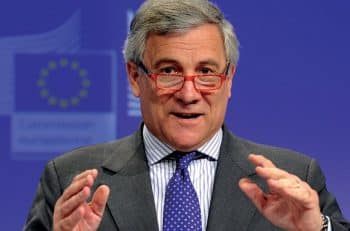
    On 17 January, the European Parliament elected a new President, the Italian MEP Antonio Tajani. The election of Tajani may have gone unnoticed by most citizens in Ireland, however the implications of it could have far reaching consequences for their everyday lives. Tajani, is a member of the European People’s Party (EPP), a group he shares with the four Fine Gael MEPs. This group refers to itself as the centre right. However, in its quest for power it has accepted political parties with extreme right-wing views, including parties like Fidesz from Hungary, the party of Viktor Orban. The new president of the European Parliament, Tajani, is not as extreme as his Fidesz colleagues, but he does hold some conservative views. A founding member of Silvio Berlusconi’s Forza Party, Tajani was once spokesperson for the controversy-ridden Prime Minister. He has been a vocal opponent of reproductive and LGBTI rights. In 1996 he wrote that “the child of a same sex couple is certain to have serious psychological problems and experience major difficulties in being accepted as part of society”. More recently he signed up to the Novae Terrae Pledge. This takes a hard line on abortion and on LGBTI people. On the issues of abortion and euthanasia, it asserts the right to life from conception to natural death. On same-sex marriage, it asserts that “families consist of the union of a man and woman”. It refers to same-sex relationships “as homosexual private affectivity” and claims any comparison between this and families is “insane”. The choice of such a socially conservative man by the EPP for the role of President of the Parliament is deeply concerning. It marks a further shift to the right for this, the largest group in the Parliament. The election of Tajani also saw the end of the grand coalition between the ‘Socialist and Democrats’ group, the second largest in the Parliament, and the EPP. A dispute on who would take over the role of President of the Parliament led to this split. To secure his election, Tajani and his political group struck a deal with Guy Verhofstadt the leader of the ‘Alliance of Liberals and Democrats for Europe’, the fourth largest group in the Parliament. This hitching of the liberals to such a conservative candidate raised many an eyebrow on the corridors of power in Brussels. The deal is being sold as a pro-European coalition to combat the rise in far-right populism. Ironically this so-called pro-European coalition may very well further undermine citizens’ confidence in the European institutions. Tajani is another insider, another establishment man who is very much part of the golden circle of European bureaucrats. His election, like those before him, was secured in a secret backroom deal. This is the type of deal that gives the EU its bad reputation. The contents of the deal will also do little to comfort citizens. This so called ‘pro-European’ deal is about federalism, it is about creating the basis for a united states of Europe. It wants to see more economic governance at EU level, a move that only one in five citizens actually supports. The deal envisions a European defence union incorporating an EU coastguard and an EU army. Both these political groups are supportive of the call for Member States to increase defence spending to 2% of GDP, a large proportion of which would have to be spent on the arms industry. Ireland currently spends less than 0.6% and an increase of such magnitude would have to come from cuts to spending on other public services such as health and education. EU Barometer polls show that citizens see social inequality and unemployment as the priority for the EU. Despite this, the pro-European deal calls for more international trade deals. These trade deals have been shown to diminish workers’ pay and conditions and to undermine employment. If there is anything positive to be taken from the election of Tajani it is that it may finally bring about a left/right realignment in the Parliament. It is rumoured that many of the more progressive members of the Socialists and Democrats group are secretly relieved at the break-up of the grand coalition. Across Europe they have been leaking votes and many have put this down to their failure to act asa voice of real opposition to the EU’s policies of austerity. These people have already made contact with my political group, the ‘European United Left – Nordic Green Left (GUE/NGL)’, and with the ‘Greens – European Free Alliance group’ to see if we can forge a progressive left-wing voting bloc. It is only through such a bloc that a coherent approach can be taken to tackling the right-wing economic and social policies of the new President, and to stem the rise of fascism. By Lynn Boylan

    Loading

    Read more