International

Random entry RSS

  • Posted in:

    CETA flouts democracy

    One year on from the UN Summit to agree the Sustainable Development Goals, and approaching the first anniversary of the Paris Agreement on Climate Change there are worrying signs that the consensus to ‘leave no one behind’ was no more than a shallow aspiration. The industry in measurement of the goals has intensified. There is the opportunity to develop metrics for 17 goals and 169 targets. Whilst the NGOs and the social scientists argue about the fine detail of how to measure progress, a significant violation of EU law is about to happen that will have a chilling effect on these global agreements. The EU has decided to provisionally apply the Canadian European Trade Agreement (CETA). It has done so despite overwhelming legal opinion that this would be in contravention of the EU’s founding treaties. The Agreement is not a ‘trade’ deal in the ordinary sense of the word. The scope of the deal extends far beyond trade into many areas of investment and hence, in the eyes of the law, is a ‘mixed deal’. As such it needs to be ratified by every national parliament before being applied. However, the EU decision means that it comes into force in its entirety as soon as it is signed. The most controversial element of CETA is inclusion of an Investor State Dispute Settlement (ISDS) system. This mandates investor courts which sit outside the regular national legal system, but have the ability to sue governments for actions which undermine the rights of investors. If a government moves to change policy to prioritise issues such as public health, social cohesion, or environmental sustainability over the financial profit of investors, it can and will be sued. ISDS courts exist already. They have grown exponentially in the past decade to over 600 in 2014 as bilateral trade deals have expanded. Once CETA is provisionally applied, it is anticipated that a raft of new cases will be lodged. Even if countries defy the European Commission and if CETA, as expected, is legally challenged and struck down in the Spring of 2018, corporations will still have three years to sue governments. If national and international policy frameworks were heading in a shared trajectory of social cohesion, economic prosperity and environmental sustainability, ‘copper fastening’ them into such trade and investment deals would be just about palatable. The logic of handing over huge swathes of policy to unelected and unaccountable entities could still be questioned, but there could be some merit to copperfastening good policies and suing those in violation. The problem is that any such shared trajectory is far from the current reality. CETA, and similar deals, modelled on CETA, pose a serious threat to democracy and stability globally. They will do nothing to help address major global challenges such as climate change, which requires a pro-active choice to end the fossil fuel era and shift to a zero-carbon future. They will undermine efforts to address significant public health problems as science develops, such as our over dependency on antibiotics. If CETA had been signed in the 1990s, it is highly unlikely we would have smoking bans or plastic bag taxes. Governments would have been sued to prevent them. The Sustainable Development Goals and the Paris Agreement require transformative action. Current frameworks, based on the assumption of ever-increasing trade in resources on a finite planet, are deeply flawed. Addressing climate change requires policy choices to prioritise certain forms of activity not on the basis of profit alone, but on the basis of their social and environmental good. Such choices are anathema to the provisions of CETA and its like. CETA will inevitably lead to governmental reluctance to pursue such progressive policies, for fear of being sued. Bold ideas are now needed that require radically new policy frameworks, not the chilling effect of CETA. The German population recognised this threat to democracy and over a million people took to the streets in Berlin to protest against CETA and its ‘sister’ TTIP, in mid-September. In Ireland, despite the fact that our government has endorsed the proposal, there has been no public outcry. Despite the efforts of a number of NGOs and concerned citizens, very few people are even aware that this is happening. The poorest people will suffer the most with this next generation of trade and investment. Most EU countries have already put in place significant public health and environmental frameworks. Developing countries, on the other hand, may now be further pushed to retain low standards rather than raising them. CETA moves sustainable development and curtailing climate change ever further down the agenda. Lorna Gold is Head of Policy & Advocacy with Trocaire

    Loading

    Read more

  • Posted in:

    Irexit

    We should leave the EU because we are net contributors to the EU, we are dependent on UK trade and to avoid having an external EU border

    Loading

    Read more

  • Posted in:

    Oxford, Britian

    Though it has produced nearly all modern Prime Ministers and is solidly pro-EU, this elitist university town antagonises the UK more than it defines it.

    Loading

    Read more

  • Posted in:

    When shall we three meet again?

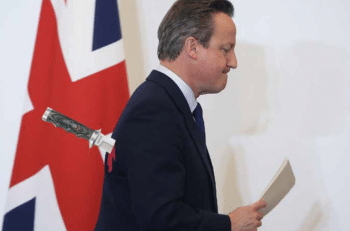
    This is a saga of sadness, a tragic tale of three ‘whiches’, a fairy ‘which’, a whichsoever ‘which’ and a wicked ‘which’. In initiating each of three referendums, David Cameron said, “You have a choice, ‘this’ or ‘that’, which do you want?”. So all three ballots were binary, and while the first two delivered what he wanted, the last one was, in effect, political suicide. All three outcomes were inaccurate reflections of ‘the will of the people’. Let’s have a look, and then let’s consider a better methodology. 2011 Referendum on the Electoral System After the 2010 general election, the UK had a coalition government: Cameron’s Conservative Party (Tories) and the Liberal-Democrats. And he probably thought to himself, “How can I rid myself of the Lib-Dems’ persistent pursuit of proportional representation, PR?” Hence the first ‘which’, so to silence any further debate on electoral reform. Some people liked single-seat constituencies, either the UK’s first-past-the-post, FPTP, a plurality vote; or France’s two-round system, trs, a plurality vote followed by a majority vote; both are single preference systems; or again, there is the Australian alternative vote, av, a preference vote which is like a knock-out competition – in a series of plurality votes, the least popular is eliminated after each round and his/her votes are transferred to the voters’ second or subsequent preference… until a candidate gets 50%. Meanwhile, many wanted PR in multi-member constituencies. There is the German half FPTP and half PR-list system called multi-member proportional, mmp. There is PR-list – in Israel, you vote for a party; in the Netherlands, for a candidate of one party; in Belgium, for one or more candidates of one party; and in Switzerland, for those of more than one party. Or there’s the Irish PR-single transferable vote, PR-STV, where voters can vote cross-party in order of preference; STV is like AV except that success depends on (not a majority but) just a quota of votes. Overall, then, the choice was huge. But Cameron’s 1st preference was FPTP and his 2nd av. So that was the 2011 referendum, the first ‘which’: “FPTP or AV, which do you want?” For countless (and uncounted) supporters of pr, this was like asking vegetarians, ‘Beef or lamb?’. Now maybe FPTP was the most popular but, based on data from just a two-option poll, impossible to say. For Cameron, however, it was a dream: he chose the question, and the question determined the answer, just as any fairy godmother would have wished: a massive 67.9 to 32.1%. Magic. Furthermore, the Electoral Commission said the question was fair. Amazing. The Ombudsman agreed. Incredible. And many thought this was all democratic. So that was the end of that argument. So why not a second fantasia, another referendum? Scotland 2014 “Double, double, toil and trouble”, said the witches in Macbeth. The Scottish Nationalist Party, (SNP), always on about independence. How can I rid myself of these skittish Scots? This was Cameron’s second problem, and so, as if on a broomstick from the darkest recesses of Westminster, the second ‘which’ enters the political stage. There were three options: (a) the status quo, (b) maximum devolution or ‘devo-max’ as it was called, and (c) independence. Thinking that (a) would easily beat (c) in a two-option contest, just as FPTP had wiped out av, Cameron waved his wizard’s wand and demanded a binary ballot. So the second ‘which’ was again dichotomous: “(a) or (c), which do you want?” In the campaign itself, however, the gremlins were grumbling, option (c) was gaining ground. Cameron twitched; no – panicked: and so, as if at the witches’ coven, a vow was made – zap! – and option (a) morphed into option (b). On the ballot paper, however, there was no switch, the ‘which’ was still “(a) or (c)?” So the result was a stich-up: 55.3% and 44.7% respectively were highly in ated levels of support for (a) and/or (c). Furthermore, the winner was (b)… but no-one had voted for it! For Cameron, though the potion was fading, the plebiscite was still successful, and that was the (very temporary) end of that argument too. We return to the diviners’ den. The EU Referendum Believing as it does in majority voting, the Tory Party (and many another) is a beast of two wings and no body. Little wonder that this weird creature is often in a ap, especially over Europe. “Those cursed Europhobes”, he might have muttered. And then, stage extreme right, another scary monster, the UK Independence Party, Ukip. “Oh how can I rid myself of these damned devils?” Ah-ha, the third… but this was the wicked ‘which’. The wrong side won. The Electoral Commission’s semantic change from ‘yes-or-no?’ or ‘in-or-out?’ to ‘remain-or-leave?’ did not change the poisonous potent of the poll, its binary bind, its divisive ‘positive-or-negative’ nature. The question – “Which do you want?” – was again adversarial. The campaign was horrible. And the result? 48.1% chose ‘remain’ to 51.9% ‘leave’. But nobody knows what the latter actually want! To suggest, then, that this outcome is ‘the will of the people’ is, again, bunkum. Meanwhile, politically, Cameron is dead, impaled on his own petard; in a word, ‘bewhiched’. Democratic Theory and Practice So what should have happened? Well, consider first a hypothetical example. The average age of the electorate cannot be identified by a majority vote. If such a piece of research were to be attempted, the question would probably be, “Are you young or old?” In which case, no matter what the answer and by what percentage, it would be wrong! If, however, the question were multi-optional, ‘Are you in your twenties, thirties, forties, etc.?’ the answer could be pretty accurate. With average age or collective opinion, as in a German constructive vote of con dence, voters should be positive. No-one should vote ‘no’ or ‘out’ or ‘leave’; instead, everyone should be in favour of something: for the UK to be in the EU, or like Norway in the EEA, or like Switzerland in a looser

    Loading

    Read more