International

Random entry RSS

  • Posted in:

    Careful with that private finance.

    By Lorna Gold. It was the vision of Garret FitzGerald, as Minister for Foreign Affairs, which led to the establishment of an official Irish aid programme for Africa and the developing world 40 years ago, in the early years of our membership of the EEC. For a generation it generally increased – until this recession. 2014 was the first time in six years that there was no reduction at all in Ireland’s Overseas Development Aid (ODA). This year the budget will be €600m, 80% of it to be spent in sub-Saharan Africa. 20% of the overall budget goes on fighting hunger. In 2014 Ireland also spent €68 million on humanitarian support to crises, especially in West Africa, Syria, South Sudan; and ebola-ravaged Sierra Leone. Although, worldwide, extreme poverty has been cut in half since 1990 and 17,000 fewer children die each day, one in nine people remains hungry. Recently a voguish blending of public and private finance has become a key trend in international development and its aid. A side effect of the global financial crisis – as the availability of, and ideological commitment to, the provision of international public finance has decreased – is dramatic growth in the portion of aid being delivered via private or semi-private profit-making entities. Official Development Aid (ODA) now makes up only 27% of financial flows to developing countries (down from 44% in 2008). Private finance now make up 65% of external resources going to developing countries, worldwide. In practice formerly ‘like-minded’ donors, mainly the Nordic countries, have been moving away from the principles of poverty-focused aid. These countries have gradually gone in a pro-business direction for aid systems and delivery. Ireland, until now, has bucked this trend with an exemplary focus on the very poorest. The recent OECD Development Assistance Committee (DAC) Peer Review of Irish Aid commends the country on its high-quality, poverty-focused, 100% grant-based aid programme. However, Development minister, Seán Sherlock, says the focus of the programme is on “inclusive economic growth”.  Perhaps reflecting the focus on economy, there are escalating pressures on Irish Aid, from within Government and externally, to modify its attitude to the private sector, and to engage the private sector more pro-actively in the development aid effort. In the space of a few years we have seen the publication of the Africa Strategy by the Government and the rollout of a new approach to the engagement of Irish business in Africa. The trade promotion portfolio has been shifted into the Department of Foreign Affairs and this is now strongly reflected in the new foreign policy statement. The Minister of State for International Development and Human Rights has become the Minister for ‘International Development and Trade’. There are potential merits in the combining of these portfolios, particularly when it comes to promoting integration of policy. However, the DAC Peer Review finds the approach deficient. It specifically points to the dangers of an unclarified focus on ‘synergies’  when there may be policy conflicts. If it is accepted that the trend of private engagement in international development will continue, then it is critical that there is an overriding ‘do no harm’ policy. A key test is what role will be afforded business entities in the realisation of human rights. The consultation on a National Action Plan (NAP) for Ireland on the implementation of the Ruggie Principles on Business and Human Rights (a UN Framework) was launched at last year’s NGO Human Rights Forum. The Human Rights Unit of the Department of Foreign Affairs is leading this and has started consultations. The NAP, if it is to meaningful and effective, needs to address a broad range of policies relating to business and human rights focusing on Government as a whole, not isolated departments. Trócaire’s submission to the NAP sets out seventeen measures which need to be taken for the NAP to be comprehensive and in line with international best practice (www.trocaire.org). It needs, for example, to embed the principle of ‘extra-territoriality’, giving the state the power to protect against human rights abuses committed by their companies abroad. Furthermore, building on the incipient reality of a state-business nexus, the Government needs to focus on those businesses where it has most influence. Companies that are looking to get stuck into our foreign, trade and particularly our overseas-aid policy provide a good initial focus for the implementation of the NAP. As the UN framework says, “The closer a business enterprise is to the State…The stronger the State’s policy rationale becomes for ensuring that the enterprise respects human rights”. Human-rights due-diligence procedures should be required within these companies – if we are to stay focused on the end, rather than the means. • Lorna Gold is Head of Policy and Advocacy for Trócaire.

    Loading

    Read more

  • Posted in:

    Syriza seizes a moment for Europe.

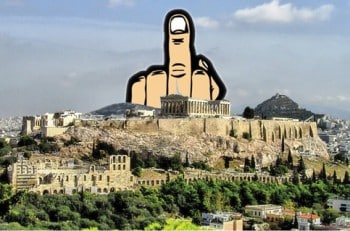
    By Michael Smith. Newly elected Syriza has told voters it will end the era of austerity in Greece (and beyond). It has pledged to stop what its 40-year-old leader, Alexis Tsipras, has called the “fiscal waterboarding” policies that have turned Greece into a debt colony. It is the first time in more than 40 years that neither New Democracy nor the Pasok socialist party will be in power and Syriza has a mandate for fresh and feel-good policies, including tax cuts, a public-sector hiring spree, and a slashing of Greece’s debt, which stands at an unpayable 170% of GDP. It will govern in coalition with the right-wing Independent Greeks which shares little with it politically except a determination to repudiate the debt and end Greece’s status as a “laboratory animal” for austerty. Greek voters remain outraged that GDP has shrunk by almost 20% since 2010 and that unemployment is still as high as 26%. The social safety net that was perhaps the biggest achievement of the post-1974 democratic era was the by-product of the prosperity spurred by EU membership after the junta (1967-74). But it had almost collapsed since the onset of the debt crisis in 2009 and the austerity measures demanded by the EU and International Monetary Fund in return for €245bn in bailouts. Pensions had been reduced by an average of 40 per cent; most unemployment benefits were cut after 12 months; and charges for prescription drugs were up by more than 30 per cent. Many long-term unemployed lost access to the state healthcare service. Middle-class Greeks faced stringent new levies on property, the default investment for them given the nation’s historically high inflation. Cynicism about the squeeze is wide-ranging and high-powered. Economist James Galbraith says: “It is clear that the policies that were specified as a condition were at bottom not recuperative, but punitive in character. Punitive in character against the whole Greek nation, and on an improper principle of collective responsibility for the admitted mismanagement of the affairs of the Greek state by previous governments and by the Greek political class…. If you read Timothy Geithner’s memoir, it’s clear that he was very struck by this attitude [in Germany, particularly articulated by its CDU finance Minister Wolfgang Schauble], which reflected a moralizing indifference to the future of Europe”. Paul Krugman believes that if the troika had been truly realistic, it would have acknowledged it was demanding the impossible. Writing in the New York Times, he declares that: “Two years after the programme began, the IMF looked for historical examples where Greek-type programmes, attempts to pay down debt through austerity without major debt relief or inflation, had been successful. It didn’t find any”. And he entirely sympathises with Syriza’s radical agenda: “If anything, the problem with Syriza’s plans may be that they’re not radical enough. But it’s not clear what more any Greek government can do unless it’s prepared to abandon the euro, and the Greek public isn’t ready for that. Still, in calling for a major change, Tsipras is being far more realistic than officials who want the beatings to continue until morale improves. The rest of Europe should give him a chance to end his country’s nightmare”. Writing in the European press on 23 January Alex Tsipras took a swing for the good guys, albeit a measured one: “Greece changes on January 25th, the day of the election. My party, Syriza, guarantees a new social contract for political stability and economic security…We must end austerity so as not to let fear kill democracy. Unless the forces of progress and democracy change Europe, it will be Marine Le Pen and her far-right allies that change it for us…Austerity is not part of the European treaties; democracy and the principle of popular sovereignty are. If the Greek people entrust us with their votes, implementing our economic programme will not be a “unilateral” act, but a democratic obligation. Is there any logical reason to continue with a prescription that helps the disease metastasize?”. A Syriza advisor recently told the Wall Street Journal the party’s platform is “a Keynesian program with redistribution attached, with some Marxist view of the world”. He added: “We are not ashamed of that”. Syriza seems to have most in common with the parties of the radical left here, even down to nervousness about taxing the family home. Paul Murphy TD of the Anti-Austerity Alliance – speaking breathlessly  from the electoral centre in Athens claimed “the ideological wall saying ‘There Is No Alternative’ to austerity has been decisively breached”. But in fact Tsipras spent his recent visit to Dublin canvassing for Sinn Féin. Modelling themselves on Syriza, which is an alliance of 13 parties, Sinn Féin and People Before Profit are looking to collaborate with unions and other activists, though the Socialist Party is standoffish about Sinn Féin’s leftist credentials, and hostile to its fetishisation of nationalism. What any of them think  of the new Greek government’s indulging of Russia’s breaches of Ukranian sovereignty and the irredentist helicoptor flight of the new Defence Minister over the Turkish islets of Imia, is not yet recorded. In Ireland, perhaps the emphasis for the Left needs to be a little different: to equalise pre-tax wages and impose greater taxes on wealth. This is because taxes on income here are actually quite progressive and we have a much smaller black economy. It is notable too from some of Syriza’s prioritised reforms how much deeper austerity bit in Greece. Many of its ministers are jazz-loving academics, a type not known in this jurisdiction since the heyday of the Labour Party in the 1970s; and they’re going to have some political fun. The estimated total cost of the “Thessaloniki Programme” is €11.4bn, while it proposed to raise a concomitant €12bn in new revenues. If it pulls the Programme off it might become a template all over Europe, including in Ireland. Its first pillar is “social”. The party’s spending priorities are food and electricity subsidies for impoverished households including free electricity

    Loading

    Read more

  • Posted in:

    Environmental and social agenda Juncked.

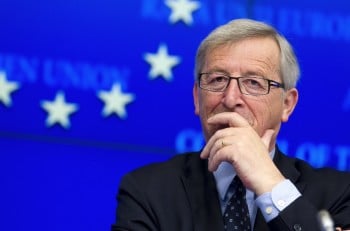
    New commission has learnt nothing from manifest anger in recent elections. By Lynn Boylan So it’s business as usual at the European Commission. At best. Anyone hoping that the European elections would change the eurobureaucrats will be deeply disappointed. Last month Jean-Claude Juncker, the new EU Commission President, having vowed contrition after his role in promoting offshore tax avoidance in his native Luxembourg was exposed by LuxLeaks, outlined his priorities for 2015 in the Commission workplan. It is clear from this that his priorities are to continue to push the anti-environmental and corporate agendas. There isn’t even much sign of his vaunted talent for generating consensus. On January 15th the European Parliament was asked for its opinion on this workplan but failed to reach a common position. I was part of the negotiating team for the GUE/ NGL Group of which Sinn Féin are a member. What became clear very soon in that negotiating room was that the largest group, the European People’s Party of which the four Fine Gael MEPs are members, was not prepared to allow any criticism of Juncker’s workplan. This is despite the criticism that came from many quarters once the content of the workplan first became available. Green NGOs and other civic organisations such as Corporate Europe Observatory, which exposes the power of corporate lobbying in the EU, and Alter EU, an organisation that campaigns for greater transparency on lobbying, were quick to point out flaws and glaring omissions in Juncker’s priorities. His proposals for a lobby register provides one example. It goes nowhere near establishing a mandatory lobby register. In order to have any level of transparency when it comes to lobbying it is essential that any register created is legally binding. Juncker’s proposal will instead continue to allow corporations to ‘play’ the system as it includes no detailed disclosures or sanctions for lobbyists, who are famously influential here, particularly in the earliest stages of the complex Eurolegislative process. According to AlterEU Goldman Sachs, the ‘vampire squid’, one of the largest and best-connected investment banking firms in the world, claimed it spent just €50,000 on lobbying in the EU in 2013. At the same time in the United States where there is a mandatory lobby register with very precise disclosure, the same firm disclosed that it had spent $3.6 million on lobbying activities. Instead of taking the opportunity to deal with the concerns of transparency in how the EU conducts business, Juncker has instead opted for a ‘nothing to see here’ approach. Juncker’s workplan for 2015 confirms that his Commission will, like the Barroso Commission before it, continue to place corporate interests before those of social justice and the environment. For example, Juncker has withdrawn the Maternity Leave Directive which sought to guarantee working women 20 weeks of maternity leave, and protection when they returned to work. One of the intentions of the Commission’s ‘REFIT’ exercise which is withdrawing 80 of the 400 EU legislative proposals currently in train, is to withdraw proposals that do not advance in the legislative process, in order to allow for a fresh start. The Commission claimed that “including this [Maternity Leave] file on the list of withdrawals would open a door for a new beginning, allowing for a more modern directive”. Juncker has also dropped the Air Quality legislation despite evidence showing that 400,000 premature deaths are attributed to air pollution in the EU. In 2013 in Ireland alone, 3,400 deaths were linked to air pollution. He has also dropped the Waste Management Proposals. These proposals sought to improve recycling and the reuse of raw materials and resources. It appears that Juncker’s attitude is that environmental protection is an inconvenience rather than a central priority. He failed to give any of his Commissioners a remit for sustainable development. Instead he chose to merge the energy and climate change portfolios and to appoint the controversial Miguel Arias Canete to this merged portfolio. Canete has openly acknowledged his links to the oil industry and he was also a member of a Spanish Government that had a reactionary record of coal promotion, and a lack of interest in renewable energy. The fact that the European People’s Party in the European Parliament had no criticism whatsoever of Juncker’s workplan speaks volumes of where their interests lie. Every other group that took part in the negotiations to find a joint resolution had one criticism or another. Juncker could have chosen to invest in green jobs and innovation. He could have chosen to put the needs of society before corporations. He could have ensured that working women were given all the protection they require to realise their potential. Instead he opted to continue the EU policy of protecting big business and the interests of the cosy consensus of elites. • Lynn Boylan is Sinn Féin MEP for Dublin

    Loading

    Read more

  • Posted in:

    Germany’s unwavering ambition.

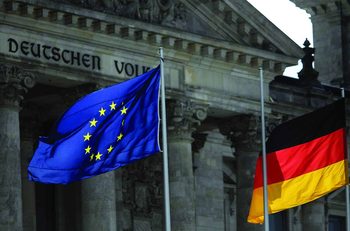
    By Anthony Coughlan. The EU establishes a post-war arena where European Nation State interests continue to work themselves out. Take Germany for instance. That great realist Germany’s own Otto Von Bismarck once said:  “I have always found the word ‘Europe’ on the lips of those powers that wanted something from others which they dared not demand in their own names”. The myth of origin of the European Union is that it is a peace project to prevent wars between Germany and France – as if a collective tendency to go to war were somehow genetically inherited. Historically in fact the EU’s origins lie in war preparations. The first step towards supranational economic integration in Europe, the European Coal and Steel Community of 1951, was to facilitate German rearmament at the start of the Cold War between the USA and its allies on one side and the USSR and its allies on the other, and to reconcile France to that fact. The USA wanted a rearmed West Germany inside NATO on its foundation in 1949. This greatly alarmed France, which had been occupied by Germany just five years before. Jean Monnet was America’s man in the affair. To assuage French fears of German rearmament Monnet drafted the Schuman Declaration proposing to put the coal and steel industries of France, Germany and Benelux under a supranational High Authority as “the first step in the federation of Europe”. The EU celebrates the anniversary of this Declaration each year as “Europe Day”. In his memoirs French President Charles de Gaulle characterised the ambitions of the first President of the  European Commission, Walter Hallstein, for Germany and the then European Community as follows: “ I think that if in his own way  Hallstein is a sincere ‘European’, this is only because he is first of all an ambitious German. For the Europe that he would like to see would contain a framework within which his country could find once again and without cost the respectability and equality of rights that Hitler’s frenzy and defeat caused it to lose; then acquire the overwhelming weight that will follow from its economic capacity; and, finally, achieve a situation in which its quarrels concerning its boundaries and its unification will be assumed by a powerful coalition”. Forty years later a major shift in Franco-German power, Germany’s reunification in 1991 as a side-effect of the collapse of the USSR, led the two countries to establish the European Economic and Monetary Union and its single currency, the euro. The increase in Germany’s size and population consequent on its reunification greatly alarmed France. But France possessed nuclear weapons, which the reunification treaties debar Germany from having. The deal between the two of them, set out in the 1992 Maastricht Treaty, was EU Monetary Union for Political Union or, put crudely, the Deutschmark for the Euro-bomb! Germany would give up its national currency, the symbol of its post-war economic achievement, and share the running of a new supranational EU currency with France, while France agreed to work jointly with Germany towards a supranational EU political union with its own common foreign, security and defence policy, and in time a common EU army. This would give Germany a central role in running a potential EU world power, with its finger eventually on a European nuclear trigger. France in turn hoped the euro would give it a political lock on Germany. A Franco-German army brigade, with joint officers and a joint command, was established simultaneously as symbol and prototype of the EU army of the future. France and Germany are often said to share a common interest in being joint motors of the EU integration “project”. As Charles De Gaulle once remarked: “Europe is France and Germany. The rest is just the trimmings”. But Chancellor Helmut Kohl, who pushed through the euro in face of a reluctant German public opinion, was less bifocal: “The future will belong to the Germans when we have built the House of Europe. In the next two years we will make the process of European integration irreversible. This is a really big battle, but it is worth the fight”. Germany’s post-war political elite saw economic success as the way back to great powerdom. The Eurozone allows Germany free rein to pursue a mercantilist strategy of seeking export domination (“Export Weltmeister Deutschland”) by enjoying a significantly lower currency exchange rate with the euro than it could enjoy on its own were it to retain the Deutschemark. This is a consequence of the internal imbalances within the Eurozone whereby Germany, with its persistent trade surpluses, can avoid an upward currency revaluation and thus enjoy a stimulus to its export economy, while countries like Italy, Spain and France, with persistent trade deficits, cannot enjoy a downward currency devaluation and are thus condemned to permanent economic stagnation domestically. This grounds the Eurozone austerity regime we now live under. In 2009 inflation-obsessed Germany amended its Constitution to adopt a balanced budget regime forbidding the Federal Government from running a structural deficit – that is, a surplus of government spending over government revenue leaving aside the cost of national debt service – of more than 0.35% of GDP in any year.  Chancellor Merkel then pushed the Stability Treaty embodying a similar rule on the rest of the Eurozone.  Irish voters adopted this by constitutional referendum in 2012. The Stability Treaty is a constitutional ban on Keynesian-style deficit budgeting by EU governments. It means that Ireland and the other Eurozone States are legally bound to balance their budgets or run budget surpluses each year. It ordains that the maximum underlying gap between public revenue and public spending, excluding debt interest, which a national Government can have in any one year is 0.5% of GDP if its total debt is over 60% of GDP. Ireland’s national debt is currently double that. The treaty requires national debts of over 60% of GDP to be reduced by one twentieth of the excess each year. On 1 November this year

    Loading

    Read more

  • Posted in:

    EU’s Roman values.

    By Niall Crowley. Sandro Gozi, Secretary of State for European Policies in Italy, caught the spirit of it. On behalf of the Italian Presidency of the European Council he spoke of a lost decade where the main reason for establishing the European Union: the advancing of fundamental values such as equality and human rights, was forgotten. He called for a return to these guiding values. Salla Saastamoinen, Director of Equality at the EU’s Justice Directorate was equally upbeat and more practical. She confirmed the European Commission’s commitment to prioritise unblocking of the proposed EU Equal Treatment Directive. She stated that the Commission would establish a new High Level Group on Non-Discrimination, Equality and Diversity to be operational in 2015. This new energy for equality at European level was evident at a recent high-level event organised by the Italian Presidency and the European Commission. Our own Aodhán O’Ríordáin, Minister of State at the Department of Justice and Equality, was an enthusiastic and articulate participant. He was one of the first signatories of the ‘Declaration of Rome’. The declaration commits the signatories to an impressive range of actions to advance equality and non-discrimination. The challenge is to make sure the declaration is signed by a significant number of Member States and to ensure that it is implemented by those who sign it. The declaration is ambitious in its commitment to ‘mainstreaming’. This involves taking account of the situation of groups experiencing inequality when Government is developing new policies, plans and programmes. Mainstreaming aims to ensure the effectiveness of such policies, plans and programmes for these groups. It is a powerful tool for equality that has yet to be implemented to any adequate extent in Ireland or elsewhere. The declaration commits signatories to: “Mainstream and promote the principle of equality and non-discrimination for all groups at risk of discrimination across relevant government departments so that these concerns are integrated into all policy-making and policy-implementation, establishing, if appropriate, structures for this task and providing training and other support, as necessary, on human rights and equality-related issues, to develop mainstreaming capabilities within the civil service”. The Minister has a useful starting point for giving expression to this commitment. The Irish Human Rights and Equality Commission Act 2014 includes a requirement on public bodies to have regard to equality and human rights in carrying out their functions. Public bodies are required to make an assessment of equality and human rights issues of relevance to their functions in their strategic plans and to set out policies, plans and actions already in place or to be put in place to address these issues. The Minister and his department need to champion this legal requirement across all government departments. The Department of Justice and Equality should emerge as an enthusiastic exemplar in implementing this public-sector duty. The Minister needs to ensure that a standard is set in the public sector for an ambitious and effective implementation of the public-sector duty, and that necessary supports for achieving this standard are put in place across the public sector, if the commitment made in the declaration is to resonate. The signatories to the declaration welcomed “the establishment of a High-Level Group on Non-Discrimination, Equality and Diversity by the European Commission” and committed to “support the development of common objectives for equality and non-discrimination to guide and focus the work of this Group”. Common objectives established at a European level for equality and non-discrimination could be a valuable driver for progress on these issues. They must be wide-ranging enough to embrace the full spectrum of groups covered by equal treatment legislation. They must be ambitious enough to advance progress on advancing equality for these groups. We need new forms of co-operation at European level for equality and non-discrimination. Ireland should emerge as an imaginative leader co-operative challenging of the European Union to reconnect with its fundamental values of equality and human rights. •

    Loading

    Read more