Multinational States to break up into national ones.
by admin
Multinational States to break up into national ones.
by admin
Are Clooney and wife losing touch?
by admin
In Greece the backlash finds concrete form
Posted in:
by admin
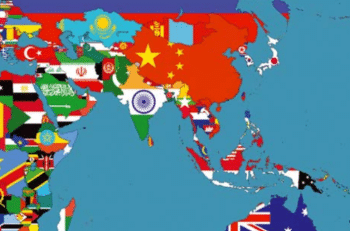
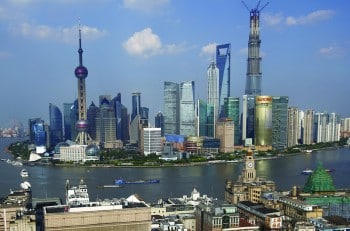
By Peter Emerson. Nineteen eighty-five: Mikhail Gorbachev; the start of the end of Soviet communism. Those were exciting times. The collapse of the Berlin wall, the first Russian elections, the quests for Georgian/Lithuanian independence, and so on. Life was changing, fast. And even those who opposed such changes, like those of the Albanian regime, with their sealed borders of barbed wire and a ‘no-man’s land’ of mines, could not prevent the winds of change blustering into Tirana as well. There was no stopping a movement whose time had comprehensively come. Exciting, and dangerous. The first inter-ethnic conflict was in 1988, in Nagorno-Karabakh. This was followed by more wars, in Georgia – Abhazia and South Ossetia – in Moldova, Tajikistan, throughout Yugoslavia, and the problems rumble on, now in Ukraine. For many non-Russians, then, the excitement ended in misery; while in Russia itself, there was first economic collapse, and then the rise of authoritarianism under Vladimir Putin. 1978; Dèng Xioǎping; China; the embrace of capitalism and global markets leading to galloping economic growth and then came the internal party disputes, the first against the rightists, some versus the revisionists, and the last against the leftists, the Gang of Four. Exciting and dangerous times now from Táiwān in the East to Xīnjiāng in the West and even Hong Kong – as well as many socio-economic and environmental problems. There is talk of democracy, socialism etc., with “Chinese characteristics.” Well, what might they be? One clue lies in the language which is dichotomous. One sentence could be: you can/cannot speak Chinese? – nǐ huìbùhuì? Another might read, Ireland is very beautiful, yes or no? – duìbùduì? Furthermore, the history of the Chinese Communist Party is riddled with binary struggles, initially against the perceived minority of landowners and kulaks (slightly better-off peasants). In fact, early communist policies were often based on a majoritarian ethos; and many, in the villages, were sent to their deaths by majority vote. Is it wise, then, for westerners to argue for a majoritarian democracy in complex territories? And socialism? Well, there’s not much of that either, not yet anyway. During the course of the last century, the influences from Moscow on the politics of China have been enormous. The lessons from the collapse of the Soviet Union have already been learnt in Beijing. If China is to have its dream, it will indeed be exciting; but first things first, it must suppress the danger. The Socio-political questions China (Zhōngguó, the Middle Kingdom) – the People’s Republic of China – is a one-party state of over 1.3 billion mainly Hàn people. It is also home to 55 recognised minorities, some of which, like the Hakka (Kèjiā), are quite large by Irish standards – there are 80 million of these. Another is the ‘Muslim’ community, although Buddhists and other religious groups are not classified in this way. Some minorities, as in Tibet (Xīzàng), have their own language and a very strong sense of identity, even if many Tibetans live in neighbouring provinces like Qīnghǎi and Sìchuān. Meanwhile, the Uyghers (Wéiwú’ěr) in Xinjiang share their province with others – Kazakhs and Tajiks, for example, not to mention lots of Han, many recently arrived. Han settlement programmes have also been underway in Tibet and Inner Mongolia (Nèi Měnggǔ). Problems, then, abound. Taiwan – the Republic of China, to give it its official name – is a multi-party democracy. Initially, the Kuomintang (KMT – Nationalist Party) fought for a one-party state, first on the mainland, and then, after 1949, on the island. In the 1990s, it adopted a more western structure – i.e., one based on the two-option majority vote – and so, like Britain, Ireland, the United States, etc., Taiwanese society has also divided into two main blocks: the blue, the KMT and allies; and the green, the opposition. Furthermore, there is talk of a constitutional referendum on the question of independence, and all too little awareness of how this might affect mainland China: Xinjiang, for example. Then there’s Hong Kong (Xiāng Gǎng – Fragrant Harbour). Under British rule, the locals got second-hand double-decker buses, left-hand drive, a reputation for plastic, no cycle lanes and no democracy. Only when the colony had to be handed back did the British suddenly get terribly concerned about governance. Hence, the present arrangement, which is binding for just 50 years: one country, two systems. Hong Kong has elections but, at the moment, candidates for the top post are first vetted by Beijing. The 50-day protest blockades and tents have now been cleared; these somewhat disparate groups of students and others can nevertheless rest assured that their mainly peaceful demonstrations have definitely had an impact. The mistakes of 25 years ago in Tiānānmén Square transcend. The Socio-economic questions China operates a draconian regime for consumers. In Tiānjīn, for example, only some car owners can drive on certain weekdays, depending on their cars’ registration numbers, but all of them can drive on Sundays – which means the day of rest is one of frustrating traffic jams. The basis of the policy, however, is absolutely sound: if the city’s population is to be able to breathe, there have to be limits as to how much pollution each individual can cause. It is a question of human rights. Similarly – despite the many, horrific stories which relate to its implementation – the basic idea of a one-child policy is sound. If the human and other species are to survive, there have to be limits. And China is actually trying to restrict the otherwise Malthusian growth of its urban Han population. Here too, then, the problems are huge. Every year, millions of people migrate from the countryside to the city; Chóngqìng, for example, has an annual increase in its population, the size of all of Belfast’s. The city is the basic administrative unit, and it is large; towns are few; and just beyond the urban boundaries is an endless scattering of villages, all under the authority of the city. The urban
Posted in:
by Village
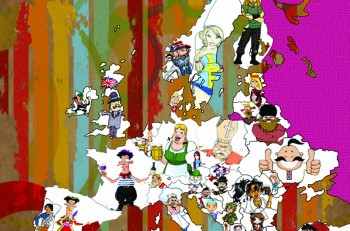
Book review Don’t Mention the Wars: a Journey through European Stereotypes Tony Connelly New Island Press €19.99. By Ronán Lynch. In late October, a Ryanair flight from Kraków to Dublin was delayed by fog, prompting an adventurous Irishman booked on the flight to take to social media to complain. After taking his children to the death camp in Auschwitz on an educational weekend, he was raging at being stuck at Kraków airport, and wrote that he and the other passengers had been crammed ‘like cattle’ into the departure lounge. Such fantastic lack of awareness and reflection is fertile ground for writers and a decade in Europe convinced RTÉ’s Tony Connelly that there was comedy gold to be mined by trawling through intra-European misunderstanding and conflict. The foreign correspondent is the professional version of the innocent abroad and has produced some gems of 20th century literature, notably Evelyn Waugh’s ‘Scoop’, based on Waugh’s own experience of covering the Italian invasion of Abyssinia in the 1930s. Covering the war for the Daily Mail, Waugh scooped a story and sent it back in Latin for secrecy. The editors thought it was gibberish and binned it. Connelly’s book does not suffer from over-sophistication. In 2009, to mark the 20th anniversary of the fall of the Berlin Wall, Connelly travelled by train through central Europe, stopping off in Germany, Poland, the Czech Republic and Hungary, and that journey appears to have given him the idea for this book. Perhaps that’s why the book sometimes has the air of a 1990s ‘Let’s Go Europe’ minus the hotel tips and exchange rates. Connelly had also visited Denmark, Sweden, Finland, France, Spain and Italy, and these countries attract the rest of his focus. The formula is straightforward: Connelly spends a couple of days talking to expats to see how their initial impressions changed after spending some time living in the adopted country, follows that with some historical background, and then wraps up with some more amusing anecdotes. So, a chapter on the Czech Republic starts in breweries, is followed by a bit of history, and then moves to a Semtex factory. Unless you’re an explosives expert, you won’t be aware that plastic explosives are a Czech invention, but do they say something about the Czech character? Is the Czech Republic synonymous with beer? The Germans and the Polish would argue with that. That’s the problem with writing about stereotypes: to undercut them requires – at the very least – sharply observed and insightful anecdotes, or reflection on the deep cultural and social mores of a country. It’s hard enough to work up the stereotypes in the few days allocated, but whatever energy was expended seems to have left none for some serious insight into any of the cultures, as evidenced by Connelly’s visit to Scandinavia. Connelly spends a few weeks travelling at low speed through Denmark, Sweden and Finland and it may take readers just as long to get through the sleep-inducing 80-plus pages devoted to the Scandinavian countries. Other bits stay in that should have gone. In France he visits a vineyard run on biodynamic principles which is inaccurately simplified as ‘organic plus’ and even ‘homeopathy’, suggesting he just doesn’t care enough about what is on offer. That’s the type of marketing exposure that vineyards simply can’t buy. Glass of homeopathic wine, anyone? Otherwise, Connelly seems quite happy to be in France but that first chapter lays out the Anglocentric bias, and of the more than twenty people interviewed, only six are French. It’s a view of France from an Anglophone journalist drawn from English-speaking sources and English historians. France has borders with seven other lands; it would have been interesting to get a bit of perspective from citizens of those countries. In places like Holland, schoolchildren learn the language of nearby countries, and common languages taught in border areas reduces the banal national stereotyping. How did linguistically diverse Belgium throw up the multiculturalism-reviling Vlaams Blok/Belang? Unfortunately, as it is, the book could be more fairly subtitled ‘A Journey through Anglophone Stereotypes’. Ask Germans and Poles for their impressions of one another and you’ll start getting some fascinating insights into each country. Poles often discuss Germans and Germany (and it’s not pretty) and assume that Germans think badly about Poland in return; they get even more annoyed to find that despite being 90km from Berlin, Poland barely registers with Germans at all. Or take Poland and the Czech Republic. A lot of young Poles gaze longingly over the border at their Slavic neighbours and admire their tolerance, freedom from religious doctrine and liberal laws. In return Czechs mock the agricultural Poles and their clerical ways, but with a bit of provocation, young Czechs might allow that they have serious questions about their own country, and even that theatrical sleigh-of-hand was at work while former leaders under communism dropped out of sight for a time, all the while moving effortlessly into dominance in new businesses. What happened to their industry, and competition? Why was Volkswagen allowed to buy Skoda? How did T-Mobile, Vodafone and O2 end up in control of the telecoms business? These issues and questions seem beyond the grasp of Connelly. The chapter on Italy comes closest to a proper analysis of the bobbling European economy, alleged cause the updating of this book. The Germans may churn out cars but do Berliners really shop in centres built to launder Italian mafia money? Apparently so – but you already know that if you’ve read ‘Gomorrah’, Roberto Saviano’s grim account of the Naples mafia and their effortless acccomodation of globalisation of commodities from cocaine to couture. Is there more than a passing link between the oligarchies of Naples and the march of global capitalism? We never find out, because we’re flying along on the surface rather than stopping to poke around a bit. The book does have a good bibliography, and points readers towards Norman Davies on Poland or Giles Tremlett’s ‘Ghosts of Spain’.
by Village
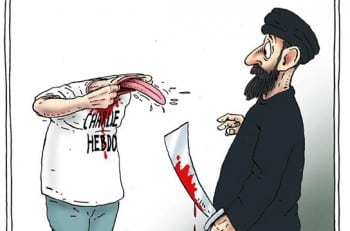
By Mark McGovern After the terrorist attacks that killed 12 people at Charlie Hebdo’s offices, and four innocent people in a kosher supermarket in early January, it suddenly seemed that everyone was Charlie: all the world’s leaders were Charlie, Enda Kenny was Charlie, Israel’s Benjamin Netanyahu, Hungary’s Viktor Orbán and Queen Elizabeth II were Charlie. All the celebrities in Hollywood and George Clooney were Charlie. The French police who had long been savagely caricatured by the satirical newspaper were applauded at the Je Suis Charlie march, and the bells of Notre Dame tolled in homage to France’s most notoriously irreligious newspaper. One organ that was self-consciously not Charlie was Ireland’s Phoenix magazine, whose editor, Paddy Prendeville, actually signed an editorial headed “Je ne suis pas Charlie”. A minimum of humanity as well as a mature politics dictate that, while few want to be totally Charlie, it is quite wrong not to be willing to be seen as Charlie at all. While clearly many Muslims are offended by Charlie Hebdo’s brand of vitriolic satire, it is important to point out that the weekly is not racist, anti-Muslim or anti-Palestinian, but an anti-clerical newspaper in a country where blasphemy had been off the statute books since 1789, which presents left-wing political content in the most outrageous possible manner. This fact is borne out not only by Charlie Hebdo’s commitment to defending the rights of France’s immigrants, many of whom are Muslim, but also by the numerous legal cases that have been filed against it over the last two decades. Since it resumed publication in the 1990s, Charlie Hebdo has been sued 48 times: 12 times by its archenemies in the far-right Front National, eight times by Catholic associations and only six times by Muslim ones. Questioned about the newspaper’s insistence on poking fun at religion, Charlie Hebdo’s new editor Gérard Biard told NBC: “…every time that we draw a cartoon of a prophet, every time we draw a cartoon of God, we defend freedom of religion. We declare that God must not be a political or public figure […] Religion should not be a political argument. If faith, if religious arguments step into the political arena, they become totalitarian arguments. Secularism protects us from this. Secularism guarantees democracy and ensures peace”. While most of the political leaders who attended the 11 January march in Paris would find common ground with Charlie Hebdo’s bid to defend secularism, the same cannot be said for the extreme content of the newspaper’s drawings. Humour does not travel well; and taken out of the context of the newspaper’s politics, jokes about Islamist political parties and Islamic terrorism, blasphemous jokes but jokes nonetheless, can be perceived as racist slurs. Parallels have been drawn with the depictions of Irish peasantry in centuries old Punch cartoons: though there are no grounds to suggest that Charlie was colonialist. Ironically, in many parts of the world where there is no clear distinction between media and government, a publication that appealed to less than one per cent of the French readers is now being seen as the official voice of France: quite a feat for a newspaper that publishes cartoons of some of the country’s most prominent politicians engaging in sexual acts. Worse still, this perception has led to attacks on French cultural centres, death threats to French nationals and even more paradoxically, given the newspaper’s standpoint on religion, to attacks on Christian churches. As it stands, no date has been set for the next issue of Charlie Hebdo. According to the newspaper’s communications manager, the editorial staff who are worn out by mourning and fatigue will need some time before they can produce another newspaper. However, editor Gérard Biard has insisted that publication will continue. In the wake of the brutal massacres in Paris, the 14 January issue of the weekly, which usually has a print run of 50,000, sold seven million copies. This is major change for a newspaper that had no ambitions to enter the mainstream. Added to the difficulty of scrutiny from this new and questioning readership, there is the blaze of attention from the world’s media and the certain knowledge that whatever Charlie Hebdo publishes may be appropriated to generate sectarian conflict, which it does not seek to promote. Now that people are dying in lynchings in Niger, Charlie’s principled stance for absolute freedom of speech along with absolute freedom to present political argument in any manner it sees fit may have to be reconsidered. There is no reason why a cartoon should result in anything worse than a court case, but sadly what pertains in France does not necessarily apply in the rest of the world. And the world is waiting for the next issue of Charlie Hebdo. • Mark McGovern is a journalist and translator living in Paris.
Posted in:
by Village
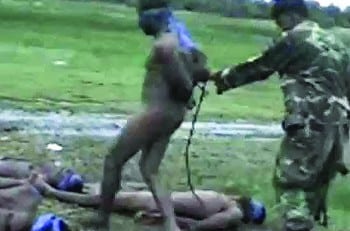
By Frank Connolly. The High Court is about to adjudicate on the constitutionality of the direct-provision system for refugees. This is a story illustrating who the system affects, and how. Ramesh (not his real name) was a respected journalist and talented, acclaimed, poet in Sri Lanka when he was arrested in 2008 on suspicion of having Tamil sympathies. One of his alleged crimes had been to question military authorities about Tamils who had been ‘disappeared’ by the Sri Lankan army. Another was to write about the illegal encroachment and seizure of resource rich Tamil lands by the Colombo government (not unlike the Israeli occupation of Palestinian lands) in north and east Sri Lanka. His detailed and critical analysis of the massive Sethu Canal project in which powerful interests in the US, India and China have combined to develop the massive project with negative environmental, social and economic implications for the Tamil people was banned in Sri Lanka and India. His investigation of the notorious ‘White Van’ abductions by the army led to his own arrest at his home in Colombo in June 2008 and a year of torture. Recently married with a 6 month baby, Ramesh describes to Village what happened: “I was blindfolded and tied and taken in a white van. My father tried to stop them but I pleaded with them not to attack him. They tortured me in the hidden torture camp, Panadagoda, with electric currents on my nipples, in my nostrils and on my penis. They put barbed wire in my anal area. They put petrol in a plastic bag and put my head in it. I was naked. They accused me of being a supporter of the Tamil Tigers, a spy for freedom fighters. They wanted the names of high ranking Sri Lankan army officials who supported the Tamil tigers. They wanted to know how I knew about corruption in army business dealings that I had written about. My eyes were covered. At one stage the soldiers released my blindfold and I had a chance to view the surroundings. I saw the ‘electric crematorium’ run by Sri Lankan army where they burned people and left their clothes, thousands of pieces of clothing, including women’s clothes. After five days of brutal torture and unconscious, they left me in the bush. I was taken into hiding by friends and after some days I travelled to India where I was hospitalised for six months”. It was January 2009 and near the end of the 26-year war in which more than 200,000 people were killed. The conflict began when the Liberation Tigers of Tamil Eelam (LTTE, also known as the Tamil Tigers) sought to create an independent state in the north and east of the island. Between January and May 2009 the Sri Lankan military massacred tens of thousands of people as the Tigers prepared to surrender. “When I was in India I was arrested by the authorities because of my political opinions and activities. They detained me without charge for almost nine months in a camp”, Rasheem recalled. He was released with the help of Irish embassy staff in India and permitted to come to Dublin to act as an interpreter and witness at the People’s Permanent Tribunal of inquiry into the Sri Lankan conflict in January 2010, after which he applied for political asylum. Following a rigorous and demeaning application process he was given refugee status and admitted to the direct-provision system for asylum seekers in 2010. Not before one retired garda assessing his application threatened to have him extradited to Sri Lanka to face subversion charges, and certain death. Unable to work, study, cook their native food or live a normal life, those in direct provision are expected to raise families and maintain a dignified existence on €19 a week. His experience in detention centres in Kilkenny, Waterford and Dublin is a harrowing indictment of how the Irish state treats some of the most vulnerable citizens of the world. His final humiliation was when another asylum seeker, sharing an overcrowded space, urinated on his face as he slept in the Waterford centre. Ramesh recently left the direct provision service and is looking for a job. His mental health has inevitably suffered from years of ill treatment and prolonged separation from his wife and young child. The manner in which he has been treated by the Irish authorities has made matters worse. The inhumane conditions have resulted in recent protests at several of the centres which are invariably in isolated locations miles from the nearest town and run by private commercial concerns with little interest in the quality of life of those in their care. Is it any wonder President Higgins and the media have been refused access to some of these places where hundreds of families are living as unhappy and unwelcome guests of the nation? •