Latest

Random entry RSS

  • Posted in:

    Balance is a foreign land. The media, the BAI and the referendum.

    By Gerard Cunningham. Daniel O’Donnell best showed RTÉ’s literalist interpretation of broadcasting balance in its full absurdity. In an afternoon interview with Ray D’Arcy the Donegal crooner was asked about the referendum, and spoke on the topic for three minutes. As he finished, D’Arcy asked “have we got a stopwatch on that?”, and made a lame joke about the man from Del Monte, before moving on to the next topic. Half an hour later, D’Arcy welcomed David Quinn on air, and read out to him a summary of what Wee Daniel had said, asking for his responses. A clearly unprepared Quinn (“I’m sort of reacting on the hop here”, he began) gave his initial thoughts on air, until he was interrupted by D’Arcy, saying “I have to finish up there, I know it’s rude David but you know the way things are done – three minutes”. And so, in the name of balance, both sides of the debate were given three minutes, but arguments were interrupted in mid sentence. The hashtag #BAIBalance was popular on twitter during the referendum debates: protesting at the artificial balance imposed by RTÉ’s simplistic stopwatch solution.  A lot of the cynicism was unfair to the Broadcasting Authority of Ireland, and the referendum guidelines they apply which derive from section 39 of the Broadcasting Act. The Act requires news and current affairs to be presented “in an objective and impartial manner and without any expression of the broadcaster’s own views”. It does not require that balance be achieved over a single stilted programme, instead allowing that “two or more related broadcasts may be considered as a whole, if the broadcasts are transmitted within a reasonable period of each other”. And if that’s not clear enough, the BAI’s guidelines state clearly that there is “no obligation to automatically ‘balance’ each contribution on an individual programme with an opposing view” and “no requirement to allocate an absolute equality of airtime to referenda interests during coverage of the referenda”.  D’Arcy’s view of ‘the way things are done’ was a distortion. RTÉ is a professional organisation, so doubtless it digested the BAI guidelines. Yet instead of the rounded approach the BAI encourages, advocating a multiplicity of voices reflecting differing strands of opinion, much of the referendum coverage was reduced to simplistic stopwatch speeches. Somewhere, RTÉ lost the plot. So how did we get here? The Referendum Commission (RefCom) exists because of the 1995 McKenna judgment, where Patricia McKenna took the government to court, and established that the State could not fund one side in a referendum debate. Five years later, in Coughlan v Broadcasting Complaints Commission, the courts found that broadcasters had to remain impartial. Anthony Coughlan had no complaint about RTÉ’s conduct in referendum debates, which he monitored, and he accepted that both sides got roughly equal access to the airwaves. However, RTÉ also transmitted party political broadcasts, and since almost all parties were advocating a Yes vote, the result was 40 minutes for Yes and only 10 minutes for No. Add to that legal history the jitters in RTÉ caused by everything from the Fr Reynolds libel case to Brendan O’Connor’s interview with Pantibliss in 2014, and you end up with risk-averse production staff taking the path of least resistance. Meanwhile, coverage of the second referendum on the age of voters for the Presidency was close to non-existent, possibly because RTÉ was unable to find pairs to argue both sides of the question. And for many local stations around the country, even coverage of the contested marriage referendum was difficult, as producers struggled to find speakers for the No side. “I’m not sure what the fix is, I think that the fix is that media organisations simply need to honour the spirit rather than the letter”, says NUJ Irish secretary Seamus Dooley. “It was never intended to be a mechanical exercise”. “Normal rules of balance should have been enough, but I think the Panti thing had them all terrified”. During the campaign, the filter bubble was a constant distortion on Twitter. The bubble, caused by the social media phenomenon of listening only to like-minded friends, amplifies agreement in an echo chamber and downplays dissenting voices, leading observers to overestimate support. Opinion polls were scoured for clues, and when they too agreed with the dominant Yes narrative on Twitter, they were followed by warnings about “Shy No” voters, and reminders of how the gap narrowed in the final days of the divorce referendum, which was carried by less than one vote per ballot box. The fear of an echo chamber effect may even have been a factor in the #HomeToVote campaign, where recent emigrants still registered flew and sailed home to cast their ballots. In the end, it became clear that the echo-chamber effect didn’t really exist, and the bubble reflected reality. Yet the iron adherence to stopwatch debates created a different kind of mirage. Iona Institute director David Quinn acknowledged in an interview with the US Family Research Council sponsored Washington Watch that Iona (“a small organisation, we had a budget of about €180,000 a year”) and the No side generally punched above its weight, with only 12 contributors between Iona and Mothers and Fathers Matter (MAFM) across many debates. The lack of new faces on the No bench became apparent as the debates went on, and may even have played a part in the No campaign’s claims that unseen supporters were being silenced. As an aside, the accounts presented to SIPO, the Standards in Public Office Commission, should make interesting reading. Of a budget of €180,000, it has been estimated, based on published Youtube rates, that Iona spent €70,000 on Youtube pre-roll advertisements, with MAFM spending multiples of that. Iona also sought to make an issue of foreign funding from Atlantic Philanthropies for several groups advocating a Yes vote, but only raised the talking point late in the day, perhaps reluctant to answer questions in return about its own funding. Atlantic gave the Gay and Lesbian

    Loading

    Read more

  • Posted in:

    New Left alliance taking shape.

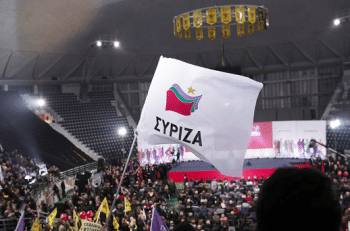
    By Frank Connolly. The prospect of an alliance of left-wing, trade-union and progressive organisations in advance of the general election took a tentative step forward following a meeting hosted by the Communications Workers Union in Dublin on Mayday. A gathering of up to 200 political, trade-union and community activists heard speakers from the Syriza government in Greece and the Spanish social movement, Podemos, describe how they have built a progressive alternative to the traditional conservative and social democratic parties in their respective countries. Syriza activist, Konstantina Tzouvala, explained how Syriza grew from student mobilisations in 2006 and 2007 when the main universities were occupied for over a year and campaigns against the privatisation of water and austerity in more recent years. Since its election the new Syriza-led government has restored the minimum wage, reinstated many public-service positions, ended compulsory HIV testing for drug addicts and sex workers, released immigrants from detention centres and of course, battled its EU partners over debt repayments and bailout terms. In Spain, Podemos, according to Eduardo Maura, has broken the traditional two-party system in place since the death of Franco in the mid-70s and has built on the successes of the Indignados movement in 2011 to build a new force “not left, not right but at the heart of Spanish politics”. While some of those present took exception to his dismissal of traditional political dividing lines he argued that the new movement was seeking to build a social majority and last year secured 1.2 million votes and 5 MEPs in the European Parliament elections. Both speakers eloquently described the crisis of legitimacy in their respective countries and the “kidnapping of democracy” by the corrupt elites – which can only be challenged by a united movement of the people. The Syriza activist who was subjected, arrogantly, to some patronising criticism by some of the purer Leftists in the room about her government’s failure to unilaterally renege on its debts responded that it was a promise that was never made by her party. She accurately identified, and criticised, the tendency of some on the Left to indulge in the “fetishism of small differences” and to behave as the “professionals of disagreement” in remarks that resonated with many of those present. Berlin Water Movement activist, Dorothea Haerlin, also spoke. The meeting included representatives from the four unions involved in the campaign against water charges: the CWU, Mandate, UNITE and the CPSU; as well as from SIPTU, Sinn Féin, the Anti-Austerity Alliance, People Before Profit and other left-wing groups and think tanks. The general secretary of the Irish Congress of Trade Unions, Patricia King, also attended the event which was formally opened by Congress president, John Douglas A number of left-wing independent TDs including Catherine Murphy, Clare Daly, Mick Wallace, Thomas Pringle and Roisin Shorthall were present along with TDs Mary Lou McDonald, Joe Higgins, Ruth Coppinger and Richard Boyd Barrett representing their respective parties. In a powerfully presented analysis, economist Michael Taft argued for an alliance of the Left that could unite progressive parties and independents, unions and community activists and which was based on credible and workable policies. Wealth has to be generated before it is distributed and the provision of decent public services depends on the collection of sufficient and fair taxes to fund them, he argued. Paddy Mackel of the NIPSA trade union spoke about the campaign against water charges and privatisation in the North. Maynooth university lecturer, Rory Hearne, delivered a paper on the political analysis of the Irish water movement, while Stephen Nolan of Trademark addressed the meeting on “Political Economy: Democratising Knowledge”. With over 40% of voters supporting parties and candidates standing on Left policy platforms in 2011, the responsibility of those seeking a progressive government is to develop a platform of economic, fiscal, taxation and social policies which a majority of voters can support and which can survive the forensic scrutiny of the right wing parties and the media. The meeting was presented with a list of ‘Policy Principles for a Progressive Irish Government’ which included proposals on water, health, education, housing, decent work, debt justice and democratic reform. All of those present, who were largely Dublin-based, were asked to consider the document and submit responses and proposals on the policies outlined and any other ideas, before a follow up event in mid-June. The participation of 200 activists of the Left for an afternoon of discussion on the experiences of progressive movements in Greece and Spain and their willingness to engage in detailed discussion on policy proposals which could form the basis for an agreed election charter for progressive parties and candidates is a positive development. Hopefully it will be advanced without “inflating the significance of our differences”. •

    Loading

    Read more

  • Posted in:

    Too big (and weird opes).

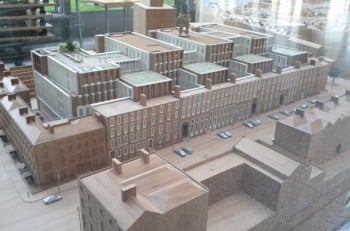
    By Michael Smith. In 2013 the ESB announced its  intention to demolish its Dublin headquarters on Fitzwilliam Street. The edifice had been designed in 1962 by then-fresh-faced young (subsequently Ansbacher-account-holding) architect-tyros Sam Stephenson and Arthur Gibney. The ebullient young pair won the competition to replace the street, which dates from 1792, after a report by eminent English architectural historian Sir John Summerson, who seems to have been an unworldly purist, denounced the historic buildings of Dublin’s Georgian (three-fifths of a) mile and their magnificent interiors as “by Georgian standards rubbish…a sloppy, uneven sequence…one damned building after another”. There was much opposition to the demolition including, creditably from the City Council and its officials, but Stephenson said: “…Georgian buildings are not intended to last more than a lifetime”, and the Minister for the ESB, Erskine Childers, was unmoved. The President of MIT reportedly wept in the street as the ball and chain bore down. As to the replacement, the ESB chairman said it proved that “…architects of the eighteenth century did not have a monopoly on talent, imagination and good taste”. Professor Christine Casey in her book, ‘Dublin’, is surely stretching it when she says that it is “a clever contextual design”. She particularly likes the “ground floor recessed, modestly and elegantly expressed as as alternating panels of brick and glass” and considers that “the counterpoint between the ground and upper floors is particularly effective”. In the end, however, she damns the buildings because “though the design endures, the coloured concrete is shabby”. In any event, the ESB wants to replace this monster with a €150m development doubling the capacity of the existing offices. Architectural critic Shane O’Toole has actually lodged an appeal suggesting the buildings should be retained. The current proposed scheme, designed by Grafton Architects and O’Mahony Pike, did not at first comply with the Dublin City Development Plan which required the Georgian facades of the original 16 buildings to be reinstated. So city councillors voted last March to change the development plan, replacing the requirement to replace facades with one to “reinstate the Georgian rhythm” by dividing the building into five blocks or “fingers” to suggest the width of historic house plots. The proposal was for a scheme that would have been seven storeys high, far taller than the surrounding Georgian houses, but planning conditions reduced the height of two blocks by one floor, and floors linking some blocks were removed. That permission has now been appealed to An Bord Pleanála which will no doubt host an oral hearing on the matter in the summer. Interestingly, subversive appeals have been lodged by Ruadhán MacEoin and Peter Sweetman, the twenty-first century inverse of Stephenson and Gibney, though not by the Irish Georgian Society, which led the 1960s opposition. In its appeal An Taisce emphasised the significance of the site, noting that it forms part of a number of important settings – including for the modernist icon former Bank of Ireland building on Lower Baggot Street, for the Pepper Canister Church terminating Upper Mount Street and for the renowned ‘Georgian Mile’ with its long urban vista towards the Dublin mountains. Furthermore, the site has significant visibility from the adjacent Merrion Square, a prime Georgian city square. The site itself contains numerous protected structures and most of the surrounding streets are lined with protected structures. The primary areas of the site have the Z8 conservation-oriented land-use zoning which is to “protect the existing architectural and civic design character, to allow only for limited expansion consistent with the conservation objective” while the inner part of the site has Z6 enterprise and employment creation zoning. The An Taisce appeal, which is signed by Kevin Duff, considers that the proposed development is seriously at odds with the variation to the City Development Plan, which now governs the site, and which he quotes at length: “The proposed façade to Fitzwilliam Street, with its extensive use of unproportioned, full-height window opes up to the top floor, and double-height window and door opes at ground floor along the mid section of the façade, does not constitute ‘an exceptional urban design and architectural response’ and does not maintain the ‘character and composition of the Georgian streetscape in terms of the solid to void ratio, the rhythm of windows and doors [and] the proportion and scale of the ground floor storey to the upper storeys’ as required by the Variation  and having regard to the consistent, classical design of the area. It is essential that the rhythm of opes and proportions to the street as seen here – which is a particular Dublin characteristic deriving from buildings built in groups – is maintained in any redevelopment of the ESB section of the street. The current proposal fails to achieve this”. An Taisce and other parties have expressed serious concern about the major scale and bulk of the proposed development to the rear of the Georgian streetscape. It states that the proposal steps up excessively to the rear, overdeveloping the highly sensitive Z8-fronted Georgian site and overwhelming the setting of the surrounding four-storey Georgian Protected Structures which dictate the scale and design of the area, and the Conservation Area. It declares that the development as proposed would unbalance the very specific scale of Georgian Dublin, appearing to ‘pile up’ in the south-eastern corner of Merrion Square and in other views, and as such would be contrary to the “limited expansion” allowed for under the Z8 conservation zoning of the site. It is concerned about the overwhelmingly commercial nature of the proposed scheme and the applicant’s failure to meaningfully consider the Fitzwilliam Street frontage for residential use (or live/work use) in the face of the Dublin City Council document ‘The Future of the South Georgian Core’ (2012). An Taisce claims that, following introduction of a levy exemption for residential conversion of Protected Structures, as recommended in the 2012 document, a significant increase has been seen in change of use applications (in part or whole) from office/non-residential use to residential use

    Loading

    Read more

  • Posted in:

    Beades.

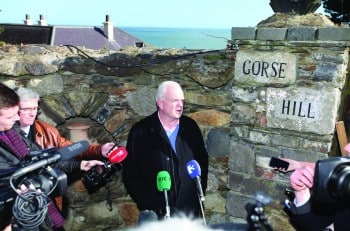
    By Frank Connolly. If you want to know a bit more about New Land League founder, Jerry Beades, just ask Frances Cullen. She was made a widow when she and their three children in Coolock in north Dublin lost her husband, Gerry, three years ago. He died just a few years after he fell, in January 2009, from ‘rotten scaffolding’ and suffered injuries which forced him out of work as a builder’s labourer, and according to his wife, to an early grave. He worked for a construction company owned and run by Jerry Beades which was building apartments at the Richmond Avenue site in Fairview when the accident occurred. He was employed by Mendit Construction Ltd. and/or Jerry Beades Construction Ltd. “Gerry fell 18 feet from the scaffolding. He was brought to James Hospital badly bruised and cut and with a back injury. After that he had constant back pain and couldn’t walk properly. He never worked again and was only 58 when he died suddenly a few years later from a blood clot in his bowel. He was in good health before he fell and needed to be to keep up work as a builder’s labourer”. Another worker, a non-national, also fell from the scaffolding and suffered even more severe injuries. In 2011 Gerry Cullen was awarded €39,150 in compensation for his injuries and loss of work. He died nine months later, in February 2012, without seeing a cent as Beades had failed to comply with the terms of his company’s insurance policy, according to Frances Cullen. In an affidavit to the court, Beades conceded that he had failed to notify the insurance company immediately after the accident, as required under the policy. He unsuccessfully tried to join Quinn Insurances to the action taken by solicitors for Cullen. Cullen’s application for redundancy was also delayed after he failed to obtain any constructive co-operation from his employer, Beades. Cullen managed to secure almost €4,000 in his redundancy entitlements after two appearances at the Employment Appeals Tribunal but never received the almost €40,000 compensation award.  Contacted by Village, Beades blamed everyone but himself, including legal advisors, for the failure to notify his insurance company. His firm had gone into liquidation soon after the accident and he now owes over €9.7m to Bank of Scotland and another €2.5m to Ulster Bank. Frances Cullen insists that her husband had nothing but problems over the years with his boss. “There were always problems with Beades. Gerry was often left waiting for his wages to be paid at the end of the week. When he was injured Beades never got in touch. When we took him to court he sat on the other side of the room and never even acknowledged us. He is not a nice man”, said Frances Cullen. In 2013, summary  judgment was granted against Beades for €3.5m to Ulster Bank. €1.3m had been taken out of an account with the assistance of a bank manager, as a result of “theft”. He says that he intends to bring a claim against the bank arising out of this alleged wrong. Mr Beades further argued he did not accept claims by the bank that a signature on a loan document was his. He also argued that he had taken out the loans with Ulster Bank Ltd, an entity he said no longer exists having been wound up several years ago. He was also pursued by Bank of Scotland for nearly €10m lent for property development. Commercial court judge, Peter Kelly, asked if Beades had received the monies at issue from Bank of Scotland – but received the response “I refuse to answer that question”. Jerry Beades is now the self-appointed leader of the self-styled New Land League and fights for others in difficulty with the banks. Most recently he has been championing the oppressed residents of Gorse Hill, the ‘bog standard’ Killiney mansion occupied by solicitor, Brian O’Donnell and his family in their failed battle against receivers acting for Bank of Ireland. O’Donnell owes over €70m to the bank and Beades has taken up the cause with his followers to highlight the hundreds of other distressed borrowers against whom eviction threats have been made up and down the country. Whatever his band of merry men might think, Jerry Beades is no Michael Davitt, the Mayo man who founded the Land League in the late 19th Century, who was the antithesis of a dodgy builder who does not look after his workers and never accepts blame. Beades was a member of the national executive of Fianna Fáil  when the party under Bertie Ahern was leading the people over the economic cliff. After his own financial collapse he formed ‘Friends of Banking Ireland’ to highlight the lax regulation of the industry, including those to whom he owed millions. He went on to lead the charge against public auctions of repossessed properties and has promoted himself as the latest saviour of the oppressed even though most viewing his recent antics on Vico Road and at the High Court – and how much he seemed to enjoy it all  – might think the opposite. •

    Loading

    Read more

  • Posted in:

    Labour’s weapon: Alan Kelly profiled.

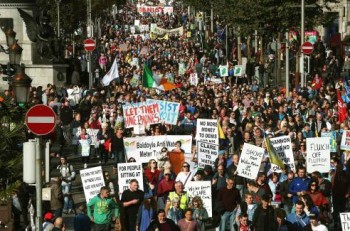
    By Michael Smith. The rating standard for Ireland’s Environment Ministers is never how good they are but how negative their legacy. For aficionados Fine Gael’s Phil Hogan now vies with Fianna Fáil’s builder’s friend Martin Cullen and Labour’s manic gerrymanderer James Tully for the title of worst ever, but all the indications are that Labour’s Alan Kelly is catching up since taking the torch in July 2014. Surprisingly, Fianna Fáil often over compensate for their perceived dodginess on heritage and local government issues and lack of interest in the environment by giving the position to a heavyweight. Labour’s record on the environment is always poor as its most diligent ideologues prefer social or economic ministries. Incumbents tend to be more excited by the local government aspect of the environment brief than the workaday tedium of environmental regulation. That the brief could be a popular vehicle for the engine that is quality of life has never occurred to any minister. Perhaps Fianna Fáil’s Noel Dempsey came closest. Kelly is probably best known as a blow-hard recognised even within his own party as AK47 for his slingshot machismo, the lad who told Mattie McGrath to fuck off in the Dáil. He is allegedly the dynamo who may power the Labour Party out of its crisis-resolving martyrdom, as angry tyro and, soon, as leader. Sometimes Alan can appear almost menacing, though in the context of Labour Party burnout, that passes for a positive. Surprisingly, Kelly, who comes from an old Labour family, has a distinguished academic background and CV. He earned an MPhil from Boston College, and a diploma in leadership and a masters in business studies, he was the founding chair of the Kemmy Branch of Labour in UCC, was Chair of Labour Youth and became an e-business manager for Bord Fáilte before being elected to the Seanad’s agricultural panel in 2007. He impressed many to become MEP for Ireland South in 2009, beating the truculent if declining Spring dynasty’s Arthur, and then scraped in as TD in Tipperary North in 2011, while doubling Labour’s vote. Though Kelly’s chosen rhetorical method is the lisping monotone, his campaigns were slick and well-funded, infused with energy and resources from his high-flying US-politico-PR consultant older brother, Declan (see box on page 29) who donated a total of €7,500 in 2010, personally and through companies. Having been a Senator and MEP, Kelly shimmied up the junior ministerial ladder on his first election as TD in 2011 becoming Minister of State for Public and Commuter Transport  under Leo Varadkar. His specific brief was the 2009 ‘Smarter Travel’ policy which had clear 2020 targets to reduce climate emissions, congestion and pollution, and to increase public transport and cycling use. However, the Interdepartmental Working Group required to provided biennial reports on progress on the Smarter Travel targets was not set up.   Public-transport investment was largely abandoned and Dublin congestion was made worse by the approval of two extra lanes on the M7 Naas to Newbridge. EPA reports show increases in the ratio of diesel cars to petrol increased climate emissions by over 2% in 2013 over 2012 levels, and air pollution now breaches World Health Organisation guidelines, with the measures recommended by the EPA not carried out. For example, Dublin Bus continues to buy polluting vehicles rather that the best available emission-efficient standard. Kelly’s record in Transport made it clear he was no tree-hugger. Last year he swept aside all-comers to become deputy leader of the Labour Party winning 51.5% of the vote in a contest with Michael McCarthy, Ciara Conway and Sean Sherlock. He took charge of the Department of the Environment and Local Government (DoECLG). Kelly’s first act as Minister was to defuse the water crisis. In doing so he deployed formidable guile – making sure to bore his antagonists with repeated obfuscation about ‘timelines’ without any sense of ideology or perspective on the common good: “While the timelines may have been dictated by the Troika, we all accept at this stage that they were simply too ambitious. I fully accept this. While I was not a member of cabinet at the time, it is important that as a Government we acknowledge that errors were made – the timelines, the complex nature of the charging structure and poor communications by Irish Water. Many people are preparing for bills in the region of €800. Nobody will be paying these levels for their water. Let me repeat that, nobody will be paying these levels for their water services”. Alan Kelly would not be the man to explain the ‘polluter pays’ principle that underpins environmental economics, to recalcitrants. In the end of course it was resolved that householders will be liable for charges of €160 for single-adult homes and €260 for all other homes, while water conservation grants of €100 a year mean the effective costs will be €60 and €160 respectively and it has recently been announced that no-one will be jailed for payment default. For good and bad Kelly killed the issue, even if tens of thousands of diehards continue to protest the principle at occasional marches in Dublin. Kelly’s ideology is best summed up in an interview he gave to the Sunday Independent where he noted that Labour was a “party of workers that support people who want to work, people who are unemployed, but want to work’’. He warned that the economic policies of Sinn Féin and the far Left would condemn the unemployed to a lifetime on social welfare. The ideology if it can be called that is entirely compatible with that of Margaret Thatcher’s Conservative party. But the message is delivered pugnaciously by a street-wise 39-year-old with gel in his hair. Kelly and his party wanted the environment brief to forward their priority policy: social housing. In November 2014, Kelly launched the Government’s Social Housing Strategy: 2020, a six-year strategy intended to deliver over 110,000 social housing tenancies through the provision of 35,000 new social housing units, at a cost of €3.8bn,

    Loading

    Read more