Latest

Random entry RSS

  • Posted in:

    Putin puts in the boot. The West and its weakest link here, Germany, face a formidable foe and test. By Eddie Hobbs.

      By Eddie Hobbs   What is Putin’s big Disruption Strategy? To find out I’ve been engaging with geopolitical experts. I don’t dwell here upon the effectiveness of the mounting responses to Putin’s aggression.  He faces a coalition of overlapping opponents: the EU, UK, NATO, USA – many countries and multinational corporations. The military strategy of the West may be to fight Russia down to the last Ukrainian, then do a deal;  but that strategy presupposes that Ukraine is his main objective.  After research, I don’t believe that is so.     Putin has been planning this meticulously for a long time, well over a decade. It is multi-faceted and, he has weaponised economics and finance as part of his plan. His objective is a multi-polar world with Russia the epicentre of the Eurasian sphere.   He seeks the diminution or disintegration of the EU. His chief target is Germany, its weakest link. His most potent weapon is energy supply.   Crippling the EU, he fractures NATO and diminishes the transatlantic alliance, disabling the USA, its economy and potentially its currency. This is a global financial and economic war, the kinetic theatre of which is Ukraine. Disruption to supplies of Russian hydrocarbons and Ukraine harvests will exacerbate inflationary forces. Both recession and stagflation are real risks. Central banks, led by the Fed raising rates to head off inflation add to the uncertainties. This is a climate of asymmetric risks, there is no safe haven.   Putin is a Christian Conservative and authoritarian, but first and foremost he is a Russian nationalist.  He despises what he determines to be fascist, but he also hates the extremes of the former USSR.   He is not irrational or insane when you examine the tensions created by the backing of liberal democracy, the EU and NATO up to his front door as he sees it.  This is not to excuse the invasion of a democratic neighbour despite its record of corruption and the prevalence of the far right.   Putin’s hero is Peter the Great – he determines Ukraine to be part of greater Russia, and an artificial creation. Ironically his invasion, faced with a skilled and determined opposition, is creating the foundation identity story for the remarkable people of Ukraine.   The truth is Putin doesn’t care whether political opposition in Europe and the USA is hard left or hard right, so long as he can foment instability by financing it.   He already has assisted in establishing what is a hard-right Tory administration in the UK which broke away from the EU.   Russian bankers have financed Marine Le Pen, Russian monies flow into far-right movements like the AfD in Germany and elsewhere including ethnic Russian populations in the Baltics.   Russian banks have financed Trump’s hard-right economic nationalism and Russian digital assets were deployed to support Trump’s candidacy.   Brexit was Putin’s greatest victory in the EU and since then he’s focused on Le Pen in France. Brexit reduced the EU to one nuclear power and isolated the other at its outer orbit.   He now hopes on foot of popular support for Le Pen and for the Left, that the French National Assembly elections in June will lead to political paralysis in France, and for the EU.   Putin is placing his chips on the inability of NATO to hold at the centre, he considers Germany Europe’s biggest and strongest economy to be weak at the centre.   Germany’s disastrous policy of reliance on Russian gas, oil and coal led by East German, Angela Merkel, and blinkered by Putin, puts Germany at the epicentre of his plans.   He expects that pragmatic Germans, faced with a horrible winter of rationing of industrial opening hours, autobahn driving, cooking and heating, will weaken in their resolve to remain in the EU and do a deal with the Russian sphere.   He is also banking on Hungary voting no in NATO, just as he banks on weakened subsidies to former East Germany to grow political extremes.  This is where the pro-Dexit (German EU Exit) and AfD (Alternative für Deutschland) have their stronghold as does Die Linke with roots through to the Marxist-Leninist ruling party of former East Germany.  Both are Russophiles but who may publicly say otherwise.  Sinn Féin and Die Linke, together with a host of communist and socialist parties form The Left grouping at the European Parliament.   He further understands the vulnerability of Target 2, (the ECB trade settlement system structured like the USSR Comecon) at the heart of the Eurozone.   Germany leaving the Euro or faced with France, Italy or Spain leaving would mirror the USSR breakup.   It would leave huge unpaid debt of over €1trillion owed by Central Banks across Europe to the Bundesbank and would leave behind inflation-ravaged replacement currencies, fertile ground to stoke old rivalries thought long dead in Europe.   In military terms Putin can move Russian assets along the Suwalki Gap, separating Poland from the Baltics in a line between Northwest Belarus and Kaliningrad, the headquarters of his Baltic Fleet, without breaking treaties.   Military exercises have ramped up in the Kaliningrad Oblast where he over twenty thousand troops and intermediate nuclear missiles.  He may be calculating that Poland wouldn’t wait for an Article 5 consensus vote or be delayed by German prevarication.   Poland would be unlikely to stand idly by and watch a repeat of Crimea in the Baltics especially when its historic links to Ukraine and its bloody history with Russia is considered.  A failure of consensus over Article 5 would end NATO as a functioning alliance. Poland, in Putin’s calculations, could be left isolated and vulnerable: a scenario in preparation for which he may be blooding his army in Ukraine.   To the Northwest of Kaliningrad lies the strategic island of Gotland part of Sweden but from which the Baltics can be dominated.   Directly north sitting at the mouth of the Gulf of Bothnia, that separates Sweden from Finland, lies

    Loading

    Read more

  • Posted in:

    The boot is on the other foot. Former British 'PSYOPS' officer Colin Wallace sues the MoD. His case demonstrates that lying to Parliament did not start with Boris Johnson.

      By Joseph de Burca.     Introduction to Village’s online pamphlet on the Colin Wallace Affair. The Tory Government of Boris Johnson is routinely accused of deceiving the House of Commons. Many British commentators behave as if this is a new low in their democratic history.  Yet, there is nothing unusual about the situation. The UK’s Parliament has been misled by ministers at the behest of Britain’s intelligence services, especially MI5 for decades. MI5 is attached to the Home Office and is responsible for internal security. The deception of Parliament has been nowhere more evident than in the case of Colin Wallace, the man who tried to expose the notorious Kincora Boys’ Home child sex abuse scandal.  Village readers will be familiar with the case of Wallace. In the 1970s he worked at the British Army HQNI at Thiepval Barracks, Lisburn. He had a public job but also a clandestine one. On the surface, he performed public relations duties for the army. Towards this end, he briefed journalists about an array of routine military activities. His ‘open’ superior was Peter Broderick, a very senior official of the Ministry of Defence (MoD). Broderick served as the head of the Army Press Desk. Secretly, Wallace was also reporting to Col Maurice Tugwell and later Col Geoffrey Hutton who were in charge of the Information Policy Unit (IPU) which conducted psychological operations known as ‘PsyOps’.  Hutton took over from Col Tugwell in March 1973 and was in post for two years.  He was in charge when Wallace left NI in February 1975. Wallace has just issued proceedings in the High Court in Belfast with the intention of prising out further documents which are in the possession of the British government which will confirm his PsyOps role in detail.  In 1974-75 Ian Cameron of MI5 plotted against Wallace who wanted to expose the Kincora Boys’ Home scandal and was refusing to engage in smear campaigns directed against British politicians. During the course of his work, Wallace was ordered to leak certain documents to the journalist Robert Fisk. He was then disciplined for what he had done. At his disciplinary hearing, MI5 and others conspired to deceive the tribunal hearing his case. They alleged that he had only one role – his ordinary PR duties – and therefore should not have leaked anything sensitive to Fisk. Secretly, Cameron contacted the chair of the tribunal and told him that Wallace was in the UVF. Wallace, of course, had nothing to do with the UVF. Wallace lost his job. Worse still, in the 1980s he was framed for manslaughter on the basis of fabricated evidence by a corrupt Home Office pathologist who lied to the Court. The conviction was later overturned but not before Wallace spent six years in prison. The MoD has alleged that all of the files belonging to the IPU were destroyed in 1980.  The Ministry has admitted that those responsible for the destruction of the files have never been interviewed. It is highly unlikely that the documents were actually destroyed. In the main, this article – which is intended as an online version of the old fashioned pamphlet –  has been drawn together from reports which have already appeared in Village. This account has been prepared in response to the launch of Wallace’s legal action in Belfast. The materials included in the ‘pamphlet’ merely represent a portion of the evidence which shows that Wallace has been telling the truth for decades and the MoD, NIO, Home Office, Conservative Party and Whitehall have been lying. Readers should also watch the documentary ‘The Man Who Knew Too Much’ which is available on Youtube. More information about Colin Wallace can be found at:  https://en.wikipedia.org/wiki/Colin_Wallace WALLACE AND THE PERILOUS  PANTIES Wearing his IPU hat, Wallace and the members of his team were responsible for waging psychological warfare against Loyalist and Republican paramilitaries.  It is important to bear in mind that psychological warfare is not solely about spreading false information, it is about the use of intelligence and factual information in such a way as to influence the behaviour of others.  For example, one of Colin Wallace’s more amusing and notable successes was to deter female members and collaborators of the IRA from transporting explosives for the organisation. Wallace put a story into circulation that the static from the typical female pair of nylon knickers generated sufficient  electricity to explode the bomb materials being carried. As a result, there was a great reluctance to transport explosives. There was a scientific basis at the root of the story, as can be seen from a document entitled: ‘Ammunition and Explosives Safety Standards’. At pages 85-99 it stated: Explosives. The explosives or explosive mixtures that are sensitive to static discharge (electro-static sensitivity of 0.1 joule or less) when exposed are generally primer, initiator, detonator, igniter, tracer, incendiary, and pyrotechnic mixtures. In reality, the chances of explosions being caused by static electricity were very small. Similarly, the PsyOps unit pointed out that the use of nitro benzene in home-made explosives was potentially carcinogenic.  This claim is supported by the United States Environmental Protection Agency who considered nitro benzene a likely human carcinogen. See “Nitrobenzene CASRN 98-95-3 – IRIS – US EPA, ORD”.  An excellent account of Wallace’s exploitation of fears about devil worship stories can be watched on the Man Who Knew Too Much documentary. THE INFORMATION RESEARCH DEPARTMENT (IRD) The Army’s IPU was not the only organisation engaged in PsyOps. The notorious Information Research Department (IRD) was too. The IRD was part of the Foreign Office and worked closely with the British Secret Service, MI6, which is also attached to the Foreign Office. The IRD operated from a building in London called Riverbank House. The IRD was a Cold War Intelligence organisation designed to counter Soviet expansion globally. Inevitably, its staff became involved in the propaganda war in Ireland. The department’s representative in NI was Hugh Mooney, a graduate from Trinity College with Irish roots who had once worked for The Irish

    Loading

    Read more

  • Posted in:

    Ireland should stand with Poland on threats to gay rights

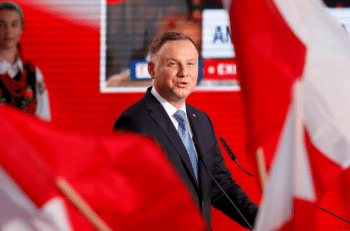
    An emigrée contrasts Poland’s reversion to hatred of LGBT+ with Ireland’s recent liberalisation. By Sara Chudzik. I was twelve when I first moved to Ireland in 2007. Ever since then with every passing year I would count how many years it is that I’ve lived in Poland and how many in Ireland. Now the Irish half is becoming top-heavy and I’ve lost count of the years. Yet, for the past few days I’ve felt more Polish than ever. On 6 August 2020 Andrzej Duda was sworn in for his second term as the President of the Republic of Poland, having narrowly defeated the liberal mayor of Warsaw, Rafał Trzaskowski, who  in 2019 promised to provide greater support to the city’s gay community, including offering some anti-discrimination and anti-bullying education in schools. Duda had claimed the mayor’s gesture constituted the “sexualisation of children” and the destruction of the family. Duda’s wish and promise it is to make Poland an LGBTQ+ free zone and to stop the spread of LGBTQ+ ‘ideology’. Since the election activists have taken to the streets to peacefully protest the extension of Duda’s conservative regime. Rainbow flags have begun to appear around monuments and statues around cities. Margot, a transgender activist, was violently arrested for stealing a registration plate from a van belonging to an anti-LGBT+ Fundacja Pro, an organisation responsible for spreading pseudo-scientific facts such as that homosexuality is on par with paedophilia. Margot was detained and taken to a man’s prison yesterday. Since then 48 more activists have been detained;  in many cases with no immediate information about their whereabouts.  Back in 2015 when Ireland became the first country to legalise gay marriage in a popular vote, I did not vote because I couldn’t. Despite living in this country for years and being educated here, I was still not a citizen. Technically, I did qualify. Practically, I never had the money to buy an Irish passport. I have never voted in Irish elections and could not take part in either the 2015 marriage equality or the 2018 choice referendums. Living in a country in which you don’t vote makes you feel like an observer or a lurker rather than an active participant of society. I feel deep regret at the fact that I wasn’t part of these monumental and historic changes in Ireland.  This entire time I’ve been a remote Polish citizen and when my parents reminded me of my right to vote in the upcoming election, knowing about Duda’s hatred-fuelled ideologies, I was excited at being able to exercise my right to vote. I wanted to take part in stopping Duda from continuing to a second term. When that didn’t happen, I felt useless. I’ve already heard of LGBTQ+ people being targeted by the police and about the violence that erupted at pride marches in June. Then Duda got re-elected and I was in Ireland, not knowing how to take action.  In the past few days, the situation has gone from bad to worse, as more peaceful demonstrations followed that were violently interrupted by the police. People gathered in their hundreds around Warsaw and other major cities in Poland. I saw brutal videos and images and read about the arrests of activists from the safety of my phone screen. For years I have considered Ireland my primary home but now I wish I was in Poland to be part of the fight — a wish that only those from a safe distance could make.  I watched and wondered — what about Ireland? The Polish are the biggest minority group here. There must be people out there angered by this. Eventually I came across a social media group which listed cities in Poland and around the world where peaceful protests and demonstrations were to take place. After scrolling through the comments, I saw a user ask about Dublin. Later I found an event which was to take place this Sunday.  I felt like I should make a poster for that purpose as I didn’t have any flags with me. I took out whatever materials I could find in my room in order to draw a Polish flag with the outline of the country with rainbow colours. Months ago, I bought some make-up and an eyeshadow palette that had red in it. Whatever could I use that for? Today that came in handy. Sometime later I found myself outside the GPO amongst dozens of both Irish and Polish people with LGBTQ+ flags and signs showing both solidarity and expressing the need for action. We stayed there for an hour as passers-by took interest and some stopped to learn more about the situation.  The GPO was the appropriate place for this as the sight of Ireland’s fight against oppression. And we weren’t standing there alone. Behind us were two stands with food for the homeless, one set up by the Sikh community, the other by a group of nuns. At the end, men with turbans offered us some rice and curry.  This wasn’t an uprising – it was only a small crowd, mostly young adults, but we all knew that being able to stand there uninterrupted and safe was a privilege that is not given to people like us in Poland. Some older demonstrators  who came from different parts of Poland remembered the protests from years ago. They said not much has changed. The goal right now is to raise awareness. People in Ireland need to know what is going on — we have been here and lived here for many years now and are part of this country — help us to protect people from where we came from. We aren’t in Poland but there are a number of things that we can do from here. You can donate to various organisations in Poland at  https://lgbtqpl.carrd.co The goal of the activists at the GPO on Sunday is for there to be consequences for the Polish government. The EU as well as governments outside of Poland have the power to prevent the spread

    Loading

    Read more

  • Posted in:

    The elephant in the (staff)-room – lack of diversity.

    We need to move beyond tokenism to ensure genuine equality of access to training and jobs for teachers from minority backgrounds.   By Sorcha Grisewood. In her memoir, ‘No You Shut Up: Speaking Truth to Power and Reclaiming America’, political activist Symone Sanders recalls her experience of school in America: “In Omaha, my sister and I went to elementary school in my predominantly African American neighbourhood.  Despite this, there was not a single Black teacher in our school (something that is still an all too common an occurrence)…You know what?  There wasn’t a single Black teacher at my high school, Mercy High School, either.  In fact, one of my classmates had never even seen a person of colour before meeting me and some of our classmates”.   Her words also aptly describe the experience of ethnic-minority pupils in Irish schools.  In June, eleven-year old Tré Jones from County Meath read out a heart-breaking poem on RTÉ Radio One’s Liveline programme describing his experience of racism growing up in Ireland, and his eloquent words have been echoed by several other black and mixed-race voices.   Schools have a crucial role to play in tackling racism and discrimination.  Our school-going population has become more diverse in recent decades but not our school staff rooms.  Teachers cannot simply talk to pupils about tolerance, equality and respecting difference; our staffrooms need to embody those values.  We must acknowledge the lack of diversity in the teaching profession as a real problem and then facilitate increased participation by people from minority groups.   99% of applicants for primary teacher training courses listed their ethnicity as “White Irish” and “Settled” but 9.91% of pupils were not born in Ireland or had parents not born in Ireland  Research by Dr Elaine Keane and Dr Manuela Heinz of NUI Galway, for their 2018 paper, ‘Socio-demographic composition of primary initial teacher education entrants in Ireland’, found that 99% of applicants for primary (and post-primary) teacher training courses listed their ethnicity as “White Irish” and “Settled”. Applicants from a minority background are clearly greatly underrepresented.      Imagine how students from minority backgrounds feel in primary schools – a formative encounter with a State institution – learning about racism, diversity, tolerance and the importance of respecting difference, but never seeing any teachers like themselves. Ireland has 3,106 mainstream primary schools and 133 special schools, catering for 567,731 pupils.  Neither the Department of Education and Skills nor the Teaching Council keeps official records of the socio-economic or ethnic backgrounds of pupils and teachers, but figures from the CSO for 2019 show that 9.91% of pupils were not born in Ireland or had parents not born in Ireland.  The largest group came from EU countries, then the Middle East and Asia, and then Africa.  These pupils are extremely unlikely to ever encounter a teacher like themselves in an Irish classroom.   Little data had been collected on teacher diversity, Keane said, before her project with Heinz, with prior discussions of teacher homogeneity having been “completely uninformed by data on the national context”.  The research by Keane and  Heinz is the first national study of this important area.   Students, schools and society benefit from a diverse teaching profession.   “Minority teachers can be ‘cultural translators’ and inspiring ‘role models’ in and outside of classrooms” state Drs Keane and Heinz in their 2018 paper.  For this to work in practice, however, we need to move beyond mere tokenism and ensure genuine equality of access to training and job opportunities for those from minority backgrounds.   Simon Lewis is principal of Carlow Educate Together National School.  He is Jewish and the only ethnic minority teacher in his school.  He would love to see more diversity in staffrooms, but, sadly, he believes that he is “probably as diverse as teachers get”.  A new Migrant Teacher Project at the Marino Institute of Education, led by Dr Garret Campbell and supported by the INTO, may lead to change, however.  An INTO spokesperson stated that the union “actively support[s] the Migrant Teacher Project, including taking migrant teachers into our schools on placement as part of this project”. The Migrant Teacher Project started in 2019 and aims to support migrant teachers in understanding the requirements for teaching in Ireland and facilitate them in finding employment in the sector. Last year, 34 teachers from 17 countries graduated from the bridging programme.   The Migrant Teacher Project started in 2019 and aims to support migrant teachers in understanding the requirements for teaching in Ireland and facilitate them in finding employment in the sector.  Dr Campbell receives four or five queries most weeks about the project’s bridging programme and over 1,000 people subscribe to a newsletter.   Last year, 34 teachers from 17 countries graduated from the bridging programme.  Despite obvious interest from aspiring migrant teachers eager to work in Irish schools, significant financial, cultural and bureaucratic barriers, and the denominational ethos of most schools, deny them their dreams.   Overcoming these barriers will require discussion, collaboration, vision, political will and cultural change.  It remains to be seen whether our schools, our education system and our society are ready to embark on that scale of transformation.    

    Loading

    Read more

  • Posted in:

    Hypocrisy about Whistleblowing. Official Ireland is indifferent. This time about Donegal.

    Editorial, Village, April 2014 Gerard Convie is a whistleblower, but you won’t have heard of him. Over the last few years Village has helped a number of other whistleblowers whose cases are to varying degrees unassailable but have not been championed by the media or pursued by the authorities: Jonathan Sugarman on Unicredit Bank, Noel Wardick on the Red Cross, Paul Clinton on Treasury Holdings and Dublin City Council, Séamus Kirk on planning appeals withdrawn after a 1m payout in Louth, Colm Murphy on solicitor fraud and Law Society ‘skulduggery’. As Frank McBrearty, the whistleblower whose attempted framing for the murder of Richie Barron led to the instigation of the Morris Tribunal, told Village this week: “without whistleblowers you can’t expose corruption”. But the lack of official interest in these brave citizens, or action on their allegations, bespeaks an overwhelming cynicism veiled only by the correlative rush to be publicly perceived as welcoming of whistleblowers such as the gardai who revealed the penalty-points scandal. As one man’s freedom fighter is another man’s terrorist, so one man’s whistleblower is another’s deluded obsessive. You only really become a whisleblower once your whistle has been heard by the ‘political correspondents’ and the party spokespersons. When you are at your most vulnerable they won’t seek you out or even answer your letters.   Convie worked in Donegal County Council as a senior planner for nearly 24 years. He claims it was well known in Donegal and beyond that he would not capitulate to the “goings-on in planning” by certain councillors and senior officials in Co Donegal. He tried to control one-off housing, produced the first design guide, and used to appeal to An Bord Pleanála on his own behalf and at his own expense all decisions to grant planning permission via the infamous S4 motions. This was controversial. He claims one councilor constantly referred to him as a ”wee shit from the North”. Convie has claimed, in an affidavit opened in court, that during his tenure there was bullying and intimidation within the council of planners who sought to make decisions based exclusively on the planning merits of particular applications. In the affidavit, Convie alleges another planner: 1) recommended permissions that breached the Donegal County Development Plan to an extent that was almost systemic 2) submitted planning applications to Donegal County Council on behalf of friends and associates 3) dealt with planning applications from submission to decision 4) ignored the recommendations of other planners 5) destroyed the recommendations of other planners 6) submitted fraudulent correspondence to the planning department 7) forged signatures 8) improperly interfered as described in a number of planning applications 9) was close to a number of leading architects and developers in Donegal, including the head of the largest ‘architectural’ practice in Donegal, with whom he holidayed but the relationship with whom was undeclared. His affidavit also refers to irregularities perpetrated by named officials at the highest level in the Council as well as named senior county councilors. The Minister and Donegal County Council made no defence of any averment in Convie’s Affidavit. Convie had a list of more than 20 “suspect cases” in the County. As he reverted to private practice he claimed that there must be many more, perhaps hundreds, “a cesspit”. His complaints to various Ministers for the Environment and to the Standards in Public Office Commission went nowhere. After the Greens got into government, Environment Minister, John Gormley, announced “planning reviews” in 2010, not of corruption but of bad practice – in seven local authorities including Donegal. Convie’s case studies comprised all the material for the review in Donegal. But when the new Fine Gael and Labour government took over they very quickly dropped the independent inquiries. A lazy 2012 internal review stated: “The department’s rigorous analysis finds that the allegations do not relate to systemic corruption in the planning system…Nonetheless, they raise serious matters, ranging from maladministration to inconsistency in application of planning policy or non-adherence to forward plans, such as development plans”. As regards Donegal, the Department, extraordinarily and scandalously, decided – according to Minister Jan O’Sullivan in the Dáil, that: ‘’ … the complainant [Convie] has failed at any stage to produce evidence of wrong-doing in Donegal Council’s planning department”.   Convie felt this left him in an invidious position and, in the absence of any defense of him by from any source, he successfully sued. In the High Court Order all the conclusions by the Minister were withdrawn, including reports on the matters prepared for the Minister by Donegal County Council. The government has been forced to reinstate the planning enquiries. But it will be important to see the ramifications for the civil servants who concluded that Convie’s complaint did not constitute “evidence”, and for the Minister who accepted the conclusions. While some of the council officials who are named in the irregularities in Convie’s Affidavit have retired, some remain in the Council’s employ and have seen their careers soar. The Convie file has been referred to the Attorney General for direction and she has now reported back to the Minister. The Department will report its review before the summer. Meanwhile a taint hangs over the administration of planning in Donegal, and a whistleblower twists in the wind.   As Village was going to print, things were finally heating up in Donegal County Council. The Director of Housing and Corporate Services told Village the Council would be responding to Convie’s reported allegations, shortly, and Ethics Officer, Paul McGill, said the matter was being examined by management.    As regards County Councillors, the current mayor of Donegal, independent Ian McGarvey, while making it clear he did not wish to be involved in anything ‘scurrilous’, said he would refer the issue to the county secretary. Independent Donegal County Councillor Frank Mc Brearty noted it was difficult for current councillors to ascertain the truth of such matters because of difficulties getting files – even last year when he was mayor. While complimentary of the current incumbent,

    Loading

    Read more