
Politics

Random entry RSS

  • Posted in:

    One had a Nanny and went to Eton.

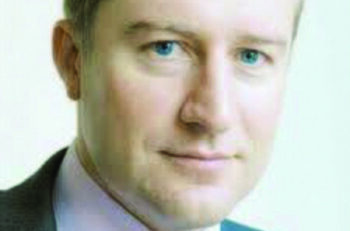
    By Michael Smith. The differences between David Cameron and Nick Clegg (2010). No-one has ever contemplated the relative poshnesses of Ireland’s  Enda Kenny and Brian Cowen.  Both are classless (and  only incidentally unclassy).  Britain is different.  In a society where people wear their class on their shirts or forearms (sleeved or tattooed), they are obsessed with it. Even our comrades in the Guardian published an article about who was posher – (Prime Minister)  Cameron or (Deputy Prime Minister) Clegg. Both of them are sons of financiers, attended major public schools and then went to Oxbridge. Both have the comportment, manners and what has been described as ‘pointless handsomeness’ of a certain sort of well-bred Englishman. Both have aristocratic connections. ► Clegg Clegg’s father, Nicholas Clegg CBE (no less), is chairman of United Trust Bank.  His paternal grandmother was a Baroness from  Imperial Russia whose aristocratic family fled after the 1917 Russian Revolution. His paternal grandfather was the editor of the British Medical Journal for 35 years. Clegg’s great-great-grandfather, was attorney general of the imperial Russian senate. Louis Theroux, the Gonzo-style tv jourmalist, was his fag at Westminster Public School and he spent a gap year (that irritating staple of the white-shoe Englishperson) as a skiing instructor in Austria. Clegg, who worked for years in Brussels, speaks English, Dutch, French, German and Spanish, and his family owns a chateau in France. But this isn’t enough. Instead they sniff he was born in Chalfont St Giles (a sort of English Kinnegad), and more ambivalently, that he’s an  unrecognisable hybrid Eurofop, not the well-known English incarnation. His accent is not easily defined (just a hint of Sheffield, where his constituency is, and a mortifying ease with the glottal stop). And the name Clegg…even his wife insisted on calling all the children exotic Spanish first names to counter it. A Clegg sounds like a jobbie’s nail. ► Cameron Cameron is a direct descendant of King William IV (and so fifth cousin, twice removed of Queen Elizabeth II). Cameron’s maternal grandfather was High Sheriff of Berkshire, and his maternal great-grandfather was Sir William Mount, First Baronet, Conservative MP for Newbury 1918-1922. His wife, Samantha, is the eldest daughter of Sir Reginald Sheffield (and a descendant in three different ways of King Charles II). Her mother is Viscountess Astor. We assume – though he will hardly admit it – that Cameron, like many of his forebears, regarded it as preferable in a wife to be a baronet’s daughter. Samantha grew up on the 300-acre Normanby Hall estate in Lincolnshire. Her family also owns a large Yorkshire estate called Sutton Park. “Cor blimey, guv” Sam Cam – a later incarnation – allegedly took reverse elocution lessons to make her sound a little less £30 million, went to all the wrong colleges and has a tattoo – but it was all too late and makes no difference to her class. Cameron grew up in Peasemore, Berkshire, under the tutelage of Nanny Hoare –  the Cameron family loyal retainer who not surprisingly doesn’t figure in official dispatches. The experience of Jacob Rees Mogg, another toff – the son of a former editor of the Times, [right] shows what can happen if you allow others to play the Nanny card. Do not expect to see Nanny Hoare’s Master David albums in Hello Magazine, any time soon. On Desert Island Discs,  Cameron described how – while poor old Nick Clegg was presumably wasting his time on yet another academic bauble – he spent the inevitable gap year in Hong Kong working for Jardine Matherson – a sort of shipping agent – which one assumes is the last outpost of unreconstructed colonialist buffery, where he will have been updated on how to rule places. While wending his way back to blighty he visited a beach at Yalta in the Soviet Union, where he was approached by two Russian men, speaking fluent English. Cameron was later told by an  omniscient professor that it was “definitely an attempt” by the KGB to recruit him.  This is the ultimate accolade for any Nob. Clegg would not have worked for anything containing the name Jardine, would not have been in Yalta and, if he had, would have reasoned with the spooks in flawless Russian. Of course Cameron, presumably uncompromised, went to Oxford and took a first in Politics, Philosophy and Economics. Along with London Mayor, Boris Johnson, he was a member of the élitist Oxford Bullingdon dining club, whose members major in getting drunk and smashing restaurants. A famous photo, over which he sued, depicts this comprehensively. The Guardian has accused Cameron of relying on “the most prestigious of old-boy networks in his attempt to return the Tories to power”, pointing out that three members of his shadow cabinet and 15 members of his front-bench team were “Old Etonians”. While this might be just quaintly irritating to a disinterested Irishperson, it’s infuriating to many English people: the Milburn report, published last year, shows that 45% of top civil servants, 53% of top journalists, 32% of MPs, 70% of finance directors and 75% of judges come from the 7% of the population who went to private schools. So why is the Conservative (note: Cameron never uses the term Tory) Leader seen as upper class while the Liberal Democrat Deputy passes for an ordinary bloke?  Firstly, Metropolitan Westminster School, where Clegg went, is just not as grand as Cameron’s alma mater, Eton. Equally, Cameron’s Oxford college, Brasenose, was founded in 1509: Clegg’s college, Robinson, was founded in 1977. Of course the policies are different too – or at least they were for a while before the Clemeron/Conserveral coalition.  Clegg wanted to dump Trident and join the Euro – though no longer.  Cameron would never dump ‘our Trident’ but famously cut the Conservatives’ link with the European People’s Party in favour of one with a bunch of nationalist loons; and wanted to limit capital gains tax to estates over £1m. He’s much keener on re-legalising bloodsports than his foreignish friend.

    Loading

    Read more

  • Posted in:

    Wind.

    By Richard Callanan. Some hundred people gathered in October in a Portlaoise Hotel for a private meeting to plan joint action against what they perceive to be the government’s “flawed energy policy”. Reports from those in attendance variously concluded that these hundred people represented forty or possibly eighty-five different groups from across sixteen or seventeen Irish counties. These groups have found common cause in their opposition to wind turbines and pylons. Some describe themselves as action, awareness or information groups while others identify themselves more overtly as being opposed to energy infrastructure by being ‘Against Turbines’ or ‘Against Spin.’ Not a few have adopted titles which come with snappy acronyms such as TWIG (Tubber Wind Information Group) or POW (People Over Wind). This week a very different gathering took place in New York where the UN Climate Summit once again called on the world to step back from the brink of irreversible and catastrophic climate change by reducing our carbon fuel consumption. Enda Kenny’s address  to the summit was rich in unprepossessing climate-change cliché: “stark reality…fair and achievable…the clock is ticking” but mostly it avoided any suggestion that Ireland might set an example for small nations by unilaterally instigating local change, even though for historical reasons is a country which can provide global leadership on certain social issues. With the line ‘Leading nations have to step forward. Others will follow’ our Taoiseach firmly placed Ireland among the followers on the subject of climate change and gave succour to those in this country who have foresworn any responsibility for addressing our own disproportionate carbon fuel use. It is in the nature of wind farms that remote sparsely populated areas tend to be chosen for their location so opposition to their construction invariably relies on a relatively small pool of local inhabitants. The sense of isolation and powerlessness felt in many of these remote communities becomes heightened in the face of the perceived financial and political muscle of wind farm developers. Accustomed as they are to generally both ignoring and being ignored by the tentacles of state and corporate Ireland, the residents of such out of the way towns and villages as Ballycommon, Garbally and Luggacurran are invariably distracted and somewhat overwhelmed to suddenly find themselves – with the prospect of wind turbines being erected in their locality – in the spotlight. Indeed more substantively it is arguable that the scale of climate change requires solutions of a dramatic size – such as vast solar farms in the Sahara or southern Spain, geo-thermal from Iceland and wind from Ireland, linked by an enhanced continent-wide renewables grid. Not one-off solutions designed to fuel rhetoric not substance, of the sort that have always had particular appeal in this country of ad hoc rationalisations. All of which makes it entirely understandable that a small number of these disparate and isolated groups should seek to find greater strength and influence through solidarity in coalitions of the like-minded. But apart from their being formed in response to the prospect of the arrival of some bit of energy infrastructure in their previously unencumbered neighbourhoods what is it that these groups have in common? The arguments to be made either in support of or in opposition to the particular wind turbine location proposals are most valid when they are made in reference to the particular environmental, topographical and the other local factors. These factors are unique to each proposed site and rarely lend themselves to credible extrapolation to refer to all wind-farm proposals. So in the context of a gathering of a multiplicity of disparate local action groups such as that held at Portlaoise the unique arguments which apply to particular wind farm proposals become largely irrelevant or at least not generally applicable. In this situation generic as opposed to particular arguments come to the fore such as the pseudo scientific writings of paediatrician and long-time opponent of wind energy, Nina Pierpont. In 2009 Pierpont authored a book in which she coined the term ‘Wind Turbine Syndrome.’ The premise, methodology and conclusions of the research on which Pierpont based her findings for the existence of a range of deleterious health symptoms all attributable to the proximity of wind turbines have all been entirely discredited by subsequent peer reviewed scientific papers. Despite this, such is the scarcity of credible scientific witnesses that Pierpont has since made something of a career  for herself as an ‘expert witness’ for hire to the opponents of wind energy around the world and has testified or been cited at hearings in the US, Canada, Australia and Slovenia which has become a case study in wind power opposition for the Irish group Wind Aware Ireland (WAI). Pierpont is a darling of one of the most radical and effective anti-wind groups in the US. They are the Wisconsin Independent Citizens Opposing Wind Turbine Sites who go by the contorted almost-acronymous label, WINDCOWS who in a further branding twist have adopted a logo depicting some very angry looking cows in front of a wind turbine. WINDCOWS has become much more than a campaign group against the erection of wind turbines in the state of Wisconsin and is now an international resource for those arguing against wind power in all its forms. A merry-go-round of conflated and inflated articles recently saw WINDCOWS cite an article by a Donegal group arguing – in a considerable exaggeration of even Pierpont’s writings – that the deleterious health effects of her ‘Wind Turbine Syndrome’ could now be felt up to 10 km from a turbine. Their rhetorical flourishes – ‘Big Wind Is Today’s Big Tobacco’ – have much in common with the language adopted by the Tea Party and are similarly peppered with conspiracy theory, xenophobia and invective against the evils of ‘Big Government’. Examples of mission-creep from initially simply giving voice to concerns over local environmental and amenity degradation into the realms of the catch-all protest movement are evident in the postings and publications of many of the groups represented at

    Loading

    Read more

  • Posted in:

    Disability sector embraces the market not the disabled

    By Niall Crowley Private-sectorisation’ is again the order of the day for many organisations in the community and voluntary sector. It is not a new phenomenon. Philanthropy offered an easy route into the community and voluntary sector for the private sector. Wealthy business people turned philanthropists never offered value-free funding. It came with management speak and metrics. Agendas, going forward. One Foundation, for example, offered ‘venture philanthropy’ which transposes “the tools and methods used by venture capitalists – who invest in businesses for financial return – to the non-profit sector, where the return would be defined in terms of social impact”. Atlantic Philanthropies offered a funding model that involved “achieving a joint understanding of how success will be measured” and providing “technical assistance in such areas as communications, finance and organisational development”. ‘Private-sectorisation’ is now rampant in voluntary organisations providing services to people with disabilities. Ironically, it is a key part of the rehabilitation of a sector that had taken private-sector senior-management wage levels as an entitlement. First the Central Remedial Clinic (CRC) bit the dust, then Rehab crumbled. The Charities Regulator was subsequently appointed to the unseemly relief of many in the sector. Rehabilitation involves senior-management wages dropping, though remaining beyond any popular understanding of ‘enough’. Rehabilitation for the CRC also meant putting a businessman, two lawyers, two human-resource specialists, an accountant, an academic, a marketing expert, and an IT specialist on the Board. Rehabilitation for Rehab was even more intensive. It involved creating a new Board of three former and one current chief-executive officers from the private and public sectors, two lawyers, one accountant, one medical professional, one businessman, a chartered surveyor, a development-aid specialist, a management consultant, a former disability-group trustee, a real-estate manager, an IT company executive, and a former public servant. ‘Private-sectorisation’ started with outsiders controlling the way their funds were spent but now the charity sector is itself adopting the ways of the private sector. Dóchas, Fundraising Ireland, Total Fundraising, the Wheel, and Whitebarn Consulting invested in a website last year, goodcharity.ie, to answer the question “What makes a charity good?”. The website is directed to those wishing to make a donation or wanting to volunteer. They are advised to “make sure the organisation is legitimate and efficiently run. Is it transparent about its resources, both the people who run the organisation and its finances?’ Does it apply professional standards to its work, such as a governance code and the Statement of Guiding Principles for Fundraising?”. It reassuringly asserts that charities “need the best leaders they can find’’ in answer to the question ‘are charity salaries too high?’. It establishes that “good charities publish their annual accounts and/or other financial information on their websites”. It offers links to material about  good governance, financial reporting, fundraising principles, cost and overheads, pay and benefits, and charity numbers. This is the essence of a ‘good charity’ in the land of ‘privatesectorisation’. ‘Private-sectorisation’ is, unsurprisingly, about market orientation. Its market is the donor or the volunteer. The priority is systems and standards that satisfy this market. It does not seem able to define its market as the people served by these organisations, people with disabilities in the instances cited. If it did, and pursued its own logic, it would be challenged to create a functional market by putting the funds directly in the hands of people with disabilities. This would allow them to choose which organisation and what services they want to avail of. This logic  of course will never be pursued, as it would threaten the survival of many ‘good charities’. ‘Private-sectorisation’ is about valuing private-sector skills and values. This means boards for organisations serving people with disabilities are selected without representation of people with disabilities or service users. Far from empowering people with disabilities by giving them control over the funds, ‘privatesectorisation’ does not even give them a voice in decision-making. ‘Private-sectorisation’ ensures these organisations are accountable to the donors and the general public. It seeks no accountability to the people they seek to serve. Good governance ends up as the test for ‘goodness’ – not empowerment and equality for people with disabilities. ‘Private-sectorisation’ is neat, tidy and systematic. Social change is messy, confused and even chaotic. People with disabilities need social change and ‘Privatesectorisation’ denies them this possibility. •

    Loading

    Read more

  • Posted in:

    European standards for tenants

    By Paul Newsome Dr Padraic Kenna’s pleas in the last two editions of Village for rent-control legislation and ethics in housing policy were just too gentle on Ireland’s systemic prostration in the face of unquestioned landlordism. Workers’ house prices inflated by four thousand five hundred per cent between 1990 and 2007 in Drumcondra Dublin. A sample red-brick, three-bed house bought for €22,000 in 1990 had bloated to a valuation of €860,000 by 2007 without having another brick added to it. The only properties worldwide that bested these percentages were speculative land rezonings in suburban Ireland and the CPO sell-out to farmers who sold their land for motorways, constituting 25% of the cost of the road programme. Brian Lenihan stated at the beginning of the crash that house prices had risen by 250%. If that was the case our sample house would have risen to €70,000, not €860,000. None of our esteemed, academics, economists, journalebrities, opposition politicians or media strung out on property-ad revenue attempted to correct this farcical assertion. Between 2007 and 2014 – the years of the Great Recession – the price of our sample worker’s house had dropped back to circa €400,000. That’s still 2, 000 (thousand per cent) above the pre-Celtic-Tiger price. But we are still told by the same people whose greed and negligence caused the boom and bust that workers’ houses are now ‘half price’, ‘cheap’ ‘under-priced’ etc. The greatest driver of this explosion in the cost of basic workers’ homes was, and still is, Ireland’s particular brand of un-regulated landlordism. This is the peculiar desire of one sector of society to own the home of another sector for profit: that post-famine gombeen desire to secure and fund a landlord’s own economic future, pension, retirement and old age with rent extracted from worker renters. Typically, defenders of landlordism do not ponder how those captive renters will fund their own pensions, retirement and old age when they are no longer able to earn or afford rent, who having spent twenty or thirty years paying off the Celtic Tiger negative-equity mortgages of the landlords, have nothing but eviction, homelessness and dependency on the State to look forward to in their own final years. They themselves are expected to live without ever owning their own home. What else can we call this except property apartheid  for ordinary, particularly blue-collar, citizens. Fifty-thousand rural peasants armed with little more than pikes and pitch forks rebelled against landlordism in 1798. For six months they fought a bloody war with the British occupying forces and their conscripted yeomanry across Leinster and beyond, in Ireland’s first ideologically driven rising against landlordism. After the ten main architects of that Rising were ambushed in Oliver Bond’s house, Dublin declined from actively joining in the rebellion. Forty-eight years later the Great Famine, directly caused by the State system of landlordism devastated Ireland. The estimation of deaths from starvation, disease and exposure through mass evictions along with mass emigration on coffin ships are now just millions of statistics stored in National Archives. Sixty-nine years after the famine, in 1916, the GPO became the focal point in the struggle for ordinary Irish citizens to control their own destinies and own their own homes … But in 2014 there are still around one and a half million workers enslaved to property-apartheid landlordism in the Irish ‘republic’. Nothing has been learned from multi-generational struggle about the undemocratic immorality and injustice of free-for-all private landlordism. Indeed the famine and our colonial past seem to have generated a property fetish entirely unknown to industrial societies in Europe. For instance, the namawinelake website informs us that there are 160,000 landlords who own four properties each. Future generations will balefully try to figure out how or why Ireland’s self-proclaimed Republican Party, Fianna Fáil, Fine Gael and their acolytes so wholeheartedly embraced for the duration of the Celtic Tiger and beyond the concept of absentee landlordism from Section 23 to the ‘Bulgarian play’ option re-establishing property ownership as the strangling grip of the minority of the privileged and wealthy over the majority when generations of their predecssors had fought to eradicate it. Napoleon once described England as “a nation of shopkeepers”. Today Ireland is “a nation of landlords” where renters pay off the negative equity mortgages of the predatory speculator landlords, and their rents also prop up the banks bailed out by the tax exchequer. Ireland’s EU citizen renters have none of the regulations, legislation, laws or security of tenure which our compatriots in mainland EU member states take for granted. The Irish political system has ejected private renters from the State’s duty of care by handing their finances over to an Ahernist, politically-appointed, the PRTB. At the same time in 2004 Ahern also scrapped the last remaining right that residential renters really had in law (from 2009), the right to a renewable thirty-five year lease when they had paid rent for a minimum of 20 years. Our cohort of boom-town landlord TDs cheered the disciplines of the market without bothering to declare their interests. As the daft.ie infographic opposite shows, rents in Dublin have risen 26% since 2011 in a near-inflation-free economy. The Landlord class had not gone away. With the sniff of a downturn they diverted their liabilities for property and second-home tax (and water tax) on to their tenants with the rise in rents being immediately trumpeted across Ireland’s slavering property media as a sign of a shortage of housing in Dublin, though it was in reality merely the rise of suppressed demand. There is a national conspiracy in favour of both (a) landlords and (b) landlordism. The budget announcements of social housing only highlight the oppression of first-time private buyers most recently manifest in the Central Bank’s clampdown requiring draconian 20% deposits. And why did the establishment figure of former An Bord Pleanála chairman, now National Buildings Agency boss, John O’Connor recently call for “rent-only” tiny apartments to be built in Dublin for “a young mobile workforce”? The For Sale

    Loading

    Read more

  • Posted in:

    Toxic PDs: The compromised ‘party of conscience’ merits continuing scrutiny.

    By Frank Connolly. (November 2014) It should come as little surprise that a former Progressive Democrat minister is among those named in the dossier on tax evasion compiled by Gerry Ryan, the civil servant who has been investigating the Ansbacher files since 1998 and whose inquiry was closed down by then Tanaiste, Mary Harney, in 2004. After all, Mary Harney and the PDs had plenty of form in this regard during their power-sharing years with Charles Haughey in the late 1980s and then with Bertie Ahern from 1997. Indeed, her seat at the table was barely warm when Harney was forced to grapple with her conscience as it was confirmed that her cabinet table colleague, Ray Burke, had taken large chunks of cash during the general election of 1989 leading to his resignation that Autumn and the establishment of the Flood tribunal. Of course, Harney was familiar with such shenanigans as she presided over an inconclusive internal inquiry into an alleged donation to the PDs during the same election that went to fund the campaign of their Waterford candidate, Martin Cullen, rather than to the central party coffers – much to the chagrin of local fundraisers. In 1998, she had the misfortune of making ill-advised comments to the Irish Independent about the integrity or otherwise of the party’s original adversary, Haughey; and her comments resulted in a decision that the former Taoiseach could not be prosecuted for his improper receipt of over €1 million from retailer Ben Dunne and related matters. This was the same year that the explosive Ansbacher documents landed on her desk and when she appointed Ryan to investigate them. The papers revealed how more than 200 members of the Irish business and political elite, including senior FF, FG and PD ministers, used the complex offshore mechanism to avoid tax from 1977 until 1995. In early 1999, Harney muttered a few words about her “conditional” loyalty to the Ahern government after EU commissioner, Padraig Flynn, imploded on the Late Late Show over the 1989 €50,000 donation by Tom Gilmartin to Fianna Fáil which ended up in the then minister’s personal bank account. She was particularly nervous as Gilmartin had dragged Ahern into the affair by claiming to have met him on a number of occasions and had informed him in 1989 about the missing Flynn donation. Having crossed this particular hump, Harney was forced to agonise again early that summer when it emerged that Joe Burke, a friend of Ahern’s, had  intervened to help secure the early release of Philip Sheedy, an architect serving a sentence for killing a woman in a road incident. Two judges, including Supreme Court member, Hugh O’Flaherty, fell on their swords but the summer recess and the victory of Harney’s conscious once again kept her on board. In February 2000, Mary Harney gave an undertaking the authorities would carry out a comprehensive investigation into anti-competitive practices at CRH, but this has never happened. Patrick Massey, then head of the Competition Authority, resigned his position that very same month stating:  “it is no longer possible for me to continue as director of competition enforcement due to the failure to provide adequate resources to enable me to do the job properly. My experience has convinced me  that price-fixing cartels represent a serious widespread problem in this country…the resources available are wholly inadequate for carrying out the sort of complex and highly intensive investigations that are required to obtain evidence”. Massey went on to say, “certain complaints made to me in recent months involve matters that would occupy four or five staff full-time for the best part of a year. I simply do not have such staff resources and given the very real concerns expressed to me by the complainants as to the consequences for them if the matter is not pursued properly, I have concluded that it is simply not possible to pursue the matter”. In 2004, during her second term as Tánaiste and as she left her position as enterprise minister, Harney decided to terminate the Ryan investigation followed another torrid few years of controversy not least as the Moriarty and Flood/Mahon tribunals continued to uncover extraordinary details of corrupt behaviour by FF, FG and PD politicians and as the latter inquiry came closer to unravelling the convoluted financial affairs of the then Taoiseach going back to the late 1980s. When she aborted the investigation, it was not known of course that among the suspected tax evaders was one of her party colleagues and a (former) minister but it did not go unnoticed that she had an apparent aversion to investigating the affairs of Ireland’s largest corporate monopolist and a central player in the Ansbacher affair, Cement Roadstone Holdings (CRH). At the time, Vincent Browne wrote; “Among the plethora of recurring self-regarding proclamations Mary Harney makes about herself [‘anyone who knows me…..’] is the boast that she and her party are committed to taking on monopolies and freeing up the market for the benefit of the Irish consumer. And indeed, this government has taken on goliaths such as taxi drivers, bus workers and now airport employees. But when it comes to the big boys – and especially when it comes to the biggest boy of all, the most gigantic monopoly in the history of the state, construction conglomerate Cement Roadstone Holdings [CRH] – it’s a different tune”. This  is no doubt surprising for many who believed that the company with which her party’s nemesis had such a close connection would surely be good hunting territory for the uber-ethical PDs. The links between Roadstone and the former FF leader stretched back to the 1960s when his father in law, Sean Lemass, was chairman of Roadstone which went on to become CRH. In 1969, Roadstone Ltd sold 80 acres of land to Haughey, then Minister for Finance, for £120,000.  In 1973, Haughey sold 17.5 acres of that land back to CRH for £140,000. Within four years, Haughey had made a net profit of £20,000

    Loading

    Read more

  • Posted in:

    Preferendum preferable.

    By Peter Emerson. Preferendum: The received wisdom “The electorate might be bewildered”, declared Gerard Hogan, the lawyer (now judge), in the 1996 Whitaker Constitutional Review; “The referendum system”, he continued, “has worked well in practice”. This was written after the bitter divorce referendum of 1995, the  vicious 1991/2 plebiscites in the Balkans, and the fractious 1973 Northern Ireland Border Poll. “[Preferendums] would cause chaos”, exclaimed Garret FitzGerald, former Taoiseach (1999, in a UCD seminar on decision-making). Allowing the people to choose, he continued (I paraphrase), would bring back the rope, ban income tax… chaos. “They would mean the end of party politics as we know it”, declared Rodney Rice, a journalist; (c. 2000, in private conversation). “It is my moral responsibility to decide what the options should be”, confirmed Liz McManus, another politician; (meeting with the Oireachtas Committee on the Constitution, in the runup to the 2002 abortion referendum). “Problem is preferendum favours status quo”, tweeted Professor David Farrell, (responding to Conor O’Mahony’s Irish Times article on abortion polls, 30.8.2014). Antipathy from both the media and academia prevails in the North too.  Despite numerous presentations, workshops and publications by the de Borda Institute, the media do not even mention multi-option voting; and Lord Paul Bew for example, professor and adviser to the Belfast Agreement, once said. “I don’t understand the preferendum”. Six wrongs. Alas, many believe that, “democracy works on the basis of a decision by a majority” (per the Whitaker Report again); as if all decisions, if based on a ballot, must be subject to a – simple or weighted – majority vote. But… “What has happened here today should be reported and repeated”, said Michael D Higgins, TD, now President (1991, in his key-note speech at a public meeting in Belfast where, with electronic voting, the preferendum was tried and tested). One right, but a big  one… The problem Politicians achieve their goals by first controlling the debate: they choose the question: it’s yes-or-no, and in most cases, the question is then the answer. Preferential voting would reduce that monopoly manipulation. People cast preferences when voting in elections; why not, then, when making decisions?   The solution In multi-option decision-making: •    the electorate (or their representatives) formulate the options which, if need be, independent commissioners edit to a (short) list of up to six balanced options: (in an abortion debate, this could be two pro-choice, two pro-life and one or two compromises). •    when agreed to, this list forms the basis of a Modified Borda Count, MBC, a preferendum. •    those concerned then cast (one, some or all of) their preferences on the options listed; and the higher the preference, the more the points. •    the result is the option with the most points; if everyone casts a full list of preferences, the outcome is the option with the highest average preference, which of course involves every voter, not just a majority of them. Some countries do use multi-option referendums: Australia, Sweden, Uruguay etc. In most, however, including Ireland and  Britain, politicians reduce complex problems to a dichotomy. Many fractious issues could have been, or still could be, resolved by MBC.   How it would work: the ongoing abortion conundrum in Ireland Before the 2002 abortion referendum, the Government had outlined seven possible options but still, in the vote, it was yes-or-no.  The motion was defeated by less than 1%: a combination of some who thought it too liberal and others who thought it not liberal enough. “The people have spoken!”, declared Taoiseach Bertie Ahern. “Well”, de Borda asked in a letter to the Irish Times, “what did they say?” De Borda had suggested five options which it now reiterates for the evolved circumstances of 2014: (a) Absolute ban subject to indirect abortions; (b) Abortion permissible when necessary to save the life (but not to prevent the suicide) of the mother; (c) Abortion permissible when necessary to save the life of the mother, (and this includes the prevention of suicide); (d) Abortion permissible under (c) and also to protect the physical and/or mental health of the mother; and (e) liberal regime as in Sweden. An MBC procedure for the abortion (or any other major) issue could be as follows. The Dáil would appoint an independent commission which then receives submissions from the public, allows all relevant proposals, and draws up a (short) list of 4 – 6 options. Next, the people cast their preferences. Then, subject perhaps to certain minima – e.g., in Denmark, the turnout must be 40% plus  – the Government enacts the outcome, i.e., the Executive executes the will of the people.  That’s their job. That’s democracy. In an MBC of, let us assume, six options: •    he who casts only one preference gives his favourite option just 1 point; •    she who casts, say, three options gives her favourite 3 points, (her 2nd preference 2 points and her 3rd preference 1 point); •    while those who cast all six preferences give their favourite 6 points, (their 2nd preference 5 points, their 3rd preference 4 points, and so on). Success therefore depends on a good number of high preferences, a few middle ones perhaps, but very few low ones.  So the wise protagonist will try to persuade her erstwhile opponents to give her option not a fifth or fourth, but a third or even higher preference.  In other words, the MBC encourages dialogue. No-one votes against. They vote only for, albeit with varying degrees of enthusiasm.  Furthermore, as implied above, voters are (not forced but) encouraged to submit full ballots. Those who do thus recognise the validity of all the various options. The MBC is indeed inclusive.  What’s more, as recognised in the science, it is more accurate than any majority vote. A multi-option abortion debate would almost certainly be more civilised and sophisticated than any polarising two-option contest. Secondly, because the outcome would probably be the 1st preference of many, the 2nd preference of some, and maybe the 3rd preference of a few

    Loading

    Read more

  • Posted in:

    Blue-sash elitism.

    By Lynn Boylan, MEP. I am just over four months into my new role as a Member of the European Parliament and beginning to settle in, though I’m shocked by some of the sense of entitlement around here. Sinn Féin is a member of the GUE/NGL Group which is a confederate group committed to a more socially equitable and peaceful Europe. Sinn Féin’s track record in GUE/NGL was helpful in securing committee positions for me in the Parliament and it also ensured that all four Sinn Féin MEP’s secured our preferred ten Parliament Committees. The fact that Sinn Féin can now cover such a broad range of issues will be of huge benefit to Ireland. I had set out my priorities during the election as being employment and workers’ rights. Given the growing inequalities in Ireland and the driving down of workers’ conditions and rights, it was imperative that Ireland have a left MEP on the Employment and Social Affairs Committee. I am a member of the working group for the European Globalisation Fund through this Committee. The fund is to help redundant workers. It has been controversial in Ireland due to the Government’s mismanagement of monies allocated. The most infamous case was the Dell Workers in Limerick, where 40% of the funds allocated to support them getting back to work were returned due to mismanagement. This cannot be allowed to happen again. I will be monitoring Irish applications coming through the committee for approval.  Even in the short time I have been on this working group it is clear that some countries are accessing the fund far more than Ireland. They include countries that were not as hard hit by the economic crisis. I have participated in a Youth Panel Discussion organised by the Europe Youth Forum. I put forward a strong argument for the need to revisit the Youth Guarantee and to ensure that it is adequately funded, has real achievable goals and is not just a box-ticking exercise. I met Jonathon Taylor, Vice President of the European Investment Bank in July.  I was interested to know as to why Ireland has such a poor record on drawing down EIB funds which could be used to invest in jobs. I also intend to discuss the possibility of the periphery countries getting the funds on a 75/25 ratio rather than the current 50/50 ratio My background as an ecologist, and the six years that I spent on the Board of Safefood, have been a real bonus for my work on the Environment and Public Health Committee. I am currently working on two reports. The first report concerns genetically modified organisms (GMOs) and a Member State’s ability to ban them. I hope to ensure that any regulations introduced will be robust and will stand up to legal challenges from industry. The regulations must provide for long-term studies of GMO crops that will not only look at health risks but will also take into account possible impacts on biodiversity. The second report concerns the increasingly widesepread use of nano-technology in food – which is becoming increasingly widespread. In both of these reports the European Food Standards Agency (EFSA) is central. Yet there are concerns as to how independent the EFSA is. A recent Eurobarometer poll showed that 41% of the public distrusts scientists because of their links to industry.  Measures must be put in place to restore public confidence in this key body. I have drawn the incoming Commissioner’s attention to this. Unlike the adversarial nature of the Dáil, the work of an MEP is carried out in Committees and through winning support for proposed amendments to legislation. I look forward to putting my negotiation skills to the test. On a more personal note, in terms of the institution itself and my first impressions I have to admit to being taken aback by the trappings of elitism there is around MEPs.  The recent recommendation for MEPs to wear a blue sash with gold tassels during plenary is laughable and, as someone who believes in equality for all, the notion of an MEP being ‘entitled’ to skip the queue in the coffee dock is obscene.  One would have to question how desperate you have to be for a coffee that you would use the ‘’Do you know who I am?” line. The separate blue-carpeted runway entrance for MEPs is equally offputting and I am firmly of the opinion that the entrance that is good enough for my assistant is certainly good enough for me. It is far from blue carpet runways and blue sashes with gold tassels that I was reared.•

    Loading

    Read more