


Politics

Random entry RSS

  • Posted in:

    14.4%

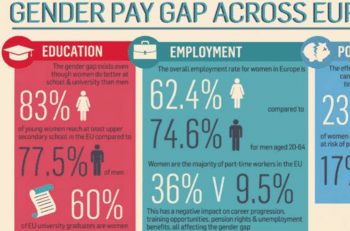
    Gender-pay-gap issue relegated as budget prioritises male, and high, earners

    Loading

    Read more

  • Posted in:

    Denis gets a great profile in the paper and celebrates more deals.

    In which Denis revels in an upbeat profile in the Business Post and celebrates even more deals both by  himself and his older and slightly cleverer colleague Dermot Dear Dermot, Huzzah on getting that whopping apology from the  Sunday Times for implying you weren’t the man behind the IFSC. Does the pope  shit in the woods? That man O’Dowd! The man who once ran the headline ‘Denis O’Brien, praised by Clinton and NY Times, seeks to make a difference’ is back – on Denis O’Brien. In the Business Post. Fawning again. He might as well be Jim Morrissey. “Ireland produces its fair share of global business leaders but none quite like 56-year-old Denis O’Brien, the wealthiest Irishman around”, he wrote. “His franchise is best described by that new buzz word philanthrocapitalism – giving back in spades to help make his business better and the world better too. In Haiti, where his company Digicel holds the main telecom license, he has built 100 schools. He saw what Bill Gates and others now see before they saw it – that philanthrocapitalism was a far better way to achieve success and make a difference than just building up a bank account’.We are not robber barons’, he says pointedly”. Top-class scraping, Mr Desmond, but there’s more: “The Digicel Haiti Foundation announced last October that it has built its 100th school in Haiti. We have 30-40 people, surveyors and engineers, our own team that is actually doing the school building”. All true. All true. Dowd also helpful in inoculating against that whole O’Royally thing.  He quotes me again: “I can relate to difficulties. Everyone has this false impression that everything in business is a staircase you know, always going up. It is never like that. My first business for instance was a big failure, so it is part of every business life. I would sincerely hope everything will be sorted and okay for him [O’Royalty]. He is a hugely talented person who has man impact for Ireland globally and did an incredible amount of work here in the U.S. to do with the Ireland Funds. I only met Tony O’Reilly twice in my life [But I can tell you, Dermot, there were a few years where I only stopped thinking about him twice]. One time, he was very kind to me when I was graduating from Boston College. He kindly met me because I was looking to see what I should do  and it was very helpful. Then the second time I met him was when there was a peace pipe when he was ready to step down as CEO of Independent Newspapers and to be honest with you there was no rancour on his side, zero rancour at all”. Rancour of course didn’t really do it. Think Denis dangling old stallion’s severed testicles in front of its nose. Anyway O’Dowd went on to the business side of the thing. Not that that mattered to me of course. Was simple: Badly run with  no internet strategy. Gobshites! Here’s what he quoted: “I thought it would be a good hedge to the telecoms. As it turned out it wasn’t because the media and newspaper sector worldwide collapsed, but that’s business. At the end of the day there has to be pollination between online radio and TV and newspapers. I was up with a business in Canada last week, Rogers, and they have a massive network across all platforms, and whatever business they have is cross promoted across everything else. When I told one of their main guys about the restrictions in Ireland the guy fell off the chair laughing. He said, ‘You gotta be kidding me, that is stone age stuff’”. Good to get that  in.  Smart. Stoic. Entrepreneurial. Enjoyed the Clinton Global Initiative in New York in September. Gerry Adams and Mary Robinson joined Hillary, Bill, Chelsea and me; but no sign of you again.  Or O’Reilly of course. Flogged majority stake in Aergo Capital to Global investment firm CarVal for undisclosed sum. Aergo’s pre-tax profits rose to $2.28 million (€1.7 million) in 2013. Brought Johnny Sexton back to Leinster on a four-year international contract.  He’ll be an ambassador for Topaz at €150,000-€200,000 per year. Interesting to see how he gets on with Cowen. Of course this prompts the SIPTU-heads in the  IT to ask “is there no end to Denis O’Brien’s intervention in Irish sport?”. “Something doesn’t feel right about billionaire chipping in to bring Johnny Sexton home”, on and on they moaned. Tax exile and all that shite. Gobshites. Commentary I don’t read. And I am not alone. I was talking to my friends and they don’t bother reading commentary anymore. They are sick of the extremist criticism. They and I just don’t read it. At all.  Ever. Morrissey does little else though. Thundrous letter slagging off the Times: “Clearly Malachy Clerkin doesn’t want Denis O’Brien to support Irish soccer or Irish rugby. Maybe Malachy is a sports journalist who simply does not like sports. Yours, etc”. Love sport.  Soccer. John Delaney: class act. John O’ Shea’s last-minute equaliser. The craic is just great. The people you meet. Keano’s beard. The slagging is lightning. The same kind of fun as rugby but different.  Wouldn’t play with Mick Wallace though. Miserable gobshite asking privileged questions in the Dáil: “there would be some unease about the fact that Denis O’Brien’s close political links may have been instrumental in his bid to buy Siteserv, the company that won the State contract to install water meters for Irish Water”. Howlin went for him though:  “Bluntly, considering the deputy’s position, I am surprised at some of the assertions he has made”. Free Pass for me. Enough of me. I see your €200 million joint venture Broadhaven Credit Partners is in discussions with property developers about building hundreds of new homes in the greater Dublin area. Will never  forget your masterly 2006 sale of your 22 per cent property play in Greencore, at a profit to poor Liam

    Loading

    Read more

  • Posted in:

    Rocking the anti-establishment

    By Villager Past pupils at rugger-loving, unisex, feepaying Blackrock and Belvedere Colleges have written to alumni urging them to campaign against the Education Bill which is intended to remove “soft barriers” to admission by forcing schools to publish entrance policies. The Belvedere students’ union has circulated a smug sample letter directed against Minister for Education Jan O’Sullivan, claiming the bill was “a stealth tactic, to destroy private institutions like Belvedere College”. The bill would also allow schools to prioritise siblings of past or present students and the children of staff, but only as part of a transparent process that is subject to external review. But the privileged ones are most enraged by a provision that would limit schools’ rights to guarantee places to children of past pupils. Blackrock’s campaign is fronted by Shane Murphy, senior counsel and giant who was a charismatic auditor of UCD’s L and H debating society thirty years ago, and who subsequently spent a spell as a French Tridentine novice, immersed in the ascetic pleasures of the Latin mass. Murphy could argue his way out of a plastic bag, but he should champion causes that deserve him. When publishing the draft bill, former minister for education and Rockman, Ruairí Quinn proposed 25 per cent of places could be reserved for such pupils but an Oireachtas committee has since recommended no such quota be allowed.

    Loading

    Read more

  • Posted in:

    We need to talk about the Gardaí.

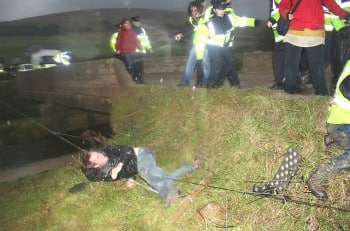
    Political compliance and media silence on scandals redolent of police state. By Tom Hanahoe, Terence Conway and John Monaghan. Between May 2007 and November 2009, 111 complaints about alleged Garda violence and intimidation were submitted to the Garda Síochána Ombudsman Commission – established in 2005 and invested with more public hope than legislative power – by campaigners opposing Shell’s Corrib Gas Project in Kilcommon Parish in north west Mayo. Not one of the accused gardaí was disciplined. Gardaí often seem to be above the law. Unaccountable. The history of An Garda Síochána is a long litany of violence against citizens, of indiscipline, insubordination and ineptitude, corruption and illegality, of ill-treating detainees, botched investigations and much more – wrongdoing revealed by tribunals of inquiry culminating in the extraordinary findings of the Morris Tribunal whose recommendations still blow in the wind, in court trials and in debacles like the latest one that brought down the Minister for Justice. The right to dissent peacefully is a cornerstone of democracy. Nevertheless, since the foundation of the Irish state, police violence has been routinely used to suppress protest movements – most notably protests by the most marginalised in society. In September 1922, the infant State experienced its first labour dispute. Striking postal workers were attacked by Gardaí and soldiers. A female striker in Dublin was shot at, but had a lucky escape when the bullet was deflected by a suspender buckle. In August 1934, gardaí opened fire on protesting farmers in Cork City, killing a 15-year old boy and wounding several men. In February 1938, during protests by striking dockers in Ballina, Co Mayo, men were knocked unconscious by baton blows to their heads. In the 1950s, unemployed protesters were physically attacked by police. In the late 1960s and early 1970s, protests against the eviction of tenants and homeless squatters were crushed by baton-swinging Gardaí. Protesting students received similar treatment. In May 1978, men, women and children were knocked to the ground while resisting attempts to dump asbestos waste at a site in Ringaskiddy in Cork, near two national schools. In March a UN Special Rapporteur called for a investigation of the human-rights of Protestors against the Corrib Gas field in Mayo. More recently, a 32,400-word report ‘An Garda Síochána: An analysis of a police force unfit for purpose’ was compiled by the authors of this article, outlining in considerable detail some of the history of Garda violence and wrongdoing. Especially examined is Garda behaviour in Kilcommon, transformed into a mini police-state, to stifle opposition to Shell’s proposed gas project. Twenty-seven copies of this report were sent to print and broadcast news media. Enclosed with the report was a letter – signed by nine Kilcommon activists (including three of the Rossport 5) – which made three demands:- • That an independent inquiry be held into Garda behaviour in Kilcommon • That this be part of a wider inquiry into Garda behaviour in other counties • That an unpublished internal Garda inquiry into Garda behaviour in Donegal – the Carty Report – be published. One would think that the 32,400-word report and the accompanying demands were worthy of coverage in the news media. However, the response to the 27 copies of the report sent to the media was remarkable. Only one media outlet bothered contacting the authors – Village magazine. The authors are unaware of any reference at all being made to the report in any other print or broadcast media. Separately, a few months ago, 57 groups and individuals – including AFRI, Fr Peter McVerry, former UN assistant secretary general Denis Halliday, politicians, campaigners and academics – signed a letter calling for a public inquiry into policing in Kilcommon. This letter also received scant media publicity. Why? Where is this resistance to media scrutiny of Garda wrongdoing – especially in Kilcommon – coming from? Hardly from journalists – some of whom signed the letter. Though national editors are a different matter. Whose interests does this media censorship serve? States where police can act with impunity and where media engage in censorship are called police states. It is time that the Irish police are themselves properly policed – held accountable for any wrongdoing. And it is time that the national news media played its part in doing this. The Morris, Smithwick and Barr tribunals investigated Garda behaviour in three counties. The findings were shocking:- gardaí in Donegal attempted to stitch up numerous innocent people for crimes they had not committed, including murder; someone in Dundalk Garda station colluded with the Provisional IRA in the murder of two RUC officers; gross Garda incompetence resulted in the shooting to death of mentally fragile 27-year old John Carthy in Abbeylara, Co. Longford. The widest-ranging independent inquiries into Garda behaviour throughout the State must be instigated, though history suggests this is unlikely and the mind boggles at what might emerge. •

    Loading

    Read more

  • Posted in:

    Imprison fewer women.

    By Ivana Bacik. Women are a tiny minority in prisons and a particularly marginalised and vulnerable group. On average, only about 3-4% of those in prison are women. While prison numbers in Ireland generally have stabilised and even reduced in recent years, there have been increasing numbers of women committed to prison. There was an increase of 13% in 2012 over 2011. Between 2005 and 2010, there was a dramatic 87% increase in the number of women committed to prison. A large number of women are committed for short-term sentences arising out of non-violent offences. However, even short periods of imprisonment have a severe impact on these women and on their children and families. The Irish Penal Reform Trust (IPRT) has pointed out the notable recent increase in female committals and the need for urgent action, given persistent overcrowding in Ireland’s two women prisons. There is no open or semi-open prison for women in Ireland. All those imprisoned, even for minor offences or non-payment of fines, are sent to either the Dóchas Centre in Dublin or Limerick Prison. While Dóchas is a relatively new prison, designed to facilitate rehabilitation, the conditions in Limerick are particularly poor, and in serious need of modernisation. It comprises part of the capital plan in the Irish Prison Service’s Three Year Strategic Plan 2012-2015. Overcrowded conditions prevent effective rehabilitation, even in the Dóchas Centre. On one recent date, there were 141 women in the Dóchas Centre, which has a capacity of 105. In Limerick prison, where conditions are outdated and completely inadequate, there were 33 women detained in a space designed for 24. Because women only make up a small minority of the prison population, conditions in women’s prisons tend to be overlooked in the formation and application of penal policy. That is why a document launched jointly by the Probation Service and the Irish Prison Service in March 2014 was so welcome. Their Strategy for 2014-16, entitled ‘An Effective Response to Women who Offend’ sets out how the two agencies will work together with other statutory, community and voluntary sector partners to reduce offending and imprisonment rates among women. The Strategy recognises that most women who offend pose a low risk to society but, generally, have a high level of need. Both services have now committed to developing a gender-informed approach to working with women offenders in custody and in the community. This approach is to be informed by evidence and best practice. The services will develop a range of options to provide an effective alternative to custody and improved outcomes, for women; and enhanced integration for women offenders in the community. The launch of this Strategy was welcomed by the IPRT. It is notable that many of the actions outlined in the Strategy reflect recommendations made in the IPRT’s own December 2013 Position Paper, ‘Women in the Criminal Justice System – Towards a non-custodial approach’. The IPRT Position Paper, and the new Strategy recognise that a number of key steps can be taken to improve conditions for women in prison. The imprisonment of women must only be used as a last resort, when all other alternatives are deemed unsuitable. A review should be conducted of sentencing practices that currently result in many women receiving short custodial sentences for non-violent crimes. There should be greater use of alternatives to custody. An open prison should be provided for women. Increased support services in the community are needed to address the complex needs of many women offenders (including mental health issues and alcohol or drug addictions), and enable them to maintain links with their children and families. It is regrettable that, at a time when a welcome reduction is evident in the numbers of people sent to prison in Ireland each year, we are seeing increasing numbers of women sentenced to custody. However, the commitments made in the new Strategy, once implemented, will contribute to a more progressive penal policy, and should greatly enhance the prospects of rehabilitation and re-integration for women offenders within the criminal justice system. •

    Loading

    Read more