

Politics

Random entry RSS

  • Posted in:

    Battling successfully for Travellers in Cork.

    By Chrissie Sullivan. This year the Traveller Visibility Group (TVG) will celebrate its 21st year working in Cork with the Traveller community, tackling social exclusion and discrimination head-on. We have been to the fore in highlighting the many practices of institutional racism in our city. When we were set up, there were three key services in Cork implementing segregated provision to Travellers. The local Social Welfare Office had all Travellers signing on on the same day of the week; maternity services put Traveller mothers in private wards to spare local settled women “the trauma” of having to be in the same room as young Traveller mothers; and from pre-school up to secondary-level Traveller children were educated in separate classrooms. These systems have changed. However, insitutional racism continues to be a reality. Most recently we have learned that racial profiling of young Travellers has been taking place in the city. Traveller children are being placed on the Garda pulse system. This is an abuse of human rights. TVG has been to the fore in creating the expectation that Travellers have the right to a seat as equal partners at the table for decision-making in Cork, when it involves Traveller issues. We are playing a key role in the Traveller ‘interagency’ forum and we are seen as equal partners by the Traveller Health Unit. This brings together heads of disciplines from within the HSE and Traveller projects across the south to deliver a more effective health service to Travellers. We are strong advocates for the Traveller community in obtaining state services that have clearly been set up with one community in mind, the Irish settled population. Many of these services are slow to change. Some services are taking steps to adapt and change. However we lack political leadership on this. The Government needs to focus on the experiences of minorities within state service provision. The 2010 All Ireland Traveller Health Study shows this is a life and death issue for Travellers. Life expectancy for Traveller men was 15.1 years less than the general population, while that of Traveller women was 11.5 years less. Traveller infant mortality was estimated at 14.1 per 1,000 live births compared to 3.9 per 1,000 for the general population. Traveller unemployment runs at over 80%. We were one of the first projects in the country that took on the direct employment of Travellers as Traveller Community Health Workers. TVG is now the biggest employer of Travellers in the south. This is important so that other Travellers see that there are real job opportunities in the community. We have worked hard at interagency level to address the issues of long-term unemployment within our community. However, we do not have adequate resources and there needs to be a targeted approach to engagement of Travellers in new programmes and employment opportunities in the mainstream labour market. We are particularly proud of the child-care centre we have created as it represents a truly multi-cultural approach to early-childhood learning. When it opened seven years ago it was Traveller-specific. We wanted to be sure of how best to approach a move to a more integrated service. Now we have quite a number of different nationalities, including Irish settled children playing and working alongside Traveller children in our centre. This gives hope for the future education of our children in an inclusive society. These are all positive steps but many issues remain. Only 8.2% of Travellers completed secondary school according to census 2011. The 4.3 percent overall reduction in government spending in the five years after 2008 compare with an 86 percent cut to Traveller education initiatives and an 85 percent cut to Traveller accommodation schemes during the same period. Traveller accommodation policy has made little impact on living conditions for many Travellers. Traveller-specific accommodation is less and less available. Conditions on some sites are awful. Nomadic facilities are still not being provided. Standard housing and private-rented accommodation are the accommodation options being provided. Local authorities develop plans to accommodate Travellers on the basis of poor consultation methods. They often fail to meet their own targets and there is no State sanction. The recent five-year Traveller accommodation plans in both the city and county of Cork have fallen way short in their assessment of the needs for Traveller-specific accommodation. When TVG was set up in the 1990s we didn’t have the drugs and alcohol misuse that we have today in the community. The rate of Traveller suicide is now six times higher than the national average. These new issues are putting huge pressure on whole families and the whole community. TVG is seen as a beacon for Travellers in the city. We have created a safe space for Travellers who want to embrace their Traveller identity and who want to be part of the Traveller movement. • Chrissie Sullivan is coordinator of the Traveller Visibility Group

    Loading

    Read more

  • Posted in:

    In which Denis gets agitated about Siteserv cynics.

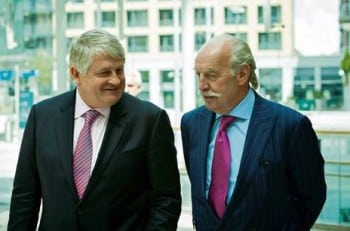
    D E N I S   O ‘  B R I E N   Dear Dermot, Bloody Catherine Murphy – on and on about Siteserv. Bought it for €45.4m from IBRC, formerly Anglo Irish Bank, while Siteserv owed Anglo €150m. Arthur Cox represented both sides of the sale. Perfectly fine. Chinese Walls. Top firm. Good people. We had to buy it sight unseen remember. That’s what people forget. No due diligence. Risk takers. The sale involved IBRC writing off €100m of Siteserv’s debt, and the distribution of €5m to Siteserv’s shareholders, instead of as part of the debt writedown. Clever. Easier too when Cox was representing me and Siteserv’s shareholders. At the time of the sale, the Sunday Business Post reported that Australian hedge fund Anchorage Capital had offered a higher price for the company. I mean, like, so what? Nothing like the second mobile licence situation. Nothing like it. French company Altrad too claimed it was denied the opportunity to make an offer for Siteserv – saying it had been prepared to offer €60m for the firm but that it was “effectively denied the opportunity because its representative was told the Irish group was not for sale”. The lads at Siteserv shoved out a statement dealing with it just fine: “Neither Siteserv’s board or its advisors ever received any formal approach or offer from Altrad prior to accepting the [O’Brien] offer”. Very Morrissey. Note it doesn’t deny Altrad was told it wasn’t even for sale. Brilliant. One against the head! Sean Corkery, ex-Esat, now head of Siteserv, top boy (my boy) told RTE: “I’m getting a little bit fed up of the constant questioning from Catherine Murphy in the sense that it’s the same question, I think she knows what the answer is in that it is that everything was completely above board and I’m trying to run a company I’m the CEO of that company”. Proper order. Cross sounding too. A few weeks ago, in another reply to the bloody woman, Noonan revealed that there were concerns raised about our Siteserv deal: “Through this review, Department of Finance raised concerns with the quality of some of the decisions, that legal advisors to the company referred to in the question had also acted for the purchaser, that a payment had been paid to the shareholders of the company referred to in the question, that some of those shareholders were members of the Board of the company referred to in the question and that a significant proportion of those shareholders appeared to be clients of the financial advisor on the transaction to the company referred to in the question”. In a later reply Noonan stated “it was agreed that my department would review this transaction to better understand the decisions taken by IBRC.… It was decided a senior department of finance official would be seconded to IBRC to explore opportunities for deleveraging with a view to maximising the recovery for the taxpayer. This had the additional benefit of providing greater oversight while supporting the management team”. In a reply on February 26 last Noonan confirmed to Ms SIPTU-head that the bank would consult with the minister in relation to “any transaction which resulted in an adverse impact on total regulatory capital of the bank of greater than €100m would require interaction between the minister and the IBRC”. But was that enough for Murphy?  She then asked, if that was the protocol, why wasn’t Minister Noonan involved in discussions with IBRC, regarding the Siteserv sale. In a reply, Minister Noonan stated that the protocol only came into effect on March 29, 2012 – 14 days after the Siteserv sale was completed. Nothing to see here. In late March the High Court (ring of steel) addressed the legality of the funding scheme for the Begrudgers United case against the award of that second mobile-phone licence to us. Losers ( I use the term advisedly) Persona want ‘Harbour Litigation Funding’ to fund their litigation in return for the blood money of a cut. Not that anyone’s intending to bleed of course. Anyway…back to me. About to join the advisory board of a new fund, founded by a Russian oligarch, that plans to invest at least $16bn (€14.6bn) in the European telecoms market: LetterOne Technology, a British-registered company founded by the Alfa Group’s Mikhail Fridman, whom Forbes says is Russia’s second-richest man, with a $15bn fortune. Alpha. Richest Man. Forbes.  I was in before you could say due diligence. Could be a good vehicle to take a punt on Eircom, whose lender-backers last year pulled a planned flotation. I want Eircom. I can show up O’Reilly,  again. I would have the utmost of sympathy for him and that is genuine. People say how could you have sympathy for him after the boardroom battle? I totally do because I can relate to difficulties. Everyone has this false impression that everything in business is a staircase you know, always going up. It is never like that. Beefed up board of Beacon hospital, whose chair is Colm Doherty former AIB CEO. Cowen. Former James’s Hospital CEO Brian Fitzgerald and former group financial controller of Kingspan, Darragh Kavanagh. Enjoyed Man U/Spurs sitting next to Sir Alex Ferguson at Old Trafford.  I like Alex.  I like sitting next to Alex.  I call him Alex and we watch football together. Little enough from you, meanwhile. Of course there’s that bloody  diamond mine  but it’s scarcely premier league. Your IIU has engaged posh lawyers advisers in London to fight a multimillion-dollar legal battle over your investment in a brawl against Canouan Resorts Development, the company behind the ultra-luxury Pink Sands development on Canouan island in St Vincent and the Grenadines. Canouan is the vehicle of banker Antonio Saladino, having secured a 99-year lease to develop an international resort on the 13sq km island in 1990. You bought into the $120m project on a 50:50 basis in 2010. Canouan is a little west of Barbados, where you’re a big investor in

    Loading

    Read more

  • Posted in:

    usury

    Negative Interest Rates would force investment, redistribute wealth and reduce debt. By Peter Emerson

    Loading

    Read more

  • Posted in:

    Wasting anger.

    By Michael Smith. Colm McCarthy, Ireland’s most unangry man, has stated portentously if unoriginally that “anger is not a policy”. He likes to reach smugly for a metaphorical spreadsheet that emits efficacious public policy to him alone, at his click. He’s right of course.  Always right! The Roman stoic philosopher Seneca agreed with him: anger was “worthless even for war”. For Catholics anger is one of the seven deadly sins. Aristotle, contrariwise, endorsed a bit of anger, at least when deployed to prevent injustice. The opposite of anger is a kind of insensibility, he reckoned. At the far end of the cultural spectrum (from Aristotle, not necessarily from McCarthy) the Sith Lord Sidious, from ‘Star Wars’, tells Anakin Skywalker who has metamorphosised into evil Darth Vader: “I can feel your anger. It gives you focus, makes you stronger!”. But in Ireland the strength has always outgunned the focus. Anger as represented in risings has an honoured tradition here dating back to Silken Thomas, the Desmond rebellions and Hugh O’Neill, in the sixteenth century. The State was founded in anger and indeed blood; and the 1916 Rising Proclamation refers to six rebellions in the previous 300 years. Of course post-colonial revolution focuses not on separatism but on politics, not quite so much on by what country as on by whom and how a country is governed. The most famous modern protests internationally were in 1968. Globally, exposure of the contradictions of capitalism has latterly again spawned anger on the streets, in the polling booths and in opinion polls: with Occupy and the Indignados, protests in Egypt and the rise of hard-right and hard-left poles in Europe, and of the Tea Party in the US. Characteristic of the latest wave of international protest has been the participation of ordinary people, not lobbies with lists of demands. Their mix of revelry and rage condemns the corruption, inefficiency and arrogance of the 1%, even if – whatever about protests – solutions are rarely coherent or consensual. In Ireland after an extraordinarily slow start a campaign is rallying to threaten the fundaments of a bondholder-friendly, unimaginative, regressive and arrogant government. The campaign has been a shrewd if rough-hewn balance of consensus and sulphur. The problem is it has coalesced around the wrong issue. A recent article in the Irish Times was headlined “Protest works – if it breaks rules”. Fine. But one rule it must not break is choosing the right thing to protest over. Even if doing so gets gratifyingly up the capacious nose of the establishment. On its own terms the water-tax campaign has been a resounding success, consensual, cross-party (opposition parties anyway) good-spirited though with a hard-nosed edge. There has been some violence. Joan Burton got ignominiously imprisoned in her car. A garda was hit by a stone outside the Dáil; and respect has gratifyingly disintegrated, taking the discourse with it. So An Taoiseach was told he was a c*** at a meeting about the Easter Rising commemorations, and feisty new Environment Minister Alan Kelly told Mattie McGrath TD to fuck off, because he was annoying him. Sinn Féin too has been busily registering its contempt at the irascible personage of the Ceann Comhairle. It sat in in the Dáil with very little immediate provocation from the speaker, and has stridently broken most of the august rules on parliamentary privilege. The problem is that if revolution, anger or even contempt were the currency we would have been rich half a millennium ago. But the history of revolution – that Marxists predicted would replace the bourgeoisie with the proletariat – instead dictated that the bourgeoisie was always replaced with the bourgeoisie, after a decent break. Not so exciting. The revolutionary generation in Ireland took the country through to the conservative, protectionist, frugal and religious fifties and sixties. The Civil War parties delivered nothing but conservatism, albeit sometimes – proving the point – cynically dressed up as socialism. The Labour Party failed to deliver on exciting manifestos every time it fell for power. The most hated government in Ireland’s history was replaced with a government so close in orientation to it that it is indistinguishable. It failed to deliver the anti-bondholder, anti-corruption, anti-profligacy policies its component parties had championed at election time. Meanwhile rampant, power-thirsty Sinn Féin which secretly dominated the December 10 water-charge protest, seems poised to replicate the mistakes of Fianna Fáil’s policy-free nationalistic populism in the South but with a retardation of 90 years. In the North Sinn Féin part-fronts one of the least radical governments in Europe. And after a crisis that looks like it has been almost entirely wasted it is still possible for Ireland’s best selling newspaper to feature on its cover Michael Fitzmaurice, newly elected independent TD for Leitrim/South-Roscommon, as the future of change. Fitzmaurice is chair of the burn-the-environment turfcutters, a cross of the earnestness of Peter Mathews and the gombeenism of Jackie Healy Rae (and their visual cross to boot). He is a man without a single coherent idea. He now plans to establish a party to replicate this vacuum as a platform and to stand 25 candidates in the general election. It will be “neither left or right wing but down the middle”. The problem is that if you’re not ideological you’ll split, because your troops will be annoyed when it turns out they didn’t get what they marched for – when they realise they got something else that only you thought they wanted. There are unlikely to be any great ideologies waiting to be discovered (though certainly we all crave new ideas): keep it Left, Right and maybe Green – and, if you must, Conservative or Liberal but spare us ideology-free nationalism, down-the-centrism or turfcutterism. After 100 years of independence! Michael Fitzmaurice is a split waiting for a movement and a generation, to squander. In other words what McCarthy said is true: anger and the reaction it generates does not effect social change or even clever ideas. Look at how the angry-about-planetary-destruction

    Loading

    Read more

  • Posted in:

    Yes in May.

    By Grainne Healy. In many ways the coming out of Minister Leo Varadker was the starting gun for the marriage equality referendum campaign. His announcement brought the forthcoming campaign to the attention of the media and the public in a manner few expected. On a yet to be determined Friday in May the Irish electorate will get to vote on whether or not they want lesbian and gay people to be able to marry the person they love. This is a referendum that is about recognition – recognition of the love and commitment that gay and lesbian couples have for each other; recognition that some of them want to get married so as to have Constitutional protection for their relationships and families; and recognition that they should have the right to choose to get married like all other citizens. A successful Register to Vote initiative (YesEquality) has been organised. Some 40,000 new voters put their names on the electoral register. These mostly young, first-time voters will be a crucial cohort in May. All recent polls on voting intentions show that a majority will vote Yes, but until now those being polled have not been engaged with the campaign. Younger voters are hugely supportive of the proposal. Ensuring that the youth vote is mobilised and informed is a key challenge. Student and youth organisations are already launching initiates in this regard. Irish society has come a long way since decriminalisation of homosexuality in 1993. Civil Partnership in 2010 was a milestone on the road to equality for same-sex couples. Civil marriage equality will bring equal recognition before the law for lesbian and gay people. If you support the campaign, you could: Start conversations: Conversations about the referendum at home or in the work place are important. Ask others how they are thinking of voting. Encourage them to check the register and to vote. Explain your reasons for voting Yes. (see www.marriagequality.ie for information). Donate: A fundraising initiative (#sharethelove) asking people to give small personal donations or organise fundraising events for the campaign has been launched. If you text Love to 51500 you will get a text back telling you how to make a donation. Encourage your friends to donate too. Get organised locally: Join or form a local group interested in canvassing in the run up to the vote. Identify the spaces in your locality where people gather, and where you could canvas their vote. Groups are forming, targeting train stations or simply planning to knock on doors with campaign leaflets. Note the date: Make sure you put the referendum date in your diary when announced. Vote Yes on the day. Tell ten others about the date and organise to go together to vote or give a lift to those who need support to get to the polling station. Many civil society organisations are gearing up to support the campaign, including the Trade Unionists for Civil Marriage Equality, USI’s #makegráthelaw, students for marriage equality, and Faith in Marriage for people of various faith communities who intend to call for a Yes vote. A coalition campaign for civil marriage equality will soon be launched. ICCL, GLEN and Marriage Equality will play leading roles in co-ordinating it. This grassroots-led, grassroots-targeted campaign will be looking for local community groups and bodies who support a Yes vote to ensure that as many doors as possible are knocked upon and as many Dart/Luas/train stations and football/sporting occasions as possible have a Yes campaign presence. The Children and Family Relationships Bill (2014) is being debated in the Oireachtas. It will bring greater equality for diverse family types including addressing issues of guardianship, parenting and the right to apply to be adoptive parents for same-sex couples. Voters must see clearly that the referendum is not asking people to judge whether or not lesbian and gay people make good parents or should be allowed to parent. Lesbian and gay people already make wonderful parents. This issue is likely to be raised by the opposition and voters must understand that what they are being asked to vote on is the right for lesbian and gay people to enter the institution of civil marriage. We want to live in a country where you can marry the person you love. •

    Loading

    Read more

  • Posted in:

    Ah, lads.

    Private educational privileges. By Niall Crowley The current defence of inherited privilege in the debate about the Education (Admissions to Schools) Bill is ugly no matter how you dress it up. There is the call to ethos and tradition, the soothing reassurance that this is not about excluding the disadvantaged, and the satisfying flexing of legal muscle and ‘contacts’. There is the inevitable support of the Catholic Church. The Bill requires schools to implement an admissions policy that respects “principles of inclusion, equality and the right of parents to send their children to a school of the parents’ choice”. That seems right and proper. An accompanying draft regulation sets out that, where there are more applicants than places available, priority may not be given to a relative of a former student of the school. Schools are allowed to seek a derogation from this which would allow no more than 25% of available places in any school year to be filled by application of a past-pupil criterion. The Joint Oireachtas Committee on Education and Social Protection found this derogation too generous. They suggested it was “unclear as to why the relevant percentage was set at 25%” and that “there should be no such derogation, and that a school should not be permitted to give priority to a student on the grounds that he or she is the son or daughter of a former student of the school”. The Catholic Church rushed to the barricades. The executive chair of the Catholic Schools Partnership stated: “We are strongly of the view that admissions should not be dealt with by legislation”. The elite ranks of the privately educated then moved in. The ‘Unions’ of past pupils of some fee-paying schools took up the cause. This was despite their schools still being able to protect privilege behind the barrier of high fees. They did so without consultation with their alumni ‘members’ on the assumption that this defence of inherited privilege would inevitably be supported. The Belvedere Union wrote to its members, “This isn’t just a threat to us, it is a threat to all schools in the country who rely on the goodwill, generosity and buy-in of past pupils”. Money in other words is the tradition, to be defended. The Blackrock Union wrote to its members: “Blackrock College has operated a fair and transparent admissions policy without unjust State interference” and “The admissions policy has engendered a positive community spirit through many generations of ‘Rockmen’ and has never before been so unjustly challenged by the State”. Transparent: perhaps, but fair? On what definition? Gonzaga Union sought to “maintain its autonomy in admission policy” but “this should not be interpreted as a desire to foster privilege or exclude pupils from entry to Gonzaga”. But – whatever the desire – it patently is about privilege and exclusion. A discrimination case taken by a Traveller woman whose son was not admitted to Christian Brothers High School in Clonmel has recently ended up in the Supreme Court. The complaint was about the school’s policy of giving priority to students whose fathers were past pupils. It was pointed out that Travellers were statistically much less likely to have a father that attended secondary school. Only 10% of that child’s parents’ generation progressed to secondary school compared to 66% of the general population. The Equality Tribunal found this policy to be discriminatory, though the High Court overturned the decision – and the Supreme Court decision is awaited. A 2009 ESRI study on the integration of pupils in schools considered the effects of admission practices and polices on the distribution of ‘newcomer’ pupils across schools. Some of the selection criteria applied by schools were found to exclude newcomer pupils including giving preference to those applicants with siblings already in the school and to children of staff or past pupils. This was already leading to a level of segregation at primary level. Those most engaged in this defence of inherited privilege are fee-paying schools which couch their defence in terms of autonomy and freedom from state interference. This is principle-free self-serving selectivity, given their equally stout defence of state interference when it comes to any challenge to the €100 million annual subvention to these schools – from the state. Education is the engine of equality. Particular scruple is required to avoid the privileged perpetuating their privilege through weasel words that underplay the signicance of exclusionary practices in private education. •

    Loading

    Read more