

Politics

Random entry RSS

  • Posted in:

    UPDATED: Newly discovered evidence of a secret Kitson-RUC plot to safeguard the UVF. By David Burke.

    The campaign for the truth about the infamous McGurk’s bar bombing has uncovered the existence of a covert intrigue hatched by the British Army’s counter-insurgency (i.e., dirty tricks) guru, Brigadier Frank Kitson, and the RUC, to conceal the truth about the UVF’s bomb attack massacre at McGurk’s bar fifty years ago. Kitson and the RUC conspired to blame the attack on the IRA. The explosion caused the building to collapse, killing fifteen Catholic civilians—including two children—and wounding seventeen more. It was the deadliest attack in Belfast during the Troubles. The Ministry of Defence has told the campaign that it has no record of the scheme to switch blame from the UVF to the IRA. The PSNI (as successor to the RUC), is being non-committal. They undoubtedly know full well that (a) there was a secret arrangement and (b) precisely what it entailed, but don’t want to admit the deeply shameful truth. The reason for believing the PSNI knows what happened is because the Police Ombudsman for Northern Ireland has details of the secret compact. It is not prepared to provide them to the families of the deceased, at least not at this stage. What are the MoD and PSNI/RUC trying to hide? What is so controverdial that it merits a cover-up 50 plus years after the event? What are the MoD and PSNI/RUC trying to hide? What is so controverdial that it merits a cover-up 50 plus years after the event? The British Army was deployed in Northern Ireland in 1969 to protect Nationalists from organised Loyalist attacks involving attempts to burn them out of their homes. The Army was sent to their rescue. The soldiers were welcomed by the Nationalist/Catholic community. Their arrival ushered in a ‘honeymoon’ period during which relations between the Army and Catholics were harmonious, if not warm. At the time, the threat to the Army and police emanated from Loyalists. In October 1969 Loyalists rioted and murdered Victor Arbuckle, the first police officer to die during the Troubles. The honeymoon period began to peter out as 1970 dragged on. The reasons for its decline are complex, multifaceted and controversial. What is crystal clear, however, is that Brigadier (later General Sir) Frank Kitson, who had been sent to Belfast in September 1970, chose to abandon peacekeeping and go on the offensive instead. He decided he did not want to take on both Nationalist and Loyalists and opted to attack the IRA (then consisting of the Officials and Provisionals). He used ancient dirty trick tactics which he had brought up to date in colonies such as Kenya and Malaya. In a nut shell, he used Loyalist terror gangs as proxy assassins to kill IRA members. I set out the evidence that Kitson and elements within the RUC were using the UDA assassination squad commanded by Tommy Herron of the UDA’s Inner Council as proxy assassins in my recent book on Kitson. It includes a chapter on Herron and one of his top killers, Albert ‘Ginger’ Baker. If the UVF attack on McGurk’s had sparked  the internment of the UVF, it was likely that figures in the UDA such as Herron and Baker would have become targets too. When internment was introduced in August 1971, Kitson’s Loyalist cats’-paws were not interned. The McGurk’s bar bomb atrocity of December 1971 – four months later – threatened to change this set of affairs. Had the truth about the bomb attack emerged, i.e. that the UVF was responsible for the bomb in the bar – not the IRA, it would have amplified calls to intern members of the UVF and UDA. Who would carry out Kitson’s assassination programme if the Army and RUC were ordered to intern Loyalist gunmen? At the time, Kitson and the SAS were also training a secret army, the MRF. Its personnel were drawn from the Army. The MRF had an assassination wing. When the MRF was deployed on shoot to kill missions in 1972, they wore civilian clothing thereby inviting the public to conclude they were Loyalist terrorists when the circumstances so demanded. If Loyalists were to be interned in a widespread and effective manner, it had the potential to strip the MRF assassins of their cover i.e., the public perception that MRF hits were the work of the UVF and UDA. Overall, the McGurk bar bombing was a threat to Kitson’s various lethal strategies. Hence, the McGurk attack was portrayed as an IRA ‘own goal’. Kitson, a black propaganda expert, saw to it that the attack was blamed on a non-existent IRA unit which was meant to have carried the bomb into the pub en route to its final destination, but that it exploded prematurely. Kitson knew that this was a lie. Kitson’s template for the exploitation and manipulation of Loyalist gangs as proxy assassins was pursued for three decades by MI5, the MRF, RUC Special Branch, the FRU and a host of other secret departments. The UVF was deeply involved in these clandestine programmes. Robin ‘the Jackal’ Jackson of the UVF featured prominently in collusive murders during the 1970s and 1980s. The newly discovered Kitson-RUC arrangement by the McGurk’s bar bomb campaign for justice threatens to reveal some of the early roots of this practice. UPDATE 2 May 2022: The following information is from a press release from the campaign for the truth about the McGurk’s bar massscre Chief Constable Snubs Massacre Families and Withholds Evidence The Chief Constable of Police Service Northern Ireland has yet again snubbed the families of the McGurk’s Bar Massacre despite a protest at the Policing Board to mark the 50th anniversary of the atrocity and an official request to meet with him. Instead, a police representative of the Chief Constable has informed the families that PSNI is withholding critical evidence of the police and British Army cover-up of the massacre. On 2nd December 2021, families of those killed and injured in the McGurk’s Bar Massacre were left out in the cold at the Policing Board when Chief Constable Simon

    Loading

    Read more

  • Posted in:

    Dr Jekyll… An Bord Pleanála and Mr Paul Hyde. By Michael Smith.

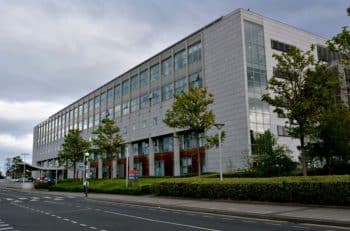
        • An Bord Pleanála’s manifest ethical weakness in perspective • The planning appeals board, An Bord Pleanála, has been brought into disrepute by its deputy chairperson’s property deals, by his criminal failed declarations of property interests and mishandled conflicts of interests, and by his receiverships.  He must go.   System of Planning Appeals The 1963 Planning Act prescribed that planning appeals from local authorities would be decided by the Minister for Local Government.   An Bord Pleanála formed After years of unease with the corruptible system that resulted, An Bord Pleanála (ABP) was established in 1977 under the Local Government (Planning and Development) Act, 1976 and has ever since been responsible for the determination of appeals and certain other matters under the Planning and Development Acts 2000-2019, and of applications for strategic infrastructure development including major road and railway cases.   It is an independent, statutory, quasi-judicial body.   Change to system of appointment of ABP members Board members were directly appointed by the Minister until 1983 when the system was reformed following unease with appointments of acolytes, including his own constituency advisor, by corrupt Minister Ray Burke in the golden era of Fianna Fáil-led planning corruption.   The reforms established a new ‘arms’ length’ approach where members of the board, who take the decisions,  are appointed by a committee chaired by the President of the High Court and selected by different interest groups. When I was chairman of An Taisce I was ex officio on the committee that appointed the chairman in 2002 and I can vouch for the thoroughness of the interview process. Mind you, the system does favour the Minister’s, or at least the Department’s,  preferred candidate since the Department’s Secretary General is always a force on the committee,  hosts the meetings and reads the rules.   The membership of the board, which is based in Marlborough St in Dublin 1, is determined by the Planning and Development Acts.   A Chairperson of the board holds office for seven years and can be re-appointed for a second or subsequent term of office. The Chairperson is appointed by the Government.   ABP’s performance In 2020, the board received a total of 2,753 cases. Planning appeals (1,956 cases) accounted for over 71% of all cases received in 2020, with two-thirds of all appeals relating to residential developments. Only 47% of all appeals are taken by third parties (i.e. not developers/applicants). The chart below shows that ABP overturns local authorities’ decisions in 27% of cases, varies them in 47% of cases and confirms them in 26% of cases.  It grants permission in 65% of cases and refuses it in 35% of cases. Compliance with ABP’s 18-week-decision target continued in an upward trend from 39% in 2018 to 69% in 2019, and 76% in 2020. Legal challenges Between 2017 and 2020, the number of legal challenges brought against decisions of An Bord Pleanála increased by 74%. An Bord Pleanála’s rulings were successfully challenged in 63% of High Court cases in 2020, according to the planning body’s annual report.   There were 51 legal cases in 2020 and the board lost 32. ABP’s legal costs were  €8.2m in 2020, more than twice the figure for 2019. The figure was similar in 2021. Legal costs scandalously account for almost half ABP’s public funding and 30 percent of its total budget.     In 19 cases the High Court quashed the planning permission while in 13 cases the board admitted to defects in its decision-making process.   Only 11 decisions were upheld while another eight were discontinued or withdrawn.   The Bord has a terrible track record with controversial SHD (Strategic Housing Development) – large-scale residential applications which bypass local authorities. However, the percentage of overall planning decisions that are subject of legal challenge annually remains very small (only 0.3% in 2020) and only 0.07% of decisions were overturned by the courts.   Financing ABP’s income in 2019 totalled €28 million. Just over €6 million, or 23%, was comprised of fee receipts. Grant funding issued from government amounted to €18.6 million in 2019. Expenditure on salaries and related costs amounted to €16.2 million, representing approximately two thirds of the board’s expenditure in 2019. It had 175.3 whole-time equivalent staff and nine board members.   Expenditure on legal fees amounted to €8.2 million. The balance of expenditure of €5.4 million related to premises and other operating expenses. The surplus for the year was €2.8 million.   Quality of decisions The current board is particularly pro-development.  Partly this is driven by edicts, for example on height, density and small apartment sizes, which bind it.  The board has always tended to apply local authority development plan standards more stringently than the local authorities themselves. This is because it is not subject to the parochial lobbyings of county councillors.   For a long time that led ABP to higher standards than those of local authorities.  However, since the time of former Fine Gael housing minister Eoghan Murphy and his predecessor Labour’s Alan Kelly, in particular, national standards have been lower than those local authorities would like to apply, and the era of a stringent ABP pushing an official government agenda of sustainable development has passed.   Membership of board The Minister for Housing, Planning and Local Government appoints up to nine ordinary board members, including the deputy chairperson, plus the chairperson, making ten members (there is one current vacancy). Normally, board members are proposed by four groups of organisations representing professional, environmental, development, local government, rural and local development and general interests. Sometimes, one member of the board can be a civil servant appointed by the Minister. Ordinary board members normally hold office for five years and can be re-appointed for a second or subsequent term.   Its Chairperson is Dave Walsh who was appointed for the period of seven years in October, 2018. He had been Assistant Secretary in the Department of Housing, Planning and Local Government, with primary responsibility for planning policy, including

    Loading

    Read more

  • Posted in:

    McKinseygalitarian no more

    The young man with the enormous brain who had come racing in to rescue us from the Banks, the IMF and Fianna Fáil had decided that the only way you solve the problem of Fianna Fáil was by joining it

    Loading

    Read more

  • Posted in:

    Immationalism

    Fianna Fáil and Fine Gael deny any historical analogy between their own party histories and the process which Sinn Féin/IRA are currently going through to make the transition from political violence to fully peaceful democracy; and Sinn Féin confuses the inspiration nationalists have drawn on from preceding generations of revolutionaries with institutional continuity

    Loading

    Read more

  • Posted in:

    TWITT

    When it comes to naming Bloody Sunday murderer, Soldier F, Twitter isn’t enforcing its own rules that allow censorship only in accordance with the laws of the tweeter’s own country

    Loading

    Read more