

Politics

Random entry RSS

  • Posted in:

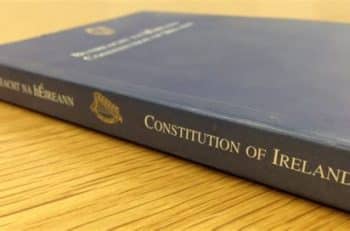
    Stádas bunreachtúil na Gaeilge in Éirinn aontaithe. Le Dáithí Mac Cárthaigh.

    Tá borradh tagtha agus ag teacht faoi stádas agus úsáid na Gaeilge sa saol oifigiúil. Is teanga oifigiúil oibre den Aontas Eorpach í gan mhaolú, cíos, cás ná cathú ón 1ú Eanáir 2022. Feasta achtófar agus clófar gach rialachán, treoir agus cinneadh den Aontas as Gaeilge ag an am céanna agus ar aon dul leis na leaganacha sna 23 teanga oifigiúil eile idir mhórtheangacha domhanda cosúil le Béarla, Fraincis agus Gearmáinis agus teangacha na náisiún beag cosúil le Máltais, Eastóinis nó Laitvis. Tá Acht na dTeangacha Oifigiúla leasaithe agus an tAcht leasaithe sínithe ag Uachtarán na hÉireann. I measc na leasuithe is suntasaí anseo féachfar go mbeidh 20% ar a laghad den fhoireann a earcófar chuig comhlachtaí poiblí inniúil sa Ghaeilge faoin 31 Nollaig 2030 agus cuirfear seirbhísí poiblí ar fáil as Gaeilge sa Ghaeltacht. Beidh 20% d’fhógraíocht chomhlachtaí poiblí as Gaeilge agus caithfear 5% dá mbuiséid fógraíochta ar na meáin Ghaeilge. Éascófar úsáid síntí fada, cinnteofar lógónna dátheangacha, foirmeacha dátheangacha agus ábhar margaíochta dátheangach do chomhlachtaí poiblí. Leagfar síos prótacail nó caighdeáin chinnte maidir le seirbhísí as Gaeilge ó chomhlachtaí poiblí agus cuimseoidh na dualgais seo seirbhísí a chuireann comhlachtaí príobháideacha ar fáil thar ceann comhlachtaí poiblí. Tá reachtaíocht teanga á achtú do na Sé Chontae, reachtaíocht lena mbunófar caighdeáin teanga faoina soláthrófar seirbhísí poiblí as Gaeilge agus Coimisinéir Gaeilge a fheidhmeoidh mar ombudsman teanga. Sa chomhthéacs fáis seo, ní foláir a chinntiú go slánófar stádas na Gaeilge mar theanga oifigiúil faoi aon socrú bunreachtúil nua. Is slán don stádas láidir oifigiúil ag leibhéal an Aontais Eorpaigh agus is gá a chomhaith a chur i bhfeidhm ag baile. I gcomhthéacs Éireann Aontaithe, beidh cosaint cearta mionlach go mór i gceist, lucht labhartha na Gaeilge ina measc. Ó thaobh cosaint mionlaigh teanga de, tá múnla eiseamláireach le fáil i ndlí bunreachtúil Cheanada sa Chairt Cheanadach um Chearta agus Saoirsí a leagtar amach agus a phléitear thíos. An Ghaeilge mar phríomhtheanga oifigiúil Ó bhunú an Stáit, tá an Ghaeilge neadaithe mar theanga náisiúnta na tíre agus ó 1937 le h-achtú an bhunreachta reatha is í an príomhtheanga oifigiúil í toisc gurb í an teanga náisiúnta í. Is cuma nach ndéantar beart de réir briathair ina thaobh seo i gcónaí. Is beag dlí a chomhlíontar a chuid riachtanas an t-am ar fad ach ní chealaíonn sé sin an t-ordaitheach bunreachtúil a eascraíonn ón seasamh bunreachtúil seo. Cuimhnítear gur ráthaíodh comhionannas idir shaoránaigh ó 1937 i leith ach gurbh éigean do mhná éirí as poist stáit nuair a phósaidís anuas go dtí 1973 agus nár cuireadh deireadh leis an gcleachtas leatromach seo ach faoi anáil dlí an Aontais Eorpaigh. Mar an gcéanna, is de bharr seasamh bunreachtúil seo na Gaeilge agus an t-ordaitheach a leanann é a baineadh amach aon bhua don Ghaeilge sna cúirteanna. An té a mholann an stádas sin a mhaolú, ní ar mhaithe leis an nGaeilge atá sé, é sin nó ní thuigeann sé an Bunreacht.   Bunreacht Saorstát Éireann 1922 D’fhoráiltí le hAirteagal 4 Bhunreacht 1922 mar seo a leanas: Sí an Ghaedhilg teanga Náisiúnta Shaorstáit Éireann, ach có-aithneofar an Béarla mar theanga oifigiúil. Ní choiscfidh éinní san Airtiogal so ar an Oireachtas forálacha speisialta do dhéanamh do cheanntair nó do líomatáistí ná fuil ach teanga amháin i ngnáth-úsáid ionta. Cheadaítí maolú ar an dátheangachas oifigiúil ag deireadh an Airteagail ‘to provide for the contingency of the entry of Northern Ireland into the Free State’ dar le Kohn The Constitution of the Irish Free State (Londain 1932), lch 124. Thráchtaí ar chúrsaí teanga chomh maith in Airteagal 42: Chó luath agus féadfar tar éis d’aon dlí aontú an Rí d’fháil, cuirfidh an cléireach no pé oifigeach eile a cheapfaidh Dáil Éireann chuige sin dhá chóip chearta den dlí sin á dhéanamh, ceann aca i nGaedhilg agus an ceann eile i mBéarla (agus sighneoidh Ionadaí na Coróinneach ceann de sna cóipeanna san chun é do chur ar rolla cuimhnte in oifig an oifigigh sin den Chúirt Uachtarach ar a gcinnfidh Dáil Éireann), agus beidh na cóipeanna san mar fhínéacht chríochnuithe ar fhorálacha gach dlí dá sórt, agus i gcás coinbhlíocht idir an dá chóip a cuirfear i dtaisce mar sin, sé an ceann a bheidh sighnithe ag Ionadaí na Coróinneach a bhuaidhfidh. Tá cúpla léamh ar an bhforáil seo. Dar leis an gcéad Phríomh-Bhreitheamh, Aodh Ó Cinneide, sa chás Ó Foghludha v. McClean [1934] I.R. 469 gur thug an tAirteagal achtú dátheangach le fios seachas achtú as Béarla amháin agus tiontú Gaeilge a chur amach ar ball agus luaigh sé an nós billí/achtanna a rith go dátheangach i dtíortha eile den dlí coiteann a raibh dhá theanga oifigiúla acu .i. Ceanada (Béarla agus Fraincis) agus an Afraic Theas (Béarla agus Ísiltíris).   Bunreacht na hÉireann 1937 Foráiltear le hAirteagal 8 den Bhunreacht reatha mar seo a leanas: Ós í an Ghaeilge an teanga náisiúnta is í an phríomhtheanga oifigiúil í. Glactar leis an Sacs-Bhéarla mar theanga oifigiúil eile. Ach féadfar socrú a dhéanamh le dlí d’fhonn ceachtar den dá teanga sin a bheith ina haonteanga le haghaidh aon ghnó nó gnóthaí oifigiúla ar fud an Stáit ar fad nó in aon chuid de. Is ionann stádas príomhúil na Gaeilge in Airteagal 8.1 agus ordaitheach bunreachtúil ar ar bunaíodh na cearta a baineadh amach sna cúirteanna, an ceart chun éisteachta a fháil os comhair breitheamh a thuigeann do chuid Gaeilge, m.sh. (Ó Cadhla v. An tAire Dlí agus Cirt [2019] IEHC 503). Tugtar faoi deara gur mó an poll sa taoschnó áfach in Airteagal 8.3 más ea, in ainneoin nár achtaíodh riamh dlí den chineál a dtráchtar air ann. Tráchtar ar chúrsaí reachtaíochta agus ar chúrsaí teanga in Airteagal 25. Foráiltear le hAirteagal 25.4.4° agus 6° mar seo a leanas: 4° i gcás an tUachtarán do chur a láimhe le téacs Bille i dteanga de na teangacha oifigiúla agus sa teanga sin amháin, ní foláir tiontú oifigiúil a chur amach sa teanga oifigiúil eile. 6° i gcás téacs Gaeilge agus téacs Sacs-Bhéarla de dhlí a chur isteach ina n-iris

    Loading

    Read more

  • Posted in:

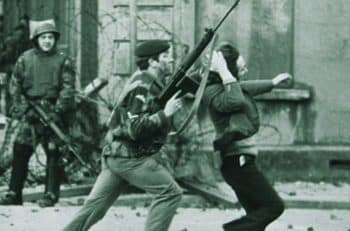
    Was revenge the cause of the ferocity on Bloody Sunday? By Brian Lacey, author of 'Siege City: the story of Derry and Londonderry'.

    The 2010 Report of the Saville Enquiry describes much of what happened in Derry on Bloody Sunday (30 January 1972). Various commentaries and later publications have added further information, some of it of a nature that the authorities must have hoped would never be revealed. It seems however that the ferocity of the slaughter that day has still not been adequately explained. Could ‘pure’ revenge be that explanation, as it had been on several other occasions in the past when the British army committed similar atrocities in Ireland. In the late 1980s while living in Derry and in the course of doing research for my book ‘Siege City: the story of Derry and Londonderry’ (published 1990), I became aware that as well as the terrible deaths in the city on Bloody Sunday, on the same day Major Robin Alers-Hankey, an officer in the Royal Green Jackets, had died also – but in London.  Major Alers-Hankey was the first British army officer to be killed in the Troubles.  He died of an injury sustained several months earlier while on duty in Derry’s Bogside, at a location that figured prominently in the deaths of the civilians on Bloody Sunday.  There are slightly differing accounts of the incident but, apparently, he was shot while providing security cover for the fire brigade which had been called out to a burning building in Abbey Street. It is possible that the fire had been started deliberately with the intention of luring the soldiers into an ambush. I was struck by the coincidence of the major’s death on the same day as the terrible events in Derry itself and wondered if there could have been any connection between the two tragedies.  However, I didn’t know what time of the day the major had died and in those pre-googling days I had no easy way of finding out.  Clearly his death would have had to have occurred before the slaughter in Derry if there was to have been any connection. I mentioned the subject to various people in Derry from time to time, but I never met anybody who seemed to know much about the incident.  Most times I spoke about it I got the distinct impression that people thought I’d be better not to enquire too much into the matter; at best it would be seen as a distraction from the main unresolved issues, at worst I might even be accused of providing a ‘reason’ or possibly an ‘excuse’ for the actions of the paras.  The latter, of course, was the last thing on my mind; but as an historian I felt that the question was worth pursuing or, at very least, worth asking. I was asked by the Bloody Sunday Trust to chair a fairly large public meeting in the Pilots’ Row Community Centre in the Bogside on the weekend of the 25th anniversary of Bloody Sunday, in 1997.  In the course of my introduction, I mentioned the Alers-Hankey affair and although some of my other remarks were responded to by those attending and reported, for example in the Derry Journal, my reference to the officer’s death seemed to fall totally flat and was not mentioned again. On 25 January 2002, however, the Irish Times reported that Martin McGuinness “was under pressure to state all he knows about 34 murders carried out by the IRA in Derry during 1972”. Among those listed was the killing of Robin Alers-Hankey. On 8 February 2002, the Irish Times published a letter from Jonathan Stephenson, a trades union official in Belfast and a former chairman of the SDLP (1995-8). It appeared under the heading ‘Remembering Bloody Sunday’. In the letter Mr Stephenson (who was English) mentioned that Major Alers-Hankey was ‘a member of my family’. He went on to refer to Martin McGuinness’s role in the IRA in Derry saying: ‘it is entirely possible that Mr McGuinness might have a fair idea who killed him [Major Alers-Hankey].’ I didn’t pursue the matter in any way subsequently although my curiosity about it remained. I assumed that it would be dealt with by the Saville Enquiry.  By then living in Dublin, I made a preliminary check of the Saville Report immediately on its publication on 15 June 2010. The Report does mention the major’s death on Bloody Sunday as background to the situation in Derry at that time but (as far as I know) it does not mention the time of his death or suggest any link with the atrocity.  There also seems to be some discrepancy in the dates given for the original wounding of the major: Saville states 2 September 1971, while a number of army-related sources (e.g. Holywood Palace Barracks website) suggest 16 October. On the day of the Saville Report publication (15 June 2010) and over the next few days I made attempts to contact a well-known journalist who I thought might be interested in what I had to say about the matter and who might mention it in his own coverage.* Having failed to make contact I wrote a short letter to the Irish Times, still indicating that I was unaware of the time of the Major’s death. The letter was published on 17 June and among those who contacted me as a result (18 June) was a female reporter from RTÉ/TG4 Nuacht who wanted to interview me.  Unfortunately, I cannot now remember the reporter’s name.  On the phone, I explained to her that my hypothesis that there might be a connection between the two events was dependant on the time of the major’s death and if it was possible that news of it could have reached Derry prior to the attack on the marchers. An hour later the interview crew arrived in my office in Dublin.  In the meantime, the reporter had done a bit of googling and had found a relevant reference in ‘Those are real bullets: Bloody Sunday, Derry, 1972’ by Peter Pringle and Philip Jacobson (published 2000). The following is the relevant

    Loading

    Read more

  • Posted in:

     Vatican/Vested interests 10: Women of Ireland 0. The people and process failures that created the St Vincent's NMH débacle. By Peter Boylan.

    The ownership and governance arrangements for the new National Maternity Hospital (NMH) are fraught with risk for future generations of women in Ireland. The board structure of the new hospital makes it liable to capture and control by the 3/3/3 membership structure.   The NMH will have minority representation of only three out of nine on its own board, and one of its directors is limited to chairing its own board for a maximum three out of nine years.   The three St Vincent’s Hospital Group (SVHG) directors are committed to the “continuance of the fulfilment” of the  evidently Catholic mission of the Venerable Mary Aikenhead, the founder of the Religious Sisters of Charity who is well advanced in the process of becoming a saint in the Catholic Church. One of these directors too will chair the NMH board for three out of every nine years.   Minister Donnelly claims he can guarantee that his successors over the next 299 years will not appoint three anti-choice members who could combine with the three SVHG members to form a 6:3 anti-choice majority. There is no need to speculate that such a situation might arise in fifty or a hundred years.   Memories are clear of the infamous picture of the majority of the Fianna Fáil parliamentary party just four years ago — women to the forefront — holding up “Love Both” posters; while men in the background all affirm their anti-choice position.   In a final blow for NMH board independence, one of the ministerial nominees will chair the board for three out of every nine years.   The global pushback on women’s reproductive rights is constant.   Majorities on controlling boards matter.   Just look at how a majority anti-choice Supreme Court in the USA is poised to overturn Roe v Wade.   Problems with the NMH relocation plan began can be traced back to a letter written by then Master, Dr Rhona Mahony, and Deputy Chair Mr Nicholas Kearns to Kieran Mulvey in September 2016.   Problems with the NMH relocation plan began can be traced back to a letter written by then Master, Dr Rhona Mahony, and Deputy Chair Mr Nicholas Kearns to Kieran Mulvey in September 2016.   “We agree that the ownership of what is now the NMH will transfer to the ownership of SVHG, a private company owned by the Sisters of Charity”.   Simon Harris, then Minister for Health, enthusiastically embraced this plan in the Mulvey report   Simon Harris, then Minister for Health, enthusiastically embraced this plan in the Mulvey report, apparently untroubled by the history of the Magdalene laundries in Ireland and seeing no possible risk in a Catholic religious order owning the State’s flagship maternity hospital.   When the predictable public uproar ensued, five years of complicated and secretive legal manoeuvres commenced.   The Sisters announced they were departing healthcare. Not true, they were gifting their land to their successor private company, St Vincent’s Holdings.   The Sisters announced they were departing healthcare – a plan in the works for several years before May 2017 – and were “gifting lands worth €200 million to the People of Ireland”.   Not true, they were gifting their land to their successor private company, St Vincent’s Holdings.   They then tried to claim that they did not need Vatican permission for the shareholding transfer. Not true either.   They then tried to claim that uniquely among Catholic religious orders they did not need Vatican permission for their shareholding transfer.   Not true either.   Two more years passed while the machinery in Rome considered the Sisters’ petition. In Ireland, a dizzying number of legal documents whizzed between top law firms as the State’s attempt to dig itself out the hole it had created for itself became increasingly labyrinthine and Byzantine.   Following correspondence between the Sisters, the Irish Catholic hierarchy, the Papal Nuncio, and the Vatican, conditional permission was granted in 2020 for the creation of St Vincent’s Holdings. Two further years passed while the civil law process got underway.   In a spectacular failure of due diligence, that correspondence has never been seen by the Government who have now committed to spending a billion euros   In a spectacular failure of due diligence, that correspondence has never been seen by the Government who have now committed to spending a billion euros, and probably more, on a new hospital whose operating company NMH DAC will be owned by St Vincent’s Holdings – the Sisters’ Vatican-approved successor.   Only sustained opposition and public pressure forced the release of some of the tangled web of legal documentation following failure to approve Minister Donnelly’s Memo to Cabinet two weeks ago.   Contradictory “definitions” were put forward about the term “clinically appropriate” including one risible proposition that it was to ensure NMH clinicians didn’t indulge in a spot of brain surgery when they were supposed to be doing a caesarian section.   In a new twist, fresh consternation arose about the term “clinically appropriate” in the documents. Taken by surprise, different and contradictory “definitions” were put forward, including one risible proposition that it was to ensure NMH clinicians didn’t indulge in a spot of brain surgery when they were supposed to be doing a caesarian section.   Doctors such as Professor Louise Kenny and myself were clear that these words make the provision of legally permissible services dependent on the clinical decision of a doctor rather than the request of woman on a case-by-case basis. They remove patient autonomy.   Nothing has changed since the Chairman of SVHG, Mr James Menton made clear in May 2017 that the project “will only proceed on the basis of existing agreements that give ownership and control of the new hospital to St Vincent’s Healthcare Group” Irish Times May 30 2017 .   His objective has been wholly achieved.   Vatican/Vested interests 10: Women of Ireland 0.   And the Government, as we now know, has never been on the pitch.   Dr

    Loading

    Read more

  • Posted in:

    'God's Cop' has gone to meet his maker. He will have a few questions to answer. By Joseph de Burca.

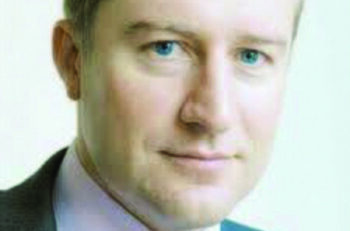
    The article which featured Anderton was about John Stalker and a number of other honourable English police officers and soldiers who had tried to do the right thing in Ireland. The relevant section  read as follows:   The late John Stalker, the former Deputy Chief Constable of Manchester, investigated the RUC’s shoot to kill programme in Ireland in the 1980s. He discovered, for example, that the RUC and MI5 had murdered a teenage boy who had stumbled across an IRA arms dump in a hay shed. Stalker refused to back off and was stabbed in the back by his own side. The deepest wounds were those inflicted by his boss, James Anderton,  a man who believed that God spoke ‘to him and through him’. In reality Anderton became an accessory after the fact to the murder of the boy at the hay shed. Stalker was smeared by a corrupt press in Britain, linked to criminality and taken off his inquiry. The killers got away Scot free as did all of those involved in shafting Stalker. Few in Britain could have cared less. Although he cleared his name, Stalker retired from the police early a demoralised man. The photo which accompanied the article appeared and read as follows: Former Chief Constable James Anderton. He stabbed his own deputy in the back to help MI5 cover up the murder of an innocent teenager. The original article can be found here: Updated: The very best (and worst) of British.   Anderton was also a homophobe. He claimed homosexuals with AIDS were ‘swirling in a human cesspit of their own making’. According to The Guardian he ‘encouraged his officers to stalk [Manchester’s] dank alleys and expose anyone caught in a clinch, while police motorboats with spotlights cruised for gay men around the canal’s locks and bridges.’ In 2011, historian Jeff Evans told the Manchester Evening News: ‘I’ve interviewed retired officers who took part in police surveillance of public toilets, lying in the roof space watching men urinate for hours on end.’ He believed that “sodomy in males ought to be against the law”. Anderton was also a Freemason, a clandestine  organisation which rejects Christianity. How Anderton reconciled his membership of that brotherhood with his purported religious beliefs is a mystery.  “God works in mysterious ways,” he said.  Of his religion, he once boasted: “Given my love of God and my belief in God and Jesus Christ, I have to accept that I may well be used by God [in my police work].” Despite all the controversy, he was knighted in 1991 during Margaret Thatcher’s premiership before enjoying a full retirement. Patrick Walker was another criminal who never complained about what was written about him in Village. We accused him of ordering the murder of Patrick Finucane. See The D-G of MI5 who got away with the murder of Patrick Finucane has died. The article pointed out that: “Village magazine accused Walker of the murder years ago. He was named in one story which has been read more than 22,000 times. He did not sue. He did not  even seek a right of reply. His silence now condemns him.”

    Loading

    Read more

  • Posted in:

    The St Vincent's Papers. By Marie O'Connor.

    The Religious Sisters of Charity have now transferred the assets held by them in St Vincent’s Healrhcare Group to a Catholic holding company which was  set up by offshore specialists with links to the Panama Papers.   The British Virgin Islands   have just made the news with the arrest of their Premier in Miami on Thursday on charges of money laundering and drug trafficking. The territory features sporadically in the Panama Papers, and the territory is now facing direct rule from London following a year-long UK inquiry into government malpractice. The islands have hosted more than 370,000 shell companies,  used to control assets totalling $1.5 trillion on behalf of undisclosed owners. These owners included shady oligarchs and politicians. Despite oft-repeated claims of independence, St Vincent’s Holdings CLG is effectively a spin-off of  St Vincent’s Healthcare Group Coincidentally, on the same day that the British Virgin Islands  Premier was arrested, St Vincent’s Healthcare Group announced that it had completed the legal transfer of the shareholding of the congregation in the St Vincent’s Healthcare Group into St Vincent’s Holdings CLG. Until this week, the nuns owned three hospitals:  the enormous St Vincent’s University Hospital, which the order used to mortgage the building of their private hospital: St Vincent’s Private Hospital; and St Michael’s Hospital in Dun Laoghaire. The congregation also owned the Elm Park and Dun Laoghaire sites. The hospitals and the lands were valued at €661 million in 2018. The Elm Park site now owned by St Vincent’s Holdings covers a sprawling 28.7 acres. Housing land in the vicinity  is currently making €5 m per acre. This does not represent the full site because the congregation has held onto its old private hospital, which sits on a further 1.8 acres. The Religious Sisters of Charity are set to rent the property, now known as the Herbert Wing, to its former company. The transfer of the Religious Sisters of Charity’s shareholding means that the new St Vincent’s Holdings CLG has assets worth up to three quarters of a billion euro. If the maternity hospital deal goes through, the property portfolio will be worth in or around €1.75 billion. The board of this new St Vincent’s Holdings CLG currently consists of just three members. The Religious Sisters of Charity set up St Vincent’s Healthcare Group in 2001 to own and manage its hospital at Elm Park. The Religious Sisters of Charity was the sole shareholder in the company. St Vincent’s Healthcare Group  pushed hard for ownership and control of the new maternity hospital. It got it by insisting on retaining ownership of the site on which the new hospital is to be built, and using this ownership to press for an operating licence (a key condition of the lease). The purpose of this licence, to be given back to itself, is to enable the St Vincent’s Healthcare Group to control the use of the land and, by extension, the activities of the new hospital. The subscribers to St Vincent’s Holdings CLGare Stembridge Ltd and Porema Ltd As its constitution shows, the new holding company, St Vincent’s Holdings CLG, was set up by two companies limited by shares. Informed sources say that this is a highly unusual arrangement for a not-for-profit company. The subscribers to St Vincent’s Holdings CLG, which appear on the final page of the document,  are Stembridge Ltd and Porema Ltd. Both are active in what has been termed ‘the offshore economy’. Under the constitution, these subscribers are the members of the new holding company. Stembridge and Porema are linked. CRO filings show that they share the same CEO, cross directorships; the same secretary and the same address. These offshore specialists appear on the website of the International Consortium of Investigative Journalists which details who is behind more than 800,000 offshore companies, foundations and trusts from the Panama Papers, Pandora Papers, Paradise Papers, Bahamas Leaks and Offshore Leaks investigations. Both Stembridge and Porema are listed as being linked to a vast number of offshore entities. Each one is associated, separately, with well over 200,000 offshore companies, and each is linked to over 2,000 “intermediaries”  (described as “introducers”). Even allowing for a 40 per cent overlap between these entities, these numbers are dizzying. Stembridge is itself an intermediary, according to the Irish Times. In 2016 the newspaper reported that Stembridge (cited as Stembridge Trust Ireland and owned by Paul Newman, who was listed as living in Switzerland) was one of seven intermediaries in Ireland with links to the Panama Papers. One section of the Panama Papers relates to the Mossack Fonseca leak. Mossack, described as one of the world’s largest wholesalers of offshore secrecy, was a Panama-based law firm. It kept the financial secrets of global celebrities, oligarchs and criminals for four decades, flouting rules requiring lawyers and other offshore specialists to identify and verify their clients, to prevent ill-gotten gains from being salted away. In 2016, 11.5 million documents from the firm’s records were leaked. Its bread and butter was the setting up of shell companies in tax havens, so, when the tsunami hit, the firm didn’t know who its clients, numbering tens of thousands, were. The leaked files show that Stembridge was linked to 24 offshore companies associated with Mossack Fonseca. Two of the directors of Stembridge and Porema, Karen Corcoran and Sue Jesper, signed the St Vincent’s Holdings CLG constitution. The leaked files show that Stembridge was linked to 24 offshore companies associated with Mossack Fonseca. Two of the directors of Stembridge and Porema, Karen Corcoran and Sue Jesper, signed the St Vincent’s Holdings CLG constitution. Both are employees of Corporate Formations International Ltd. All three companies share cross directorships. Corporate Formations International also has a strong presence on the International Consortium of Investigative Journalists website:  the company is linked to over 275,000 offshore entities; and well over 3,000 intermediaries. Again, even allowing for a 40 per cent overlap, these figures are eye-watering. There is no question, nor any implication, of illegal behaviour in any of the above on the part of any of these companies. What it is, however, is complex. Why did St Vincent’s Healthcare

    Loading

    Read more