

Politics

Random entry RSS

  • Posted in:

    Why Pay Teachers [They’re Only Women]?

    Last month, Minister for Education and Skills Richard Bruton mentioned that “the idea of courses to upskill homemakers were among a number of steps under consideration” to deal with the shortfall of teachers in key subject areas. Calling them “homemakers” may have been correctly gender-neutral, but the issues at stake are not. How could they be, given that women vastly predominate among stay-at-home parents, and among teachers? Why wouldn’t Irish mammies see their role as unpaid child minders extend to the classroom and shouldn’t they be delighted if the government decides to throw them a few euro for doing so? As a lecturer, activist and member of the Teachers Union of Ireland, I have been struck that the numerous public-service pay agreements over recent years have totally failed to address the relation of gender to the teaching profession. The government, trade unions and the media failed to comment on the fact that since the 1970s there has been an almost total feminisation of teaching in Ireland. According to the Central Statistics Office, women account for almost nine out of every ten teachers at primary level, and more than seven out of ten at second level. In the primary system, you have a 17% chance of being a principal if you are a man, but only 8% if you are a woman. So if primary school teaching is now an almost entirely female profession, how is it that men are twice as likely to become a school principal? Why are the majority of teachers now women, and why do men do better when it comes to promotion? There are two problems facing us here: the feminisation of teaching, and gender inequality when it comes to promotion. When a profession or job becomes feminised, there is a correlating depreciation in salaries. This is borne out by researchers such as Emily Murphy and Daniel Oesch, who point out that “in female-dominated professions salaries are lower and it is not only women with children, but also childless women, who earn lower wages”. According to a report by the Primary Education Committee, set up by the Minister for Education and Science in 2003, “There is a strong argument that jobs involving care work have been systematically devalued. For example, teaching and nursing are female-dominated professions while engineering and software development are male-dominated”. A recently qualified primary or secondary teacher starts on a basic salary of €34,602, rising to €43,292 after five years, and incrementally up to the top of the scale at €64,701. But it takes 27 years to reach this level. By contrast, according to the most recent Morgan McKinley salary guide for 2017, a Dublin-based qualified accountant starts on €45-55K, which increases after three years to between €55K and €65K, and after two more years to between €65K and €70K. A Dublin-based software (e.g. Android) developer can expect to start on €30-40K and to reach €85K after five years. Over the course of a career, therefore, teachers earn less than other professionals, and they endure incredibly slow career progression and mobility. Moreover, the 27-year incremental scale has since 2012 had a proportionally negative impact on career average pensions. As the teaching profession is dominated by women, what has developed is a system where women are systematically paid less, and where they will be most at risk of income poverty when it comes to living off their pensions. With such low salaries and lack of mobility and progression, not to mention increasing workloads, men are choosing not to become teachers. When male primary school teachers ten years into the profession were asked in a 2005 survey what would attract more men into the profession the answer most frequently given was “more money (improved salary structure/financial rewards/ promotion prospects)”. The next most common factor was the poor public image of the profession, which seems strange given the level of education and achievement required to enter. The CAO entry requirement for primary school teaching in 2017 was 451-466 points. New regulations introduced this year require entrants to score at least 60% in Leaving Cert Higher Level Irish. For secondary school teaching, an honours Bachelors degree is required, followed by a two-year Professional Masters in Education (PME). Not only does it take a lot of time to become a teacher, but there are financial expenses too. With the minimum number of years to acquire a primary teaching qualification at four years, and five years for a secondary school teacher (a three-year minimum degree plus two more years), the financial expenses start to mount: a basic degree is €3,000 per year, and the PME costs approximately €10,000. It is outrageous that, despite all this, our educational system does not value teachers and refuses to pay them commensurate with their professional qualifications and expertise. In fact, in the recent talks for the current pay agreement, the government has made it clear that it would rather permanently instate a lower rate of pay for new teachers entering the profession. The message is that teaching is ‘women’s work’ that doesn’t merit fair or equitable pay. Since the ballooning of state debt that was part of the decision to bail out the bondholders in 2008, all sectors of education in Ireland have suffered severe reductions in funding. At primary and secondary levels, the pupilteacher ratio has increased and moratoriums have been placed on recruitment to posts of responsibility, severely limiting promotional opportunities. Among Institutes of Technology, there was a 35% cut in funding between 2008 and 2015, but during the same period student numbers rose by 32% and full-time academic staff numbers fell by almost 10%. The Further Education sector has also undergone similar ‘reform’. From the point of view of teachers and lecturers, these cuts have created severe additional workload pressure, all in a context where the new norms of precarious employment status and hourly paid contracts are exacerbating income poverty. Numerous high-profile cases in Irish universities have also highlighted gender discrimination when it comes to promotion. It is no

    Loading

    Read more

  • Posted in:

    One Cheer For The Sugar Tax

    In the early 1980s the government decided to try to get children to drink more milk. I’m not sure that there had been a problem with children not drinking milk. As I recall, that’s all we drank. Yet it introduced a free milk scheme. The milk was to be distributed through schools and it was packaged in a sort of rough plastic bag. If it had arrived cool, by the time we were given the milk it was warm and smelled rancid. We used to have fights using the gone-off milk on the way home from school. If the policy was intended to get children to drink more milk, and not designed to alleviate the then-growing butter mountain, the policy failed. The government is still concerned about children’s diets. Since the 1980s there has been an increase in the number of children who are overweight and diagnosed with type II diabetes – the one related to poor diet. When confronted with such figures the first response should be to question the data. As we can see with Garda data on crime, even measurement of clearcut things is rarely simple. Data are based on man-made decisions, collected by humans, and so can be subject to human biases. The measure of weight using Body Mass Index (BMI) is somewhat controversial, though some of the criticism is overdone. We know for instance that muscle weighs more than fat, and so very fit people can be classed as overweight. We also know that all fat isn’t equal. Fat around the bum and thighs may not be wanted, but it’s not deadly in the way visceral fat around the organs at the belly is. Weight itself isn’t a problem, it’s what weight is associated with. But as a measure BMI broadly correlates with other measures of health, and has the advantage of being relatively easy to measure. We also do it right. Though expensive, we now measure a genuine random sample of people in Ireland, with interviewers willing to call to targeted respondents multiple times. This is rare. It’s also rare to survey over 7,000 people, which allows us to see where they live and who they are in greater detail than most other surveys would. So let’s assume that the data are broadly right, and about 60 per cent of adults are overweight or obese. The government’s concern has led to a number of policies being introduced. One is to give out free samples of healthy food in primary schools – in a Food Dudes programme. It’s the modern equivalent of the milk-in-schools scheme, and it makes the same mistakes. The fresh vegetables and fruit are not that fresh, and so children who don’t normally eat fresh fruit and vegetables will be left (even) less likely to try them again. In the recent budget Paschal Donohoe announced another policy, which has been dubbed a sugar tax. It isn’t actually a sugar tax: processed sugar is zero-rated for VAT and will continue to be. It’s a tax on sugar-sweetened beverages. Sugar is seen by some as today’s tobacco. Whether it is or not is less clear. There’s no evidence that sugar has properties that are addictive in the way nicotine is, but it’s also clear that there is a link between sugar-sweetened processed foods and diseases such as diabetes. However, if we look to UK data (which we are culturally and economically closest to) we are consuming fewer calories now than in the 1980s. However, the nutritional value of the calories we are consuming may have changed. Milk consumption among US children and adolescents has halved since the 1960s, largely replaced by sugar-sweetened beverages. So even though we don’t have good time-series data for Ireland, and the Healthy Ireland survey doesn’t give us very fine grained data on what we are eating, we’re probably consuming more sugar now than in the past. So how do we deal with this? And will Paschal Donohoe’s intervention work? Taxes affect behaviour. We often don’t want them to affect behaviour – taxes on work tend to deter people from offering or taking up employment; taxes on goods may stop people from trading goods, suppressing economic activity. But what if those goods are ones we don’t really want people to consume, or certainly not in large volumes? As long ago as 1776 Adam Smith, who didn’t want taxes that distort the economy, nevertheless noted that “Sugar, rum, and tobacco are commodities which are nowhere necessaries of life, which are become objects of almost universal consumption, and which are therefore extremely proper subjects of taxation”. Whether these taxes would work depends on their price elasticities. That is, the extent to which price changes cause changes in demand. Demand for tobacco is shown to be highly inelastic to changes in prices. Increased prices have little impact on consumption. The tax on cigarettes is now about 400% and, while smoking has reduced that is mainly because of lower take-up and people quitting for health reasons, though no doubt the price helps. It can raise a lot of revenue for the state. But even this huge tax might not affect consumption among existing smokers. In Ireland the tax introduced by Donohoe on sugar-sweetened beverages (SSBs) is modest. He is “introducing a tax at a rate of 30 cent per litre on drinks with over 8 g of sugar per 100 ml and a reduced rate of 20 cent per litre on drinks with between 5g and 8g of sugar per 100 ml”. A can of Coke will go up by 10 cent. This is roughly a 10% tax. Will it deter people? Research by Mathew Harding and Michael Lovenheim, published in the Journal of Health Economics, on elasticity of demand suggests that sweet snacks are quite inelastic, which might mean taxes won’t affect behaviour much. However, using modelling techniques, which are themselves problematic, they found it might work: a 20% tax on high-sugar products might reduce sugar consumption by 16%. There have been

    Loading

    Read more

  • Posted in:

    Don’t Feed The Bots

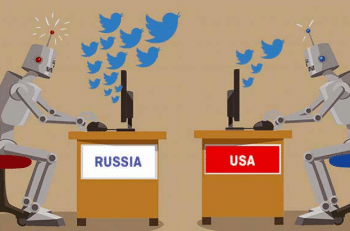
    One in four Twitter followers of Philip Boucher Hayes is a fake account, the RTÉ broadcaster announced on his Twitter feed recently. Around the end of August, Boucher Hayes had noticed an uptick in new followers on Twitter, which he had monitored since. “Previously 100/150 people would follow me every week”, Boucher Hayes posted on Twitter. “Suddenly it became 800/1500 a week. Most had Irish-sounding names. None had tweeted. They were all following the same high-profile Irish accounts”. Boucher Hayes noted that many of the accounts had usernames consisting of a name followed by a series of random digits, such as @ John87654321 or @Mary12345678. This pattern, suggestive of names being mass-generated automatically, had also been seen earlier in the year among many ‘Brexit-bots’ in the UK. Although Boucher Hayes reported the increase in fake followers to Twitter, the pattern continued unchecked. “Either most of the high-profile Irish accounts have grossly inflated numbers of followers (which is admittedly a bit of a “so what?”) or someone is amassing a very large Twitter mob for some as yet unidentified purpose”, Boucher Hayes posted. “Either way it further erodes confidence in an increasingly compromised platform. Twitter doesn’t seem worried, maybe its users will be”. The same phenomenon may also account for the large numbers of fake followers identified for the @rte2fm radio account by the anonymous account of ‘Secret RTE Producer’ (@rtesecretpro), and would certainly make more sense than the national broadcaster spending licence-fee money to boost a social-media headcount. Perhaps reflecting official sensitivities, as Village was going to press, 2FM had reduced from thousands to 45 the number of accounts it was following. In recent testimony to the US congress, Twitter estimated five percent (16 million) of its accounts belong to fake users. Bots in turn can be divided into subgroupings. Spambots post URLs, hoping to encourage users to click on them, either to sell a product, or to lead users to a malicious website, which can infect their browsers and take over their laptops or phones. By contrast, influence bots seek to influence public opinion, whether by spamming hashtags, promoting artificial trends, pushing smear campaigns and death campaigns, or boosting political propaganda. “Artificial trends can bury real trends, keeping them off the public and media’s radar. Smear campaigns and death threats can both intimidate vocal opponents and dissuade would-be speakers. The link between propaganda and legitimate political speech is a fine one, of course, and in some cases is entirely in the eye of the beholder. Nevertheless, bots can be used to amplify the propagandist’s desired message”, noted Nathalie Marechal, a researcher with the University of California, writing in the International Journal of Communication in 2016. A 2016 study found that Twitter’s algorithms would eliminate a bot which tweeted spam links, but would not delete the associated accounts that retweeted the original post. This meant bot networks could all retweet a message hundreds of times, at the loss of only a handful of original tweeting accounts each time. Analysts at the University of Washington in Seattle studied a network which they named the Syrian Social Botnet, which worked not only by posting pro-Assad news and promoting astroturfing, but by flooding timelines with irrelevant news. A hashtag about the Syrian civil war would be flooded with irrelevant reports about other stories, for example from Hurricane Sandy, swamping the system with noise and making the hashtag useless for search purposes, a practice known as smokescreening. Another network – the Star Wars Botnet – discovered by researchers at University College London, numbering over 300,000 accounts, was so-called because the accounts each posted random snippets of text from Star Wars novels in the minutes after they were set up. A large number of the bots followed a handful of real users, and it seems to have been built for this purpose, and sold to users who wanted to inflate their follower counts and exaggerate their popularity. Bots can also be used to create page impressions, as Twitter and Facebook accounts are often used as logins by readers of news sites. This could exaggerate page views and ad impressions on websites seeking to defraud advertisers. A second botnet uncovered by the same London-based researchers numbered over 500,000 accounts, and was behind a large-scale spamming attack on Twitter in 2012. Gavin Sheridan, who worked as innovation director with Storyful, the News Corp-owned online news-verification company started by Mark Little in 2010, says it is not possible to determine who might be behind this nascent bot army until it is activated. (And indeed, now that it had been noticed, its usefulness may have been diminished to such an extent that it is never used). “I’ve read a lot of research, and I’ve seen the bot armies myself”, says Sheridan. “There were bot armies for California leaving the Union, for Texas leaving the union, there are pro-Erdogan ones in Turkey, one for Catalonia, one for Scotland leaving the UK: all bot armies in some shape or form”. “I started looking at [the Irish botnet] about two weeks ago. I wasn’t being followed by them but I noticed them following other people. A couple of people contacted me and said that they seemed to be being followed by strange accounts. There’s a couple of interesting things about these bots. One thing is the rapidity with which they are following certain users, the second thing is that they appear to have Irish-sounding names, not all of them, but a certain number, so if I look at, say, a prominent member of the Repeal the Eighth movement, I’ll see that of the last 50 followers, about half are newly set up – in the last few weeks. They have never tweeted and engage in no other activity. Some follow 50, some follow 80 accounts, that include people prominent in the Repeal the Eighth campaign. I’d have to analyse every single checking account to see if they follow people on the other side of the debate, but so far they’re also

    Loading

    Read more

  • Posted in:

    On Visiting Bosnia 25 Years Later

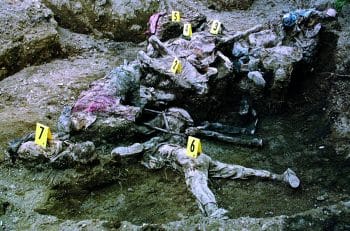
    2017 marks 25 years since the start of the Bosnian war which followed the breakup of the formerly Communist Socialist Federal Republic of Yugoslavia. After Slovenia and Croatia seceded from Yugoslavia in 1991, the multi-ethnic Socialist Republic of Bosnia and Herzegovina passed a 1992 referendum for independence. Nearly half of its citizens were Bosnian Muslims. Nearly a third were Orthodox Serbs and the rest mostly Croatian Catholics. Independence was rejected by the political representatives of the Bosnian Serbs, who had boycotted the referendum though it gained international recognition. The Bosnian Serbs, led by roly-poly poet Radovan Karadžic and supported by the Serbian government of Slobodan Miloševic and the Yugoslav People’s Army (JNA), mobilised their forces inside Bosnia and Herzegovina to secure ethnic Serb territory. War and ethnic cleansing followed. Around 100,000 people were killed, 2.2 million people were displaced, and an estimated 12,000–20,000 women – mostly Bosnian Muslims – were raped. These were Crimes against Humanity. It was the worst conflict in Europe since World War II. The concept of Crimes against Humanity had its apotheosis in the Nuremberg Tribunal, of which more later, but its inception may derive from the discourse in Sophocles ‘Antigone’ as to whether an immoral law is a law. In that play, the Rosetta stone of modern natural law, the heroine Antigone observes to the harsh positivist King of Thebes Creon who will not allow her brother, who has fought against him, to be buried properly, allegedly violating the principles of the Natural Law that: “Yes; for it was not Zeus that had published me that edict; not such are the laws set among men by the justice who neither dwells with the gods below; nor deemed I that thy decrees were of such force, that a mortal could override the unwritten and unfailing statutes of heaven. For their life is not of to-day or yesterday, but from all time, and no man knows when they were first put forth…”. Therefore Antigone asserts that the positivistic law of Creon is not a law as it is immoral; or perhaps that an immoral law is not a law; or that if a law so violates humanitarian principles it cannot be deemed a law. This, in my view, is the source of Crimes against Humanity. Later for the Roman orator, statesman and part-time Natural Lawyer, Cicero, positive laws that contravened the natural law could be struck down. Cicero indicated that a legislature which determined that theft or adultery were lawful would be not be making laws, but rather acting as a band of robbers. From Cicero’s perspective, an unjust law is not a law: “Those who formulated wicked and unjust statutes for nations, thereby breaking their promises and agreements, put into effect anything but laws”. Most famous of all early Christian lawyers, St Augustine of Hippo said “lex iniusta non est lex” (an unjust law is not a law). But still, immorality as such was not deemed a crime against humanity though the ground has been laid. In jurisprudential terms the last century saw a considerable revival in natural law thinking. The World Wars, the horrors of the Holocaust, the aftermath of colonialism, the nuclear age, economic instability and scientific doubt all cumulatively led to the emergence of human rights from 1945 onwards which I think has morphed into a form of secular religion and all of it related to Crimes against Humanity. A crucial juristic figure was the German Gustav Radbruch (1878-1949), both a law professor and a government minister during the Weimar Republic. It is often argued that his earlier writings were positivistic – based on the philosophical system that recognises only that which can be scientifically verified or which is capable of logical or mathematical proof, and therefore rejecting metaphysics, natural law and theism. In 1932 he was a relativist in terms of the question as to whether or not moral standards existed in law. He wrote that a judge had an obligation to uphold an unjust law. However, after the Second World War he changed his mind. In his famous Radbruch’s Formula (Radbruchsche Formel) he argued that where statute law was incompatible with positivist law to an intolerable degree, and where it negated the principle of equality which is central to justice, it could be disregarded. In 1946 he wrote: “[P]reference is given to the positive law, duly enacted and secured by state power, even where it is unjust and fails to benefit the people unless it conflicts with justice to so intolerable a level that a statute becomes in effect false law and must therefore yield to justice…where there is not even an attempt at justice. Where equality, the core of justice, is deliberately betrayed in positive law then the statute is not merely false law it lacks completely the very nature of law”. Radbruch suggested that where there is intolerance and betrayal by government, the law ceases to be valid and must yield to justice. For Radbruch justice (Gerechtigkeit) was linked to human rights. Thus in Funf Minuten Rechtsphilosophie he argued for “justice as moral equality – applying the same measure to all or guaranteeing human rights to all”. As legal philosopher HLA Hart indicates: “His considered reflections led him to the doctrine that the fundamental principles of humanitarian morality were part of the very concept of Recht or legality and that no positive enactment or statute, however clearly it was expressed and however clearly it conformed with the formal criteria of validity of a legal system, could be valid if it contravened basic principles of morality”. Radbruch had a broad conception of such fundamental laws. He contended that there was a law which was above statute: “However one may like to describe it: the law of God, the law of nature, the law of reason”. Such a law rendered invalid positive laws that did not conform to justice; he argued that Nazi laws did not “partake of the character of law at all; they were not just wrong law,

    Loading

    Read more

  • Posted in:

    Lowry and Sinclair

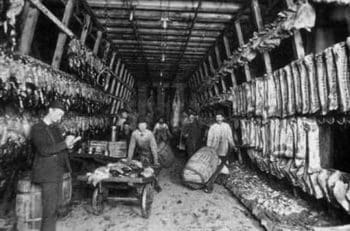
    I recently concluded a criminal case in the Crown Court in Manchester; a city I had not visited in over 20 years. Much has changed while I’ve been gone. It is a little less frenetic, with no Tony Wilson or Hacienda club, and a good deal more gentrified. Salford, the traditional working-class area, immortalised in the works of such working-class poets of music as John Cooper Clark and Mark E Smith, is no longer as bleak and industrial as it was 20 years ago, but has acquired a glossy riverside sheen, or rather façade. Appearances are always deceptive, and much is still very rundown indeed. Perhaps the most famous chronicler of Mancunian and Northern working-class existence is the painter LS Lowry, to whom there is dedicated a fabulous museum in the designer-revamped Salford: a huge treasure, free to the public and staffed by authentic people of the utmost friendliness. The museum is there, along with a northern version of a Daniel Libeskind structure – actually designed by James Sterling, containing the imperial war museum, northern branch; two theatres; and sundry other cultural delights. The paintings, once seen en masse in the beautiful gallery in the Lowry Centre, are indeed like the ‘matchstalk men and matchstalk cats and dogs’ that I remember children singing about in my youth. Humanity is represented by little emaciated speckled archetypes, often scurrying around in droves near the citadels of northern capitalism, the industrial factory. The people appear as miniature figurines to highlight the backdrop as in an industrial Canaletto view of Venice. The people are all like dots of insignificance: working-class cyphers, their lives dedicated to the service of their paymasters. If you wander away from the totemic works there are, not as famous but more precise, evocations of workingclass existence. A drunken brawl, a funeral congregation in black, the Sunday best for the big occasion: dour. The celebration of shortened lives in rank conditions. These paintings are stark but full of empathy, observed calmly and with rational detachment, as indeed are some of his portraits, and he is a remarkable portrait painter, though I had not realised it. Separately, some weeks ago on a visit to Dublin I spoke to a friend, the librarian in the IFI bookstore, an oasis of modern civilisation in an ever-bleaker city. We conversed and he intimated to me that he had read a recent article by me in the Dublin Review of Books, where I noted the need for a new Orwell to chronicle how the poor die in our nefarious third-world state. No, he firmly intimated, we need not Orwell but that great chronicler of American depression-era working-class life, Upton Sinclair. In Sinclair’s most famous book ‘The Jungle’ he demonstrated sub-standard conditions of workers in the Chicago meat-packing industry and many of his works including ‘Oil’, which became the film ‘There Will be Blood’, are attacks on unbridled, greedy capitalism and what it does to the human spirit. Lowry and Sinclair are ever more relevant as we return to the present. The Marxist analysis of dead capital sucking the blood of labour is more pertinent than ever. I know the tropes and nuances are different, and that the culture has shifted. I know with Marx that identifying the problem does not solve it but recognise the communist manifesto will not work. The existence of the ordinary person in under-paid and over-worked corporatism is not unlike the heyday of Victorian capitalism, or indeed the Great Depression, with the modern version of the factory being the bleak buildings of financial services and corporate law firms. Death by overwork while serving the interest of the plutocracy has become banal in much of western society. Ordinary people console themselves often, as in a seminal painting of Lowry, in the consolations of booze, the Friday night out, the office party. Oblivion. Blowing the limited amounts of disposable income they have, which has not been hoovered up by inflated rents, and mortgages which may never be repaid. Certainly in Ireland there is little or no ‘real’ economic growth as such. Those who have wealth and property run the country like a feudal oligarchy, abusing state structures to go after anyone that poses a threat to their interests. They often mask it well. But deep-seated criminality and thuggery are intrinsic to the modus operandi of our ruling classes and the tactics of surveillance, fabricated cases and false or political prosecutions endemic to a system descending into anarchy, where vested interests are using ever more desperate and ruthless tactics of human exploitation. There is a pattern to all of this. As Arundhati Roy intimates in her monograph ‘Capitalism: A Ghost Story’, and her recent novel ‘The Ministry of Small Things’, the pattern is that globalised capitalism is ‘cartelising’ the world into a small number of people who control the wealth and assets, and enforce penury and degradation on the mass of the population who are deemed surplus to requirements. That word “surplus” implies disposability by any means necessary. Thrown in a river, locked up in prison, shot. Exposers of the systemic corruption such as Roy in India have been jailed for their temerity in pointing out the growth of the rotten neoliberal agenda. Lives are being destroyed or truncated and the lunatics of the corporatocracy and the insanely rich are pillaging the planet with a speed and rapacity never witnessed before. In their wake, they are destroying equality of opportunity and the ability of ordinary people to work themselves out of the poverty trap. It is not just the working class but all of us, including the educated middle class, who are suffering. So, the working middle classes are confronted with longer working hours, increased competition and migration through neoliberalism – a wholesale race to the bottom. As Roy demonstrates in her ‘Capitalism’ book droves of Indian farmers are committing suicide because of the punitive conditions imposed on them. Suicide rates are exorbitant for failed businessmen, lonely farmers and the homeless of Ireland. A

    Loading

    Read more

  • Posted in:

    Referendum Practice

    The Government intends to hold seven referendums over the next two years, and the Citizens’ Convention is due to consider Ireland’s referendum practice before it winds up next spring. With a contentious abortion referendum looming up soon after that, this is a good time to consider how we run referendums. A code of good practice in referendums was adopted in 2007 by the Council of Europe’s Venice Commission for Democracy through Law. The Supreme Court cited this code in its 2012 McCrystal judgment which found that a Government information booklet in the children’s rights referendum of that year contained significant errors and ruled that it had to be withdrawn. Referendums in Ireland are forms of direct legislation in which citizens vote on a Bill to amend the Constitution, the basic law of the State. It is the citizens, not TDs and Senators, who are making the law on these occasions. Once an issue is put before the People for decision, the Government, as Government, should not interfere. It should not, for example, spend public money, which comes from voters on both sides in a referendum, to push the side it favours, any more than it should be able to loot the Exchequer to bribe voters in elections. Of course the political parties that make up the Government can spend their own money for partisan purposes, but that is different from the Government, as Government, doing so. Between 1987 and 1995 Irish Governments massively abused the referendum process. In 1987 the Supreme Court in its Crotty judgment on the Single European Act (SEA) required the Government to put any treaty that entailed a surrender of sovereignty before the People for decision. As the People are the repositories of sovereignty, only they can surrender it – in the case of the SEA to the supranational EU. Voters at the time would have passed the SEA referendum comfortably, but to make assurance doubly sure the Charles Haughey-led Government of the day spent taxpayers’ money in full-page newpaper adverts: ‘Ten Reasons for Voting Yes’. This had never been done before in any of the eleven referendums that had been held since the Constitution was adopted in 1937. The same thing happened in the 1992 Maastricht Treaty referendum on replacing the púnt with the euro. On that occasion the Albert Reynolds-led Government commissioned a private company to place the Vote Yes adverts. One of them read: ‘A Vote No Disempowers Women’! Patricia McKenna put a stop to this abuse of public funds by taking her famous case in the context of the 1995 Divorce Referendum. The Council of Europe’s Code of Good Practice in Referendums accords with the Supreme Court’s ruling in McKenna that partisan expenditure of public money in referendums is unconstitutional, undemocratic and unfair. The Government’s response was to establish a new statutory body, the Referendum Commission, to give citizens information in referendums. The 1998 Referendum Act that established the Referendum Commission charged it with producing and publicising two statements, one telling citizens what the referendum was about, and the other setting out the main arguments for and against the proposed constitutional amendment. The Referendum Commission is not a permanent body, although idealy it should be, as its UK equivalent is. It is called into being anew every time there is a referendum and the Government appoints a new chairman each time. Its four regular members are the Ombudsman, the Comptroller and Auditor General and the Clerks of the Dáil and Seanad. On the Commission’s first outings in the 1998 Amsterdam Treaty and Good Friday Agreement referendums and the 2001 and 2002 Nice Treaty referendums its chairman was Mr Justice T.A. Finlay. As a retired Chief Justice he was not open to subsequent Government patronage. Both sides recognised that Justice Finlay carried out his statutory duties impeccably. Since 2001 successive Referendum Commission chairmen have all been High Court judges, of which, unfortunately, the same cannot be said. When citizen-voters rejected the constitutional amendment to ratify the EU’s Nice Treaty in 2001 the Bertie Ahern-led Government of the day removed from the Referendum Commission its function of setting out the main Yes-side and No-side arguments. It did so because it judged that that had been too helpful to the No-side in Nice One and it wanted that function removed for the referendum re-run in Nice Two in 2002 so as to get a different result. With one day’s notice to the Opposition, the Government put all stages of the requisite change to the Referendum Act through both houses of the Oireachtas in a single day, the last day before rising for the Christmas holidays in December 2001, when most people were concentrating on the seasonal festivities. Fine Gael, Labour and the Greens voted against the change. Setting out the main pros and cons of any referendum proposition in a fair and objective manner is fully in accordance with the Council of Europe’s Code of Good Practice in Referendums. This states that in order to encourage a wellinformed citizenry on these occasions: “The best solution is for the authorities to provide voters with an explanatory text setting out not only their viewpoint or that of persons supporting it, but also the opposing viewpoint in a balanced way, or to send voters balanced campaign material from the proposal’s supporters and opponents”. It is surely a pity that Ireland’s pioneering step in encouraging more politically educated voters in referendums was brought to naught in the way described. It is unfortunate that the original remit of the Referendum Commission was not given more of a chance to prove itself, and that the Commission was deprived of its Yes-No function because it proved inconvenient for the Government in such a politically important referendum as that on the Nice Treaty. After all the need for citizens to be properly and fairly informed of the main Yes-side and No-side arguments applies in all referendums regardless of the issue. In carrying out its original Yes-No function Mr Justice Finlay’s Referendum Commission

    Loading

    Read more

  • Posted in:

    Stormont Should Correct HIAI Report to Reflect Police Paedophile Delinquency

    In January 2017 the Historical Institutional Abuse Inquiry (HIAI) reported on the treatment of children in care in Northern Ireland. The Inquiry, chaired by Sir Anthony Hart, conducted its extensive task with considerable speed and reported on the day of President Donald Trump’s inauguration. The Inquiry shared something else with the then incumbent US president, a reluctance to process unwelcome information. The Inquiry ignored evidence that from 1971- 73 an accused and then convicted serial child-abuser named Dr Morris Fraser continued to work with vulnerable institutionalised children. The HIAI also refused to examine how and why police protected the internationally-known child psychiatrist from exposure and from professional censure, for a year after he was found guilty of abuse. The HIAI was asked to make recommendations and findings concerning institutional failings with regard to children in the care of the state and/or of its agencies. It was tasked also with indicating if failings were systemic. The HIAI failed to do so in the case of Morris Fraser. This is more than merely a story of out-of-date attitudes and of the embarrassing proclivities of wayward medical folk. It concerns something officially rotten in the state of Northern Ireland in 1972, that a public inquiry in 2016 felt unable to scrutinise. The HIAI Report, chapter 26, page 82, briefly considered and then dismissed discussion of Fraser’s work and of his official treatment. It found that: “… the way the medical authorities and the police dealt with Dr Fraser after his [May 1972] conviction in London are not matters that fall within the Terms of Reference of this Inquiry and we have not considered them” The finding was based on the Inquiry’s view that Fraser’s interaction with institutionalised children was peripheral to his main work with outpatient children. Volume seven of the HIAI Report dealt with Lissue Hospital’s in-patient child psychiatric unit, where abuse allegations were rife. Chapter 24, page 22, paragraph 84, stated: “It is probable that Dr Morris Fraser worked at Lissue Hospital as a Senior Psychiatric Registrar in the course of his training”. This is followed by error-strewn commentary on Fraser’s 1972 child-abuse conviction in the UK and, two years later, in the US. The HIAI stated that “Dr Fraser was convicted again of sexual offences against a child in New York in May 1973”. In fact, Fraser was convicted in June 1974 of abusing three boys, not one. He was merely arrested in May 1973. The complacent commentary concluded in paragraph 87 with: “Dr Fraser continued to work elsewhere as a psychiatrist, though not with children, and he then took early retirement”. In fact, the four-times convicted paedophile abused children and associated with abusers until he was persuaded to remove himself from the medical register in November 1995. Fraser made use of his medical status to groom children for his own use and for the benefit of other paedophiles. Paragraph 87 began, “there is no evidence of Dr Fraser’s work at Lissue…”. These nothing-to-see-here findings were partially based on 13 April 2016 testimony from Dr William Nelson at HIAI hearings. He was the first director of the new Lissue children’s psychiatric unit, that opened in 1971. Under remarkably brief and light questioning, Dr Nelson suggested, from memory, that Fraser might have been at Lissue for “a short time”, but that his “main work” was over 10 miles away, at the Royal Victoria Hospital “in out-patients”. There are two issues of concern. The first involves documentary evidence, in the HIAI’s possession, querying Dr Nelson’s recollection of events over four decades earlier. The HIAI ignored the documentation. The second relates to how Dr Fraser came to perform clearly established duties in Lissue, even though he was simultaneously (unbeknown to colleagues) a convicted paedophile offender. I will deal with each issue in turn. Some Background The reason for the HIAI’s curiosity about Fraser is because, on 17 May 1972 at Bow Street Magistrates’ Court Dr Fraser pleaded guilty to having sexually abused in London in August 1971, a 13 year-old Belfast boy. Fraser had brought three boys from Belfast to London, ostensibly on a scouting trip. Fraser was conditionally discharged with a £50 fine and was bound over for three years. His co-accused, Ian Bell, whose case was considered separately. Bell pleaded not guilty at Bow Street to abusing a 10-year-old, and went on to Crown Court, where he was convicted after changing his plea. As is the case today, in 1972 police could either hide from, or present to, the public, an accused person and the crimes with which they were charged. In this case an internationally-known child psychiatrist was processed through a court late in the evening, after 9pm, without anyone noticing. Fraser started giving off signs of being an officially protected species of paedophile. Inexplicably, Dr Fraser continued to see children in the Royal Victoria Hospital, and to enjoy a prominent newspaper, radio and television profile in Ireland, Britain and the US. That is because police did not tell the NI Hospitals Authority, Fraser’s employer, of his abuse conviction. One year later, in May 1973 on the other side of the world, Fraser was stopped temporarily in his tracks. He was arrested in New York as part of an eight-man child abuse ring. Unlike Fraser’s effectively secret October 1971 arrest and May 1972 conviction, his 1973 New York arrest was covered in the US, followed by British and Irish, news media. In February 1974 in Suffolk County, NY, Fraser’s guilty plea, to abusing three boys, was reported briefly in the New York Times. Fraser was convicted in June 1974 and was again conditionally discharged. Disturbingly, the judge was not informed of Fraser’s 1972 London conviction. Fraser’s US conviction and subsequent deportation were ignored by news outlets. Fraser should have been, but was not then brought back before a UK court, having broken the terms of his May 1972 three-year ‘conditional’ discharge. The HIAI ignored all of this because it said that Fraser worked with outpatient children and not with

    Loading

    Read more