


Politics

Random entry RSS

  • Posted in:

    Democracy Works

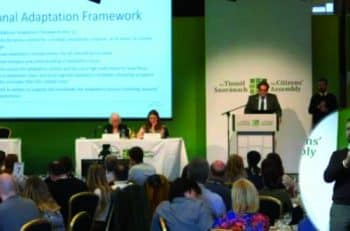
    It’s been a bad couple of years for democracy. The Brexit fiasco was the most humiliating British retreat from Europe since Dunkirk, but this time, entirely self-inflicted. Yet, rather than an alarm, Brexit instead turned out to be a blueprint for the bloodless US coup that followed, where right-wing extremism seized the world’s most powerful political office. Some 95 million Americans didn’t vote in November 2016. “One of the penalties for refusing to participate in politics is that you end up being governed by your inferiors”, is how Greek philosopher, Plato presciently put it. And while not riven by such gaping wounds of xenophobia and extremism, Irish democracy is also profoundly dysfunctional, and nowhere is this clearer than in its record of abject failure on climate policy. A decade ago, it looked like Ireland was beginning to get its act together, yet by the time Enda Kenny led Fine Gael into power in 2011, the environmental agenda hadn’t so much been scrapped as bleached. Fast forward to 2017. Ireland is now the third worst per-capita greenhouse-gas emitter in the EU and one of only four countries certain to miss its 2020 targets. Massive EU compliance fines are looming, and our only plan is to try to weasel out of paying, rather than tackling our underlying carbon-pollution crisis. It didn’t have to be like this. Professor Andy Keen of Edinburgh University told the Citizens’ Assembly earlier this month how Scotland, with cross-party political support, in 2009 set the highly ambitious target of cutting its national emissions by 42% by 2020. This is more than twice Ireland’s 20% target for the same period. While we will struggle to achieve a maximum 4-5% cut, Scotland actually hit its 42% target in 2015, five years ahead of schedule. It is now pushing hard to achieve 100% renewable electrical production by 2025, and will probably succeed. Scotland has no natural advantages over Ireland. That’s the difference between politics that works and politics that is broken. Any notions that Irish people are innately unconcerned and indifferent to climate change were well and truly scotched by the outcome of the Citizens’ Assembly, which sat again over two weekends in October and November, under the gimlet legal eye of Justice Mary Laffoy. Instead of the usual circus of lobbyists and their client politicians, the Assembly instead only heard from disinterested experts, and its round-table format allowed the 99 citizens to discuss what they had heard among themselves, and then ask searching questions of the experts. I sat through almost eight hours of presentations and discussions on a Saturday in November, and watched these volunteer citizens, young and old, from all walks of life, as they engaged with the process for hour after hour. No fiddling with phones, dozing or absent-mindedly gazing into the distance. This is what direct democracy looks like up close. In a word: inspiring. Even more impressive was that the citizens agreed and then voted in a secret ballot on 13 recommendations and, incredibly, all were carried – in most cases, by thumping majorities. Everyone knows Irish people won’t accept paying new carbon taxes. Wrong. This idea was carried by an 80% majority. Everyone knows that agri-emissions are a special case. Wrong again. Some 89% of Assembly voted in favour of taxing carbon-intensive agriculture, and rewarding farming methods that cut carbon. On industrial peat burning, a whopping 97% of citizens voted to end all State subsidies supporting this madness. And despite our supposedly unbreakable love affair with the private car, 92% of citizens voted for the State to favour developing public transport ahead of new road infrastructure at the rate of no less than 2:1. A recommendation allowing micro-producers of clean (solar) electricity to be allowed sell their surplus back to the grid was backed by 99% of citizens. Meanwhile, ‘Climate Action’ Minister Denis Naughten, has once again excluded small-scale rooftop solar from even being considered in the national consultation on renewable energy. The Citizens’ Assembly may have been set up by the government in the hope it would become another dull talking shop. If so, its radical recommendations, first on abortion rights and now on climate change, have shown that, given half a chance, we Irish are entirely capable of sober civic engagement with complex issues. Who would have guessed?   John Gibbons is an environmental commentator and tweets @think_or_swim

    Loading

    Read more

  • Posted in:

    DUPed

    Ireland and the EU have been outmanoeuvred by the UK into a deal that gives NI and perhaps ultimately the whole UK a competitive advantage trading into Ireland and the EU, by allowing a retreat for NI and the UK from EU environmental, social and other typically non-economic standards.

    Loading

    Read more

  • Posted in:

    Needed: Mass party of the socialist Left

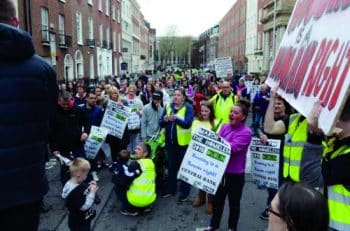
    It is almost a decade since the beginning of the financial crisis which brought capitalism to the point of collapse. In the intervening years, working-class people have been forced to carry the cost of bailing out the system through various, vicious austerity programmes. Establishment political parties across Europe and the world have been greatly reduced, or almost wiped out, for implementing these measures. Now, as we enter 2018, the ‘line’ from the establishment and media is that we have entered a period of stability and recovery. However, for working-class people the key signifiers of the ‘recovery’ are precisely the issues which show that capitalism cannot deliver a decent standard of living for all and provide the space for movements and a socialist Left to grow. Politically, in Ireland, recent opinion polls have been heralded by right-wing commentators as a sign that everything’s ‘back to normal’. But it is a new ‘normal’, with the combined vote of Fianna Fáil and Fine Gael at best only hitting 60% but averaging out in the mid-50s, only slightly up on its historic low. Meanwhile, the Labour Party is stuck in the margin of error. The ‘centre’ isn’t as strong as it tells itself it is, and through movements on the streets can be forced into giving some concessions, solving the problems facing people we need a fundamental change of the system.   Housing The key crisis facing working-class people is housing. At the last count in October, 5298 adults and 3194 children were homeless and in emergency accommodation. 184 homeless people are forced into sleeping on the streets. Rents have rocketed and are expected to continue skywards for the next two years at least. Over 100,000 people and families are waiting on housing. 500,000 young adults are forced to live at home because they cannot afford to move out, twice the number in 2006. At least 29 housing policies have been launched by this government and its predecessor, but the problem gets worse. All of these policies have relied on the private sector to solve the housing crisis. This reliance on the private sector has resulted in massive wealth being gathered in the hands of a parasitic elite of developers, vulture funds and landlords. While huge misery is inflicted on the majority. In Dublin West, for instance, despite the area being a homeless blackspot only 10 new social homes were directly built by the Council. Solidarity’s recent proposal to build 1100 social and affordable homes in Damastown has received widespread public support and is an example of the approach which is required. This proposal is for 550 social homes to be built for rent from Fingal County Council. Another 550 affordable homes are to be built and made available to buy through affordable mortgages. The mortgages would be provided by the Housing Finance Agency, and paid back over 25 years. Monthly mortgage repayments will be from €478 per month for a one-bed home, to under €800 for a four-bed home. This is the type of radical approach on housing which is needed but the government will need to be forced into it by pressure from the streets.   Repeal A whole generation of young people have been drawn into a battle to win abortion rights over the last number of years. This year saw the largest ever March for Choice, and big turnouts on International Women’s Day for Strike4Repeal and other marches and events. This has been accompanied by a deep politicisation of issues of oppression and equality. The #metoo campaign has encouraged women to speak out against sexual assault, genderbased violence and sexism. Demands for the separation of church and state and trans rights are now more common and loud than ever before. The vote on the Oireachtas Committee on the 8th Amendment to support abortion up to 12 weeks on request is a testament to the work and pressure applied by activists over a number of years. In particular, credit is due to the courage of those who highlighted the abortion pill, campaigning across the country to raise awareness and assist women and pregnant people with a crisis pregnancy. The pressure from the movement forced and dragged conservative politicians into voting for these recommendations. However, legislation must still be produced and passed by the Oireachtas. The Dáil is still deeply conservative and may attempt to water down any legislation. We need to continue to exert pressure on the Dáil to make sure there is no backsliding on the proposals.   Precarious employment While unemployment may be decreasing, many people returning to work are finding themselves in worse conditions. The government, the capitalist class and big business have used the crisis to hammer employment terms by creating a slew of temporary and contract jobs. The phenomenal growth of the so-called ‘precariat’ signals the success they have had with this policy. So called ‘if and when’ and ‘banded hours’ contracts have become the norm across whole industries. The effect of this row-back in employment conditions especially affects ‘would’ workers. They are expected to be at the beck and call of employers. They have no guarantee of hours and therefore have no guarantee of income. The Tesco strike this year exposed for everyone the reality of ‘banded hours’ contracts which can see a worker’s hours and income fluctuate anywhere from 16 to 40 hours a week – often determined at the discretion of a manager, and often as a weapon to punish workers. The decision of Ryanair pilots in Ireland and across Europe to take industrial action can be a decisive battle. If a major anti-union, anti-worker employer like Michael O’Leary can be given a bloody nose it will be a major victory for all workers. It will demonstrate to workers, especially those employed in multinationals, that international action against bosses is possible and can deliver victories. The government have played a part in undermining working conditions too. As part of public-sector pay deals, they have created an age apartheid between young and older

    Loading

    Read more

  • Posted in:

    Housing: ‘the carrot and the stick’

    There’s been plenty of talk about “carrot and stick” for our housing predicament. At a property Summit last month, commentators exhumed memories from the industry boom and bust and suggested numerous ways to revive the sector. Much discussion revolved around the fact that there is no official metric for the measure of new housing output. With projected completions of fewer than 9,000 new homes this year, supply remains well short of demand. Senior Government officials suggested that the state needed more land and would get more into active land management. Others noted how state house-building has fallen off a cliff. Local authorities are building on average 300 homes per annum yet own enough zoned residential land to build more than 45,000 homes nationwide . Approved Housing Bodies (AHBs) – part-funded by the state, and voluntary efforts, account for the bulk of social homes in any year, out-performing local authorities two to one. In Dublin there were 16 local authority homes built in the first six months of 2017 – AHBs completed were 174.   Part V One source of new-build social homes is so-called ‘Part V’ dwellings, built by developers and sold at a discount to local authorities. Part V requires 10% of all private residential developments of ten units or more to be sold to the state at reduced prices. The discounted site cost is calculated at ‘existing use value’, a pre-determined formula. The ‘preferred’ option is purchase of units (Part V guidelines direct Local Authorities to buy units rather than land), but land transfer can be agreed as an alternative. Indeed up to September 2015 cash in lieu of land was an option. Subsequent revisions precluded cash payments so developers can no longer buy their way out of Part V. The Rebuilding Ireland Part V target is an average of 524 units per year. However, only 514 Part V units were purchased nationwide in the past five years (see table right). 11 Local Authorities including Cork and Galway City Councils made no Part V social housing purchases in five years. On average 9 social homes have been purchased by Dublin City Council per annum. The current situation is in marked contrast to that of the preceding decade.   Part V 2002- 2011 According to the Housing Agency, between 2002 and 2012, 567,585 new homes were completed and 15,320 Part V social homes were purchased by the state. Other forms of Part V compliance, land transfers and cash in lieu, equated to the potential for an additional 4,311 social homes. Sites for 213 homes were transferred (20 hectares) and cash paid in lieu totaled €122.4m (av. €29,800 per site). The bulk of Part V compliance, 78%, was achieved by developers providing social homes at discounted prices.     Part V 2012- 2016 In the last 5 years the situation has changed dramatically. €29.6m was paid in lieu of land transfer by owners plus sites for just 3 homes (9 hectares). Out of a potential 1,510 Part V homes only 514 were delivered. The bulk of Part V compliance, 64%, was achieved by developers paying cash in lieu of land transfer. The affordable housing scheme was discontinued in 2011. Part V was revised in September 2015 to preclude cash payments, but according to official figures €11m was paid in 2015 and €4.9m in 2016 in lieu of land transfers by developers, perhaps reflecting an overhang of planning permissions extended from before the system was changed but perhaps also suggesting that old (and bad) habits die hard. The total percentage required was reduced from 20% for schemes of five or more units to 10% for schemes of ten or more units. The affordable housing scheme was discontinued in 2011. In the period 2002 to 2016, the total combined figure for cash in lieu of land transfers was €152m. Cash has been king for beleaguered local authorities. Extraordinarily, only three house sites have been transferred in five years. Figures suggest that a significant number of new homes will be built in coming years with little or no social housing element. For example in 2017 our total new housing output may be close to 9,000 homes but Part V is likely to comprise just 200 units, only 2.2% of total new housing. Given the minusculity of payments during the downturn, there is the strong uncomfortable possibility that some developers, while under the control of state agencies, sought successfully to reduce the provision of social housing. Even if there is an increase in new house-building, fewer than than 1,000 Part V social homes may be delivered by 2021. To put these figure in context, there are currently 216 new households per week availing of rent assistance (housing assistance payment) for the first time. 1000 homes would solve the problem for just five weeks worth of this backlog – by 2021!       Conclusion The reality of state land management is very different from the official narrative, even if – under media pressure – the authorities have ratcheted up their rhetoric. Official figures confirm there is little official appetite to obtain cheap land from developers and build directly, and even less inclination to pass site discounts to potential purchasers of affordable housing. Despite all the rhetoric. Owners of land-banks who agreed to buy-out part V obligations when sites were at a historic low values can expect a handsome return on their investment in a short time. Many sites will benefit from generous capital gains-tax exemptions. Legislation introduced by Minister Murphy in July 2017 to extend the lifespan of existing planning permissions ensures that lucrative Part V cash arrangements remain unaffected. There is no official affordable housing scheme and no official definition of what an affordable house is. Last July Minister Murphy confirmed that local authorities can build 2 bed dwellings directly for €191,000 ‘all in’ cost- yet Dublin City Council is purchasing Part V units from a developer in Rathgar for €480,000 per unit . At the property summit, when asked if there

    Loading

    Read more

  • Posted in:

    Immingratitude

    In December a group called ‘Identity Ireland’ made much of a do online about the relative nothing of unfurling their banner from a bridge over a motorway. The banner urged motorists to “DEFEND IRELAND”, prompting one Twitter user to quip they were “11 days too late” (referring to the Irish soccer team’s humiliating 5-1 defeat to Denmark). The further irony is that the Identity Ireland group itelf is but an Irish franchise of a European anti-immgration organisation. An organisation of foreign conception bemoaning foreign influence. While it may seem ridiculous, anti-immigration groups coming into the open like this is a new development, another symptom of sentiments more likely to find expression in the broadsheets than in the streets. This Summer, the Irish Navy ship LE Eithne rescued 700 people from the Mediterranean sea in a single day. Those souls were but droplets in a wave of refugees, cast adrift in the wake of state failure in various parts of the Middle-East. There is much anxiety across Europe about the demographic consequences of an influx of migrants. Kevin Myers uncharacterisitically said sorry for a supposed slur on an ethnic minority that ended his tenure as a columnist for the Sunday Times. Yet he is less contrite about his numerous other statements stoking anxieties about other minorities. Myers described the swell in immigration to this country, for example, as a “tidal wave”, asserting it was “the greatest threat to the existence of the Irish nation”. And this was in 2007, long before the fallout of the Arab Spring, the demise of Gadaffi, the rise of ISIS, and the consequent disastrous upsurge in refugees. Given this island’s history of invasion and colonisation, we are particularly well versed in the dangers posed by foreigners seeking to make home on these shores. We have much to protect. The value and venerability of our collective cultural inheritance is perhaps epitomised in Newgrange, or Brú na Bóinne. The construction predates Stonehenge and the Great Pyramid of Giza by 500 odd years. Despite the remarkable survival of this structure (not only intact after 5000 years, but still watertight), we are perhaps more aware of the fragility of ‘culture’ than any other European state. The wreckage of invasion remains strewn all over our society. Vikings have become synonymous with rape, pillage, and plunder – there is still something earnest in my shudder when Americans in plastic-horned helmets roar at me from the Viking Splash Tour buses! But the most poignant example of the very real humans terrorised by their raids is a short poem in the margins of a Ninth Century manuscript. A monastic scribe paused in his task to express gratitude that there was a fierce storm raging, for it meant “the fierce warriors of Norway” would not be arriving that particular night. The English invasion left deeper scars. Our legal and parliamentary systems are not derived from the ancient Brehon laws, or the old Gaelic political order. They are carbon copies of the English regime we supposedly deposed. The same is true for our system of landholding (indeed, Travellers, although the most maligned demographic in this, their own country, have a culture much more ‘Irish’ than the vast majority of the populace). The overwhelming majority of the people on this island speak English as their daily language. Think for a second how a native Irish speaker from Rosmuc might view the Anglophone population: we speak the language of the invader, we mimic their laws and power structures. Our national culture is much more English than it is Irish. So unless you’re a committed Gaeilgóir still surviving on one of the Celtic fringes of this country, in Connemara, West Kerry, or Donegal, maybe you should rethink your right to object to immigration at all. But even then, you might pause and consider this: the precise origin of the name of our greatest national monument, Brú na Bóinne, is lost to history. But it was certainly not the name given to it by those who built it. They didn’t speak Irish. Newgrange was built thousands of years before the Celts would arrive, bringing with them horses, Iron, and an Indo-European language. The Irish language arrived here the same way English did – via conquest. ‘Ah, but’, the argument goes, ‘Islam is uniquely intolerant’. Shocking scenes of unfettered depravity in Syria – beheadings, homosexuals being thrown from high buildings, women being stoned to death for transgressing Sharia law – have instilled intense anxiety about accepting immigrants from that part of the world. One of Myers very latest pronouncements is that Europe is in the midst of “an existential crisis for Judeo-Christian values”. But many of the refugees aren’t Muslim at all, many are not only Christian but Catholic – just as most Irish people still claim to be on our census. These are the Chaldeans – an ancient and distinguished branch of the Catholic Church with its own liturgy and lineage dating back to the apostles. The very existence of these particular refugees points to a glaring inconsistency in the idea that Islam is inherently a religion of intolerance. Those supposedly concerned about demography should be well aware of the Middle-East’s remarkable religious and cultural diversity. Zoroastrianism, Yazidism, Mandeanism, Samaritanism – all these ancient belief systems are still extant, despite the dominance of Islam. Where are Europe’s pre-Christian religions? Christendom didn’t suffer them to survive. Yes, the plurality of peoples and faiths in the Middle East are now under threat of extinction from a vicious, virulent strand of Wahhabism – but this is the very horror the refugees are fleeing. And what does the Chaldean Patriarch of Baghdhad cite as the root cause for this exodus of his flock? Western intervention. As surely as the slumber of reason conjures monsters, the ‘war on terror’ brings forth fresh evils. This is the terror we helped create, by continuing to allow American war planes to use Shannon Airport making an absurdity of our claim to ‘neutrality’. You can’t bomb a society

    Loading

    Read more

  • Posted in:

    Careless about Kerr

    The Ulster Freedom Fighters will not be well pleased The Ulster Freedom Fighters (UFF) will not be well pleased to learn that their name has been taken in vain by a distasteful group of conmen hellbent on covering up the existence of a VIP paedophile network in Ireland and the UK. We will refer to these nasty specimens collectively as the “Paedophile Protection League (PPL)”. The UFF’s name was misappropriated by the PPL in an attempt to intimidate the courageous Kincora Boys’ Home survivor Richard Kerr to whom an anonymous threatening letter was sent late last year. Kerr, who lives in Dallas, Texas, was a resident at Williamson House in the early and mid-1970s, and later at Kincora (1975-77). He was abused at both homes. He was later abused in England by various highborn lowlifes, including Sir Peter Hayman, the former Deputy Chief of MI6, who infamously left paedophile material on a London bus whence it was picked up by the police; and a senior and highly influential member of Margaret Thatcher’s Cabinet. Village will identify this minister in due course. Before we turn to the threatening letter a little additional context might assist in explicating the underlying menace of it: Richard Kerr was a close friend of Steven Waring who was also a resident at Kincora. He committed suicide by plunging into the sea from the Belfast-Liverpool Monarch Ferry in 1977 rather than suffer any further abuse. Kerr has been haunted by his death ever since. Like Kerr, Waring had been taken out of Kincora and subjected to vile abuse on both sides of the Irish Sea. In November 2016 Kerr received the following anonymous letter: “DEAR RICHARD, HAVING READ AN ONLINE ARTICLE ABOUT YOU TODAY CONCERNING YOUR BEHAVIOUR IN LONDON IN 2015, A GROUP OF SURVIVORS HAVE RESEARCHED AND DISCUSSED YOUR ALLEGATIONS. IT IS OF MANY UK-BASED SURVIVORS OPINION THAT YOU ARE PLAYING A GAME AND WORKING FOR THE ABUSERS STILL. THERE ARE FIRST HAND ACCOUNTS OF YOUR BEHAVIOUR IN DOLPHIN SQUARE AND IN KINCORA INCLUDING ACCOUNTS OF YOU ACTING AS FACILITATOR FOR ABUSERS. THERE ARE ALSO ALLEGATIONS AND ACCOUNTS OF YOU ACTIVELY TRYING TO DISCREDIT OTHER SURVIVORS INCLUDING THE SUSPICION THAT YOU IN FACT KILLED STEVEN ON THE BOAT, RATHER THAN THE STORY YOU TELL OF HIM COMMITTING SUICIDE. WE DO NOT HAVE ANYONE IN TEXAS TO ACT AGAINST YOU. YOU HAVE BEEN DISCUSSED AT A VERY HIGH LEVEL AND ALTHOUGH THIS IS NOT A THREAT, AS A GROUP WE WOULD LIKE TO INFORM YOU THAT YOU ARE NO LONGER WELCOME IN THE UK OR IN NORTHERN IRELAND AND IF YOU ARE SEEN, ACTIVE SERVICE UNITS OF THE ULSTER FREEDOM FIGHTERS AND THEIR FRIENDS WILL FORCIBLY REMOVE YOU TO AN AIRPORT. YOU ARE OBVIOUSLY A SURVIVOR OF ABUSE SO BY OUR OWN CODE WE CANNOT ORDER ANYTHING MORE; HOWEVER FEELINGS ARE RUNNING SO HIGH ABOUT YOU THAT WE CANNOT GUARANTEE YOUR SAFETY AND WELLBEING IN THE UK OR NORTHERN IRELAND”. The address which exposes the source of the anonymous threatening letter The anonymous letter was posted from south East Anglia. There is, however, little or no mystery about the identity of its true author. Richard Kerr had made a number of trips to Ireland and the UK before he received the letter. During these trips he was – as he puts it himself – “hijacked” by some very unsavoury characters whom he instinctively distrusted and to whom he decided not to provide his address in Texas. This group pretended they were interested in exposing the VIP paedophile ring but in reality wanted to find out what Kerr was going to say about it and discredit him. They made the monumental error of taking Kerr for a fool when in fact they were the amateurs . Instead of providing his own address, Kerr gave them the address of a trusted confidant who lived on the North Central Express Way in Dallas. Yes, you guessed it: the PPL threatening letter was subsequently sent to the confidant. The North Central Express Way address was also provided to the BBC’s ‘Panorama’ programme. However, since the staff at ‘Panorama’ are not known for sending vile threatening letters to child-abuse survivors, the odds must be high that it was sent by the PPL or their allies in MI5/6. In addition, two others were provided with the address, both of whom can be discounted as the author of the letter. Why would the PPL go to such lengths in an effort to intimidate and upset Richard Kerr? Why go to all this trouble if the VIP vice-ring had never existed? The letter is consistent with the fact that it was and is still being protected. Tory blowhards and the Jimmy Savile defence The PPL was behind a spectacularly successful attempt to hoodwink politicians, journalists and the British public generally about the non-existence of the VIP vicering. They achieved this by acting as spin doctors for a troupe of fraudulent witnesses who alleged they had been victims of child sex abuse. The intention all along was to lure genuine victims like Richard Kerr into their orbit and tar them all with the same absurdist brush. Regrettably, the stench emanating from the preposterous false witness ‘Nick’, has tainted all child sex-abuse victims as fantasists or liars. The Wiltshire Police, which investigated Ted Heath’s history as a child molester, have said they intend to prosecute ‘Nick’ for wasting police time. He made a series of claims that were so risible that countless members of the British public became doubtful about other – genuine – witnesses. It is important for MI5’s sake that ‘Nicks’ defence will not be that he was acting on orders from his MI5 handlers at Thames House. After the Wiltshire Police released their findings about Ted Heath’s molestation of children two months ago, an array of bloated Tories stampeded into radio and TV stations across the UK bleating that nothing the Wiltshire Police discovered could possibly be taken seriously because of ‘Nick’ who

    Loading

    Read more

  • Posted in:

    The Rule of Law in Ireland, end 2017

    This article asks what is meant by the concept of The Rule of Law and, after the resignation of a second Minister for Justice in two years, whether such a concept is honoured in Ireland today? Dysfunctionality and hypocrisy have dug a chasm between the theoretical affirmation of the rule of law by lawyers in this state, and reality. It renders the very nature of our democracy fragile.   1. The Rule of Law in Theory The legal philosopher John Finnis indicated that the rule of law is: “The name commonly given to the state of affairs in which a legal system is legally in good shape”.   2. The practice Let’s then stress test the case of the Irish state today. The Constitution as interpreted in the courts Yes of course rights exist in our constitutional matrix and in our still fine, if both dated and shop-worn, constitution, and are enforced by the courts in many instances; but there is also cause for concern about undue deference to the executive, which has led to the non-enforcement of social and economic rights by the courts and an abundance of judicial caution on other rights-based claims – particularly claims where issues of financial disequilibrium or that amorphous blob ‘public policy’ are cited. Judge Gerard Hogan of the Court of Appeal, an eminent constitutional academic, recently noted that the record of the Irish courts in upholding substantive constitutional rights has been disappointing, indeed “baffling”, in the last twenty years and stressed disquieting developments in due process and criminal justice. He noted that the recent Supreme Court decision deriving a right to work for asylum seekers “is probably the first time in 25 years or so that the Supreme Court has invalidated a major item of social legislation or social policy”. The State: the Garda and the Department of Justice There are widespread violations of and due process by the state itself and a demonstrable associated relative unaccountability, particularly in the case of the police force and justice department with the latter secrecy-driven tail wagging the former mad dog. The Charleton Tribunal is now grappling with the collateral implications of the Maurice McCabe scandal: allegations that the police with help from the HSE were framing McCabe, a Garda whistleblower, and others for child sex abuse. The Department of Justice acquiesced in smearing McCabe in that tribunal, ultimately forcing the resignation of the Tánaiste Frances Fitzgerald, former Minister for Justice, in late November. Considering also that up to two million breathalyser tests have been falsified by gardaí, law enforcement seems to have become systemic law-breaking. Journalist Fintan O’ Toole recently described the Department of Justice as subverting the state. We must address the possibility that the most dangerous subversives are those who have misappropriated the raiments of the state.   3. The Contribution of Lord Bingham Lord Bingham in a celebrated lecture (published in The Cambridge Law Journal, 2007) developed the following rule closely followed by eight sub rules as to what constitutes the rule of law. First, the general rule and the core of the rule of law according to the judge is that: “All persons and authorities within the state, whether public or private, should be bound by and entitled to the benefit of laws publicly and prospectively promulgated and publicly administered in the courts”. It should be noted that such a rule is violated when retroactive legislation is passed or a retroactive decision such as A v Governor of Arbor Hill Prison are reached – regardless of its merit as policy. Judges deferring to the mob mentality or refusing to make decisions in conformity with the rule of law out of deference to a twisted sense of populism act misguidedly and not in conformity with the rule of law. It is also noticeable that the Proceeds of Crime Act was upheld on constitutional criteria even though it operates retroactively. Lord Bingham then developed eight sub-rules from the above generic statement all of which merit close attention and delineation. First, the judge considered, “the law must be accessible and so far as possible intelligible, clear and predictable: a norm is not law unless it is formulated with sufficient precision to enable the citizen to regulate his conduct”. In this respect the layers of ambiguity and discretion inherent in say the Proceeds of Crime Act 1996 which allows for the confiscation of assets, theoretically without charge, on the say-so of a Chief Superintendent that someone is a criminal is bizarre. The over-deference to government on policy breaches the Rule of Law but has been overindulged by our Superior Courts, particularly since the economic downturn. A disequilibrium in the public finances is not an argument to discount or counteract a claim of rights. So, for example, vague discretionary non-review of the Financial Services Ombudsman process and long-standing deference to administrative structures in asylum, banking and environmental matters will not stand up to historical scrutiny. Second, Bingham considers that “general questions of legal right and liability the judge should ordinarily be resolved by application of the law and not the exercise of discretion”. Discretion is in reality too prevalent a feature in our sentencing policies. A recent ‘Prime Time’ programme exposed the scandal of the extent of use of the ‘poor box’ by District Court judges to avoid imposing convictions. ‘Discretion’ also dominates for example in our family courts. Discretion at a different level is utilised by the Garda not least in the penalty points sphere. The Garda Síochána Ombudsman Commission reported in November that 442 gardaí had cancelled penalty points in the case of one 700 times across 17 counties. Nobody knows how many of the 74,000 fixed-charge notices cancelled were legitimate and how many were not. And of course none of them will face sanctions. The third rule the judge enunciates is a vision of a type of equality: “The laws of the land should apply equally to all, save to the extent that objective differences justify differentiation”. Well of course we

    Loading

    Read more