



Politics

Random entry RSS

  • Posted in:

    US and EU

    All States and aspiring States have their ‘myth of origin’ – that is a story, true or false, of how they came into being. The myth of origin of the European Union is that it is fundamentally a peace project to prevent wars between Germany and France. Most wars are civil wars, not inter-State ones. One can make a plausible case that the EU contributed to the Yugoslav civil war in the early 1990s by recognising Croatia and Serbia as sovereign States within their internal-Yugoslav administrative boundaries, without any consultation with the large Croat and Serb national minorities that found themselves on the ‘wrong’ side. This was against all the norms of international law governing the recognition of new States. And did not the EU contribute to the Ukrainian civil war since 2014 by pushing an EU “economic partnership” agreement on Kiev and working with the US to lever Ukraine and the Crimea out of Russia’s sphere of influence? An important new book by University of California historian Ivan T Berend, ‘The History of European Integration, a New Perspective’ (Routledge, 2016) uses the American national archives for the first time to show that the EU’s own historical origins lie in war preparations rather than peace strivings. America was the original demiurge of European supranationalism. Europe was divided between East and West following World War II. The Cold War between the US and USSR took off in the later 1940s and the possibility of it turning into a real, ‘Hot’ War persisted until the 1980s. In the later 1940s American policy was to push Europe’s former imperial powers towards economic and political integration with one another. In 1947 the two Houses of the US Congress passed a resolution that “Congress favours the creation of a United States of Europe”.That same year US economic aid to revive Western Europe under the Marshall Plan was premised on support from the recipients for economic and political integration. “Europe must federate or perish”, said John Foster Dulles, later US Secretary of State.  In 1948 the American Committee on United Europe was established, supported by the Rockefeller and Ford Foundations. For years the Central Intelligence Agency (CIA) channelled money to the European Movement. That movement’s national sections became the main non-governmental lobbyists for ever further integration in the different European countries and have remained so to this day. In 1949 at the time of NATO’s formation the US wanted a rearmed West Germany as a member. This greatly alarmed France, which had been occupied by Germany only five years before. Jean Monnet, who was America’s man in the affair, came up with the solution. Monnet and other technocrats had been pushing schemes of federal-style supranationalism for Europe since the end of World War I in 1918. These had had no effect in preventing World War II, but in the new situation post-1945, with America now supporting Euro-federalism as a bulwark against communism, Monnet and his colleagues saw their opportunity. To assuage France’s fears of German rearmament Monnet drafted the Schuman Declaration, named after France’s Foreign Minister Robert Schuman, proposing to put the coal and steel industries of France, Germany and Benelux under a supranational High Authority as “the first step in the federation of Europe”. This led to the European Coal and Steel Community Treaty of 1951, the first of what were to become the three supranational Community treaties – the other two being the Atomic Energy Treaty, which gave us EURATOM, and the European Economic Community Treaty, which gave us the EEC. A federation is a State, so the political aim of establishing a European State or quasi-superstate under Franco-German hegemony was there from the start. The preamble to the German Constitution, adopted in 1949, speaks of Germany as “an equal partner in a united Europe”. Far from European integration being a peace project therefore, the historical fact is that the first step towards supranationalism in Europe, the 1951 European Coal and Steel Community, was advocated and supported by the US to facilitate German rearmament in the early years of the Cold War, and to reconcile France to that fact. The EU celebrates 9 May 1950, the date of the Schuman Declaration, as “Europe Day” each year.  Jean Monnet became secretary of the supranational High Authority which ran the Coal and Steel Community. This was the predecessor of today’s Brussels Commission. Forty years later, in 1992, the central political purpose of the single currency, the euro. was to reconcile France to German reunification following the collapse of the USSR. This was Monetary Union for Political Union or, put crudely, the Deutschemark for the Eurobomb, with Germany and France as effective joint hegemons of the European Union that was first mooted in the 1992 Maastricht Treaty that gave us the euro. Following the Coal and Steel Community Treaty and against the background of the 1950-51 Korean War, the French Government, again pushed by the Americans, produced an ambitious plan for a European Defence Community (EDC) in 1952. As Monnet put it in his Memoirs, “Now the federation of Europe would have to become an immediate objective. The army, its weapons and basic production, would all have to be placed simultaneously under joint sovereignty. We could no longer wait, as we had once planned, for political Europe to be the culminating point of a gradual process, since its joint defence was inconceivable without a joint political authority from the start”. This proposed European Defence Community was to have a European Army, a European Defence Minister, a Council of Ministers, a common budget and common arms procurement under the overall aegis of a European Political Community. The treaty establishing the EDC was ratified by the German Bundestag, but it caused a political storm on the Right and Left in France and in 1954 the French National Assembly narrowly rejected it. Chastened by this setback the Euro-federalists decided henceforth to play down their ultimate goal of political integration and to stress economic integration as the supposed route to

    Loading

    Read more

  • Posted in:

    Corporate welfare fares well

    Corporate welfare is controversial. Negatively, it can mean ‘crony capitalism’ – politicians using public resources to benefit their friends in business, or at best propping up failing enterprises for short-term political gain. A more positive understanding is that corporate welfare involves the state, employers and workers co-operating on a shared project of economic development. Corporate welfare, in a broad sense, is when public resources are used to give businesses one or more benefits. This can include direct payments or subsidies, the purchase of goods and services by public bodies (€8.5bn annually in Ireland), the provision of infrastructure, the availability of support services (like Enterprise Ireland), preferential tax treatment, tax breaks or lax regulation. Corporate welfare is highly prevalent across even the most avowedly ‘free market’ economies. There is no agreed definition of corporate welfare, and there is no standard way of measuring it. The CATO Institute (a US think-tank dedicated to limited government and free markets) estimates that just the most obvious state subsidies to business cost US taxpayers $100bn  [€90bn] in 2012. In the UK, a more expansive definition of corporate welfare was estimated by Dr Farnsworth of York University to cost £85bn [€120bn] in the year 2011-12. In Ireland, Paul Sweeney – Chair of the network of economists available to TASC, an independent progressive think-tank whose core focus is economic equality and democratic accountability – conservatively estimated state support to the Irish enterprise sector at between €4.7bn  and €6.2bn  in 2011. Governments routinely support businesses in order to boost employment, which in turn makes people – and the country as a whole – more prosperous, and reduces the cost of social protection payments to the public purse. In this way, corporate welfare is part of wider welfare policy. More recently, Ireland’s Department of Social Protection has supported people to leave unemployment by helping them to become self-employed, switching ‘welfare’ payments for ‘enterprise’ payments and blurring the boundaries of social protection and industrial policy. Unlike social welfare to households and individuals, the distributional effects of corporate welfare are much harder to measure. Although a business might gain from state supports, the effect in the economy might be to provide more jobs for people on low-to-middle incomes rather than to provide any additional profit for the business owner. In some cases, corporate welfare may be cost-neutral or even generate returns for the state. The cost might be off-set by benefits from increased exports, higher employment and more tax paid by companies in receipt of supports. Sometimes wider policy goals, like more balanced regional development, might be judged to outweigh the financial cost of business supports. Nonetheless, corporate welfare can mean public money benefiting individuals who are already wealthy. For example, businesses in receipt of state supports may give high pay to their executives and the effect of the state intervention may be to make a business more profitable in the long term, which means more wealth flowing to owners and shareholders. One of the most egregious examples of excessive pay in businesses supported by the state was the €500,000 agreed as the cap on executive remuneration in Ireland’s bailed-out banks, which even then met resistance from bankers. Distinguishing cronyism from genuine industrial policy can be difficult. The social costs and benefits of corporate welfare are not easy to calculate, as some measures may genuinely benefit the economy but also involve giving benefits to friends of the government of the day. Various Tribunals have passed judgment on crony capitalism in Ireland – Tribunals into beef export subsidies, planning decisions and a telecoms licence. These processes took years, and are not a practical or economical way to safeguard probity in business dealings with government. The Irish state has a long history of corporate welfare – from basic economic development such as electrification, to various supports and inducements to foreign direct investment today. Politically, the tendency has been for the radical extremes to oppose corporate welfare – the Left based on the accusation of crony capitalism and the Right out of deference to the religion of free markets, while those closer to the centre of the political spectrum are more likely to favour it. The connection between industrial policy and corporate welfare highlights the pro-enterprise role of the welfare state. This perspective also raises issues of equity that have been absent from earlier discussions of industrial policy, where the focus was chiefly on economic goals such as technological development or employment. The complex and changing role of the state in the economy is perhaps best described in terms of inter-dependence. It is widely accepted that the state should aid private enterprise in the developed capitalist economies. However, in the absence of detailed official data to permit more thorough analysis, it is impossible to say whether corporate welfare in Ireland delivers the best value for public money, or whether it is ethical.  Nat O’Connor is Lecturer in Public Policy and Public Management at Ulster University. This article is based on ‘Crisis and Corporate Welfare’ by Nat O’Connor and Paul Sweeney, in Murphy, M.P. and Dukelow, F. (editors 2016) ‘The Irish Welfare State in the

    Loading

    Read more

  • Posted in:

    Even kingdoms have rights

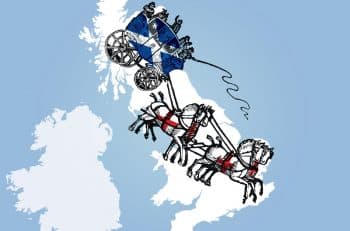
    Democracy means rule by people, however, there is some dispute as to what exactly this means in practice. It must mean more than majority rule – it cannot allow minorities to be oppressed just because they are minorities.   Democracy and fairness Democracy must embrace fairness in its broadest sense. It needs to engage with people’s identities, aspirations and sense of community, and through mechanisms including human rights and rule of law. Some procedural aspects of democracy are contentious; for example, whether proportional representation should prevail over single seat constituencies. Jurisdictional fairness is important too: gerrymandering is often circumscribed by allowing an independent commission to delineate constituency boundaries.   Unclear Boundary Rules Determining the boundaries and jurisdictions of countries too presents certain conundrums: Who decides what boundary defines a nation? When can part of a ‘kingdom’ decide to be sovereign and demand secession? History suggests that there are no rules, only that those who hold the power decide, retrospectively justifying the decisions or alternatively acquiescing to regional demands for regional sovereignty for reasons of political expediency. In the US for example in the Nineteenth Century the federalist states objected to the southern states’ demands for secession. Majority rule within the southern (confederate) states held no sway; the will of the more powerful “division” prevailed, after the Union Civil War. The US Supreme Court has been robust, holding in 1869 that Texas could not secede from “an indestructible Union”. The rights of persons other than those seeking secession are clearly at issue and must tempore any regional secession majority vote. Canada has been more circumspect. When Quebec secessionists sought independence and failed in two referenda, the last one in 1995 by a margin of 0.6%, the Canadian Supreme Court was asked to rule in 1998 on whether a vote for secession in Quebec would require implementation by federal authorities. It held, ambivalently, that both sides would be obliged to negotiate with due regard to constitutional principles and that any impasse should not be subject to judicial supervision due to its political nature. It did say though that the democracy principle “cannot be invoked to trump… the operation of democracy…in Canada as a whole”. Canada passed the Clarity Act in 2000 which sets out a broader participatory framework for any secession claims.   Secession versus Unification If two sovereign countries contemplate unification, a referendum which requires a majority in both ‘countries’ appears reasonable. However, when one ‘country’ such as Scotland aspires to independence, then a majority vote in the secession-claiming region is alone sometimes seen as sufficient, as when David Cameron conceded a referendum to Alex Salmond in October 2012, in the Edinburgh Agreement. But there may be an asymmetry between unification and separation. If the secessionist region times its challenge for a period of general instability of the larger region, as now with Brexit, regarding Scotland, then one lucky vote can forever divide a country, with no replay for the disenfranchised. Unfairness inevitably results from the asymmetry of process, whereby a vote for secession only needs to win once, whereas the unified region must win every time. Imagine a boxing match in which a challenger only needs to win one round out of fifteen, and can skip any round for a rest. The rights of citizens in the ‘abandoned’ region are clearly an issue too; the secessionist region may contain valuable resources (oil reserves for example) over which the abandoned region has a legitimate claim. The identity of the abandoned citizenry may be intrinsically tied to the unified country and the esteem, identity, integrity, power and military might associated with this greater power risk being downgraded. Without some bulwarks against secession there is a risk of fragmentation and chaos. Resource-rich regions could claim ‘Independence’ opportunistically to enhance the wealth of its citizens to the detriment of others. States could fragment into mini-kingdoms, each with its own laws and boundaries. Even the bald rule of law, a necessary component of democracy, requires that a brake be put on secessionist claims, which are based solely on regional ‘majority’ claims. One solution is to provide the (potentially) abandoned region with some say in any secession referendum process.   Everyone needs a say In the case of Scotland, for example, the remainder of the UK could also be allowed to vote in any new independence referendum. The more that Scotland’s independence is opposed in the UK, the higher the threshold which should be imposed upon Scottish voters to achieve independence. The percentage in the UK (less Scotland) in excess of 50% against independence could be divided by four and added to the 50% threshold, which was applicable to the last Scottish referendum, in 2014. Thus, if 80% of the remainder of the UK opposed change, then a majority in excess of 57.5% would be required for Scotland to secede. Such a system, or some similar formula, would better secure the conflictual rights at stake than determination by a simple majority of secessionists. Democracy must embrace the broader consequences of secession demands upon everyone and mould independence referenda procedures accordingly. Independence in an interdependent world is no longer simply a matter that should be left to those who see advantage in independence, no matter how noble such an aspiration may be, unless, as pointed out by the Canadian Supreme Court (in the international law context of self-determination), people are “subject to alien subjugation, domination or exploitation”. The ‘left-behind’ block of citizens has legitimate aspirations to stability and respect for their multi-stranded identities of which nationalism is but one facet. They should not be endlessly threatened with fragmentation of their notion of nationhood at the behest of one region of a country, particularly without their voices being heard. A minimum 15-year interval between any independence referenda coupled with a balanced participation formula (allowing all persons affected to partake) in any such vote would also conduce to a fairer system. The era of notionalism, of slavery to old slogans, must yield to a calculus of the greatest

    Loading

    Read more

  • Posted in:

    A vision, with buy-in

    History and economics John Moran is former Secretary General at the Department of Finance. I meet him for brunch in a Mexican restaurant on bank holiday Monday. He is bright and open, and brings along his ebullient mother (but that is another story). Before elevation to the most senior position in the Department of Finance Moran worked as head of the banking unit at the Department, which he joined after a stint at the Central Bank. Before that he worked as a senior banker and corporate lawyer mostly outside Ireland. He did a law degree and a Master’s in the US, and followed up with a degree in maths. I ask him what he’s up to now. “Basically since I left the Department I’ve set up a company, RHH, which is designed to do social entrepreneurship and strategic leadership. We do a number of roles with different charities like the Hunt Museum”, of which he is chair. It also lobbies for the likes of Nomura and Uber. As a social entrepreneur Moran supports a number of not-for-profit organisations drawn from interconnected spheres including education, and regional and urban development.  He has helped established and serves as chair of Narrative 4 Europe, based in Limerick, a not-for-profit organisation promoting social change through storytelling co-founded by Irish novelist Colum McCann, and is an active member of the Limerick Economic Forum, since November known as Limerick Twenty Thirty which is charged with developing key strategic sites in Limerick City and County that will act as anchors for enterprise and investment development across Limerick”. It has generated a national buzz about Limerick and sites like the Opera Site and Hanging Gardens. Moran was appointed a board member of the European Investment Bank (EIB), and is a ‘Chevalier de l’Ordre National du Merit’, or ‘Knight’ of France’s second highest national order of merit. A Francophile, he’s involved in the restoration of La Maison Carrie-Boyer, a 13th Century medieval home in Cordes-sur-Ciel near Albi in the South-West of France. The building is classified as a national monument. He is no longer involved in the juice bar he once ran in France. He lives mostly in Islandbridge in Dublin but is also restoring a Georgian house on Pery Square in the centre of historic Limerick. He looks back on his time in the Department with favour and in particular considers he was influential in effecting a change towards collection of data and a more evidence-based approach, one which perhaps surprisingly had been lacking until then. I probe him on whether he thinks the Department made mistakes during his time there but he certainly doesn’t think so. He defends Nama for selling property early as that was its remit. If it had not done so it is probable there would not have been the return to vibrancy in the property market that we are now benefitting from. He doesn’t agree the vulture (and he disagrees with the term) funds were indulged. He won’t be drawn on whether Nama could have expected to retrieve closer to the original, par values of loans instead of the discounted prices it paid and he certainly won’t be drawn to criticism of the way Project Eagle was handled. He believes it was right to exit Northern Ireland. He met Oak Tree and Lone Star in the immediate run-up to their putting in, successful, bids for Project Sands but does not recall engaging with Cerberus about Project Eagle, though Michael Noonan did, the day before bids were due. He and Noonan made their diaries available to the Public Accounts Committee. And of course Nama and the Department are far from conterminous. He accepts that the Anglo €34bn is gone but believes the State will recoup the rest of the €64bn advanced in the bank bailout from the bailees. In terms of his political philosophy he is unforthcoming but he’s passionately in favour of equality of opportunity. Limerick It’s in that context that he’s got involved in promoting the development of Limerick (he grew up in Patrickswell and there are hints of the accent through the mid-Atlantic and Merrion St). He feels at the moment too much development is going to the Greater Dublin Area. The people of cities outside Dublin are simply not benefitting from equality of opportunity. His vision for spatial strategy is of a spreading of the benefits of economic development around the country. He’s actively engaging with the government’s draft National Planning Framework. He’s a big believer in quality of life so I ask him if they ever looked at linking tax incentives to quality of life indicators in the Department when he was there. In fairness after failures with the likes of the Upper Shannon blanket tax incentives the Department of Finance had, by the time of his tenure, become hostile to property-based tax incentives but he says they had not looked at such linkages. He’s a little defensive. He notes accurately that the Department’s strategic plan “didn’t look just at GDP, but at quality of life too” and I ask him if that had been enough. He insists it was an “evolving agenda” to look at quality of life too. His vision seems ad hoc rather than comprehensivist. Though he doesn’t agree with tax incentivisation, if they are introduced they should be for the public realm, for the outside of people’s houses, not the inside. That benefits everyone. More generally, he thinks good planning should facilitate quality of life through; “Public realm: I think the first thing you have to do is invest properly in terms of public realm and public transport”. As to what this might mean for Limerick, he notes it “has a huge amount of green space downtown and in terms of reaching out and into the county and along the river. I think they should draw a red line around those areas and keep them. But grow the city in terms of density using the rest of the spaces”. For the historic city: “You have to come up

    Loading

    Read more

  • Posted in:

    The Furthest Exit: Bannon’s complex agenda

    Steve Bannon, President Trump’s chief strategist, was removed from the National Security Council in early April. Among the Kremlinologists who watch the Trump White House, this has been interpreted as a setback for the man whose neo-reactionary philosophy provides the guiding principles of Trumpism: Islamophobia, misogyny, xenophobia, and excited anticipation of a new American revolution. But Bannon’s ousting has also been called a disguised promotion, as he is restored to his proper role of the mostly unseen puppet-master. In the first part of this article in last month’s issue, I put Bannon in the context of the alt-right and drew the connections between him, Gamergate, Milo Yiannopoulos, 4chan and Alexander Dugin. Here I want to continue this profile of Bannon by looking at his political philosophy. Bannon subscribes to an esoteric version of history known as the ‘Fourth Turning’. Developed by amateur historians William Strauss and Neil Howe in the 1990s, the Fourth Turning applies the logic of cyclical history to the United States. Each turning represents a distinctive atmosphere that dominates a generation. Or better yet, to borrow a phrase from ‘True Detective’, a psychosphere, encompassing the social field of possibilities. In the first turning, following a period of crisis, the atmosphere is one of societal confidence built on a strong state and positively repressed individualism, known as “The High”. For Strauss and Howe, this period ran from the end of World War II to the Kennedy assassination in 1963. This is the era of the Greatest Generation and profound optimism in the American Dream. This turning was followed by “The Awakening”, where the state-individual relation was inverted. Characterised by a dismantling of the social order and the pursuit of individual autonomy, it descended, over time, into generalised confusion as society splintered. It ran up until the 1980s, and was followed by “The Unravelling” where individualism became unfettered to such an extent that societal ties became exceptionally weak. Then follows the final stage, the one Bannon believes we are entering, of “The Crisis,” where conditions require a radical re-assertion of the collective. One may wonder what the crisis was that shifted us into the Crisis. For Bannon the financial crisis of 2008 marked the moment when the individualism of the baby boomers was revealed in its full consequence: a stolen future. This is how he couches his vision when speaking to older conservative audiences, requiring that they own up to their failure and then pointing toward the rise, in line with Strauss and Howe, of a robust Millennial generation that will blast through the Crisis to get to the next High. Bannon has in mind a quite specific segment of the Millennial generation: the pick-up artists, the meme-warriors of Twitter and 4chan, and the campus-touring Milo enthusiasts. It also includes the Chad nationalists, a group of “norms” who might not explicitly position themselves on the political spectrum, but tend to be on the right. Did Chad vote for Trump? It’s implicit in his name, like some kind of metaphysical property. And it means Chad’s dad and his girlfriend and his fraternity did too. These people will quietly act to maintain Americanism, but not necessarily in a militant way. The decision might not always be theirs, however, as central to Bannon’s vision is an existential confrontation with Islam that will radicalise the entire Millennial generation away from individualism and back toward statism, since only a strong state could win such a battle. For Bannon, there is a multi-faceted project to accomplish. The State in its current decadent baby-boomer form must be dismantled. Yet this “deconstruction” (his own term) is simply a prelude to a complete regeneration of the society to be accomplished through total war. On this point, we find ourselves hoping that Trump’s personality will prove sufficiently resistant to Bannon’s apocalypticism. Some say it is General James “Mad Dog” Mattis, Secretary of Defense, who will be the greatest obstacle to Bannon’s vision. Surely this makes Mattis the world’s most unlikely dove. Maybe you know all this. You have heard about Bannon the puppeteer and the raw onslaught the alt-right has engaged Western culture with. Yet the story is even murkier. Alongside the alt-right exists another position, neoreaction, and it as close as this spectrum has to a philosophical system. Trumpist populism and Bannonesque esotericism are no doubt in the ascendant, but they are always threatened by their innate anarchism. There is a sense that the game might implode, that equilibrium could be restored, that a counter-populist movement might render Trump’s reign an aberration. Neoreaction, in contrast, is content to abide its time. Developed by the elusive Curtis Yarvin, under the penname Mencius Moldbug, neoreaction binds a disdain for stagnated democratic politics with a cold formalist system of neo-monarchism. Given the inefficiencies of democracy, only a strong leader, fully free to implement a political programme, can steady the ship. Neoreaction sees itself as an antidote to the Whiggish misreading of history that traces a continuous record of human progress. Instead of the Enlightenment, neoreaction ushers in the Dark Enlightenment. The most consistent formulation of the Dark Enlightenment comes not from Moldbug, but from the British philosopher Nick Land. Land has a storied history, emerging as one of the most exciting Continental philosophers in the 1990s before abandoning academia and the west for a freelance writing career in Shanghai. Throughout, he served as an intellectual lightning rod for the hugely diverse spectrum of alt-right and neoreactionary ideas. This has involved him extolling the virtues of cryptocurrencies, human biodiversity, and singularitarianism (space prevents me from developing these), but his most important contribution, is his emphasis on the all-too-easily overlooked libertarian concept of exit. In the 1970s and 1980s, libertarians became split over whether to enter representational politics. The ‘entryist’ wing established the Libertarian Party in the United Sates as a means to introduce the idea of libertarianism into mainstream politics and out of obscurity; similar parties have cropped up in other countries. The American party was eventually bought out by the

    Loading

    Read more

  • Posted in:

    Trump versus the public sector

    Steve Bannon, President Donald Trump’s chief strategist and beacon of the so-called ‘alt-right’, recently announced to cheers at the right-wing Conservative Political Action Conference (CPAC) that “the primary goal of the Trump administration” is “the deconstruction of the administrative state” or the dismantling of the public sector. Similarly, Trump’s oft-chanted populist campaign pledge to #DrainTheSwamp was calibrated to attract support from the small-government, anti-federal element of the American electorate. Since taking up in the Oval Office, the President’s actions (as well as his marked inactions) have demonstrated a relentless focus on the fulfilment of this promise to shrink the federal workforce, and to remove it from electoral control. Trump has gone to war with the public sector. On his first Monday as President, Trump signed an order imposing a near-total freeze on public-sector recruitment. His Presidential Memorandum also included a commitment to develop “a long-term plan to reduce the size of the Federal Government’s workforce through attrition”. Moreover, with one hundred days of his presidential term behind him, Trump has yet to fill a sizeable proportion of the roughly 4,000 federal appointments he is entitled to make. Where he has filled roles, Trump’s selections have been characterised by a fox-henhouse dynamic consistent with his hostility towards public-sector workers. In justification of his assault on the federal workforce, Trump relies on the standard-issue set of tired anti-public sector clichés about supposed inefficiency and laziness. His proposed solutions are as unoriginal as his critique: he wants to apply his brand of private-sector ‘The Apprentice’ logic to the federal workforce. A senior adviser in the administration recently said that “the government should be run like a great American company”. Superficially, Trump’s anti-public-sector rhetoric seems economically motivated. His press secretary, Sean Spicer, has argued that “federal employee health and retirement benefits require a level of generosity long since abandoned by most of the private sector” and demonstrate “a lack of respect for the American taxpayer”. In reality, however, Trump’s animosity towards the public sector has far less to do with economics than it has to do with core ideology. Structured, as it is, on precedent and procedure, the default setting of the bureaucracy, in the US as elsewhere, is the maintenance of order. It sits on a sort of ideological gimbal: it can remain stable in pivoting to serve worldviews either side of centre. Its procedures, in other words, can flex to reconcile small lurches to the right or left. There is, however, an inbuilt intolerance for the radical extremes: a fail-safe calibrated to trigger in the event of violent ideological swings. The federal workforce serves as a buffer – a kind of surge protector – between the people and the sometimes experimental enthusiasms of partisan politics. Trump sees the public sector as a political opponent: and he’s right to. Hillary Clinton won bureaucratic hotspots like Washington DC and Maryland with easy majorities, and 95% of political contributions made by federal employees went her way. It is not incidental that Trump tries to discredit the federal bureaucracy at every turn. Public-sector workers are accused, in slavish obedience to that age-old right-wing mythology, of being dispassionate, indifferent, cold and impersonal. When Trump and his team talk of applying private-sector logic to the public sector, they say the federal workforce needs to become more ‘responsive’, more ‘nimble’ and more ‘flexible’. These terms, however, are bywords for Trump’s desire to see a suspension of the transparent, impartial public system and its replacement by an opaque black-box system based on erratic discretion and exclusive loyalties. Nothing is more ‘nimble’ nor more ‘responsive’ than the capricious whim of a despot – think ‘off with his head’, or ‘you’re fired’.     The public bureaucracy is gender-neutral and colour-blind; it is uninterested in inherited differences in status or prestige. What codes as indifference through the looking glass of right-wing propaganda is, in reality, impartiality. What Breitbart calls impersonality is actually a commitment to radical tolerance. Methodologically, the federal workforce rigorously adheres to transparent procedure: its elevation of due process is possibly its most essential feature. Far from being some unfeeling monolith, the public sector operates on core values: values antithetical to those held by the Trump administration. The anatomy of an authoritarian regime is bespoken by inner circles: by cadres, cabals and coteries. Power is pooled in the hands of a few, and guarded there by populating the executive branch via nepotism, cronyism and patronage. The ideological clash between public-sector impartiality and Trumpian discretion is perfectly, almost poetically, captured in the fact that Trump, in a brazen act of nepotism, has appointed his son-in-law, Jared Kushner, to head up a White House ‘SWAT’ team, the ‘Office of American Innovation,’ charged with “scaling proven private-sector models” in the federal government. If a public-sector bureaucracy works without passion or prejudice, then an authoritarian regime works fast and loose on grace and favour. There are palms to grease rather than forms to fill and administrative decisions are made on a provisional, ad hoc basis. Disorder is weaponised and the state becomes permanently indecipherable. Since Trump’s election, the antibodies cryogenically embedded in the public-sector system have thawed and grown active. The federal bureaucracy has emerged as a sort of entrepreneurial check on Trump’s power. Much-maligned public-sector workers have been recast as folk heroes of the resistance as they take to ‘rogue’ twitter accounts, sign dissent memos en masse or leak prodigiously to the news media (je suis Sally Yates).  The IRS, remember, holds the ultimate article of kompromat – the tax returns. George Washington famously (perhaps apocryphally) remarked that the comparatively less contentious structures of the Senate should function as the saucer in which the hot tea of the House would cool. This function, however, is endangered. Whether it’s the erosion of the senatorial filibuster in the US or our own Senate’s brush with extinction, upper houses are, increasingly, being drawn down into the sinking sands of partisan politics. We have seen the public sector shift to fulfil some of this function. The

    Loading

    Read more