Politics

Random entry RSS

  • Posted in:

    Gross Neglect: MI5's fatal waste of resources

    I have spoken to Fred Holroyd from time to time. Holroyd worked with the British army and MI6 in Ireland, 1973-75, and has written a book about his experience ‘War without Honour’. Incredibly, British spies are still meddling with his post. Holroyd has furnished me with a photograph of an envelope he received from me. It contained an academic book about the origins of the Troubles, something that interests Holroyd. To protect the book from damage, it was placed inside a bubblewrap cover and then slipped inside an ordinary white envelope. Somewhere along the line someone pierced both layers of the package with what was undoubtedly a micro camera wand to see what dangers to the Realm lurked inside. The misuse of precious resources Moreover spendthrift paranoia like this and the decades-long Special Branch monitoring of Jeremy Corbyn and Diane Abbott compromises scarce resources. Since Theresa May became home secretary in 2010 total police numbers in england and wales have fallen by 46,700 or 19.5%. In contrast to this, the overall budget of the Single Intelligence account – which covers expenditure on MI5, MI6 and the government monitoring service GCHQ – rose to £2.63bn in 2015 up from £2.48bn in 2014; in 2010, it stood at £2bn. As a result of these cutbacks, armed troops had to be placed under the con- trol of the police after the Manchester suicide bomb atrocity. Meanwhile, MI5 is making excuses for its failure. One of these is that it is overwhelmed and under resourced. A fact shouted from the rooftops is that it requires 30 officers to place a single suspect under surveillance 24/7. Since there are approximately 3,000 such threats, it would require 90,000 surveillance officers to watch them all. Yet, despite this MI5 is still able to find resources to interfere with Holroyd’s post; photograph its content; compile reports and send them to whatever departments analyses them. After this MI5 probably liaises with MI6 which in turn contacts its spies in Dublin to find out more about the threat posed by the sinister forces who sent a history book from Dublin. Holroyd’s phone is probably also monitored. Since he is scrutinised daily, a fair estimation is that 10 working hours are consumed daily. Why? The surveillance of Holroyd intensified after the pressure to reinvestigate the Kincora Boys Home scandal grew to the point where the Hart Inquiry into child abuse in NI was established. Holroyd’s handwritten notes from his time in NI confirm that he had been told that Loyalist politicians were visiting Kincora for sexual purposes. If Holroyd’s post is being surveilled, other Kincora whistleblowers who have featured in recent editions of Village such as Brian Gemmell and Colin Wallace are probably being scrutinised too; not to mention Kincora survivors such as Richard Kerr and Clint Massey. If only 30 individuals are being monitored, that means about 300 man hours are being consumed daily. This is only part of MI5 and MI6’s misuse of time, energy and gold. They have both had to prepare for the Hart Inquiry and the Independent Inquiry Into Child Sexual abuse (IICSA) in London. Their only interest was to maintain the cover-up of their sordid role in a swathe of child sex abuse blackmail scandals. Officers would have had to talk to serving and retired officers to get a full picture of what went on; trawl through records; cull embarrassing documents; liaise with Home office and Foreign office officials and pull the wool over the eyes of senior politicians; engage with lawyers; consider PR and propaganda initiatives; and last but not least: coach their witnesses to lie to these inquiries. Tens of thousands of man hours must have been spent, and this will continue to be the case as the IICSA looks like it will last another decade. An avoidable massacre There is no doubt that the Manchester massacre could have been avoided. Amber Rudd, the Home Secretary, has stated that the bomber was “known” to the security services “up to a point”. His mother told them that he had been radicalised. Two of his friends called the police hotline in 2012 and warned that he believed that “being a suicide bomber was okay” and that he was “supporting terrorism”. He also made trips to Libya and, it now appears, Syria. In addition to wasting time on Holroyd et al, MI5 has a lamentable record of eavesdropping on trade unionists and other civil rights groups. one of those placed under the microscope was that well-known threat to the realm, Jeremy Corbyn. It’s anyone’s guess how much of this nonsense is still going on at the expense of British taxpayers while Isis terrorists gambol back-and-forth from the Middle east. The present Director-General of MI5 is Andrew Parker. He believes that MI5 is an honourable organisation. We will give him the benefit of the doubt and assume that all the recent child-abuse skulduggery has taken place behind his back. Will someone now please tell him that he should redeploy his troops from Holroyd et al to Isis terrorists. The politics of the pirouette The demons unleashed by Britain’s destruction of Libya loom large in the story of the Manchester bomber. He had a Libyan background and was trained by Isis in Libya and/or Syria. Going back a few years, MI6 (which is responsible for overseas intelligence activity) failed to predict what was likely to happen in Libya when David Cameron was considering bombing Colonel Gadaffi’s forces in support of the rebels. It certainly didn’t impress this likelihood on him with sufficient force to prevent the bombing of Libya by the RAF. Chaos and civil war engulfed the country and created a haven for Isis. Overall, recent British-Libyan history defies belief. Gaddafi furnished the IRA with arms, his agents had planted a bomb on an airliner which exploded over Lockerbie and shot a police officer dead outside the Libyan embassy in London. On the other side of the fence, the US and UK plot against Gaddafi and on one

    Loading

    Read more

  • Posted in:

    Charting the Charleton Tribunal

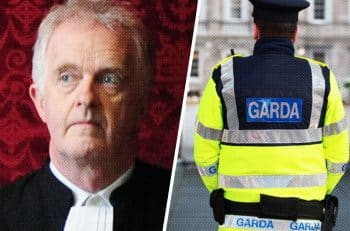
    As the Tribunal of Inquiry into protected disclosures and Certain Other Matters prepares for its opening statement from counsel in mid-June, Peter Charleton must be wondering what he’s let himself in for. It wasn’t supposed to be like this. The Supreme Court justice initially agreed to chair a commission of inquiry, a much more sedate affair than a tribunal. Set up by Michael McDowell in 2004 during his tenure in the department of justice, commissions of investigation addressed several concerns at the time about tribunals of inquiry, principally their ratcheting costs. But commissions are held mostly behind closed doors, and when it emerged shortly after Charleton’s appointment that false allegations of child abuse had been made against whistleblower Sergeant Maurice McCabe, the public clamour led the government to upgrade the commission to a tribunal of inquiry. A bigger deal altogether. He said there would be two modules in the tribunal – the first module will concern the reaction of Garda Commissioner Nóirín O’Sullivan, former commissioner Martin Callinan and others at the highest command level to disclosures made by Sgt McCabe. Maurice McCabe rejected plans for a Commission of Investigation calling instead for the inquiry to be held. The second module will deal with members of the force who made protected disclosures and whether they were mistreated as a result. Fortunately, although fresh scandals continue to emerge from An Garda Síochána almost weekly, from investigations into breathalyser statistics and accounting practices in Templemore to reports of potential security breaches as senior officers use third- party email accounts from Gmail, the Tribunal has avoided attracting further terms of reference as each new report of alleged Garda misbehaviour emerged. Charleton is of course no stranger to Garda tribunals. He was the lead counsel for the Morris tribunal into Donegal Garda misbehaviour in its initial years. Set up in March 2002, the tribunal delivered its final report in 2008, although Charleton departed in 2006, appointed a judge to the High Court. A retired president of the High Court, Frederick Morris headed one of two Garda tribunals at the time, while Justice Robert Barr headed a tribunal into the Abbeylara siege which ended in the death of John Carthy, shot by gardaí. Coincidentally, Barr’s son Anthony, also a barrister, acted for the Morris tribunal alongside Charleton. The latest whisleblowers inquiry (or as it wishes to be known, the Disclosures tribunal, and as it will probably become known among journalists, the McCabe or Charleton Tribunal) has one advantage over the Morris Tribunal. While the Donegal inquiry looked at a wide range of issues covering over a decade, the terms of reference for – and indeed the events which are being scrutinised by – the latest probe are much narrower. Even so, it could take some time to complete its work. Justice Barr looked at the events of a 25-hour siege, and the events leading up to it. His inquiry ran for four years. Charleton moved swiftly from the first. First announced early in February, before month’s end he had delivered impressive opening remarks, pointedly observing that lies told to the tribunal would be a “waste of what ordinary men and women have paid for”, and that the Irish people expected the tribunal to do its work expediently. Lies are a big thing for him: in a 2006 book, ‘Lies in a Mirror: An Essay on Evil and Deceit’, Charleton reflected on the criminals he had worked with, developing the idea that lying opens up the evil within all of us. His opening remarks also sought to shut down the possibility of delays to the tribunal’s work by way of appeals to the High Court, arguing that because so many previous tribunals had led to appeals to the High Court and Supreme Court, most important issues relating to tribunals were pretty much settled law. He also sought to shut down any claims of journalistic privilege which might impede the tribunal’s investigations. An interim report followed in mid-May, dealing mostly with the logistics of setting up the tribunal. It did reveal that at least some early concerns about journalistic privilege had been allayed, as both former Garda commissioner Martin Callinan and his successor Nóirín O’Sullivan, and Garda press office superintendent David Taylor, had waived any privilege in relation to any allegedly confidential communication with journalists. Born in 1956, Charleton was educated at St Mary’s College, Dublin, Trinity College and King’s Inns, before being called to the bar in 1979. He has written several books on criminal law in Ireland, as well as articles for both Irish and international journals on family law, constitutional law, the law of evidence, criminal law and judicial review. He has lectured at King’s Inns, Trinity, Fordham University in New York and Beijing University. He is unpaid chairman of the National Archives advisory council. He was appointed from the High Court to the Supreme Court in 2014. A noted musician, he was a founder member of the RTÉ Philharmonic Choir, and is formerly a member of the board of the Irish Baroque Orchestra. He is often described as “off beat” and “quirky”, which may be legal code for “well rounded” and “has interests outside the law”.   By Gerard Cunningham

    Loading

    Read more

  • Posted in:

    Neoliberalism cloaked as modernity

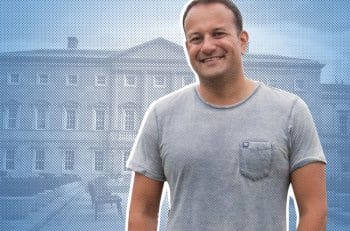
    Leo Varadkar consistently asserts that he does not believe in equality of outcome but in equality of opportunity. He sees himself as “right” or “either centre right or a higher class of liberal… somebody who believes in personal freedom, someone who believes in a political economy and in a free market as the best way to create wealth”. He wants to lead a party, and we infer a country, for “people who get up early in the morning”. His highest-profile initiative came in late April, when as Minister for Social Protection he launched the fractious ‘Welfare Cheats Cheat Us All’ advertising and online campaign. It aims to encourage the reporting of suspected fraud to the Department of Social Protection anonymously. The image Varadkar, who was always going to win anyway, cultivated in his long tilt at the Fine Gael leadership is that of champion of equality of opportunity, liberalism… the right… those who get up early in the morning and aren’t part of the class responsible for welfare fraud. But above all Varadkar speaks the language of markets. However, the markets are a dead end. Neoliberalism is defined as “a modified form of liberalism tending to favour free-market capitalism” (Oxford). Like Scientology or some of the madder dogmas of religion, it is pseudo-science or bad science and it has been, as we shall see, comprehensively discredited. But this is too tart. Of course it has been discredited, but its hold on us grips our lives still, grips our incoming Taoiseach. So let us try and whisper in the world’s ears, and in the ears of the Taoiseach, why it is wrong and dangerous and pushing us to the edge. For a start there are better economic theories. John Maynard Keynes was in Saul Bellow’s phrase a man of “clairvoyant intelligence”. Keynes was prophetic in his great work ‘The Economic Consequences of the Peace’ that predicted that the dire economic conditions forced on Germany after the war would lead to its economic collapse and political upheaval throughout Europe. It resonates in our times. Keynes’ ideas fuelled recovery after recovery after the mistakes which followed 1929. Recovery was needed after the market was shown in every instance to be deficient in providing macroeconomic efficiency, let alone broader societal goals. Keynes argued that aggregate demand determines the overall level of economic activity. Inadequate aggregate demand can lead to prolonged periods of high unemployment. Keynes advocated the use of fiscal and monetary policies to mitigate the adverse effects of economic recessions and depressions. Time Magazine has said of Keynes: “his radical idea that governments should spend money they don’t have may have saved capitalism”. Keynes himself was reportedly disparaging about capitalism itself: “Capitalism is the astonishing belief that the nastiest motives of the nastiest men somehow or other work for the best results in the best of all possible worlds”. The stagflation of the 1970s with the shocks to the Keynesian system generated by oil prices opened sowed dissent. Keynes fell out of fashion with the stranglehold of unionism and welfarism and the imposition of socialist dogma. It created ‘a market’ for the work of the Chicago School and trickledown economics characterised by fetishistic privatisation, deregulation and the elimination of State subsidies. In the late 1970s much of this made superficial though never profound sense. The market may have seemed like a score counter that could be tamed for human purposes. No longer. It is the recipe for inequality leading to intolerance. After the Depression which started in 2007, Keynesianism actually underpinned some of the measures implemented in some countries – notably by Barack Obama and Gordon Brown in the US and UK. This was not the case in most of the world, particularly in Germany, which has learnt, and insisted that others learn, the wrong lesson from its own hyperinflation-driven catastrophe – or the EU, including Ireland which was an incubator for austerity. But it is Greece that was the laboratory. When the Greeks decided the ignominy was too unfair and pointless and elected a government firmly opposed to the hopeless conditions imposed upon them they were forced into an astonishing U-turn to accept further self-destructive bailout packages. Not even the IMF thinks that Greece can comply with these terms and successfully pay back its debt, especially when coupled with crippling austerity conditions. The latest figures show Greece’s debt stands at 179 percent of its gross domestic product, or about €315 bn. Naomi Klein in her bestseller ‘The Shock Doctrine’ analyses the growth and development of Neoliberalism across the world. An economic paradigm dubbed by the author ‘disaster capitalism’. Klein particularly homes in on how these crises and others are used to justify further disaster prescriptions. She quotes Hayek’s mate Milton Friedman: “Only a crisis – actual or perceived – produces real change. When that crisis occurs, the actions that are taken depend on the ideas that are lying around. That, I believe, is our basic function: to develop alternatives to existing policies, to keep them alive and available until the politically impossible becomes politically inevitable”. This describes the Greek decade. Moreover, Neoliberalism has contributed to the world order approaching a collapse at a startling velocity. As shown by Thomas Piketty decades of inexorably widening inequality lead to economic instability and social unrest. Trump, Le Pen and Brexit are the predictable fruits. Racism, sexism, xenophobia, intolerance, anti-environmentalism and disdain for the truth are their imperatives and their currency. It isn’t hysterical to fear that the end of human civilisation is glaring us in the face while most people look away. Established parties of government in nearly all major countries have subscribed to the Neoliberal agenda and merely quibble about its implementation. A wild ballet of madness. Neoliberalism’s imprimatur for austerity has ineluctably led to social instability and fragmentation, the destruction of pension and welfare entitlements, poorer and often more expensive health care, homelessness, evictions and the corralling of our world into the very rich, and the rest. The ineluctability comes from its

    Loading

    Read more

  • Posted in:

    Ungenerous Ireland

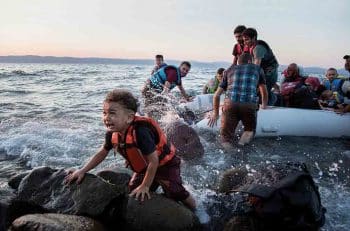
    The 2015 Summer refugee ‘crisis’ was the moment when refugees entered the European consciousness as an existential dilemma. Many European media asked if this influx represented the death of the Schengen line, the free travel zone and even of the European project. The pan-European furore that followed contributed to the Brexit vote. Indeed it is difficult to think of that time without being reminded of scenes of refugees at Calais attempting to make their way across the sea to Britain and of Nigel Farage campaigning in front of a billboard depicting long lines of refugees. However, to a large degree Irish society has escaped the pan-European panic. There have been no terrorist attacks in Ireland, and neither immigration nor the recent refugee influxes have been a major factor in any of our elections. News this week that one of the perpetrators of the London Bridge attack spent time in Ireland is notable as the first time Ireland has featured in international discussions of Islamist terrorism. On the face of it Ireland would appear to have been unscathed by the xenophobic political tensions that have been spurred in other countries. However, consider Graph 1 on Irish asylum applications. 2015, the year of the refugee crisis, should have been the year in which Ireland accepted its most refugees. And yet it is was in 2002 that applications peaked for asylum, at 11634.     Perhaps the recession led to the drop, yet if we look at the table it really begins to plummet in 2003 and 2004, boom years of great economic prosperity in the Republic, before gradually dropping to a recent low of 916 in 2013. For the sake of clarity it is important to note that an asylum-seeker is an applicant for refugee status – someone hoping to be declared a refugee. Like other European nations Ireland is obliged through international treaties to accept refugees. Refugees are defined as those who are forced to leave their country in order to escape war, persecution, or natural disaster. The situation in countries like Syria is so bad that many of them are accepted to be refugees, without question: they do not have to go through the process of seeking asylum. For example in Germany in 2016 57% of Syrians entered as refugees. The figures for people entering the country as asylum-seekers are different from those entering as refugees. Before 2015 Ireland’s efforts went almost entirely into asylum-seekers rather than refugees. So a big reason for the strange graph is that most of the crisis in 2015 were refugees, not asylum seekers. The Irish Refugee Programme (IRPP) was set up as a direct response to the 2015 refugee crisis. By the end of 2016 760 refugees had arrived through it. The State committed to taking in 4,000 people over three years through the IRPP. The commitment of the IRPP applies to two different groups of people. The first group is made up of people living in Turkey and Lebanon who have fled the Syrian war and already have refugee status. The second is made up of people who arrived in Greece and Italy by sea from Syria whose asylum applications are to be assessed in Ireland. 520 of the 760 refugees accepted in 2016 belonged to the first group, 240 to the second. It is most dramatic to note that Germany, albeit with demographic demands, will take a million refugees over the same period. To further complicate matters it is important also to note the success rates for asylum-seekers in different countries. Ireland’s is particularly low. For example over the period 2012-14 Ireland accepted only 677 asylum applications from asylum-seekers. Norway accepted 20 times as many per head of population. The US accepted 68,317 asylum-seekers in the same period, the most in the world; Germany 48,000; the UK 28,000. During that period the US accepted 16.7% of asylum-seekers; Germany 7.7%; the UK 16%; Ireland 3%. In fact only 21% were rejected with the majority deferred or closed for some reason, including that the asylum-seeker leaves the country. Separate from asylum-seekers and refugees are ordinary migrants, those who come to Ireland for economic reasons, to make a better life for themselves and their families. The total figure for non-nationals in Ireland is 584,000 out of a total population of 4.7 m. The figure of 12.5% of the population is substantially higher than that in Britain where it is 8%, a little more than in the US. However it should be remembered that Ireland’s immigrants mostly arrived in the last twenty years. Other richer countries will have accepted generations of immigration. In recent years the categories have become confused as many asylum applicants are in fact economic migrants attempting to use asylum as a way to enter into wealthy western countries. In spite of how perilous their economic situation can be, abject poverty has not been recognised as a criterion for refugee status. Instead, the Irish State’s suspicion that many asylum applicants are in fact economic migrants in refugee’s clothing lies at the heart of direct provision. In his paper on ‘Social Welfare Law and Asylum-seekers in Ireland’, Liam Thornton sets out how welfare conditions for migrants decreased considerably after direct provision was introduced in the year 2000. Before 2000 asylum-seekers could avail of social welfare like anyone else in Irish society once they had met the necessary conditions. This included payments for medical conditions, non-contributory pensions if the asylum-seeker was over 65, one- parent family payments and child benefit. Asylum-seekers who did not qualify for pensions or single parent allowances could still avail of  the same supplementary welfare allowance that anyone else in the State could qualify for. After the direct provision system was introduced asylum applicants instead received their supplementary welfare as a benefit in kind in the form of bed and board with an additional small payment per adult per week and an additional smaller payment per child per week. The meagre accommodations that ground Ireland’s system of ‘direct provision’ are

    Loading

    Read more

  • Posted in:

    Not quite feeling the Bern

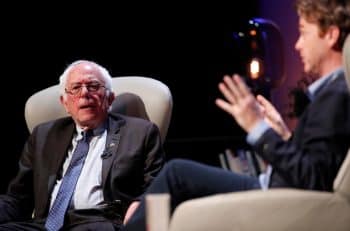
    In the foyer collected a curious mix of tattooed half-American lefties, millionaires, NAMA refugees, journalists, politicians and the plummy denizens of Dalkey. Interestingly there did not seem to be a presence from Ireland’s hard left or even soft left, though Eamon Ryan was there. What they were there for, surprisingly, was Senator Bernie Sanders, recent Democratic Presidential candidate, on his first ever visit to Ireland speaking to the Dalkey Book Festival at the Bord Gáis Energy Theatre. Tickets – €35 euro including a compulsory copy of his book ‘Our Revolution, A Future to Believe In’ – had sold out in under five minutes, which was quicker than Katy Perry’s gig at the theatre. This was because attending this event was a Cultural Statement for the Irish political classes. What they were not there for (except the plummy denizens) was David McWilliams but he was, predictably and essentially, oblivious to this. He started proceedings with a lengthy, familiar and unnecessary summary of the “magic” appeal of Bernie but really it was about the magic of how McWilliams and his entourage had enticed Sanders off his tour of Britain to Dublin. McWilliams (and Sanders) had been welcomed earlier to Áras an Uachtaráin by President Michael D Higgins. This made McWilliams proud. You sensed he feels pride every time the President has him up. Then like a ringmaster he summoned Bernie from backstage and the audience rose to its feet. Sanders is a brilliant speaker: never a word astray, never dull, always passionate. On occasion he did refer to the US as “this country”, some of the speech – about terrorism for example – had been lifted from comments he must have made to British audiences earlier in the week and it was a little strange to hear an Irish audience cheer to the rafters acknowledgements of national political delinquency in another country, even if the country is the US. But Bernie is heroic and his talk was a joy to behold, politically. He opened with an excoriation of Trump’s policies on climate change. He said Trump’s actions in withdrawing the US from the Paris Climate Accord were “incredibly stupid and short-sighted and will end up harming the American economy and the world economy”. Trump’s claim that climatechange is a hoax is “dead wrong and not believed by the majority of Americans”. “How in God’s name do you make public policy in defiance of science?” he thundered, to applause. Trump was “lying through his teeth” when campaigning when he said he was on the side of the working class and at this stage in the cycle was the least popular President in history. He’d duped the people into believing he was on their side. Sanders said that 28 million Americans do not have health insurance and Trump’s measures would throw a further 23 million out of health cover. Trump plans to cut $800bn from Medicaid, which helps the poor, over the next decade and to defund Planned Parenthood which serves the poor with abortion and family-planning services, while, at the same time, providing a $300bn tax break to the wealthiest two percent of Americans. Trump’s Budget proposals are even worse, as he wants to cut $2.5tr from programmes that help the poor over the next decade while giving the same amount in tax breaks to the top one percent. He said Trump’s Budget proposals are “the ugliest and most destructive attack” ever by an American President on the working class, middle class, and poor people of America. His most incisive attack was on those who think they can champion equality in issues of feminism, abortion, racism and homophobia while not addressing the issue of the very richest, the 1%: of social inequality. He let loose on the very richest, particularly in America: “The top one tenth of the top 1% has almost as much wealth as the bottom 90%. 20 people in America own more than the bottom half. The richest 1 per cent of the world’s 7.3 bn people now own as much as the rest of the world put together. Eight men own the same wealth as the 3.6 bn people who make up the poorest half of humanity. After the Great Recession the total wealth owned by the top 1% of the population in the US grew from 35% to 37%, and that owned by the top 20% of Americans grew from 85% to 88%. 52% of all new income generated in America goes to the top 1%. One family, the Walmart Waltons, owns more than the bottom 42% of the American people. Under Trump’s proposals, that family would get a $50bn tax break over a decade”. It was blistering. And statistical. His most memorable attack was on the Democrat party for not representing the disenfranchised, for wasting time on fundraisers, for cultivating Wall St. After an hour of rhetoric from Bernie, McWilliams ushered him to a faux-livingroom set where he prodded him with questions, each of which necessitated a McWiliams’ hand revolution, every answer generating furious foppish nodding. McWilliams lounged the smug lounge of the initiate, head tilted in the general direction of Bernie at an angle twenty degrees north of what anyone who doesn’t run their own hedge fund would have adopted. However, there was an appropriate response from one of the world’s most people-attuned political practitioners: every time McWilliams asked a question from the intimate bay of yellow-lamp-lit armchairs where he and Bernie nestled, Bernie rose and addressed the audience, his back to the great man. Much worse than the optics of having an event for a radical leftie pre-paid and over-priced for a bourgeois book festival in a lavish amphitheatre that usually hosts blockbuster musicals, was the misconstruction of Sanders’ politics. At one point McWilliams seemed to make common purpose with Sanders, both being “people on the Centre or Centre-Left”. But this is a failure of imagination. To be clear: Bernie is on the radical left; McWilliams is a clever analyst whose whole body of

    Loading

    Read more

  • Posted in:

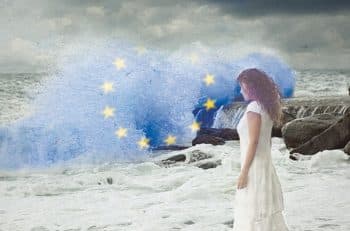
    Demexit

    While the consequences of the UK’s decision to leave the EU remain unclear, one thing is certain – the power and influence Ireland, North and South, will exercise over the final decision-making is limited. The hype in May of this year over apparent ‘concessions’ gained by Ireland from the EU, about an early resolution to how the Irish border will be affected, was quickly rubbished by UK Brexit Secretary, David Davis. He and other English Tory politicians have made it clear that the UK’s self-interest goes beyond, and is much more important than, the concerns of those living either side of the Irish border, or indeed the Irish peace process. It is not even clear how the 27 remaining member states of the EU (of which the Irish State is only one) will actually approach negotiations with the UK, and whether they will indeed take the concerns of the Irish seriously. The Irish State has not been awarded a veto similar to the one apparently granted to Spain by the EU over any decisions on Gibraltar, in relation to the North or the Border. Indeed it is not clear that EU interests (if they exist collectively) are likely to coincide with Ireland’s when it comes to what will be a new EU land border with what will be a non-EU state. And if the Irish State will have limited power and influence over negotiations it is clear that the people of the North will have none at all. Despite a majority of the North’s population (56%) voting to Remain in June 2016, that voice has more or less been silenced by an overwhelming majority of English MPs in Westminster supportive of Brexit whose minds are concentrated on negotiating a deal that will suit their own constituencies. One option touted by some hopeful nationalist politicians is for the people in the North to vote for Irish reunification, in a referendum (allowable under the Belfast Agreement, 1998). David Davis accepted in March of this year that by joining an existing EU State (Ireland) the North could remain in the EU without having to reapply. However, while many Unionists, particularly in Border areas, voted against Brexit it’s not clear that this would translate into a vote for the ending of partition. The Northern Ireland entity was after all created in 1920 specifically to give Unionists a majority, where they had lacked one in the whole of Ireland. It is true that that majority has decreased in recent years. It is also true that in the Assembly elections in March 2017 the Unionist parties (for the first time since partition) did not win a majority of seats, but then neither did the Nationalist parties. There is also no guarantee that votes for the Nationalist parties would necessarily translate into votes for reunification, particularly if this led to the loss of the NHS, social services and public-sector jobs. Ironically, a Westminster Tory Government dedicated to rolling back the welfare state and public-sector cuts, might make that choice easier! In any event the British Government has refused to agree to a referendum in the North as it also has in Scotland, apparently fearful that this might lead to the break-up of the UK. The lack of control over its own destiny is not something new for Ireland of course. Though the North remained within the UK after the 1921 Treaty, the ‘independence’ of the Irish State in the South always seemed compromised, initially by economic dependence on Britain and then, from 1973 onwards, by EU membership and a progressive seepage of sovereignty to the EU and, in particular, its bigger states. The lack of democratic control over the economy in Ireland, North and South, became particularly clear during the banking crisis and the period of austerity. While the experience of the crisis and austerity was different, North and South, reflecting different social, economic, and political contexts, as well as different forms of democratic control, it nonetheless showed that power lay elsewhere. The 2008 global economic crisis and the responses to it in the industrialised rich countries of the world led not just to a re-moulding of capitalism, but to increased clarity about both the lack of global democracy and what John Pilger termed in 2002, “the new rulers of the world”. Neoliberal minimalist State regulation of financial institutions, and the economy in general, was replaced by high-State interventionist ‘austerity’ measures, aimed at protecting capitalist financial structures. In the EU, Governments nationalised private debt, spreading the costs across their local communities, largely to ensure that capitalism as an economic structure and ideology was maintained. The notion of ‘European-ness’ and a sense of a unified EU citizenship – used to promote the idea of a greater social and economic union from the 1970s – gave way to single-State self-interest as the bigger economies banded together to protect their national interests and the interests of their banks and their bondholders. Smaller EU states, having progressively relinquished sovereignty to the larger states, from Maastricht (1992) to the Euro (2002) to Lisbon (2007) in the interests of ‘Europeanisation’, realised that they no longer controlled their own economies, budgets or fiscal arrangements. Ideological choices appeared limited in smaller states – either accept the new ‘austerity’ measures, enthusiastically, as the only solution to a global crisis, or accept them, reluctantly. What Greece’s former Finance Minister, Yanis Varoufakis, was to call, “financial terrorism” was in town. Irish Governments from 2008 on fitted in with that ‘austerity’ agenda accepting with enthusiastic energy the dominant agenda of public-sector cuts. Although the capitulation to threats from the IMF and the EU seemed to show a lack of democratic control, they still had a choice, even if it was simply to raise a protest at the way their State was being treated. A ‘pragmatic’ approach to the powerful seemed the best option and by and large the approach fitted with the world view of the main parties. Up until 2015, the North of Ireland had not suffered

    Loading

    Read more

  • Posted in:

    Demexit

    Brexit, like the bank bailout, shows how little democratic control we really have in the global economy

    Loading

    Read more