


Posted in:
Simon Coveney
Housing is probably the number one priority for this Government
![]()
Posted in:
by admin
Housing is probably the number one priority for this Government
![]()
Posted in:
by admin
Many housing targets are being manipulated and missed
![]()
Posted in:
by admin
Massive crowds, presidents, politicians pay tribute
![]()
by Mel Reynolds
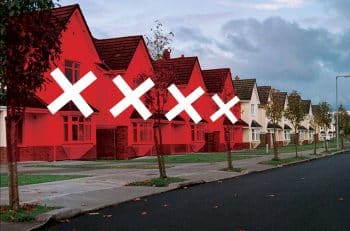
In an article on 27 March in the Irish Examiner ‘Simon Coveney Looking at All Means of Getting more Houses’, the Minister for Housing made serious and precise statements about the housing market. Mel Reynolds checked them. CLAIM: “Many years of pro-cyclical policies contributed to the crash that caused a decade of inactivity, and it will take a number of years of the correct ones to put things right”. Concededly tax incentives and grants contributed to the boom and crash. But is the government now working against the economic cycle? The Help-to-Buy scheme was widely criticised on its introduction in 2016 as being pro-cyclical and inflationary. To date there have been 3,750 successful applicants for the scheme at an average cost of €15,000. Just 3,606 new homes in housing estates were sold last year and recent figures suggest that house prices have increased by €15,000 in three months. Current price inflation may get into double digits and will significantly erode affordability for those attempting to get on the property ladder. By June we may see two Help-to-Buy applicants for each new home coming to the market. VILLAGE VERDICT: True, but with a misleading implication about current policies. CLAIM: “The most recent monthly activity report indicates 15,256 homes were provided last year and commencement notices in the year up to the end of January 2017 show an increase of 44% year on year”. The Department of Housing figures use connections of dwellings to the electricity supply as a proxy for completions, and dwellings vacant for two years or more are double-counted as new-build completions when connected even if they have registered in figures before. Given the large volumes of vacant NAMA and ghost-estate units, this methodology gives inflated new-build levels and creates a false perception of dynamism in the market. In 2016 there were just 3,606 estate homes developed and sold, and a similar number of one-off homes commenced along with 75 local authority houses – less than 8,000 new homes in total. Not 15,256. This has been highlighted in this magazine and elsewhere. Yet the Minister ignores the reality. Officials have never explained how they get to double these figures, 15,256, for new-build units completed. It is reasonable to infer they cannot. VILLAGE VERDICT: Deliberate untrue misstatement on a central plank of government performance, an issue the Minister accepted in May 2016 is “a national emergency”. CLAIM: “One of the central elements of ‘Rebuilding Ireland’ involves an unprecedented commitment of €5.35bn for social housing. We are determined to help individuals and families that are homeless and those on social housing waiting lists”. Housing 2020 was launched in 2014 and proposed a budget of €3.8bn and 35,000 social homes in five years. Between 2014 and 2015 there were less than 1,000 local authority and voluntary and co-operative social homes built. Homelessness has increased by 190% since 2014. Child homelessness has increased by a shocking 250% in the same period. Official figures show that 4,875 adults and 2,546 children are sleeping in hotels, B&Bs and hostels. As part of the plan to tackle homelessness, the Government promised 200 rapid-build homes by the end of 2016, a further 800 this year, and a further 1,500 next year. Just 22 have been built so far. Department Housing Plans consistently missed targets by some distance. VILLAGE VERDICT: True but optimistic. CLAIM: “Last year 18,300 social housing solutions were put in place and this year that figure will be over 21,000 and we will spend €1.3bn making it so”. ‘Solutions’ is the Department’s term and includes rent supplements, assistance, emergency hotel accommodation and private and public social housing – all forms of social housing assistance. Many would not know that rent supplements was a ‘social housing solution’. To illustrate the low level of state construction, in 9 months of 2016 just 161 Local Authority homes were built. This is actually double the rate of the preceding year. The private sector is similar – the number of Part V social homes delivered by the private sector was 37 in 2016, it was 64 in 2015 and 67 in 2014. Government relies heavily on the ‘hands-off’ involvement of charities and approved housing bodies for social housing, and of course on private sector rentals with no security of tenure. VILLAGE VERDICT: True but misleading. CLAIM: “In terms of social housing construction, 650 homes were built last year, 1,800 are under construction on sites around the country and 8,430 are at various stages in the pipeline of delivery”. Construction activity has started on 1,829 units and 3,262 housing units are at some stage of pre-development. However, one third of the total mentioned, 2,687, are ‘under consideration’- these schemes may or may not proceed and may well be cancelled. Minister Coveney includes these as “in the pipeline of delivery”. For most people anything that is metaphorically in a pipeline cannot be stopped. So this is misleading, not really true. Furthermore, Housing Department equation of completions with ESB connections means that existing local authority voids refurbished will be double-counted as new build completions, inflating figures again. VILLAGE VERDICT: Misleading and untrue. CLAIM: “That’s why we brought in a €200m housing infrastructure fund to unlock these sites. I will be shortly announcing funding for roads, bridges and amenity infrastructure that will facilitate the delivery of tens of thousands of new homes across the country”. The €200m infrastructure fund – over fully five years – for housing infrastructure is a pro-cyclical developer incentive. Designed to ‘unlock’ 23,000 ‘affordable’ units, details have now been provided of various impressive bridges, link roads, and Dart stations to be funded 75:25% between the Exchequer and local authorities. Nevertheless it is unclear whether details of the 23,000 affordable units have been agreed between landowners and local authorities, and the Department. It would appear to make little sense if what are effectively incentives to developers are being paid in advance of agreements on unit size, location specification, delivery date, and most obviously affordability including price of the suggested units, There is no guarantee that the developers will pass on the benefits of their incentives end-purchasers and tenants. The Department claims that it “is determined that the fund
![]()
Posted in:
The figures given for housing completions 2015-2017 are simply and definitively untruthful and misleading. It is extraordinary that the political Department of Housing and the normally scrupulous Central Statistics Office continue to tout them though the deficiencies have been highlighted by Mel Reynolds in Village and elsewhere.
![]()
Posted in:
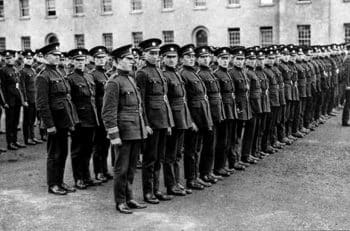
The Garda appears to be stumbling from crisis to crisis. As Village was going to print Fianna Fáil was considering a vote of no confidence in its management and the Government had agreed a ‘root and branch’ review. It is now difficult to keep account of all of the controversies that the force has been embroiled in – or the associated inquiries. The current difficulties with a million phantom breath tests, and 14,700 wrongful convictions for motoring offences, the ongoing tribulations of Garda management in the mishandled controversy surrounding the Garda whistleblower, Maurice McCabe, apparent misaccounting in Templemore and rumours of false crime, including murder and domestic-violence, statistics, are just the latest in the downward spiral of scandals – but are nothing new. For most of the history of the new Irish state the success of the Garda force in presenting a neutral, unarmed and publicly acceptable form of policing after a bitter civil war has been the subject of wide-ranging favourable commentary. However, in the modern era, certainly from the 1980s onwards, the force has not coped well. Vincent Browne recently recalled how, following the murder of the British Ambassador Christopher Ewart-Biggs in 1976, two gardaí who argued a fingerprint allegedly found on a helmet near the scene of the explosion was not the suspect’s were moved out of the fingerprint unit and were effectively demoted. A subsequent inquiry into the affair led by the head of the fingerprint unit in Scotland Yard concluded that what was done in the Ewart-Biggs case “endangered the science of fingerprinting worldwide”. In 1977 Nicky Kelly, Osgur Breathnach and Brian McNally, members of the then newly formed Irish Socialist Republican Party (IRSP) were convicted of committing a £200,000 train robbery in Sallins, Co Kildare. The only evidence against them was confessions they made while in Garda custody and while in that custody there was clear evidence that they had suffered significant injuries. More that 20 gardaí gave evidence in almost identical phraseology that the accused were not assaulted in custody and that the confessions were voluntary. Kelly was ultimately pardoned and the other two acquitted. In many ways I am the last person to be critical of An Garda Síochána. My own grandfather joined the force in 1922, rising to the rank of Chief Superintendent, was shot at during the civil war and was compelled to carry a revolver for most of his service career. The fact that my father was a Minister from before I was born meant that much of my parenting and early lessons in life were actually provided by my fathers two Garda drivers. They were really part of our family and in many ways an inspiration to us growing up. My grandfather’s old dress uniform hung in his bedroom wardrobe well into retirement and we would gaze at it, as children, with great awe – its gold-braid peaked hat and the Sam Browne belt with blue whistle and tie. Over the years in politics, business and in journalism I have interacted with senior gardaí and never found them wanting. In particular I found Garda Commissioners Pat Byrne and Fachtna Murphy to be exemplars of professionalism and would go as far as to count them as friends. Most of the gardaí I have spoken to, not the previously mentioned I hasten to add, have been shocked by revelations in the whistleblower affair. Few understand how the current Commissioner can retain her position, given that she must have known about so many of the controversies that are undermining the force including the incendiary rumours that were circulated about Maurice McCabe, including by senior members of the force. Though out of politics I was also on the receiving end of these stories. When the Garda want to put something out there they are not shy about it. One reason why the Garda has not made an easy transition into the modern era of more sophisticated crime is because much of its work from 1969 onwards was taken up by the demonstrable threat to the state posed by the IRA. It gave a culture of secrecy and stealth the upper hand within the force. In a recent Irish Times’ article Vincent Browne claims: “Lawyers, acting for accused persons associated with illegal organisations, stated repeatedly during that time – ie in the 1970s and 1980s – that Garda perjury was a regular feature of such cases and, later, became almost a constant feature of many criminal trials, whether subversive related or not. At no time was there any inquiry into this or was any Garda disciplined within the force in that connection”. The same over-zealousness accounts for the fact that it is now suspected that at least 2,800 non-999 calls were monitored, in 23 Garda stations, from 1980 to 2013. The Ian Bailey case currently advancing to the French courts has aired serious allegations that gardaí considered paying someone in order to frame Bailey for murder. The instincts of many gardaí have been called into question. More generally in the JC case streetwise Supreme Court Justice Adrian Hardiman rehearsed the critical findings of tribunals of inquiry into Garda conduct and cited recent “deeply disturbing developments” in relation to the force and its oversight. “If the ordinary citizen were provided with a defence of ‘I didn’t mean it’ or ‘I didn’t know it was against the law’, then many parts of the law would become completely unenforceable, he noted. The conflict in the North occasioned a corollary and opposite problem: the resources that had to be devoted to the conflict in Northern Ireland skewed the force’s operations. While on the one hand the conflict engendered some heavy-handed tactics, on the other it reduced the force’s efficacy, weakening it. So, the Garda was late to counter the threat posed by armed and well-organised crime gangs. The fact that for example the Kinahans have become one of the biggest drug gangs in Europe tells its own story. Symptomatic of the weakness of the Garda was the incident
![]()
Posted in:
There is a good reason to regard the labour historian C Desmond Greaves (1913-1988) as the intellectual progenitor of the 1960s Northern Ireland Civil Rights Movement, for it was he who pioneered the idea of a civil rights campaign as the way to undermine Ulster Unionist majoritarianism. Greaves is best known in Ireland for his biographies of James Connolly, Liam Mellows and Sean O’Casey. Because his political activity on Ireland took place in British Labour circles, it is not so well known here. Perhaps also because he was a communist party (CP) member, as in the days of the Cold War people were reluctant to credit communists with any progressive development. Desmond Greaves joined the British CP in 1934 when a student at Liverpool University at a time when, with fascism advancing on the continent, many of Britain’s young intelligentsia moved to the left. He was always more interested in questions of imperialism and national independence than of socialism. He held the view that leftwingers should champion democratic issues and if possible give a lead on them. This he saw the socialist James Connolly as doing when he allied with the radical democrats of the IRB in the Easter Rising to establish an independent Irish State. He identified early on with Ireland, where he had family roots, and devoted most of his political life to trying to undo Partition. Logically, there were only two ways this could be done. One was the IRA way of physical force. This was undesirable in principle because of the violence and division it would cause, but it was also impractical because the British army, with NATO behind it, could never be defeated militarily. The other way was to create political conditions in Northern Ireland whereby over time Unionists/Protestants would rediscover the political implications of the common Irishness they share with their Nationalist/Catholic fellow countrymen. Hence civil rights: to establish equality of treatment and parity of esteem between the two Northern communities. If the rational basis of the Unionism of many Unionists was to be top-dog over Catholics, getting rid of top-doggery, which only a successful campaign for civil rights and equality could do, would lay the basis for a gradual coming-together, even if it took two or three generations. The post-War British Labour Government was wholly behind Ulster Unionism because of its backing of Britain’s efforts in World War II. This was shown by Labour’s passing the 1949 Ireland Act, which provided that there could be no change in the constitutional position of the North without the consent of the Stormont Parliament. Twenty years later, when the Civil Rights Movement got off the ground, Ulster Unionism was so discredited in British Labour circles that there was substantial backbench opinion pressing Harold Wilson’s Government to tackle anti-Catholic discrimination in the North. This change was largely due to the work of Greaves and the Connolly Association, which campaigned in British Labour and Liberal circles from 1955 onwards to expose the woeful civil liberties situation under the majority Unionist regime at Stormont. Founded in 1938, the Connolly Association is the oldest political organisation of the Irish community in Britain. It is still active there. Greaves edited its monthly journal, the Irish Democrat, from 1951 until his death in 1988. From 1958 until 1961 I was active in the Association while studying and working in London. I was its full-time organiser for a while. Its main campaign at the time was to try to get Labour MPs to demand the release of the couple of hundred Republicans who were interned without charge or trial, some for years on end, in Belfast’s Crumlin Road Prison under the Stormont regime’s Special Powers Act. This was following the IRA’s 1950s Border campaign. The British Government hid behind the parliamentary convention that MPs could not raise anything in the House of Commons relating to powers devolved to Stormont, which included justice and policing. This was a happy way of ensuring that sleeping dogs lay undisturbed. Greaves discovered that a number of the Belfast internees were members of British trade unions operating in Ireland. We were invited as speakers to trade union branches in London, Manchester, Glasgow and other cities to tell their astonished members how some of their fellow trade unionists were being imprisoned for years without charge or trial in a part of the UK about which they knew nothing. By 1961 over half the Parliamentary Labour Party had signed a series of telegrams to Unionist Premier Lord Brookeborough calling for the release of the internees, which duly happened. This anti-Unionist campaign in Britain continued during the 1960s. The Connolly Association was affiliated to influential bodies like the National Council for Civil Liberties and the Movement for Colonial Freedom, which helped leverage its message. Greaves established good relations with the old Northern Nationalist Party and in particular Cahir Healy MP. When Patricia and Conn McCluskey set up the Dungannon-based Campaign for Social Justice in 1964 and began detailed documentation of anti-Catholic discrimination, the Association spread its material in British Labour and Trade Union circles. When Gerry Fitt was elected MP for West Belfast in 1966, it was the Association that organised his first public meetings in London. Greaves had considerable personal influence on those who set up the Northern Ireland Civil Rights Association in 1967. Two ideological influences went into NICRA’s formation. One was the Republican ‘politicisers’ of the Belfast Wolfe Tone Society, of whom the late Jack Bennett and Fred Heatley were on the original NICRA executive. Greaves used to stay with Bennett, who wrote the influential ‘Claud Gordon’ column in the Sunday Press, when he visited Belfast. The other was the leftwing trade unionists, mostly of Protestant background, of the Belfast Trades Council and the Draughtsmen’s Union in the Belfast shipyard. Betty Sinclair, who was the full-time Trades Council secretary and Noel Harris of the Draughtsmen, were leading NICRA figures whom Greaves knew through the Northern Ireland Communist Party. In 1968, in face of Unionist resistance to the civil right
![]()