

Politics

Random entry RSS

  • Posted in:

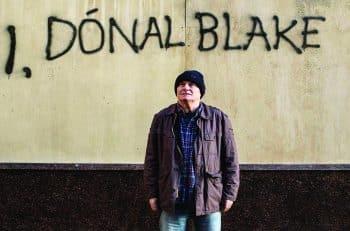
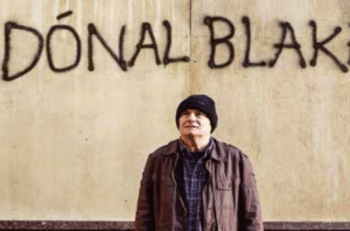
    I, Dónal Blake?

    Our new Taoiseach Leo Varadkar TD makes sure he gets out once a week, often to see a movie. Last year he went to see the English movie ‘I Daniel Blake’ directed by Mike Leigh. Discussing the movie at a Pobal conference he showed little sympathy for the plight of Daniel who, having suffered a heart attack at work, was forced to reply on job seekers payments while attempting to appeal a decision not to allow him  a disability payment.  Nor did he appear significantly moved by single mother Katie and her children (Daisy and Dylan). Katie, having moved to Newcastle from a London homeless persons’ hostel, and increasingly desperate to survive, resorted to  food banks, shoplifting, and work in a brothel. Indeed he has since gone out of his way to affirm his belief in the heavy-handed ‘work-first’ policy message at the heart of UK welfare reform. Through a rhetoric of ‘welfare cheats’ and an election campaign that spoke to the “coping classes”, the “people who get up in the morning” he has consciously sought to replicate an anti-welfare rhetoric in Irish political discourse.  The question we must now ask is whether, under his new emboldened leadership, the bleak lives of Daniel and Katie, dominated by a hostile welfare state, could happen here.  Are we seeing conditions emerge for ‘I, Dónal Blake?. The Irish welfare state has recently played catch-up to new forms of globalisation,  privatisation, marketisation and voguish new public management (NPM) and has, championed by both international and domestic actors,  moved towards work-first activation  which is  a more active use of income support to promote participation in paid employment.  It is a mixture of enabling, compensation and regulatory regimes, but the general international trend has been  for policy, and managerial, reforms to undermine potentially enabling elements and intensify its regulatory and punitive elements.  Pathways to Work (PTW),  Ireland’s activation policy,  has fundamentally restructured Ireland’s activation institutions and programmes,  rolling back old institutions like FÁS and rolling out new institutions like Intreo, the pay-by-results private-sector Job Path, and the Social Inclusion Community Activation Programme which has reoriented local community-development work towards supporting job readiness.  New penalties have been introduced and, while the incidence of sanctions is still comparatively low,  the unemployed have heard the message clearly. There is a new regime in town which must be engaged. Activation is often associated with recommodification of labour and mobilisation of a new form of ‘floating’, or more available and flexible employee,  where claimants are gauged by their ‘standby-ability’ and live in a condition of flex-insecurity. We can best understand what activation is for by asking activation ‘into what’. The crisis also saw increased incidences of low pay and more precarious working conditions.  Low pay is an increasing feature of the Irish labour market, with up to 30% of Irish workers low-paid according to the OECD definition of two thirds the industrial wage. Some groups of people are more likely to be low-paid, with women, young people and migrants not only more likely to be in low-paid work but also to work involuntarily part-time, to be underemployed or to  be in precarious forms of employment. The Irish state spends over €1bn  in in-work benefits to support low-paid workers and their families,  compensation mechanisms that supports participation in low paid employment ultimately act as forms of corporate welfare, supporting not only low-paid workers but ultimately making such low-paid work viable. Taken together then, recent Irish changes point to a work-first policy strategy with a greater use of privatised actors working in  a more managerial culture and using more  regulatory sanctions to pressurise working-aged claimants into low-paid and precarious employment.  That this work is often only viable through compensation in the form of in-work and employer subsidies raises questions about the quality of employment people can aspire to and whether in fact paid employment offers a sustainable route out of poverty.  There is an alternative and it includes  longer-term ‘preventative’ measures including properly accredited and quality education and training and regulating for decent jobs and living wages. One desirable recent change is the inclusion of Employment in the remit of the old Department of Social Protection.  We need to judge success not by movement from welfare into work, but movement into lasting, sustainable and decent employment.  If the new Taoiseach wishes to avoid a dystopian future or ‘I Dónal Blake’ situation  he might look to addressing low pay as a significant Irish labour market phenomenon and introduce policy initiatives that counter a ‘low hours’ employment culture.  People want jobs and to ‘get up in the morning’ but need a combination of institutional and income support responses to unemployment that reverse the emerging reality where approximately 30 percent of Irish workers experience not only low pay but also low hours of work, part-time work, temporary contracts and precarious working conditions.    By Micheál Collins and Mary Murphy

    Loading

    Read more

  • Posted in:

    New morning for Ireland’s housing problems

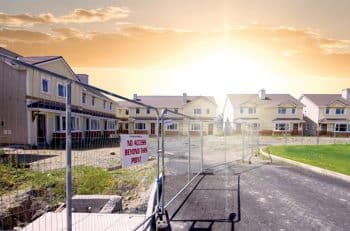
    On 20 June the consumer advocacy group Right2Homes presented a National Co-Operative Bill to the Oireachtas Joint Committee on Finance, Public Expenditure and Reform. Supporting the bill was an expert panel including Edmund Honohan, Master of the High Court, homeless campaigner Fr Peter McVerry, academic Dr Rory Hearne of Maynooth University and other industry professionals. Prominent US Cornell University Law School professor Robert Hockett submitted a separate written submission to the Chairman. The Bill envisages the establishment of a not-for-profit co-operative to purchase large volumes of mortgages currently on the books of Irish lending institutions, that are in arrears. It is envisaged as an off-balance-sheet self-funding initiative, a special purpose vehicle with the intention to purchase 42,000 homes currently in arrears of more than one year. €14bn of assets for a marked-down value of €5bn. The overarching intention is to “keep owners and tenants alike in their homes” out of an overheated private rental sector and to help prevent further homelessness. To put the initiative in context, it is useful to remind ourselves of the current housing status. Mortgage Arrears – a ‘perfect storm’ A March 2017 report by the Central Bank confirmed the scale of Ireland’s mortgage distress: one in ten mortgages (76,422) are in arrears over 90 days of which 33,447 were in arrears for more than two years. Out of this 14,367 are ‘Buy-to-Let accounts. Despite this, the current rate of repossessed properties disposed of was relatively low at 210 in the first quarter. Homeowners in arrears are facing a ‘perfect storm’ – on the one hand very low levels of new home supply give a net loss of overall housing stock and contribute towards historically low levels of rental properties. On the other there is a recovering economy, net inward migration of over 34,000 people per annum and increasing levels of household formation. The Housing Agency suggests there is a demand for 81,000 additional homes by 2021. The Central Statistics Office confirmed that, when all factors were taken into account, the total stock of housing increased by just 8,800 in 5 years. Sharp sales price and rental inflation in the past three years confirms that demand dramatically outstrips supply, even with 32,000 vacent and so-called ‘ghost estate’ homes having been brought back into habitable use since 2011. For owners and tenants facing repossession, options are limited. Social and Affordable Housing Under-investment in State housing has left thousands of families in social-rental ‘solutions’ – temporary tenancies with little security of tenure. In the five-year period 2011-2015 there were only 807 Part V social homes delivered. Just 37 Part V social homes were delivered nationwide last year. Ireland’s social housing is a subsidised private-rental model – state-sponsored tenants competing for living space in the private-rental sector. The average sales price of a new three-bed home in Co Dublin on a greenfield site is €360,000. Purchase at this price requires a combined household income of over €100,000. There is no official definition of ‘affordable’ housing at present, no affordable housing scheme and no official intention of introducing one. Legislation underpinning the previous affordable housing scheme was revoked and any new initiative would require a legal framework to be developed. State infrastructure funding of €240m has been announced and will subsidise infrastructure for a number of housing sites (LIHAF). The intention is to aid delivery of 23,000 new homes in a five-year period. However, there are no legal agreements in place with developers in receipt of LIHAF funding for affordable housing, and given the lack of clarity on what an affordable unit is, especially its price, it is unlikely that any family homes below the maximum affordable price limit of €290,000 will be provided. Officials talk of an ‘affordable dimension’ to the infrastructure initiative and the assumption is that additional new homes will reduce prices to affordable levels. Detailed analysis of Central Statistics Office (CSO) data confirms that increased new-homes supply follows increases in price and rent, and that over a 40-year cycle increasing supply has not once reduced prices. Rental Sector and Homelessness There are 3,100 available rental properties nationwide, just 1,300 of them in Dublin. This is the joint lowest level on record. All demand indicators point towards entrenched double-digit house price inflation in the short term, and even with a recently introduced cap, rent increases of over 7% per annum. There is an unprecedented level of homeless families in Ireland at present . Typically these are households left behind by the country’s recovery that, for various reasons, simply cannot afford higher rents. Officials are quick to point out that over 3,000 people exited homeless temporary accommodation last year. However Father Peter McVerry has confirmed that in 2016 there was a net increase in homelessness of 1,000 people, confirming that the rate of people entering the homeless system is currently at 4,000 per annum. To improve balance sheets, lending institutions may accelerate the sale of large tranches of distressed home loans to investment funds – so-called ‘vulture funds’ – as there is good demand and sale-price inflation approaching 10% . As many vendors require ‘vacant possession’ for sales, sales of 20% of the mortgages in arrears for two years or longer may result in a significant distortion of the rental sector. Owners and tenants-in-arrears will enter a volatile rental sector while their original properties become temporarily vacant during the sales period. Given the current historically low level of available rental properties this has the potential to drive up rents into double-digit figures and to increase the net numbers of families entering homelessness by up to 5,000 persons per year. National Housing Co-Op Bill It is against this bleak backdrop that The National Housing Co-Operative Bill 2017 has been proposed. By purchasing existing arrears properties for an average of €120,000, owners and tenants could be kept in place for less than €600 per month. This figure is less than half the current Housing Assistance Payment (HAP) level for a two-bed property in County Dublin. Off-balance-sheet bond-funding-mechanisms have been

    Loading

    Read more

  • Posted in:

    Church betrays its public-interest legacy by school-land sales

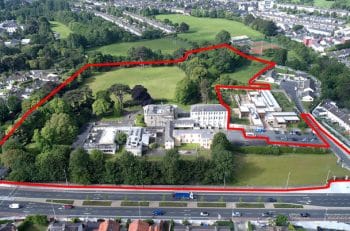
    Assets that are social not just financial Ireland’s housing crisis and swirling property prices threaten precious and irreplaceable green spaces in our cities and suburbs with housing developments. House prices have risen more in the first six months of this year than the entire twelve months of 2016. Recognising the opportunity for maximum prices to take care of an aged clerical population and reparation commitments for historical abuse, religious orders are selling off their most valuable assets (after their faith) – their land. Unfortunately these sites are not vacant lands. Agonisingly they are where the children go at breaks and lunch-time, they are the schools’ resort for children’s sports and funding fairs and often community resources for dog-walking and exercise and simple relief from the traffic and commotion. Dublin has the highest land valuations and so has seen the biggest rise in the sale of school land in recent years. Infamous examples include Oatlands in Mount Merrion, St Paul’s in Raheny, and Notre Dame in Churchtown, carried through despite a shortage of schools in these areas. Holy Faith Convent in Killester, adjoining the school of the same name, is currently for sale. The brochure from WK Nowlan Real Estate Advisors suggests the zoning allows 70 apartments on the attractive one-hectare site which also contains a large former convent building. The same agent will sell the former St Teresa’s school in Blackrock, which closed in 1988, by auction on 21 July. It describes it as an “Exceptional Development Opportunity and period residence on approximately 3.92 hectares (9.7 acres). Large Residence, Gate lodge and former school buildings on mature landscaped grounds”. Of course in sales of mature institutional lands from Kilcoole to All Hallows WK Nowlan, the reverends’ favourite, publishes expensive marketing materials that suggest that the opportunities to cover these attractive lands in second rate housing is an occasion for public celebration. There has never been a greater market for education in this country. The population of the country continues to grow and projections for new schools continue to grow. Doctors complain that our children are not exercising enough. Institutional lands cannot be replaced once built on. A future generation, richer and more civilised than ours, will certainly curse us for the betrayal of our legacy of fine institutions on elegant grounds. So whose interest is being served by their ubiquitous sales over the last generation and in its desperation to deal with a severe housing crisis are the government and local authorities sleepwalking us into an educational crisis in Dublin?     God’s Land The Catholic Church owns €3.743bn of land and property in the State. It owns or occupies more than 10,700 properties across the country and controlled nearly 6,700 religious and educational sites. The assets owned by the State’s 26 dioceses and 160-plus congregations and other district Catholic organisations have been accumulated over more than two centuries of providing religious, educational, health and other services to a once comprehensively devout populace. In the case of many orders the congregations transferred the running of institutions to separate bodies which are invariably charities, for example the Edmund Rice Schools Trust (ERST) which was set up in 2008 with responsibility for 95 former Christian Brother schools and 37,000 pupils. Its objective (as stated on its website) is “to foster the advancement of education”. Interestingly, and showing that Richard Bruton’s proposal to preclude Catholic schools from discriminating against those who have not been baptised in the Church is, at least in the case of the Christian Brothers, pushing an open door, its schools “promote equality of access and participation – in other words, children of any faith, or none, at every level of ability, of any nationality or ethnic grouping are all welcome in our schools”.     Addressing the Redress Scheme Apart from peak land price, the tiptoe to the auctioneers is driven by clerical abuse and its financial legacy. The Catholic Church has surrendered ownership of 44 properties worth €42m to the State as part of the 2002 Residential Institutions Redress Act. In the wake of the 2009 Ryan report, the Government wanted the religious orders to pay half of the total bill of €1.4bn due for redress payments and legal costs. But the religious orders still have a long way to go to reach the €700m the State in the end demanded. Minister for Education Richard Bruton spoke out in March of this year, following the publication of a report by the Comptroller and Auditor General (C&AG) which showed that in total €209m has been received by the Irish Government from religious groups to address historical child abuse. Bruton condemned religious organisations for failing to help meet the costs of residential institutional child abuse. It might be argued that the Church should have met sanctions at the upper end of the financial scale and as a result transferred not just ownership, but control, of the institutions over which it is widely accepted it exercised control well out of proportion to its mandate in today’s society. Many of the schools, hospitals and clerical-training colleges could have been transferred to the Republic, with little unfairness since much of the money subscribed in the first place was for progressive-secular, as well as religious, purposes. In addition the funds raised from these sales are to meet the challenges arising from declining and ageing congregations of nuns, brothers and priests. The average age of the Christian Brothers is 79 and of the Sisters of Mercy 74 with over three-quarters of the nuns aged over 65. Part of the cost of maintaining retired members and the staffing of their care homes will be taken from the final price fetched for the school land sales.     Celestial Figures The sale of these lands is not only taking away green spaces from the schools but it also ignores the need for new and expanding schools in light of anticipated population growth in these areas. There are currently 345,550 secondary-school pupils in the Republic (excluding PLC

    Loading

    Read more

  • Posted in:

    The Health Halo: Marketing is killing us

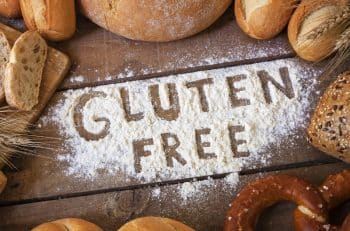
    Several years ago I lectured in a management school in England. One of the classes I gave was on food marketing. I began the class by playing a clip from the then famous documentary, ‘Super Size Me’, where the protagonist Morgan Spurlock undertakes an extreme diet of McDonald’s-only food for a month to chart the consequences on his body and mental health. The clip I chose is near the beginning of the documentary – where two American teenagers are about to sue McDonald’s for their obesity. I freeze-framed the image of the two teenagers, and turned to the class. “Where”, I wanted to know, “does personal responsibility end and corporate responsibility begin?”. As you can imagine, the entire class fell silent. Then one student pointed to the screen, and said, “Do you see those two girls? They deserve to die”. My shock only lasted a moment before the other students chimed in with qualifications to the student’s statement – no, not really that they deserved to die, but that they were the ones that were ultimately responsible for their own health! – everyone knows that McDonald’s is unhealthy food and should be eaten in moderation! – no one is forcing them to eat junk food! – and so on. I asked them whether they would react differently had I presented them with a documentary on the beauty industry and freeze-framed two anorexic girls who were suing L’Oréal for their unrepresentative portrayals of extremely thin women. “No!” was the incredulous reaction. In such a scenario, there would be more justification for blaming beauty brands, as they stimulate a mental vulnerability in all women, with some falling victim at a more extreme level. The classroom is a microcosm of society – albeit a pretty rarefied one. These students, I concluded, were not some extremist bunch whose mental processes were close to psychotic. In fact, you could probably argue, their reactions were a base point for most people’s; they just happened to be unguarded in their response. I suspect in fact most people feel this way. We feel that we should be able to ingest what we want, as long as it’s legal, and that the market doesn’t force us to do anything – certainly not to consume to excess. These two obese girls are what we would call ‘bad consumers’ – they haven’t learned the rules of the market properly. Perhaps they lack information (they don’t know that it’s healthy to eat at least five pieces of fruit or vegetables a day, for example). Or perhaps they lack restraint, whether moral or physiological (as in, their hypothalamus, the part of the brain that supposedly regulates appetite, isn’t functioning properly). And yet, is this the whole picture? The longer I teach marketing, the more uneasy I am about where this locus of control lies. We have never been so health-conscious and at the same time so fat. These two trends, rather than being opposites, go hand-in-hand. How come? The first reason I believe lies in what I call the perversity of marketplace knowledge. Marketplace knowledge refers to all the information we have about the market – how much a pint of milk costs, where to buy a lawnmower, how many calories are in a can of Diet Coke, that washing machines live longer with Calgon. That is a huge trove of information that we learn over the years and carry around in our heads! Thus, it is much better to think of consumers as learners and marketing as their teacher. Within this model, you’d be forgiven for thinking that the more information you had the better decisions you’d be able to make. However, recent research would suggest that this is not the case. In fact, the more involved we are in our market-place decisions, the more ‘brand literate’ we are, the more we fall victim to what are known as halo effects. The consumer researcher Pierre Chandon has shown that when one aspect of a food is portrayed as healthy, consumers will tend to mentally categorise the entire food as healthy, leading them to underestimate its calorie content, and to overconsume it. This phenomenon is known as the health halo, and it is not ‘marketing illiterate’ consumers who fall victim to it, but precisely those of us who know a little about nutrition, are health conscious, and can understand how branding works. When the so-called health benefits of a food are foregrounded on packaging and advertising (organic, gluten-free, high in natural fibre, sugar-free, low-fat, packed with fruit, etc.), consumers typically miscalculate the product’s calorific content: gluten-free bread or organic ice-cream is somehow healthier for us. This is not a conscious mechanism; in fact, when people are made aware of it, they tend to regulate their behaviour. The problem is of course that the environment we live in is obesogenic – we are surrounded by messages that encourage eating, and counter-messages are virtually non-existent. Chandon’s research also revealed that when consumers believe they are eating healthily they will unconsciously reward themselves – those who opted for Subway (positioned as a healthy fast food) over McDonald’s in one particular instance tended to add a side and a dessert to their order. In another experiment, by Chandon’s colleague Alexander Chernev, overweight participants when presented with ‘light’ M&Ms increased their consumption by 47%, whereas normal-weight participants only increased their consumption by 16%. In this ‘negative calorie illusion’, people who are more attuned to features of food and drink that supposedly promote health are likely to consume more. You can be weight-conscious and opt for diet versions of foods, but you are more likely to underestimate the calories, consume more and ultimately become heavier. These mechanisms are typical of the psychological vulnerabilities that the food marketing system is expert in. Our weaknesses stem in part from how we think of food in the first place. Ask anyone to give a definition of ‘food’, and their answer will likely be something like ‘a source of fuel or energy

    Loading

    Read more

  • Posted in:

    Henry Phelan: First Garda murdered

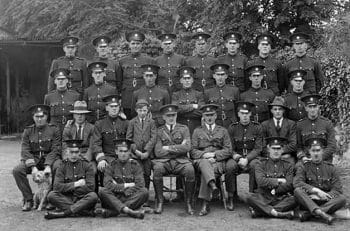
    The Garda is in trouble, morale is low and there are numerous investigations into alleged incompetence and cover-ups. Village has been to the fore in detailing these delinquencies.  The purpose of this article is something different: to highlight through a not untypical case the extent of the duty and the dangers of service.  Overall, 88 gardaí have been killed in service, 23 by individuals or groups associated with the IRA/dissident republican paramilitary and terrorist groups, this being the most common cause of death apart from accidents. The most recent death was that of Garda Tony Golden, who was murdered in October 2015, while attending a domestic dispute, by dissident republican Adrian Crevan Mackin, who also shot and critically injured his partner before taking his own life. This article looks at the first Garda murder. In 1922. The War of Independence was ended by a truce on 11 July 1921 and the Anglo-Irish Treaty was ratified by Dáil Eireann early in 1922. Agreement was also reached by the British and the newly formed Provisional Government to disband the Royal Irish Constabulary, and in February 1922 a meeting was held at the Gresham Hotel Dublin to establish a police force to replace it. The Civic Guard was formed on 22 February 1922 and renamed the Garda Síochána on 8 August 1923. The Civic Guards were initially armed and trained at the Royal Dublin Society Showgrounds, Ballsbridge, Dublin and transferred from there to Kildare Military Barracks on 25 April 1922, and later to Collinstown before returning to the former RIC headquarters in Dublin’s Phoenix Park. Following a mutiny in Kildare the first commissioner, Michael Staines, TD tendered his resignation on 18 August and he was succeeded by General Eoin O’Duffy in September. Dublin Castle and nearby Ship Street Barracks was taken over by the Civic Guards on 17 August 1922. Following the accidental death of Charles Eastwood the Civic Guard became unarmed. Later that month the Gardai moved to Collinstown, County Dublin, and then to the Phoenix Park RIC Depot. The Civic Guard was then sent out among the people. The bitter civil war was still raging and the deployment of thousands of government-backed gardaí was certain to cause unrest, particularly in areas that were still controlled by republicans. The assurance that the Garda were above politics and concerning themselves only with criminal matters failed to impress the anti-Treaty IRA and their supporters. Dozens of barracks were attacked in the first months and it seemed only a matter of time before a garda would find himself on the wrong end of an IRA bullet. Henry Phelan would be the unfortunate victim after a tragic encounter in Mullinahone. Henry Phelan was born in 1899 neat Mountrath in County Laois. He was the youngest of a family of nine children but his father had died, forcing his widow and children to manage the farm alone. As Henry grew older he became interested in nationalism, eventually following the well-worn path of many of his generation to serve in the IRA during the war of independence. After the truce Phelan considered membership of the Civic Guard. He applied and was quickly accepted into the force, undergoing a short period of training in the Curragh. He qualified and was amongst the first detachment of twenty-six gardaí sent to the old RIC barracks on Parliament Street in Kilkenny City on 27 September 1922. At the end of October, along with twelve of his colleagues and a sergeant, Phelan was transferred to the town of Callan. Just after 3 pm on Tuesday, 14 November 1922, Phelan, along with two colleagues, garda Irwin and garda Flood, were granted an afternoon’s leave from their superior officer, a Sergeant Kilroy. The men had decided to cycle the five miles to Mullinahone. The trip was a recreational one and the guards’ intention was to buy a sliotar and hurleys for a new team that garda Phelan was attempting to set up in the Callan district. Like much of the county of Tipperary, Mullinahone was supposedly under the command of the government at that time but realistically the anti-Treaty IRA held great power in the area. Phelan and his colleagues decided to go to the village nonetheless. The gardaí succeeded in their mission of purchasing the goods, afterwards deciding to go to Miss Mullally’s licenced premises and general grocers on Kickham Street. The men ordered and were given a couple of glasses of lemonade which they finished quickly. Just then, three armed men rushed into the premises. The first of the intruders produced a revolver, while the man directly behind him held a rifle level with his hip. The first man fired a shot in the direction of the three men from a distance of about three or four yards. It hit garda Phelan in the face and he fell heavily onto the pub’s floor. The belated order was then given by the second man “Hands up”. The remaining two gardaí were horrified but complied with the command. The shooter then asked the shocked policemen if they had any arms. They replied that they did not. The second raider, who was still pointing a rifle at Irwin and Flood, seemed just as surprised by the shooting as the two gardaí and he asked his compatriot “What are you after doing; why did you fire?”. The first man muttered something inaudible and placed the revolver back in its holster. The third man was still standing at the door and said nothing during the altercation. Garda Flood begged the men to allow him to come to the aid of the stricken Phelan, who was still lying on his face and hands. They replied “You may”. They then left as garda Irwin went for help. The local doctor came swiftly but could not be of any assistance as Phelan was already dead. He had not spoken after the shot and died almost instantly. Word spread quickly about the first member of the Civic Guard to be killed

    Loading

    Read more

  • Posted in:

    ‘Left’ now used for ‘liberal’ not pro-worker

    I don’t like ‘-isms’,” War of Independence veteran George Gilmore once said to me.  “Heaven save me from the Marxists!”, an exasperated Karl Marx is reputed to have exclaimed. “All the ‘-isms’ are ‘-wasms’ ”, was a witticism following the collapse of East European communism in 1991. Nonetheless ‘-isms’, ideologies of one kind or another, show no sign of vanishing.  We all subscribe to some ideology or other once we have developed political views and think or say that our Government or the powers-that-be ought to do this or that, even if we do not know it or fail to give it a name. They are slippery things, “-isms”, shifting in meaning from place to place and accreting different connotations over time. One person’s praiseworthy “-ism” is likely to be regarded as reactionary by at least some others, depending on their politics. That is why sensible people who engage in political or polemical debate and want to avoid fruitless argument will seek first to define their ideological terms if they use them. “Populism” is a new “-ism” that has come into fashion only this past year.  It refers to electoral or referendum outcomes that the elite who control mainstream public narratives do not approve of – e.g. Brexit, Donald Trump’s election or the growth of EU-critical movements like UKIP, Marine Le Pen’s National Front and the Alternative for Germany party. ‘Nationalism’ is one of the oldest ideologies, from Latin ‘natus’, referring to where people were born.  In Ireland the word has traditionally had positive connotations as referring to the aspiration or movement for an independent State, which most Irish supported. Thus Pearse and Connolly were nationalists, as were De Valera, Collins, Cosgrave, Lemass etc. In modern Germany by contrast ‘nationalism’ is seen as a bad thing. ‘Nationalist’ is a term of abuse. The Nazis were nationalists. Hitler’s nationalism brought a catastrophe on Germany, as Mussolini’s did on Italy. The words are redolent of reactionary and anti-human doings. Clearly the same word, ‘nationalism’, can refer to quite different, even diametrically opposite, things in different contexts – to movements for national self-determination and independence on the one hand, with connotations of patriotism and love of country, and to imperialism on the other, the aspiration to conquer or dominate others, and associated chauvinism, racism and xenophobia. It is interesting how negative associations have come to attach to the words ‘nationalism’ and ‘nationalist’ in Irish public discourse since 1970.  The decades since have spawned a whole school of ‘anti-national’ revisionist history-writing which tended to disparage past movements for Irish independence. The IRA’s campaign of violence from 1970 to 1994 was one reason for this. The commitment of the Republic’s Great and Good to European economic integration since we joined the EEC in 1973 was another.  After all if one thinks that history is moving towards a supranational United States of Europe, talk of national independence for individual States is out-of-date and Europe’s national histories need to be drastically revised. ‘Internationalism’ is probably the most helpful ‘-ism’ to fall back on when one is dealing with national questions. Internationalists desire the emancipation of mankind. The human race is divided into nations. Therefore internationalism stands for the right to self-determination of nations. That was first advanced as one of the Rights of Man in the French Revolution. It is now a basic principle of international law, enshrined in the UN Charter, and is a fundamental of modern democracy. Internationalism does not mean that one is called on to urge every national community to seek a State of its own. Some nationalities are quite happy within multinational States as long as their rights as a minority are respected.   But if enough ‘nationals’ want to have a State of their own, that is their right, and internationalism calls for democrats everywhere to show solidarity with them if they seek it. In France’s recent presidential election the basic conflict, we were told, was between ‘globalisers’ and nationalists.  Nearly half the voters in the first round of the French election backed candidates who were critical of either the EU or the EU-currency. They were anti-globalisation.  By contrast, the victory of Emmanuel Macron, the most europhile of the candidates, was seen as a win for globalisation’s supporters.  Macron’s walk to the podium for his victory speech was to the tune of the EU anthem, not the French one. He plans to save the euro-currency by pushing for more integration in the Eurozone. The carrot he is likely to hold out to a reluctant Germany is the prospect of France’s nuclear weapon being ‘Europeanised’. That way Germany will get its finger on a collective nuclear trigger. The Deutschemark for the Euro-bomb, monetary union for political union, has been an objective of the Franco-German duo since the 1992 Maastricht Treaty. ‘Globalisation’ is at once a description of fact and an ideology, a mixture of ‘is’ and ‘ought’. It refers to important trends in the contemporary world: ease of travel, free trade, free movement of capital, the internet. The effect of these on the sovereignty of States is often exaggerated. States have always been interdependent to some extent. There was relatively more globalisation, in the sense of freer movement of labour, capital and trade, in the late 19th century than today, although the volumes involved were much smaller. At that time too most States were on the gold standard, a form of international money. In contrast to the 19th century modern States do more for their citizens, are expected by them to do more, and impinge more intimately on people’s lives than at any time in history, most obviously in providing public services and redistributing national incomes.  Globalisation imposes new constraints on States, but constraints there always have been. Nation States adapt to such changes, but they do not cause States to disappear or become less important. Globalisation as another newly fashionable ideology refers to the interests of transnational Big Business and High Finance that seek to roam the world looking for profitable

    Loading

    Read more