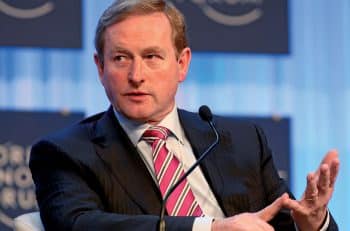



Kenny has conducted himself with as much dignity as any leader at home or abroad, and attracted international respect. He’s more or less done what it said on the tin, and he really didn’t offer to do anything else.
Dump neoliberalism and build the just society optimising liberalism and equality envisaged by Rawls, Dworkin and Declan Costello.
Inadequacy is set to remain one of the most significant features of the welfare state in Ireland. Fiscal conservatism, lack of capacity to get traction from ‘taxability’, and failure to generate adequate revenue suggest Ireland’s welfare state will remain not up to its task. This is the somewhat gloomy conclusion to the recently published book, ‘The Irish Welfare State in the Twenty-First Century: challenges and change’, edited by us. This book focuses on four dimensions of post-crisis structural change in the welfare state. It explores what welfare is for, who delivers it, who pays for it and who benefits from it. It addresses these questions for social protection, education, health, housing, pensions, the labour market, water, financial services, early childhood education and care, and corporate welfare. While new social risks and demographic trends drive welfare change, so too does globalisation, Europeanisation and financialisation. Processes of marketisation, privatisation and fiscalisation also drive welfare change in uneven and sometimes unexpected ways. The discourse of welfare is often ambivalent and contradictory. This is most evident in exploring the question of what welfare is for. Discourse on water has shifted from of its conception as a social good to as an economic good. Corporate welfare has shifted from a developmental welfare agenda to a more explicit competitiveness and growth agenda. Social protection and activation have moved from addressing poverty and social inclusion, to addressing active inclusion through employment and a more overt work-first discourse. Third-level and further education and training has shifted from a focus on the person to a product with a focus on meeting the needs of employers and the economy. We see more ambivalent discursive shifts in early childhood education and care that struggle to decide whether they should aim to meet the needs of the labour market or those of children. In debt and financial services a conflict exists between whether the aim is a conservative moral imperative or a social-liberal model offering the prospect of a fresh start. In social housing, we see discursive repetition of the mantras of security, quality and choice but little policy to realise such goals. Finally, in health and pensions we hear a discourse about universalisation but see a dualist public/private system. Ireland has long had a mixed economy for welfare. When it comes to the question of who delivers welfare, rather than any outright transfer of responsibility between state, market and civil society in provision, funding and regulation, we see a blurring of boundaries. The crisis broke some path-dependent policy, providing opportunities for organisational reconfiguration to rationalise and downsize the public sector and introduce other providers. Some of the largest and most disproportionate budget cuts were in community initiatives and development services delivered via the now vulnerable social and community sector. Credit and debt services have been changed by the instigation of a range of new institutions delivering new services with a strong market logic that filters through to civil society organisations like credit unions. Overall, who delivers welfare seems less important than how delivery is controlled. With the concerted roll-out of neoliberal agencies and mechanisms, the market logic has pervasively infused the mixed economy of welfare. Meanwhile there has been more overt marketisation and privatisation in some sectors. As to the ‘activation’ of employment for those without jobs, we have seen the introduction of JobPath, a private-sector-delivered service, but little significant change in the state’s role in delivering income support. As to pensions, we see a return to pre-crisis-style reinforcement of private-market funding and financing accompanied by residualisation of the public system. Housing policy is similar, with reliance on private providers for the delivery of social housing. As to water, we see the failed creation of a quasi-market institution and the fall back to a ‘state’ owned company. In health see significant re-organisation of existing state, voluntary and private systems, albeit with more privatisation, but no real reform, and abandonment of the proposed market-led universal health insurance. Education now offers private sector delivery in third level and further education and training, alongside greater managerialism where the state remains involved. In early childhood education and care there is an ongoing creeping privatisation. Corporate welfare ie support for business is experiencing significant infrastructural and institutional change and a scaling down of state agencies. The question of who pays is interlinked with changes in how welfare is funded. Social protection shifts from social insurance to tax-funded social assistance, while employers still pay the lowest PRSI in Europe. The next generation of workers will pay even more for the present generation’s pensions, while the state subsidises the richest 20% to invest in their own private pensions. Debt and credit markets are complex. Mortgage arrears have hit a middle-class, home-owning population, while the poor ultimately pay through over-priced credit. The attempt to shift to user water charges appears stymied and the taxpayer continues to pay for water provision. There is no roll-back of health-service user charges. People and families increasingly pay for care, or ration services. Increased user charges for those in social housing in the form of a reduction of rent assistance payments ultimately manifests as deprivation and homelessness. In education, students have experienced increased fees and higher self-contributions. Families continue to pay the highest childcare costs in the OECD. In tandem with discursive shifts, citizens are construed as customers, further undermining the welfare state’s role in generating solidarity. It is not always clear who benefits from state welfare functions. There are well known instances of regressive redistribution and hidden beneficiaries, but often the beneficiaries are impossible to discern, with serious data deficits and a culture of not evaluating outcomes. The social protection system benefited Irish citizens during the height of the crisis through its effectiveness in mitigating poverty. However, child poverty doubled during the crisis, deprivation rates soared and the younger generation bore the brunt of social protection cuts. Activation policy means employers benefit from the subsidisation of low pay. In healthcare, we see unequal access and unequal geographical delivery and ultimately unequal health
Posted in:
by Rosi Leonard
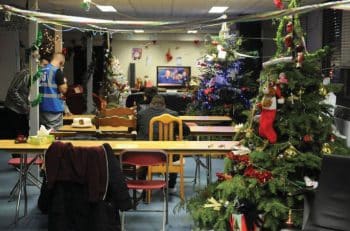
Josephine Campbell (not her real name) volunteered for the media team in Apollo House during the 28 day occupation, which saw a vacant NAMA building transformed into a shelter for people sleeping rough. In total, 205 people stayed as residents in Apollo House. “I’m currently without a home or a tenancy since May 2015. Before this I was 15 years living in the same area. We had to move out due to a rent increase of €400 a month. Myself and my son, who is in sixth class were forced to stay with my elderly parents on the other side of town, after months of looking for a place to live and staying between friends’ houses, usually on couches. Now we are in overcrowded conditions, sleeping in the same room with no space for our belongings. We travel across town every morning to get to school. When we moved, everything we owned had to either be destroyed or stored in friends’ houses. We are still living out of bags, seventeen months after. I’m eleven years on the Dublin City Council waiting list. I was never involved in any housing campaign before Apollo House. I only knew I wanted to help so I signed up a few days after the occupation. The day before I signed up I had passed a man outside Stephen’s Green shopping centre. It was freezing out. I gave him some food and asked had he a place to stay that night. He said he hadn’t. I wrote him out the details of Apollo House and said he should to go there, that he’d be safe. I don’t know if he went in the end, but It was the first time I’d felt I could actually do something, just giving him the details was enough to feel like I was helping in some way. Everyone who entered Apollo House had no idea what they would be faced with when they went in. I don’t think anyone was aware really what a success it would become. Everyone thought, “I’ll do a few hours then I’ll head off”. From day one I stayed 12 to 14 hours without noticing the time go by. There was an all-consuming energy the minute you walked in the door. That energy was care, love and determination, alongside all the issues we were faced with every day stretching from the residents needs to the media backlash. The day-after-day change in the residents was astounding, from coming in tired, weary, pale, and very unhealthy, to getting three meals a day, the colour back in their face, feeling empowered and feeling their voice was heard. I really think it brought out the very best in everyone. There is something quite magical in that. It is why it worked so well, only good can come from good. The Apollo Alchemy is a huge catalyst for change. After Apollo, I feel more than ever that people like me, who are living this crisis every day, have a voice. We are all affected. Once you start to see just how horrific the situation really is, it is very hard just to ignore it. Apollo House brought this to the fore, the isolation and loneliness you feel when you’re affected by homelessness and how to beat it. It highlighted the standard of care people should be receiving, from 24-hour beds to the supports they need to become part of society again. This is breaking the cycle of poverty. You can’t put a person in substandard care and throw them out again. All people need proper support, love and care. What would success be? Success would be to increase the standard of care for those currently living on the streets and to give vulnerable people support. Success would be more public housing. I feel the funding given towards the private rental market (HAP & RAS) was counterproductive. There is still no security of tenure or available property for rental, particularly in Dublin. There is also the need to prevent homelessness, not just deal with it after the fact. The homeless crisis is so bad that it is starting to normalise horrendous conditions. People think because I have somewhere to stay that it’s ok. But it’s not, and neither is living in tents, cars or parents’ houses, or paying your entire earnings just to put a roof over your head. All volunteers have a story. Each story becomes a channel for change. I know what it is like to lose everything. I lost my home, my neighbours, my community. My son lost everything. If my experience helps anyone else feel less isolated or alone then I will continue to fight for housing rights. Rosi Leonard is involved in The Irish Housing Network and in Home Sweet Home.
Posted in:
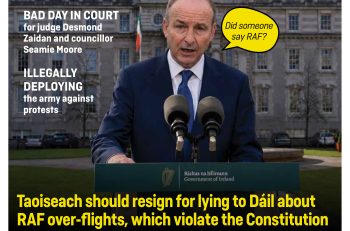
Judges and the Garda let our society down: make the Garda Commissioner accountable to the Ombudsman, and establish a Judicial Commission.
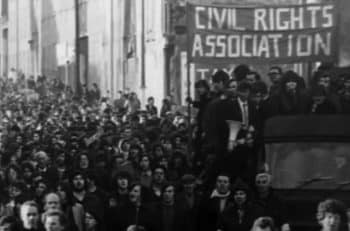
January was the 50th anniversary of the establishment of the Northern Ireland Civil Rights Association, which sponsored the civil rights marches that brought the anti-Catholic discriminatory practices of the old Stormont Unionist regime to world attention. I was at that foundation meeting on Sunday 29 January 1967 in the International Hotel, since demolished, behind Belfast City Hall as an observer from the Dublin Wolfe Tone Society of which I was then secretary. All shades of Northern political opinion were represented on NICRA’s first Executive – Liberal, Labour, Nationalist, Republican, Communist, Trade Unionist. A Young Unionist was co-opted at the next meeting in the same venue on 9 April, which I also attended. Tony Smythe, secretary of Britain’s National Council for Civil Liberties, told the January meeting how NICRA might emulate the NCCL. This meant tackling Unionist discrimination against the Catholic Nationalist minority. The novelty of the new movement was that it was not going to raise the constitutional issue, the North’s membership of the UK, and the Partition question. British rights for British citizens were to be its focus. This was deeply subversive of the sectarian political basis of the Northern statelet. The majority Unionist Government at Stormont was used to dealing with the IRA. It could handle the anti-Partition agitations that had been the focus of Nationalist minority politics since 1920. But the demand for equal treatment for Catholics and Protestants within the existing constitution was something quite different. It divided Unionism between the more liberal element backing Stormont Premier Terence O’Neill and the more anti-Catholic element that looked to Ian Paisley. It appealed to the sense of fair play of the British public. Above all it put the British Government on the spot. For how could London stand over the discriminatory practices of a devolved administration in one part of what was the United Kingdom when they were brought to world attention? All the more so as the UK and the Republic were then applying together for membership of the EEC. Northern Republicans backed the call for British rights for British citizens. This was the pre-1970-split IRA/Sinn Féin, led by Cathal Goulding and Tomas MacGiolla. They had learned the futility of trying to end Partition by force and had ‘gone political’ following the failure of the IRA’s 1956-61 Border campaign. NICRA agreed five demands at its foundation: (1) One man one vote, which meant an end to the property franchise and associated plural voting in local elections; (2) an end to the gerrymandering that put nationalist-majority towns like Derry, Enniskillen and Dungannon under permanent Unionist control; (3) an end to anti-Catholic discrimination in allocating Council housing and in public and private employment; (4) an end to the Special Powers Act, which permitted arrest without warrant, imprisonment without trial and the banning of nationalist publications and meetings; and (5) the standing down of the B-special constabulary, which allowed volunteers in this wholly Protestant force to intimidate their Catholic neighbours at will. The first NICRA-sponsored civil rights march took place from Coalisland to Dungannon the following year, on 24 August 1968. I was one of the thousand or so people that walked on that. I recall standing on a ditch outside Dungannon that lovely summer evening, the better to hear Betty Sinclair, Austin Currie, and other civil rights speakers addressing the crowd from the lorry at the front. I had a pocket radio with me on which at the same time I was listening to news of the Russian intervention in Czechoslovakia to put down Dubcek’s “Prague Spring”. The RUC stopped the marchers entering Dungannon on the ground that there was a Loyalist counter-demonstration up ahead. The second NICRA-sponsored march in Duke Street, Derry, on 5 October 1968 brought the Northern civil liberties situation to world attention. I got to that just as the RUC began batoning the few hundred marchers at its start, and was later doused by the police water-cannon as they cleared the street of protesters. Stormont Home Minister William Craig had banned the Duke Street march. Gerry Fitt, Republican Labour MP for West Belfast, had blood covering his shirt-front from a head wound received from a police baton. Fitt had brought three Labour MPs from London to be with him. The TV cameras sent pictures of the RUC batoning the marchers around the globe. Civil rights in the North became world news overnight. Harold Wilson’s Labour Government came under pressure from an appalled British public to tackle the abuses of the Unionist majority-rule regime at Stormont, which London had been happy to ignore since the 1920s. The following month, November 1968, was the culmination of the non-violent phase of the Civil Rights Movement when the Derry Citizens Action Committee, led by the Catholic John Hume and the Protestant Ivan Cooper, marched thousands of people peacefully into Derry city centre, establishing their right of protest in their own city. Between then and summer 1969 the Unionist Government was caught between the pressure of the Civil Rights Movement internally and the British Government externally. Stormont Premier Terence O’Neill was forced to concede in principle all of NICRA’s demands, although it would take years for some of them to work through, in particular ending discrimination in jobs and housing. In that time occurred the rise in Protestant-Catholic sectarian tension which culminated in August 1969 with the ‘Battle of the Bogside’ in Derry, the burning of Catholic homes and businesses in Belfast and the expulsion of hundreds of Belfast Catholics in face of Loyalist attacks. The Cameron Commission’s Report is still the best account of the early Civil Rights period. It attributed significant blame for the rise of sectarianism in 1969 to the actions of the student-based People’s Democracy. The PD split the civil rights movement. It criticised NICRA’s demands as too moderate. It disdained proper stewarding on its marches. It called for one-person-one-job rather than one-person-one- vote. Its leaders wanted what they called “socialism” and they wanted it quickly! The Cameron Commission characterised the Burntollet march organised by the
We are now witness to a pervasive acceleration in the normally glacial processes of geopolitical rebalancing in the West. Behavioural economics is helpful in analysing it. On his first full day in the White House, President Trump signed an executive order withdrawing the US from the Trans-Pacific Partnership (TPP), the core international economic legacy of the Obama Administration. The TPP, alongside its Trans-Atlantic brother, the TTIP, both trade deals, is also the most public embodiment of the elite-driven obsession with promoting political globalisation under the guise of free trade. Almost at the same time, a series of political opinion polls across the EU produced historically unprecedented results, showing a dramatic shift away from the mainstream Centre-Left political parties towards the populist parties of the more extreme Left and Right. In the Netherlands the Labour Party, traditional mainstream leader of the Left, has fallen in popularity to eighth place. To put this into perspective, since the end of WWII, it has never fallen below second place in any general election. Germany set September 24 as general election date, just as the German constitutional court ruled against banning the neo-Nazi National Democratic Party (NPD) from contesting elections. A milder and more successful version of NPD, the nationalist Alternative for Germany (AfD) is now represented in 10 of Germany’s 16 state parliaments and, with 13-15 percent support among the German electorate, is set to get into the federal Parliament, come the September election. In Sweden, the centre-right opposition is gearing up for September 2018 elections. Sweden is currently led by a centre-left minority Government that is being challenged by the traditional centre-right opposition parties through an uneasy informal alliance with the far-right Sweden Democrats. The marriage – which is ideologically not quite made in heaven – is a necessary compromise for the traditional right, as the Sweden Democrats are quickly emerging in polls as the biggest political force of the right. In Austria, the far-right Freedom Party (FPO), a member of the Europe of Nations and Freedom block of EU right-wing and far-right parties, is currently leading the polls with 33-34 percent support, while the Social Democratic SPÖ-S&D are languishing in second place with 27-28 percent support. In Greece the most recent public opinion tallies put New Dawn at 33-36 percent, well ahead of Syriza with 20-22 percent. What in January France’s Marine Le Pen called the “European Awakening” is now turning into a tide of popular discontent among the previously solidly centre-left and centre-right voters. Welcome to the Age of ‘Fu&k You!’ voters. It’s the Uncertainty, Stupid In reality, despite all the mainstream media’s attempts to argue to the contrary, the rise of populism in the US and Europe is neither new, nor unexpected. And, as in the US, that rise is firmly anchored in behavioural economics. More precisely, it is grounded in the growing chasm between the rhetoric of free trade, free markets and economic empowerment presented by centrist politicians and technocrats, and the reality of a corporatist takeover of the Western democracies that has led to an unprecedented increase in socioeconomic uncertainty in the lives of ordinary men and women. Consider the key signposts. For decades, behavioural economists have known that people make choices under conditions of uncertainty differently from when facing risk. First, people are more prone to eschew uncertainty, as opposed to avoiding risk. In simple terms, this means that we tend to focus more intensively on the potential negative effects of choices made in an uncertain environment, than when we are facing the same decisions in the presence of mere risk. For those unaware of the differences, risk refers to a situation where the potential outcomes of a gamble may be uncertain, but are known or are governed by a known probability distribution. In contrast, uncertainty occurs when we do not know all possible outcomes of a gamble in advance and cannot assign a particular probability distribution to those we do know. Second, the effect of uncertainty on our decisions is magnified by our past experiences. When losses have dominated our experience of past choices, future choices under conditions of uncertainty can lead to the acceptance of more risky gambles, while past wins tend to decrease our willingness to take risks. Whether or not you trust the official growth and employment statistics coming out of the US and other Western economies today does not matter. The salient points are how much uncertainty does the current socio-economic system generate and whether the voters are aware of the changing nature of uncertainty. Here, we have helpful data: the Economic Policy Uncertainty Index, which measures the degree of policy uncertainty encountered in the national and international news media. Between 1994 and 2008, Economic Policy Uncertainty in Europe, UK and the US tended to move within a similar and largely moderate range. In other words, with the exception of when the dot.com bubble burst in 2001-2002, there was little deep uncertainty about the direction of economic policies in the West. Even at the inception of the Global Financial Crisis, economic policy uncertainty was of relatively low concern for the news media. The Seas of Policy Tranquillity were the golden area of pre-2009 economic statism: Social Partnerships-styled corporatist politics assured industrial peace in exchange for the financial bubbles- and debt-funded spread of prosperity. This tranquility was shattered around 2009-2010, when the European Sovereign Crises took hold. As shown in the chart above, since then economic policy uncertainty took hold in Europe and the UK. In 2016, this crisis became systemic: following the Brexit vote, the UK’s economic Policy Uncertainty Index ended 2016 with an average annual reading of 562 – an all-time high and dramatically up on the 324 reading for the peak of the European Crisis period in 2012. In Europe, EPU also posted its record reading at 288, up on the previous all-time record of 222 in 2012. Even with its November 2016 election, the US EPU averaged 167 in 2016, still below the 180 readings recorded in