

The new rate of €193 will still be €11.30 below the maximum working-age payment made in 2009; and €102.70 for 18-24s
by admin
The new rate of €193 will still be €11.30 below the maximum working-age payment made in 2009; and €102.70 for 18-24s
Our crumbling infrastructure for equality is symbolised by the Workplace Relations Commission (WRC). There are other symbols, but this one still stands out. The Commission was a product of the economic crisis, the official turn against equality, and the disenchantment with public-sector bodies designated by a hostile media as ‘quangos’. It was created out of the merger of five different bodies, including the Equality Tribunal; though it has been more disappearance than merger for the Equality Tribunal. The Equality Tribunal was a key part of a vibrant set of statutory institutions for equality during the 2000s. It was where cases under the Employment Equality Acts, prohibiting discrimination in employment; and under the Equal Status Acts, prohibiting discrimination in the provision of goods, services, education and accommodation; were heard and decided or mediated. The WRC was established to merge the National Employment Rights Authority, the Labour Relations Commission, the Rights Commissioner Services, and the complaints and referrals functions of the Employment Appeals Tribunal alongside the Equality Tribunal. The problems started with the name for the new institution. Equality legislation stretches far beyond the confines of the workplace. Many of the more controversial cases pursued under equality legislation and dealt with by the Equality Tribunal related to the provision of services, in particular by the public sector. A concern for rights in accessing services is hardly reflected in a title of ‘workplace relations’. The problems continued into the legislation for the new body in 2015. It was silent on issues of equality, diversity and discrimination where it set out the functions of the WRC. At best this focus can be implied in the general function to promote and encourage compliance with “relevant enactments”. Otherwise the functions are: promoting the improvement of workplace relations and maintenance of good workplace relations, providing guidance on compliance with codes of practice produced under the Workplace Relations Act 2015, reviewing and monitoring workplace relations, researching workplace relations, and providing advice to members of the public in relation to employment. Inevitably the problems have now passed into the operations of the WRC. Civil society organisations have raised issues in relation to the visibility of equality in the work of the Commission, the accessibility of the Commission for those experiencing inequality, and the procedures of the Commission in cases of discrimination. These issues dominated a recent roundtable discussion convened by the Equality and Rights Alliance, the Independent Law Centres Network, the Employment Lawyers Association of Ireland, and SIPTU’s Workers Rights Centre. WRC publications make little mention of equality cases and equality legislation. Its website, until recently, offered inadequate information and guidance on equality legislation, and continues to be difficult to use. The monthly reporting of the Equality Tribunal on equality cases decided or mediated – a valuable resource for tracking developments in implementing the equality legislation, has not been continued. There is no breakdown provided in Commission publications of cases by ground or field of discrimination and outcome. Access to justice has, in effect, been diminished with the establishment of the WRC. The demands made on people experiencing discrimination, when lodging a claim, are impossibly onerous unless they get legal assistance. The right to mediation is illusory and rarely granted, apparently for lack of resources. There are only limited concessions in the operations of the Commission to reasonably accommodating diversity, in particular for people with disabilities. There is no clarity offered as to the procedures to be followed in equality cases. Officers hearing cases appear to take different approaches. Legal practitioners openly express a loss of confidence in the competence of officers dealing with cases. The demands on complainants in making submissions take no account of the barriers faced by people experiencing inequality and discrimination and the limited resources they might have access to. New leadership recently appointed to the WRC offers some hope that change in this sorry scenario might still be possible. There have been positive indications with feedback now encouraged, changes being made to the website, and meetings held with relevant civil society groups. Change, however, must be vigorously pursued if equality and non-discrimination are to be asserted as core functions in the practice of the Commission. The civil society roundtable agreed that a time-limited problem- solving working group should be convened by the Commission to bring the relevant stakeholders together to secure such an outcome. The convening of such a working group will be a key test of the willingness to change. By Niall Crowley
There is much talk nowadays about the practical difficulties of multiculturalism (and of the rejection of tolerance by radicals promoting violence). With a shrinking world on our doorstep, integration of peoples of different cultures is preferable to ghettoisation and apartheid. Radicalisation is the byproduct of alienation which thrives where the legal system appears to be, or is, complex. Integration – the antidote to radicalisation – will not be achieved by shouting louder or asserting the superiority of our societal norms. Instead, the key to the dialogue, without diluting our homegrown standards, is identifying and highlighting the identical behavioural norms which underpin the laws of all cultures. But there will be no dialogue where it counts – on social media – unless the millenials have a better grasp of these shared human values. That generation has apparently forgotten, or perhaps never even heard, the old but timeless slogans with which our forebears rallied the cause of liberty. All the tenets of the Western model of society are now reproduced in its laws. Strip out the small print and it is clear that the basic similarities between legal cultures outweigh the differences. It is not a competition. We have no need to talk of imposing conformity if the grundnorms of human society are the same the world over. The minutiae of the law may be opaque, but the measure of what is or is not lawful does not really need counsel’s learned opinion. Ask any person in the street what the law is on any particular matter and you will almost always get an uncertain response. But this does not mean that there is any real disconnect between the law and the person; it is just that most people have an instinctive awareness of the general principles, if not of the minutiae, of the law. Take one example: the formalities of contract. In 1988 Judge Costello decided, after days of evidence and legal argument, that Fyffes’ offer to sell their Irish Distillers shares to Pernod Ricard was binding because, with no contract in writing, after Pernod Ricard came back into the room and announced that they were prepared to accept the offer at 450 pence per share, “there was a spontaneous shaking of hands and Mr Flavin said ‘we are partners now’ “. An essay in semiotics perhaps but most importantly and obviously a universal standard, unambiguous. The body of legal principle which is called the Common Law is composed of instinctive judgments, judgments on the basis of conscience, custom from “time immemorial” and (per Sir John Davies) “so framed and fitted to the nature and disposition of this people as we may properly say it is connatural to the nation”. We are familiar with the perspective of ‘the man on the Clapham omnibus’, with the duty of care for one’s ‘neighbour’, with the measure of ‘reasonableness’. We don’t need to refer back to the Ten Commandments, scripture, religion, Roman law, the Statutes of Edward 1, the Napoleonic Code, the Treaty of Rome or any other Declaration or Convention. Dress them up however you want, these are the layman’s yardsticks for good and bad behaviour. The context needs to be the dignity of man. If primary school children are now being taught coding, surely secondary students should get an education in the principles of Common Law? They can be told it is about good and bad and how to achieve them. The Human Rights agenda is often cited as the checklist for admission to (Western) civilisation. Doing so heightens the differences in emphasis and overlooks common denominators. Before the 1949 UN Declaration on Human Rights the preparatory commission (chaired by Eleanor Roosevelt) asked a group of philosophers from Western, Confucian, Hindu and Muslim cultures (Jacques ‘Natural Law’ Maritain, Harold Laski, Teilhard de Chardin, Mahatma Gandhi, Humayun Kubir and others) whether there were common principles to which all nations and cultures could subscribe, and in due course they reported that – somewhat to their surprise – there were a few common standards of decency (emphasis added) that were widely shared though not always formulated in the language of “rights”. Maritain wrote that “we agree about the rights, but on condition no one asks us why!”. I believe ‘decency’ is an extremely employable word for the integration dialogue. It belongs to no religion nor is it to be found as a legal term of art in any legal order. It has an unambiguously human resonance. It is a behavioural yardstick impossible to define precisely but also impossible to misunderstand. Decency is a world brand. It is a Big Mac. For Norms. You can subscribe to the ‘decency’ standard for human behaviour without subscribing to democracy as the gold standard by which systems of government must be rated. Democracy, in practice, is by no means a ‘no-brainer’! The 1789 French Assembly declaration speaks of law as “the expression of the general will of the people” and of the right of every citizen “to participate personally, or through his representative, in its foundation”. Whether by accident or design, we seem now to have government consisting of citizens,without real involvement, just getting whatever public services politicians and bureaucrats offer them; with politicians offloading difficult decisions to statutory agencies or regulators; or engineering with bureaucrats to avoid scrutiny of, and accountability for, the administrative mistakes of the past. Indeed, if the Brexit vote is anything to go by, 52% of UK voters think their “democracy” in the EU is closer to the totalitarian end of the spectrum (government by unelected Mandarins) than to the self-governing end (for example, by referendum, issue by issue, on the Swiss model). Truly, democracy is a work in progress! Perhaps indeed it has stalled in the teeth of overwhelming global forces. It is only supranational government that can counter the forces of globalisation. Nor is it necessary for all engaged in multicultural dialogue to sign up to the rights-based model. Even in the West there is concern about whether rights should be
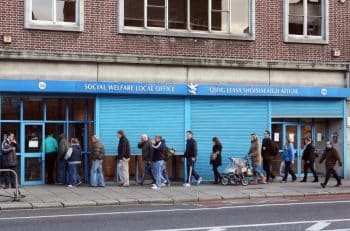
The modern State is a hybrid, an extraordinarily complex machine. Beyond the well-established remit of setting laws, collecting taxes and managing international relations, the Irish State has been involved in incarcerating women and children, commemorating the past and exploring outer space. Often, the State is idealised as a sort of referee who sets and implements rules for society, although this occurs through the highly emotional process of politics. Separate from the State there is the ‘economy’ and its ‘markets’, collections of individual actors who seek out their own profit and desire. This separation is imaginary. Arguably the welfare system is the greatest creation of the State, alleviating the vicissitudes of life whether age, health or employment status, by social solidarity. However, recent years have seen the transformation of the welfare office into a State-wide Human Resources department. Nationwide, the ‘dole office’ is now a contact point for employers who want workers. Within these offices, jobseekers are instructed to apply for certain posts, accept certain offers and take training courses. From simply providing citizens with their entitlements, the State has now become the hand-maiden of the labour market, a match-maker who can provide any employer with labour power, anywhere, for any job. So, Ireland is rapidly developing a low-wage economy. Obviously, a human resources department is a reasonable thing within a large firm which matches skills with tasks, managing the talents of a diverse work force who voluntarily have contracts with management. It is unreasonable when the State replaces the social safety net with a human resources department, so there is no way out of the company, bar emigration. Perhaps this seems like a radical critique, but really, this is government policy, announced in Pathways to Work from 2012 to the end of the FG/Labour coalition. Furthermore, it is reflected in the jargon of economists and the ESRI who stress the ‘supply side’ of labour, and the importance of ‘upskilling’, making people ‘work-ready’ or ‘maximising labour market participation’, which basically translates into making jobseekers take any job they are offered and giving them compulsory courses, often of dubious benefit. Refusal results in sanctions, the reduction or suspension of welfare entitlements, which means hunger, cold, debt and potentially homelessness. Despite the falling unemployment rate, the numbers of people sanctioned continues to grow. What are the consequences? Firstly, the State facilitates exploitative employers. Short term, part-time, insecure and high pressure ‘precarious’ work become compulsory. ‘Zero-hour contracts’ or ‘if-and-when contracts’ are an offer that jobseekers can’t refuse, even if it is only a few hours a week, without guaranteed times. At Waterford Institute of Technology, an ongoing research project examines the experiences of jobseekers. This year, in addition to pressure from the welfare office, many reported being forced to accept poor-quality employment. Of course, not all employers are exploitative, but clearly employment law is not yet stringent enough to prevent these kinds of abuses. Several respondents described how they were forced to accept unskilled work with no security after spending years gaining qualifications. While work was available, many reported hopelessness or despair about ever getting a full-time job with a living wage. The new ‘normal’ was shuttling between unemployment and poor-quality work: “It’s kind of like a revolving door, because one person is gone and another person is put in their place”. Secondly, hybrid mixtures of ‘work-experience’ and social service emerge. Those on social welfare can be compelled to join up to schemes which have little justification in terms of building skills beyond keeping them ‘work-ready’. Within these schemes, paid their basic entitlement and a negligible top-up, jobseekers perform work for the public good, like gardening, landscaping and cleaning public areas. This used to be the preserve of FÁS and now is contracted out to a host of organisations. This is publicly beneficial and necessary work, but the State doesn’t pay the minimum wage for it, much less offer full-time contracts. The taxpayer gets an unfairly good bargain, because the ‘human resources department’ has extraordinary control over jobseekers. These are not the ‘scroungers’ envisaged by tabloid newspapers, but workers who support the State. Indeed, to reverse the usual stereotype, it is now the State that ‘sponges’ off the hard work of jobseekers! Thirdly, there are long-term consequences. In Ireland welfare entitlements have been repositioned as ‘benefits’ only given to those who fulfil their ‘contractual’ obligations, to seek work, accept any offer and comply with the requirements of the State-run human resources department. This involves scrutiny, pressure and threats, and occasionally harmful sanctions. All of this assails the well-being of jobseekers, with mental-health implications. The State is inevitably involved in the labour market, but should protect the common good rather than being a human resources department for all employers. Jobseekers should not be used as a reserve army of cheap labour for public projects. Up-skilling and education should be voluntary and high quality, rather than compulsory dead-end courses. Those who have qualifications should be given supported opportunities, rather than faced with an offer they can’t refuse. Tom Boland and Ray Griffin lecture at Waterford Institute of Technology and are the authors of ‘The Sociology of Unemployment’
Posted in:
My election as Chairperson of the National Women’s Council of Ireland (NWCI) and that of a renewed Executive Board, comes at an exciting time, as the vibrant feminist movement in Ireland is experiencing a huge resurgence, particularly among younger women. As the representative national women’s organisation in Ireland, the NWCI is leading the work for change in women’s equality. Over recent years we have seen a number of successes not least the introduction of gender quotas, and the provision of two weeks paid paternity leave, which are significant and welcome. We need to increase the pace of change for women’s equality in Ireland though, and this will be a key challenge throughout the term of the new Board, until 2018. An important part of our accountability to the NWCI membership is to assess and report on the ongoing impact of the organisation’s policy and advocacy work. The NWCI’s primary objective for the foreseeable future will be repealing the Eighth Amendment and ensuring that, through legislation, women have access to the full range of essential reproductive health services. We have received a strong mandate to prioritise this issue through the members’ consultation to produce our new Strategic Plan. Through this process it was clear that the time for incremental change on abortion is long gone. We know that restrictive laws do not stop abortion, but they do cause immense hardship to women forced to travel, and even more so to women who cannot travel. The NWCI will play a part in supporting women’s voices to be heard by holding a series of regional seminars and it is vital that all women take part. In particular I hope that disabled women will participate in these conversations, and as Chairwoman I will work hard to facilitate and deliver this. Another priority for the NWCI over the next years will be the issue of men’s violence against women. Research shows that one in five women in Ireland will experience domestic or sexual abuse at the hands of a male partner, yet there is widespread unwillingness to accept, less still, address this crisis in our society, even as women continue to be murdered by their partners or former partners. We have well-resourced road-safety campaigns, which challenge all of us who use the roads to play our part in reducing injury and death. Where is the equivalent public-awareness strategy to challenge the level of violence against women? Minister Frances Fitzgerald told NWCI members at our recent AGM that she has secured funding for such a drive. We await its announcement with huge interest. The Government has signed up to the Council of Europe’s ‘Istanbul Convention’ on preventing and combating violence against women and domestic violence but we need to resource the full implementation of the Convention as a matter of urgency. This will involve increasing supports for frontline services and the Gardai in order to provide women with safety and protection and to hold perpetrators to account. In addition the Irish Observatory on Violence Against Women, which is chaired by the NWCI, will be requesting funding to research and produce media guidelines for reporting on cases of men’s violence against women. While healthcare, and ending violence against women are crucial for women’s equality, so too is the availability of accessible, affordable, quality childcare. Affordability of childcare has been consistently ignored by successive governments and parents have been left struggling to pay costs which would be unacceptable most other EU member states. As the primary responsibility for childcare in Ireland continues to be placed on women, the lack of affordable childcare continues to be a key obstacle to women’s full participation in employment and in public and civil life. Women are making decisions which affect their career progression, working hours and types of employment based on juggling expensive childcare and this cannot continue. Ireland needs to set itself on a course to provide a sustainable childcare infrastructure for children, for parents and for those who work in the sector, many of whom are women. Again, there are positive noises coming from government on this issue, but we need to see considerable progress in Budget 2017, to come even one step closer to the Scandinavian system promised by the last government. Of course, reproductive health care, violence and childcare are not the only barriers to women’s equality in Ireland, but addressing them would go a long way toward achieving a truly feminist future. Full equality will not be achieved as the afterthought of an economic system; it is the bedrock of a thriving, inclusive society. It is within our imagination to achieve gender equality across our society. We should all play our part to make it a reality. Find out how to become a member of NWCI and read our new strategic plan on nwci.ie By Frances Byrne
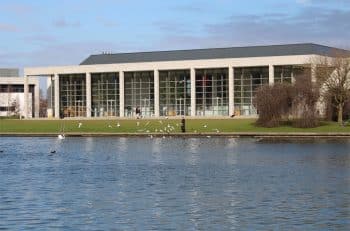
There are disturbing messages coming this autumn from the global rankings of universities. Ireland is sinking: only one Irish university retains a place in the top 100 universities of the world and that is Trinity College, Dublin, hanging on by its fingernails at 98th in the ‘QS’ rankings. In one respected index TCD was not even originally included because it had inadvertently submitted the wrong data to the organisation that compiled the ranking. During the boom years the official priority was to increase the spending on research and build up the laboratory capacity of the third-level sector. Irish Universities climbed the rankings and at one point the two main performers (TCD and UCD) were both in the top 100. Dauntingly, however, in the latest QS rankings survey TCD fell 20 places to 98th and UCD fell 22 places to 176th. The heads of both institutions issued a joint statement following the bad news attributing the setback to the paucity of funding by government. There is some justification for the academics’ blame-throwing given that Ireland is placed at 29 out of 32 OECD countries when it comes to the total amount spent on Education. This is not where a country, with Ireland’s ambition, for ‘the knowledge economy’ should be. Nevertheless, the performance of the universities in Ireland is not just down to funding and it is time that government and the sector itself analysed strategy and specialisation in particular. Apart from TCD and UCD the other universities in Ireland lag precariously behind the requisite ambition, in the short to medium term, to enter the top 100 rankings. In this sense the government may have to look carefully at the potential to augment both of these institutions so that they can remain in the top 100. There may also be a case for tighter co-operation in research and advanced research between the two institutions to assist scaling the rankings. Academics are prone to dismiss these rankings and pick holes in them. However, they do determine how attractive a country is both to international students and to high-flying academic or research talent. If a country’s universities fall down the rankings then serious talent will not move to them to work and in many cases will leave to better-performing institutions abroad. Corporations too monitor the rankings to determine where they will spend on research. One of my jobs as Minister for Science, Technology and Innovation was scouting and luring both scientists and multinational corporations to Ireland to participate in Science Foundation Ireland (SFI)-sponsored research programmes. Scientific and research talent is highly mobile these days. I got a further insight into this during my four years in Moscow bringing large companies to invest in an Innovation Hub that was being built by the Russian authorities with a budget of $10bn. My job was to create corporate and research partnerships into the project. The team I ran brought $1.2bn of R&D investment into this particular tech hub on the outskirts of Moscow. In Russia I met a huge number of CEOs and CTOs (Chief Technology Officers) of multinational companies. Getting a decision to locate R&D is complex and difficult. It depends on the company’s experience in the country and its trust that it can get relevant and excellent research. Ideally multinationals want to collaborate with local educational or research institutions. Both in Russia and Ireland these companies will focus assiduously on the quality of the science or research being conducted in a country, the talent available and the guaranteed continuity of funding from government over a seven-to-ten year horizon. If these basic elements are not there then the investment will not come, will cease or will be diverted somewhere else where the offer is better. The key advantage to Ireland of the push on science and technology spending in the boom years was that it rooted many multinationals in Ireland. In some cases the Irish R&D component is a key link in their global network of research centres. However post-Depression Ireland faces a big challenge to its reputation and ability to attract further FDI in the years ahead. The IDA does a great job but there are limits to how many companies they can attract to make R&D investments here if the perception grows that Irish education and research is sub-par. R&D investments by major corporations in a country will often lead to a further increase in both manufacturing and services wherever they locate. The risk is that if Ireland lets its universities drift down the rankings while other Irish national indicators rise, that the country will face a double whammy in the years ahead as the EU, OECD and other countries try to erode our corporate tax rate and the advantages it anchors in luring FDI to Ireland. The Apple case is emblematic of what can be expected in aggression from the European Commission about the tax practices of the multinationals in Ireland and other locations. While the heads of the universities obsess about funding, the rankings are arrived at because of quality indicators and the level of citations, research excellence and teaching reputation of the institutions involved. That is why Richard Bruton is right to pour caution on the demand from the universities for more money. He wants to see reform before increased funding. There needs to be a concentration of research spending on the universities with the capability to deliver significant research outcomes. There also needs to be a serious look taken at which institutions can best accommodate particular areas of research so we can avoid duplicating or spreading the spend over a number of third-level colleges. This will require restructuring how the universities work. The two glimmers of hope from our university sector are that The Royal College of Surgeons’ and the National University of Galway’s improved rankings showing that they, at least, must be doing something right in the era of austerity and a paring back of state funding. Both of these institutions have a very international outlook in recruiting
by Anton McCabe
The news that serial non-litigator Gerry Adams is to sue over allegations he sanctioned the murder of IRA informer Denis Donaldson, cannot surprise. Contrary to what has become the received wisdom, the former security force agent in the IRA did not tell BBC Northern Ireland’s ‘Spotlight’ programme on September 20th that Gerry Adams sanctioned the killing of Denis Donaldson in 2006. His allegation was much more tentative. Despite this, media outlets have run with the allegation that the decision to carry out the killing was agreed by Adams, and that the IRA carried it out. An example is the Irish Independent headline: ‘Gerry Adams sanctioned the killing of British spy, claims former IRA man’. This is based on a section of the programme, where reporter Jennifer O’Leary is interviewing ‘Martin’, a former IRA man and police agent. A transcript reads: Jennifer O’Leary: “Martin also said he told his Special Branch handlers what he had learned about the murder”. Martin: “Not too long after Denis was murdered I was told by a member of the IRA, an active member of the IRA, that the IRA had killed Denis, and not anybody else. I gave that information to the Special Branch.”. Jennifer O’Leary: “What was your handlers’ reaction to that information?”. Martin: “They were just totally mute. There wasn’t any acknowledgement of what I’d said. The subject was changed to something else”. Jennifer O’Leary: “Are you surprised?”. Martin: “No. I think they knew themselves. You see I just think you know they and the whole status quo had seen Denis’ death as internal housekeeping and they were happy enough to put up with it. I believe they acted on some information and didn’t act on other information because it was too politically sensitive to do so”. Jennifer O’Leary: “Martin believes that the shooting of Denis Donaldson was sanctioned by the man at the top of the Republican movement, Gerry Adams. Spotlight understands that by 2006 Gerry Adams had stepped aside from the IRA Army Council but Martin claims that Adams was consulted on all matters”. Martin: “I know from my experience in the IRA that murders have to be approved by the leadership and they have to be given approval by the leadership of the IRA, the political leadership of the IRA and the military leadership of the IRA”. Jennifer O’Leary: “Who are you specifically referring to?”. Martin: “Gerry Adams. He gives the final say”. Note: there is nothing indicating this IRA man had first-hand knowledge of Adams’ approving the killing. Note also: the final line is “He gives the final say”. Not “He gave the final say”. What we may call the alleged allegation runs contrary to the Real IRA’s claim of responsibility for the murder in 2009. After the programme, a former Real IRA army council member spoke to journalist Suzanne Breen of the Belfast Telegraph, and reiterated the claim. Breen is a trenchant critic of Adams and the mainstream IRA, so the claim must be taken seriously. Unfortunately, Donaldson was cavalier about his own safety. Some time after he was unmasked in 2005, he went to a cottage in Donegal that had been a safe house for the INLA and IRA for years. It was secluded, so killers could stake it out if necessary. It was near a main road, in an area with a lot of holiday homes, so escape was easy and strangers didn’t stand out. Donaldson had been an informer since at least the mid-1980s. Two groups had particular grudges: families and friends of those killed as alleged informers, people not as well-connected as Donaldson; and families and friends of those IRA members killed or imprisoned because he may have betrayed them. Crucially, the IRA did not need to kill him. He no longer had their protection, and there were plenty of others willing to do it. The killing was similar to that of Dungannon taxi driver Barney McDonald in 2002. In both cases a shotgun was used, making forensics difficult. The current story took off because there is a media obsession with Adams, who is a safety-valve for Sinn Féin’s opponents in politics and the media. It must be said that he has left himself open by seeming ridiculous with his denials of IR A membership. Martin McGuinness receives nothing like the same treatment, despite his admitting having held high rank in the IRA. As Deputy First Minister, McGuinness is central to the political process in the North. The DUP perceive him as a ‘moderniser’ in Sinn Féin. So a media campaign against him might damage the political process.