



Politics
-
-
Posted in:
Unemployed are mistreated
by admin
Their deprivation rate was 53.4% in comparison to a national figure of 29%
-

Posted in:
The serious business of proofing
by admin
How to assess how policy advances equality and human rights, and reduces poverty
-

by admin
Law, human rights, tolerance and decency must be taught in schools
-

Posted in:
Nay to the Mayor Yayers
by admin
We can achieve a strong, identifiable executive mayor without holding direct elections that unnecessarily increase conflict
-
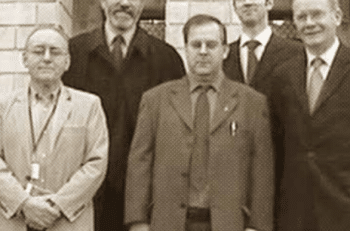
by admin
Gerry Adams didn’t order spy’s murder, and ‘Spotlight’’s agent didn’t even say he did
-
Posted in:
The serious business of proofing
by Mary Murphy
The May 2016 Programme for Government commits the Government to “develop the process of budget- and policy-proofing as a means of advancing equality, reducing poverty and strengthening economic and social rights”. In doing so, it specifically recognises the Irish Human Rights and Equality Commission (IHREC) as an independent expert body to support the development of this proofing. The commitment focuses on equality and human-rights budgeting including by developing institutions to support proofing processes in key Government Departments and strengthening the budget-scrutiny role of the Oireachtas. There is a separate commitment for the Department of Public Expenditure and Reform to advance the role of social impact assessment. Ireland was once a leader in policy-proofing. The 1997 National Anti-Poverty Strategy ‘Sharing in Progress’ pioneered ‘Poverty Proofing’ to assess all major policies and programmes at design and review stages to ensure that they either contribute to reducing poverty or, at least, do not increase poverty. It was applied to major economic and social proposals and was embedded in the Strategic Management Initiative for the public sector. A National Economic and Social Council evaluation in 2001 found a high level of formal compliance with poverty- proofing. However, there was confusion as to whether the objective was tone-setting or practical. Over time there was a shift from overall poverty-proofing to specific poverty-impact assessment in the Office for Social Inclusion. The non-statutory exercise became a ‘tick box’ exercise, and there was a gradual rundown of the supporting institutions including the Office of Social Inclusion. Elsewhere, the Gender Equality Unit in the Department of Justice, Equality and Law Reform developed, promoted and supported Gender Impact Assessment Guidelines for the National Development Plan 2000- 2008. This had been mandated by the EU for disbursement of its Structural Funds. Progress was found to have been made on mainstreaming gender under the headings dealt with by the National Development Plan. However, progress uneven. The process ended with the closure of the Gender Equality Unit. An Equality Proofing Working Group was established in the Department of Justice, Equality and Law Reform. It was an initiative of the Equality Authority which funded it 2000-2008. It instigated a number of pilot projects, promotional events, proofing tools, and data analyses to support policy-making to take account of the situation, experience and specific needs of groups experiencing inequality and covered by the grounds in equality legislation. This initiative collapsed with the diminution of the Equality Authority over the 2009-2010 period. It is difficult to isolate specific outcomes generated through these processes. However, progress includes: process innovations including in information provision, data-gathering and analysis; greater transparency; greater accountability; and culture change within public institutions. Improvements were also made in various policy areas. The procedural and substantive progress smoothed the path for new commitments to human-rights and equality-proofing, including equality and human-rights budgeting. The commitment to human-rights and equality coincides with changes to, and pressure for reform of, the budget process. An OECD report, ‘Review of Budget oversight by Parliament: Ireland’ in 2015 recommended a range of reforms aimed at improving the quality of policy-making, resource-allocation and accountability, and ultimately at promoting better outcomes for citizens. These reforms included greater ex-ante engagement of the Oireachtas in fiscal planning through commitments by Government to provide more information to the Oireachtas and the establishment of a Parliamentary Budget Office to analyse information about taxation, expenditure and performance, and to cost policies. There have been a number of important new developments in the budgetary process this year. These include publication of the Spring/Summer economic statement (SES) and parliamentary engagement in the National Economic Dialogue (NED), which the budget scrutiny committee attended, in June. In July the Tax Strategy Group papers were published and forwarded to parliamentary committees. The Budget White Paper will continue to be published on the Friday before Budget Day. Documents available on Budget Day will now include distributional analyses. SWITCH analysis will be available before the Social Welfare and Finance Bills. The Department of Public Expenditure and Reform will have regard to equality and human-rights-proofing as part of its social impact assessment framework. There will be a new ex-ante focus on the ‘Stability Programme Update’ with more parliamentary comment encouraged, and there will be greater parliamentary engagement with mid-year expenditure reports. At the end of June 2016 the ‘Report of the Select Committee on Arrangements for Budgetary Scrutiny’ set out proposals, on foot of the Programme for Government, for a new budget scrutiny framework. This should include: a Budget Oversight Committee which has since been established; enhanced budget scrutiny by existing Oireachtas sectoral Committees that should involve engagement with civil society; and the early establishment of the Independent Parliamentary Budget Office – on a non-statutory basis in the first instance and on a statutory basis within two years. This Report also states that Government proposals for budget changes and policy changes should be policy-proofed with specific reference to gender, age, disability, poverty and regional impact, and should be subjected to a distributional impact assessment. It recommends that the Independent Parliamentary Budget Office should liaise closely with IHREC, taking opportunities for exchange of information and learning about their respective agendas. As to Budget 2017 on 11 October, the Select Committee recommended that, to advance the proofing arrangements, the Department of Finance and the Department of Public Expenditure and Reform should be requested to provide an early briefing on the development and implementation of the Government’s proofing of the budget-making process – to the Committee on Budgetary Oversight. However, it would be better if individual Ministers could also be asked to engage with their counterpart committees in the early autumn over progress made in the proofing of any specific proposed policies. All this represents substantial progress on the Government’s commitment to enhanced engagement with the Oireachtas throughout the budget cycle. However, it is clear that the 2017 staging posts are constrained by Constitutional provisions and by executive prerogatives. Therefore, it is expected that much of the meaningful parliamentary engagement with the budget will focus on the legislative stages