



Politics

Random entry RSS

  • Posted in:

    Clinton in perspective

    Rejected Democrat candidate Bernie Sanders would have done nicely. He is passionate about the agendas of equality, sustainability and accountability. On equality: “The issue of wealth and income inequality is the great moral, economic and political issue of our time”. On Climate: “Climate change is the single greatest threat facing our planet. On accountability: “Are we prepared to take on the enormous economic and political power of the billionaire class, or do we continue to slide into oligarchy?”. Sanders, much more than Corbyn in Britain, more than the anti-property-tax, anti-water-charge Radical Left in Ireland, gets it. However, in his absence we are left with two conservative candidates: one sober and clever, the other bombastic, mendacious, fascistic and intolerant. Clinton is strong on the environment and climate but doesn’t buy the rhetoric or the meat on equality, and her record on accountability is tainted. Trump never mentions equality, doesn’t believe in climate change and can’t stop lying and reversing his positions. It would be better to like Hillary Clinton but she’s just too boring, just too insincere, just too compromised and above all just too conservative for this magazine. Since every word she has said since Bill became Governor in Arkansas in 1978, when she was 30 has been parsed and often shredded, she has not really been alive to exciting new ideas. Her intellectual curiosity seems to have peaked as an academic in Yale when she had radical views on children. Her political life has been a history of triangulation, of compromise, of expediency with, for America, a vaguely liberal, Democrat- just-left-of-centre gloss. This is a woman who until three years ago was not even in favour of gay marriage. In 2005 she said “I believe marriage is not just a bond but a sacred bond between a man and a woman”. She does not have the instincts of secular European liberals: “Bill and I went into our bedroom, closed the door and prayed together for God’s help as he took on this awesome honor and responsibility”, Clinton wrote of her husband winning the 1992 election. She grew up in a Methodist household, taught Sunday school like her mother and is a member of a Senate prayer group. Hillary has had a difficult time in the public eye but coped with some dignity, for example, with a husband who had a nastily roaming eye. Unfortunately for this otherwise gilded couple: for many the rosy picture they paint of undaunted mutual support rings false. This is something Trump was always liable to exploit. She is not an empathetic candidate. She is a shocking orator, shouts at public meetings and weirdly emphasises the wrong parts of words and sentences. More substantively, Hillary was never far from nancial wrangles when Bill was in the White House: there was Whitewater, Travelgate, Filegate, and a cattle-futures controversy. Anomalously and disturbingly for someone whose earnings ow almost exclusively from her public life, she now has an estimated worth of $45m. For the fifteen months ending in March 2015, Clinton earned over $11m from speeches and in 2013 she was paid $225,000 to speak at a Goldman Sachs’ conference on ‘Builders and Innovators’. When the Clintons’ indulgence of a revolving door of their policy-makers into and out of top positions in delinquent banks is taken into account, it leaves an unpleasant odour. Inevitably with such a long record in public life Clinton has left a legacy of controversy. Her failure to get healthcare reform through Congress during her husband’s Presidency has been attributed to arrogance. Her political life has been a history of triangulation, of compromise, of expediency with, for America, a vaguely liberal, Democrat-just-left-of-centre gloss steady and wonkish but generated a number of controversies. When in 2012 members of the US diplomatic mission in Benghazi, Libya, were killed, Clinton was forced to take responsibility for security lapses. In 2015, it was revealed by the State Department’s inspector general that Clinton had always used personal email accounts on a private server instead of a federal server, during her tenure as secretary of state. In July the FBI concluded an investigation. The FBI said: “It is possible that hostile actors gained access to Secretary Clinton’s personal email account”. Although Clinton or her colleagues were “extremely careless in their handling of very sensitive, highly classified information”, the FBI recommended no charges. Clinton has tended to exaggerate the extent of the FBI’s exoneration of her. On many issues, the positions of Clinton and Trump align with that of their parties – Clinton wants to raise taxes on high-income households while Trump wants to cut taxes for all income brackets Clinton is pro-choice, Trump is pro-life; Clinton supports the DREAM Act and a path to citizenship for undocumented immigrants, while Trump wants to deport all undocumented immigrants, build a wall on the Mexican border and be nasty to China; Clinton wants to expand gun control legislation, Trump does not;. Clinton is for LGBT rights; Trump says he sees himself as a “traditional guy” on the issue. On other issues, the lines are more blurry. Ironically, for example, alleged billionaire Trump claims to be for the small voter. Clinton has served as Secretary of State in the Obama administration, where she was responsible for orchestrating US foreign policy. She is perceived as more interventionist than Obama. Trump tends to non-intervention. Unless someone annoys him. Michael Smith

    Loading

    Read more

  • Posted in:

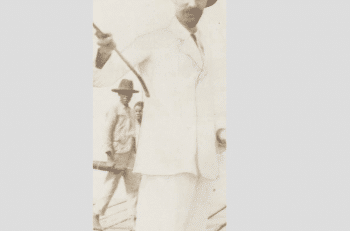
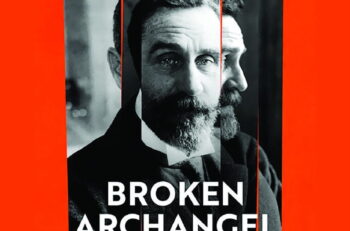
    Discovering Casement

    It is today widely believed that between Casement’s arrest and execution in 1916 the Black Diaries now held in the UK National Archives were clandestinely shown to in uential persons in order to disarm appeals for his reprieve. This belief was once again articulated by law professor Sean McConville on 2 June, 1916 at a Casement event in London when he stated to a TV audience of millions “…the diaries were circulated in London … Blackwell … was circulating these diaries at a time when Casement’s fate had not nally been decided …”. The original sources of this belief, however, are the books written by Rene MacColl BL, Reid, Roger Sawyer, Brian Inglis and Séamus Ó Síocháin. These volumes comprise more than 2,000 pages and at an average of two years of research for each study, we have around ten years research. Strangely, in these 2,000 pages there is not a single verifiable instance recorded of the diaries in the National Archives being shown to anyone in that period. How can this be? It is not credible that these authors of research overlooked this crucial aspect after ten years. If they found instances of the diaries being shown in that period, then it seems they withheld that vital information from their readers. Since this is not credible, we must assume that none of them found any instance of the diaries being shown in that period. It is well attested that typescript pages were circulated in that period and that a large quantity of these eventually found their way to Singleton-Gates who published them in Paris in 1959. But Casement did not type those pages. What would constitute a proof of authenticity of the diaries held in the National Archives? There are no witnesses to Casement’s authorship and there have been no rigorous and impartial scientific tests. The only evidence that has been adduced in favour of authenticity is a resemblance in handwriting. The attempts at corroboration in July 1916 are not evidence of authorship. But perhaps the question about authenticity is a false trail. In the period from 25 April to 3 August the British authorities claimed to be in possession of the five bound volumes now held in the UK National Archives. However, there is no verifiable record that these volumes were shown to anyone in that period. Rather than show the diaries, the Intelligence chiefs had decided to prepare typescript pages and to show these to influential persons, journalists, editors, politicians, churchmen and others. They told these persons that the typescript pages were authentic copies of original diaries written by Casement. They failed to provide any proof that the typescript pages were copies of anything written by anyone. The proof which they did not provide would have been exhibition of the bound volume diaries now in the UK National Archives. No explanation has ever been proposed for this failure. Today there are five bound volumes in the UK National Archives. Their existence today does not prove their existence in the period 25 April to 3 August 1916. That the bound volume diaries were not shown in that period means there was some impediment to showing them. The protagonists – Blackwell, Thomson, Hall, Smith and others – had the strongest of motives for showing the bound volume diaries which they said had been discovered but they did not do so. The impediment certainly existed and it was such that these powerful men neither jointly nor singly could overcome it. Therefore it was out-with their joint power to show the bound volume diaries in that period. This circumstance indicates that the impediment could not have been overcome by anyone in England at that time – not even by the monarch. In this regard these powerful men had touched the limit of theirhuman power. The question is therefore not about forgery or authenticity but about the material existence of the bound volume diaries at that time. The absence of verifiable evidence that the bound volume diaries existed before August 3, 1916 means that questions about authenticity are meaningless. What first requires to be proved is their existence in that period before August 3. Those who claim the typescripts were true copies have now had 100 years to produce evidence of the existence of the bound volumes in that period. That they have not produced the necessary evidence indicates that they too have been unable to overcome the impediment which defeated their powerful predecessors, Thomson, Smith, Hall etc. In these circumstances an impartial court of law would decide to act as if the bound volume diaries did not exist at that timeand would dismiss a case for their authenticity as being un-tryable. The case for the typescripts being copies at that time could not be tested or proved without verifiable independent evidence that the bound volumes existed before August 3. Thus the case in favour of the material existence of the bound volume diaries before August 3 rests entirely on the word of Thomson, Hall, Blackwell, Smith and others and these are the people who at that time were circulating typescripts which depicted Casement as “addicted to the grossest sodomitical practices”. These persons can only be considered as hostile witnesses by virtue of their uncontested behaviour. There are no neutral witnesses who testified to seeing at that time any of the bound-volume diaries now in the UK National Archives. Absence of proof of existence of the bound volumes at that time entails that no proof of their authenticity can be derived. That no proof of authenticity can be derived entails that – until such proof of existence is provided – the veracity or falsity of the typescripts cannot be considered. Ei incumbit probatio qui dicit, non qui negat; the onus of proof rests on the accuser, not on the defence. If questions about authenticity are meaningless due to lack of conclusive evidence after 100 years, claims favouring authenticity do not rest upon verifiable facts or upon independent testimony. Therefore such claims rest upon

    Loading

    Read more

  • Posted in:

    Áras Attracta lesson: rights-based model

    On 4 January 2016 I found myself in a court-residents. The review group recommended a move to a room in Castlebar, Co. Mayo. One man and ve women were on trial, charged with assault alleged to have occurred in Áras Attracta. Sitting in the courtroom my hope was to use this experience as part of my own catharsis, having lived through physical abuse in Áras Attracta which is the HSE-run residential centre in Swinford, County Mayo where 96 men and women with intellectual disabilities live. It featured of course in a recent exposé by RTÉ’s Prime Time programme. Bodily integrity, in the context of receiving support for personal care, brings an unspoken vulnerability. Fear is ever-present. Dignity and respect should be basic imperatives. Those of us involved in the rhetoric of human rights and the independent-living movement must remember that our sisters and brothers with learning disabilities are uniquely susceptible to abuse. The material captured on the hidden camera placed by Prime Time’s undercover reporter showed staff shouting, pushing, force-feeding and dragging residents across the floor. The footage was used in evidence in the case by the State prosecutor. The five staff, including nurses and care workers, were found guilty of assault. All but one avoided jail terms. Four were sentenced to community service orders in lieu of prison terms. The fifth was given a prison term of four months which is currently under appeal. The protracted saga of Áras Attracta is a reminder of the slow pace of the State’s apparatus. Two years on from Prime Time’s exposure of what was happening in Áras Attracta an independent review group published the ‘What Matters Most’ report in August with thirteen recommendations and an action plan for all congregated settings. The most pertinent of these was to “accelerate the process of supporting people to move into community living, avoiding transitional arrangements”. The HSE has committed to implementing this and claims that “individual needs assessments have been completed for all residents to identify their future support requirements to live a successful life in the community”. The independent report stated there was “widespread institutional conditioning and control” of people living in Áras Attracta. It found that this was generally imposed for the convenience of staff and management and the model of service was structured to suit staffing constraints rather than the needs and aspirations of residents. The review group recommended a move to a rights-based social model of service delivery in one of its overarching recommendations for Áras Attracta. Most service-providers for people with disabilities are state-funded. They remain institutions where power and control exerted over us and people’s right to independence and choice is denied. The report tells those of us who have to have relationships with service providers nothing new. It con rms unspoken realities. There have been a series of HIQA reports on these services that back up this analysis. The inertia in implementing recommendations from these reports coupled with the lack of rights-based legislation further demonstrates state inertia when it comes to people with disabilities. The Áras Attracta situation merely highlighted the insidious practices that take place in residential institutions. Often there is an inference that somehow people who are abused brought it on ourselves. In the context of Áras Attracta, what was considered, or diagnosed as challenging behaviour could better be described as very challenging circumstances for the residents. There are still over 2,700 people living in congregated settings throughout the country. Residential settings echo a discredited previous era. We suspect, we fear and we know. However, still they continue. Twenty-seven people currently living in Áras Attracta are now waiting to move into new supported accommodation. The Minister for people with disabilities, Finian McGrath, has announced that the Government has provided a dedicated €100m capital fund to facilitate de-congregation over the period 2016-2021. €20m has been provided for 2016 and Áras Attracta has been prioritised to receive funding in this first phase. Action is now needed, not just another report or political promise that will become redundant as time passes and nothing changes. The kernel of the ‘What Matters Most’ report is in the overaching recommendation for Áras Attracta that “The voices of the residents need to be facilitated, listened to and promoted”. Why would you need to make such a recommendation? What has gone so badly wrong that this has to be one of only three overarching recommendations. Fostering the independent voice of the people accessing services, attending to their preferences, and ensuring people know their rights and have access to advocacy services should have been a given. These are the voices that must now determine the future. Rosaleen McDonagh

    Loading

    Read more

  • Posted in:

    Nay to the Mayor Yayers

    In any discussion about Mayoral governance’ in Dublin there are assumptions: firstly, that it is a good thing, that it will solve lots of problems in the city; and second, that the mayor should be directly elected. We usually hear the paraphrased quote – ‘who do I ring if I want to talk to Dublin?’. We want to be able to identify who runs the place. We want someone to be running the place. Directly-elected mayors give us that. The ‘direct’ in direct election, a bit like in direct democracy, is a ‘Yay’-word. It is seen as an unarguable good. Who could not be in favour of giving people a direct say in, a direct link to, who runs the city? These assumptions ignore the relationship between central government and city government and what competencies are appropriate for the mayor, what geographical area the mayor might rule over, and the central issue of funding. They also ignore the fact that we can and do have strong political leaders who are not directly elected. There are broadly three models for city governance. One is the Council-Manager system we currently have – where the mayor has no executive powers. There’s an assumption that it is a bad thing. It certainly isn’t very democratic: it is not responsive to voters’ wishes and there are no clear links between the vote in local elections and local government policy. It’s also not very transparent – though that might be due to the absence of real media reporting of city government. It in turn might be a function of the lack of clarity in decision-making. The second model is the directly-elected mayor or Mayor-Council system. It is used in London, some other European cities, such as Rome, and about half the big US cities, including New York and Chicago. Probably because our nearest neighbour and biggest influencers adopted and use it, we naturally assume it is the one for us. But within this system, things aren’t uniform. They can be strongly mayoral or weakly mayoral – so the Council’s control of the legislative and financial functions can vary considerably. There is a third model. It is a Council system. The elected councillors appoint a mayor, who has executive functions. As with the directly-elected mayor, depending on rules, the mayor’s power can vary quite significantly. The system is quite common, used in many northern European cities, such as Amsterdam, Berlin, Stockholm and Paris. So which works best? Well I’m not an expert in local government, but even the literature doesn’t have a clear conclusion. So the short answer is, we don’t know. But I am interested in the functioning of central government, and we can think of the two models, the directly and indirectly-elected executive mayors as functional equivalents to the presidential and parliamentary systems at the national level. And there is a long debate in political science about the relative success of the two systems at delivering democratic stability, human development, and a range of other indicators of a country’s success. So which should we choose if we are to be guided by the relative performance of presidential or parliamentary systems? The presidential system, which is the system analogous to directly-elected mayor, has some advantages. Candidates are required to present a vision to the public. It puts power in the hands of one person, on the basis of popular election. That means the presidential system is clearer and appears fairer. We all know who we vote for; and the person who gets most votes becomes mayor. Unlike in parliamentary systems, there is no messing about with coalition-building based on backroom deals that aren’t transparent and over which the voters have little control. Much of the debate in parliamentary elections is about who will coalesce with whom, a debate that could be avoided in presidential-style systems. Instead the rival candidates for mayor could debate the issues facing Dubliners. The presidential system also weakens the power of parties. Many people dislike parties, and regard them as gatekeepers of political ambition. With a presidential system new leaders can emerge without having to be sanctioned by a party. This is much less likely in a parliamentary system. And at a time when people complain that government is unresponsive to their needs, and lacks leadership, the mayor could have clear lines of power to deal with the big problems. A suitably empowered mayor might be able to deal with the housing crisis in a way that the local authorities, minister and agencies can’t. The parliamentary system, that is the indirectly-elected mayor, however, has some advantages of its own. One might seem a weak one, but it might be important. We are used to parliamentarianism – it’s in our political culture. Political culture governs how we behave and are expected to behave. It changes slowly and doesn’t always respond to institutional changes – perhaps not at all, or perhaps not in predictable ways. This is important because picking systems that we are used to means we are less likely to get nasty surprises. A stronger argument in favour of parliamentarianism is the way it divides power. Politics is meant to do at least two things. It should solve collective action problems: those that make us collectively better off if we are guided to behave in certain ways than if we were left to act individually. The classic example is fishing. Individually we have an incentive to extract as many fish as we possibly can from the seas. We would over fish, making us collectively worse off when fish stocks are depleted. So we are made better off being forced to restrict our fishing. Politics is therefore also a mechanism for the resolution of conflicts, such as the fishing one. In parliamentary systems the mechanism for the resolution of conflict is negotiation, and parties representing different interests compromise, strike deals and build consensus, embracing a wide range of views in the decision. This manifests itself in coalitions, with a formal opposition offering alternative policies. In presidential systems conflict

    Loading

    Read more

  • Posted in:

    Adamned if he does, adamned if he doesn’t

    The news that serial non-litigator Gerry Adams is to sue over allegations he sanctioned the murder of IRA informer Denis Donaldson, cannot surprise. Contrary to what has become the received wisdom, the former security force agent in the IRA did not tell BBC Northern Ireland’s ‘Spotlight’ programme on September 20th that Gerry Adams sanctioned the killing of Denis Donaldson in 2006. His allegation was much more tentative. Despite this, media outlets have run with the allegation that the decision to carry out the killing was agreed by Adams, and that the IRA carried it out. An example is the Irish Independent headline: ‘Gerry Adams sanctioned the killing of British spy, claims former IRA man’. This is based on a section of the programme, where reporter Jennifer O’Leary is interviewing ‘Martin’, a former IRA man and police agent. A transcript reads: Jennifer O’Leary: “Martin also said he told his Special Branch handlers what he had learned about the murder”. Martin: “Not too long after Denis was murdered I was told by a member of the IRA, an active member of the IRA, that the IRA had killed Denis, and not anybody else. I gave that information to the Special Branch.”. Jennifer O’Leary: “What was your handlers’ reaction to that information?”. Martin: “They were just totally mute. There wasn’t any acknowledgement of what I’d said. The subject was changed to something else”. Jennifer O’Leary: “Are you surprised?”. Martin: “No. I think they knew themselves. You see I just think you know they and the whole status quo had seen Denis’ death as internal housekeeping and they were happy enough to put up with it. I believe they acted on some information and didn’t act on other information because it was too politically sensitive to do so”. Jennifer O’Leary: “Martin believes that the shooting of Denis Donaldson was sanctioned by the man at the top of the Republican movement, Gerry Adams. Spotlight understands that by 2006 Gerry Adams had stepped aside from the IRA Army Council but Martin claims that Adams was consulted on all matters”. Martin: “I know from my experience in the IRA that murders have to be approved by the leadership and they have to be given approval by the leadership of the IRA, the political leadership of the IRA and the military leadership of the IRA”. Jennifer O’Leary: “Who are you specifically referring to?”. Martin: “Gerry Adams. He gives the final say”. Note: there is nothing indicating this IRA man had first-hand knowledge of Adams’ approving the killing. Note also: the final line is “He gives the final say”. Not “He gave the final say”. What we may call the alleged allegation runs contrary to the Real IRA’s claim of responsibility for the murder in 2009. After the programme, a former Real IRA army council member spoke to journalist Suzanne Breen of the Belfast Telegraph, and reiterated the claim. Breen is a trenchant critic of Adams and the mainstream IRA, so the claim must be taken seriously. Unfortunately, Donaldson was cavalier about his own safety. Some time after he was unmasked in 2005, he went to a cottage in Donegal that had been a safe house for the INLA and IRA for years. It was secluded, so killers could stake it out if necessary. It was near a main road, in an area with a lot of holiday homes, so escape was easy and strangers didn’t stand out. Donaldson had been an informer since at least the mid-1980s. Two groups had particular grudges: families and friends of those killed as alleged informers, people not as well-connected as Donaldson; and families and friends of those IRA members killed or imprisoned because he may have betrayed them. Crucially, the IRA did not need to kill him. He no longer had their protection, and there were plenty of others willing to do it. The killing was similar to that of Dungannon taxi driver Barney McDonald in 2002. In both cases a shotgun was used, making forensics difficult. The current story took off because there is a media obsession with Adams, who is a safety-valve for Sinn Féin’s opponents in politics and the media. It must be said that he has left himself open by seeming ridiculous with his denials of IRA membership. Martin McGuinness receives nothing like the same treatment, despite his admitting having held high rank in the IRA. As Deputy First Minister, McGuinness is central to the political process in the North. The DUP perceive him as a ‘moderniser’ in Sinn Féin. So a media campaign against him might damage the political process. The episode of ‘Spotlight’ is available on the BBC I-player until October 19th. The relevant section can be watched beginning at 51 minutes. Anton McCabe

    Loading

    Read more

  • Posted in:

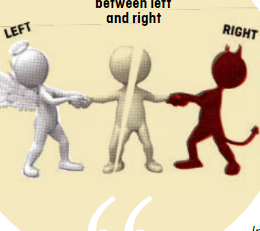
    Left – egalitarian

    Political commentary doesn’t “always” couple populism with far-right. South America, Podemos, Syriza, People Before Profit and the AAA are far-left populists

    Loading

    Read more