Politics

Random entry RSS

  • Posted in:

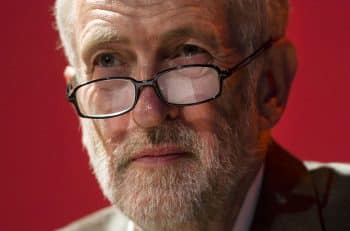
    Corbin in the light

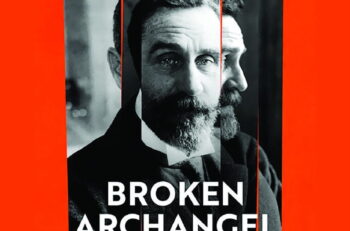
    Trolls, bullies, and wounded egos stalk Twitter and Facebook. Blocks are interposed. Friends are defriended. The internet is the forum of choice in the most recent Battle of Britain that is Jeremy Corbyn. The mainstream media has joined the battle rather than offer any analysis. Cool perspectives are not available. ‘Corbyn: The Strange Birth of Radical Politics’ by Richard Seymour is not itself always dispassionate. Tony Blair, for example, appears as “an SDP viper in the Labour breast”. Nonetheless, Seymour usefully takes us behind how Corbyn emerged, to explore why he did. This generates lessons for all concerned with advancing a more equal society. Seymour identifies Corbyn as a product of crises in politics, social democracy, and the labour movement. Of course a popular withdrawal from politics is depriving democracy of its lifeblood, participation, across Europe. Voter turnout is on an ongoing downward trend. Membership of political parties has dropped precipitously. This is not a matter of apathy driven by contentment and affluence. Seymour argues rather that it is about deliberate abstention, a rejection of the choice on offer, and the lack of difference between political parties. He concludes “it is not apathy that characterises a growing chunk of the electorate, it is their effective exclusion from political power”. This abstention is particularly evident among young people and those living in poverty or from ethnic minorities who might otherwise be expected to vote Labour. Social democracy has been a “casualty of neo-liberalism”. The strategy of Social Democratic parties had been to fund welfare state commitments from a thriving capitalist economy. However, they ended up embracing austerity policies as economic crisis took hold. Social democracy has not yet been able to present or pursue a convincing alternative economic model. Its economic base has disappeared, and it has “lost its purpose”. A ‘Social Liberalism’ has taken its place, where “the leadership is neo-liberal and the direction of policy is aimed at gradually converting the base to a neo-liberal common sense”. The crisis in the labour movement is seen in falling trade union density, the decline of leftwing groups, the transience of social movements and the sparsity of egalitarian publications. It is presented by Seymour in terms of the impact of Blair on the Labour Party. Under Blair’s ‘third way’, equality was abandoned for meritocracy and welfare shifted from being a safety net to being a lever to get people into paid work. While power had never been vested in party members, party conferences became ever more stage-managed as power was concentrated in a leadership that relied on polling and focus groups for its vision. Seymour suggests “Corbyn is the culmination of a series of defeats for a form of political organisation that seems to be inadequate in today’s world”. He offered real choice, pointed to a different agenda, and practised a new politics. However, he considers that Corbynism is “headed for a defeat of its own”, particularly if progress is not made in the short term in addressing: popular values; party organisation; electoral prospects; and policy. Ideologically, Corbyn’s call for a “kinder politics” is important, particularly on issues of immigration and welfare. Seymour considers, “Corbyn is willing to challenge more than the establishment; he aims to run against popular prejudice and win”. Corbyn must revitalise the Labour party. The influx of new members is encouraging. However, there is a challenge to democratise the party and secure active engagement from members. Corbyn’s electoral strategy aims to “rebuild the core disintegrating vote while motivating abstainers”. Labour’s share of the vote has not grown, though Seymour notes that polling companies weight against young and poor voters on the basis that they don’t turn out, obscuring any rise in support. However, he concludes that Corbyn is “unlikely to recoup enough of Labours electoral losses to carry a general election”. He suggests that there is a contradiction, however, in prioritising this electoral goal in that the “main point of Labour’s existence is to win Labour governments, however much these governments may undermine Labour’s other purposes in the long-term”. For policy the “most pressing task is to demonstrate that there is a coherent alternative economic model”. Corbyn has committed to end austerity and introduce a “People’s Quantitative Easing” with investment in infrastructure, jobs and high-technology industries. This is to be funded by closing tax loopholes, stimulating growth, and spending less on, for example defence projects like Trident. Seymour highlights that this “agenda is not the stuff of which revolutions are made”, but he is not convinced that, if elected, Corbyn would be able to implement these policies anyway. Ireland still awaits its Corbyn, its Sanders or even its Podemos. This book offers some insights as to what a new politics might really look like and the challenges it would inevitably face. By Niall Crowley

    Loading

    Read more

  • Posted in:

    The joy of personalisation

    An army of of taskforces is contemplated in the current Programme for Government, covering everything from electric cars to broadband rollout to mental health of young people. There is one among them that holds particular promise for people with disabilities.This is the taskforce promised on the implementation of “Personalised Budgets” for people with disabilities. There is a commitment in the Programme for Government to “devolve budgets to the person so they may shop beyond traditional service providers to better fit their needs”. The taskforce is to draw up an application system, brokerage models to assist people to connect with and purchase the services that meet their needs, systems of accountability, and practices to monitor the Personalised Budgets. This is a crucial development for people with disabilities. The taskforce is to be set up within three months of publication of the Programme for Government in May this year. It is to be led by public-service officials and to consult with civil society. After a period of five years, it could change into a national agency. One key concern is that people with a day-to-day experience of disability must be among the taskforce membership. Personalised Budgets are not a new idea. They can be traced back to the Independent Living Movement in the USA in the 1970s. They have been in operation in England for almost 20 years. They go by many different names such as ‘individualised funding’, ‘direct payments’ or ‘service brokerage’. All of these refer to different systems, but the key characteristic in all of them is the element of choice. It can be disquieting for those of us who receive, or will receive, a social care-service to know that, unless we have the means for private support, we have little choice over what services will be provided. For many people with disabilities this lack of choice is a lived ongoing experience. Personalised Budgets afford choice to people with disabilities about where, when, and how their needs are met. Personalised Budgets should be flexible to reflect a person’s changing needs over time. They must acknowledge that a one-size-fits-all approach does not work. In some countries the Personalised Budget changes in certain circumstances such as upon reaching a certain age or moving from community living to nursing or residential care. The idea that a person should control his or her budget and therefore the services received is based on a social model of disability. This understands disability as being caused by the way society is organised and emphasises the need to remove barriers that restrict the life choices of people with disabilities. It departs from the charity model that pervades Irish disability services. Such choice should be a straightforward principle, but in practice progress on choice for people with disabilities has been slow in Ireland. A central problem is that nobody is actually entitled to a service to begin with. Therefore nobody is entitled to a Personalised Budget. While there is an entitlement to secondary education to age 18, there is no entitlement to any service following that. The Disability Act which was enacted in 2005 is not ‘rights-based’. This means that a person is entitled to an assessment of their need but has no corresponding entitlement to a service, therapy or support to address that need. You simply take what you are given and, at present, only children are covered for the assessment. Issues of cost have been raised as a barrier to introducing Personalised Budgets. However, in many jurisdictions – British Columbia for example, it has been has shown that Direct Payments cost the same as traditional services and, even where costs were initially higher, they evened out over time. An issue of legal, or more usually ‘mental’, capacity among people with intellectual disability in particular has also been cited as a barrier. However, the Assisted Decision-Making (Capacity) Act will alleviate many of these concerns about capacity once it is commenced. Its implementation will ensure people can get appropriate decision-making support. Research has shown the positive impact of such support on the physical and mental wellbeing of people with Personalised Budgets and how they feel more in control. This suggests further value for money. A 2012 Value for Money Report for the Department of Health, which looked at disability services, recommended a move away from block grants and towards disaggregation of services. This would facilitate a Personalised Budgets approach but has yet to happen. The taskforce is to be established to implement Personalised Budgets. The use of the word “implement” is critical in signifying action and delivery. We cannot be satisfied with further reports, scoping exercises or pilot projects. The task of the taskforce is to put Personalised Budgets into effect. Sarah Lennon is Training and Development Officer with Inclusion Ireland

    Loading

    Read more

  • Posted in:

    Our politics is broken not new!

    The talk these days is all about ‘new politics’. Claiming Our Future suggests we should be talking about ‘broken politics’. That is some gap to be bridged. It goes back to how we judge our politics. The ‘new politics’ seem to be confined to how the Dáil goes about making decisions. ‘Broken politics’ is more concerned with the decisions made. ‘New politics’ give us better debate at Dáil Committee level and the strange sight of the main opposition party keeping the Government in place. ‘Broken politics’ give us decisions that have no evident capacity to address the big issues of our day such as inequality or climate change. In convening a national deliberation for civil society activists and organisations Claiming Our Future recently chose to focus on ‘broken politics’. The deliberation, however, was not about politicians and political reform, but about how civil society organisations could best step up to the mark to advance their vision of transformative change for society in a context of ‘broken politics’. Participants celebrated the potential and creativity of civil society. This was based on testaments from an emerging disability movement, the People’s Energy Charter network, the challenge to the cultural sector to re-purpose itself, and the achievements of the Right2Change movement. In a context where change is elusive and hardship widespread, the need to inspire hope was emphasised and, within that, the importance of taking time to celebrate success. The event, however, was also one of reflection, a rare moment for people from across the different strands of civil society to talk together about the shared challenges faced in working and co-operating to make change happen. There were no speakers, only conversations involving people from community, trade-union, environmental, culture, and global-justice organisations. There was discussion about the agendas pursued by civil society and how these were developed. Tensions were pointed to in the agenda-setting process between paid workers and unpaid activists, between working-class communities and middle-class NGOs, and in the invisibility of some groups like people with disabilities. There was a strong sense that further action was needed to empower these agendas. There was a challenge posed to build a greater popular understanding of and commitment to the values and issues raised by organisations. The further development of civil-society media was suggested to enable this. The strategies being implemented by civil-society organisations were explored and analysed. The importance of mobilising people, engaging them in the issues and offering different ways and levels for them to get involved in seeking change was emphasised. Local activism needs to be stimulated and supported. There was a strong desire for greater creativity in strategies and the cultural sector was identified as holding potential in offering new ways of engaging and educating people. A challenge was posed to move outside the parameters set by the political and administrative system in seeking change. The need for civil society to connect and collaborate more effectively was debated. Fragmentation between the different parts of civil society was seen to have increased over the period of economic crisis. Leadership within civil society for greater collaboration was called for. Collaboration is not only needed between the different sectors of civil society, but also between the different levels of action (local, national, and international). A set of propositions emerged from the deliberation. The first focused on the need to build effective solidarity behind different campaigns currently being pursued. A task force of alliance-builders was proposed to identify the campaigns that civil society organisations could collaborate on to achieve greater impact. The need to create formal spaces where organisations can discuss and build collaboration on shared issues was put forward. Ideas for less formal networking were also mooted, using digital platforms to share information, advance campaigns and secure active solidarity between organisations. New structures, such as Public Participation Networks that include community, voluntary, cultural, and environmental organisations, could be used to build shared actions at local level. The value of creating new links for civil society with both politics and academia was stressed. These links need to be thought through to reflect new types of relationships. Organisations across all sectors need a relationship with politics that goes beyond lobbying and negotiation to include partnerships with those parts of politics that share their values. A more active engagement by academics with civil society could facilitate penetrating analysis and generate evidence to ground the call for action to seek change, fuelled by innovation. Claiming Our Future is now planning a ‘reflection’ meeting to consider the various propositions and how they might be implemented. By Niall Crowley

    Loading

    Read more

  • Posted in:

    New Constituti-on/off

    1:Need for Change There has been much public discussion as to whether or not our Constitution is in need of replacement. Various attempts at reform including those conducted by the Constitutional Review Group and the Labour-Party-promoted Constitutional Convention have led to little change. The recommendations merely unleashed a great deal of well-intentioned hot air, all of which is largely ignored by our political classes. When there is a referendum to amend the constitution it is often dictated by Europe or is a result of a political spat or a flavour-of-the month response. None of these cosmetic, sometimes ill-considered referendum proposals have constituted fundamental solutions. It was a diversion to institute referenda on judges’ salaries and the age of the president, for example, when there were much more important and pressing issues at hand. In fact, our state-sponsored referenda to the existing text often skirt away from important issues of structural reform and hijack a designer, populist issue, like gay marraige. In the interests of clarity such a remark is not intended to diminish the importance of substantive equality, but simply to question what the motives behind the referendum were. I am of two minds as to whether a new constitution is needed to present us with a fresh vibrant document for the 21st century or whether we can tinker with the old one in such a fashion as to effect the requisite structural change. The South African Constitution is the model here but it derived from a new societal dispensation. I am, however, absolutely convinced that structural change is needed. Of course the document has been developed historically by the judiciary through creation of unspecified rights from 1965 until about 2001. This process of modernisation to the construction of the document – a ‘living instrument’ approach – led the judges to ‘read in’ rights that were not there – dividing academic opinion. This practice, mirrored in the general current interpretation of the US Constitution, freshens up the document. Its merits are that such fundamentally important rights as privacy, the protection against inhumane and degrading treatment and the prohibition against torture, were read into a dated document by an expansionist judiciary. The document was modernised by judicial construction largely to mirror international-humanrights instruments. The problem is that this process of teleological (aims-based) construction has been aborted and, since 2001, no new rights have been created, with neo-conservatives having taken over the judiciary. Little is left of judicial activism or progressivism. Ideologically-conservative judges are in general anxious, above all else, to uphold the status quo, to mask judicial inaction as deference to the separation of powers. We are therefore unlikely to see a modernisation of the Constitution by the judiciary, unless some liberal judges are appointed to balance what is an unrepresentative and unbalanced, conservative judiciary. For example, many important Constitutional cases are heard by Judge Gerard Hogan, now of the Court of Appeal, formerly of the High Court and one-time Trinity academic – probably Ireland’s leading Constitutional expert and in some respects the most progressive of the existing bench. He starts from the self-restrained vantage point of literalism and a textualistic approach to the document. He is against adding new rights, confining himself to the precise language of the text. In effect he sees innovations as an overstepping of the judicial function and an interference in executive decision-making processes: a breach of separation of powers with the courts acting as quasi-legislators. Though in his case such language can often be manipulated to achieve socially just outcomes, the language restrains and prevents the expansion of the document, literally. Judge Hogan and indeed former Chief Justice Keane (in the TD case) have in effect brought into question the whole power of the courts to declare unspecified rights. Judge Hogan, with other members of the Court of Appeal, sought to revive an under-utilised section of the document, in Article 40.3 the protection of the person clause, most noticeably in their judgment in Fleming (the right-to-die euthanasia case), to suggest that such obviously important rights as privacy and bodily integrity, rather than being separately declared as unspecified rights, could be adequately embraced within the specified rubric of protection of the person. Though these views were not in substance endorsed by the Supreme Court, nor were they specifically rejected. Thus, there is judicial inertia about modernising the document to create new rights prompting questions about whether we need a new constitution. If our new breed of judges won’t do it out of constitutional necessity, it must be done through political initiative. 2: The Reform of The Existing Provisions I propose to go through the document from beginning to end, highlighting what I believe needs to be revamped and also what needs to be added, making some salient points about the incompatibility of aspects of the document with our present fragmented, divided, mildly chaotic and multi-cultural society. The preamble, which is non-binding, starts off as a declaration of the aims of the document and invokes “Our Divine Lord Jesus Christ” and “The Most Holy Trinity”. The preamble cannot be amended as it is not an official part of the text, but a new constitution would, of necessity, delete these unmandated phrases. We are not all Christians. Some of us are agnostic or atheist. Some of us deeply distrust the effect organised religion has had on our society. Some of us might regard religion, as Christopher Hitchens did or Richard Dawkins does, as evil. Some of us are Islamic, for example, and might be somewhat perturbed at the words of the preamble being as confined as it is to the Christian religion. The Trinity is a particular focus of the Roman Catholic, not other Christian churches. I propose as part of an overall metric of considerations, that we adopt a strict severance of Church and State and that such phrases in the preamble be deleted. This disentanglement or disestablishment is what the architects of constitutionalism, the Americans and the French, settled on. In the preamble there is

    Loading

    Read more

  • Posted in:

    The pencil and the mouse

    For nearly 20 years before his death in 1989, my father, who left school at 11 and drove a mailcar for a living, railed against the undemocratic evil of the European Thing. He brought me to understand that its operation depended on replacing intelligent politicians with stupid ones for the purpose of absolute control – the mechanism operating to lift from the shoulders of politicians all requirement for thought, vision, creativity or foresight, providing them with the wherewithal to enable their countries to function after a fashion for as long as they do what they are told.  Once the transfer of sovereignty is achieved, he said, anyone can run a country. Hence, Enda Kenny. The world catches up – slowly. For sure: our former nations, even our former empires, have now become as dependent on the bureaucratic girdle of the EU as, in the years of the Iron Curtain, were the peoples of the former communist satellites in Czechoslovakia and Poland on the Soviet apparatus.  We know no other way of being, never mind living.  Both as an upshot and a driving factor, we are nowadays incapable of producing anything other than functionaries and middle-managers whose odd admixture of timidity and egomania allows them to become mini-dictators in their own countries, implementing the will of their foreign masters. Just don’t ask them to pronounce an original thought, a vision of independence or a promise of self-realisation. One thing that we have gleaned from Brexit is that, almost for certain, there are no grown-ups left in British politics.  There are boys, and certainly one or two girls, but no adults. The daily tableau of happenings is like a series of scenes from a tale written by Frank Richards: a story with a constant tumble of intricate twists arising from the flaws of its cast of hapless and villainous anti-heroes: the toffy-nosed school captain done down by the incompetent scheming of the Fat Owl of the Remove; the Fat Owl in turn done down by the beasts and bounders of the lower fourth. But Theresa may. She may yet emerge as the only one capable of looking convincing in long trousers. We move ever closer to Alexander Mitscherlich’s prophecy of a mass society stripped of responsibility, where everyone’s a sibling, looking sideways, waiting to be fed, and there are no adults left to lead the people back on to the vertical path from history to the future. No one looks up to the top of the stairs, because there is no one there to see. In 1975, when the UK last held a referendum on membership of the European ‘Thing’, it was mainly left-wingers like Michael Foot and Tony Benn (labelled, interestingly, the ‘Minister for Fear’ by the Daily Mirror)  who opposed it. The result was two-to-one in favour of remaining in what was then called the Common Market. There were many interesting similarities and contrasts between that contest and the recent one, but one thing that has to be said is that the calibre of leader available to Britain at that time – on both sides of the argument – was infinitely greater than it is now. It has gradually become clear that most of those advocating the Leave position did not want to win. Boris Johnson played a faux populist tune in which he didn’t actually believe. He may well have been the most dismayed of all, having hoped for a narrow defeat. The main purpose in his elbowing in was to deny Nigel Farage the mileage to be gained from winning or losing narrowly. As the polls closed, he was predicting a narrow win for Remain. In the immediate aftermath of the result, faced with having to step up to cope with all the fallout, you could see his chagrin and confusion. “It was just a lark”, he seemed to say, “why take things so seriously?”. It was no surprise when he jumped at the first excuse to cop out altogether. Farage duly followed shortly afterwards. Michael Gove is far worse, a man utterly without qualities, run by his appalling wife. He was the first politician I ever registered who believes, “We have to get over our obsession with biological parenthood”. He was sleeping, clearly anticipating defeat with an easy conscience, when they called him to say that his side had won. I had the feeling from the start about the Vote Leave campaign that they were a bunch randomly picked to make a case they didn’t believe in. Boris et al seemed simply to parrot off-the-peg populist arguments in a manner designed to sound convincing to the hoi polloi but without conviction, as though the Brexit campaign was intended as a controlled explosion of Euroscepticism – a managed letting off of the known negativity but in a manner as to ensure that, no matter how it went, the situation would be steered back on course and the Tories would be the victors. Nigel would be bypassed, Cameron would if necessary fall on his sword. But both sides of the argument would be controlled by essentially the same forces. This result was a long time coming. Avoidance by those whose duty it was to do otherwise pushed the UK’s demographic and cultural nightmare under the carpet, making the present moment all but inevitable. Nigel Farage erupted from the resulting silence, propelled into the public arena by virtue of media bullying and the cowardice of mainstream politicians, who emitted mixed and coded signals about immigration because they knew it concerned a lot of people but remained a dodgy topic under PC rules. Fifteen months ago, I wrote: “There’s something slightly too obvious about him – like a poorly drafted comic character in ‘EastEnders’, a likely lad with an over-developed patter and excessively large lapels. Farage says wholly predictable things in a wholly foreseeable way, but he represented something of the suppressed feelings of Britain’s uneasy gut, and the studied condescension he attracted from the media was the most reliable indicator of

    Loading

    Read more

  • Posted in:

    22% of Dáil

    Ireland had, until this year, an appalling record on women’s participation in politics. Men always represented at least 84% of TDs. The proportion of women TDs had never increased above 16%. Voter choice was severely restricted, with no women candidates of any party fielded in several constituencies in both the 2007 and 2011 general elections. Between 1990 and 2011, women’s rate of political representation actually reduced. In 1990, Ireland was in 37th position in the world table of women’s representation in national parliaments but by 2011 had fallen to 84th position, with only 23 women TDs out of 166 (14%), well below the world average. In the February 2016 general election, the percentage of women TDs increased significantly to 22%, with 35 women out of 158 TDs. This still remains below the European Union average. Ireland is at 76th place in the world tables of women’s representation. So, while improved, our democracy continues to be not truly representative. Nonetheless progress now seems possible and further gains can be expected. Gender parity has been one of my key campaign priorities since my first election as a Senator in 2007. The barriers are significant, known as the ‘five Cs’ of childcare, cash, confidence, culture and candidate selection. These are captured in the 2009 report, that I drafted, of a Sub-Committee on Women’s Participation in Politics of the Joint Oireachtas Justice Committee. We made a series of recommendations aimed at addressing each of these challenges. The introduction of quota legislation to require political parties to select a minimum proportion of women candidates for each election was recommended for candidate selection. This was the underpinning for the progress made in the February 2016 election. This recommendation was controversial and was vocally opposed by many, including some high-profile women politicians. NGO support and campaigning was key in changing the political climate for this recommendation. The National Women’s Council, ‘50:50 by 2020’ and ‘Women for Election’ all played a big role in this. ‘Labour Women’, the women’s section of the Labour Party, had a particularly influential role. The combined strength and influence of these groups enabled Labour to push successfully for the inclusion of this recommendation in the Programme for Government of the Fine Gael/Labour coalition elected in 2011. The Electoral (Amendment) (Political Funding) Bill was introduced in the Seanad in February 2012, and became law in July 2012. It obliged each political party to select at least 30% of their candidates of each gender for the subsequent general election; rising to 40% after seven years. Political parties failing to meet this figure would lose half of their state funding. Legal quotas work and have a transformative effect as was proven in the February 2016 election. Clearly, other obstacles remain. Candidate selection is only one of the ‘five Cs’. Culture is key and remains a significant barrier. The political culture in Ireland is still predominately male, just as it is in other spheres, such as third-level education. Quotas need to be accompanied by action for a change in culture. It is early yet to predict the likely impact of gender quotas on culture and practice within political parties. There was some opposition to the Act itself from individuals who felt adversely affected by it. The Constitutional status of the Act was challenged unsuccessfully in the Courts. Generally, however, the necessity for some positive action measure to tackle persistently low levels of women’s political representation was accepted, albeit grudgingly by many. Culture within the political system is also at issue. It is to be hoped that, over time, the way we do politics may be positively influenced by the increased presence of women in the Oireachtas. In my own limited experience, increased numbers of women in the Seanad seems to have made for a more collaborative and less adversarial working environment. Much more still needs to be done before we can achieve gender parity in our democracy. In particular the intangible work of changing cultures within political parties and the political system requires attention and initiative. I look forward to continuing the campaign and to further developing this focus. I am currently working with others in the Oireachtas to celebrate the centenary of that momentous 1918 election, with a series of events in Leinster House and elsewhere. Our celebration – called ‘VoteAll 100’ should remind us that as we commemorate the achievements of the past, we have yet to achieve true gender equality. It is these types of initiative that can stimulate the shift in values that would drive a new culture in our politics that embraces and reflects gender equality. By Ivana Bacik

    Loading

    Read more