
Politics

Random entry RSS

  • Posted in:

    Slow but surer

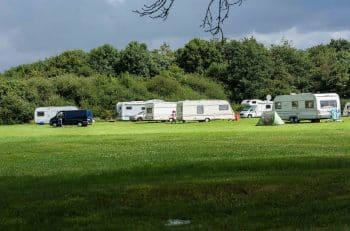
    The European Commission has made impressive efforts to secure the wellbeing of Roma and Travellers across the Member States. In 2011, it developed the ‘EU Framework for National Roma Integration Strategies up to 2020’ to tackle the marginalisation and poor socio-economic conditions of the Roma (including Irish Travellers). Each Member State was required to draw up a national Roma integration strategy that set targets in education, employment, health and housing and that allocated sufficient funding to achieve them. The response to date by the Irish Government has been inadequate. The European Commission has not been impressed. It assessed Ireland’s current strategy in 2013 and 2014 and found that Ireland only met four out of the 22 criteria required. The lack of a timetable of actions, targets, indicators and budget to secure effective implementation were highlighted. The Commission also stated that improved consultation with Roma and Travellers was needed. These criticisms reflected concerns Pavee Point had been raising since 2011. Ireland is now seeking to respond to the challenge posed by the European Commission by developing a new and more ambitious National Traveller and Roma Inclusion Strategy (NTRIS). The Department of Justice and Equality (DJE) has established a national steering group with representatives of Traveller organisations and Roma community members and a range of government departments – chaired by the Minister of State. It launched a public consultation process to develop the new NTRIS. This was welcomed by Traveller organisations and Roma. The preparation of NTRIS started in 2015 and involves three phases. Phase one was an initial round of consultations to identify the priority themes to be addressed in the NTRIS. The second phase was to identify and agree specific objectives under each of the themes identified. The third phase is to focus on identifying precise and measurable actions, as well as timescales for achievement of each of the objectives that emerged from Phase 2. On foot of this the NTRIS is to be considered by Government. Pavee Point was commissioned, in late 2015, to compile a report of the priority themes identified through a public consultation process. Four regional consultations on NTRIS objectives were organised. These took place in February 2016 in Dublin, Sligo, Limerick and Athlone. A report of the feedback from the consultation process was given to the Department in April 2016 and Pavee Point’s work for DJE came to an end in May 2016. The NTRIS was planned to be available by early 2016. Unfortunately there has been slippage in the timescale anticipated. This is largely due to change in and shortage of personnel in DJE. There was a significant time lag in replacing the officer who was driving this work. The second round of consultations on the NTRIS, which were due to take place in May 2016, had to be postponed. These consultations were to discuss what actions should be included in the NTRIS under each of the objectives identified. Pavee Point, ITM, NTWF and Mincéir Whiden had written to DJE urging them to postpone this second round of consultations. They were concerned that local Traveller organisations would not have sufficient time to review the draft actions due to be discussed. The draft actions had not yet been circulated to Traveller organisations a week before these consultations were to begin. Traveller organisations needed time to discuss these and prepare their members to attend the consultations. It was effectively impossible for groups to prepare in advance and this would have resulted in a tokenistic consultation process. They were also concerned that no discussion had taken place at steering group level about the information gathered from the first round of consultations and how this would be incorporated into the NTRIS. There had to be clarity on this if Traveller organisations were to have confidence in the consultation process. The second round of consultations is now scheduled to take place at the end of September, and a NTRIS steering group meeting has been scheduled for mid-September. The NTRIS is an important development. It is important that its preparation is completed quickly and with adequate participation. It is equally important that the NTRIS is not posed as a panacea for all Traveller and Roma policy and programme development. To-date it is the answer of choice in response to the many challenging questions being posed to Ireland by a range of UN human rights monitoring mechanisms. Progress on equality and human rights for Traveller and Roma has been really slow. Most important of all must be to ensure that when agreed the NTRIS is implemented and adequate structures and processes are created to drive its implementation. We have had good plans before that have fallen at this key final hurdle. Ronnie Fay is Co-Director of Pavee Point

    Loading

    Read more

  • Posted in:

    Action (not Acts)!

    When a State enacts legislation that creates a right for a category of person, it is acknowledging that society has excluded or marginalised those people and is seeking to rectify this. This is why people with disabilities welcomed the Assisted Decision- Making Act 2015 last year. It is why, despite some misgivings, they welcomed the Citizens Information Act 2007, the Disability Act 2005, and the Education of Persons With Special Education Needs Act 2004 in the years before. However, the gap between acknowledgement and action, reflected in the failure to fully implement this body of legislation mocks any such welcome. It is not enough to bestow symbolic rights nor is it acceptable to indefinitely delay enforceable rights. If justice delayed is justice denied, then the delay in implementing rights-based legislation for people with disabilities must be described as a scandal. The Assisted Decision-Making Act was enacted in December 2015. It has not yet been commenced. Although the Act is ostensibly disability-neutral, it would create a system of supports for people with disabilities and others to exercise decision-making. The indications are that the Act will be commenced – partially only – towards the end of 2016, twelve months after its enactment. ‘Partial’ commencement is not a new phenomenon in Irish disability law. The Citizens Information Act was enacted in 2007. This Act provided for, among other things, the introduction of a Personal Advocacy Service, where advocates with a range of statutory powers would be employed to support persons with disabilities. The Personal Advocacy Service was never established. Instead, in 2011, a ‘National Advocacy’ Service was created, a limited service that employs advocates who do not have statutory powers. The Disability Act disappointed many disability campaigners in 2005 as it was limited in scope and not ‘rights based’. The Act did provide for a right to an ‘assessment of need’, however it did not create a right to any service to meet that need once it had been assessed. After a decade of torpor all parts of the act have now been commenced except the crucial part providing for that right to an assessment of need. Currently, only children are entitled to an assessment of need and even with that there are difficulties. Some parts of the country report waiting times of up to a year for these assessments. The Education of Persons with Special Education Needs Act (EPSEN) provides a comprehensive statutory framework for education of children with disabilities. Rightly welcomed as inclusive, the Act proposed a right to an individual education plan for children with disabilities. The implementation of the Act was to be staggered, but in 2008 this ground to a halt and was postponed indefinitely. Successive governments have merely passed the buck for failure to implement these laws. In 2015, the Minister for Education Jan O’Sullivan blamed the previous government and admitted that the preferred avenue was now to bring in EPSEN’s provisions on a non-statutory basis. Most recently, in answering a Dáil question, Minister for Disability Issues Finian McGrath blamed decisions made in 2008 for the failure to commence the Disability Act and the EPSEN Act in full. It is true that exchequer finances were in a poor state in 2008. However, this cannot be used to gloss over the fact that 2008 was a full three years after the enactment of the Disability Act and four years after the EPSEN Act. For much of that period the exchequer was flush. The various Programmes for Government over these periods paint the picture. In 2007, three key commitments were made to “Complete the roll out of [EPSEN]”, to provide “a legal right to independent assessment of need”, and to “implement the Citizens Information Act”. By 2011, the Government had changed and the ‘Statement of Common Purpose’ committed to publishing a “plan for the implementation of the EPSEN Act” with no mention of the Disability Act or the Citizens Information Act. In the current ‘Programme for Partnership’, there is a commitment to “consult with stakeholders to see how best to progress sections of the EPSEN Act” and an ambition to “improve services … particularly for early assessment and intervention for children with special needs”. Again there is no mention of independent advocacy. It seems the rights of persons with disabilities are simply slipping off the page. Resources were scarce for much of the past decade but it is simply undeniable that where there were competing demand for resources, the rights of persons with disabilities lost out. That seems to be a part of who we are. Sarah Lennon is Training and Development Officer with Inclusion Ireland

    Loading

    Read more

  • Posted in:

    Public sect or agent of equality

    What is it about Irish legislation? We set up this complicated institutional apparatus to enact it. We elect all sorts to devise and deliberate on it. Much of the time of civil society is diverted to lobbying for it. Legislation doesn’t come cheap or easy. However, while we are entitled to have some minimum expectations, it would be foolish to expect anything much. The last session of the Dáil passed hardly any new legislation. The scandals in Console and St John of God’s revealed that the Department of Justice and Equality had failed to commence large portions of the Charities Act 2009. The Irish Human Rights and Equality Commission Act 2014 included a duty on public bodies to have regard to the need to eliminate discrimination, promote equality and protect human rights in carrying out their functions. Not only is this piece of the legislation not being implemented, public bodies don’t even seem to know it is in place. The big test for this duty on public bodies is now. The duty specifically requires public bodies, when they are preparing strategic plans, to assess the equality and human rights issues relevant to their functions and to identify policies, plans and programmes they are deploying or will deploy in response to these. Under the Public Service Management Act 1997 Government Departments are required to produce a strategy statement within six months of the appointment of a new Minister. These statements are currently being prepared by all Government Departments. The Equality and Rights Alliance has been doing some investigating. The strategy statement process is being led by the Department of the Taoiseach. It has not included in its guidance any reference to the public-sector duty being one of the obligations each Department should be mindful of in preparing their strategy statement. The personnel in Government Departments responsible for the preparation of the Departmental statement are not aware of their obligations under the 2014 Act. The Department of Justice and Equality, which was responsible for the 2014 Act in the first place, has taken no action to secure implementation of the duty. The Irish Human Rights and Equality Commission which has a mandate to encourage implementation of the duty does not appear to have raised the issue anywhere, in any way. Civil society campaigned for the introduction of such a duty for over two decades. The former Equality Authority published research in 2005 that suggested Ireland was in breach of the Belfast Agreement in failing to introduce the duty. The Belfast Agreement commits the Government to ensuring an equivalence of rights with Northern Ireland. Public bodies in Northern Ireland have been subject to a duty to have due regard to the need to promote equality and good relations in carrying out their functions since 1998. The difference is that there they actually implement it. In short, its inclusion in the 2014 Act was a huge success for a weary campaign. The Equality and Rights Alliance have informed all Government Departments that they are subject to this public sector duty. They have asked that the strategy statement of each would be developed in compliance with the duty. This would firstly require Government Departments to carry out and document an assessment of the human rights and equality issues relevant to their functions as policy-maker, service-provider, employer and/or procurer of goods and services. It would then require Government Departments to identify and set out the policies, plans and actions they already have in place or propose to put in place to address these issues. The strategy statement should be published in late October. The extent to which Irish legislation dealing with progressive and important social issues holds any sway in Government Departments will be suggested by whether or not these strategy statements include such an assessment with accompanying commitments. The Equality and Rights Alliance recommended that Government Departments should include commitments in their strategy statement to secure ongoing implementation of the public sector duty. This would include: establishing a working group to drive implementation; training staff to be able to implement the duty; developing indicators and data-gathering systems to identify and track equality and human rights issues; and putting in place an equality and human rights impact assessment methodology that would be used for draft legislation, policies and plans. They can’t say they don’t know. The challenge has been promulgated. We will know in a month where the public sector is to stand on equality. By Niall Crowley

    Loading

    Read more

  • Posted in:

    Laws of unintended coherence

    What an irony it would be, in these times of the exponentially reducing quality of public debate arising from media degeneracy, parliamentary groupthink, the tyrannical imperatives of political correctness, the moronic cacophony of the twitterati and the impoverishment of the education system, if the only functional dialectic available to our society was to occur between men and women dressed in wigs and gowns, a slo-mo exchange dragged out over years and decades, a sombre exchange of opinions and subtleties in which the most vital matters affecting our society and its future were teased out in ponderous and archaic language and encountered only at the edges of civic freedom, in the hushed and terror-inducing rooms of our legal system. The more imminent it appears, the more it seems like, to coin a phrase, an appalling vista. And yet, from time to time, a judgment emerges which, in its eloquence and reason, gives us cause for hope that, when that dreaded eventuality hits, all may not be lost. Such a feeling came over me reading the judgment of Mr Justice Richard Humphreys in the much-publicised recent case of I.R.M. and ors -v- Minister for Justice and Equality and ors. The case became a media talking-point in the month or so since its publication because of the ways in which it touched on the meaning and scope of Article 40:3:3, aka the Eighth Amendment, but, insightful and humane as were its treatment of the unborn child, it is actually more far-reaching than that. The case illustrates in a quite dramatic manner the way in which constitutional provisions and amendments can interact with legal judgments old and new to bring about quite unexpected and unintended consequences, a syndrome which I and other warned about during the referendum debates in the ‘Children Amendment’ of 2012, and the ‘Marriage Equality’ referendum of last year. One of the symptoms of our reduced public debate is that any attempt to raise the potential complexity and unpredictability of legal instruments is dismissed by media gatekeepers as either vexatiousness or intellectual conceit. Humphreys J’s judgment, however, makes for a textbook instance of the propensity for legal instruments to bleed into one another, shifting, double-shuffling and doubling back on themselves to arrive at entirely unimagined destinations. In general, this tendency leads to baleful outcomes; here, in my view anyway, it shows signs of tending in the opposite direction – extending hope to some of the most marginalised and disparaged categories of humanity now subsisting in the unfriendly territory of the former isle of Saints and Scholars. The case, somewhat incongruously, arose from a rather wearyingly typical speculative tilt at the asylum process. The case was taken by a Nigerian man, ‘I.R.M.’, his female Irish ‘partner’, Sarah Jane Rogers, and their child S.O.M., who was born in Ireland last year. I.R.M. came to Ireland as an asylum-seeker in 2007. He had been through the asylum process and ultimately been refused. His deportation was first ordered in 2008 but he managed to remain, and, as well as working illegally here, in 2009 married a Czech national, a union which broke up within a few months, although the couple did not divorce. In 2010, the man pursued an application to remain here based on his marriage to an EU citizen. This application failed. In September 2014 he became involved with a Cameroonian woman, who gave birth to his child on July 10th 2015. This woman was subsequently awarded Irish citizenship. The man was engaged in a concurrent relationship with the Irishwoman Sarah Jane Rogers, with whom he had another child, born a month after the first, on August 21st 2015. On April 28th 2015, while both women were in an advanced stage of pregnancy, the Children Amendment, which had been delayed by a court challenges, was finally enacted, becoming Article 42A of the Constitution. On May 21st 2015, a day before the passing of the Marriage Equality referendum, the man applied for the revocation of the deportation order against him, citing his imminent parentage of an Irish citizen.Following the birth of the child, S.O.M, to Sarah Jane Rogers, he applied for residency based on parentage of an Irish citizen. The case, as Humphreys J noted, had “a complex and somewhat unusual procedural history”, mainly to do with whether or not various applications made by the parties ought to be telescoped rather than dealt with separately, and also questions relating to the amending of the Nigerian applicant’s statement and his wish to remain anonymous. The judge ruled that both the man and the child should remain anonymous, but said that no legal basis of granting anonymity to the child’s mother had been pressed on him. The substantive issues arising in the case related essentially to the lawfulness of deporting the man in view of his – at the time of the original application – prospective parentage of an Irish-born child, and whether the proper process of deliberating on such an application ought to consider the rights of the child under article 40:3:3 as being confined to the right to life or whether these rights might be more extensive, and whether, arising from this and other instruments, the family rights to be considered might be more extensive also. There was also a question relating to whether, in view of the instant proceedings, the man should be given due notice of the precise date of an intention to deport him. Since I’m concerned here with issues that arose in the context of child and parental rights, under the Constitution and otherwise, I propose to glide over the asylum-related details of the case. The family-related aspects essentially revolved around the circumstance of the unmarried father, with otherwise no rights to remain in Ireland, seeking to avail of his fatherhood of an Irish-born child in order to remain here. The case arises at an interesting moment in the mutation of the Irish constitutional family, in the wake of a series of radical and highly ideological attempts to manipulate

    Loading

    Read more

  • Posted in:

    No more broken pencils

    Simon Coveney was born in Minane Bridge, Cork in 1972. Scion of a family of Cork’s rarefied merchant bourgeoisie, Simon was one of six children of Pauline and Hugh Coveney. Both his parents were Mayors of Cork and his father, Hugh, Minister for Defence in 1994 before resigning the following year after he leaked details of a Budget to the Evening Herald, a class of sin which over subsequent years has been deemed less and less venal. Hugh was subsequently appointed a junior minister in the Department of Finance with responsibility for public expenditure. Young Simon was educated locally in Cork before later attending posh fee-paying Clongowes Wood College, County Kildare, an Irish Eton for the agricultural classicist. These formative years were not easy for Coveney as he had a “significant speech impediment” – a princely stutter. In 2010 he told a cloying Miriam O’Callaghan: “Literally until I was 15 or 16 year of age, I could not string two or three sentences together. I remember breaking pencils under the desk in frustration when trying to read as Gaeilge in Irish class”. He was expelled from the college in Transition Year. He has told how, after already having received a warning for drinking, he and some friends absconded from school to attend a party – it seems to have been the last straw for the killjoy school. He completed his secondary school education in Presentation Brothers College, in Mardyke Cork, purdah for a dauphin. Coveney subsequently studied Economics and History in University College Cork but left after a year for Gurteen Agricultural College, Tipperary, before completing a BSc in Agriculture and Land Management from the Royal Agricultural College, Gloucestershire. “The college does have an upper class image – the Queen is its patron – but I didn’t find it exclusive. Many of the students are from regular farming backgrounds and quite a number of Irish people go there”. For his six months’ work placement he was attached to the Scottish Agricultural College, near Edinburgh, which is the equivalent of Teagasc. He also worked on the family farm in Mallow. He later told the Irish Times, “My background – going into agriculture from an essentially urban base, a rural-urban mix – is unusual and will be an advantage”. In 1997/8 he led the “Sail Chernobyl Project” which involved sailing his late father’s boat Golden Apple 30,000 miles around the world and raising €650,000 for charity, without ever getting his feet dirty. Charity was shaping up to be Coveney’s thing, unless the family political calling beckoned. He married his long-time girlfriend Ruth Furney, an IDA Ireland employee, in July 2008. They have three daughters Jessica (6), Beth (5) and Annalise (3). In 2014 he admitted that politicians’ “obsession with votes” puts them at risk of neglecting their own families. An urbane and good-looking fellow, particularly before his hair thinned, he is approachable, good-natured and gregarious. A keen fan of all competitive sport, he played rugby for Garryowen, Cork Constitution and Crosshaven Rugby Club. He is a fully-qualified Sailing Instructor and Life Guard. Coveney lives in Carragaline and continues to be involved in the running of the family farm. Simon’s even more orthodox brother Patrick Coveney (45), the chief executive of sandwich firm Greencore since 2008, earned pre-tax income in 2014 of around €6.3m – 40 times more than his brother’s. Another brother, Rory, currently serves as Strategic Advisor to the Director General of RTÉ, Dee Forbes. Coveney has served as Fine Gael (FG) TD for Cork South-Central since 1998 as one of FG’s youngest TDs when he won a bye-election following the death in unexplained circumstances of his father, an Ansbacher Account holder, who died after plunging from a cliff in Robert’s Cove, Co Cork. In March 1998 it became publicly known that the Moriarty Tribunal had questioned Coveney about whether he had a secret offshore account. Ten days later, on 13 March 1998, Coveney visited his solicitor to change his will. The next day, 14 March 1998, Coveney died in a fall from a seaside cliff while out walking alone. Simon insisted that his father had never held an Ansbacher account. Though this was inaccurate it is only fair to note that no impropriety was ever proved against Hugh Coveney. It later emerged that Hugh Coveney had held $175,000 on deposit in the secret Cayman Island-based bank. Coveney commented on his election win: “I probably got elected on the back of a sympathy vote if I’m honest”. Coveney was elected to the European Parliament for the South constituency in the 2004 European Parliament election and held Shadow Ministries in the areas of Drugs and Youth Affairs, Communications, Marine and Natural Resources, and Transport. He chaired the FG Policy Development Committee before the 2011 General Election and is seen to be a policy polyglot, though no innovator. During his forgettable three years as an MEP, Coveney was a member of the Foreign Affairs Committee and in June 2005 became the coordinator for Human Rights, for the largest political group in the European Parliament, the EPP-ED. He was also author of the European Parliament’s Annual Report on Human Rights in the World 2004. He returned to national politics in 2007. In June 2010, Coveney and a number of other front-bench glitterati stated that they had no confidence in their underpowered party leader, Enda Kenny. Fellow Cork TD Jim O’Keeffe suggested Coveney could be a compromise successor. Following a blistering takeout driven by Big Phil Hogan, a confidence motion in the leader was won. Coveney made a confusing call for party unity and was re-appointed to the front bench as spokesperson on Transport. In March 2011 he became Minister for Agriculture, Food and the Marine in Enda Kenny’s coalition government dealing solidly enough with debacles such as the horse-meat scandal in 2013. Though apparently a passionate believer in the need to address the reality of climate change – the Jesuits don’t do climate deniers, Coveney was a patsy for the IFA’s successful campaign

    Loading

    Read more