

Politics

Random entry RSS

  • Posted in:

    THIS IS NOW A COPY AND IS TO BE DELETED IN DUE COURSE: THE BATTLE FOR ST MATTHEW’S, JUNE 1970: THE UNPUBLISHED PAMPHLET. The British Army created a vacuum, someone had to step in.

    Introduction by Kieran Glennon In the immediate aftermath of the violence that erupted in Belfast in August 1969, Citizens’ Defence Committees (CDCs) were formed in many nationalist areas; barricades were hastily erected and patrols of vigilantes armed with clubs were organised to ensure that loyalist mobs, the B Specials and the RUC were all kept at bay. Within days, a co-ordinating group was established to link the individual CDCs, the Central Citizens’ Defence Committee (CCDC); its first chairman was Jim Sullivan, who was also Adjutant of the IRA’s Belfast Brigade. Jim Sullivan, Adjutant of Belfast IRA and first chairman of Central Citizens’ Defence Committee (CCDC) By early 1970, Sullivan had been deposed and replaced as chairman by Tom Conaty, a fruit and vegetable merchant from west Belfast. Conaty’s closest ally on the CCDC was Canon Pádraig Murphy, the administrator of St Peter’s Cathedral in the Lower Falls. Paddy Devlin MP had remained the CCDC’s secretary since its inception. Fifty years ago this month, at the end of June 1970, the Provisional IRA made their first armed appearance on the streets of Belfast, in conjunction with armed members of the local CDC, in what came to be known as the Battle of St Matthew’s. In Ballymacarrett in the east of the city, more commonly known today as the Short Strand, three people were killed in the worst night of violence since August 1969. At that time, Tom Henry – a nom de plume – was self-employed as a researcher and was commissioned by Conaty and Murphy to write a history of St Matthew’s church for the diocese of Down and Connor. Also at that time, Conaty and Murphy were welcome at Army HQ, Lisburn as representing the Bishop of Down and Connor, Doctor William Philbin. Canon Padraig Murphy and Major General Tony Dyball Henry was given access to parish records at St Matthew’s as well as written statements from witnesses who were present there during that night. However, despite their central involvement in the battle, Henry did not knowingly interview any members of the IRA or their local auxiliaries. Fearful of the police scrutiny that would inevitably follow the pamphlet’s publication, he took the view that what he didn’t know couldn’t be got out of him, even under torture. So, while there is one reference in his text to “armed defenders”, the initials “IRA” are not mentioned. Henry completed his pamphlet in April 1971 and concluded that on the night, the British Army had failed to honour written agreements given to the Ballymacarrett CDC for the defence of the area if attacked. In view of this conclusion, he believed the pamphlet would not be well received. This conclusion did not suit Conaty and Murphy. At the time, they were trying to position the CCDC as the spokesmen for moderate nationalists; their efforts to develop a close relationship with Army HQ in Lisburn would receive a frosty response if they were to publish an account of the debacle that was critical of the Army. Tom Conaty, Chairman of the CCDC: commissioned the pamphlet but its conclusions would have threatened his relationship with British Army HQ, Lisburn. I have known Tom Henry for many years and know him to be a man of impeccable integrity: he was not about to change his conclusion to suit the positions of Conaty and Murphy. A copy of the manuscript was shown to Henry Kelly, then northern correspondent of the Irish Times whose opinion, as he informed Henry, was that the pamphlet would never see the light of day. That remark turned out to be prophetic. It is notable that while the confrontation became known as the Battle of St Matthew’s, Henry entitled his pamphlet the “Battle for St Matthew’s”; the distinction is subtle, but probably reflects more closely what happened on the night. Historian Andrew Boyd had a copy of the manuscript and donated it to the Linen Hall Library in Belfast, considering it to be an important historical document. Although it was referenced in the book Belfast and Derry in Revolt, by Simon Prince and Geoffrey Warner, the full text has never before been published. Included as a prologue, as they form an essential foundation for Henry’s conclusion, are the verbatim texts of the documents supplied by the Army to the Ballymacarrett CDC in September 1969; also included are excerpts from written responses to the Army and RUC by the CDC and their legal advisor. Taken together, these constitute the “Joint Military and Police Security Plan for Ballymacarrett.” Like the pamphlet itself, they have never previously been published. The early chapters of the pamphlet provide context for the events of June 1970. Chapter 3 outlines previous attacks made on St Matthew’s in the course of the pogrom of 1920-22. Chapter 4 recounts the opposition to the planned building of a Catholic church elsewhere in east Belfast in the 1930s, illustrating that sectarian hatred was directed, not just at St Matthew’s in particular, but at Catholic churches in general. Chapter 5 details correspondence between the Bishop of Down and Connor, William Philbin, and the chairman of the Sirocco Works at Bridge End, near St Matthew’s, concerning the extent of religious discrimination in employment at the firm – overturning such discrimination was one of the key objectives of the Civil Rights movement, to which unionism took such violent exception. What happened during the Battle for St Matthew’s undoubtedly flowed from what had happened before – but what ultimately transpired was not inevitable. Kieran Glennon is the author of ‘From Pogrom to Civil War, Tom Glennon and the Belfast IRA’. Although he is not from the area, two of his great grandparents were married in St Matthews. In 1920, his grandfather, as a member of the IRA, did picket duty at the church to protect it from sectarian attack. Prologue: September 1969 On 12th September 1969, the Ballymacarrett Citizens’ Defence Committee (CDC) met with the British Army and RUC to discuss security in the area; the next

    Loading

    Read more

  • Posted in:

    ‘England’ in the Euros

    We are told that the Brexit debate is the most important political decision our neighbour has made so far this Millennium. Even so, the debate in the UK could compete for the most boring referendum campaign ever. It’s been little more than a series of ‘he said, she said’. The claims made by each side are notable both for their increasing extremity and their increasing certitude. The outcomes of political decisions are rarely certain, but this has not stopped those on either side make predictions with impossible precision. Brexit will cost each British subject £32,000 according to one, house prices will fall by 25% according to another (hardly a bad thing anyway). The population will ‘surge’ by four million if the UK votes to remain. Even more extreme claims about Hitler and implications of World War III are aired and taken seriously, or derided. In Ireland there is a consensus that Brexit will be a disaster for us, but I’m not sure how we can be so certain about that. I suspect people have formed their positions and then escalated their rhetoric to suit the position. If it does nothing it should make people think about the appropriateness of referendums for making important policy decisions. But who will win? Whether it is the impact of claim and counterclaim or not, there has been a change in the polling numbers over the last two months. From late April to mid-May the Leave side was in the ascendant; then since mid-May the Remain side maintained a comfortable lead. More recently still a couple of polls show this lead tightening, sometimes dramatically. The polls have come under some scrutiny because of last year’s failure to predict the UK election. Telephone polls are significantly different from online polls. The telephone polls, which were more accurate predictors of the eventual 2015 general election results, show a large lead for Remain, much larger than the internet polls. This prediction is confirmed by the inevitably streetwise betting market (which may or may not be independent of the polls) which show that the odds of Remain are never less than 1/2. The move to Remain is consistent with a common explanation of voting in referendums: that people are risk-averse and so tend to have a status quo bias as they approach the actual act of voting. We can see that the number of undecideds has fallen. But it could also be the campaign that matters. As a series of claims and counterclaims on the issues of the economy and immigration, the ordinary voter can be forgiven for being confused. The ‘facts’ are contested and so the voter has to depend on something else. That something else could be the credibility of those making the claims. The Leave side is unlucky to have so many barmy, old, white English men making its case. Though there is no gender difference in the polls, there are significant regional and class differences. London and Scotland are more likely to support Remain, as are the young and the better off. And try as it might to set the agenda in the campaign, the Leave side has been left reacting to claims. I suspect a more systematic analysis of the referendum campaign might show the Leave side spending most of its time responding to, or rejecting, the barrage of reports, and claims, cascading from the Remain side that Brexit would damage the British economy. But the Remain side is hardly blessed. Labour is not campaigning strongly; it’s been somewhat diverted enjoying the Tories tear themselves apart. Its traditional vote is probably unfashionably interested in the immigration issue, and could shift to Brexit. Regaining your sovereignty might not actually mean much anymore, but it elicits a visceral response for most people. If you think that your country is in trouble, saying ‘do nothing’ doesn’t seem adequate. Seemingly irrelevant factors can become relevant in a referendum. The English team’s performance in Euro 2016 could yet play a part. It will increase the sense of patriotism, which might spill into the ballot box.

    Loading

    Read more

  • Posted in:

    Like men only poorer

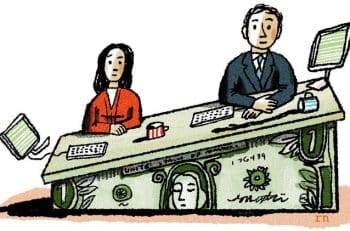
    On 26th May the European Parliament passed a comprehensive and progressive report on “Poverty – A Gender Perspective”. There has been recognition of the feminisations of poverty for decades, but there has been little progress on tackling the root causes for this. There is a whole range of factors at play and the report is valuable in taking a multi-dimensional approach. I was the author of the chapter that dealt with employment issues. The single biggest issue for employment is that women continue to be paid less than their male counterparts. Across the EU the gender pay gap stands at 16.3%, with Ireland doing slightly better at an average of 13.9%. We are calling for greater transparency in pay systems. The gender pay-gap is compounded by the disporportionate number of women who are on zerohour contracts and in precarious work. Dressed up in neo-liberal language as ‘flexible’ contracts, people on these contracts are left not knowing from one week to the next whether there will be enough money to pay the rent or to put food on the table. Our report calls on all Member States to implement the Internation Labour Organisation recommendations on reducing precarious contracts. This would limit the amount of time a worker can be employed on such a contract before being offered a permanent one. The new Portuguese Government is looking at the possibility of a tax disincentive for employers who use precarious contracts excessively. Things get progressively worse for women as they grow older. Absence from employment to care for children or sick older relatives often leave women facing a pension pay gap. This stands at a phenomenal 34.7% in Ireland. Women make up 78% of carers and it is only right that time spent as a carer is calculated into pension eligibility. We need to change outlooks. The report calls on the Member States to introduce care credits for building up pension rights, to ensure those who take a break from employment to provide care are not disadvantaged in doing so and that the time spent as a carer is calculated into pension eligibility. The report further welcomes the EU Commission’s proposal to introduce Carers Leave and for them to proceed with this without delay. Access to affordable childcare is a key imperative in tackling the poverty experienced by Women. The report recommends that Member States increase expenditure in line with the 1% of GDP proposal in the Barcelona Objectives and incentivise employer contributions to childcare costs. Ireland, for example, is way down the list with a spend of just 0.2%. It recommends that priority be given to projects establishing childcare facilities in expenditure of EU funds such as under the European Social Fund. It calls for flexibility within the Growth and Stability Pact to allow for financing such facilities and recommends that the Commission should allocate specific resources through a co-financing mechanism to promote incentives where early childhood education and care facilities are lacking. Women’s vulnerability to gender-based violence plays a part in the feminisation of poverty. Women who have exhausted paid leave are at risk of losing their jobs. Others who flee the family home can find themselves in emergency accommodation and at the mercy of the public services provided by the state. Financial independence is crucial for women escaping abusive relationships. The report notes the introduction of paid domesticviolence leave in Australia and of unpaid leave in the US, and calls on the Commission and Member States to examine the feasibility of introducing a system of paid leave for survivors of domestic violence. A recent ICTU report found that 20% of employees have taken time off as a result of domestic violence and 2% of those lost their jobs as a result. Paid leave for domestic violence would enable a person to find alternative accommodation, attend court hearings and doctors’ appointments if their existing leave had been exhausted. It would help women maintain economic independence. It is welcome that the European Parliament voted for a report that recognises that gender poverty must be addressed at an EU level. That the European Parliament with its neoliberal majority voted in favour of a report that rightly condemns austerity policies and cuts to public services is a significant achievement. However, it is often the case that words are cheap and action is much harder to come by. If the EU is serious about addressing gender poverty, it must recognise that societal changes are essential. We need the political will for change. Men and women will benefit from a more equal social and economic order but unless men and women are prepared to fight for it, the status quo of three million more women than men living in poverty in the EU will remain.

    Loading

    Read more

  • Posted in:

    Really Healy

    In 1976, an ageing farmer living a few miles from Killarney wanted a medical card. He had just turned 60 and a few years previously had suffered a stroke. Medical cards were a relatively new phenomenon in Ireland back in those days and so he called up his local Fianna Fáil councillor to ascertain how he might go about passing the means test and acquiring one. The Fianna Fáil councillor, surveying the 23 acres of farmland the farmer owned, pointed to the farmer’s 17-yearold son and told him brusquely: “Dónal, sign the farm over to the young fella and you’ll get your medical card”. Dónal duly signed the farm over to his son and he got his medical card. That Fianna Fáil councillor was named Jackie Healy-Rae, Dónal was my grandfather and the “young fella” was my father. The point of this anecdote is to illustrate that the localistic and clientelistic nature of the Healy- Raes’ politics has existed for decades, generations even. Since Jackie was first elected as a county councillor in 1973, he and his family, have acted as fixers, middle- men between the state and its citizens. Knowingly or unknowingly, they have exploited the particular nature of the Irish political state. It’s no surprise Jackie started out in Fianna Fáil and remained a councillor for the party for a quarter of a century. As Dick Walsh wrote in the 1980s: “[Fianna Fáil] may not have invented the phenomenon known to political scientists as localism, but its leading members in any county of the twenty-six must be sufficiently experienced practitioners to be able to give lessons in its operation”. When Jackie left the party in 1997 and was elected as an independent TD for Kerry South he retained these traits and transported them to the national level. His sons, Michael and Danny, inherited them too. Even as they make hundreds of thousands of euros from county council contracts and own and operate a bar, a post office, a petrol station and a string of residential properties, they’re still able to present themselves as salt-ofthe- earth, modest Kerrymen. The Healy-Raes are not merely products of Kerry however: they are a product of a highly centralised political system from which citizens feel alienated and by which they feel disempowered and of a weak and inaccessible system of local government towards which citizens feel at best ambivalent and at worst hostile. Explaining the recent electoral success, which saw Michael top the poll and his brother Danny joining him in second place, requires a bit more digging, however. In 2016 they bagged 40% of the first preference votes in Kerry. Before, when people from other counties slagged me off about the Healy-Raes I would defend myself and my county by pointing out that they scraped in every year, that their popularity was confined to rural pockets of the South Kerry constituency (my native Killarney being innocent of such foolhardiness naturally), and that it was thanks to ‘backwards culchies in Kenmare and Cahersiveen’ that they managed to get elected. And I wasn’t entirely wrong. If you look at Jackie and Michael’s performances in each general election between 1997 and 2011, they never topped the poll. In 1997, Jackie came second to John O’Donoghue while in 2002 and 2007 he placed third and so did Michael in 2011. This was during the Healy-Raes’ supposed golden era. Jackie propped up Fianna Fáil-led governments in 1997 and 2007 and in return was notoriously compensated by way of infrastructural development in the county, everything from roads to bridges, from hospitals to roundabouts. And yet, during all this time, they never topped the poll, never came close even. So how is it that they managed to finish first and second in 2016? The Kerry South constituency, which they knew so well, was abolished and amalgamated with the Kerry North constituency in 2013 to form a new Kerry constituency. I thought they’d struggle when that happened: North Kerry is different to South Kerry. It’s more urban and had two very well-established politicians in Martin Ferris and Jimmy Deenihan. It also has a strong tradition of Labour and Sinn Féin support that does not exist in South Kerry. Allied to all that, the Healy-Raes wouldn’t know it very well and wouldn’t have the same local expertise. Secondly, and perhaps more importantly, Michael hasn’t been propping up any governments in the last five years which means he wasn’t able to attract much infrastructural investment to the county. No Fianna Fáil sponsored goodies for Kerry people to enjoy and them to brag about and for their companies to make money from. So, what happened? Well, I’ve got a theory. In the last number of years, themes of rural isolation and economic under-development in areas outside of Dublin have been pervasive in political debate. The basic argument goes as follows: Dublin and its hinterland gained the most during the good years of the Celtic Tiger and have fared much better in the economic recovery we’ve seen in the last number of years. Rural Ireland was destroyed by the recession and is being abandoned by young people because it has been abandoned by the government. The closure of post offices, Garda stations and hospitals, as well as the lack of infrastructural development in the form of roads, motorways and broadband bear testament to this. I’m not here to argue the bona fides or even the rights and wrongs of that argument but people believe it to be true and their political choices reflect this. The Healy-Raes have tapped into this feeling and exploited the sense of rural underdevelopment better than anyone else. Other politicians around the country such as Michael Fitzmaurice in Roscommon, Michael Collins in Cork and Michael Lowry in Tipperary have done it too but the Healy-Raes have made it into an art. From Michael Healy-Rae referring to the last government as the “most anti-Rural Ireland government in history” to Danny’s moronic attempt to legalise drink-driving so lonely rural bachelors could

    Loading

    Read more

  • Posted in:

    Water campaign is class warfare

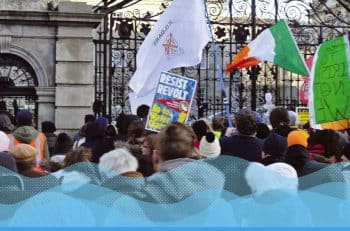
    “For good and bad Kelly killed the issue [of water charges], even if tens of thousands of diehards continue to protest the principle at occasional marches in Dublin” (Village, May 2015) Alan Kelly got it wrong. The mainstream media got it wrong. Village got it wrong. They were united in the rhetoric that water charges were environmentally progressive and that the non-payment movement would go down to defeat. In Alan Kelly’s words, “Ruth Coppinger and her band of people will lead people up to the top of the hill and then abandon them”. Instead, the movement has forced the suspension of water charges. They are very unlikely to be re-imposed in the course of this Dáil. Fine Gael salvaged what they could – the continuation of Irish Water. The project of commodification of water is badly damaged but remains intact to make a return at a more opportune time. In response, a whole new genre of writing has been spawned – one bemoaning this suspension, which “embodies all that is wrong with Irish politics” (the headline on Una Mullally’s opinion piece in the Irish Times on 27 April 2016). Competition for the worst example is fierce, but the winner is arguably Daniel McConnell’s who concluded in the Irish Examiner on 30 April“… this is why we need the Troika back in town”. This is the gratifyingly honest logical endpoint of the denunciation of ‘populism’ (read: ‘democracy’). Village will undoubtedly join in, but in a more ‘progressive’ tone. The arguments are predictable. We need increased investment in water infrastructure and water conservation. Yes, clearly, but why water charges, which lost money, and borrowing by a semi-state at higher rates than direct state borrowing would increase spending on infrastructure is never explained. The evidence of the limited impact of charges on usage by comparing Ireland and Britain is ignored. The significantly greater impact on conservation, but at a cost to developers and builders, of proper building regulations is not addressed. The other favoured argument is to cite the very many things that are undoubtedly more important than water charges. Donal O’Keeffe in The Journal (28 April) helpfully put together a list of ten issues, including homelessness, the living wage and the need for repeal of the 8th amendment. Village has its own list, which includes equality, NAMA and corruption. One could in passing question whether most of those making this argument have ever done anything about these issues either – in contrast to most of the leading figures in the anti-water charges movement who are also active in movements on housing, wages and abortion rights. The key question, however, is whether the movement and partial victory on water charges make change on these other issues more or less likely? The answer gets to the heart of the matter. What is missing from the analysis of Village and others who share with the radical left a wish for a more equal and socially just society, is class. We live in a deeply divided class society, where the ruling capitalist class, through their traditional parties, Fine Gael, Fianna Fáil and latterly Labour, try to implement policies that improve their relative position in society. That’s what water charges were about – shifting the taxation burden from the 1% to the 99%, as well as preparing the way for privatisation. In this capitalist world, we can’t choose the issues upon which major class battles and possible victories turn. This was the case for water charges – because of the timing of their implementation when recovery was being loudly announced and because people could resist easily and effectively by refusing to pay. A victory for our class over their class on any important issue makes it more, not less, likely that further victories can be won. When Enda Kenny asked “it’s not about water, is it?” he was right – it is about bank bailouts, payments to bondholders and seven years of crushing austerity. Suspension of water charges is not just about water either then. Irish politics has changed quite fundamentally as a result. A people-power movement of mass civil disobedience, of course with many flaws, forced the establishment back. Having experienced a victory, however partial, it is not likely that working class people return to the role allotted to them by capitalist ‘democracy’, voting every few years for parties which pretend to represent their interests and sitting passively waiting for the next election. An active, politicised and confident working class can score further victories against a weak minority government on housing, precarious working conditions and abortion rights. It is also likely to generalise from the experience of these movements, developing towards the kind of broad class consciousness that is essential to win socialist change.

    Loading

    Read more

  • Posted in:

    Depressing and uncertain

    After almost seventy days wandering in the political wilderness the two largest parties have finally agreed a programme with a 30-month timelimit. As Village was going to print the programme was being supplemented with whatever concessions are necessary to attract at least eight independents into the Fine Gaelled minority administration in a ‘Programme for Partnership’. But it was clear that it is a broadly centre-right deal. This reflects the largely indistinguishable ideological orientations of the two parties and sets out a range of proposals on the economy, public-sector pay and services, jobs, housing, crime and water. A fiveyear strategy for the health service is presumably intended to avoid the annual Health Services Executive cost overrun which destabilises budget planning.  Among its principles, the document has Fianna Fáil agreeing to permit the election of a Taoiseach and cabinet, to facilitate up to three budgets and to abstain or vote against on any motions of confidence in the government, its ministers or significant financial measures. In return, Fine Gael agrees to publish any deals it makes with Independents or other parties, allow the opposition to present bills without government obstruction and avoid policy surprises. Crucially, it accepts “that Fianna Fáil is an independent party in opposition and is not a party to the programme for government”. This particular figleaf is presumably intended to allow Michael Martin to pretend to his party members and supporters that he is not responsible for whatever the government does though Fianna Fáil has effectively written much of its agenda. In other words, Fianna Fáil is hoping to maintain its position of lead opposition party while ensuring that Enda Kenny, or whoever replaces him within the coming 12 to 18 months, sticks to implementing the policies contained in the eight page document. Clearly the agreement cannot include provision for the unexpected events that are certain to erupt over the coming three years or indeed for the outcome of the Brexit referendum in Britain, the ongoing refugee crisis in Europe or the outcome of the uneasy compromise on water provision and charges. The water can has been kicked under the bridge but will still cast a shadow over the minority government which will have to deal with the recommendations of the expert commission it will establish within eight weeks of its appointment and which will have until early next year to compile its report. The outcome is the ultimate in political fudge since the findings will be put to an Oireachtas committee and then to an Oireachtas vote sometime in the late Spring of 2017 if the timetable is realised. With the certainty that any proposed charging scheme will be opposed by a majority of TDs and senators the policy programme has included a convenient contingency which states that “those who have paid their water bills to date will be treated no less favourably than those who do not”. Realistically this signals the end of the shambolic charges regime imposed by Irish Water and the outgoing government and its probable replacement in a subsequent budget by a new household/property/utility tax. All of this hinges on the willingness of Fianna Fáil to allow this new dispensation where it seeks to influence the policy direction of the government, including a budget division of 2:1 in favour of public services over tax cuts, while sitting on the opposition benches posing as an alternative administration in waiting and dreaming of the next election result when it hopes to increase its tally of TDs to the mid-sixties. Martin and his more far-sighted colleagues also know that there is no longer a likelihood of any single party gaining a majority to allow it form the type of government Fianna Fáil used to dominate and are prepared to envisage a similar arrangement next time around, with FG as the facilitators. It’s either that or full-blown coalition with the blueshirts. However, they are also watching their backs and know full well that Sinn Féin, the other left parties and independents who do not sign up to Kenny’s temporary little arrangement will not give an easy ride to the new minority administration, and are certainly not obliged to. Equally, those independents who join government, mainly of centre-right disposition – or of the well-known disposition that allows the sacrifice of left-wing principles for a seat, or influence, at the cabinet table – are likely to get nervous if events don’t work out as planned. A failure to realise their ambitions, whether local or national, as the minority government totters unsteadily towards its near-three-year termination date will mean almost certain defections from the depleted ship of state. Add to that the potential for industrial unrest, as workers demand a greater share of promised recovery, continuing anger over the homeless, housing and health crises and general dissatisfaction at a weak administration unable to cope with big issues like climate change and international developments and you have a recipe for uncertainty. Not a lot to look forward to.

    Loading

    Read more

  • Posted in:

    (Water)rors

    For years vital Irish public services were consistently starved of funding at a time when taxes were being cut for electoral reasons. This is unfortunate but it has consequences which cannot be denied, whatever the ideology of the (non-)payer. Keeping water prices at an artificially low level leads to a vicious cycle of underfunded service-providers, insufficient investment, collapsing infrastructure and deteriorating services, according to the European Environment Agency. If this sounds bleak, that’s because it is – cheap or free water has been tried before. It doesn’t work. Irish Water’s five-year business plan proposes to spend €5.5 billion by 2021 on national priority schemes, on fixing leaks, on improving drinking water quality and on reducing pollution through sewage outfalls. Indeed it says that €13bn needs to be invested over the next 10-15 years. A flickering insight into what this means is that despite dominating the political discourse and its angst for several years, only €110m has been collected over the last two years. Diligent payers are in the lurch. Social Democrat TD, Stephen Donnelly, was on the mark when he suggested recently that: “Anyone who’s paying out €160 is essentially being asked to go out into their front garden and set fire to the money”. One of the problems is that Irish Water was so badly thought through. Phil Hogan, the minister, rammed the Bill for it through in three hours, after the opposition walked out. Of course consultancy and PR charges were scandalously inflated, metering seemed disproportionately expensive, the underlying principle of the polluter paying was undermined by the setting of standard charges and a misnamed conservation rebate was applied to the bemusement of all. The problem is homegrown. There is no infirmity in the EU regime which we purport to be implementing. Under the EU water framework directive the aim of water pricing is to “provide adequate incentives for users to use water resource efficiently”. “Social, environmental and economic effects” can shape these price levels; what is required from user groups is an “adequate contribution”. Of course one of the reasons for forming a commercial company was that it would be able to borrow without the loan registering in the now-EU-constrained national debt. This was a logistical imperative in itself and never implied that increasingly unfashionable privatisation was the covert agenda. In a country where referendums on for example property rights and protection of national resources are long overdue calls for a referendum enshrining Water alone as a resource which can never be privatised are little but cynical populism. The longer water charges are suspended, as a wily public reserves its rights during the party-political maneuverings, the greater the overall cost to households. This is because eroding the incentive to save water raises consumption and therefore demands more pre-treatment, pumping, post-treatment, elevating the cost which must be borne by someone. Charging works. In the Czech Republic, following charging reforms in 1990, household water consumption fell by 40%, from 171 litres per person per day to 103 litres a day, in the subsequent 12 years. Denmark, which extended volume-based charging in 1993, had much the same experience. In Ireland, losses to leakage are 49pc, almost double the 28pc in Northern Ireland where there are charges. Figures from Eurostat released in November 2015 suggest the average person in Ireland accounts for 400 litres of water use a day (146,000 litres a year), some five times higher than in Belgium. 1% of households use 22% of water, 7% of houses uses 6 times the national average of water and one house in Galway notoriously used the water allocation expected for 325 houses. Until 2013, water was the responsibility of 34 local authorities. The Republic has 856 water-treatment plants, Northern Ireland gets by with 24. 600 of our treatment plants are earmarked for closure, but the process is slow and expensive. Operating costs, expressed both in terms of population and kilometres of network, are almost double those at Northern Ireland Water. Meanwhile for example the Vartry tunnel (1860) in Wicklow, a 4km tunnel bringing drinking water to 335,135 people in County Wicklow and County Dublin needs to be replaced. A planning application has been submitted for a new tunnel. Meanwhile Dublin is vulnerable. Elsewhere, more than one-in-ten public supplies are inadequate, with, for example, thirty Kerry plants requiring attention. But there are problems with more than just supply and wastage. The pollution record caused primarily by insufficient funding is little short of calamitous. 30% of our 13,200km (8202 miles) of rivers and streams are polluted. In general, while Ireland treads water (charges), standards are getting increasingly stringent under the Water Framework Directive. Moreover as of 2012 less than 50% of lakes and transitional and coastal waters met EU standards for a ‘good’ or ‘high’ rating under the Bathing Water Directive. Furthermore the EPA’s Urban Waste Water Report 2014 found waste-water discharges contributed to (indictable) “poor water quality” at seven of Ireland’s bathing spots. Discharges from Youghal, Clifden and Galway city contributed to poor quality bathing waters at Youghal Front Strand, Clifden beach and Ballyloughane beach respectively. The same was true at South Beach, Rush, Co Dublin; Ardmore Beach, Co Waterford; Lough Ennel, Co Westmeath; and Duncannon Beach, Co Wexford. A recent Prime Time highlighted raw untreated sewage being pumped into the sea in the case of Rush, an expanding town of 9,000 people. Along much of our coast, semi-treated sewage is discharged through what appear to be streams. Children mistake these for attractive play areas. In Co Kerry alone, there are at least eight vulnerable beaches. E.coli risk will not materialise every year, and programmes to monitor and close beaches are in place. In fact, raw sewage is being discharged into 45 rivers, lakes and coastal areas around the State, the Environmental Protection Agency (EPA) has said. In 2013, there were 704 reported cases of verotoxigenic E.coli, a harmful bacterium. Some 5% to 8% of those affected suffered serious kidney complications. One in 20 of those died. Water-borne E.coli in Ireland

    Loading

    Read more