



Politics

Random entry RSS

  • Posted in:

    Blueprint for the unemployed

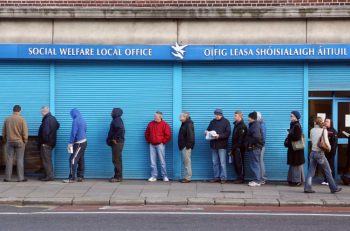
    ‘Sharing in the recovery’ was the big theme in the work of the Irish National Organisation of the Unemployed (INOU) in 2015. Our members and affiliates, the users of our services, and participants in our regional Discussion Forums and training events were all clear that this recovery had yet to be experienced by many people dealing with unemployment. There was a strong sense that the job recovery is urban-based and not evident in rural areas. Still, people living in disadvantaged urban areas noted the lack of visibility for any recovery in their communities. We need a Government that is serious about supporting unemployed people, their families and their communities. Any such commitment will only be credible if it is seen in action. The INOU have identified four key issues to be addressed. Firstly, they must strive to create an equitable and inclusive society. The second highest rate of discrimination was reported by people who are unemployed, at 23%, in the Central Statistics Office August 2015 ‘Equality Module’. This discrimination festers the absence of any protection. There is no ground in the equality legislation related to employment status and, therefore, no way for these people to challenge or change this experience. This first step for the new Government must be to commit to an equitable and inclusive society. The incoming Government should add socio-economic status as one of the grounds protected under the Employment Equality Acts and the Equal Status Acts so that unemployed people receive the full protection of this legislation. Linked to this, the Government must hold a referendum to enshrine economic, social and cultural rights into the Constitution, as already recommended by the Constitutional Convention. Secondly, the Government must support unemployed people to achieve a minimum essential standard of living. Given the impact of unemployment on people’s lives, it is critical that unemployed people receive social welfare payments that ensure they can meet their needs. ‘Jobseekers’’ payments must be restored to their 2009 levels. The age segregation applied to ‘Jobseekers Allowance’ payments in 2009 must be reversed. Further steps must be taken to protect unemployed people’s incomes. People whose primary source of income is their social welfare payment should be exempt from the additional charges introduced during the economic crisis. Rent Supplement and Housing Assistance Payments should be increased to more realistic levels that would support people to access accommodation. The third step that must be taken is to deliver better services for unemployed people. It is critical that these services enable them to make informed choices. Good career guidance, the provision of which would support unemployed people to access appropriate education and training and ultimately get a decent job, is a critical element. Frontline staff must be adequately trained to provide a top class service. A service that is built around the needs of the unemployed person is required: a service that provide additional supports to enhance unemployed people’s participation in education, training and employment programmes and ensures that this participation is by choice. This would lead to the more efficient and effective use of the resources. It would create services for which both providers and users would have a high regard. Community organisations play important roles in the delivery of services to unemployed people and others experiencing social exclusion. During the crisis, a lot of their funding was withdrawn, at a time when the demand for their supports was increasing. The new Government needs to acknowledge this work and re-invest in these community organisations to support the growth and development of their work on tackling inequality, poverty and social exclusion. Fourthly, the new Government must ensure that unemployed people can get decent and sustainable jobs. The creation of decent and sustainable jobs, jobs that pay a decent wage, must be prioritised and maximised. Employment programmes that serve as a stepping stone to such jobs must be developed. Action is needed with participants, providers and employers to secure better outcomes from such programmes. Part-time work can be a meaningful option for unemployed people and, in some regions, possibly the only option. It should be facilitated through tailored employment and social protection supports. Self-employment can be an important access point to the labour market for unemployed people experiencing exclusion because, for example, of their age, their ethnicity, or their locality. Their access to supports must be improved to make self-employment a more viable option for them. Brid O’Brien is Head of Policy and Media with the Irish National Organisation of the Unemployed

    Loading

    Read more

  • Posted in:

    The Gallo way

    I keep meaning to make a list of a certain category of politician: cataloguing those who wasted my time over the past 20 years, leading me on about seeking ways to extend fairness and justice to fathers, with dozens of whom I’ve sat over copious coffees while they took elaborate notes of the nature of the problem before going away and either doing precisely nothing or making things worse than before. Most of them I never heard from again, and now they cross the street when they see me coming, which is merely half-appropriate because, if they wanted to depict the situation accurately, they would need to cross the street not once but twice, a double-cross, except then they would have to encounter me and stare at their shoes in what you would be wrong in thinking shame. Last month, for the first time, I met a politician with whom I knew I was not wasting my time. Unfortunately, through unsurprisingly, he was not an Irish politician, but a British one, a Scot in fact, by the name of George Galloway. Since I invariably get irritated when people who come up to me in public begin by assuring me that they don’t agree with me “about everything”, I don’t intend to list the things I disagree with George Galloway about. And yet I have long had a snakin’ regard for his fiery eloquence, his polarising passion, his capacity to rile the kind of scoundrel who needs riling till the pips squeak, which often occurs when the subject of George Galloway comes up. George Galloway and I shared a Fathers4Justice platform in London on April 27th, along with the former EastEnders actor Mo George, Vincent McGovern of Families Need Fathers, Danny O’Brien of Anti-Knife UK and Matt O’Connor, founder and leader of F4J. The theme of the evening was ‘London: the Fatherless Capital’, with special emphasis on criminality and young fatherless men. Galloway seemed by then to have accepted that he was no longer a runner in the London Mayoral stakes, which has narrowed into a two-horse race (with George apparently a very distant third). The reason I felt confident George Galloway was not another time-waster was that I had heard that he had himself become a casualty of family-court anti-father tyranny. Now on his fourth marriage, he has been in dispute with a former spouse concerning what is termed his ‘contact’ with children born to that marriage. He made it clear at the outset, and reinforced the point more than once, that in anything he said about courts or the anti-father culture, he was not referring to his own situation. I spoke before him, and made some general points about the context of the savagery encountered by fathers who seek protected relationships with their children in non-marital or post-marital situations. I touched briefly on my own experience of the delightful family law jurisdiction of England and Wales, and the quaintness of this residual capacity for tyranny in what otherwise appears nowadays a relatively civilised country. For a long time, I said, I had naively thought of the problem as a ‘cultural oversight’ – an example of an unattended-to injustice which, once highlighted, would quickly be rectified. After nearly 20 years of banging my head on various solid walls, I came to realise that what was happening was not in the least a cultural oversight, but part of a planned assault on the very citadel of parenthood.   Galloway is an engaging speaker – good pacing, well-timed pauses, resounding cadences, arcs of rhetoric washing over his audience, easy on the ear even when you don’t much like what he is saying. I liked him far more than I expected. He’s real, not a realpolitik robot. He picked up and emphasised a point I had made about the issue not being ‘fathers’ rights’ but rather the mutual rights of fathers and children. “And if fathers are not getting justice”, he said, “that means ipso facto, to use a Latin and legal term, that the children are not getting justice. As John says, my child and my child’s rights are the same thing”. He went on: “I’m told that I don’t have any rights: it’s the child that has the rights. Well, I reject that. I have a right as the father of a child. The child is mine. It’s my blood. It’s my DNA. What do you mean, I don’t have any rights? That you, a total stranger, will decide on behalf of my children what will happen in their lives? What is a father? Just a cash machine?”. The word “contact”, he spits out like a broken tooth. “I don’t want ‘contact’ with my child, like I was a visiting uncle, or a social worker. What do you mean contact? That child is mine! Contact? I don’t want to be told, ‘You are precisely seven minutes late in bringing your own child back!’ I don’t want to be told, ‘You can pick your children up at school, but only until I move, maybe hundreds of miles away, and then you’ll never see them at school’. I don’t want to be told, ‘You can have overnight contact this week but I don’t really like your new wife, so I’ll start to take a different approach and you can do nothing about it’. And you know that if your wife leaves you and moves in with a complete stranger, that stranger has far more rights with regard to yourchildren than you, their father. How can that be justice? The law is an ass. And the fact that it’s secret is surely an affront to any idea of justice. Secret justice is not justice at all. The Magna Carta, 900 years ago, surely established that, because when it’s secret no one can criticise the decisions that it makes, because no one knows of them or can know of them”. The solution, he says, is: “The bleeding obvious: There’s actually an easy way to

    Loading

    Read more

  • Posted in:

    Taking housing from scandal to right

    There are human rights to food, water, healthcare, a minimum standard of living, and housing. Despite western opposition they found their way into the International Covenant on Economic, Social and Cultural Rights (1966). They have wrongly been denied as rights in Ireland since O’Reilly v Limerick Corporation [1988]. This article is about the right to housing which is most famously recognised in The UN’s Universal Declaration of Human Rights (1948). “There can be no fairness or justice in a society in which some live in homelessness, or in the shadow of that risk, while others cannot even imagine it”, according to Jordan Flaherty [in Floodlines]. Yet the Irish State is not providing enough housing that is adequate and affordable. The problem is easily addressed. For as US educationalist Jonathan Kozol reminds us: “The cause of homelessness is lack of housing”. Clearly we need to build more houses. They should be of excellent quality, sustainable, built in accordance with a spatial strategy and using new funding models, such – for example – as have been suggested by the credit unions which seem to recognise a feasible and financially viable model which government ignores. In the boom although Ireland completed up to 20 new homes per 1,000 population – the highest rate in the EU, less than two new homes were for social housing, one of the lowest rates in the EU. More starkly, since 2008 the capital expenditure on social housing has been ruptured by successive budgets with cuts of 80% (from €1.3bn to €275m). Certainly Labour Minister Alan Kelly’s Urban Regeneration and Housing Act legislates for social housing. It requires developers to provide “up to 10%” of their housing units for social housing, though even Martin Cullen, as well as Ministers ever since, maintained the rate of “up to 20%” introduced in the 2000 Planning Act, albeit that the percentage was for “social” but also “affordable” housing. The new Act also allows the dubious retrospective application of reduced development contributions and the introduction of a vacant site levy. Elswehere the Minister promoted a reduction in apartment sizes. All in the supposed interest of increasing housing supply. Moreover, the last government failed to address problems in the rental market. The current rent supplement for a single person is €520 per month and for a couple, €750 per month, despite the fact that the cost of renting a two bedroom property in Dublin city, for example, is €1,700 per month. That government also tolerated an epidemic of evictions by banks and vulture funds that it has not adequately regulated. Instead it permitted them to engage in unfair commercial practices often in breach of both consumer protection and EU law. The non-interventionist obsession, nurtured in the voodoo logic of neo-liberalism, also drove failure to nationalise the banks permanently in the public interest – to provide public-interest lending, to secretive and apparently profoundly unstrategic deal-making in the deeply suspect NAMA and to a banking inquiry which failed, through lack of zeal, to hear key evidence; and inevitably to define the root cause of the canker. Why has NAMA not intervened to provide public infrastructure, – parks, museums and above all housing? Its website states: “As at end June 2015, NAMA had identified over 6,542 residential properties as potentially suitable for social housing. Of these, demand has been confirmed by local authorities for over 2,500 properties, of which 1,386 have been delivered for social housing use. Confirmation of demand is a matter for local authorities and is not something in which NAMA has a role”. NAMA has been interventionist in its deal-makings, why not in its public-interest interventions? In short we have become a socially dislocated nation where many of our citizens do not feel part of the society that has clearly abandoned them. The level of homelessness in Dublin city centre in particular now generates an almost surreal zombie-like feel to the streets late at night, redolent of New York in the early 1990s or the streets of Nairobi where multitudes walk the streets and fields in a non-directional and tragically aimless way. The question arises what causes such matters and what can be done. First, it is obvious that the root cause was our banking collapse responsibility for which our top lawyers, civil servants, bankers and their symbiotic plutocrats have been serially let off the hook, most recently by the feeble Banking Inquiry which toiled under a smokescreen of legal manoeuvres. It was morally correct of Pearse Doherty and Joe Higgins not to sign their names to such a charade. In my practice as a barrister I have noticed that the banks have pursued the policy of reneging on their contractual obligations to reinstate consumers to tracker mortgages after expiry of a fixed-rate period. Significant litigation in the Four Courts is now geared at understanding precisely what went on in this context. Further, banks with no interest in Ireland – Danske Bank and the Bank of Scotland – simply left the room and disposed of their assets leaving to others to hike up interest payments and/or sell the assets off to the underworld of vulture funds. The banks also bundled assets. In a particularly scandalous case now wending its ways through the courts Danske Bank refused a repayment offer of €90,000 from the consumer and then sold the house via receiver to a composite property portfolio at the bargain-basement price of €60,000. This is simply an outrage but it passed unprobed. Recent reportage suggests that the vulture funds are now gathering for mass evictions and in Tyrellstown we have witnessed a vulture fund perpetrating a mass eviction even where the residents can afford to pay their rent. As Village went to press, it seemed a new government would prioritise homeless, housing and mortgage difficulties. However, the commitment it the ‘Programme for Partnership’ between Fine Gael and Independents and in the ‘Confidence and Supply’ deal with Fianna Fáil are notably nebulous. Why does the incoming government not also investigate the proposal from High

    Loading

    Read more

  • Posted in:

    Sinn Féin loophole could lead to Irish PAC funds

    With calls to review their policy that their TDs and senators should only take the average industrial wage (in Dublin because of higher living costs in the capital), Sinn Féin’s financing arrangements are again in the news. According to its press office, Sinn Féin staff have taken an average wage for as long as the party has been involved in public institutions. It was already a long-established part of political discourse during the last Presidential election campaign in 2010, when Martin McGuinness promised to draw down only the average industrial wage (AIW), if elected. A Google search reveals a 2002 article highlighting the policy. Nor is the policy exclusive to Sinn Féin; a 2002 Socialist Workers manifesto also mentions the practice. In the case of the SWP/PBP and the Socialist Party, it appears funds are distributed to various charitable and community groups within their constituencies. On the other hand a 2005 post to the Politics.ie bulletin board, specifies that Sinn Féin TDs excess incomes pay for a local “office and a full-time member of staff”. According to the same poster, councillors “give up their standard expenses to fund offices”. It is not quite clear how this ties in with the SIPO regulations prohibiting any political party from accepting a donation in excess of €2,500 from any individual. Party stalwarts lionise the practice on several grounds. Firstly, it discourages ‘career’ politicians by limiting the financial benefits of elected office. Secondly, it ensures representatives don’t lose touch with their constituents as their pay packets increase, and of course, the money goes back to the party and helps it grow. The first claim is somewhat mistaken. The average is not necessarily the typical income for a voter, particularly a Sinn Féin voter, in an economy where one in three workers earns the minimum wage (or less, due to part-time hours). The often-cited practice of Sinn Féin TDs and senators who only take an AIW, with the rest spent for the benefit of the party, remains curiously unclear. The Sunday Independent recently reported that the excess over the AIW amounts to some €47,000 a year, which can then be used to pay for a constituency worker or office rentals. On the face of it, no more than €2,500 in donations can be accepted by “a political party, accounting unit of a political party, or a third party from an individual or a registered corporate donor in any calendar year”, according to the guidelines published by the Standards in Public Office Commission (SIPO). SIPO is responsible for enforcement of the Electoral Act 1997 and accordingly addressed the question of donations by Sinn Féin TDs and Senators in its 2012 annual report, on the back of media reports relating to then-TD Sandra McLellan and enquiries from members of the public. (In the interests of full disclosure, I began blogging on the topic of political donations and the average industrial wage in 2011, and so may have been one of the “members of the public” mentioned in the 2012 annual report). In relation to McLellan, SIPO reported that both she and Sinn Féin “emphasised that elected Members’ salaries and expenses are paid directly into the Members’ own bank accounts and after awarding themselves the average industrial wage the Members use the remaining funds to expand and develop their constituency service… As the Commission did not uncover any evidence of a breach of the Act through any transfer of funds from the Deputy’s bank accounts to the Sinn Féin party it decided that its enquiries into this matter should be closed”. This 2012 investigation appears to be the first time SIPO looked at the question of Sinn Féin TDs’ spending, as a previous inquiry in February 2011 showed that SIPO had no record at that time of any advice sought by or given to Sinn Féin on the legality of donations made by its TDs to party and constituency organisations. SIPO has further stated in correspondence to the author that “a constituency office/service could not be regarded as a subsidiary organisation within the meaning of the act”. A subsidiary organisation is defined by the Electoral Act 1997 as “a body or association which: (a) forms part of such political party, or (b)  is established by or under the constitution of the political party, or (c)  is effectively controlled by the political party or the officers thereof, or (d) has functions conferred on it by or under the constitution of the party”. Put simply, if a TD gave money to Sinn Féin, and Sinn Féin hired a worker for a constituency office with that money, then it would constitute a donation to the party. But if the TD hires a worker herself, and the worker’s wages never pass through a Sinn Féin account, the same expenditure is not a donation. And if that’s not enough, a constituency office is not deemed to be a subsidiary of the party for purposes of donations. Given the differing legal requirements for the reporting of donations in the two jurisdictions, Sinn Féin’s Northern counterparts appear to operate a different policy, going by public comments by Martin McGuinness, who said during a presidential-election radio debate that as deputy first minister he earned £112,000 annually “but I don’t see it. It goes straight into a Sinn Féin account and I’m paid a subsistence out of it”. Contacted about the details of its donations policy, the party was content with a statement which simply said “Sinn Féin are fully compliant with the Standards in Public Office Commission. Your questions would be better put to them in this regard”. UCD Sutherland School of Law legal lecturer John O’Dowd points out that, while the policy may seem to fly in the face of the spirit of the law, the party is entitled to the benefit of the doubt. “There is a general legal principle that if two interpretations are possible, and one leads to no law being broken, you give the benefit of the doubt”, he said:

    Loading

    Read more