



Politics

Random entry RSS

  • Posted in:

    Largely ignored

    By Niall Crowley The NGOs assiduously did their shadow report, two actually. They headed over to Geneva to comment, address and witness. The Irish Human Rights and Equality Commission (IHREC) produced a whopper of a report for the occasion and also headed for Geneva. The media chipped in with an article or two. The Government didn’t overextend itself, but still produced its report, if a bit late. It was found to be based on outdated data that was not adequately broken down to reflect the different groups in society. The Government only mustered a Minister of State for the UN hearing, but at least managed to round up twenty-one civil servants to support him. The United Nations Economic and Social Council Committee on Economic, Social and Cultural Rights delivered the goods. It made thirty-two substantial recommendations to the Government. IHREC called it a “strong message” to Government. FLAC called it “a comprehensive blueprint for Government action”. The media kicked in again, but largely confined their coverage to the recommendation for a referendum on abortion. That’s about it then, until June 2020 when it all starts again. Human rights is at risk of descending into ritual unless something actually happens, after all this. Thirty-two recommendations, including recommendations on substantive human-rights abuses identified, should generate some institutional urgency, political tremors, even public concern. Not a bit of it. We’ve already moved on. Strong messages and comprehensive blueprints are not going to go far. The UN Committee raised substantive human rights abuses, when it pointed to the “persistent institutionalisation of persons with disabilities” and recommended that all necessary steps be taken to provide “alternatives to institutionalisation, including community-based care programmes”. It also pointed to “the poor living conditions and the lengthy stay of asylum-seekers in Direct Provision centres” but was timid in its recommendation to “improve the living conditions in Direct Provision centres”. It further pointed to the “lack of funding and at the inadequate legal framework for mental health” and recommended “implementation of ‘A Vision for Change’ through the allocation of sufficient resources”. Most dramatically, the Committee criticised Government austerity policies from a human-rights perspective. It noted the failure to assess the impact of austerity measures on economic, social and cultural rights; the disproportionate focus on cuts to public expenditure in social policy areas; and the significant adverse impact on the enjoyment of their human rights for a range of disadvantaged groups. It recommended that Government “review, based on human-rights standards, all the measures that have been taken in response to the economic and financial crisis and are still in place with a view to ensuring the enjoyment of economic, social and cultural rights”. Austerity policies must be temporary, proportionate, necessary, and comprise all possible means including tax measures. They must not result in discrimination and increased inequality. The Committee recommended that “austerity measures are gradually phased out and the effective protection of the rights under the Covenant is enhanced in line with the progress achieved in the post-crisis economy recovery”. If this were taken seriously, it would change the direction of the next budget. Promises of tax reductions would be replaced with a commitment to restoring expenditure to fulfill social, economic and cultural rights. The Committee identified flaws in our human-rights infrastructure. It recommended a review of the Irish Human Rights and Equality Act “with a view to ensuring that the IHREC covers and applies all rights enshrined in the Covenant in exercising its functions”. This of course should be at issue again when the International Coordination Committee of National Human Rights Institutions examines the IHREC for compliance with the UN’s “Paris Principles”. The Committee recommended that anti-discrimination legislation would “include all the grounds for discrimination set out in the Covenant”. These include grounds of “national or social origin, property, birth or other status”. It reiterated a previous recommendation that the economic, social and cultural rights in the UN Covenant be incorporated in domestic law. Will anything happen? Will human rights rise over the mere rhetoric and make a real impact? We need to move beyond strong message’s to deploy more impactful tools of litigation and inquiry. We need to see the recommendations not so much as a blueprint for Government action but an agenda for joined-up cross-sectoral action by civil society organisations. Only in this way will we avoid June 2020 a repeat (non-)performance. •

    Loading

    Read more

  • Posted in:

    Continuing Direct Provision

    By Sue Conlan Emily O’Reilly, European Ombudsman, recently described Direct Provision as the “human-rights elephant in the room”. The Working Group on the Protection Process [for asylum seekers], that recently submitted its final report, has looked at the elephant but, perhaps not emboldened enough given its terms of reference, it decided to look away again. A fundamental human rights issue therefore still calls for political attention. For the Irish Refugee Council and others, the ‘End Direct Provision’ campaign is needed now more than ever. The origins of the Working Group lie in the ‘Statement of Government Priorities 2014 – 2016’. This committed to two related steps: bring in a single application procedure for asylum seekers through legislation; and establish an independent Working Group “to report to Government on improvements to the protection process, including Direct Provision and supports for asylum seekers”. The General Scheme of the Bill was published in March 2015. It proposes a single procedure for international-protection applications to replace the existing multi-layered system. This is supposed to lead to “more timely and efficient protection decisions”. The Department of Justice and Equality organised a Roundtable discussion for NGOs with Ministers Fitzgerald and Ó Ríordáin, before establishing the Working Group. The themes were: Direct Provision; Supports for Protection Applicants including for education, training, healthcare, social welfare entitlements and access to employment; and Issues relating to the process of determining international protection. At the first meeting of the Working Group, the Chair, Dr Bryan MacMahon, proposed that its work would be organised around similar themes: Living conditions; Supports and services; and the protection application process. The Working Group therefore proceeded on lines already drawn up by the Department of Justice and Equality. With the benefit of hindsight, it is safe to say that government did not want the Working Group to consider and provide input into the International Protection Bill. This is despite this legislation being central to the strategy underpinning the report of the Working Group. Frances Fitzgerald, Minister for Justice and Equality, indicated in her response to the Working Group report that “successful implementation of key recommendations is dependent on the early enactment of the International Protection Bill” . The Working Group ended up proposing changes to the asylum application process only because of the tenacity of individual members of the Group. You would think from reading some of the subsequent comments of the organisations represented on the Working Group that the International Protection Bill was the fruit of their work. Not so: it would have been brought forward anyway, even if the Working Group had never existed. The International Protection Bill is due to be published in September. If amendments to the General Scheme are made, based on the substantive recommendations from the Working Group, it will be a good indication that the Minister intends to have regard to the view of the Working Group she set up. But that is not certain. The main recommendation in the report for those currently in the system affects asylum seekers only once they have been there over five years, unless the application is processed resulting in either deportation or asylum. In effect, the Working Group’s proposals are founded on the principle that no person should be in the system for five years or more. That is a remarkably restricted agenda and cannot have been proposed with any regard to submissions and comments made by asylum seekers. They would not sign up to such a limiting starting-point. Even worse, the proposals for those in the system more than five years will only come to fruition if the Minister accepts the recommendations made by the Working Group about resources. Those involved will then face the uncertainty of moving on from Direct Provision with little or no support to do so. Those who have ‘served’ less than five years will continue to be left waiting in a largely unchanged Direct Provision system. A number of NGOs, and the UN Refugee Agency, UNHCR, used language to welcome the report that, it can only be assumed, had been agreed in advance. The language of decisions being reached by or through “consensus” dominated media statements on the day of the report’s release – from organisations such as Nasc, Jesuit Refugee Service, UNHCR and Spirasi. They referred to the fact that this consensus included government departments. However, now government departments have been left on their own to argue about what they can or cannot implement in a context of competing demands, particularly on their budgets. Apart from the Ministers and the Chair, it was the NGOs and UNHCR, with a few asylum seekers, that fronted the report launch, even though they are no longer able to influence its progress and implementation. • Sue Conlan is CEO of the Irish Refugee Council. She resigned from the government’s working group on refugees in March

    Loading

    Read more

  • Posted in:

    Compromise and coalition get results.

    By Eoin O’ Malley. Charles Stewart Parnell and Michael Davitt were very different men, with very different interests. One was a Protestant, a member of the Anglo-Irish elite, the landed gentry. He was an instinctively cautious man. The other was the son of Irish emigrants evicted from their land. He had radical ideas about land ownership. Yet together they formed a remarkable association that delivered land reform for the Irish and put Irish nationalism at the centre of British politics, ultimately leading to Irish independence. Nationalism had for some time been the preserve of the idle rich. It failed to make inroads with the Irish peasantry, who had better things to think about, such as feeding themselves. Parnell’s genius was to link land reform with nationalism. What he did was to create a coalition to advance his goals. It is rare for any one coherent group to form a majority. For any campaign to achieve any success it has to build coalitions. Being good at this will often define a politician or political movement’s success. In the aftermath of the marriage referendum some on the left though it was a great victory for the left, and could point to a possible left-wing majority in the country. The campaign for same-sex marriage worked not because it was a left-wing issue, but because it wasn’t a left-wing issue. It was one that transcended that divide. The campaign successfully built a coalition of liberals on the left and right. It would have risked defeat if it had alienated classic liberals. In the US attempts to advance the cause of gay rights have always depended on the support of liberal (in the European sense) Republicans. If the left tries to ‘own’ the issue, it excludes others on the right who regard gay rights as matter of personal freedom. This was evident in the Supreme Court judgments gay marriage where Anthony Kennedy, appointed by Ronald Reagan, swung the vote. Fintan O’Toole observed recently that marriage equality wasn’t the human rights issue of our time. Rather “the most urgent human rights issue…is child poverty”. He’s promised to campaign on child poverty, and so we can expect countless sermons on it. Here’s a prediction: the campaign will go nowhere. It’s not that I want it to go nowhere – I hope I’m wrong. I agree with him about the identification and the urgency of the problem. Liberal democracy has created a class, that from childhood fails to empower people to recognise the value in their life. Roberto Unger claims this class suffers “death by installments”. But this campaign will suffer from two related problems. The first is what Robert Nozick observed as normative sociology: “the study of what the causes of problems ought to be”. Conservatives don’t like the welfare state and so consider it the cause of all ‘social ills’ such as school drop-out, drug dependency etc. Social democrats hate inequality, and so make the naïve assumption that it must cause all the bad stuff we see around us: school drop-out, drug dependency etc. They agree on problems. It’s just the issue of causality gets mixed up by their prejudices. An old joke comes to mind: Psychologist: ‘You should go easy on Johnny. He comes from a broken home’ Teacher: ‘I’m not surprised. Johnny could break any home’. The causes of social problems are complicated, and we often don’t have policy instruments to deal with them, but we frequently just pick what we think should be the cause. O’Toole and others are probably already certain they know the cause of childhood poverty, and even more certain it’s time for their preferred solution. In fact I suspect social democrats in Ireland feel that there are few if any serious social problems that Danish-style social democracy can’t solve. This is a problem for campaigns like this. When we have decided the cause and the solution in advance we exclude others who have identified their cause and solution in advance. Breda O’Brien responded to O’Toole, signing up to the child-poverty agenda, but citing the link highlighted in Robert Putnam’s (disappointing) new book ‘Our Kids’: social ills such as poverty, poor health, mental illness are associated with the breakdown in stable two-parent families. To succeed the campaign needs to build a broad coalition. That means two things. Making compromises, and working with people you don’t like. Neither are things that come naturally to people, especially to true believers (who are likely to lead new issues). True believers tend to have a boundless self-confidence in their position, which makes compromise difficult. And they tend to hold simple views, whose simplicity makes them perplexed that others don’t share their views. (‘Why can’t you understand if we just burned the bondholders all this would have been fine?’) But simple solutions are also easier to find fault with and so this naturally alienates people, rather than encourages finding common ground. For the child poverty campaign to work it could require the left to work with the Catholic Church, who share a lot of the same concerns, and control a lot of the structures that should be used to deal with the problem, such as schools. On the first occasion when they could have made common cause, on the cuts to the lone-parent allowance, it didn’t happen. This is because Catholics want rid of policies that they think encourage non-traditional family formation. And if it turned out that Iona had a point about traditional family formation, that there IS a causal connection between lone parent families and childhood poverty, I suspect the O’Tooles of the world would find that hard to accept. The liberal left and the conservative right would probably form a majority in the country, and so a campaign could succeed. They should start by trying to find common ground, and build slowly from there. More common ground will reveal itself when they work together. The failure of the left in many countries is the failure to find common ground with others

    Loading

    Read more

  • Posted in:

    Villager – July 2015

    Picking at Piketty “What struck me while I was writing is that Germany is in fact the single best example of a country that, throughout its history, has never repaid its external debt, neither after the First nor the Second World War. However, it has frequently made other nations pay up, such as after the Franco-Prussian War of 1870 when it demanded massive reparations from France and indeed received them. The French State suffered for decades under this debt. The history of debt is full of iron” – Thomas Piketty interviewed in Die Zeit Villager loves Piketty and likes Germany (as they might say in an Aldi ad). But it’s a little unfair of the Frenchman not to note that there is a big difference between debt legitimately accrued and reparations. And Prussia is not Germany. Keeping up with the changing Times Villager is looking for an advertising slogan for Village. The Irish Times has some really horrible new ones starting with ‘You are what you read’. That certainly isn’t anywhere close to true, and saying so is bound to annoy readers none of whom can be that enthusiastic about the product now. It succeeds the 2013 campaign with the nice man in the dated jacket putting his hand through Kevin O’Sullivan’s wall: ‘The story of Why’. Worse still is the totally mundane audio-campaign featuring chief sports writer, Keith Duggan: “It’s a privilege to write about different sports”; and Róisín Ingle (who print ads tell us “writes about the things that speak to her; she takes the ordinary and makes it extraordinary”): “When someone comes up to me and says you really made me laugh or they say I was cryin’ and everybody was looking at me. There’s something really amazing about bein’ able to do that”. And then: “Even though they’re very much about me, they’re my stories… if I’m enjoying written’ it then I kinda know that that’ll be one that’ll – touch people”. Villager is not open to being, and has not been, touched in this way. Summer love-in This year’s MacGill summer school will look at our governance and the need for longer-term planning. Was that not last year’s theme, and the year’s before that? Fair and accurate Séamus Dooley, Irish Secretary of the National Union of Journalists has asked Village to clarify the NUJ’s position on the Binchy High Court judgment on the Catherine Murphy/Denis O’Brien Dail reportage debacle. Its statement read “This is an unambiguous ruling in favour of democracy. The right of parliamentarians to speak under privilege is a cornerstone of our democracy and the right of the media to fairly and accurately report such proceedings is fundamental”. Village reported that the phrase “the right of the media to fairly and accurately report” implied that the media has no right to report “wrong-headed contributions”. Dooley points out that in fact: “On the contrary the NUJ believes in the right of the media to fully report what is said in parliament. The public has a right to know what’s said, regardless of whether it’s wrong-headed or not. It might even be argued that the public has a particular interest in knowing that a TD or senator has gone off on one and gone things totally wrong! Saying reporting should be fair and accurate is not the same as saying the comments reported upon should be fair and accurate”. Very Important, the Presidency Miriam O’Callaghan, presenter of Ireland’s flagship current affairs programme, ‘Prime Time’, has allowed it to be spread that she wants to be the next President. How compromising! And she’s told VIP magazine whose cover insinuated itself into Villager’s glance in Spar (he was looking without avail for Village), that she wants her epitaph to say that she was a good mother. This presumes she is entitled to an epitaph. Villager prefers presidents and prime-time broadcasters who at least rate the job in hand. Beit bitten The proposed sale of €20m of Old Masters paintings from the Beit collection at Russborough, Co Wicklow – in contradiction of the express wishes of the deceased Beits who bequeathed them – has been postponed, probably indefinitely, but it has yielded casualties. The Georgian Society’s representative on the Beit Foundation which promoted the sale, Robert O’Byrne, fell on his 22-carat sword to be replaced by senior counsel Jerry Healy, though the soi-disant ‘Society’ is said to be in turmoil, with President Patrick Guinness denying he had, as a release had stated, “deplored” O’Byrne’s approval of the sale. An Taisce has replaced Consuelo O’Connor, its one-time chairwoman, who also approved the sales, with Ian Lumley, its heritage officer. An Taisce is taking a case against the sales that have already gone ahead and as preemption of any attempt to revive the suspended sale of the paintings by Peter Paul Rubens, David Teniers the Younger and Francesco Guardi if their mooted purchase by an Irish collector stalls. An Taisce’s ground is that the National Gallery doesn’t have authority to grant export licence – it was simply never delegated the power by the Department of Arts. Brutal Beloved former Taoiseach John Bruton of the IFSC (annual pension variously reported as €125K, €134k or €141k; first pension paid aged 35; retired from Dail aged 57) writes in the Irish Times castigating Greece’s “completely unsustainable pensions regime” (annual average pensions €9,996; average retirement age now 61). Blood out of Labour’s stone Labour sold its headquarters on Ely Place for €800,000 and has moved to the spiffy top floor of the Bloodstone building on Sir John Rogerson’s Quay, built by Sean Dunne’s Mountbrook and owned by Blackstone. Labour pays rent of €212,625 a year. It will run out politically before it runs out financially, then. EqualiTU Newish ICTU General Secretary, Patricia King has told its bennial conference that the greatest friend that inequality and those who perpetrated it had was a weak trade union organisation. Ms King told the conference that the introduction of a living wage of €11.45 per hour would

    Loading

    Read more

  • Posted in:

    Anatomy of an eviction

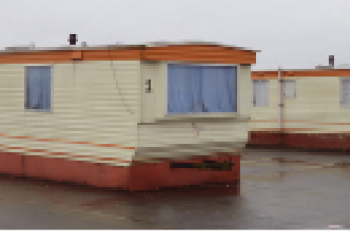
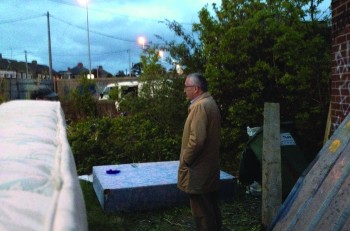
    “We’re being evicted”. By Roger Yates This was the text message that I had been dreading – and yet, one I expected sooner or later. It came from a ‘squat’ in north Dublin and the “we” was a female squatter and her rescued greyhound. I grabbed my keys and headed for the place… Rewind to about 6 weeks earlier when some friends and I responded to the eviction call from the Grangegorman site near Smithfield in the centre of Dublin. A long-established squat, replete with café, residential areas, and a community garden, had been invaded by Gardaí, workers who erected dividing fences, and bailiffs. We had attended to offer solidarity and, subsequently, much-loved and needed sandwiches as a stand-off intensified. Although I do not claim the title of squatter for myself, I was involved in a small way in the running of a ‘squat-shop’ in the 1980s in Liverpool which was situated across the road from an anarchist book store called New from Nowhere. Since that time, I had trained as a sociologist, studying and teaching topics such as the sociology of crime and the sociology of poverty. The sociologist in me took an interest in the Grangegorman case, so I trotted along to court to witness events when “persons unknown” were given some 30 days to prepare their case – to get out, effectively. As a de facto participant observer, then, I stood in Dublin’s Four Courts alongside a group of scruffily-dressed squatters as they urgently consulted with their casually-dressed legal representative. How out of place they all seemed among the suits and the uniforms. It struck me that this little gathering, being looked down upon and sniffed at by most present, probably had the most gentle and communal of values of all there. They seems very much out-of-place and, sociologically, that is quite a dangerous place to be. They didn’t seem to stand for money, or power, or private property (obviously) and they were clearly far out of step with the general ethos in that building. I remembered a point that was made in an early criminology seminar I attended at university. The lecturer had us contemplate the vast number of jobs and careers that depend on the constant commission of “crime” in any given society. What damage the “criminal fraternity” could do to the social fabric if they all stopped their unlawful activities. What if no-one “stepped out of line”? It certainly would not be great news for criminal barristers and solicitors. So it was with all this in mind that I agreed to act as observer (and, as it transpired, helper and driver) when a friend and friendly hound set up a squat of their own. The site is a large fenced-off compound comprising a small boarded-up two-bedroomed house, a large grassy area to the front, and a huge derelict factory area to the left. The front door was swinging open, its window broken, so no break-in was necessary. The person who “cased” the joint had been told that the site had been disused for up to twenty years but documents inside the house indicated that a tool hire firm had operated there until 2005. Still, a decade is a long time to stand alone. The house itself was quite cosy but some work was inevitably needed to block a couple of holes and fix a few broken windows, especially the one in the door. As ever with abandoned buildings, large stones lay in some of the rooms, thrown through the windows from the street. In the time that she had, our squatter had organised a small gang of enthusiastic helpers to assist with cleaning, painting, and yard tidying. A passer-by who lived in the area was pleased to hear that the place was soon to be made less of an eyesore. The house and gardens quickly began to look lived in and cared for. However, with no electricity or running water, “arrangements” were necessarily made for the provision of portable heaters, cookers, and toilet-flushing facilities. Then the dread day: “We’re being evicted.” I arrived at the location not knowing what to expect. Gardaí; or a group of heavies; flashing lights; trouble; tears. I found only the latter as the squatter had returned to find that, earlier in the day, some people (“my men” as it turned out) had been inside the house and had systematically smashed and destroyed all the household items there. A wooden bed was broken up and thrown into the garden, clothes and bedding thrown out and deliberately had paint poured onto them. Solar-powered lights not only removed from the building but made unusable. It seemed clear to me that some point had been made, and made with force: try setting up here, on my land, in my property, even though I’m not using it just now, and you’ll suffer as a consequence. Every window in the occupied bedroom had been smashed from within to render it less hospitable. It seemed like a cruel act. As the squat organiser, and a friend who had responded to the eviction alert stood wondering what to do next, the owner – or a man claiming to be the owner – arrived. Shouting and clearly furious, he began to push the women about, issuing sexist and racist slurs along the way. The greyhound wanted to defend her human but was held back as attempts were made to defuse the situation. The man, well-dressed in expensive coat and shoes, insisted that this was his property and that he was living in the house. This was clearly untrue since the house had been empty apart from a broken washing machine and office paperwork when occupied a few weeks earlier. Access to the house involved squeezing through a chained gate, negotiating a wall, and a walk through the overgrown garden area, not something the suited gent seemed likely to be willing to do. When he realised that the people had decided to leave peacefully the man did calm

    Loading

    Read more

  • Posted in:

    Privilege to report Dáil proceedings clear and absolute

    By Eoin O’ Malley The extraordinary decision of Irish media not to publish brings the concept of parliamentary privilege to the fore again. It has been invoked on a number of occasions in the last few years, sometimes in ridiculous circumstances, sometimes for political grandstanding, but also to allow the Oireachtas to do its job effectively and prevent it from being dominated by the executive. The parliamentary privilege offered members of the Oireachtas in Bunreacht na hÉireann is clear and absolute. I have no idea whether Catherine Murphy’s allegations are true or not (and to be fair nor does she claim to know their truth or otherwise) but her right to make them is unambiguous. Articles 15.13 relates to the rights of members: “The members of each House of the Oireachtas shall, except in case of treason as defined in this Constitution, felony or breach of the peace, be privileged from arrest in going to and returning from, and while within the precincts of, either House, and shall not, in respect of any utterance in either House, be amenable to any court or any authority other than the House itself” The first clause means TDs and senators cannot be arrested for offences that wouldn’t normally warrant a prison sentence. It is designed to prevent abuses by executive authorities interfering in the legislative process. If the executive could organise the arrest of members, it could prevent them from voting. So it is there to protect the separation of powers. The ‘immunity from arrest’ privilege dates from the 14th century in England, when an MP was released having had been detained, thus preventing him from attending the House. This privilege from arrest was thus set in English law. The US introduced such a clause to its constitution (Art. 1.6), and we took ours almost verbatim from there. It can still be seen as a bulwark to protect the Oireachtas from executive action. The second clause gives members the right not to be prosecuted for what they say in either chamber, underpinning an important element of democracy: freedom of speech. It is feared that TDs and senators can abuse the privilege to make defamatory statements about people. The absolute nature of privilege puts a duty on TDs not to abuse it. It was used by Mary-Lou McDonald to allege that an investigation into Ansbacher account holders had been curtailed to protect certain former TDs [full disclosure: my father is one of those former TDs named]. Arguably McDonald’s use of privilege designed to deflect media attention from her own party’s travails over the Mairia Cahill affair. She was able to question the head of the Revenue Commissioners shortly after and appeared happy with the reassurances that all these individuals had been fully investigated. No court can sanction a TD for their utterances in the Dáil, just the Houses itself. The Oireachtas has something called ‘exclusive cognisance’, that is the right to govern its own affairs. People who feel they have been defamed can appeal using Standing Order 59. In the current controversy the issue of reporting the Oireachtas proceedings is being questioned. The constitution is clear: “All official reports and publications of the Oireachtas or of either House thereof and utterances made in either House wherever published shall be privileged”. It is excessively cautious legal advice and a genuine fear of being embroiled in expensive legal proceedings that are stopping the mainstream media from reporting. But this is exactly why we have this article; to prevent the powerful from dominating or suppressing public debate. Although privilege is not something we expect to invoke regularly, constitutions often contain clauses that appear redundant until they are called upon to be used in extreme circumstances. The clarity of the language was deliberate and should be relevant to any legal outcome. The people when they ratified it mandated the free reporting of the Oireachtas. In Common Law there are some restrictions on reporting defamatory statements but the most relevant law seems to be the Parliamentary Papers Act 1840 which offers a defence “that such extract or abstract was published bona fide and without malice”. Catherine Murphy is a serious politician who cannot be accused of grandstanding or hyperbole. This is clearly an important public matter worthy of fuller investigation. So reporting her words would clearly pass this test. We might think that its abuse in some cases means there should be some restrictions on privilege. Whatever a TD’s motivation, and though at times a ‘public interest’ defence appears questionable, any attempt to curb that right should be resisted. •

    Loading

    Read more

  • Posted in:

    Dunnes beats them all

    By Ronan Burtenshaw The ongoing Dunnes Stores dispute is a potentially critical battle against low-wage, insecure employment in Ireland. June 6th’s march to the company headquarters was a continuation of a battle begun on April 2nd, when 5,000 workers in the retailer went on strike, led by their union Mandate. That strike itself came after a year’s work by the union, which established the Decency for Dunnes Workers campaign on foot of workers’ unhappiness with the nature of their contracts. The campaign has four demands – decent hours, fair pay, job security and recognition of their union. The first of these has become the cause célèbre of the campaign, with Dunnes workers’ flexi-hour contracts drawing comparison with similar, but slightly worse, zero-hour contracts in Britain. These flexi-hour contracts leave many Dunnes workers on a guarantee of only fifteen hours per week. Even though they often get many more than this, the limited guarantee on hours is used by management as a means of control, to disincentivise dissent or manage workers who they want to get rid of out of employment. But for many others flexi-hours also mean a state of permanent underemployment. Hours can also be spread out over an entire week, meaning the capacity to top up wages with welfare payments is severely limited. The family income supplement, requiring a minimum of nineteen hours per week for eligibility, is also out of reach. This gives the company the power to reduce a worker’s earnings from €384 to €144 at a stroke of a pen. There has been significant public sympathy for the Dunnes campaign, on this issue in particular. And, when you explore the numbers, it’s easy to see why. At the beginning of the economic crisis less than one percent of Ireland’s workers classified themselves as underemployed. Today, according to Eurostat, it’s almost eight times that. That makes around 150,000 people. But that isn’t the only area where the campaign chimes with the experience of post-crash Ireland. One of Mandate’s other demands, recently ceded by Dunnes, though it denies it was related to the strike, was for a 3% pay rise for the workers. By making their workforce increasingly precarious, Dunnes has joined the army of low-paying employers in Ireland. The extent of these problems is evident in the most recent OECD data, which placed Ireland second in the developed world for low-paying jobs. Between a fifth and a quarter of all those working in Ireland fail to make two-thirds of the country’s median wage. Given that our median wage is a measly €28,500 per year, this means Ireland has a huge number of people who are working poor. We also have 450,000 part-time workers, a third of whom are involuntarily so. According to Mandate, “there is widespread use of fixed-term and temporary contracts within Dunnes Stores. In many instances, workers initially get 3-month contracts, followed by 6-month contracts. Many are then let go without explanation and replaced by others on similar short-term contracts. Consequently the available hours are being deliberately directed away from established members of staff”. The workers’ demands are for permanent contracts with ‘standard’ probation periods. These, when combined with the banded-hour contracts and pay increases the strike also fought for, would begin to sound like the kind of jobs people could make a living on. In April, at the picket line on North Earl Street, I spoke to three women workers from Dunnes. For two of them, both from Santry in Dublin’s northside, the biggest issue with their precarious status was the inability to get credit. “Banks won’t lend if you’re on these hours”, Faye said, “so you can’t get a house, or a car, or even other loans easily. It’s just like a ceiling you’re living with”. For the other, who didn’t want to be identifiable, the issue was recognition. Not being willing to even meet with the union feels like a snub. But it goes far beyond this: it is about recognition of the contribution the workers made to the company. She felt that the company’s management saw them as “pawns” and hoped that its attitude would change after a strike. Those who were hoping for that outcome were to be bitterly disappointed, however. The day after the strike on Holy Thursday, Dunnes’ management across the country began calling in workers who were on the picket lines to meetings. In these, many had their hours reduced, were moved to parts of stores they had never worked in before, or were told their contracts wouldn’t be renewed. Others, like Karina McGovern, who worked in Dunnes in Northside Shopping Centre, were in effect sacked. A worker in the store for six months, she says she was told at a recent appraisal that she was “a permanent member of staff”, but never signed any document to this end. After taking part in the strike on April 2nd, “because she couldn’t feel any security on the contract she had”, she was called up to her manager’s office the next day at 4:45pm. She wasn’t asked to bring a witness and none was present. At the meeting she was told that she would be let go. “Shocked,” she enquired after a reason. Her manager told her simply, “we can’t give you one”. Devastated by the news of her job loss, McGovern was then told to return to the tills to work out her shift. Her colleagues in the Coolock store, incensed by this, rang their union to tell them. Morale in the store has been at an all-time low ever since. “The most difficult thing,” McGovern said, “is seeing them hire five new people so soon afterwards. That job was how I lived and then it was gone, no reason given. I was made an example of and replaced. That tells all you need to know about how it is for us and why there was a strike”. Tony Malone from Dundalk was a victim of similar treatment. The day after the strike, two days shy

    Loading

    Read more