Politics

Random entry RSS

  • Posted in:

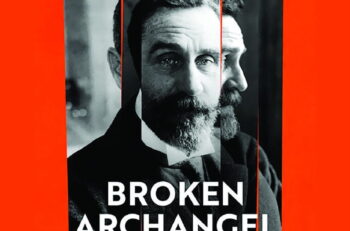
    Conviction not ideology: Noël Browne, on his centenary.

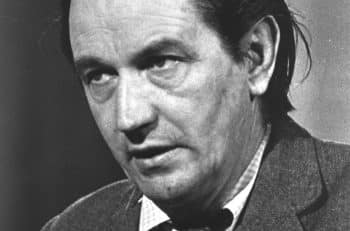
    Post-independence Irish politics provided few characters as compelling as Dr Noël Browne who was born just months before the Easter Rising, a century ago, in December 1915. Raised in a wicked combination of tragedy, poverty and illness, Browne saw his father, an inspector for the National Society for the Prevention of Cruelty to Children, pass away from tuberculosis when he was nine. The destitution which followed led the family to lose their home and most of their possessions before emigrating to Britain, where his mother would die from the same illness just weeks later. In England Browne found some redemptive fortune, first winning a scholarship to the renowned Jesuit school Beaumount College and then befriending the son of a wealthy Dublin surgeon. The Chance family paid the future politician’s way through medical school in Trinity College during the Second World War. But England also offered a sickly Browne, himself now a victim of tuberculosis, an important insight into the early development of socialised medicine, part of the evolution of what became the National Health Service in 1948. Back in Ireland after graduation Browne committed himself to tackling tuberculosis, a disease that killed nearly 10,000 people per year here in the early twentieth century. Frustrated by the impotence of individuals to meet the enormous challenges posed by the disease, and unwilling to profit through private practice from the misfortune of the poor masses consumed by it, Browne settled on politics as the only means to tackle what he saw as “Ireland’s most important social problem”. This was a theme of Browne’s life: it led to politics by moral conviction and a confidence in his ability to solve problems. His ideological progression was shaped by the challenges he aimed to overcome and the frustrations he endured in doing so. In the 1948 general election Browne stood for Seán MacBride’s Clann na Poblachta, a newly-formed republican party that aimed to channel discontent at civil war politics into a social agenda. Browne represented the social-democratic wing of a party that was riven with contradictions but ascendant in the polls. Nominated as the Minister for Health of the first coalition government after claiming a seat in Dublin South-East, Browne began one of Ireland’s most notable political careers at the tender age of thirty-three. In office Browne instigated an enormously successful campaign against tuberculosis, forcing the government to pursue extensive investment in free screening, and providing access to new antibiotics and vaccines as well as a massive construction campaign of hospitals, clinics and sanatoria. This effort is credited with reducing the rate of deaths from tuberculosis from 146 per 100,000 in 1947 to 16 per 100,000 in 1960. Despite this achievement, one of the most impressive in post-independence Irish politics, it was another aspect of his time as Minister for Health which defined his legacy: the attempt to introduce the Mother and Child Scheme. The Mother and Child Scheme was a proposal by Browne, grounded in a provision in the 1947 Health Act introduced by the previous Fianna Fáil government, to legislate for free healthcare, without means-testing, for mothers and children up to the age of 16. The story of the Mother and Child Scheme told today filters it through a modern lens: a contest between Church and state. But this is only part of the story, secured in its particular prominence by Browne’s release of correspondence between the Church hierarchy and political leaders, to the Irish Times. Browne’s political philosophy at the time was weaker in its analysis of Irish capitalism and more focused on the cultural importance of secularism. This blinded him to a degree to the potency of the other opponents of the scheme: the Irish medical profession. The Irish Medical Association was determined to defend private healthcare from socialisation and opposed both the 1947 Act and the 1950 scheme. This followed the path of their colleagues in Britain, who had initially opposed Aneurin Bevan’s NHS, and of their predecessors in 1911 who scuppered the Irish Health Care insurance Act. Although Archbishop John McQuaid later described the face-off over the Mother and Child Scheme, which ended with Browne’s resignation in 1951, as “the greatest challenge to clericalism in Ireland”, its significance was actually even deeper than this. Both the Church and business in Ireland understood the potential of such a scheme, which drew widespread support from the popular classes, as a social-democratic moment for Ireland. Catholic social teaching was not simply an impediment to liberalism gaining a foothold in social and cultural issues, it was the ideological basis of Irish capitalism. Welfare was to be based on the private sphere – the family backed by Church and charity – with services provided on means-tested or modest transfer basis. Catholic corporatism eschewed the concept of universal entitlement, historically a far more potent line of defence for social democratic gains. It also siphoned off large sections of social reproduction to forced labour in carceral institutions. Poverty, rather than be eliminated, was always to be with us. In the end a cheap imitation of the Mother and Child Scheme was introduced in 1953 to satiate public appetite generated by the controversy. Mothers received free health care for infants, but only up to six weeks and on a means-tested basis. The mould Noël Browne had tried to break remained intact. After he was forced to resign from government, Browne went on to join Fianna Fáil, erroneously hoping that the “seed” of social democracy in the party that saw it introduce the widows’ and orphans’ pensions and the sickness allowance and to build social housing could be developed into something more fundamental. Instead he found even more entrenched support for the prevailing economic and social mould than had existed in Clann na Poblachta. Following inevitable expulsion from Fianna Fáil he established the National Progressive Democrats, a social-democratic party in complete contrast to the prophets of the free-market who were later to usurp the name. During his time in the NPD he focused on his favoured role, parliamentary watchdog, teaming up

    Loading

    Read more

  • Posted in:

    Get moving on that social housing

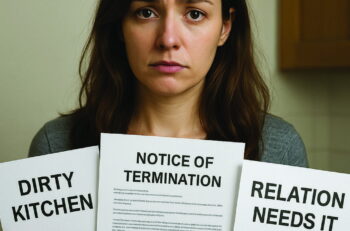
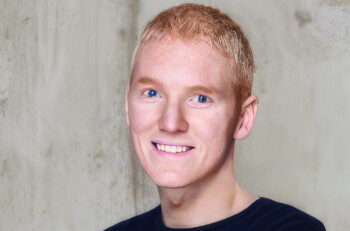
    Homelessness was always a winter story and affected individuals only. Now it’s an all-year narrative and the homeless are no longer just isolated individuals -although they are still there – but families, in all their forms and colour. Our recent research for the Housing Agency report, ‘Family experiences of path- ways into homelessness – the families’perspective’, sheds some light on the causes,consequences and features of these unwelcome developments. The research was basedon interviews with a sample of 30 families,including a mixture of family types (couples and one-parent households with children of differing ages, as well as families from minority – Traveller and migrant – backgrounds). The human story was com- pelling. Both of us, ‘seasoned’ researchers long involved in the homeless field, were shocked by the conditions and circumstances in which the families found themselves. Some were homeless for months, but for others it was years. We met families living for months in one room of a hotel. Others lived in damp basements and rooms, with heat turned on for only a few hours a day. Most of the families we met no longer had possessions, apart from those they could put in a suitcase. They were broke, having used up whatever savings they had. Parents were distressed, despairing, humiliated – often eg under curfew – but absolutely determined to ensure their children survived the experience. At a policy level there were clear findings. Almost all the families had lived in private rented accommodation: none were dispossessed mortgage-holders. Many had been in private rented accommodation that they liked, some in the same home, for long periods, whilst others moved around frequently.The problem was that this time, when they left or were evicted (the euphemistic term is ‘issued with a Notice of Termination’), they could not find an affordable alternative. They could not get back in. They typically called prospective landlords, or called door-to-door, 50, 60 times only to find the accommodation already gone, or, more likely, to be assailed with “no rent allowance here”. For some, leaving or being evicted was a sudden and brutal process: eg a violent ex-partner turning up and causing trouble, a ratinvasion or the roof falling in. For the majority, though their departure was the landlord deciding to get more rent from tenants. For tenants told to leave, the one thing theyneeded more than anything else was a reference for the next landlord, so they did not argue. Campaigns for tenants to be ‘better informed’ of their ‘rights’, when they have almost none, overlook the inequality of power. With little new housing built in recent years and a dearth of social housing, which can be traced to 1987, a previous austerity period and its cuts in spending on local authority housing, our rising population has put more pressure on accommodation. The bottom of the private rental market gets ‘squeezed’, and those on low incomes are squeezed out. As demand rises, landlords know that they can charge more. Rents move higher and higher above the rent supplement levels that the Department of Social Protection pays, putting them out of reach of those on low incomes. The introduction of the Homeless Housing Assistance Payment (HAP) which permits a 20% increase in rent supplement marks a welcome recognition that rent supplement levels are no longer adequate. The homeless families to whom we spoke had many ideas on how to solve the homelessness crisis, including the opening up of boarded-up local authority homes. For them(and we should listen), local authority accommodation was the ultimate solution, offering security, acceptable standards and affordable rent. The Social Housing Strategy 2020 – a six-year plan to address social-housing needs – commits to the provision of 35,000 new social-housing units, over half (18,000 units) of which are due to come on stream by the end of 2017, with the remainder (17,000 units) scheduled for completion by the end of 2020 at a cost of €3.8bn.While the requirement is clearly immediate, a useful additional measure has been the introduction of a Ministerial direction which requires named local authorities to allocate up to half of available social housing units to homeless (and other special needs) households for the first six months of 2015. Notably, no-one we spoke to expected to get back to private rented accommodation, ever. Kathy Walsh and Brian Harvey Kathy Walsh is Director of KW Research and Associates Ltd, and an experienced social researcher and strategic thinker with expertise in equality and integration.

    Loading

    Read more

  • Posted in:

    Freedom politics

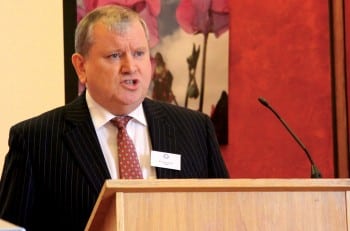
    By Senator Katherine Zappone My decision to run as an Independent candidate in Dublin South West for the next General Election affords me the freedom to think, build relationships, negotiate and act outside of the strictures and regulations of party politics and whips. Independence allows a greater creativity to bring one’s own gifts and experience to the political agenda. Freedom to think and act with imagination is precisely what Ireland needs now to change its direction from austerity politics to the politics of generativity and equality for everyone. We don’t have this kind of politics yet, but it could be fashioned. This is what I want to work towards in the next Dáil on behalf of the citizens and communities of Dublin South West. As an Independent member of Seanad Éireann I have learned the practice of freedom politics and witnessed its impact and effectiveness. Freedom politics involves a carefully crafted methodology that begins with one’s own values and experience. Having worked as an educator, human rights advocate and progressive entrepreneur in the communities of Dublin South West and national civil society organisations, my politics start with deep and respectful listening to people’s needs and dreams. Early in my Oireachtas career I invited a group of young transgender people into Leinster House at a time when there was no legislative action towards securing legal recognition for transgender people in Ireland. Our conversation prompted my conversion to participate in this civil movement. I worked with advocates and legal experts to publish a Bill that set high benchmarks for the parties in power. Today Ireland has one of the most progressive laws in Europe on this issue. An Independent’s political freedom demands a critical review of the Programme for Government put together by the political party or parties in power. Sometimes this means resisting the decisions of the powerful, with little or no resources, and calling on the strategic creativity and perseverance required to bring about better alternatives. Our current Government put forward Seanad abolition as one of its prime ideas to reform politics, with little apparent credible rationale. While the practice of politics did and does require substantial reform to implement policies and laws that open opportunity for all of our people, I judged that shutting down one of the houses of parliament would consolidate power in the hands of the few rather than share it so that all public representatives could have more effective voices. So, with a small group of committed democrats, we built a campaign over the course of two years that resulted in the Seanad’s retention. Subsequently, the Seanad Reform Bill written by Democracy Matters and published by Senator Feargal Quinn and me, has significantly influenced recommendations for the reform proposals put forward by an Independent group appointed by the Taoiseach. As an Independent, I am also free to support Government ideas contained in its Programme, if they resonate with my values, experience and judgment. It was a tremendous privilege to work alongside Government and other political parties, in strategic cooperation with Yes Equality, to advocate the successful Yes vote in the Marriage Equality referendum. As a founding member of the marriage equality movement in Ireland, practising the politics of freedom in this instance provided a way to draw on my experience of a decade of human rights advocacy. Being an Independent, then, is not simply about freedom from a party whip, or political party discipline. Being an Independent provides freedom for thinking and action that often can be suppressed in political parties, leading to the extinguishment of creativity and the passionate pursuit of ideals rooted in one’s experience and self-knowledge. I have witnessed this happen to colleagues and it will continue to happen unless there is imaginative reform of the practice of politics (including within political parties) and a re-balancing of power between the Cabinet and members of parliament. One of the prime reasons for the rise of the number and popularity of Independents, I think, has to do with their effective efforts to bring personal power to bear on the direction of law, policy and the investigation of corrupt or unethical practices in public, political, social and economic institutions. This personal power is most effective when it is rooted in a creative vision inspired by the needs and dreams of our people. It provides a stronger base from which to negotiate the compromises that generate significant change. If elected as an Independent in the next Dáil, I want to work with citizens and communities, civil society organisations and legal experts, to manoeuvre the Government compass closer to the politics of generativity and equality for everyone. •

    Loading

    Read more