

Politics

Random entry RSS

  • Posted in:

    Why I resigned from Dublin City Council’s Arts Committee

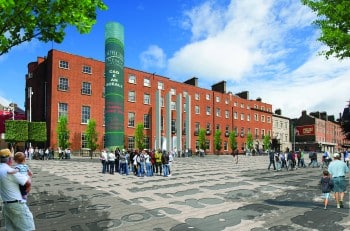
    By Mannix Flynn Despite all the negativity that can whirl around any local authority, much of the remit of Dublin City Council (DCC) is exciting.  But it is not popularly associated with the arts of which – if you include Temple Bar – it is the biggest curator in the country. Most of the accolades go to the Arts council and the Department of Arts. DCC does not blow its own trumpet but then again it lacks a cohesive overall policy as well as strategy and vision. It has no brand and therefore it fails to benefit from public goodwill that its arts activities could attract. The apex of DCC’s arts structure is the city arts officer, Ray Yeates. The very name betrays the lack of dynamism. Arts officer is oxymoronic, whatever about Dublin City arts officer. Why not have an Arts “Commissioner” as they have in New York? In DCC the arts are “managed” through all sorts of sub committees, with arts managers and personnel all jockeying for the limelight and constituency favour. Overall responsibility falls in the lap of a Strategic Policy Committee (SPC) but its remit is too broad: Arts, Culture, Recreation and Community. And even worse, and most importantly, there is no suggestion of the balance DCC intends to strike between participative, Community Arts on the one hand and world-class excellence in Art, on the other. These can go hand in hand but usually do not. It is an anonymous rubber-stamp that never challenges, asserts best practice, or holds to account. The SPC’s endeavours are also paralysed by bureaucracy, the imperative to deal with logistical matters such as the minutiae of parks management and an obsession with the commissioning of long-winded reports full of artspeak and jargon. Any area offering a bit of ould art gets designated a cultural cluster, an emerging arts district or a hub. Typical is the Parnell Square cultural quarter and the €60m proposed new Central Library at its heart: it fails entirely in its plan to acknowledge the well-established Hugh Lane gallery. CEO Owen Keegan and other senior members of staff at DCC had no idea of the structures of the companies behind the Parnell Square Cultural Quarter until I did some research and raised the issue with them. Somehow a body called the Parnell Square Foundation (PSF) operating with the philanthropic support of Kennedy Wilson, a major US vulture-capital developer recently come to town, has been charged with the development of the square. It is only recently DCC took possession of the Parnell Square property formerly Coláiste Mhuire owned by the Christian Brothers, which had been handed over to the State as part atonement for their involvement in institutional abuse (Ryan report). It was transferred to DCC by the OPW in a land swap. The plans for Parnell Square notably fail to embrace the State-owned lands surrounding the Rotunda Hospital. A plan by Dublin Civic Trust showing how the space could be opened up as a park to rival Stephen’s Green merely serves to emphasise the limited remit and lack of dynamism of DCC’s approach. I brought a motion calling on DCC to appoint Councillors to the board of the PSF. Strangely, the Chair of the arts SPC and some territorial DCC staff who serve on the PSF wholly opposed my motion but she lost the argument and the Arts SPC overwhelmingly agreed the motion. The Culture, Recreation and Community Section spends around €80m annually (2014), of which €9m goes on the arts, and all of its activities should be scrutinised. The Arts SPC proving deficient in this, I have had to resign. I felt that the chairperson, Mary Freehill, was creating obstacles and personalising issues I raised, presumably at the request of senior staff and management who simply don’t want me anywhere near their boards particularly the Parnell Square foundation. The systemic problems are deep-rooted – underpinned by the usual local-authority problem of the real power residing with management not elected members. Community beanos are not the same as high culture; and it is possible to be interested in both without caring how the grass in city parks is cut. Dublin City Council receives almost a billion euros annually to operate the city. But there is little accountability and Councillors are loth to haul officials and quangos to account because of the dynamic where keeping officials on board may reward Councillors with the fruits of goodwill the next time they need urgent official attention for a constituent. Even when there is evidence of torpor or impropriety DCC moves slothfully. It took over four years years for Dublin City Councillors and Dublin City Council to act properly over the Temple Bar Cultural Trust (TBCT), which we ultimately replaced. Every step of the way certain Councillors saw fit to protect the cosy cartel of TBCT. Why do we continue to spend the guts of €200,000 on the literary ‘Impac’ prize, with its strange worldwide-library-led nominations procedure that seems always to throw up Colum McCann? The Impac company no longer exists so we should reconstitute the prize in the name of DCC.  More generally, why do we not claim credit for  our greatest institutions? The DCC logos in the Hugh Lane gallery are actually painted over. The recent designation as UNESCO city of literature would appear to just have consisted of a whole load of plastic signs being stuck onto buildings. Nothing meaningful has happened and the same familiar celebs and well-thought-of authors and poets have been paraded in and around predictable and over-staged events. Dublin City Council recently put up for sale two unique mews stables on Dawson Street. According to the Dublin Civic Trust they are the only remaining examples of their kind in the city.  They have been in the charge of Dublin City Council for the past 17 years but have descended into dilapidation – reminiscent of Dublin corporation’s total disregard for the Wood Quay Viking site back in the day. All this money slushing around while

    Loading

    Read more

  • Posted in:

    Reinstate mobility grants for disabled

    By Rachel Mullen Living with a disability costs more than you’d think. There are the human costs of living in a society that disables at every turn. There are significant financial costs. They have been estimated at €207 a week for the average disabled household by Dr John Cullinan of NUI Galway. This is equivalent to 35% of the household’s disposable income. The Department of Health and Children axed the Mobility Allowance and the Motorised Transport Grant for people with disabilities in 2013. This was because criteria governing the schemes were in breach of the Equal Status Act. They did not have to eliminate the scheme but, we were promised, the issues would be resolved quickly. Two years later, some people with disabilities remain on the scheme, despite its having been found to be discriminatory, and no new scheme has been provided for the many others now precluded. Transport is vital for people with disabilities to get education, employment and local services, and to participate in their communities. A recent report from the Centre for Independent Living highlighted that the cost of buying and running a car was prohibitive for many people with a disability. The cost of insurance was greater, or in some cases not possible. In one testimony a man was told by an insurance company that he was “uninsurable”. In another a man needed €70 to pay for a round trip by taxi to visit his GP as there were no accessible alternatives in his area. The situation is particularly acute in rural areas, where there is a dearth of accessible adequate public transport. The Mobility Allowance and the Motorised Transport Grant were essential in this regard. They ensure that people do not become trapped in their own homes. These schemes were axed on foot of a case heard in 2008 by the Equality Tribunal and a second case dealt with by the Ombudsman in 2011. The two schemes were found to be in breach of the Equal Status Act 2000 on the ground of age. The criterion was that new applicants for the schemes had to be under the age of sixty-six. Claimants already on the schemes were allowed to continue to receive the payment after they reached the age of sixty-six, provided they continued to satisfy the means test. The Ombudsman’s report noted that the criteria imposed by the Department of Health and Children for applicants seeking the Mobility Allowance, also gave no consideration to the fact that people with intellectual disabilities and/or mental ill health could have restricted mobility as much as people with physical disabilities. The Department could have simply dropped the age restriction. Instead they chose to eradicate the schemes. That was in February 2013. The Department said it had begun a review process on the schemes and, pending its recommendations, the schemes were no longer available. Claimants in receipt of the Mobility Allowance at that time were allowed to remain on the scheme, supposedly temporarily. In June 2013, the review group issued an interim report stating that new statutory provisions would be established and that an inter-departmental group, chaired by the Department of the Taoiseach, would be developing these proposals, including the eligibility criteria. This inter-departmental group would, we were informed, report back by October 2013. Four years since the decision of the Ombudsman and seven years since the decision of the Equality Tribunal this issue has not been resolved. The inter-departmental review process has delivered no decision on the way forward. In the meantime, people who need to access this payment are left trapped and ignored. Last month the media reported an incident on the Sligo to Dublin train. Gerard Gallagher was left stranded on the train when no staff came to assist him to remove his mobility scooter which was in another part of the train. He was eventually found when a cleaner heard him shouting for help. Gerard said; “the power to the train was turned off and I was left in complete darkness…..the doors closed around me…I had no way of contacting anyone. I was completely alone and no one knew where I was”. His words are eerily metaphorical: the isolation being enforced on some disabled people who need this Mobility Allowance and the Motorised Transport Grant. The Minister should do the right thing and ensure people like Gerard are not left isolated in darkness. •

    Loading

    Read more

  • Posted in:

    Locating Ireland in South America

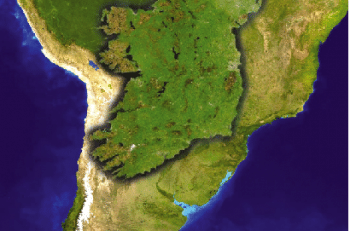
    By Mary Murphy We need a new politics in Ireland but do we have the motivation for and capacity to mobilise? Professor Eduardo Silva from Tulane University has analysed the left politics that emerged in responses to crisis in some Latin American states in his study ‘Challenging Neoliberalism in Latin America’. With some caveats, there are useful lessons to be found for Ireland. He emphasises motivation and capacity. Conditions will trigger motivation. There is clear evidence of neo-liberalism causing economic volatility in Ireland. However, despite unresolved high levels of individual and collective indebtedness, unemployment, emigration and increased deprivation,  the crisis simply has not been grave enough to cause a reaction with sufficient force to provoke a change of course. The conditions do not compare to other European countries in crisis, and especially to Latin America. However, crisis is still alive in Irish society and the potential for conflict remains. This is evident in the Anti-Water-Charges Protest movement which echoes some of the approaches found in Latin America, both in terms of the coalitions and the issues. Motivation is stimulated by political exclusion. The  2011 general election in Ireland represented a ‘pencil revolution’. However, there remains a crisis of representation, where citizens mistrust political institutions. Opinion polls highlight the turbulence and volatility in Irish politics. However, the same opinion polls can show a potential for recovery for mainstream national politics committed to meeting fiscal-deficit targets. Silva emphasises the importance of associational power: the formation of groups; and collective power: the formation of new coalitions or alliances, in achieving change. He argues that Latin American elite leaders sought to ensure a fragmentation across the different parts of civil society. This echoes in Ireland. Many trade unions and non-government organisations are sectoral, and organised around specific campaigns to puncture individual austerity measures. They are also conditioned by a tendency to consensus with the state. Government has implemented cutbacks that, while not significant in terms of the percentage of GDP,  are politically significant in encouraging groups to persist in sectoral campaigns while if anything generating resistance to harder and riskier work such as coalition building. There is, however, some evidence of the type of collective mobilisation that happened in Latin Amercia. Linkages across sectors can be found in various grassroots gatherings, Claiming Our Future, We’re Not Leaving, campaigns against precarity, and Right2Water. As to capacity: there is evidence in Ireland of major protest and some very conscious attempts to build collective action. These efforts did not, however, demonstrate the necessary capacity or alliance-building to create the conditions for a significant ‘new politics’. Only the Right2Water campaign, from among various oppositional movements, has achieved critical mass. The emergence of this has been spawned by wider dissatisfaction with austerity and the political elite, according to Rory Hearne. The reasons for this failure include the decline in trade unions and their adoption of a largely defensive position during the crisis, and the degree to which a historically strong civil society now appears dominated by state and market, perhaps a legacy of two decades of social partnership. Meanwhile the power of indigenous Irish pro-neoliberal forces has been augmented by international allies, particularly in the ‘troika’ of the European Commission, the ECB and the IMF; and has bared teeth. Silva emphasises the importance of ideological power and the need to frame messages and narratives consciously to broker new linkages of issues and people. There has not been such an effective framing in Irish protests. The issues have not been framed to focus on what might unite a critical mass around a positive vision of life, or to stimulate united action to create a world without the social, democratic, cultural and economic rupture associated with neo-liberalism. Silva advises that such a framing is crucial to brokering the linkages necessary to achieve change. A new politics requires a ‘new policy consensus’. In Latin America this reaffirmed: the legitimacy of state involvement in the economy and society; an ecologically driven model of development; less reliance on and greater regulation of markets; less reliance on foreign investment; and more social investment in welfare, health, education, and pensions as well as a focus on inclusion and equality of status for all, including women. Such an Irish narrative could create new solidarities based on an understanding of our collective interdependence. This new politics could drive more, and more effective, protest, and vision. •

    Loading

    Read more

  • Posted in:

    Referendums often give the wrong result

    By Eoin O’ Malley The marriage referendum was a roller-coaster. The reports of thousands of Irish taking boats and flights home to vote in the marriage referendum were heart-lifting. Ursula Halligan’s revelation in the last week of the marriage-referendum campaign that she had hidden her sexuality from everyone, including at times herself was heart-breaking. She cited the referendum campaign as the reason she finally found the bravery to come out. We can only assume that she was relieved at the response and delighted at the result of the referendum. The referendum gave popular approval to what we had already known: that Ireland and its people are decent and kind. Few who witnessed it will forget the happy, open and emotional atmosphere in Ireland on the weekend of the result. But there’s a reason why Ireland is the first country in the world to approve same-sex marriage by popular vote. Not many countries want to have to go to the people every time they want to change their laws, even constitutional law. As well as being expensive and slow it may cause more harm than good. The referendum last month has probably settled the issue of same-sex marriage. But that’s because it confirmed a measure that was on the path society was already following. There was no such settlement in the UK when a couple of years ago it rejected a change to its electoral laws. Many, from UKIP to the Greens, are calling to revisit that decision. And referendum certainly hasn’t settled the issue of Scottish independence. In fact the referendum has accentuated divisions within Scottish society. In the marriage referendum one Irish Times columnist proclaimed to be “heartsick at what we have witnessed in these past weeks”. Rather than unite the country it has exposed and deepened a division. This isn’t surprising. This is what happens in referendums. This is because as Paul Romer observes in a recent issue of the American Economic Review: “Politics does not yield to a broadly shared consensus. It has to yield to a decision, whether or not a consensus prevails. As a result, political institutions create incentives for participants to exaggerate disagreements between factions. Words that are evocative and ambiguous better serve the factional interest than words that are analytical and precise”. Romer was talking about politics generally, but the referendum process is even more guilty than representative democracy of incentivising division. Because referendums offer only an either or; they create binaries whereas issues are on a continuum. Instead of a Seanad referendum on its retention or abolition we could have had a debate on the nature of the second chamber we might actually want. There is a lot of shouting in parliament the main purpose of which is signalling to voters that the politicians care about an issue; but behind the scenes, in committees and, yes, in the Dáil bar politicians talk and share experiences (sometimes even evidence) and they work together usually in a slow and sloppy way to make things better. Productive collaboration is completely ditched in electoral campaigns, as politicians accentuate the differences between them and the other lot. That’s fine in the marketplace for competent politicians: you want to see how politicians perform under pressure. In referendums finding the best policy is important, but extreme positions are taken in an attempt to win. I experienced it directly when I was involved in the Seanad referendum campaign, on the side in favour of abolition. In response to what we thought was fanciful fear-mongering about democracy in danger, we exaggerated our rhetoric, to talk of the Seanad as a danger to democracy. In fact neither contention was true. The referendum was pointless, and neither outcome was going to change anything very much. I started out with that position, but campaigning moved me towards an extreme. In moving to the extremes we divide the country, and in having a referendum on marriage equality we missed an opportunity to talk to each other about the problems gay people have, well beyond the issue of marriage, and listen to the – we have to assume – genuine concerns of those opposed to marriage equality. The most righteous proponents on either side saw the morality of their position but made no attempt to speak to or hear the other side. As the social psychologist Jonathan Haidt points out, “[Morality] binds us into ideological teams that fight each other as though the fate of the world depended on our side winning each battle. It blinds us to the fact that each team is composed of good people who have something important to say”. The No side was dishonest. It didn’t want to say that it thinks homosexuality immoral, so it muddied waters with children and surrogacy. This appeals to those who are uncomfortable about the speed and direction Ireland is moving. The Yes side was honest in its frame about equality and fairness. This pushes buttons for liberals, but does nothing to convince for conservatives. The Yes side seemed to be saying ‘This is Ireland, your one is dead’ and didn’t care about bringing people along with it. Instead conservatives could have been persuaded by emphasising respect. Battle lines had been drawn when the campaign started with a call for a ‘homophobia watchdog’; we were never going to come to a genuine understanding of the other side. It was one where genuine doubters were called names and increasingly illiberal stances were assumed by many of either persuasion. We didn’t learn much, except to hate the other side. The media are also to blame. They stopwatch the different sides, and pick sometimes-extreme proponents of each view. This is the John Waters-effect. We like to hear strong opinions not rational ones. Some lawyers took a sceptical view of the children’s rights referendum. They wondered aloud whether it was needed at all because all these rights were already implied in judgments. But they weren’t clearly on one side or the other so instead of hearing these views,

    Loading

    Read more

  • Posted in:

    The politics of disillusionment

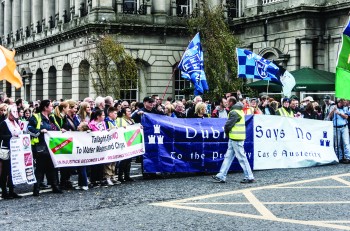
    By Ronan Burtenshaw Since it emerged in mid-2014 the water charges movement has grown to become Ireland’s largest social movement. Beginning with small-scale, self-organised resistance to meter installations in Cork and Dublin, the campaign progressed with the formation of Right2Water to a kind of mass politics unseen in Ireland in decades. It successes include five protests of over 50,000 in Dublin in six months, at times daily events in communities across the island, and the generation of an atmosphere that has led to the revelation of a number of scandals that have occupied hours of airtime and pages of print. Through all of this little attention has been paid to one of the most interesting aspects of the movement. While the media focused on the more established public performers in the trade unions and left-wing political parties, smaller, newer organisations were co-ordinating resistance across the country and growing steadily more influential. The movement is approaching a crossroads as the consequences of non-payment become clear and as a general election demands crystallisation of agendas. Village looks at four of these organisations, asking where they came from and where they are going. Dublin Says No derives its name from the Ballyhea Says No group from county Cork who have been marching against the bank bailout since March 2011. The ‘Says No’ name has become a motif of the resistance to austerity in Ireland with hundreds of groups around the country adopting it in local campaigns of resistance. The Dublin version began in February 2013 after a number of activists were unhappy marching behind trade-union leaders they saw as “sellouts” in a demonstration against the debt burden. One hundred non-aligned protestors marched in their own demonstration that Easter Sunday, and a march of differing composition and size has been held every Sunday since. Dublin Says No’s strength as a political organisation was built on Facebook, where it has 17,000 likes on a page that regularly sees its images, videos and status updates mocking politicians reach hundreds of thousands by shares. The page positions the group against “the corrupt political system”, while its banner says it is opposed to “the property tax and austerity”. However, it is in the water charges movement that Dublin Says No has become really significant, organising a January protest without institutional support that drew 50,000 to Dublin’s city centre and pioneered the now-popular tactic of marching from numerous points and converging on O’Connell Street. Before this Dublin Says No had been involved in a series of smaller protests, such as an attempted ‘lockout’ of politicians from the Dáil and occupations of buildings like Dublin’s Civic Offices. But itsmost famous and controversial activity has been confronting politicians in the street, usually with the question “how has austerity affected you?”. These confrontations have drawn condemnation from politicians, who regard them as harassment, and have even reached the national headlines on occasion, such as when Dublin Says No activist Derek Byrne called President Michael D Higgins a “midget parasite”. Byrne says that his videos are important because they “show people putting it up to politicians”. “You look at the opposition in the Dáil, getting involved in ridiculous debates, not changing anything, and people get frustrated. Dublin Says No are actually holding people in power to account”. Activist Bernie Hughes, who is one of the few affiliated with Dublin Says No to have previously been involved with organised Left politics, says the strong language the group uses represents the “vernacular” of many working-class communities and is part of its appeal. “There is an enormous anger out there at Ireland’s politicians and what you see with Dublin Says No is ordinary people finding a way to express it”. Byrne says the group deliberately has “no structure”, with whoever joins the discussions on the page or attends protests becoming Dublin Says No, much like the modus operandi of Anonymous. “It’s for people who are fed up with the corruption in Irish politics and don’t have faith in the political parties to sort it out. A lot of people want to change things themselves”. Byrne says its politics are “left-wing” but contrasts them with the Socialist Party and Socialist Workers Party, who he says preach “revolution” but “when they get to the streets it’s a case of turn up, have a few speeches and go home”. Despite this Dublin Says No has been drawn into co-operation with political parties and trade unions such as Unite and Mandate through the umbrella Right2Water campaign. They will support its  march in Dublin city centre on June 20th. Communities Against Water Charges (CAWC) describes itself as a “loose network of activists based in Dublin North-East”. It emerged after the area became a heartland of the resistance to water-meter installations in mid-to-late 2014. Taking advice from Dr Paul O’Connell, now lecturing in law at the University of the School of Oriental and African Studies in London but originally from Dublin North East himself, a group of local activists convened a meeting in Kilbarrack in November to form the group. Formed by residents of working-class Dublin suburbs lincluding Coolock, Darndale, Edenmore and Donaghmede, the first focus of the group, according to activist Cat Inglis, was to “counter the media narrative that everyone protesting water meters was a ‘layabout’ or ‘scum’. We wanted to have the community’s voice heard”. The anti-metering campaign in the area began when Raheny resident Donna Thompson blocked Irish Water from an installation in May. She put out a call on Facebook which was responded to by activists from Dublin Says No and Edenmore. Later in the summer, when Irish Water tried to install in Edenmore itself, the activist base was already built up to resist it. Residents from Dublin North-East continued to prevent water-meter installations throughout the summer, at first organising to stop Irish Water vans by standing in front of them, but escalating to embrace sophisticated operations involving cars of activists driving around suburbs blocking off access from main roads. Inglis points out that some of

    Loading

    Read more

  • Posted in:

    Undaunted austerity fighter

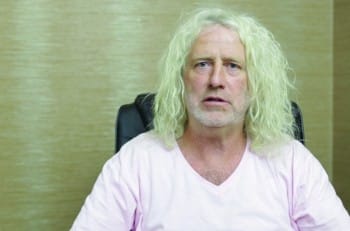
    Frank Connolly interviews Mick Wallace When Mick Wallace raised some uncomfortable questions in the Dáil last October about the sale of Siteserv to Denis O’Brien and the role of the Irish Bank Resolution Corporation (IBRC) in the deal, he was roundly abused by government ministers, including his constituency rival, Brendan Howlin. Phone calls were made to several newsrooms by O’Brien’s media handlers and Wallace’s speech went largely unreported. Some days later, the former chairman of the IBRC, Alan Dukes, protested loudly over the remarks in a lengthy column in the Irish Times and called for the comments to be withdrawn from the Dáil record by the Wexford TD. His pertinent questions about the timing of the Siteserv deal and the subsequent award of the lucrative contract to install water meters to O’Brien’s company went unanswered and the controversy was buried until Catherine Murphy revived it, not for the first time,  in the House on Thursday 28th May. Once again the media were asked to suppress her comments and O’Brien, Dukes and others trotted out widely published attacks on the Kildare deputy accusing her, among other things, of lying and using stolen documents. O’Brien was given most of a page in the Irish Times on Tuesday 2nd June to attack Murphy whom, he said, had used Dáil privilege to “gain notoriety and political advantage for herself”. “O’Brien himself with his court injunction on RTÉ has made a circus out of it to such a degree that his own friends in Fine Gael are distancing themselves from him and his threat to Dáil privilege”, Wallace said of the latest twist in the IBRC/Siteserv debacle. “I got a call from one journalist in a national paper last October to say that several news outlets had been contacted and warned not to pursue what I said in the Dáil about the Siteserv deal. Dukes had a free run at me in the Irish Times”. As someone who has been the subject of vicious attacks in the O’Brien controlled Independent newspapers with no less than 19 front-page stories published about his financial difficulties in its daily edition, Wallace knows something about media interference and selective banking practices. “I know how banks operate and the idea that Denis O’Brien would ring the bank to say he wanted the term extended on his loan repayments is perfectly normal. The difference on this occasion is that it is taxpayers’ money he is using. The question I was trying to get an answer to was: “How in God’s name did O’Brien’s company get the water contract so soon after buying Siteserv?’”. He is still waiting. Wallace is not convinced that his namesake, no relation, and IBRC liquidator, Kieran Wallace and Eamonn Richardson of KPMG, will shine sufficient light on the controversy to allay many suspicions when his review is completed and has plenty of grounds for scepticism given his experience with internal investigations he has witnessed into Garda wrongdoing and other matters during his four years in the Dáil. “If you follow what goes on in government it is a regular thing to see conflicts of interest in different inquiries and investigations. The penalty-points scandal was full of internal investigations that went nowhere. Many of the crime correspondents ignore serious wrongdoing in the force because they depend for their stories on the guards”. Wallace has, with Clare Daly, been to the fore in calling for greater transparency and fairness in the way the country is run. He has had his share of trouble since the collapse of his company, M & J Wallace, which was put into receivership after he was unable to meet bank debts of some €41m. However, he was not made bankrupt and says he still leases the wine bars and coffee shop in the Latin Quarter from the banks which took them from him; employing 55 people in jobs that pay well above the industry norm. Notwithstanding the continuous years of hostile reporting of his financial affairs by the Irish Independent, Wallace insists that he settled his issues with the Revenue over the under-declaration of VAT which arose because of his genuine efforts to save his construction business, and made payments for thirteen months until a High Court judgment for €19.4m in favour of ACC effectively brought the company down. He also insists that the widely held, and reported, view that he withheld pension entitlements from some of his employees, is simply false. “We paid every penny due of the pensions. I was fined for late payment and this was due to a row over whether we owed money for people who had left the company”. After watching assets once valued at €80m drop to €20m in the property crash he believes that there is  another scandal about to emerge over the manner in which huge profits are being made by certain investors, including US vulture funds, which are getting in on the act while others are excluded from privately-organised sell-offs. “The IBRC issue is just the tip of the iceberg when it comes to insider dealing in the sale of distressed assets”, he claims. Across the country, Wallace believes that over half of the population is struggling to pay their bills at the end of the month and these are the people searching for a political solution to their personal and family crises. “We have never witnessed such numbers of people in such a difficult place. These are whole sectors of society who are poorly represented. They want society run in a fairer manner. Sometimes I listen to people in the Dáil going on about things and they are clueless. There is a serious shortage of people with experience in the real world including how to run a business. And if you think the Dáil is a talking shop what does that make the Seanad. The greatest load of b….x”. Wallace does not do clinics or attend every second funeral in the constituency as other politicians do with their time but he is

    Loading

    Read more

  • Posted in:

    Finally, some nuance comes to NI

    By Anton McCabe The UK General Election in the North saw the stalling of the Sinn Féin juggernaut. Its share of the vote fell by 1% compared to the last election – despite fighting an extra seat, South Belfast. This was the party’s first electoral setback in the North since 1992, when Gerry Adams lost his West Belfast seat at Westminster. Overall, the long-running apparently inexorable rise of the Nationalist vote was halted. The Nationalist share of the overall vote was down 3.6%. For the first time in 32 years, Unionists took a Westminster seat from Nationalists – Fermanagh and South Tyrone. Another nationalist seat is extremely vulnerable, that of SDLP leader Alasdair McDonnell in South Belfast. He was only 900 ahead of the DUP candidate, despite a three-way Unionist scrap. In North Belfast, seen as a possible Nationalist gain, the total Nationalist vote in fact fell by 4.2%. While not as prominent as in the Republic, social issues are at last and at least bubbling below the surface. The conservative wing of the DUP were losers. Health minister Jim Wells resigned after claiming child abuse was more common among gay people, then police being called to an incident with a lesbian couple in Rathfriland. Wells stood in the Nationalist-held seat of South Down. His vote fell sufficiently to allow the Ulster Unionists to outpoll him. The Reverend William McCrea, traditionalist Free Presbyterian minister and outgoing MP for South Antrim, lost to Ulster Unionist Danny Kinahan. Kinahan was the only Unionist Assembly member to vote for equal marriage. The election has weakened the threat to the DUP from the right. The right-wing Traditional Unionist Voice polled poorly: six of seven candidates polling under 2,000 votes. A DUP source told Village this indicates the DUP’s future is in the centre, in electoral competition with more moderate forces. Under the radar, there is a peculiar development. The DUP is courting Catholic social conservatives – an estimated minimum 10% of the North’s Catholics. They are more middle-class and motivated to vote. A Catholic social conservative told Village: “I have three issues: Abortion; Homosexual marriage; A united Ireland. The DUP is with me on two of them. Sinn Féin is only with me on one, and even then it is compromised”. He said he was reluctant to vote Ulster Unionist, because some of their candidates took liberal stances on social issues. After the election, a Catholic pro-life group in Dungannon has claimed credit for the Unionist victory in Fermanagh and South Tyrone. It circulated 20,000 leaflets, targeting Sinn Fein as pro-abortion. The DUP source was careful not to exaggerate the support from Catholic social conservatives. “It may be only a handful”, the DUP source said. “But in an election, a handful of votes can make a difference”. He pointed out that, while all the Churches have sought DUP support on social issues “only one Church ever backed that up with a statement – that’s the Catholic Church”. A priest in a nationalist rural area has said he has been surprised at a number of parishioners telling him they were voting DUP. They were former SDLP voters, who saw that party as standing for Catholic principles – but have lost faith in it. Certainly, with constitutional issues and controversy over flags and marches having retreated, the DUP is no longer as toxic to a section of Catholics. Its difficulty may be that the issues which attract these Catholics are increasingly toxic to the majority of the North’s Protestants. Sinn Féin’s stalling in the North  has certain implications for the Irish general election. The political opponents most avidly anti-Sinn Féin were those who most strongly believed it was unstoppable. They will breathe more hopefully now. Sinn Féin has perhaps been nurturing excessive expectations or the next election. Strategists believe its seat tally will probably be in the mid-20s, from the current 14. It has suffered from the reduction in the total number of Dáil seats, and changes in constituency boundaries. In a number of seats, it has a weak organisation and no well-known candidate. However, North and South Sinn Féin has shown an ability to learn from setbacks. From the Northern results, it is clear that the Republic will be the area of growth. •

    Loading

    Read more