


Politics

Random entry RSS

  • Posted in:

    Fuel poverty is two-pronged

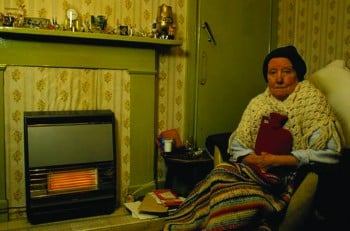
    By Brendan Hennessy Around 20% of all households in Ireland are considered to be in energy poverty, as they spend more than 10% of their income on energy. The latest EU Survey on Income and Living Conditions (SILC) data identify a continuing upward trend in households, both above and below the poverty line, struggling to afford energy. This is also reflected in the work of the Society of St Vincent de Paul (SVP). The overall demand for our assistance rose by 100% between 2008 and 2012. However, our expenditure for assisting households with energy costs rose by 200%, from €3.8m in 2008 to a high of €11.3m in 2012. This assistance is for all fuel types and covers both the Republic of Ireland and Northern Ireland. The issues are illustrated in the words of one person we assisted: “I sit out in the kitchen but during the cold spell…I couldn’t light my fire because it was getting a back draft down the chimney, full of smoke… [my son] has bronchitis and [my daughter] has asthma so I’d to get the heaters out and thank God only for the St Vincent de Paul helped me out to get the heaters, and during the very cold spell…that’s all we had was those heaters…Oh my God the doors we had…there was a big gap. You could see out on the street. I went around the house doing my own little thing… put masking tape around the draft on the window…the snake thing for the door, hot water bottles for the kids to heat upstairs and the bedrooms”. The point is this is not untypical. Energy affordability is not only about being able to buy energy. It is also about housing conditions, the price of fuel and knowing ‘the little things’ that reduce costs. These are the issues that SVP brought to the Department of Communications, Energy and Natural Resource consultation document ‘Towards a New Affordable Energy Strategy for Ireland’ Survey on Income and Living Conditions’. This document pointed to the importance of retrofitting homes in addressing energy poverty. Improving the energy efficiency of the national housing stock, both owner-occupied and private-rented, makes financial, economic and social sense.  Investing in energy-efficiency measures is good for household income, jobs, the environment, and human health and welfare. As to the efficacy of subsidies for retrofitting, we can look to the large Department of Social Protection expenditure on the fuel-allowance and household-benefits package. The €400m spent annually on these allowances dwarfs that of the retrofit budgets of the Sustainable Energy Authority of Ireland (SEAI) yet retrofitting would clearly help reduce the need for the allowances. Retrofitting homes plays an important part in addressing energy poverty, but it should not fall to those already in energy poverty to foot the bill. If Government wants to fund a significant national retrofitting campaign it behoves all stakeholder Departments to contribute to the cost. SVP’s recent briefing paper ‘Policy Links on Energy Poverty’ contends that the debate must take account of the multi-layered benefits of energy efficiency measures. The positive health contributions are suggested by the quote above. SVP volunteers speak of their fears for children’s education when they visit homes where students have to do their homework in busy family rooms due to the absence of heated quiet rooms. Any resultant reduction in bills takes financial pressure off households, reduces dependence on credit and gives more financial autonomy. Reducing energy use benefits the environment and wider society. Research, undertaken by the Vincentian Partnership for Social Justice and commissioned by the SVP, shows the positive contribution of energy retrofitting. However, it also points toward continued income inadequacy for households dependent on social welfare. This research, entitled ‘Minimum Household Energy Need’ found that, for certain household types in different accommodation and using different fuel types, improving the BER rating of a home from an E to a B halved the household’s energy costs. Despite this however, such households remained in or close to energy poverty as they still paid more than 10% of their income on energy. The report warns that: “even at the highest efficiency levels examined, social-welfare-dependent households tended to remain in energy poverty and all faced inadequate income. Consequently policy must address both overall income adequacy and dwelling efficiency”. • Brendan Hennessy is Membership Liaison Officer, Social Justice and Policy Team, Society of St Vincent de Paul.

    Loading

    Read more

  • Posted in:

    Doctors rob York Street

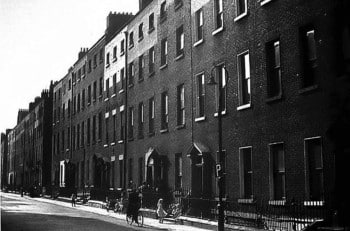
    By Mannix Flynn In 2009 the then Lord Mayor of Dublin, Eibhlin Byrne, officially opened the new apartment blocks at York Street, Dublin. It was hailed, by some, as a flagship of social housing and regeneration. Before this, York Street housing had magnificent spaces outdoor and indoor – substantial back gardens, ample space in bedrooms and good-floor-to-ceiling heights. Residents had been housed in a dilapidated, though distinguished, Georgian former tenement block with fire-safety issues. Had that block been refurbished and made safe it would have safeguarded the aspirations of an entire community. Instead, what happened was the perpetration of the architecture of containment and an ‘othering off’ – the erasure of the spirit of York Street apartments. The very concept of these blocks was constrained: by the necessity to sell more than half of York Street at its east end to the plutocratic St Stephen’s Green-anchored Royal College of Surgeons in Ireland (RCSI) for swanky new college facilities. During the negotiations between the residents and tenants of York Street which began around 2007 Sinn Féin’s Daithi Doolan was the representative in the area. There were other Sinn Féin supporters on the ground, and the community felt confident that they were going to get a good deal, though they might have been suspicious about a college of doctors that had built a car park at York Street some years previously against the wishes of the local people purely for financial reasons, generating large-scale vehicle emissions to the detriment of community health. The sweetener for the deal was the use of the RCSI sports and community facilities. The rooftop of the RCSI extension was to be in the form of an all-weather pitch and its facilities were to be shared with the entire community in compensation for the lost green space and amenities. However, in fact these amenities were eliminated by stealth as the community interest was subordinated to that of the well-got RCSI. The all-weather pitch was removed through a variation of the plan. And the use of the facilities as a right was eliminated – becoming instead part of an elusive ‘outreach program’ whereby the community got access to the facility only when it was not in use. In partial return the RCSI gave Dublin City Council around €400,000 of community-gain money, whose destination is uncertain, and there will be no messiness of integration with the locals for the men in suits and stethoscopes. All this has eradicated the possibility that the RCSI might ever integrate with the community of York St and Mercer St. It was tragically clear in 2009 when the new apartments opened that the residents had had no idea that there was to be no all-weather pitch or sports facility for them. Moreover, as to the new apartments, from the outside all looked well but from the inside there were many concerns: safety of windows, tap-water overheating, much-vaunted roof gardens quickly closed down by Dublin City Council (DCC) as unsafe. Six years on and the RCSI has another grandiose plan. It is going to build another much bulkier building at York Street with – again – no rooftop facility, this time abetted by newish local Sinn Féin Councillor, Chris Andrews. A recent offer of around €3,000 each in compensation to the residents at York Street has been dwarfed by offers of more than twice that amount made to residents in Cuffe Lane at the rear of York Street who own their own homes and therefore seem to be treated more seriously by all concerned. The always stuffy but greedy, morally and aesthetically bereft, hawkish and cynical RCSI and the dead hand of Dublin City Council with the naïve support of deal-making local Sinn Féin councillors in 2009 and again in 2015 underpinned the dynamic of the  take-out. The property-playing RCSI, which has over several generations colonised much of the St Stephen’s Green area with characteristic mediocrity is now insisting that all the deals it did with the DCC tenants are confidential. While some of the residents in the area seem to be content, a number are not, as they face in to two years of dawn-to-dusk pile-driving, dust and heavy-machinery movements, and are seeking legal advice. Sinn Féin’s Chris Andrew’s has been rather coy on the matter in keeping with the ethos of his new party. None of the other local councillors was aware that negotiations were taking place. Many residents now feel they were stampeded into signing the RCSI secret documents, especially when their private neighbours have been paid substantially more than they have and Chris Andrews hadn’t informed them of this. When I raised the matter at the DCC in a motion that called for a guideline protocol for major compensation for DCC tenants, Andrews came over oddly uncomfortable. He should have been wholeheartedly in support of this motion, but the truth is that Mr Andrews is busy being in support of the RCSI, illustrating the journey the Shinners have travelled. They have aided and abetted the rape of a vulnerable community and its assets. •

    Loading

    Read more

  • Posted in:

    Sinn Féin v Fine Gael

    By Eoin O’ Malley At most a year out from the general election, we are beginning to see some shape to what will be the most formative election in recent memory. The 2011 election was called an ‘earthquake election’ by some political scientists because on many metrics we saw remarkable changes. It was one of the most volatile election campaigns in post-war Europe. But it was as remarkable that such a volatile campaign produced such a familiar government. The Irish did what they were used to doing, kicking out a long-lasting Fianna Fáil government and replacing it with a Fine Gael-Labour coalition. The current government enjoyed a honeymoon of about 18 months, followed by two years of bad news and poor management. However the last six months have seen good news on most fronts: unemployment is down, employment up, emigration has fallen, tax receipts are up, and there are tentative signs that Fine Gael and Labour are benefiting from this in the polls (see Chart 1). Given that governments usually suffer a mid-term slump, a recovery a year out from an election, accompanied by economic growth, suggests that the government could be returned, perhaps needing the support of independents to secures a majority. But the government is not loved, and its improved polling might say as much about the qualities of the opposition as it does about Fine Gael and Labour. To secure re-election the two parties need to do a better job selling their successes, and refuting their failures. The biggest and most obvious failure relates to water charges. Quite how the government managed to make this a touchstones issue is depressing. With the problems of water quality and supply that we’ve seen ubiquitously, most obviously in Galway, nearly everyone agreed that the Victorian water infrastructure needed investment. EU rules meant that its operating costs needed to be funded by consumers. A majority also agreed that people should pay in proportion to use. But the government regarded water supply as a technical issue that could be delegated to an outside agency. It failed to understand that it was more than a technical issue; it was a new tax and that required a political approach. The tax had to be sold to the public, but Irish Water was designed to supply water not sell a policy. A less obvious failure, but one that will limit the government’s resurgence, is its lack of support for the group of people who bought houses at the height of the boom and the ones who are trying to buy them now. There has been no attempt to curtail banks from increasing interest rates. Nor is there any concerted attempt massively to increase the supply of housing. The government, as one the largest property owners in the country seems to view increased property prices as a good thing. But it’s damaging Ireland’s recovery because a new generation of people is being asked to pay excessive amounts for a place to live. These costs will increase pressure for pay hikes. It’s not for nothing that the groups that are least likely to vote for the government are aged between 25 and 45. This is the generation that is least secure about its future, and all parties hoping to make electoral gains will have to make them here. Fine Gael looks in pretty good shape for the next election. Its message will be simple: recovery and stability. It will frame the choice as between the progress it has made and the risk of a Sinn Féin-led government. It will warn voters that they shouldn’t throw it all away to  populist promises of miracle recoveries. Rather, it can suggest, recoveries are delicate flowers that need to be nurtured. Since Fine Gael has shown itself to be inept at selling its message in the past one would wonder whether it could throw it all away by succumbing to its own populist tendencies. Sinn Féin will frame the election as a choice between it and austerity. It obviously suits the party that the election will be seen as a choice between it and Fine Gael. Converting opinion poll support into seats may be its biggest challenge. It has two obstacles.  Its supporters, predominantly young, working-class men, don’t vote and it will take its entire formidable machine to mobilise them on the day. It’s also not clear to what extent the party is repulsive to transfers. Certainly by-election results show that in fights between it and anyone else for a last seat you’d have to be on anyone else. Another danger for Sinn Féin is its choice to tie itself closely to Syriza. If the Greek experiment ends badly, with Syriza making significant concessions to Europe, or worse leaving the Euro, it might come to regret not modelling itself instead on the Scottish Nationalists. In fact we might prepare ourselves for that comparison being made by the party. Of course, unlike the SNP, Sinn Féin doesn’t want to govern yet. It will stay out, hoping to build on successes to solidify its position as a top-two party in the state, hoping that it can lead a government following the election in 2020 or 2021. Labour’s big mistake was entering government, when it could have been by far the biggest opposition party. Having chosen government, it will depend on personalities and transfers, but it needs to be less apologetic. Apologies indicate that you made a mistake. Labour promised too much in 2011 when it didn’t need to. It must have known that such promises wold leave hostages to fortune on the electoral battlefield, but having failed to protect university fees and child benefit it now thinks that apologising will somehow make it better. It won’t. It just reminds voters. Instead the party should be more aggressive in reminding voters of where Ireland was in 2011 and where it is now. As the smaller party in government it has a tough job. The larger party usually gets to claim the victories, the

    Loading

    Read more

  • Posted in:

    Nobody move. Northern Ireland and the general election.

    By Anton McCabe In the UK General Election of May 7th, there is only a possibility of three of the North’s 18 seats changing hands. They are East Belfast, South Belfast, and Fermanagh and South Tyrone. The Election also looks like being another stage in the weakening of the Ulster Unionist Party and the SDLP. The DUP and Ulster Unionists have made a pact in four constituencies. The DUP already holds one of the two seats where it got a free run, North Belfast: it is favourite to take the other, East Belfast. In return, the Ulster Unionists were given a free run in Fermanagh and South Tyrone, which will be an uphill struggle: and in Newry and Armagh, which is unwinnable by a Unionist. East Belfast was the story of the last General Election in the North. Naomi Long of the Alliance Party prised a stunning victory. She was voted for by the spectrum of those who disliked DUP leader and First Minister, Peter Robinson. That stretched from Loyalist paramilitaries to Sinn Féin supporters. There is no evidence that Long personally made any deal with the Loyalist paramilitaries. However, some UVF figures mobilised votes for her. Long benefited from a perfect storm that hit the DUP in 2010. Like many strong characters, Robinson has enemies. Five months before the election, one of Ireland’s juiciest ever scandals burst on him. Robinson’s 59-year-old wife, Iris, had procured loans for her teenage lover to open a restaurant. She had failed to declare her interest while a councillor on Castlereagh Council which had granted his restaurant permission. Long is more muscular in her approach than the archetypal Alliance Party candidate. She has also shown herself more sensitive to the issues affecting working-class people than most of her party. At Westminster, she voted against the Welfare Reform Bill, which Alliance wants enacted in the North. Long is not having the same good fortune now as in 2010. The scandal round the Robinsons has dissipated. Next month, she is facing Gavin Robinson (no relation of the First Minister), without  ‘Swish Family Robinson’ baggage and a standard bearer for modernisation of the DUP. The wide-ranging alliance that backed her has sundered. Three years ago Alliance members on Belfast City Council voted to fly the Union Jack over Belfast City Hall on designated days, rather than every day as previously. That stirred up a wave of working-class Loyalist protest – including from some who had backed Long. However, many of these working-class Loyalists are so alienated from the political process they are unlikely to vote. The DUP is playing the social-conservative card to attract the more middle-class end of her vote. Many of these are older and religiously conservative middle-class Presbyterians. Flying the Union Jack over Belfast City Hall is not a make-or-break issue for them. They are concerned, however, at her support for gay rights and same-sex marriage. The numbers spell out Long’s difficulty. She had a majority of 1,500 over Peter Robinson last time: the Ulster Unionists stood and gained just over 7,300 votes. This time, they are backing the DUP. While some Ulster Unionist voters will find the DUP too hard to stomach, more will vote Gavin Robinson than Long. South Belfast is also in real contention. SDLP leader Alasdair McDonnell has won twice due to a split – even shredded – Unionist vote. The constituency was then majority Protestant, though it is now fairly evenly balanced. South Belfast is different from most of the rest of the North: it has a large population born outside the North, and sizeable enclaves of middle-class trendiness. McDonnell has not made his task easier by imploding publicly in recent months. His most spectacular gaffe was to say: “Nobody can predict that a foetus is not viable and that’s the problem, and as a GP, I’m fully aware” while speaking about abortion. At time of writing, his most recent blunder was to refuse to say whether David Cameron or Ed Miliband would make the best UK Prime Minister – despite the SDLP being British Labour’s sister party. McDonnell is also victim of very nasty online campaigning. Figures indicate McDonnell will have some difficulty. According to local election tallies, five parties are separated by 2,000 votes. The DUP is ahead, then Alliance, followed by the SDLP, Sinn Féin and Ulster Unionists. Sinn Féin is running former Belfast Lord Mayor and businessman Máirtín Ó Muilleoir, who can encroach on the SDLP vote. However, McDonnell is slight favourite. The agreement between the DUP and Ulster Unionists does not embrace this constituency, meaning both are standing. UKIP is also running, with its candidate having a certain base in some of the working-class Loyalist parts. For all this, it would be foolish to rule out the DUP’s Jonathan Bell, coming through a crowded field. Bell is, however, at a certain disadvantage in this middle-class constituency. He once criticised golf clubs for harbouring sectarian attitudes. The other constituency which may change hands is Fermanagh and South Tyrone. This is not the same constituency as that which elected hunger striker Bobby Sands in 1981. In the 1995 shake-up of Northern seats, large, mostly nationalist components were hived off to West Tyrone and Mid Ulster. The election in Fermanagh and South Tyrone will take place in a parallel universe. It will be a naked sectarian headcount. This is despite the Fermanagh end of the constituency having seen a major campaign against fracking, and an anti-fracking activist standing as a Green candidate. In the sectarian fracas, Sinn Féin’s Michelle Gildernew is favourite against the Ulster Unionist Tom Elliott, who is also supported by the DUP. There is an estimated nationalist majority of almost 4,000 on the register. Elliott also suffers from DUP mealy-mouthedness. In November last year DUP Enterprise, Trade and Investment minister Arlene Foster told the DUP Conference he couldn’t win the seat, though she supports him. The SDLP is running a councillor from west Fermanagh, but his vote will be squeezed: possibly further damaging

    Loading

    Read more

  • Posted in:

    Migrant entrepreneurship.

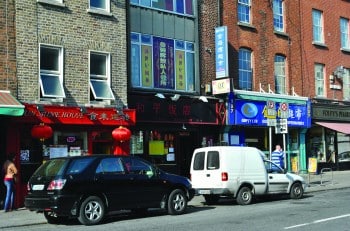
    By Niall Crowley. At best we see migrants as workers, and all too often as a source of cheap, exploitable labour. Integration policy tends to be concerned with what happens in the workplace or out in the community. We fail to see migrants as entrepreneurs. Economic policy and economic development programmes don’t do diversity and end up incapable of meeting the specific needs of migrant entrepreneurs. That is why we need to put the economic back into integration. The Dublin Institute of Technology has been setting trends in this regard. It established an Institute for Minority Entrepreneurship in 2006. This Institute is demonstrating how to put the economic back into integration. It was set up because the relevant state agencies did not appreciate the particular difficulties facing entrepreneurs who were immigrants or from minority groups. At a recent Dublin City Council event, Professor Thomas Cooney, Academic Director of the Institute, outlined the specific difficulties for migrant entrepreneurs. He said that about 12.6% of migrants have partial or full ownership of a business. This compares with 8.6% of the Irish population. Most of these migrant-owned businesses provide small-scale, locally-traded services. They are often targeted at the migrant entrepreneur’s own community. A high 94% employ five or less staff and a significant 65% generate €50,000 or less in annual sales revenue. He pointed out that migrant entrepreneurs start out in sectors where there are no barriers to entry such as retail, restaurants and IT. This is because of the difficulty they have in getting access to finance. Most go to family and friends for start-up funds. Migrant entrepreneurs have limited access to the business networks needed for successful start-ups. They don’t know their way around the business support systems that are available in Ireland. Some of them face language barriers. He suggested that the biggest problem was one of trusting, and gaining the trust of, the Irish customer. Lack of trust is sometimes manifest in having to battle extremes of racism, discrimination and prejudice. The Irish Government has set a target for Ireland to be, by 2020, the best country in the world in which to start up a business. It is big into entrepreneurship. Why we have to be the best in the world and cannot settle for ‘very good’ remains, as always, a mystery. However, this commitment should provide a favourable environment for this widespread migrant entrepreneurship to find the support it deserves. Dublin City Council initiative is part of a Europe-wide initiative of the Council of Europe covering ten cities called ‘Diversity in the Economy and Local Integration’. The initiative aims to introduce quality-management standards into integration policy such that appropriate business supports are made available to migrant entrepreneurs and such that migrant entrepreneurs have improved access to procurement tenders from public bodies and private companies. Declan Hayden, Director of the Office for Integration in Dublin City Council, is co-ordinating this work for Dublin. He says that one outcome of the initiative will be the inclusion of a focus on business start-ups in the new Dublin City Council Integration Strategy. This will serve to continue the work after the Council of Europe support has ended. Migrant entrepreneurs aren’t hanging around for everyone else to deliver. Catherine Mahoro is the founder of the Down to Basics Network (DotoBa), a platform for migrant entrepreneurs to network and find support. Its networking sessions stared with groups meeting for a cup of tea in the Gresham. The group got so big they began to have duty managers hovering around wondering ‘if they needed any help’. They took the hint and decamped to a larger venue, with the group growing to over 100 members. In May Mahoro launches a networking website for migrant entrepreneurs. She says that migrant entrepreneurs tend to shy away from state agencies. Many work extremely long hours in businesses that are barely sustainable and don’t see the returns their initiative and hard work merit. Financial institutions have shown little understanding of their needs. There is, therefore, some urgency to putting the economic back into integration if this talent and effort is not to be wasted. •

    Loading

    Read more