Abortion

Random entry RSS

  • Posted in:

    Illiberal liberalism

    College campuses around the world are renowned as centres of free thinking, individuality, and acceptance of those from all walks of life. And they are; as long as you think the right way that is. In recent years, it has become more and more normalised for people to be silenced because their opinions are seen as unpopular. In the lead-up to the abortion referendum debates raged across the nation, with students being particularly vocal, perhaps because they had little internal opposition. Although most, if not all, universities have pro-life societies, their Student Unions hold a pro-choice stance. In my experience many students feel demonised by the authoritarian view of the majority and are unable to express their opinions freely for fear of vituperation from other students. The impeachment of Katie Ascough, the former UCD Student Union president in late October 2017 is a notable example of the backlash some pro-life students face. Ascough made the decision to remove information concerning access to abortion from the SU’s magazine ‘winging it’, claiming she was acting on legal advice due to the strict laws surrounding the publication of such material and information. The decision led to the reprinting of the student magazine at an estimated cost of 8,000, a figure which her antagonists claimed was far higher than any potential fine that would have been incurred from the printing of the original material. Ascough was further criticised for making a decision that was not in line with her Student Union’s pro-choice mandate, which had been formally voted in by the student body the previous November. The grounds on which Ascough were impeached were somewhat questionable, however. She did, after all, act in accordance with the law, and technically did not actively withhold the information as it was readily available from other sources. What she did do was express a hugely unpopular opinion which was met with immediate ridicule and condemnation from fellow members of the Student Union and the student body. Posters and pamphlets were spread around campus with pictures of the original copy of ‘winging it’ containing the pricing information of obtaining an abortion and information on where to obtain abortion pills online, accompanied by pictures of President Katie Ascough’s campaign manifesto. Would the reaction have been the same if she had come out with a pro-choice guide? Perhaps not. My own experience as a student in DCU has had similar if less extreme overtones. It is almost automatically assumed that you are pro-choice; it is what is expected of you from other students. Certainly, the Student Union encouraged students via social media, not only to vote Yes in the referendum but to take part in pro-choice events which were happening throughout the year and particularly coming up to the referendum itself. DCU’s Student Union is not an outlier here, as almost every student union in the country supported the pro-choice movement. I was not the only student who saw a problem with this lack of representation for pro-life students. An organisation called Students for Fair Representation, led by a small band of DCU students, petitioned for the DCU Student Union to take a neutral stance on the abortion debate, stating in a Facebook post: “College is a time when we make up our minds on important social and political issues – like the abortion issue. But why does our Students’ Union – our voice – only pick one side of such a controversial issue to represent us and invest our welfare money in?”. From my experience, the conversations being had on campus were dominated by pro-choice opinions and this was easy to see from social media. I can’t even begin to count how many of my friends on Facebook put the Yes filter on their profile pictures. It is perfectly natural for members of the Student Union to support a movement they feel strongly about, after all, they are only human. But I feel it is also important to feel supported by the Union which claims to represent the interests of all students. It is imperative, if you have been elected, to represent those who have elected you rather than your own politics. Membership of a student union is not optional. They should be slow to take stances that even political parties, membership of which is very clearly optional, see as issues of conscience. Liberalism has several guises but the one that is subversive of those who are perceived as less liberal is unattractive, especially where the zeal of the Liberals seems to be in inverse relation to the complexity of the issue. The tainted legacy of the long-intolerant Catholic Church may be that it has left us a society of intolerant liberals, most dramatically our young people. Dearbhla Gormley

    Loading

    Read more

  • Posted in:

    Abortion on the march

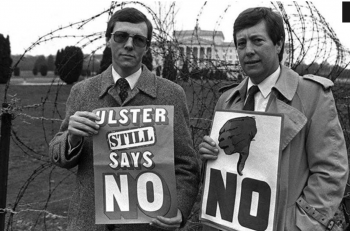
    After the abortion-repeal referendum, there is momentum for change in the North, though DUP-dependent Theresa May has indicated she will not not facilitate it. It has made reluctant bed-fellows of DUP traditionalists and Catholic moral conservatives. DUP Assembly Member Jim Wells has had the DUP whip withdrawn for openly criticising the party leadership. “I’m anti-gay marriage, anti-abortion. I would be conservative, and maybe that’s not the new image the party wants”, he has said. Wells went to Dublin to take part in the ‘Save the Eighth’ march. DUP leader Arlene Foster has noted support from former Sinn Féin voters disaffected by its stance on abortion, coming her party’s way. In early June Ian Paisley Jr tweeted: “I have a letter from a local priest in my constituency thanking the DUP for its stance on these issues and assuring me that he is urging his parishioners to vote DUP because of the stance we take on social matters”. Up to 50% of the North’s Catholics are estimated to be socially conservative, to varying degrees, with 2% to 3%, mostly urban, being fundamentalists. A minority of these actually vote DUP, for moral reasons. On the other hand, however, there are internal strains in the DUP, with some in favour of allowing abortion in certain circumstances and moving away from Paisleyite fundamentalism. Moreover, influence is not all one-way, with the recent West Tyrone by-election emboldening Sinn Féin to a Repeal stance. On May 3 Sinn Féin’s Órfhlaith Begley won that Westminster seat with a majority of just under 8,000. Pro-life campaigners ran a vigorous campaign targeting Sinn Féin in the election. The constituency is 68% Catholic, much of it rural and conservative. Sinn Féin calculates that it only lost approximately 1,000 votes on the issue. It accepts that not all its voters supported the right to choose, but most seem prepared to accept the party position. A factor was that Mary Lou McDonald came out clearly for repeal. Her statement may not have been as strong as most pro-choice campaigners would want, but it was clear. “Sinn Féin is campaigning in the upcoming referendum to remove the Eighth Amendment from the Constituion”, she said. “We are doing this because this is a public health matter. The Eighth Amendment should never have been put into the constitution because that was never the appropriate place to address issues of women’s health”. It’s a long way from the IRA in the 1930s which declared that it would take its social policy from Papal encyclicals. It’s even a big shift since the 2015 Westminster election in Fermanagh and South Tyrone. There pro-lifers had targeted Sinn Féin. In response, it circulated a lea et in the name of Martin McGuinness: “I hold very strong personal views on the issue (abortion) myself and have always been and remain pro-life… As one of the leading parties in the Assembly, Sinn Féin will continue to block the extension of the 1967 Abortion Act to the North”. Despite this letter, sitting Sinn Féin MP Michelle Gildernew lost her seat. While there has been no vote in the North on the issue, the clear majority of ‘yes’ votes in Southern border counties is suggestive of attitudes in the North, even in rural areas. These are areas where communities straddle the Border, and most people have family on both sides. Ballyconnell, Co Cavan, is on the Border with South Fermanagh. It voted ‘yes’ by almost two-to-one. Clones, Co Monaghan, is surrounded on three sides by Fermanagh. All five polling booths had a ‘yes’ majority. The same was true of parts of North Monaghan, physically, economically and socially intermeshed with Tyrone. The villages of Emyvale and Glaslough were strongly ‘yes’. That could be seen in East Donegal. Lifford, on the Border with Strabane, where most residents in several housing estates are from Strabane, voted 51% ‘yes’. From Monaghan and Donegal, there are indications that many members of the Presbyterian Church, the North’s largest Protestant denomination, did not support their Church’s call for a ‘no’ vote. In Aghabog, Co Monaghan, with a strong Presbyterian community, ‘yes’ took 160 votes to 140 ‘no.’ Nearby Drum is as Presbyterian and Orange a village as any in Ulster. It voted ‘no’, but narrowly, with 110 ‘yes’ and 119 ‘no’. In Monaghan even more than Donegal Presbyterians congregations are rural and doctrinally conservative. Thus, urban Protestants in the North could reasonably be assumed to be more pro-choice. In the longer term, the Referendum result will modify attitudes in the North. A significant driving factor of Unionism is the genuine fear of ‘Home Rule is Rome Rule’. Most Unionists would recognise there have been signi cant changes in the South, but would have certain doubts. This vote is proof of big change. In the foreseeable future it is unlikely that any significant proportion of the Protestant population will move to support Irish unity. A 2016 BBC poll showed 72% of them (and 47% of Catholics) against. But even in conservative Northern Ireland, now be sieged to the South and East by abortion liberals, a wave of change is rolling. Anton McCabe

    Loading

    Read more

  • Posted in:

    Equality over freedom

    Politics is a continuum from equality to freedom. If freedom is the vertical axis of a graph and equality the horizontal axis, every society – and every citizen – decides where the balance should be. A libertarian society tending towards survival of the fittest will not foster equality; an egalitarian society may need to be enforced by a strong state to the detriment of individual licence, and so on. Philosophers from Tocqueville to Hayek to mainstream liberals accept there is a trade-off. Village tends to the egalitarian end of the scale: truly free equality, after education and reflection – precise processes for which have been touted by many modern philosophers – is a mature and more stable goal than equal freedom. Workaday politics can be charted and defined on the graph. However, the same political action can be justified by different points on the graph. Issues like divorce, gay marriage, and abortion can be deemed imperatives of either freedom or equality. In this respect the language used is not a definitive indicator of the politics. A campaign can claim to be about equality but in fact on analysis be defined by positions only of freedom. Any campaign fronted by Simon Harris or Leo Varadkar – agents above all of the propertied, of the status quo for the wealthy – is unlikely to be rooted in any real substantive equality. It is perfectly legitimate to campaign for gay marriage or abortion because you want yourself or others to exercise rights to freedom to get married or have an abortion. Telltale signs if you do so you may include that you are less likely to make common cause with campaigns for others suffering discrimination of all sorts. You may ignore issues like racial equality, Travellers rights; you may express no concern about economic, social and educational inequalities. It is legitimate but it is not Village’s political motivation of preference. For Village recent referendums reached the right solutions but were disappointingly rooted in the politics of freedom rather than that of equality. The egregious wrongs in Irish society are best resolved by solutions driven by equality. This society above all facilitates those who are economically adroit. It provides opportunity for people who are strong; worse still it provides opportunity for them to make mistakes (trashing the environment is the one posterity will most register). It provides very little vision as to how they should exercise their freedoms. – this is in part the problem of 100 channels but nothing on the television. But on a societal scale. It is now time to move on to new agendas that are really radical. These include: agendas of radical redistribution of wealth in society, of radical changes to the opportunities available to those who have suffered traditional discrimination, including (still) to women and to those of minority sexual orientations, to racial minorities including Travellers; of educational opportunities facilitated by positive discrimination so even (or especially) the poorest in society can be whoever they want to be; of redistribution of power so it is exercised at the lowest, most local, most democratic levels; of attenuation of property rights so they are exercised in the common good. The goods in society should be distributed by that society so those least well off are most compensated. Everyone in society is morally equal, they should be treated by society in a way so they can participate in the fruits of the earth equally. It is a myth that the fruits of the earth are distributed in accordance with merit – they have been accumulated largely by force and luck. The idea that in 2018 a child’s future is determined by the time it reaches two years old is an abomination. Ireland is growing up politically. Ireland has waved good-bye to the invidious influence of an unrealistic Church and voted the right way on divorce, gay rights and abortion. However, these are really liberal causes focused on issues of identity. It is time we addressed the issues of endemic inequality enshrined down the generations. As regards the Constitution we do need to abolish Article 41 which recognises the woman’s life within the home, so devaluing women who choose not to work within the home; and to eliminate the part of the preamble which invokes the Constitution “in the name of the Holy Spirit”. Indeed the Constitution’s premises relate to another era and the whole document should be reconceived. More generally, materialism, capitalism and competition have had their day, it is time to welcome in a new agenda – of equality of outcome/condition: equality of wealth and power, of quality of life, of environment, of education, of fulfilment and happiness, of respect and opportunity. This should be achieved through politics and laws. The constitution should be amended to reflect it too. The most radical change would be to enshrine equality of outcome/condition as a constitutional imperative across the range.

    Loading

    Read more

  • Posted in:

    50 years since 1968

    Not a week has gone by in 2018 Ireland without several street demonstrations, especially about abortion and the housing crisis. In France, protesting is part of the vernacular. Riots are common: just look at 1789 and 1968. Ireland and France share a reputation for feistiness. A comparison between Irish and French demonstrations could be instructive. “What do we want? Public housing! When do we want it? Now!”. More than 10,000 people are currently home- less in Ireland. The demonstration I attended, organised by the National Homeless and Housing Coalition, on 7 April was good-natured: festive and serene. People played and sang music as they marched. The Garda seemed engaged and smiled while overseeing the demonstration: a safe protest. It appeared the crowd was representative of the general population, as perhaps you might want. It started at the Garden of Remembrance and ended in front of the Custom House in Dublin in light rain, as cheerful as the weather allowed. Its effectiveness was its mainstream attendance; there was no danger here. It would, I reflected, be different: more fractious, less representative, angrier – in France. Ireland fights for Human Rights At the moment Ireland is in arms over: abortion, education, sex education, health, animal welfare, drugs. But I have the sense that some of these campaigns are not mainstream, even as protests. Certainly the Water Protests were successful, albeit the underlying political message (no new taxes?) and symbolic value were not too clear. Abortion is a long-standing divisive issue in Ireland, symbolising the hegemony and, later, decline of the Catholic Church. Protests date back to 1983 when an unwise blanket prohibition was approved in a referendum. In May there will be a rerun. There are many events, debates and demonstrations on both sides, with pro-choice as fashionable politically as pro-life must have been a generation ago. The demonstration I attended in April was ‘pro-choice’- for ‘Equality, Freedom and Choice’, organised by Rosa. The rally was jubilant and confident, almost over-confident. The Daddy of all modern Irish marches is the PAYE protests from 1979-1980. Around 700,000 Dubliners marched against the stifling ‘Pay As You Earn’ tax. The BBC called it “the largest peaceful protest in post-war Europe”. But I sense things have changed since then. There is no longer an Ireland the sense that the regime is fundamentally at odds with its electorate. Perhaps it’s because the country now mostly complies with international norms or is fast moving in that direction; perhaps it’s because the country is simply much wealthier and has never been so confident. In 2003, Irish anti-war protesters organised a demonstration for peace in Iraq. The British and Americans had invaded Iraq. 100,000 walked on the streets of Dublin. It was a thoroughly internationalist protest. In 2006, a violent demonstration took place in Dublin’s O’Connell Street. For some reason Northern Unionists wanted to organise a ‘Love Ulster’ Parade to honour the victims of the IRA. A counter demonstration materialised and a riot started. Several Molotov cocktails were thrown and cars were burnt. A total amount of 14 persons were wounded and 41 arrested by Garda. Locals put the intense violence down to the alien influence of recalcitrant Northerners: it didn’t symptomise a new riot mentality. These kinds of demonstrations are pretty rare in Ireland compared to in France, where there are wide-ranging politically-driven strikes and demonstrations every year. Governments can fall as a result of demonstration culture in France. If France had had an international bailout that was forcibly inflicted on the population; if France had had the iniquities of Nama bailing out the richest failed developers there would have been strikes and riots. A country’s protest mentality varies from generation to generation. We’ll put down the Irish monster meetings and boycotts of the nineteenth century as the fruits of a different era. Where a country is colonised and not run for the benefit of the majority – or a significant minority – wideranging subversion is to be expected. In Ireland it culminated in the Easter Rising in 1916 and the War of Independence 1919-21. In the North of course discrimination against Catholics fuelled a later whirlwind. In the Bogside riots of 1969, eight people were killed, a majority Catholic, and over 150 homes destroyed; and the IRA campaign resulted in 1696 deaths. But, though important, this all speaks little to the modern-day Republic of Ireland.   France, protest pioneer French demonstrations have been well-known and lethal since at least the 18th century with a sustained and celebrated (though not of course by Edmund Burke) historic riot: the French Revolution, facilitating a declaration of the rights of man and changing forever the notion of the political establishment. In the twenty-first century, protests are still an important political phenomenon. France has been a global leader in dissent. The rockstar of street opposition was May 1968 when strikes and demonstrations led by students and workers and the occupation of universities and factories across France brought the entire economy of France to its knees and political leaders feared civil war or revolution. The moribund government itself ceased to function for a while after President Charles de Gaulle secretly fled France for a few hours in Germany. ‘68 changed France’s democracy: the super-annuated President De Gaulle resigned, the Assemblée Nationale was dissolved, and government committees were formed to restructure secondary schooling, universities, the film industry, the theatre and the news media. The Grenelle Accord gave better conditions for the unemployed, a 35% increase in the minimum wage and a fourth week of paid leave for those in employment. Mentalities started to change too with a sexual revolution from the young. Mixed schools became more common. 1968 sundered a post-War France of austerity, conservatism and asceticism. Nevertheless the movement succeeded “as a social revolution, not as a political one”. President of the Republic (2007-12) Nicolas Sarkozy famously denounced May 1968 as the source of contemporary France’s problems. The student revolts against bourgeois society introduced a “relativism”, he argued, that undermined national identity, the spirit of

    Loading

    Read more

  • Posted in:

    The appeal of Repeal

    There have been many turning points and defining moments as the debate over repealing the Eighth Amendment has unfolded over recent weeks. Some of these have been the powerful stories of individual women or groups of women; others have been the remarkable statements of specific organisations and yet others have been the unexpected campaigning experiences on the ground. Not least of these turning points has been the remarkable fund-raising campaign launched by Together for Yes just two weeks ago. It had a target of €50,000 initially but quickly increased to €100,000, €250,000,€300,000, €450,000 and surpassed €500,000 in the space of just ten days. But what moved even veteran campaigners were the heart-breaking stories and compelling responses of many of the almost 15,000 thousands who contributed. And for some, who made the decision to contribute despite being hardly in any position to afford to, they were matched in turn by other women and men welcoming the chance to make a public statement and many other thousands who contributed in silence. It was truly amazing the way you could see, feel and watch the secrecy that still thrives in Ireland as many who contributed asked to be anonymous, but were glad that they had found a way to make their statement within a society that silences and renders invisible their actual experiences as women in this country. Other defining moments have been the courageous statements by some organisations that have refused to have their stories manipulated in the interests of those who want to deny women access to health services in their own country and to reproductive justice for all women in Ireland – including migrant women, adoptees and women with disabilities. I would highlight in particular the statements of Downs Syndrome Ireland (DSI), Migrants and Ethnic-Minorities for Reproductive Justice (MERJ), Adoption Rights Alliance (ARA) and Inclusion Ireland (II). Without the timely intervention of Downs Syndrome Ireland (DSI) appealing against the exploitative use of images of children with Downs Syndrome, such images would have been far more pervasive. DSI has been joined by Inclusion Ireland making visible the often hidden experiences of women with disabilities, too many of whom have been denied the right to have a child or who have experienced disrespect and marginalisation within the maternity services in Ireland. It has been the persistent campaigning and activism of MERJ that has ensured that the rights and experiences of migrants and ethnic minorities have been kept in the forefront of the campaign for Repeal: “We often hear about Irish women who are forced to travel to England to access abortion. But what about the stories of the people who can’t travel to access healthcare due to legal status, lack of money, lack of childcare, disability, etc? Migrants and ethnic-minorities face enormous barriers to accessing abortion and maternity services and are disproportionately affected by the 8th amendment. Let’s remember Savita Halapanavar, Ms. Y and the countless others”. Another critical turning point and special moment in this Together for Yes Campaign has to be the very powerful and unstinting voice rarely heard in the mainstream debate on reproductive justice. The Adoption Rights Alliance (ARA) puts forward its compelling case for Repeal in the strongest possible terms. “For our organisation, the Eighth Amendment represents the latest incarnation of the control that was exerted over the thousands of women and girls who were forced to relinquish their children for adoption and who were incarcerated in Mother and Baby Homes, Magdalene Laundries and other institutions. Since 1983, all pregnant women in Ireland have been denied the right to choose whether to proceed with a pregnancy, just as adopted people’s natural mothers were denied any choice. ARA is opposed in the strongest possible terms to the notion that adoption represents a viable alternative to abortion. We firmly recognise the right of a woman to choose not to pro- ceed with a pregnancy. Adoption should only ever be utilised in situations where a child genuinely needs a home, and not as a mechanism whereby women and girls are forced to carry to term and then relinquish the child to a closed, secret system”. Individual voices have also brought new and unexpected emotional experiences to the urgent Repeal cause – in the last few days the story recounted by Chris Fitzpatrick, Obstetrician and Gynaecologist has caught the imagination of many. “I am a doctor. I am supposed to look after people. The woman sitting in front of me is crying. She has had a scan. Her baby’s brain has not developed. The baby will not survive. The woman is 20 weeks pregnant. Her partner has his arm around her. Her mother and father are on their way. Some of her in-laws too. I go over the options. It’s too early to make any decisions. Emotions are too raw. The midwife is very kind to them. We go through everything again the next day. The woman says she cannot go through the rest of the pregnancy. She is too upset. She is wringing her hands in anguish. I cannot help her. She will have to go to England. She and her partner will have to make their own arrangements. Of course, I’ll see her back afterwards. She has our number. She will have to talk to the doctors in England about how to bring the baby home. She wants to bury her baby with her grandparents. The woman is still crying. I offer her a tissue. I have a ticket for the hospital car park. They won’t have to pay on the way out. Inadequate gestures. Cold comfort. There is nothing more I can do. Doctors in another country will look after her. Everyone tells us how important communication between doctors is. I don’t lift a phone. I don’t write a letter. My hands are tied. As they leave, they thank me. I wonder: for what? I close the door of my office. I can hear the woman crying on the corridor.” (Chris Fitzpatrick, consultant obstetrician and gynaecologist (and former

    Loading

    Read more

  • Posted in:

    Let’s despatch the Eighth

    One morning recently I woke up to abusive tweets. “What is it with lesbians hating unborn babies?? Please explain!”. “Why so many lesbians pushing abortion when they should never really need one??!!!”. As a long-time feminist campaigner and Convenor of the Coalition to Repeal the Eighth Amendment, vulgar interactions from anti-choice supporters are inescapable. I’m too long in the activist tooth to let them bother me (much), but this latest batch does make me wonder. Why is “lesbian” used as a term of abuse, and what has it got to do with “hating” babies, or women, or men, or indeed anything else? I’d like to tweet back (but I don’t): “Look here, you with the vituperative tweet finger, I’m a feminist, lesbian, radical Irish grannie (of two, so far), and I’m pro-choice because I believe in equality, in human rights, in justice, and in a world where all women, everywhere, including my daughter and my granddaughter, have the right to make decisions for ourselves about our bodies and our reproductive lives. It’s a national issue, it’s global and it’s also very personal. So there!”. The Coalition to Repeal the Eighth Amendment was set up in recognition of evident and popular demand for change. Our members include trade unions, pro-choice and feminist groups, human-rights organisations and many other NGOs and groups. The next year or so will be vitally important in advancing this issue. It has become a real election issue. If political soundings are to be believed, we can expect a “national conversation” after the election in the form of a Citizens’ Convention, followed by a referendum. It is hard to exaggerate the ‘chilling’ impact of the Eighth Amendment on women, on doctors in preventing them from working in the best interests of their patients, and on our society as a whole. What does it say about respect for women and our capacity to make our own decisions about our lives? What does it say about respect for human rights principles? Successive Governments have ignored robust criticism of the Eight Amendment from UN and other international human rights bodies. Even as I write, there’s a woman setting off from Sligo or Kerry or Wexford or Dublin on that dismal journey to the UK for an abortion she can’t obtain here with the support of her partner, her family, her friends, her GP. There’s another woman getting off the plane on her lonely trek back, and another desperately trying to find the money or the vital travel documents, or whatever else she needs to go abroad for an abortion. Every day, at least ten women are forced to go through this exhausting and demeaning process because the law and the health services fail to provide for women’s full reproductive needs and rights. We have no idea how many more women are in tears and desperate because they don’t have the resources of money, travel papers, childcare, time off work, good enough health and capacity, or whatever it is they would need to be able to make the journey. We predicted the direct and dangerous implications of the Eighth Amendment for women when it was introduced into the Constitution in 1983. We have learned with terrible sadness and anger of women dying. We have had to bear unwilling witness to innumerable personal tragedies dragged through the Courts and exposed in the media. As women, the Eighth Amendment ensures that our human rights are consistently breached during pregnancy by making a dangerous, unworkable distinction between our lives and our health. It denies us life-saving treatment such as chemotherapy. It forces us to remain pregnant against our will, even in cases of rape, incest and where a fatal foetal abnormality has been diagnosed. The Eighth Amendment puts our health at risk, denying us options even when the outcomes are clearly long-term and debilitating. It discriminates against poor and marginalised women and all those who cannot travel abroad for an abortion. Disgracefully, it criminalises women for the ‘procurement’ of an abortion, including women who obtain the abortion pill, the safest and most straightforward means of abortion. It criminalises medical professionals who assist women to do so. It places punitively strict parameters around the crucial information that reproductive health services can provide. It’s clear that the Eighth Amendment no longer reflects public opinion, with poll after poll showing strong support for its repeal. While we certainly don’t underestimate the amount of work to be done, our members are committed to the battle ahead. With public support we will campaign vigorously for repeal of the Eighth Amendment. In 2016, we don’t think that’s too much to ask. Do you? Ailbhe Smyth Ailbhe Smyth is Convenor of the Coalition to Repeal the Eighth Amendment

    Loading

    Read more

  • Posted in:

    Portuguese parallels

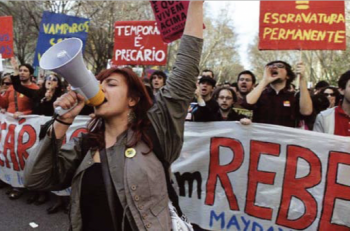
    In 2011 Portugal was at the forefront of Europe’s anti-austerity movement. Yet, four years later, as elections approach in the Autumn, there is no chance of a Left government to ally with Greece’s Syriza or the recent municipal victories in Spain. What went wrong? And can Portugal return to the frontlines? Village’s Ronan Burtenshaw interviews Bloco de Esquerda’s Catarina Príncipe. Q. First, can you tell me how Bloco de Esquerda [the Left Bloc] came about? Several events happened at the end of the 1990s that played into our foundation. The anti-globalisation movement, centred around Seattle in 1999, was important. There was a growing conclusion that we need to find new ways to work together and build projects. Some of these were forums, others were political parties. That was the international moment we were in. Then there was the Indonesia-East-Timor war and occupation. The Portuguese population had its own anti-war movement and sided with Timor against Indonesia. This managed to bring different sections of the Left together to discuss war and campaigning. Finally the failure of the abortion referendum in 1998 was also an influence. There was a referendum to overturn laws banning abortion in Portugal but no broad campaign by progressive or left-wing forces; instead every little group ran their own one. Some of these ran against each other or had clashing strategies. The Yes vote lost, so abortion was illegal in Portugal until 2007. This was the last straw for many on the Left. Q. So how did Bloco form out of these conditions? The definition of Bloco, in its first statute, is a party-movement. It is a broad party that engages with other movements without substituting for or controlling them. It is built up by this grass-roots strength and given a voice in institutions, with a political programme that unites those two domains. Therefore it manages to build strategy together with people who come from very different perspectives, activist histories and traditions. We grew steadily from 1999, when the party formed, until 2011. From 2005 Portugal had a liberal government under the Socialist Party [Portugal’s Labour Party] which had been applying austerity measures for some time before the crisis hit. They used the crisis as an excuse to escalate this. In 2009 we had elections and a broad social mobilisation against austerity. The Socialist Party still won these elections but they didn’t achieve a majority and formed a minority government. Bloco de Esquerda had 10%, the Portuguese Communist Party had 8%, so the radical Left was on almost 20%. Q. What was the result of this growth in support for anti-austerity alternatives? It didn’t mean anything in terms of the programme of the Socialist Party government. In fact, from 2009 onwards they began to impose what they called the “four pacts”, which were packages of austerity measures. The first one cut public spending, the second cut social security, and so on. In parallel they introduced continual measures liberalising the labour market. This produced social mobilisations. We had important Euro May Day demonstrations in 2010. Euro May Day parades are structures we inherited from Milan – colourful, anti-union, involving precarious/ zero-hours workers, quite creative and young, talking differently about labour. Some parts have very Negrian theories, others go with Guy Standing’s idea of the precariat. Our version of this, in contrast to those in Italy, didn’t adopt an anti-union discourse about precarious work but rather tried to ‘add struggles to the struggle’ and forge links with the unions, joining them on the May Day march. We developed a theoretical framework called “precarity in life”, which was a new form of labour discourse. We weren’t just talking about conditions at the point of production – contracts, wages and so on. We talked about the way labour instability affects different spheres of life, and affects you differently if you are a woman, a migrant, or LGBt. We were exploring the relation between exploitation and oppression, developing the particularities of these, but framing it in a new and accessible way. This allowed us to bring together the feminist, anti-racist and LGBt movements with the anti-precarity movement to form the Euro May Day. Euro May Day fed into the first really big demonstration occurring on March 12th 2011 called Geração à Rasca, Generation with No Future. It was started by a call on Facebook by four people, all of whom had some previous involvement in politics but had not been particularly active. It grew exponentially. This was the time of the Arab Spring with all the discussions about the role of new media in facilitating protests so the Portuguese media took this up as our own little experience of it. The organisers were on television almost every day. Soon they realised that they could not organise this phenomenon themselves so they put a call out to social movements and those involved in Euro May Day to help them out. In the end the demonstration had 500,000 people in various places, in a country of around ten million. Q. Was it mostly young people? We were expecting that it would be but in the end it was intergenerational. This proved our thesis in the anti-precarity movement that the issue couldn’t be dealt with in generational terms. There is a particularity to how young people experience insecurity but almost half of the Portuguese working population is precarious right now so you can’t talk about it as generational. The movement was very broad so it was quite apolitical. At the time it was correct to do this but it had limitations. there were no demands, which was necessary because it would not have brought out many people if it was too concrete, but the right-wing also used this space. Two months after the big demonstration they won the snap elections. This was then followed by the arrival of the Troika and the signing of its memorandum by the two right-wing parties who were in coalition [the PSD and People’s Party] and the Socialist Party, who had lost the election.

    Loading

    Read more