Andrew Lownie

Random entry RSS

  • Posted in:

    SECOND UPDATE: The Irish government has become complicit in the cover-up of British Royal sexual abuse committed in the Republic of Ireland. By David Burke.

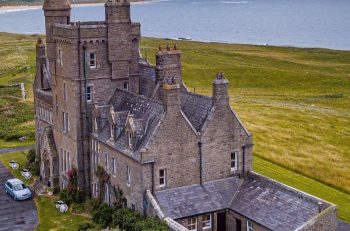
    1. The Classified Garda Files. The information provided by the brothers, John and Pat Barry, confirms that the Garda (Irish police) had a checkpoint at the gate of Classiebawn castle in August 1977. Garda security appears – by some accounts – to have been downgraded in 1979, shortly before Mountbatten was murdered by the Provisional IRA. Hence, while there might be a question mark about the existence of comprehensive Garda logs from 1979, there are no concerns about August 1977. The Classiebawn logs are the key to unlocking the sordid Kincora scandal. Boys from Kincora Boys’ Home in Belfast were trafficked to Mountbatten by Joe Mains, an MI5/6 agent who worked at Kincora. The same boys were trafficked to Loyalist paramilitaries and politicians by Mains as part of MI5 and MI6 ‘honeytrap’ blackmail operations. The Garda have shown no interest in the information at their fingertips. As far as can be told, the Government has displayed no curiosity either. The survivors of child sexual abuse deserve better. 2. Confirmation of a Garda checkpoint at Classiebawn. While the Barry brothers set out to defend the reputation of Mountbatten in their Sligo Champion interview – and did so in good faith – they have nonetheless highlighted a crucial issue about the Mountbatten-Kincora connection. It is one which could yet prove precisely the opposite of what they hoped to achieve with their interview. There is no doubt now that the Garda have a record of the registration plates of the vehicles they stopped at the gates. The existence of the Garda checkpoint was already an established fact, nonetheless, the confirmation by the Barrys is important as they  are living witnesses who can attest to its presence. It would now take a very daring – not to mention corrupt – Garda or Department of Justice official, to interfere with the files. The purpose of the interview with the brothers was to afford them an opportunity to put forward a defence for Lord Mountbatten whom they do not believe was a child abuser. John Barry, who was a boy at the time, made specific reference to a Garda ‘checkpoint’ and also that: “The guards wouldn’t have allowed some guy to come, a warden from Kincora [Boys Home in Belfast] who was supposed to have driven [child abuse victims to Classiebawn], and he was supposed to sit in the car for an hour outside the castle and let the boys in – or a boy in. And you think the guards wouldn’t have asked: ‘What are you doing here?’ No way”. His brother has confirmed the presence of Gardaí at the ‘checkpoint at the gate’. 3. Times and dates. In 2019 Andrew Lownie, author of a book about Mountbatten, sought the Garda logs taken at the checkpoint. Crucially, while the Gardaí refused to declassify the files, they nonetheless confirmed they were still in existenc.  See:  THE MOUNTBATTEN FACTOR: Boris Johnson should not bully Dublin over Brexit because the Irish Government has information which could damage the Royal Family What will the records reveal? In August 1977 Stephen Waring and another boy were abused by Mountbatten in an exterior building. They gained access to the grounds in a car which was driven through a Garda checkpoint. Waring took his own life the following November. See: SECOND UPDATE: Kincora boy abused by Mountbatten committed suicide months later. The Garda logs should contain the date and the arrival time of the car that brought Waring and the second boy through the gates of Classiebawn. They should also reveal when they left, along with the make, model and registration of the vehicle in which they were trafficked. 4. Liaison with the RUC The Kincora boys were driven to Classiebawn by Joseph Mains, the Warden of Kincora in August 1977. As a matter of routine, the registration plate of the car driven by Mains to Classiebawn would have been noted and logged. Next, the Gardaí would have sent them to Garda HQ. Then inquiries would have been made with the RUC. The RUC knew that Mains had connections to the Red Hand Commando (RHC), a Loyalist terrorist group. The Garda inquiry about the visit by Mains to Classiebawn would have raised a red flag. A senior RUC special branch officer would have taken control of the request. It is inconceivable that the Gardaí would have been told about Mains’ links to MI5/6 or the RHCs. The RUC special branch was complicit in the ‘honey trap’ operation that revolved around Kincora. Hence, the RUC undoubtedly told the Gardaí there was nothing to worry about insofar as the car driven by Mains was concerned. The RUC may even have expected a call from the Gardai and were ready for it. Rumours about Mountbatten’s involvement in the abuse of Kincora boys have circulated in security circles in Northern Ireland for decades. The Garda request about the visitor to Classiebawn in August 1977 may be at the root of the gossip. 5. A report on Mains may reside in Garda files at its Phoenix Park HQ in Dublin. The Garda inquiries that took place after Mountbatten was murdered on 27 August 1979, reached back to 1974. All of those who came into contact with him formed part of a massive inquiry. All of those who visited Classiebawn were investigated. A short report on Joe Mains may very well have come into existence as early as September 1979. Indeed, a record of his identity may have existed since his visit in August 1977 (and perhaps other visits in the 1970s). The Kincora scandal did not erupt until January 1980. Thus, when the Gardaí were making inquiries with the RUC in 1977 and/or 1979, about the car Mains drove to Classiebawn in 1977, there was no particular need to conceal his name, at least insofar as Kincora was concerned. The RUC hardly anticipated that Mains would become known as a child abuser in 1980. Mains was convicted of child abuse in December 1981. 6. 60 years

    Loading

    Read more

  • Posted in:

    Mountbatten’s paedophile abuse: letter from definitive biographer Andrew Lownie not published by Sunday Independent.

    By Andrew Lownie. A few weeks ago the Irish Times ran an article on the death of Mountbatten linked to the new series of The Crown in which the murder features in the opening episode. As the author of the most recent biography ‘The Mountbattens: Their Lives and Loves’, I was interviewed for the piece on the discrepancies between the reality and the drama, telling the paper the programme left out “some significant details about the killing, most notably that Mountbatten had ignored the advice of his personal security officer not to go to Ireland that year and that his security had been reduced”. The paper then raised some of the other discoveries  from my book namely the FBI file which revealed Mountbatten as a “homosexual with a perversion for young boys” and  my interview with two men, one of them from the Kincora Boys Home,  who claimed to have been abused by him in the summer of 1977 . In passing,  I mentioned there were rumours that Mountbatten had not been killed for political reasons but because of his paedophile activities. The article ended with references to my problems securing the release of the car logs for Classiebawn for August 1977 and the continuing closure of papers relating to the murder  and also the Kincora Boys Home in archives in Britain and Ireland . Some 40 years after Mountbatten’s death, there were details the authorities clearly did not want the public to know. Shortly afterwards Colin Armstrong popped up in the letters page of the Sunday Independent suggesting, as he has done in previous similar letters to papers, that the abuse could not have happened  because no one reported it. A former staff member at Classiebawn joined in the debate saying no-one at Classiebawn had seen anything and my assertions were pure fiction. This followed comments from Jeffrey Dudgeon that my interviewees were fantasists like Carl Beech and inferring that as they hadn’t appeared at the Hart enquiry they couldn’t be legitimate, and a story in the Sligo Champion/Weekender of “ignoring the facts”. In all this coverage, no journalist asked me to respond. I was quite happy to defend my research  and contacted  various journalists at the Irish Times, Sunday Independent and Sligo Weekender. No response. When I chased, I was told the story had moved on – after five days. So to set the record straight here is the letter I sent Dear Sir, It is natural and admirable that John Barry should seek to defend Lord Mountbatten, who employed him, his mother and brother but, just because Mountbatten’s  ‘family, friends, staff and local staff’ saw no paedophile activity, it  does not mean that it did not happen. By its very nature such proclivities are kept private. In fact my research shows that only one member of staff was well aware what was happening but chose to remain silent. If he reads my book ‘The Mountbattens: Their Lives and Loves’, rather than dismiss my findings as “implausible fictional claims” , he will see I have produced extensive evidence to back up my claims of Mountbatten’s paedophilia. Stories about Mountbatten’s proclivities have circulated in the media for over forty years including accounts in Private Eye and the International Times where the newspaper proprietor Cecil King described Mountbatten as a “sexual pervert”. There was also a report in Now Magazine in 1990 where the Northern Ireland author Robin Bryans claimed that “leading British establishment figures were in a vice ring which abused boys from the notorious Kincora Home in East Belfast” and named Mountbatten as one of them. It also reported that Mountbatten “was particularly attracted to boys in their early teens”. Bryans in private correspondence, which I have seen,  wrote that “Kincora and Portora Boys’ Schools were used as homosexual brothels by many prominent figures, including Lord Mountbatten”.  Joseph de Burca in Village Magazine has written extensively about Mountbatten’s paedophile networks. In my book I reproduce FBI files going back to 1944 with interviews with people in Mountbatten’s circle . One, the American writer and society figure, Baroness Decies, when interviewed on another matter reported ‘that Lord Louis Mountbatten was known to be a homosexual with a perversion for young boys’. Interestingly I was told that other FBI files I had requested under Freedom of Information legislation had been destroyed – after I requested them. Mountbatten’s wartime driver Norman Nield is on record saying he “was ordered to take young boys who had been procured for the admiral to his official residence in Lord Mountbatten’s Humber car” . According to Nield, Mountbatten, known as LL, used brandy and lemonade to help seduce the boys, who ranged in age from 8 to 12. I interviewed two boys who said they were abused by Mountbatten. Knowing of the controversy their testimony would generate, I was particularly keen to ensure what they said was true. Everything I could check was found to be accurate but clearly these were recollections over forty years after the event. One boy was abused in Classiebawn’s boathouse, away from the house, another in a local hotel where before the days of cctv it was very easy for a visitor to nip briefly upstairs. I have never suggested that boys stayed at Classiebawn castle itself let alone overnight. Contrary to claims, one has gone public with his claims and has brought legal action which is almost concluded. I am hoping he will shortly appear in a television programme on Mountbatten. Likewise my interviewee had agreed to participate in the HIA Inquiry but the Inquiry served several hundred pages of information on his solicitors just before the weekend prior to his appearance at the Inquiry.  His solicitors rightly told the Inquiry that, in the time allowed, it was impossible for them to read and study all the documents, let alone advise him properly.   In ‘The Mountbattens’,  I reveal that Mountbatten was probably himself abused as a teenager by a bachelor clergyman Frederick Lawrence Long who acted as a private tutor. On legal advice, some material was removed from my book , referring to Mountbatten’s paedophilia and murder,

    Loading

    Read more

  • Posted in:

    THE MOUNTBATTEN FACTOR: Boris Johnson should not bully Dublin over Brexit because the Irish Government has information which could damage the Royal Family?

    INTRODUCTION Last December Taoiseach Leo Varadkar had to slap down Priti Patel MP, who now serves as Britain’s Home Secretary, when she threatened the Republic with food shortages if the Irish Government did not drop demands for the Irish backstop. Varadkar reminded Patel of the starvation that had engulfed Ireland in the 19th century and said he hoped she would think more carefully about what she said in the future. Tensions eased as Johnson dropped the Democratic Unionist Party (DUP) and conceded a regulatory border in the Irish Sea. Now, tensions are on the increase again. Johnson has seen fit to reappoint Patel as Home Secretary and has made bellicose noises about the forthcoming trade talks with the EU. In Dublin Varadkar has stated: ‘It is going to be difficult to secure a good trade deal for Ireland, principally because Boris Johnson has fixed on a harder Brexit than we anticipated under his predecessor or at the time of the referendum, and that is one where he talks very much about divergence’.  If Britain does not get what it wants out of the  forthcoming Brexit negotiations, Anglo-Irish relations could deteriorate again. In extremis Britain could resort to its all too familiar policy of bullying Ireland.  The worst example of this was the bombing of Dublin and Monaghan in 1974 by Loyalist paramilitaries who were RUC Special Branch and MI5 agents such as Robin Jackson. Anyone who doubts Johnson’s moral vacuity and capacity for wrongdoing should listen to the infamous recording of him providing Darius Guppy, an old Etonian colleague, with the contact details of a journalist so the latter could be beaten up. Guppy told Johnson he intended to have the journalist’s ribs broken:  Boris Johnson Darius Guppy telephone call threatening violence  at https://www.youtube.com/watch?v=iDJWkS2A9T0 Unlike many of his predecessors, Varadkar is not the type of taoiseach to back down when under severe pressure. He also has an utterly ruthless streak. Anyone who doubts the latter point should study the manner in which he plotted against and undermined Enda Kenny, his predecessor as Taoiseach over the Garda Maurice McCabe paedophile smear scandal. Kenny was completely blameless in that scandal. Bearing this in mind, Johnson should note that the Irish police – the Gardai –  may very well hold a file which could be deployed to devastate the British Royal Family if relations become really toxic. 1. MOUNTBATTEN ABUSED BOYS IN THE IRISH REPUBLIC. Last August Village  published an article revealing that a boy abused by Lord Louis Mountbatten in August of 1977 committed suicide a few months later. He had been taken by car to Classiebawn, Mountbatten’s castle in the Republic of Ireland from Kincora Boys’ Home in Belfast. The man responsible for trafficking him was Joseph Mains, the Warden of Kincora, also a paedophile. Mains was a British agent and an asset of both MI5 (Home Office) and MI6 (Foreign Office).  (For further details about Mains and Kincora, please click on the Joseph Mains button at the end of this story.) Mains had to cross the Irish Border to get to Classiebawn. The Village  story about the boy who committed suicide is also available on this website. (Click on the Mountbatten tag/button at the end of this story.) 2. LOWNIE’S LABOURS Village  also revealed that the British historian Andrew Lownie had sought the Garda file on the assassination of Mountbatten in August of 1979 while preparing a book on the Mountbattens. Lownie was rebuffed politely. His book has since become an international bestseller and was listed by the Daily Mail  as one of the best biographies of 2019. Lownie’s book contained interviews with two other boys who were abused by Mountbatten in Ireland both of whom are alive. Since the publication of his book, Lownie has asked the Gardai to release the logs they made of the vehicles which visited Classiebawn. They emailed Lownie on 7 October 2019 stating that files ‘generated during the course of a criminal investigation’ are considered confidential and hence they would not be releasing them. It is significant that they did not deny that the logs still exist. Lownie responded by pointing out that the logs he was looking for related to August 1977, i.e. two years prior to Mountbatten’s assassination. There could not have been an investigation of a ‘criminal’ nature in 1977 into an assassination that did not take place until 1979. The Gardai did not – and clearly have no intention of – releasing the logs.   3. JOHNSON HAD BETTER BE ON HIS BEST BEHAVIOUR DURING THE FORTHCOMING BREXIT NEGOTIATIONS The Mains’ log (or indeed logs) are political dynamite, even forty years on, especially with the Royal Family reeling from the Prince Andrew-Jeffrey Epstein scandal. There is more to the Prince Andrew story which has been ignored by the British press thus far: his relationship with the paedophile peer Lord Greville Janner. Details, however, can be found by clicking the Prince Andrew tag/button at the end of this story. Boris Johnson should be told in no uncertain terms that MI5 and MI6 are despised in the Republic and it would be folly to unleash them to spy on, bully or coerce the Irish government during Brexit negotiations;  most particularly, they should not use their influence in the media – on either side of the Irish Sea – to besmirch Irish politicians. Village  has evidence that one of the most senior media figures in Ireland was an ally of MI6. While his influence is now nonexistent, he has surely been replaced by other traitors. It was he who got Dr Martin O’Donoghue  TD to attempt to bribe two Fianna Fail cabinet ministers – Sean Doherty and Ray MacSharry in 1982 to oust Charles Haughey as Taoiseach. Village  has referred to him in the past as the ‘Paymaster’. British spies and their agents are also blamed by all and sundry in Ireland for the Dublin and Monaghan bombings of 1974 which led to the death of 33 people; the atrocious Miami Showband massacre; the egregious assassination of the solicitor Patrick Finucane in

    Loading

    Read more

  • Posted in:

    SECOND UPDATE: Kincora boy abused by Mountbatten committed suicide months later. By David Burke.

    This article was updated on 20 December 2019 with additional information about the ongoing refusal of the Gardai to release the log of a visit by the Warden of Kincora Boys’ Home to Mountbatten’s home in the Republic of Ireland (See section 2) and further evidence of a link between Mountbatten and the abuse of boys at Portora Royal School (See section 13). It has long been rumoured in Britain that Lord Louis Mountbatten was a paedophile. A book now on sale has dug up impressive new evidence confirming what Irish sources – including the Provisional IRA – have known for decades  about his sexual predilections. So impressive is the new evidence that mainstream British media outlets such as The Mail on Sunday,   The Sunday Times  and The Sun  are covering the story. The book contains sensational new information about Kincora Boys’ Home in Belfast. Curiously, while the British media are happy to report on Mountbatten’s abuse of boys generally, the sections in the book about Kincora are being ignored. The book is called The Mountbattens: their Lives & Loves, and is written by Andrew Lownie. The author is a respected and serious historian who was once a Conservative Party Westminster election candidate. He is still friendly with many Tory MPs including one recently retired Cabinet minister. Lownie is also author of a book on Guy Burgess entitled Stalin’s Englishman which had many interesting Irish angles to it. 1. LOWNIE WAS DENIED ACCESS TO CERTAIN IRISH STATE FILES ON MOUNTBATTEN  During his research for the biography, Lownie tried to gain access to certain Irish State files including Garda files about Mountbatten only to be rebuffed.  They may contain some interesting material. A Deputy Garda Commissioner who is now dead told Village  a number of years ago that he had heard disturbing rumours about Mountbatten sexual activities before he was killed. Another Garda intelligence source says that he had heard stories that while Mountbatten had been living in India, he had had access to a 14 year old boy. If Garda Intelligence, led by Larry Wren, the Head of C3 during the 1970s, knew anything about Mountbatten’s predilections, or the presence of cars with Northern Ireland registration plates, or of teenage boys visiting his property at Classiebawn in the company of older men,  he did nothing about any of it. The Gardai had a security at Mountbatten’s estate and must have noted the registration plates of visitors. This means that the Gardai should have logs for August 1977 which noted the arrival of the car belonging to Joe Mains, the Warden of the notorious Kincora Boys’ Home because he trafficked at least two boys to Classiebawn that month. If the logs still exist, will Garda Commissioner Drew Harris (ex-RUC and ex-PSNI link man to MI5) see to it that they are released and prove once and for all that an Anglo-Irish Vice Ring ring existed and it involved Joe Mains? While the Kincora scandal was exposed in 1980, it was not until 1982 that allegations about MI5 and MI6 involvement in the affair began to appear in the press. Wren became Garda Commissioner in early 1983. He had developed exceptionally close links with British Intelligence during his tenure at C3. If the logs of cars visiting Classiebawn prove to be missing, an inquiry should be held to see if they were destroyed under Wren’s watch. For further information about Wren’s strange career at C3 please visit  https://villagemagazine.ie/index.php/2019/06/16570/ ‎ Hopefully the car registration logs still exists. Will the Independent Inquiry into Child Sexual Abuse (IICSA) in London which is probing the existence of VIP child sex abuse request Drew Harris and the Irish Government to release the relevant logs for August 1977, and indeed for all of the summers Mountbatten stayed at Classiebawn? Mountbatten’s movements were of enormous importance to the Gardai in the 1970s. Typically, the first they would hear about his pending arrival in the country was a frantic call from MI5 in London to alert them that he had boarded the Hollyhead car ferry en route to Dublin. Mountbatten’s reputation inside the Garda was that of a man who was reckless about his safety. He often gave them a security headache. On one occasion he managed to disembark before the Gardai could reach the ferry and provide him with an escort. However, on this occasion his car broke down and they rushed to his aid inland. His vehicle was towed back to Garda HQ at the Phoenix Park in Dublin where it was repaired by the fleet service department. While the repairs were taking place, Mountbatten was given a tour of the HQ which had originally been built as a Royal Irish Constabulary complex. The Gardai who dealt with him found him to have been ‘a most charming man’. 2.UPDATE: LOGS NOT MISSING BUT DISCLOSURE CONTINUES TO BE DENIED BY THE GARDAI  Since this story first appeared, the Gardai have persisted in their refusal to allow Andrew Lownie gain access to their Classiebawn car registration logs. They emailed Lownie on 7 October 2019 stating that files ‘generated during the course of a criminal investigation’ are considered confidential and hence they would not be releasing them. It is significant that they did not deny that the logs still exist. Lownie responded to this by writing back pointing out that the logs he was looking for related to August 1977, i.e. two years prior to Mountbatten’s assassination. There could have been no investigation of a ‘criminal’ nature in 1977 to an assassination that did not take place until 1979. The head of the Irish police, Garda Commissioner Drew Harris is a former RUC Special Branch officer who worked extensively with MI5. To date, he has not intervened to have the logs of Mains’ visit  in August of 1977 extracted from the main file, copied and sent to Lownie. Instead, on 7 November the Gardai reverted to Lownie saying: ‘I wish to inform you that all such security logs form part of the Garda Investigation File, and for the reasons outlined in email

    Loading

    Read more

  • Posted in:

    Stalin’s Englishman On Trial in Ireland

    The paperback edition of Andrew Lownie’s highly regarded Stalin’s Englishman is now on sale with updates which did not appear in the hardback version. It is a riveting biography of the notorious Eton- and Cambridge-educated British spy and traitor Guy Burgess, bristling with new information based on first-hand sources including hitherto unpublished letters and files. Significantly, a careful reading, between the lines, reveals a lot for the discerning Irish reader about a hidden and deeply murky aspect of the Troubles here. RECUPERATING IN IRELAND, BURGESS-STYLE Burgess was a frequent visitor to these shores. One of his trips landed him in the dock of the District Court. Lownie describes how Burgess had tumbled down two flights of stone steps after a drunken midnight wrestle with a friend called Fred Warner, as the pair was leaving the Romilly Night Club in London in early 1949. Burgess smashed his elbow, slightly cracked his skull and dislocated three ribs. Warner pushed him into a taxi, bleeding profusely, and took him back to his rooms from where he telephoned without avail, every doctor whom he knew by name or repute. He received no reply and he remained there all night, with Burgess groaning on the bed. In the early dawn, he found a doctor who took Burgess off to the Middlesex Hospital. Some rest and recuperation were advised and, after ten days in hospital in London, Burgess went with his mother, with whom he often holidayed, first to Wicklow and then for a few days at the Shelbourne hotel in Dublin. In Dublin Burgess met the writer Terence de Vere White. Lownie’s recalls how de Vere wrote how Burgess was “travelling with his mother, a quiet lady. He took the centre of the stage. He was dark and bright-eyed and was either an old-looking young man or a young-looking middle-aged man, I was not quite certain which . . . He was in the Foreign Office and was taking a rest in Ireland on account of an accident in the Reform Club [sic], where he had fallen and bashed his head on the stairs. As a result of this, he was under doctor’s orders to keep off alcohol and if he disobeyed the rule, the result was a complete blackout, lasting for more than a day. I noticed that he drank tomato juice, which seemed out of character”. ON TRIAL AT THE DISTRICT COURT IN DUBLIN True to his reputation, Burgess was actually drinking incessantly. He and de Vere White parted ways after an hour as Burgess was off to enjoy a play at the Abbey Theatre. Shortly afterwards, on 4 March, de Vere White was contacted by phone and asked if he would give evidence for Burgess in the Dublin District Court. Burgess, he learnt, had been charged with “driving a car while drunk, driving without reasonable consideration, and dangerous driving” two days before, on Grafton Street. “Confronted with the most positive medical evidence of a shaky walk and alcoholic breath, Burgess was invited by the Justice . . . to explain how he reconciled this with his story of complete teetotalism”. He responded “with a most affable air” suggesting his tomato juice might have been doctored and pointed at de Vere White who was forced to give an account of the evening. Burgess’s old friend from Eton, Dermot McGillycuddy, now a lawyer with an office on Kildare Street beside the Oireachtas, was brought in as his defence solicitor and managed to make a silk purse out of a sow’s ear. The case was dismissed, with the judge describing Burgess as “a man of brilliance who appeared overwrought and nervous…a man of cultivated tastes” – he had been returning from seeing a play at the Abbey Theatre when the accident took place. According to the doctor, a friend of McGillycuddy, who examined Burgess at the police station, “There was no smell of drink which witnesses could detect from his breath. He was smoking continuously, his speech was confused and when witnesses asked him to walk in a line, he was definitely unsteady and limp”. DRUGS FIT FOR A HORSE Burgess continued his excessive proto-rock star lifestyle while in Dublin. The tumble in London had left him with bad headaches and insomnia which he treated with Nembutal to put him to sleep and Benzedrine to wake him up. He managed to secure his supplies from a vet. The dosage was fit for a horse. A friend quoted by Lownie wrote later that, “Drugs, combined with alcohol made him more or less insensible for considerable periods in which, when he was not silent and morose, his speech was rambling and incoherent” to the extent he “seemed, hardly capable of taking in whatever it was one was saying to him”. A LOT TO LEARN ABOUT THE HIDDEN HISTORY OF THE TROUBLES Reading between the lines of Lownie’s book, there is a lot to be gleaned about the dangerous and seedy side of the Troubles. Burgess, of course, was an MI5 and MI6 officer who worked secretly for the Soviet Union as part of the infamous Cambridge Circle of traitors which included Sir Anthony Blunt, Kim Philby, Donald Maclean and John Cairncross. Village has described aspects of the Anglo-Irish paedophile network of which Blunt and Burgess were members on a number of occasions over the last two years. Burgess knew some of the more senior members of the Anglo-Irish Vice Ring. The ring had probably existed in one form or another for generations but was reorganised on a systematic basis after WWII with access to orphanages and care homes in NI for paedophiles. It survived until at least the mid-Troubles, if not long afterwards. The British Establishment is still engaged in an ongoing cover-up of its activities. Survivors are hopeful that at least some of its Irish branches will be put under the microscope by the London-based Inquiry into Child Sexual Abuse (IICSA). The wider ring included friends of Burgess such as his fellow traitor Sir Anthony Blunt; the poet Brian

    Loading

    Read more