Britain

Random entry RSS

  • Posted in:

    The cost of costs

    Real justice requires access to justice, which requires effective access to courts, which requires that courts be accessible without the threat of prohibitive costs. Some 90%, or an even higher percentage, of people in Ireland have no realistic access to justice, due to the prohibitiveness of the costs associated with legal actions via the courts. The Irish system of access to justice is permeated with unfair procedures, unconstitutional laws, and conflicts of interests, which means that most court users in Ireland are vulnerable users. BalaNCiNG CONFliCTiNG CONSTiTUTiONal RiGHTS: The English rule (Loser pays rule) on legal costs does not balance two conflicting rights – (1) the property rights of winning litigants, and (2) the right of persons to have access to the courts, without being threatened by unpredictable and prohibitive legal costs. Notionally, proponents of the English rule claim that winners are entitled to be 100% vindicated, and so be in a position to cover all their legal costs. However, this is a very narrow view, which fails to assess the big-picture consequences: (a) winners are also threatened, up to the point of winning, and can be threatened as defendants, in circumstances where they have no chance of recovery of costs from penny-less plaintiffs. (b) the English rule creates all sorts of conflicts of interests and market distortions, which enormously inflate the costs payable. (c) wealthy litigants can threaten persons of lessor wealth, with adverse costs, such that the case is determined more often by issues of fear, rather than justice. (d) the state, and most government actors become unaccountable, as the decision makers are immune from costs (lumped ontaxpayers, often, with little transparency), but can pursue political goals, or engage in abuse of power, with no financial downside, and can still threaten all challengers with financial ruin; this inequality of arms, means that citizens are generally unable to challenge the unconstitutional laws and conduct of government. HeNCe, THe eNGliSH RUle iS NOT COMPaTiBle WiTH a Real CONSTiTUTiONal deMOCRaCy: Costs Allocation Rules incentivise Unfair Adjudication Rules which also incentivise Inefficiencies into the system. Because the government is allowed to intimidate its challengers with unlimited adverse costs, it then wants to maximise those costs, so as to bolster its threat and avoid oversight; High Legal Costs has been the default weapon of choice for all governments since the commencement of the state; the “Big Stick” is maintained to bounce its opponents out of the ring, and this has so far been achieved with little condemnation by international institutions, which have largely failed to recognise the stealth threat that prohibitive costs represents as a threat to the rule of law. The Big Stick undemocratically deters citizens and/or NGOs from challenging the government when it passes unconstitutional laws, or acts unconstitutionally – this allows the government to pander to its own electoral constituency while depriving less well represented persons access to rights protection, leading to violations of minority rights and individual rights. When populist demands call for adjudicative processes which affect specific rights of connected groups, QUANGOs are often created in order to parry off populist demands for accessible justice. The substitute QUANGO justice can rarely be as independent as courts, and the outcomes are often secretised, thus bypassing democratic oversight. Hence, the government passes unfair laws for legal costs adjudication, so as to frighten all challengers – this allows it to exercise power with minimum oversight. THe Need FOR CCOS (COSTS CaPPiNG ORdeRS) In the ex parte application by Dymphna Maher [2012], the applicant effectively sought an assurance from the High Court that any adverse costs would not be prohibitively expensive, if her lawsuit was subsequently deemed not to have fallen under the ambit of the special costs regime (related to some environmental cases). Judge Hedigan insisted that there was no legal authority to permit him to make the order sought by the applicant. However, he observed that: “[It was] very arguable that the absence of some legal provision permitting an applicant to bring such a motion, without exposure to an order for costs, acts in such a way as to nullify the State’s efforts to comply with its obligation to ensure that costs in certain planning matters are not prohibitive. As things stand, I have no power to change this”. This case along with 12 other cases was appealed to the Supreme Court (SC) on an ex parte basis – where only one of the parties is heard. The SC held that it could not provide such an assurance, on an ex parte basis, as the other side (the EPA) needed to be heard first. The SC decision in the Coffey case means, in effect, that any person seeing to access the courts in Ireland is threatened with financial ruin, even if just seeking a CCO. The court failed proportionately to balance the right of access to the courts as a right conflicting with the property rights of government, particularly in the context of the need for real separation of powers. The judicial sphere of power is rendered inaccessible to most citizens, when the loser-pays rule is applied to challenges to executive power, and so the judicial sphere of power is inappropriately diminished; this undermines the checks and balances necessary in a liberal democracy between the legislative, executive an judicial functions. SePaRaTiON OF POWeRS By dividing power between these traditional three spheres, the courts, the government, and the Oireachtas, we help to disperse power and make less probable the accumulation of power to one person, or a small elite, as often happens in what are referred to as illiberal democracies. Diagram 1, above, displays the traditional Montesquieu view of three spheres of power. However the (Montesquieu) tripartite division of power, is a poor reflection of reality. This is largely because it generally fails to engage with the level of real power held by each of the three spheres, in practice. A second flaw, is that there should really be five spheres of power, and not three; the people should be seen

    Loading

    Read more

  • Posted in:

    Village October 2017

    Gratuitous Trump Image Section   Bean and Bucket Theresa May is the most inelegant British leader since Gordon brown. It’s funny how the same person can be perceived as utterly unrecognisable in terms of elementary human characteristics, just by the unfair elapse of time. In office, these two leaders managed to entirely lose their reputations for frugal good sense. If brown was Mr Bean, May is surely Hyacinth bucket (pronounced ‘bouquet’, if that’s not French). The bill for their party Villager likes to consider how much the bailout cost us all, when he’s counting out the five-cent pieces from the jar at the end of the month, in a quest to find the price of a miserable cheese sandwich down at the Capel St Spar. Sometimes he swoons unmanfully. At the end of 2016 the cost of bailing out our domestic banks stood at €39.9 billion, with an annual cost of servicing the associated debt of over €1 billion. €66.8 billion was used to recapitalise the banks and €14.8 billion went in servicing debt. by the end of 2016, the State had recouped €25.1 million in income from the disposal of investments, income from the guarantee scheme, and other means. Subtracting one from the other yields a figure of €56.5 billion. The C&AG has estimated the residual value of our remaining investments in AIB (a 71 per cent shareholding), bank of Ireland (14 per cent) and Permanent TSB (75 per cent) at €13.6 billion. name is projecting a €3 billion surplus. It all comes to €16.6 billion. Irish bank resolution Corporation (Anglo Irish bank and Irish nationwide building Society) cost us €35.8 billion. you mean on judges Most of the money that might have been sprayed around in budget 2018 has gone on reinstating public-sector pay. Villager will be reading a good book when the unexcitable Paschal Donohue rises to his feet. Nothing to see here. Socks and Swimming pay off with undiscerning youth According to Irish Times/Ipsos/MRBI pollsters, satisfaction with Varadkar’s performance as Taoiseach is – for some reason – high, at 49 per cent. 31 per cent are dissatisfied and 20 per cent, presumably people who – like Villager – don’t know what to make of hipsters, are undecided. Varadkar is the most highly rated leader, ahead of Micheál Martin (down two points since May, to 37 per cent), Gerry Adams (down one point, to 30 per cent) and Brendan Howlin (down two points, to 20 per cent).   Jayz, not another Healy-Rae on the Today programme Villager favours urban life and doesn’t like the rural perspective. nevertheless, Ireland’s most ostensibly serious broadcaster, Sean O’Rourke, continues to celebrate rural Ireland to the detriment of the capital and sport to the detriment of the arts. He is also the world’s leading user of the word wonderful. Villager caught it 15 times in one show, before the dial spun off the wireless. Women’s place Noel Whelan, barrister and political pundit, is a gentlemanly influence in the discourse but he has decided his schtick now is being unimpressed with the ephemeral machinations of the political process. Fresh from denouncing the serious attempt to impose identity cards for public-service users, as “silly season nonsense” over the summer, the second un-angriest man in Ireland (Colm McCarthy in this as so many other things remains unassailable) is dissing the attempt to visit a rake of referenda on an uninterested electorate as “a political stunt” from “a weak government trying to prove it has vision and durability”. but the man who found his progressive side during last year’s Marriage equality referendum campaign is surprisingly derisive of the likes of the attempt to remove purported acknowledgement of the special place within the home of (all women) from the constitution. Like the invocation of the Holy Spirit at the opening of bunreacht na Éireann the kinked vision of women taints the whole legal system. If you don’t get that you either don’t get equality, don’t get the point of the twentieth century or are from the ‘Fianna Fáil gene pool’. Arthur’s pay day Villager just loves development. And multinationals. When the two come together he loses control of his thesaurus. Diageo has announced plans to transform 12.6 acres at its St James’s Gate site in Dublin City to create a new mixed-use development, which will include residential units, and Villager says it is awesome. The maker of Guinness said that after “significant” investment since 2011 at St James’s Gate and advances in technology, it can now brew more second-rate beer with less, valuable, space. To this end it wants to transform 12.6 acres of the nearly 50-acre site it has been degrading for a generation to create a mixed-use development “a third residential, a third commercial and a third leisure”. called, inevitably, the St James’s Gate Quarter. During the boom Guinness talked of relocating to Leixlip where land was allegedly to be purchased from the ancient Guinness family for a “super brewery”. Oliver Loomes, country director for Diageo Ireland, told the Irish Independent that “it will be many, many years before a sod is turned on this site” for this latest development salvo. Villager therefore predicts it will not happen. parable of the Apple Villager is suggesting everyone should do in their own private and business lives what the Irish government is doing with our €13bn Apple loot. resist the pressure of the rich and powerful – the elite of Europe – to use if for ourselves. Give it back, we don’t need it. It’s Christianity in action and it’s endorsed by those always-just forces of global capitalism, the IT multinationals. Ireland is proving it is post-materialism. It just now needs to widen the ambit of its new strategic love for neighbour. beyond its stance on multinationals, to others. Neo-goldmanism Atavistic xenophobic populism has returned to German national politics with a ‘Knall’, in the unlikely form of a 38-year-old lesbian investment-banking economist, Germany’s own version of Ann-Marie Waters who once worked for Goldman Sachs. Alice Weidel is the

    Loading

    Read more

  • Posted in:

    Oxford, Britain

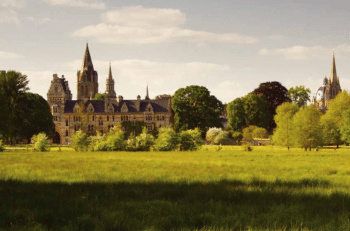
    North Oxford is a heartland of academia where leafy halls of residence mingle with stately homes and rarefied hostelries. Situated in almost the very centre of Britain a windless calm favours scholarly reflection removed from modernity’s fugue. Even the traffic is orderly with bicycles sensibly preferred. It is one of the most attractive places in the world. Spend an afternoon on the lawns at Christchurch if you doubt it. Oxford is world-class in so many ways: the city and the university. PWC and Demos rated it the best place to live in Britain, in 2012, across a wide range of criteria. Shanghai ratings names Oxford University the seventh best in the world. South Oxfordshire was recently named Britain’s best rural place to live. It is transcendent England. What has this to say about Brexit, the political issue of this generation? The City of Oxford is located on the confluence of the Isis (the idiosyncratic name for the Thames here) and Cherwell rivers. Broadly, it may be divided into three zones with a clear north-south divide: that affluent and mature north Oxford of Jericho and Wolvercote; predominantly twentieth-century suburbs including Cowley to the south; and the historical and commercial centre linked to Botley and Osney Island, built around an Anglo-Saxon settlement of which little remains. This contains renowned colleges such as Christchurch, Balliol and Magdalen. The first sign of incongruity is how close it nestles to the ‘any-town-UK’ commercial centre and its array of gaudy chains. Moving south, there is yet another Oxford as housing gets cheaper and industry is evident. The first industrial revolution passed Oxford by as colleges objected to the contagion of commerce. Only after World War II did significant manufacturing arrive as the city attracted a car industry. By the early 1970s, 20,000 people were employed in the sector and the original Mini Minor was developed here in 1959. Unfortunately, as in much of the country, a significant proportion of heavy industrial jobs have departed. The working class areas now face social problems familiar in many English cities. Living as a jobbing tutor and supply teacher in Oxford for two years I encountered classroom behaviour that made experiences in schools in socially-deprived areas of Dublin seem almost meditative. Oxford is a place of profound educational inequality. Oxford accomodates a great literary tradition: JRR Tolkien, CS Lewis, Lewis Carroll, Kenneth Graham and Irish Murdoch wrote from Oxford. The number of Prime Ministers that have passed through Oxford University is startling. 28 overall. Only Jim Callaghan and John Major, who revelled in his immersion in the university of life, among English Prime Ministers since Winston Churchill (who finally left office in 1955) did not pass along its quads. Alumna Theresa May (St Hugh’s, 1974) joins a list that includes Labour Prime Ministers Tony Blair (St John’s, 1974), Harold Wilson (Jesus College, 1937) and Clement Atlee (University College, 1904) as well as Tories Anthony Eden (Christchurch College, 1922), Harold MacMillan (Balliol College, 1914) Edward Heath (Balliol College, 1939), Margaret Thatcher (Somerville College, 1947), and David Cameron (Brasenose College, 1988). Oxford indubitably has seeded the post-War UK political establishment. Moreover, numerous Tory politicians maintain an association with the wider shire. Churchill himself was born in the nearby ancestral estate of Blenheim Palace (though he passed some of his early childhood in Dublin’s Phoenix Park). David Cameron, MP for Witney, Oxfordshire, lives in Chipping Norton close to Rebekah Brooks, Jeremy Clarkson and the rest of the well-placed Chippy set. Michael Heseltine (Pembroke College, 1954) dwells in style nearby though one imagines he looks slightly askance at the gobby neighbours. Theresa May grew up in the village of Wheatley a few miles east of Oxford where her father served as vicar. Further east towards London, Boris Johnson (Balliol College, 1987), the new foreign secretary, lives in Henley-on-Thames. Jeremy Paxman, Richard Branson, Kate Moss, Kate Winslet, Rowan Atkinson, Jeremy Irons and Ben Kingsley: celebrities, high-and-low-brow, live in Oxfordshire. Perhaps the county has a quality – an England of the imagination – that grandees of all sorts gravitate towards. It could be the low rural population density, a legacy of the Enclosure Acts (1760-1830) that placed formerly common land in the hands of expanding gentlemen farmers. Today, though located only an hour from some of the most in ated land prices in the world in London, it is possible to drive for long stretches without seeing a single dwelling. The hoi polloi were kept at bay, in Oxford and swathes of its hinterland. As an Irish person living in the city of Oxford I never had a sense that I was unwelcome, or at least any alienation was no different to that felt by the bulk of the population before a converging aristocratic and mercantile elite: unlike the ancient regime in France since the Tudor era, nobility has been open to the highest bidder and an Oxford education provides the polish. One must however acclimatise to the southern English reserve and a sardonic sense of humour. The historian Tony Judt (St Anne’s College 1980- 87), who concededly knew little of Ireland, wrote that the English are perhaps “the only people who can experience schadenfreude at their own misfortunes”. Succumbing to generalisation I regard English friendships as firmer than Irish for all the latter’s sociability. But these societies of companions generate mosaic communities often hostile to one another. Better the devil you know and bugger the rest. In the era of the Internet there is a growing suspicion of the ruling class of politicians. Many do feel “shat on by Tories, shovelled up by Labour” in the words of Uncle Monty in ‘Withnail and I’. They are often seen as a separate cast reflecting the cultural dominance of Oxford and Cambridge Universities (‘Oxbridge’) which extends to the media and business. This trend perhaps explains why maverick and grumpy (though otherwise profoundly different) outsiders such as Jeremy Corbyn, Nigel Farage (and Boris Johnson who went rogue over Brexit) are appealing to a jaded electorate; a state of

    Loading

    Read more

  • Posted in:

    Britain was responsible for The Rising and WWI

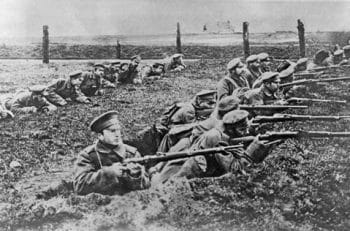
    As July 1, the centenary of the start of the Battle of the Somme – a asco in which one million soldiers were killed or wounded to make a six-mile advance for the Franco-British forces, comes nearer we will no doubt be asked to counterpose once again the heroism of the Easter Rising participants with the heroism of the combatants in the Great War. Heroism is surely an ambiguous category. Can heroism in a discreditable cause be admired? Is not indignation the most appropriate retrospective response to the politicians and generals who sent millions to their deaths in that mass slaughter? And compassion, rather than admiration, for those who followed their lead? The 1500 or so Irish volunteers of 1916 were taking on the British Empire at the height of its power. History has by now justified their cause by passing a negative judgement on that and other territorial imperialisms. The Easter Rising inaugurated the first successful war of independence of the 20th century, an example which many other colonial peoples have since followed. It set in train the events that led to the establishment of an Irish State. As the world moves from some 60 States in 1945 to 200 today and to a probable 300 States or more over the coming century, it is unlikely that either history or historians will look negatively on that Irish pioneering achievement. The 1914-18 war was by contrast a war between Empires which unleashed a catastrophe on mankind whose effects still haunt us. Quite apart from its 17 million deaths, 20 million wounded and economic devastation, its disastrous winding-up in the Treaty of Versailles gave us Hitler and World War II. The Great War was a conflict between empire-hungry politicians and powerful economic interests in the main belligerent countries. The recent academic consensus on how it started tends to spread responsibility between on the one hand the governments of the Entente Powers – France, Britain and Russia and on the other the Central Powers – Germany, Austria- Hungary and Turkey. The title of Cambridge historian Christopher Clarke’s best-selling book ‘Sleepwalkers’ implies that both sides drifted into a disaster none of them foresaw or intended. They were all equally foolish or criminal, and so equally responsible. Traditional left-wing characterisation of 1914- 18 as an “inter-imperialist war” implies a similar conclusion: that as all the imperialisms were bad, they were all equally guilty for the war. It is true there was a war party in each big power on either side. But neither logically nor historically does that mean that they all contributed equally to starting it Unsurprisingly, Christopher Clarke’s conclusion has gone down well in Germany. Germany was forced to accept sole responsibility for starting World War I in the ‘war guilt clause’ of the Treaty of Versailles. For decades English language historians echoed that verdict complacently until the Australian Clarke came along with his revisionism. Further revisionism may be called for. Some historians now contend that the prime responsibility for causing War War I rests with Britain. Their thesis seems convincing. Their argument goes like this: The economic and political rise of imperial Germany from the 1890s onwards threatened British global pre-dominance. German economic competition was making inroads into the British Empire. Britain was a naval power, with a small army. The only powers with land armies strong enough to crush Gemany were France and Russia. They could attack Germany from East and West while the British navy could blockade its ports. The central aim of British foreign policy in the decade before 1914 was to encourage a Franco-Russian alliance against Germany which Britain could join when a favourable moment came. For centuries Britain’s main continental enemy was France, with which it fought many wars. In 1904 Britain concluded the Entente Cordiale with France, ostensibly to sort out their colonial interests in Africa. This was not a formal military alliance, but secret joint military talks directed against Germany started at once and continued up to 1914. As for Russia, that was the land of serfdom, the knout and anti-Jewish pogroms in the eyes of British public opinion during the 19th century. Russia threatened Britain’s empire in India. It was the cause of “the great game” between their respective intelligence services, which Kipling fictionalised in his novel ‘Kim’. Britain and France fought Russia in the Crimean War of the 1850s to prevent it moving in on the weak Turkish Empire to take Constantinople and the Dardanelles, which was a longstanding Russian dream. In 1907 Britain upended this policy and came to an agreement with Russia on their respective spheres of in uence. From that date British policy-makers worked together with France and Russia towards bringing about a war with Germany in which Turkey would be pushed into joining Germany’s side. If victorious, France would get back Alsace-Lorraine, which it had lost to Germany in the Franco-Prussian War of 1870. Russia would get Constantinople and the Dardanelles. And Britain, France and Russia between them would divide up the rest of the Turkish Empire, including Syria, Lebanon, Palestine and Iraq. The war aims of the Entente Powers were set out in the secret treaties which the Bolsheviks released in 1917 following the Russian Revolution. These tell us what ‘the war for small nations’ was really about – that of cial propagandist phrase which many people in this country who do not know their history are still liable to trot out to explain Britain’s involvement in the Great War. Who were the British politicians who orchestrated this scheme to crush Germany for a decade prior to Sarajevo? They were the ‘Liberal Imperialists’ who were in office from 1906 – Asquith as Prime Minister, Grey as Foreign Secretary, Haldane as War Minister and Churchill as Naval Minister, interacting intimately with the Tories’ Arthur Balfour, Alfred Milner and Bonar Law, for the key people on both front benches were at one in their anti-Germanism. And what of poor little neutral Catholic Belgium – leaving aside its bloody

    Loading

    Read more