Christine Keeler

Random entry RSS

  • Posted in:

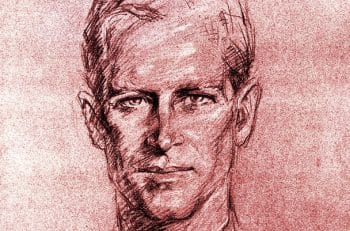
    Prince Philip’s infidelity, love children and the Profumo scandal .

    By David Burke. Christine Keeler was the woman at the centre of the Profumo scandal. As a teenager, she slept with Captain Eugene Ivanov, a Russian naval attaché at the Soviet Embassy in London, while also having a relationship with the much older John Profumo, the high-flying Conservative MP who was Secretary of State for War. Profumo, who met Keeler in July 1961, dramatically denied a relationship with her in the House of Commons but later admitted he had lied and, in June 1963, resigned in disgrace. Stephen Ward, the artist and ‘society osteopath’ who had introduced Keeler to Profumo, was subsequently put on trial for living off the immoral earnings of prostitutes. He took an overdose of medication before the jury returned a verdict against him and died shortly thereafter. He was found guilty on two charges. Keeler asserted that Stephen Ward was in fact a Russian spy and had amassed ‘kompromat’ about Establishment figures for the Soviets. Any information he passed to the Soviets is now available to Vladimir Putin in Moscow. Keeler also claimed that the late Prince Philip, the Duke of Edinburgh, was unfaithful to the Queen. “But I learned, first hand, from another of the Duke of Edinburgh’s lovers about another child. I was with her when she was pregnant”. [See page 41 of Keeler’s memoirs.] All of this was known to Ward and undoubtedly was reported to the Soviets. But I learned, first hand, from another of the Duke of Edinburgh’s lovers about another child. I was with her when she was pregnant. Ward also told Keeler how he, Prince Philip and David, the Marquess of Milford Haven, a cousin of Prince Philip, ‘had all visited nightclubs together in the 1940s. They were quite wild times and it was all thought to be a little delicate for Prince Philip when Elizabeth became Queen, according to Stephen. He had no time for Philip and would always put him down in conversation for he hated the Establishment. He thought the House of Lords was full of idiots: “Through inheritance alone these people have been set up in the House of Lords to make judgements on our account, let me tell you”. He would get more and more heated and red in the face: “It’s like a thoroughbred animal; they marry their cousins and land up retarded and deformed with the interbreeding”. [p. 35.] Ward was the son of a vicar who was married to an Irish woman from County Carlow. The Irish connection may account for some of his disdain for the British aristocracy. Ward was also a portrait artist. After the Profumo scandal erupted, 123 of  his portraits, including members of the Royal Family such as Prince Philip and the Queen’s sister, Princess Margaret, were purchased from an exhibition at the time of the scandal for £11,517, a fortune in those days. The purchase was effected by a man who refused to give his name and paid for them by way of a bank draft. The mainstream media are not reporting any of this in their glowing tributes to Prince Philip. In fairness to him, from what is known about his affairs, he seems to have engaged with consenting adults. That is more than can be said of his son Prince Andrew or his uncle Lord Louis Mountbatten. Village has published many stories about the shameful activities of the latter pair, most especially Mountbatten who was a serial paedophile. An updated and expanded version of this article including a description of Prince Philip’s obscene comments to a junior female reporter in Canada;   the woman who denied Prince Philip was the father of her children;  the censorship of his will,  the toilet creeping paedophile cousin of the Queen Mother who spied for the Soviets;   more details about Ward and Keeler, and a comprehensive dossier on the paedophilia of Lord Mountbatten can be found here: https://wordpress.com/view/coverthistory.ie David Burke is the author of ‘Deception & Lies, the Hidden History of the Arms Crisis 1970’  and  ‘Kitson’s Irish War, Mastermind of the Dirty War in Ireland’  which examines the role of counter-insurgency dirty tricks in Northern Ireland in the early 1970s. His new book, ‘An Enemy of the Crown, the British Secret Service Campaign against Charles Haughey’, was published on 30 September 2022. These books can be purchased here:  https://www.mercierpress.ie/irish-books/kitson-s-irish-war/ https://www.mercierpress.ie/irish-books/an-enemy-of-the-crown/ https://www.mercierpress.ie/irish-books/deception-and-lies/ OTHER STORIES PUBLISHED BY VILLAGE MAGAZINE WHICH EXPOSE UK VIP SEX-ABUSE SCANDALS: Mountbatten, the Royal who abused boys aged 8-12. SECOND UPDATE: Kincora boy abused by Mountbatten committed suicide months later Judge a (future) king by his courtiers: Prince William and the Duchess of Cambridge, pawns in the cover-up of a transatlantic paedophile network. Trump’s mentor: another sociopathic paedophile child-trafficker in the mix; from Roy Cohn to Epstein and Maxwell. Palace of Discord and Deception. [Updated] Prince William’s officials covered-up his uncle’s involvement in the Epstein-Maxwell sex trafficking scandal. By Joseph de Burca. Prince Philip’s infidelity, love children and the Profumo scandal .  The Prince, the pauper and the paedophile peer: the dangerous questions the BBC failed to ask. The deep Irish background to the Ghislaine Maxwell trial. By Joseph de Burca Backstabbing and Censorship, by Royal Command Prince Andrew has no need to sweat after publication of the Janner paedophile report. James Molyneaux and the Kincora scandal. James Molyneaux was linked to Kincora child rapist in British PSYOPS document. SECOND UPDATE: The Irish government has become complicit in the cover-up of British Royal sexual abuse committed in the Republic of Ireland. By Joseph de Burca. Mountbatten, the Royal who abused boys aged 8-12. The British Government purchased Mountbatten’s archive for the benefit of historians (allegedly) but has locked it away. It may include details about his links to paedophile networks including the Anglo-Irish Vice Ring. Village’s online book on the Anglo-Irish Vice Ring begins here: The Anglo-Irish Vice Ring. Chapters 1 – 3. Kincora survivor The plot to discredit victims of VIP sex abuse: Carl Beech and the ‘Useful idiots’ at the BBC. The incompetence of the BBC has

    Loading

    Read more

  • Posted in:

    MI6 traitor George Blake has died. The KGB’s penetration of British Intelligence may have gone far deeper than the public has ever been told. It may still be deeply compromised by Russia.

    By David Burke. George Blake has just died aged 98 at his dacha outside Moscow where Putin’s overseas intelligence service, the SVR, was protecting him from Covid-19. Blake was held in high esteem by the Russians. Putin has said that the “memory of this legendary person will be preserved forever in our hearts”. Putin awarded him a medal in 2007. Blake was arrested in London in 1961 and sentenced to 42 years imprisonment but escaped from Wormwood Scrubs in 1966 with the aid of Sean Bourke from Limerick. He then spent two months in London before making his way to East Germany. The story of his escape and the time he spent in hiding in London is astonishing. Blake may have been helped by Soviet agents inside the British Establishment. The Director-General of MI5, Roger Hollis, 1956-65, was believed by many to be one such agent. He retired the year before Blake made his escape, something which gave him four years to help the KGB prepare a plan to break Blake free. Roger Hollis, another traitor? Roger Hollis was investigated on an official basis on a number of occasions by MI5 and MI6 officers for treachery. The evidence against him was compelling. At the very least, if he was not a traitor, there must have been another very senior mole inside MI5. Outside MI5, Christine Keeler was adamant that he was a traitor. Keeler was at the centre of the Profumo spy scandal involving Stephen Ward. Keeler revealed that Hollis and Ward were part of a spy circle involving a confirmed MI5 traitor Sir Anthony Blunt. Further details can be found here: Keeler Concealer: the British Establishment’s severe embarrassment at the depth of the Soviet Union’s penetration of MI5 and MI6. If Hollis was indeed a traitor, he would have installed other agents inside MI5 to keep the red flag flying behind closed doors after he left. One possibility is that it was these who could have helped move Blake from London to East Germany in 1966. One thing is clear: it is inconceivable that the KGB would have let Blake rot in jail for 42 years if there was any chance to spring him. At the very least, his severe sentence was a deterrent to all of its agents and potential recruits in Britain. If Hollis was a traitor, it is obvious that the KGB would have relied heavily on him to help them plan Blake’s escape. Even if one allows that Blake’s escape from the confines of his goal in London was something he and the Irishman Bourke achieved on their own, there is still the difficult question of how he managed to hide in London for two months and then made it to East Germany. According to the official narrative, we are meant to believe that he had no help from MI5 traitors or the KGB, merely two CND activists, Michael Randle and Pat Pottle, who took him across Europe in a camper van. The allegations of Patrick Meehan The only evidence that MI5 – or a faction within it – wanted Blake to escape emanates from the late Patrick Meehan, a criminal from Scotland. He produced a book in 1989, ‘Framed by MI5’, in which he claimed that in 1963 he was approached by a man he dubbed ‘Hector’ to spring a ‘spy’ in an English prison. The man portrayed himself as a Soviet sympathiser but Meehan reckoned he was an MI5 officer. ‘Hector’ had known that Meehan had briefly been a member of the Communist Party in 1950. Nothing of substance emerged from the approach but it alerted Meehan to the possibility MI5 was prepared to stage an escape. Whether ‘Hector’ was a KGB officer who knew about Meehan’s communist past or an MI5 officer with the same knowledge, what is important is that Meehan concluded he was from MI5. After Blake escaped, he began to talk about this and circulated the theory that MI5 had wanted to spring Blake. Meehan was not involved in any way in the later 1966 escapade involving Sean Bourke. For his part, Blake has always maintained that Bourke acted without any outside help. The implications of Meehan’s Book Let’s give Meehan the benefit of the doubt and see where it takes us. For a start, this involves accepting that ‘Hector’, was indeed from MI5 and therefore acting on the orders of D-G Roger Hollis. This scenario raises one question MI5 should be made to answer: why did they never ask Meehan to help them in any sort of an inquiry into the mysterious ‘Hector’, the man who knew of Meehan’s communist past and wanted to recruit him to spring a ‘spy’ in an English prison. Meehan wrote the book in revenge for being framed for the murder of Rachael Ross in Ayr, Scotland in 1969. Although innocent, he was convicted but received a Royal pardon in 1976 after years in prison. He also received £40,000 in compensation after a campaign by the likes of Ludovic Kennedy. This, however, was not enough to assuage his anger and he had his revenge – as he saw it – by producing his book in 1989 while the Peter Wright ‘Spycatcher’ book storm was still raging. It was an expansion of an earlier book he had written in 1978 called ‘Innocent Villain’ (Pan books Limited 1978). Meehan’s conviction had been secured by ‘rigging’ an identification parade, the planting of evidence and the committing of perjury at his trial by high-ranking detectives. According to Meehan, “In the conspiracy to frame me high-ranking detectives, acting on the instructions of MI5, found it necessary to suppress evidence that would have led to the arrest of the two men who did in fact commit the Ayr murder; namely, William McGuinness and Ian Waddle. Framing me for the murder was an exercise calculated to put me out of circulation.” Waddle admitted his guilt. McGuinness was murdered in Glasgow. Meehan’s pardon was followed by a report by Lord

    Loading

    Read more

  • Posted in:

    Keeler Concealer: the British Establishment’s severe embarrassment at the depth of the Soviet Union’s penetration of MI5 and MI6.

    By David Burke The BBC’s lavish Christine Keeler drama concealed her claim that the Director-General of MI5 was a Soviet mole and ignored what she knew about the infidelities of Prince Philip. The real story is one of treachery, depravity, judicial corruption and the sexual abuse of children by VIPs such as Lord Mountbatten. The six-part BBC drama, ‘The Trial of Christine Keeler’,  has just come to an end. It was meant to be an accurate and comprehenisve portrayal of the notorious Profumo Affair during which a teenager, Christine Keeler, slept with Captain Eugene Ivanov, a Russian naval attaché at the Soviet Embassy in London, while also having a relationship with the much older John Profumo, the high-flying Conservative MP who was Secretary of State for War. Profumo, who met Keeler in July 1961, dramatically denied a relationship with her in the House of Commons but later admitted he had lied and, in June 1963, resigned in disgrace. Stephen Ward, the artist and society osteopath who had introduced Keeler to Profumo, was subsequently put on trial for living off the immoral earnings of prostitutes. He took an overdose of medication before the jury returned a verdict against him and died shortly thereafter. He was found guilty on two charges. 1. THE WIMPOLE MEWS SPY RING. The puzzle that lies at the heart of the BBC’s production is that it ignored the most significant claim Keeler made about the affair: that Sir Roger Hollis was a Soviet mole who was part of a network consisting of Stephen Ward and Sir Anthony Blunt. Hollis served as the Director-General of MI5, 1956 – 1965. Blunt was a KGB mole who penetrated MI5 during WW2. Keeler made the claim in her book, Secrets and Lies (2001). Keeler says she told Lord Denning about D-G Hollis in 1963 while the latter was carrying out his controversial inquiry into the affair and that he made notes of what she said. Hence, there is one straightforward way to resolve the question of D-G Hollis’ loyalty: declassify Denning’s files. Clearly, Keeler could not have known that D-G Hollis was a suspected Soviet mole until the 1980s when this allegation emerged into the public domain, except from her observation of him at Ward’s residence at Wimpole Mews where she had lived with Ward for a while. She said she was witness to a string of meetings between D-G Hollis and Ward at the address. There is a way to resolve the question of D-G Hollis’ loyalty: declassify Denning’s files. 2. THE TRUE DEPTH OF THE KGB’S PENETRATION OF MI5 AND MI6 MAY BE UNFATHOMABLE. Anthony Blunt joined MI5 at the start of WW2 and supplied the Soviets with classified and sensitive secrets throughout the conflict. The perceived wisdom is that he cut all links with Moscow after he retired from MI5 after the war ended and became the Surveyor of the King’s Pictures at Buckingham Palace. Keeler’s revelations, however, indicate that he was still an active Soviet agent as late as the early 1960s. Blunt eventually confessed his role as a Soviet agent and hence there is no doubt about his duplicity. If D-G Hollis was yet another traitor, it means that he had over a decade to plant and promote fellow conspirators up the ranks and turn a blind eye to Soviet operations directed against Britain and her colonies. (MI5 is responsible for the security of UK and her colonies; MI6 spies on foreign soil.) The British media has been obsessed with the hunt for the so-called ‘Fifth Man’ inside the Cambridge Spy Ring for decades. For many years D-G Hollis was viewed as a serious candidate for that perch. The Cambridge Ring consisted of Kim Philby, Guy Burgess, Blunt and Donald Maclean. British commentators now generally agree that a man called John Cairncross was the Fifth Man. Yet, there is no logical reason to believe there were only five high level traitors inside the Establishment or that Cambridge was the only campus visited by Soviet talent scouts. If Keeler’s revelations about D-G Hollis are reliable, there is a strong possibility that MI5 was nothing less than a burgeoning nest of traitors. Indeed, D-G Hollis was only one of an array of suspects. A slew of books have been published which make out cases against a variety of suspects including the man D-G Hollis appointed as his deputy, Graham Mitchell. Another senior MI5 officer, Guy Liddell, was also put under the microscope as was Lord Victor Rothschild who served in MI5 during WW2. There is no logical reason to believe there were only five high level traitors inside the Establishment or that Cambridge was the only campus visited by Soviet talent scouts. 3. AND THEN THERE WERE THE BLACKMAIL TARGETS Aside from ideologically motivated traitors, the KGB used blackmail to recruit reluctant informants. Incredible as it may seem, the FBI suspected Lord Mountbatten – who held a senior position in the Admiralty and had access to NATO secrets – was a traitor and monitored his private life. They learnt that he was a paedophile with a ‘lust for boys’. The Provisional IRA, who monitored and attempted to assassinate Sir Maurice Oldfield of MI6 in the mid-1970s, learnt he was a homosexual. If they knew, is it likely the KGB did not? In 2016 MI6 told the Hart Inquiry in Northern Ireland that Oldfield had a ‘relationship’ with the man who ran the notorious Kincora Boys’ Home in Belfast where sex abuse was rampant. If the Soviets knew even a fraction of this, why did they not destroy his career by exposing him? Instead, did they coerce him into spilling MI6 secrets? MI5 carried out an investigation into the possibility he had been blackmailed in 1980 and concluded he had not. Was Oldfield’s reputed successor as Deputy Chief of MI6, Sir Peter Hayman, another of their blackmail targets? Hayman was a notorious paedophile with a conviction for gross indecency in a public lavatory. One of his victims was

    Loading

    Read more