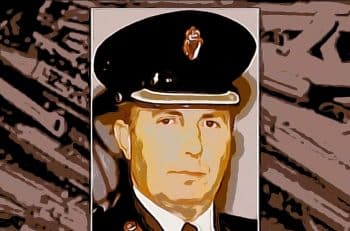
Deirdre Younge

Random entry RSS

  • Posted in:

    Judge Horner’s ruling creates the framework for a new Omagh inquiry.

    By Deirdre Younge. On 8 October 2021, Judge Mark Horner in the High Court in Belfast gave the reasoned judgment behind his decision of 21 July that there should be a new Human Rights compliant investigation into the catastrophic bombing of Omagh on 15 August 1998. He suggested that preferably there should also be one conducted simultaneously in the Republic of Ireland. The judgment was on foot of a Judicial Review brought by Michael Gallagher in 2013. Gallagher was appealing the decision of the then Secretary of State for Northern Ireland Theresa Villiers not to set up a public inquiry into the bombing of Omagh by dissident republicans (referred to as DRs by Judge Horner).  Michael Gallagher’s son Aiden was one of the 29 people who died.  Judge Horner found that there were reasonable grounds for believing that the Omagh bomb could have been prevented. The case, conducted largely in closed session, heard closed (secret) intelligence from MI5 and other agencies as well as evidence in open court. The Judicial Review was of course a civil case but one which engaged issues of (UK)  National Security because of the intelligence material from M15 and other agencies which was revealed to the court. Mr Justice Horner put heavy emphasis on the intelligence given to his RUC CID handlers in 1998 of a British  agent/informant  ‘Kevin Fulton’ who had also been the central witness at the Smithwick Tribunal in Dublin, giving evidence in 2011. Fulton was a former FRU, Special Branch, MI5 and latterly RUC CID agent and informer ‘embedded’ with the IRA in Dundalk and Newry in the 1980s and 1990s. The Secretary of State for Northern Ireland is setting up a statutary inquiry into the Omagh bomb using the grounds on which Mr Justice Horner made his ruling, as the terms of reference. In an endorsement of Fulton’s highly contested intelligence leading up to the bombing the Judge said: “I am satisfied that it is arguable that the intelligence supplied by Kevin Fulton, either on its own or more importantly in conjunction with other intelligence about the activities of those who planned the Omagh bomb and other bombs had a real prospect of preventing this tragedy”. Neither Fulton nor his handlers claimed to have foreknowledge of the Omagh bomb itself but said he had warned handlers that a huge bomb was being prepared that was about to be moved north of the border days before the bomb.   The former Police Ombudsman Nuala O’Loan in her 2001 report and now Judge Horner believe that the intelligence Fulton gave his RUC handlers in the months, days and weeks running up to the bombing was crucial information that should have been acted on to prevent the bombing. Fulton and his handler gave evidence about this intelligence concerning dissident republicans to O’Loan and Smithwick.  The October /November print  issue of Village magazine contains an extensive analysis of the evidence of Fulton and his handler  leading up to the Omagh bombing and its aftermath, and explains the significance of this intelligence in detail. Reliable sources maintain that Keeley was not in fact a detached observer of events leading up to Omagh, as he maintains, but was deeply involved himself.    In his evidence to Smithwick in December 2011 Fulton describes the operation of the timer unit of a bomb. In Queen v Hoey (2006) Mr Justice Weir describes how such a safety mechanism was added to timer units in the run up to the Omagh Bomb. Of the ten arguments put forward by the applicants Mr Justice Horner accepted the following –  Ground 2: Information passed to police between June and August 1998 by a former British security agent known by the name of Kevin Fulton relating to DR* activity. Ground 6: Surveillance operations relating to events surrounding the Omagh bomb that were reported on in a BBC Panorama; in particular telephone and vehicle monitoring carried out by GCHQ. Ground 7/9: the tracking and pattern of telephone usage by DRs and the connection arising between different bomb attacks, including the same mobile telephone being used in the Omagh bomb and the bomb in Banbridge on 1 August 1998. Detective Chief Superintendent Norman Baxters evidence to the NIAC, [Northern Ireland Affairs Committee HOC] to the effect that investigators into previous attacks in 1998 did not have access to intelligence which may have enabled them to disrupt the DR gang by way of arrest or house searches prior to the Omagh bomb. There were a number of arguments put forward by the applicants which the Judge did not accept as grounds for a new inquiry: Ground 3: Information provided by David Rupert  Ground 4: Information sent to the RUC by AGS on 13  August 1998 relating to the particulars of the red Vauxhall Cavalier that was used in the Omagh bomb. Ground 5: Information shared by AGS with the RUC relating to intelligence obtained by Detective Sergeant John White from the agent known by the name of “Paddy Dixon” [in] relation to DR activity. Judge Horner concluded: “I am satisfied that grounds 2, 6, 7 and 9 when considered together give rise to plausible arguments that there was a real prospect of preventing the Omagh bombing. Judge Horner’s judgment is a vindication for Kevin Fulton over Omagh but like all informants and agents operating in the stygian underworld there is a dark side to Fulton which Village Magazine has also explored at length. (Like many British agents Fulton has a dark side: see Investigation: Killusion and How Drew Harris diverted the Smithwick Tribunal. The High Court  judgment was in the context of Mr Gallagher’s civil proceedings. Many victims or their families are taking civil actions against the State, not just to achieve some form of redress, but to gain an understanding of events through the discovery process.   Since 2013 such proceedings are often  conducted partly or wholly as ‘Closed Material Proceedings’  ( CMPs) for reasons of ‘National Security’ and to comply with human rights legislation to protect

    Loading

    Read more

  • Posted in:

    Licence to Lie. Freddie Scappaticci, a British agent inside the IRA, sought immunity from prosecution from British legal authorities so he could claim he was not Agent Stakeknife at a secret meeting with a tribunal in Dublin.

    By Deirdre Younge.   Introduction. Freddie Scappaticci became an agent for British Army intelligence in 1978. A member of the IRA in Belfast he worked his way up the IRA hierarchy,  eventually becoming  second in command of the ‘Internal Security Unit”,  known as the feared “nutting squad”. He joined the British Army’s newly-formed Force Research Unit in 1982.  Scappaticci has consistently claimed he is not an agent called ‘Stakeknife’ or ‘Steaknife’ including in his dealings with the Smithwick Tribunal in Dublin. The latter was established to investigate allegations of Garda collusion in the murders of Chief Superintendent Harry Breen and Superintendent Bob Buchanan in South Armagh, after they had left a meeting in Dundalk Garda Station in March 1989. Operation Kenova investigating the agent believed to be Scappaticci has  submitted files to the Public Prosecution Service in relation to perjury charges. Scappaticci had an extensive engagement with the Smithwick Tribunal set up in 2005 which reported in 2013. Though he did not give sworn evidence his legal team argued on his behalf that he was not an agent called ‘’Steaknife’ or ‘Stakeknife’. Through letters obtained through Freedom of information requests to the Lord Advocate of Scotland and the Attorney General of England and Wales it is clear that Scappaticci obtained protection from prosecution or immunity in relation to his interactions with Smithwick from the Lord Advocate of Scotland. He did not not receive a similar immunity or amnesty from the Attorney General of the UK despite Smithwick’s assertions that witnesses from the UK and Northern Ireland had received such protection.Documents obtained through Freedom of Information requests to the (Irish) Department of Justice show Scappaticci was paid his full legal costs of 382,270 euro in 2015. The bills were paid by the Department of Justice, signed off by the Department of Public Expenditure. The Letter from the British Attorney General.   The absence of such an amnesty has enormous implications in light of perjury allegations against Scappaticci in relation to his continual denials that he is an agent called ‘Steaknife’ or ‘Stakeknife’. It also calls into question the decision by the Smithwick Tribunal, set up in 2005 by Dail Eireann, not to reveal details of covert meetings with him and the decision by the Irish State to pay Scappaticci  nearly 400,000 in legal costs, primarily to claim he was not a British Military Intelligence and MI5  Agent called Steaknife or Stakeknife. Senior legal sources assert that Scappaticci spent three days in Dublin talking to the Tribunal. Documents released by the Department of Justice under FOI in relation to substantial legal costs paid to him in 2015, indicate extensive interactions between Scappaticci and the Tribunal. Smithwick on amnesty In the opening chapters of his 2013 report Judge Peter Smithwick has a chapter on amnesty for witnesses and the legal cover afforded by the Irish Tribunals of Evidence Act as follows: Any witness before the Tribunal would have protection in this jurisdiction from criminal prosecution on the basis of evidence given before it. The protection is enshrined in section 5 of the Tribunals of Inquiry (Evidence) Act 1979 which provides as follows: A statement or admission made by a person before a Tribunal or when being examined in pursuance of a commission or request issued under subsection (1) of section 1 of the Principal Act shall not be admissible as evidence against that person in any criminal proceedings (other than proceedings in relation to an offence under subsection (2) ( c ) (as inserted by this Act) of that section) – ( and that is a reference to the offence of providing false testimony to the Tribunal) and subsection (3) of that section shall be construed and have effect accordingly. The Judge went on to explain how witnesses from outside the jurisdiction could be provided with legal cover, particularly those from Northern Ireland and the UK – “However, given the cross-border aspects of the Inquiry, it was equally important to securing the attendance of witnesses that such protection be extended to the United Kingdom. The Tribunal therefore sought and received an undertaking from the then Attorney General of England and Wales, the Right Hon.,The Baroness Scotland Q.C., to similar effect. Subsequent to the devolution of policing and Justice powers to Northern Ireland on the 12th April 2010, Sir Alistair Frasier, the Director of Public Prosecutions for Northern Ireland confirmed that he would continue to honour Baroness Scotland’s undertaking. After the change of Government in the United Kingdom…the new Attorney General of England and Wales..Dominic Grieve Q.C M.P provided the Tribunal with confirmation that Baroness Scotland’s undertaking would continue to apply. The Tribunal subsequently, at the request of Freddie Scappaticci, sought and received a similar undertaking from the Lord Advocate, in relation to Scotland. This was given in terms specific to Mr Scappaticci..”(Page 9, the final Smithwick report, 2013). Judge Smithwick went on to to refer specifically to Scappaticci in the one and only reference to him in the Tribunal report, as follows : The Tribunal subsequently, at the request of Freddie Scappaticci, sought and received a similar undertaking in relation to Scotland. This was given in terms specific to Mr Scappaticci..   The Lord Advocate of Scotland in his role as Crown Prosecutor gave Freddie Scappaticci an amnesty to cover his interactions with the Smithwick Tribunal so that he could provide “a full account” to the Tribunal in 2012. The AG of England and Wales it is now apparent gave no such amnesty to Scappaticci. Other witnesses from the UK and Northern Ireland included Scappaticci’s former FRU, British Army Intelligence handler, retired Major David Moyles, other British army officers, as well as ex RUC and PSNI officers. Witnesses also included representatives of the IRA ASU who talked to the Tribunal from 2008 onwards. First representation Scappaticci’s solicitor first made an application for legal representation in 2006 but this was refused However his legal representative, Belfast solicitor Michael Flanagan submitted his first bill in relation to meetings in 2007. Like all Scappaticci’s covert

    Loading

    Read more

  • Posted in:

    The Libyan weapons trail: How Gaddafi armed the IRA.

    By Deirdre Younge Kingsberry case The High Court in Belfast granted permission in early July for the family of a former member of the UDA, William Kingsberry – shot dead in 1991, to sue Libya for supplying the assault rifle used by the IRA unit that killed him.  New approach The Kingsberry case, which is civil not criminal, is a new approach to gaining compensation for those killed or injured by Libyan-supplied matériel – and will be the first of many. The PSNI initially refused to confirm that Libyan-supplied Semtex was used in explosions after 1986; but a case brought by Belfast solicitors  KRWLaw in Belfast on behalf of a number of victims has established the link to the AKM rifle used in the 1991  Kingsberry case. The  Kingsberry case creates a precedent for many other victims.  Many were killed or injured in bombs made with the powerful Czechoslovakian-manufactured but Libyan-supplied semtex explosive which was used in massive bomb and mortar attacks. The massive increase in lethal bombings  fuelled with  semtex created hundreds of victims killed  or maimed after 1986.  The first so-called ‘spectacular’ was the explosion at the Remembrance Day service in Enniskillen in November 1987 which left eleven dead and others with horrific injuries, causing shock and revulsion. According to Irish Government documents Gerry Adams believed it was an IRA own goal. It also came at a time when Adams was building up Sinn Féin, the  political wing of the movement,  and there were tentative moves towards talks. RUC woman Colleen McMurray was murdered in 1991 when a mortar boosted by semtex was fired at the police car in which she was travelling in Newry. The 1996 Docklands bombings in London were ignited by semtex.  It was also used by so called ‘Dissidents’ to make the Banbridge bomb and the devastating Omagh bomb in 1998. Victims of all these atrocities are pushing for recognition and compensation. British Government reluctance So far, the British Government has refused to directly compensate victims of IRA Libyan-supplied weapons and semtex explosives out of the former overthrown leader General Muammaur Gaddafi’s funds, long frozen in British banks.  It also refuses to publish a report it commissioned on the issue of compensation, from ex-journalist and member of the Charity Commission, William Shawcross. Action in Northern Ireland  Actions in Northern Ireland are aimed at the British-Government-controlled funds in the UK.  In 2011 Solicitor Jason McCue, who represents victims of the  post-ceasefire Docklands bombings of 1996 and who acted for the Omagh Bomb relatives in their compensation case, obtained a letter from the Transitional  Libyan Government. It’s not clear what weight the letter carries.  The issue of compensating victims of the conflict in Northern Ireland has been mired in an argument about definitions. In the case of Libya it’s also entangled with the long and murky history of the various intelligence services’ involvement in Libya and the fractured politics post-Gaddafi.  Libya  Whether the post-Gaddafi state, weak and divided, should be expected to pay reparations may be moot but that is by no means the case with the interest now accruing to the British Government from Gaddafi funds in UK banks which could, in practice, be used to compensate victims. Sovereign Wealth Fund The new Libyan Prime Minister, Abdelhamid Dabaiba, has reportedly reached a deal with the Chairman of the country’s Sovereign Wealth Fund – the Libyan Investment Authority (LIA) – Ali Mahmoud Hassan, whereby Dabaiba will receive €1 billion  via the Central Bank of Libya for his cash-strapped Government. The deal shows the central importance in general terms of the Libyan fund and that the key is its control by Hassan, a former Gaddafi ally. Bahraini bank According to the French-based Africa Intelligence  the LIA  is sourcing the funds from CBL’s Bahraini subsidiary, ABC Bank. Most of the LIA’s assets abroad, amounting to billions of dollars, have been frozen since sanctions were imposed on Gaddafi.  Gaddafi investments in UK and Ireland Gaddafi invested in everything from Pearson Inc to RBS to office blocks to villages he liked when he went on sovereign visits. It has been alleged there is €1.5billion in Irish banks. There is around £11 billion in frozen Gaddafi-era funds in banks in the UK from which the British Government receives substantial interest payments.  It is from these assets in British Banks that lawyers will try to source the money for a compensation  fund.  The Libyan Government itself has been without a budget since  March. Caught up in the internal politics of Libya and competing loyalties of politicians, some loyal to General Haftar the former Gaddafi-era exile and ‘warlord’ are making their support conditional on appointment of Haftar allies from the east of the country, to strategic positions.  The Sovereign Fund is at the centre of allegations of the embezzlement of billions of dollars during the Gaddafi era. The Prime Minister himself has taken control of the Libyan Asset Recovery and Management Office  [LARMO] in an effort to keep control of investigations into corruption in various state organisations. [Africa Intelligence,  02/07/2021]  Hassan was in control of some of the organisations in question during the Gaddafi era and he is also the focus of scrutiny by the international community including the US State Department, for the lack of transparency in management of the Libyan Wealth Fund. It’s in this tangled atmosphere of competing interests and loyalties that the issue of compensation plays out. After Gaddafi The disastrous lack of preparation for the aftermath of the fall of the Gaddafi regime, by the UK and France in particular, left Libya divided in four between a powerless internationally recognised Government of National Accord; General Haftar – a returned exile from the US, who has shifting and tenuous  control of the valuable oil fields; the so called Tobruk administration; and various militias both Islamic and other. Al Qaeda has a presence in the desert regions.  Despite promises made by the Government of National Accord, the administration in Tripoli, it is questionable if the present Government  could implement

    Loading

    Read more

  • Posted in:

    A murky affair: the Garda made no progress into the IRA murder of Tom Oliver until an intervention by Drew Harris, then with the PSNI, now Garda Commissioner.

      By Deirdre Younge. Tom Oliver, a farmer from Riverstown, on the Cooley peninsula, was kidnapped, interrogated and murdered by the IRA in July 1991. They alleged he was a Garda informant. The murder by the IRA’s punishment squad didn’t only cause devastation for his family but split the tight-knit community in which he lived. IRA men living in the area were ostracised and barred from local pubs and GAA clubs  while gardaí were told to stay away from the area. The Garda were attacked for their failure to protect Mr Oliver who had given information to them about IRA weapons found on his land. Local IRA men were believed to have been strongly opposed to the murder of the popular family man but were reportedly overruled by Belfast leaders.   Oliver was abducted by a group which included FRU/ MI5 agent Kevin Fulton aka Peter Keeley and there are allegations that Freddie Scappaticci was among those who carried out the interrogations though he has denied it. Keeley gave a vivid description of the night Oliver was snatched and named some of those allegedly  involved, at the Smithwick Tribunal in December 2011.   Drew Harris the present Garda Commissioner, then PSNI Head of Legacy, arrived at the Smithwick Tribunal in October 2012 with “new and of the moment” intelligence that a garda who had not been identified to the Smithwick Tribunal after years of private and public investigations was the ‘colluder’ who had betrayed Oliver to the IRA. Operation Kenova took up Oliver’s case and has discovered new DNA evidence. Oliver’s battered body was found a day later in Belleeks, Co Armagh. The Oliver case has been investigated and reinvestigated by the Garda in Dundalk. The latest reinvestigation just completed has found multiple flaws in the handling of the case.   Operation Kenova under Jon Boutcher took the Oliver case as part of its remit. It has now apparently found new evidence after DNA analysis was done on clothing, which appears to advance the case.  The Tom Oliver case became a central issue in the Smithwick Tribunal in Dublin which reported in 2013. FRU (British military intelligence), Special Branch and MI5 agent and informer Kevin Fulton whose real name is Peter Keeley described what he called the “abduction” of Tom Oliver, in his evidence. He gave a vivid description of the night of the abduction and of how Oliver was carried in the boot of a car to his interrogators. The cross-examining barrister, Jim O’Callaghan, acting for Garda Owen Corrigan, said of the evidence   – “you are describing the last moments of a man’s life”.  Keeley was the driver for the IRA’s  ‘Nutting Squad’ on the night Tom Oliver was kidnapped and took him to his final destination. Keeley as Fulton also implicated Fred Scappaticci in Tom Oliver’s interrogation at Smithwick. Scappaticci got legal representation to deny both that he was  involved in Oliver’s murder and that he was Agent Stakeknife! See also: Investigation: Killusion The present Garda Commissioner Drew Harris, as Head of Legacy in the PSNI, had a crucial role at Smithwick as the gatekeeper for intelligence and information from the various UK Security Services. He made a last- minute dramatic intervention  to present intelligence  emanating from M15, of the involvement of a garda who had not been identified to the Tribunal, in setting up Oliver for murder. No name has so far emerged. Drew Harris also named the senior IRA figure he claimed had ordered that Tom Oliver be shot.  See also: How Drew Harris diverted the Smithwick Tribunal. Operation Kenova and Chief Superintendent Jon Boutcher are interviewing former Gardai and others who may have evidence or intelligence about Tom Oliver’s abduction and murder. Mr Oliver was taken from near his home in Castlecarra Cooley late on the evening of the 18th July while tending cattle. His interrogation, carried out by the Internal Security Squad, was finally ‘adjudicated’ on by a senior member of the Army Council who arrived at a ‘safe house’ in Cooley after breaking off a holiday. He is believed to have overruled the local IRA officer commanding and decided that Tom  Oliver must be shot. He was then transported into South Armagh where his battered body was found the next day.  Will Operation Kenova and Jon Boutcher  finally achieve justice for Tom Oliver and his family?   OTHER STORIES ABOUT GARDA-RUC-PSNI AFFAIRS ON THIS WEBSITE BY DEIRDRE YOUNGE: How Drew Harris diverted the Smithwick Tribunal. Nailing Harry Breen Investigation: Killusion Drew Harris Drawn in. SMITHWICK’s SECRET WITNESS MI5 FLIES A FALSE FLAG. New DUP leader Jeffrey Donaldson alleged that a Garda mole was involved in the IRA murder of two RUC officers.    

    Loading

    Read more

  • Posted in:

    DUP leader Donaldson alleged that a Garda mole was involved in the IRA murder of two RUC officers.

    By Deirdre Younge. In April 2000 Jeffrey Donaldson, the new leader of the DUP, stood up in the House of Commons and made the heinous allegation on live television that former Special Branch sergeant in Dundalk Garda Station, Owen Corrigan, had colluded in the murders of Chief Superintendent Harry Breen, Commander H Division, and Superintendent Bob Buchanan, while they were on a visit to Dundalk Garda Station in 1989. Donaldson alleged Corrigan had tipped off the IRA about the two officers’ arrival at the station. As it happened the IRA operation had started early in the morning before Breen had left Armagh police station where he was based. Harry Breen and Bob Buchanan were shot dead by the South Armagh Brigade on the Edenappa Road in South Armagh a few hundred yards over the border, as they headed to Bessbrook barracks, in the afternoon of the 20th. Breen had received an order from the Chief Constable Sir John Hermon to talk to the Gardai about a joint operation to “do something” about Tom “Slab” Murphy and his smuggling activities. In fact Breen advised the Guards to ignore any such suggestions from newly arrived members of the British army. On the same day as Donaldson made his statement, Charlie Flanagan the former Minister for Justice stood in the Dail and called for an investigation into Garda collusion. At a dinner in Stormont hosted by the Secretary of State Tom King the previous week, Breen and a fellow Chief Superintendent serving on the border, Witness 27 at the Smithwick Tribunal, were joined by two British officers – described as “two Colonels” newly arrived in South Armagh. One of the officers described how on one day 90 lorries went out of Slab Murphy’s yard which straddled the South Armagh border, allegedly on a smuggling operation. King was furious and demanded action against Murphy. Both Breen and his fellow officer were disgusted that a civilian, albeit the Secretary of State, should order an operation on the strength of some loose talk over the dinner table, fuelled by newly arrived officers who had no previous experience of working on the border. Breen requested his then Sergeant Alan Mains to investigate the incidents, and he discovered that the Army monitored only 1 lorry, as he revealed at the Smithwick Tribunal. Donaldson had been convinced by meetings with former informer/agent for the British army and other agencies, Kevin Fulton whose real name was Newry man, Peter Keeley. Fulton aka Keeley had joined the Royal Irish Ranger in 1978 and in 1980 while on duty in Germany, was offered an opportunity to return to Newry as an undercover informant/ agent for Army Intelligence and later FRU. ( He later worked for RUC Special Branch, M15 and lastly CID). Keeley readily agreed to the proposition and was debriefed by Lt Colonel Victor Williams, who later died in the Chinook crash, in Wrexham in Cheshire. The object was to work his way into the IRA in Newry and Dundalk, which he eventually did by becoming the driver and accomplice of Commander Patrick “Mooch” Blair. By 2000 Keeleys varied career as an informant had come to an end. His last handler in CID Economic crimes where he had been a participating informant attempted to get him a resettlement package but it was blocked by M15. Keeley, now an ex agent with a grievance, joined up with other so called whistleblowers and aimed to make as much trouble as possible for his former employers who left him in the lurch. In 1999 Keeley was introduced to Willie Frazer in Armagh. Frazer who was now heading up his own victims group.He started to introduce Keeley as former agent Fulton, to influential unionists including as Frazer said “Lords and people like that”. One of the campaign’s that Frazer and his group started was one looking for an investigation into the murders of Breen and Buchanan. Frazer wanted answers as to why the British army did not intervene in the ambush of Breen and Buchanan. The Royal Fusiliers were carrying out a major bomb clearing operation around the Kilnasaggart/Edenappa Road area for the previous fortnight before the murders, which was due to end as soon as Breen as the RUC Commander gave the go ahead to reopen the railway line . However Frazer became persuaded by some RUC men that the collusion came from Dundalk Garda Station and in particular Owen Corrigan. Fulton was used as the vehicle for the allegations against Corrigan – that he had tipped off the IRA on the afternoon the two RUC men arrived. This was not only fiction but Fulton would completely walk away from the allegations at Smithwick. However, Donaldson stood up in the House of Commons and repeated the allegation that Owen Corrigan was the colluder. As this was broadcast live on BBC Parliament and could be received in Dundalk, the allegations had a devastating effect on Corrigan’s life. In 2003 Fulton/ Keeley was then brought by Willie Frazer to Judge Peter Cory, tasked with looking into collusion in various incidents after the Weston Park Agreement between the two Governments. At a meeting in the Merrion Hotel, Dublin ‘Fulton’ made the allegation that Owen Corrigan had told Patrick “Mooch” Blair, the IRA Commander, outside Dundalk station, that the two officers had arrived there. According to Frazer, who was the only other person in the room when Fulton met Cory in 2003, Judge Cory did not reveal the actual allegation in his report. Frazer also said the so-called Fulton Statement in the report bore little resemblance to the conversation, that there had been no actual statement passed and that Cory had actually done all the writing at the meeting. However ultimately Cory called for a public inquiry into the murders of Breen and Buchanan which resulted in the setting up of the Smithwick Tribunal,in 2005. Public hearings finally began in 2011. Drew Harris, then Assistant Chief Constable in the PSNI, was the liaison between the Security Services,

    Loading

    Read more

  • Posted in:

    SMITHWICK’s SECRET WITNESS

    By Deirdre Younge. The Smithwick Tribunal concealed its relationship with Freddie Scappaticci whom it treated as a credible source of information while the Kenova Inquiry is investigating him for multiple murders. The Smithwick Tribunal found Garda collusion in murder of RUC officers, but couldn’t name the colluder.  This was partly because it allowed a motley band of FRU operatives, informants and agents  like the serial ‘intelligence nuisance’ Fulton and elusive thug Scappaticci endlessly to mislead it on who the colluder was so that, when MI5 conduit Drew Harris gave definitive evidence to the contrary, the Tribunal was forced to give what the authorities, North, South and in the UK wanted: a false finding of collusion that was impossible for anyone, particularly an unnamed colluder, to challenge. Since this article was written the Public Prosecution Service of Northern Ireland has decided not to press charges relating to perjury against three people – two public officials and another, believed to be Freddie Scappaticci, on foot of files submitted by Operation Kenova.  The present DPP N.I Stephen Herron, appears to have accepted that Scappaticci was entitled to rely on the ‘defence of necessity’ in May, 2003 when he took a judicial review against Jane Kennedy, a Minister in the Northern Ireland Office. Scappaticci had asked the Minister to deny allegations in the media that he was the agent called ‘Steaknife’ or ‘Stakeknife’ which she refused to do on the grounds that it was standard policy to give a  ‘neither confirm nor deny’ (NCND) response to  questions related to National Security. The Minister’s decision was upheld in August 2003 when Scappaticci’s application for Judicial Review was dismissed.  An official in the Public Prosecution Service in 2006, reviewing Scappaticci’s sworn statements of 2003 on foot of complaints received, accepted that Scappaticci had committed perjury but that he was justified in claiming that he was not the agent ‘Steaknife’ or ‘Stakeknife’ in the circumstances, as to do otherwise would have put his life in danger – the ‘defence of necessity’. That decision was itself reviewed in 2018 by the then DPP Barra McGrory with the consequences explained below. The latest decision by the DPP Stephen Herron therefore, accepts Scappaticci’s defence.   Freddie Scappaticci, the British spy who came to Dublin to testify. Chief Constable Jon Boutcher, from Bedfordshire Police, is leading operation Kenova whose independent team is investigating a range of activities surrounding an elusive individual intriguingly codenamed Stakeknife, or Steaknife. Kenova detectives arrested and interviewed the British Army agent Freddie Scappaticci, a 72-year-old Belfast man, in early 2018. He is widely suspected of being that individual. A member of the Belfast IRA from the early 1970s, he was recruited as an agent for the Army’s Intelligence Corps in the mid to late 1970s. He moved to British Army intelligence Force Research Unit (FRU) in Northern Ireland which secretly penetrated terrorist organisations in 1982 with his then handler, Major David Moyles, who instructed him and channelled his information.  Scappaticci was observed operating around Dundalk and the Border region North and South from around 1982 until 1990. He is believed to have attempted to take over a unit run by another IRA man in Louth in the early 1980s. He was also described as the co-ordinator of its North-South operations. Later he was second in command to JJ Magee in the Internal Security Unit which conducted IRA interrogations along the border. He is linked to at least 20 murders.  But he fell out with the IRA, and in with MI5 and its emanations which paid him £80.000 a year. Serious allegations have emerged to the effect that, to protect his cover, the British government allowed up to 40 people to be killed via the IRA’s Internal Security Unit or ‘Nutting Squad’ which he led.  It appears Kenova is pursuing several perjury cases against Scappatacci for denying he is Stakeknife or Steaknife.  Some are sceptical whether he will be held to account as it has, for example, been alleged he retains tapes of his dealings with his handlers. A number of individuals connected to the Stakeknife scandal, and keen for an accounting, have claimed perjury is the easiest way to ensure the alleged spy will appear in a court of law. According to Henry McDonald in the Guardian, “The whistleblower who first publicly identified Stakeknife as Scappaticci, the former Force Research Unit soldier Ian Hurst, has described the perjury route as a ‘slam dunk’ if Boutcher and his detectives decide to prosecute on that front”. The focus of this article is on how such an eminently unreliable persona was allowed to elaborately subvert the naïve and misdirected Smithwick Tribunal that reported in the Republic in 2013. One gauge of the unreliability is perhaps that in court in 2019 counsel for Britain’s Ministry of Defence revealed the total number of lawsuits against the alleged spy. Tony McGleenan QC said: “There are 31 claims. Some have taken the form of correspondence [but] 24 writ actions have been issued. All of these name the second defendant (Scappaticci)”. Scappaticci had been outed as the alleged agent Stakeknife or Steaknife at the time of the Stevens Inquiry in London in 2003. The outing is credited to his sometime associate Peter Keeley aka Kevin Fulton. But it is also attributed to a former Sergeant in the Army Intelligence Corps and FRU, Ian Hurst aka Martin Ingram. Scappaticci was also the subject of allegations in relation to the Tom Oliver murder in County Louth in the book ‘Stakenife’ published in 2003 by Journalist Greg Harkin and Ian Hurst under his pseudonym Martin Ingram. That’s three different lineups alleging the identity. Keeley and Hurst are egregiously shadowy figures who were to feature in the Smithwick Tribunal and whose allegations led to Scappaticci being afforded unlikely credence and indeed getting legal representation there.  Members or agents of British Army Intelligence  were to play a huge role in the Smithwick Tribunal which investigated whether there was collusion between the Garda in Dundalk and the IRA killers of two RUC officers, Chief Superintendent Harry Breen  and Superintendent Bob Buchanan, who were shot dead

    Loading

    Read more

  • Posted in:

    MI5 FLIES A FALSE FLAG.

    MI5 faked a Loyalist arms importation to manipulate Dublin in the run-up to an IRA ceasefire. A few months later the cream of NI Intelligence were dead in the Chinook helicopter crash. Shortly afterward, the ceasefire was called. The Chinook crash files are embargoed until 2094. By Deirdre Younge. Introduction 1994 was the year of living dangerously for Northern Ireland’s spymasters. The prospect of an imminent IRA ceasefire had the intelligence community in a spin. M15 was gaining the upper hand in the battle with the RUC Special Branch for the control and flow of intelligence. Some believed the watchers were being watched. It was the year M15 attempted to pull a foolhardy false flag operation. Initially lauded as a massive coup it was quickly buried under D notices when sceptical journalists blew a hole in the story. Fronted by an Ulster Resistance leader with links to the UVF, but by now suspected by other ‘Resistance’ members of being an agent, M15 arranged a massive arms importation from Poland, aided by some members of Polish intelligence.  The shipment, seized by customs at Teesport docks in a prearranged operation, was hailed as a massive success for the security services.  The aim of the phony operation was to put pressure on the Irish Government and to ‘even up’ the threat levels in negotiations.  June 2, 1994 – The crash of a Chinook helicopter carrying 24 of  the elite of the intelligence community in Northern Ireland: senior RUC officers like Brian Fitzsimons Assistant Chief Constable and Head of Special Branch; Army Intelligence Head and founder of FRU,Lt Colonel Victor Williams; Director and Coordinator of Intelligence, M15’s John Deverall; Michael Maltby, an M15 specialist in money laundering who had spent a career investigating IRA finances; Anne James, M15, among those who died on the side of a mountain on the Mull of Kintyre when the RAF Chinook helicopter, piloted by  special forces pilots crashed in fog. The other passengers, RUC officers Detective Superintendent Ian Phoenix, Detective Chief Superintendent Des Conroy were regarded as having a mastery of the intelligence files, a vital asset in a largely non computerised system. The helicopter was heading, not towards the stated destination of Fort George, Inverness but, according to high level security sources, to Machrihanish airbase minutes away from the crash site, on the other side of the Mull of Kintyre. The purpose of the carefully arranged flight was a meeting with American Intelligence counterparts in the CIA and FBI  for an annual ‘summit’.   Machrihanish, then a top secret base which hosted high level meetings, was also used by the American Navy as a base, a training centre for Navy Seals, and for top secret flights. Just before the crash the American intelligence contingent had landed at Machrihanish in a private jet with American markings which was literally flying under the radar. After the crash  documents were strewn around the impact area which was protected by a seven mile cordon. Files relating to the Chinook are embargoed until 2094 apart from a small number of  files containing a few pages released in 2019. Immediately after the disaster on the Mull the spinning began about the destination and the purpose of the meeting. The truth got lost in the fog of disinformation. Newspapers were briefed by the RUC that the intelligence specialists were meeting to discuss a threatened bombing campaign against Dublin, the evidence of which was the importation of weapons and explosives from Poland which had been seized by customs at Teesport seven months earlier in a seeming ‘coup’ for M15. The false flag operation was being linked to the dead officers. The Sunday World covered the Chinook helicopter crash extensively three days later and detailed the RUC brief about Teesport However, the importation had been arranged by MI5 to influence the Dublin government. [Author’s note: for the avoidance of confusion: MI5 (which is attached to the Home Office) often works in co-operation with MI6 (which is attached to the Foreign Office). Both organisations appear in this story, although the primary moving party here was MI5.) Stella Rimmington, the Director-General of MI5 at the time of MI5’s false flag operation involving commercial bomb materials imported from Poland. TEESPORT RENDEZVOUS In early November 1993 a senior RUC officer was surveying the docking area of a container ship in Teesport, Cleveland, north-east England. ‘The Inowroclaw’ was sailing from Gdynia in Poland to Teesport and from there to its declared final destination of Belfast Port and into the hands of the UVF. It was jammed with armaments. Later that month the RUC officer returned with a battalion of UK Customs officers to Teesport docks to ‘intercept’ the shipment before it reached its declared destination. The RUC officer was working with MI5. He had been in Teesport  weeks in advance  to ensure that nothing could go wrong. This time the weapons would not be distributed as had happened six years previously. If the arms were added to the UVF arsenal it would match anything imported from Libya by the IRA. The Inowroclaw This is not the plot of a Northern Ireland  ‘noir’ novel, but a ‘false flag’ operation at the tail end of the undercover war in Northern Ireland. By the time it sailed from the Baltic Port, the container-load of weapons included 300 assault rifles, grenades, pistols and detonators as well as two tonnes of plastic explosives. The importation, Loyalist sources in mid-Ulster told Village, was instigated by a man linked to Ulster Resistance, an Ulster loyalist paramilitary movement established in opposition to the Anglo-Irish Agreement,  in Armagh. He was also closely aligned to some members of the  UVF  –  and the Security Services. He had apparently convinced a Loyalist faction that he could source weapons from contacts in the Polish arms industry which, perennially economically challenged, was anxious to make deals to keep factories in business. Ironically, suspicions about this man among local Ulster Resistance activists – the ‘small men’ in Armagh – had  led to the RUC’s disastrous loss of control

    Loading

    Read more

  • Posted in:

    Drew Harris Drawn in.

    As allegations continue to be made about the involvement of Robert Nairac in the Miami Showband massacre, how compromised is Garda Commissioner Harris who was PSNI liaison with Britain’s intelligence services? By Deirdre Younge. In the High Court in Belfast the British Government’s Ministry of Defence (MoD) and British Army are applying to have cases relating to the Dublin and Monaghan bombing atrocity of 1974 dismissed, alleging they are out of time. The bombings were carried out by the Glennane gang also known as the Portadown UVF who were also at the heart of an organisation that came into existence in the 1980s called Ulster Resistance. A recent BBC ‘Spotlight’ programme dealing with Ulster Resistance confirmed extensive collusion across the loyalist spectrum from DUP to UVF, UDA, UFF to MI5. Members of Ulster Resistance (UR) became aware that some of its members were MI5 agents. The key MI5 agent inside UR was carved out of the distribution of the weapons it had procured in late 1987 by those who were not under the control of the intelligence services. At the same time, information was leaked from RUC and the UDR which provided them with details of ‘suspected republicans’. The BBC NI Spotlight programme showed images of RUC intelligence that ended up in the  hands of the UFF/UDA. It  was used to target suspected republicans, including Loughlin Maginn, shot in Rathfriland in August 1989. His death, following that of solicitor Pat Finucane in February 1989, sparked the decades-long investigations by Sir John Stevens into collusion by the Security forces. Stevens was not shown evidence of RUC collusion. (BBC Spotlight on the Troubles, October 2019.) The fact that the UDA were receiving large volumes of  intelligence material from RUC sources was known to the agent Brian Nelson,  his Army Intelligence handlers and M15. That intelligence also, no doubt, informs the de Silva Report into Pat Finucane’s murder. De Silva was given access to British Army and MI5 intelligence that RUC officers at every level were leaking information to Loyalists. That intelligence is also integrated into the Ombudsman’s report on the Loughinisland murders as it relates to RUC ‘tip-offs’ about surveillance operations carried out in an attempt to seize UR weapons in Armagh in 1987 and 1988.  Awareness among members of UR that some of its members were M15 agents led to a disastrous loss of control by the Security Services and Special Branch  – and multiple murders Part 1: Commissioner Harris Drew Harris, the Garda Commissioner, didn’t leave the ‘Troubles’ of Northern Ireland behind him on entering Garda HQ. Drew Harris As former Assistant and Deputy Chief Constable of the PSNI and its former interface with the Security Services (UK), Harris has been accused of  fighting attempts to get information about the perpetrators of atrocities like the Miami Showband murders and of blocking access to  files about the many murders carried out by the Mid-Ulster, UVF ‘Brigadier’ Robin  Jackson. In 2011 the Historical Inquiries Team found Jackson had been connected to a weapon used in the Miami Showband murders by fingerprint evidence. In the High Court in Belfast in 2017 Judge Seamus Treacy ruled that there should be an overarching investigation into State collusion with the ‘Glenanne Gang’ and asked the PSNI to respond. In the Court of Appeal in Belfast the Lord Chief Justice ruled in July 9 [2019] against an appeal and said there must be an independent investigation carried out by the PSNI. Chief Superintendent Jon Boutcher has started an investigation into the Glennane series of killings as part of Operation Kenova. In an extraordinary development, Eugene Reavey whose three brothers were murdered in Whitecross in Co Armagh in 1976, has been told by the Police Ombudsman of Northern Ireland that a file has been sent to the Public Prosecution Service in the case. It is believed to recommend prosecution of a former RUC man, who was a member as ‘The Glennane Gang’. With the signing into law in Ireland of the Criminal Justice (International Cooperation)  Act  2019, the Garda can now give evidence and share intelligence with Coroners’ Courts in Northern Ireland. In an interesting twist of circumstances, Commissioner Harris  now has charge of the legacy files of secret Garda intelligence. Clearly how ambitious he’d want to be in sharing this information with authorities in the North is uncertain. As Assistant Chief Constable of the PSNI Drew Harris was the liaison between the Security Services (UK) , the PSNI and the Smithwick Tribunal from 2006 to 2014. (See also https://villagemagazine.ie/how-smithwick-got-diverted/ )The Tribunal was inquiring into alleged Garda collusion in the murders of Chief Superintendent Harry Breen and Superintendent Bob Buchanan. (See also https://villagemagazine.ie/investigation-killusion/http://Killusion ) He confirmed that he had spoken to the Security Service before he gave evidence to the Tribunal in October 2012. Drew confirms his consultation with the ‘British Security Service’ In 1989 MI5 reported the overall picture seems to be one of RUC collusion and links with the Loyalists which is similar in scale to that of the UDR, but the latter is much more likely to become involved in very serious crimes Dealing with the past is also causing problems for some retired RUC men – members of the Northern Ireland Retired Police Officers’ Association (NIRPOA). They now apparently  believe a policy of  non-co-operation with bodies like the Police Ombudsman of Northern Ireland  has been counterproductive. The Miami Showband Part 2: Ombudsman confirms collusion NIPROA took a Judicial Review against the Police Ombudsman of Northern Ireland and his 2016 report on the 1994 Heights Bar murders in Loughinisland. Former Head of Special Branch and Assistant Chief Constable Ray White often acts as its spokesman. In 1989 MI5 reported the overall picture seems to be one of RUC collusion and links with the Loyalists which is similar in scale to that of the UDR, but the latter is much more likely to become involved in very serious crimes Their affidavit was submitted in the names of Ray White and retired Chief Superintendent Thomas Hawthorne, the former Sub Divisional Commander in Co Down and chief investigator of the Loughinisland

    Loading

    Read more

  • Posted in:

    Nailing Harry Breen

    RUC Chief Superintendent whose death was the Smithwick Tribunal’s focus, was not as innocent as the tribunal extraordinarily contrived to believe. Smithwick failed to ascertain how and why he was murdered and credible sources are now telling Village why Harry Breen may have been of particular interest to the IRA.

    Loading

    Read more