fine gael

Random entry RSS

  • Posted in:

    Labour starts to rebuild

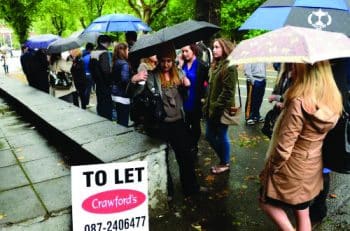
    Is the Irish Labour party finished, is a question that’s been asked for nearly as long as the party has existed. In the last year or so however, or more accurately since a couple of years into the Fine Gael-led coalition, the party’s tail-spinning poll numbers have started to feel symptomatic of a terminal decline. The old question has a new urgency. The regular Irish Times’ poll with Ipsos/MRBI hasn’t placed Labour over 10% since February 2013. The same poll has yet to rise above the benchmark set in February last year, when the party’s support bottomed out at 6.6% in the general election. On some level, the party recognises that the negative association with the last government isn’t going away in a hurry. Asked whether Labour’s problems might stem from increased competition on the left, Councillor Martina Genockey, recently selected as the party’s candidate in Dublin South-West, is quick to retort that no, “our biggest problem is that we were in government for five years”. Abatement of hostility? “People are still seeing things through that lens”, she says. A year on from the nadir of Labour’s worst general election result, policy proposals are still met on the doorstep with shouts of “you didn’t do this when you were in government, you didn’t do that”. That isn’t to say that canvassing is as rough as it once was. The increased amiability on doorsteps is a recurring line in conversations with the new array of candidates. “I wouldn’t say there’s a swing to Labour”, says Andrew Montague, selected to run in Dublin North-West, “but the anger against Labour has dissipated”. Ged Nash, elected to the Seanad and selected in April to run for his old Dáil seat in Louth, says that “there’s been an abatement of the hostility experienced on the doors”. That the polls have, if anything, gone in the wrong direction since the election, misses the point, says Kevin Humphreys, also a Senator. “Don’t necessarily expect movement in the polls”. Labour, he says, are focussing on 15-20 winnable constituencies, such that national opinion polls may not reflect the party’s strength. How credible is this? According to a spokesperson for the parliamentary party, plans are well underway for the next election, whenever it comes. The plan is to contest a minimum of 30 out of 39 constituencies. All selection conventions are intended to be completed by Christmas, with conventions already on the cards to select Brendan Howlin, Alan Kelly, Seán Sherlock, Brendan Ryan and in Meath West, newcomer Tracy McElhenny. A draft manifesto has been prepared, a fundraising drive is underway, while a membership recruitment drive is ongoing, said the spokesperson. The stated aim of party leader Howlin has been to double the party’s Dáil representation at the next election. Achieving that, bringing Labour to around 14 seats, would see it back around its historical average. That’s when the real rebuild could begin, you might think. Labour’s problem lies partially in its vote distribution, says Adrian Kavanagh, a lecturer in political geography at Maynooth University. Until not that long ago, Labour’s real base was in rural Leinster and Munster, and not necessarily in Dublin. That changed after the amalgamation with Democratic Left in 1999. “The change in the last number of years is in the loss of traditional working-class areas”, says Kavanagh. The party’s result last year saw it shrink back to a core of largely personal votes in rural Leinster and Munster – with the likes of Howlin in Wexford, Willie Penrose in Longford- Westmeath, and Alan Kelly in Tipperary clinging on. This leaves the party in a precarious position as regards vote share. Its vote is more thinly spread than that of Solidarity-People Before Profit, who won only one less seat on a lower vote total. If Labour falls a few percentage points below the 6.6% from last year, “they’ll struggle to win any seats” says Kavanagh – his analysis of the most recent Sunday Business Post poll has Labour winning only one, with Brendan Howlin in Wexford perhaps the sole survivor. Such is the geographical distribution of Labour’s vote, this could come about even as Solidarity- People Before Profit leapfrog them to 7 seats, still on a lower vote share. On the other hand, if Labour go up a few percentage points, “then it’d be possible to get back up to the mid-teens in terms of seats, which is quite a respectable result”. Separate, and socialist? Fairly or not, the primary accusation that’s been levelled at Labour in the years since it entered government has been that it turned away from its working-class base, with the consequences being felt at the ballot box. Joan Burton, the then-leader, lost more than 3,000 votes at the 2016 election. Party figures are reluctant to give credence to this viewpoint – Labour stepped up in the national interest, they still say. According to Nash, Labour’s “unique selling point is that we’re prepared to put our money where our mouth is”, minus a harmful obsession with being “philosophically pure”. Humphreys rejects the idea that Labour’s social democratic roots were abandoned, and emphasises the traditional idea that the party has a record of delivery. “Protest, not People: is all those on the hard left are good for”. Labour are in many ways dealing with an old problem, says DCU academic Eoin O’Malley. “They’re not radical enough for lots of people, while at the same time, they’re a bit too radical for a lot of people in centrist Ireland”. Furthermore, says O’Malley, “as pragmatic as the Labour Party is, it damaged them as a brand to go into government”. Better in 2011, would have been to lean on Fianna Fáil to prop up a Fine Gael government, sailing into 2016 as the uncontested leader of the opposition for the first time in its history. Counter-factuals are fine but what should the party be doing? The party has taken the implications of its diminished representation seriously – rewriting the party constitution, re-energising ordinary supporters and, says

    Loading

    Read more

  • Posted in:

    Bud get real

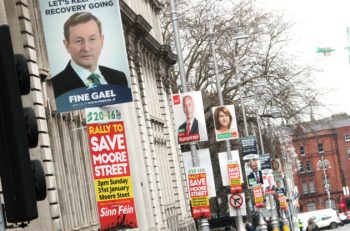
    The Annual ritual surrounding the budget will come to an end on Tuesday 10 october when finance minister, Paschal Donohoe, unveils his first package of tax and spending proposals since his appointment earlier this year. Don’t expect too many surprises though, as most of the expected initiatives have already been well aired through inspired leaks from various government and other sources. Once again, and despite the faux outrage of some Fianna Fáil frontbenchers who are threatening to pull out of its confidence-and-supply agreement unless the USC is cut or pensioners given another ver, the reality is that the deal is already done. It will not take much to cobble what both parties will claim as a victory in relation to cuts to the USC for lower- and middle-income earners while also ensuring that the wealthy are not overburdened and indeed will also gain from fiddling with tax bands and rates. Varadkar has promised to reward those who get up early and those who create wealth and pay for public services in what is clearly a pitch to the middle-class and better off voters he needs to keep on board if Fine Gael is to regain power. Equally, Micheál Martin does not wish to alienate the same constituency which he hopes will return to the Fianna Fáil fold in greater numbers than the party managed in 2016. Ultimately, the differences on tax and spending policies between the two main parties are minuscule and any rows over tax breaks for builders, increases in stamp duty, inheritance tax or whatever other measures are largely manufactured. The real question of the ratio between reducing the tax burden at the expense of improving public services is of course ideological. This makes the contribution of the hardly radical Economic and Social Research Unit all the more interesting. It has warned against tax cuts while the economy is growing by around 5% this year and an expected 4% in 2018. It submits that tax cuts will only overheat the economy. “Given the pace of growth over the past number of years there is certainly no case to stimulate economic activity with the budgetary package”, ESRI economist Kieran McQuinn said. He added that, if anything, the Government might need to raise taxes in order to dampen consumption and in order to raise the funds for essential capital spending on infrastructure in housing, health and education. This is not the narrative that Varadkar needs, to boost his chances of retaining power after the next election which many expect will come some time after the third and final budget to which Fianna Fáil committed in the confidence-and-supply deal. This is subject of course to the upshots of other unexpected events which could prompt a rush to the polls earlier next year or following the abortion referendum. Others on the Left who oppose the tax-cutting agenda and argue that the housing and health crises, not to mind other social needs, demand that all available resources should go into public services. SIPTU president Jack O’Connor spelled this out at the union’s biennial conference in Cork on 2 October. In his final presidential address to the union after more than fourteen years in the job, he argued that there should be no tax cuts whatever between now and the centenary of the foundation of the State in 2022. Arguing that all available resources should be put into the construction of social housing, decent health and education systems and a mandatory second-pillar pension scheme, he condemned the main parties for promoting tax-cutting policies and “a value system that precipitated the crisis in the first place”. “It’s back to be looking the other way, while exponentially growing inequality reasserts itself in our domestic and social affairs. It is absolutely unforgiveable that thousands of our children are homeless, in the aftermath of the collapse of a credit fuelled property bubble”, he told delegates in Cork city hall. “It is appalling to think that this is happening within twelve months of the celebration of the centenary of the insurrection of 1916, which was fought on the basis of a Proclamation which declared the establishment of a Republic which would cherish all the children of the nation equally. And while this is unforgivable in itself, it is absolutely obscene that our major political parties are again promoting a tax-cutting agenda while children are homeless, in this, one of the wealthiest countries in the world”. It is unlikely that Donohoe and Varadkar will heed such advice or that Fianna Fáil will do anything more than pay lip service to such utterances. As O’Connor, who is chairman of the Labour Party, also said, it will require an alliance of all genuinely progressive forces in Ireland to achieve his ambition for the common good by 2022. And that is a big ask. Frank Connolly

    Loading

    Read more

  • Posted in:

    Leo’s paradox

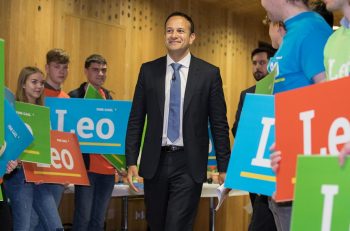
    As a younger, and perhaps wiser, Leo Varadkar once said: there is no messiah who will lead Fine Gael from the desert into the promised land. This did not prevent him from presenting a decidedly messianic image as he posed for the cameras following his decisive victory in the party’s leadership contest on 2 June. Since then politics and the media have obsessed over his choice for cabinet posts with one potential appointee after another scrambling for pole position beside the new leader to confirm their adoration for the man who holds their future in his hands. Soon forgotten was the uncomfortable truth that most of those among the party membership allowed to vote chose Simon Coveney from Carrigaline ahead of the man from Castleknock, and that Varadkar was elected through the over-whelming support of the parliamentary party and local councillors for the sole reason that they believe he is the most likely leader to ensure their re-election. The wider party it seems judged the candidates on policy, rather than geography or dare we suggest because the average blue shirt just is not ready yet for a gay man whose father comes from India as their particular cup of Barry’s tea. This is not to suggest that Fine Gael people are more likely to be homophobic or racist than any other group of political supporters but that they simply have not got their head around the rapid change in attitudes of a population with an average age of 38, which also happens to be Leo’s. For all this, Varadkar is as cautious and conservative as most in his party on both social and economic matters and is more likely to upset the wider LGBT community than endear himself to them. After all, he only came out as gay during the marriage equality referendum which many gay people saw as the culmination of decades of campaigning for their rights from which the young Leo had been silently absent. More importantly however, as Taoiseach, he is unlikely to deliver on a repeal of the eighth amendment which adequately meets the progressive demand for an end to church and State interference with reproductive rights or to tackle the huge range of discriminatory measures the State employs against women, children and minorities in health, education and social provision. There is little question that Varadkar will improve on the future prospects for his party colleagues and that they will go into the next election with greater expectations than if enda Kenny was still in charge. But that does not say much and neither does it take into account the harsh realities facing Fine Gael as it stumbles from one crisis to another while feeding from the life support provided by Fianna Fáil in government. Fianna Fáil is now looking at a general election next year and possibly ahead of the third budget it agreed to allow under the confidence and supply agreement which was negotiated by a less than enthusiastic Varadkar. His tendency to speak first and ask questions later will almost certainly cause some rocky moments over the coming months while his need to satisfy the many competing demands within his own ranks will also hinder any desire he may have to make innovative, not to mind radical, change. Varadkar will be really tested when it comes to the bigger issues facing the country and the first challenge he faces is how to deal with the ongoing and apparently unceasing crisis within the leadership of the Garda. He was among the first to criticise former commissioner, Martin Callinan, for describing the actions of whistleblower, Maurice McCabe as “disgusting”, and almost certainly precipitated the end of his long career in the force. Now he has to decide whether to allow the beleaguered Noirin O’Sullivan to remain in position. Varadkar will be happy to see the public service pay and pensions issue sorted before he takes full hold of the reins but the challenge posed by Brexit and its implications for the border and peace process would have been well outside his previous comfort zone. As to the insuperable health crisis as a medical doctor he might have been expected, when Minister for Health (2014-2016) to have led the delivery of the party’s plan for a universal health service to which he pays lip service, but there is a suspicion he ran out of ideas and little cause to think he will apply swift effective medicine as Taoiseach. Ultimately it will be his willingness to stand up to the vested private interests that sustain and feed the housing crisis, the rise in economic and tax inequality, precarious work and poverty that will test his imputed qualities as a radical young visionary. However, his party promotes the low tax, poor public service model that appeals to the very people he needs to survive in the cruel world of politics. Let’s call it Leo’s paradox. Frank Connolly

    Loading

    Read more

  • Posted in:

    Cometh the hour

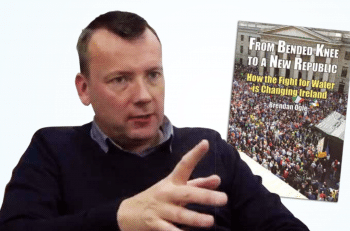
    ‘From Bended knee to a New Republic: How the fight for water is changing Ireland’ by Brendan Ogle, promises in its opening pages to take us on a journey “through the travails of a nation broken, sold and left in penury”. Ogle, unlike the many politicians and political parties he describes, fulfils this promise. The book brings you on a fascinating, inspiring, informative, and thoughtful journey through inequality in Ireland and “a nation’s fightback against it”. It should be clear from this that the book, just like the protest movement itself, is about much more than water. It comprehensively answers the question that many have asked: why was water the “issue that Irish people would take their first and biggest real stand against austerity?”. Ogle is the Education, Politics and Development organiser for the Unite trade union in Ireland and one of the founders of the Right2Water and Right2Change campaigns. The first quarter of the book provides detailed analysis of the political, economic, and social circumstances that gave rise to the Irish water protests which are “the biggest (per capita) and most peaceful protest movement for social change anywhere in the world”. These include the global water privatisation agenda, austerity, poverty and the health and housing crises. Neoliberalism is explored before an analysis of the self-evisceration of social democracy through Tony Blair’s ‘third way’ acceptance and implementation of neoliberalism, and its adoption by the Irish Labour Party. He suggests the Labour Party has become an “obstacle to progress toward a more equal Ireland, and is in fact an enabler of neoliberal inequality”. Ogle spends the rest of the book describing how the Right2Water campaign was organised and the challenges it faced in becoming a mass movement. He recounts how he and Dave Gibney, the other main organiser in Right2Water, withstood difficult negotiations with local communities who had been let down by trade unions in the past but had started this new movement in order to build trust and a strong working partnership with them. He writes about how ‘civil society’ organisations failed to offer much support to the movement. He describes the constant work required to build unity amongst the fractious left-wing parties that make up the ‘political pillar’ of the movement. We can read how he and others in the water movement which “could so easily have been just another failed campaign in a failed Republic”, actually developed the most successful mass-protest movement in modern Irish history. It is, therefore, an essential read for those looking to understand not just how and why the water movement developed in Ireland but for those seeking lessons of how to build successful social movements. A central purpose of the book is to set out the origins and purpose of the water movement, and to tell the story of the water activists, which, as Ogle rightly says, you won’t read about in the media or many other places. The book provides an important contribution to documenting Ireland’s recent socio-political history and geography, particularly the excluded voices and views in society which are too often ignored. The book documents how the movement was built from the grassroots up in working class communities like Edenmore in Coolock in Dublin and by “wonderful people” from all over Ireland “who were determined to make a difference”. It tells the inspiring story of water activists such as Karen Doyle, a “housewife and mother who also works part-time outside the home” from ‘Cobh says No’. She got involved in the water charges movement and formed one of the hundreds of ‘meter watch’ groups, which were the heart of the movement across the country, to obstruct water meters being installed. It is from such actions that a broader social movement was born. Ogle writes: “every week-day morning someone would rise about 4.00 to 5.00 am and find where the meter contractor vans were heading. Text alerts were sent so that by the time the vans arrived people like Karen were at estate entrances to protest. A caravan and trailer were procured and soup, tea and coffee produced every day for sustenance. Margaret Thatcher would have hated it. Society! People came from their homes, their individual isolated bolt holes, to start sharing stories about where it had all gone wrong, how their lives had been impacted by the breaking of a nation, which gave them the strength, the determination, to do something about it”. These groups, according to Ogle, faced problems from “some on the ultra-left” who saw the local groups “as a vehicle for advancing their own agenda, viewing people like Karen as potential recruits”. He describes how “people who got involved in a campaign out of genuine concern for their community and their country”, were hurt as they found themselves “the focal of bitter and personalised attacks”. He notes that in the past “many have walked away from the campaigns, surrendering them to the dogmatic ultra-left and the inevitable failure to deliver on their promise”. But not this time. Karen and many other community activists like her continued on and developed their own spaces and confidence to keep building a broad and inclusive movement. important in this was the support given by the Right2Water trade unions, and Unite in particular through its political economy education. It ran nine free ‘political economy’ courses for 150 ‘non-aligned’ community activists “with the objective of giving activists who were central to the growing water movement access to the type of information that would enable them to understand the political economic agenda behind water privatisation”. This was a very innovative approach which provided an important longer term empowering aspect to the movement. Ogle writes how “through the training we not only helped them connect with each other on a national level but showed how the tax and privatisation agenda are global issues…giving renewed energy as to how to challenge the neoliberal consensus”. Ogle persuasively tackles the critiques of the water movement in relation to water conservation. He highlights how people in the UK, which has

    Loading

    Read more

  • Posted in:

    Done gall

    Former County Manager of Donegal, Michael McLoone, is continuing with his High Court proceedings for defamation against Village. In 2014 the magazine printed allegations which it claims were both true and contained in an affidavit opened in court proceedings, by former Donegal senior planner, Gerard Convie, an employee of Donegal County Council for 24 years. McLoone claims he has been massively defamed. Meanwhile Convie’s allegations are being assessed by a senior counsel appointed by the Department of the Environment. Convie has consistently, in court and elsewhere, claimed that during his tenure there was bullying and intimidation within the council – of planners who sought to make decisions based exclusively on the planning merits of particular applications. He claims one councillor constantly referred to him as a “wee shit from the North”. In the opened affidavit, Convie alleges McLoone: 1. Recommended permissions that breached the Donegal County Development Plan to an extent that was almost systemic 2. Submitted planning applications to Donegal County Council on behalf of friends and associates 3. Dealt with planning applications from submission to decision, including some from friends, family and associates 4. Ignored the recommendations of planners 5. Destroyed the recommendations of other planners 6. Submitted fraudulent correspondence to the planning department 7. Forged signatures 8. Improperly interfered as described in a number of planning applications 9. Was close to a number of leading architects and developers in Donegal, including the head of the largest ‘architectural’ practice in Donegal, with whom he holidayed but the relationship with whom was undeclared. Convie made a number of complaints dating from 2006. He had a list of 20 “suspect cases” in the County. As he later reverted to private practice he claimed to have discovered many more, perhaps hundreds, “a cesspit”. In 2006 he complained to the Standards in Public Office Commission (which ruled the complaints out of time). That same year the Council sued Convie for his allegations, but dropped the proceedings after a fractious four years, without any damages or costs award. In another case McLoone won damages from a local newspaper which had printed some of the allegations but which did not fight the case in a full hearing. Following complaints from Convie after the Greens got into government Environment Minister, John Gormley, announced ‘planning reviews’ in 2010, not of corruption but of bad practice – in seven local authorities including Donegal. Convie’s case studies comprised all the material for the review in Donegal. But when the new Fine Gael and Labour government took over they very quickly dropped the independent inquiries. A lazy 2012 internal review by the Department of the Environment stated of Donegal – according to Minister Jan O’Sullivan in the Dáil, that: “… the complainant [Convie] has failed at any stage to produce evidence of wrong-doing in Donegal Council’s planning department”. Convie felt this left him in an invidious position and he successfully sued. In the High Court Order, all the conclusions by the Minister were withdrawn and an apology issued. Counsel on behalf of the current Donegal County Manager, Seamus Neeley, objected to the decision as it did not know why the case had been settled, though Convie’s barrister noted that the Council was a notice party that had played no active part in the case. There appear to have been no ramifications for the civil servants who concluded that Convie’s complaint did not constitute “evidence”, less still for the ‘progressive’ Minister who accepted the conclusions. The government was forced to reinstate the planning enquiries and found maladministration but not any sort of corruption in the cases outside Donegal. After the ‘RTÉ Investigates’ programme which apparently uncovered examples of corruption in planning last year, the government sheepishly announced a package of ‘radical’ planning measures which included the belated publication of the independent review which uncovered considerable evidence of malpractice throughout the planning system and includes 29 recommendations to improve “standards of transparency, consistency and accountability” which the Department says it will implement. The Convie file was referred to the Attorney General for direction and in the end senior counsel, Rory Mulcahy SC, was appointed to look into it. Convie by all accounts engaged with Mulcahy over the issues which were the subject of the complaints, but has now withdrawn from the process. Mulcahy has spoken to the Council and informed Convie that he would be seeking to interview other relevant parties. He is around half way through the exercise. In February this year Alan Kelly, the then Minister for the Environment, claimed, “this independent process underway remains the priority of the Minister, his Department and his officials”. However, though in general content with the process – which being non-statutory is precariously ‘open-ended’, Convie has some particular concerns. He considers the Minister changed the terms of reference for Mulcahy by re-inserting a confidentiality clause, which unlike an earlier version omitted to state that the provision would continue in force “notwithstanding the termination of this contract by either party for any reason”. In the end the Minister partially reinstated the term relating to the confidentiality of his work. Moreover Convie wants the process to embrace An Bord Pleanála to which he claims improper representations were made. He claims that in the 1990s he bid on a site in Magheraroarty, Co Donegal, never trying to hide anything. His bid was accepted by the owner but on reflection Convie says he felt it was far too much land which his family could not afford. He was approached by a builder in Donegal, Patrick J Doherty, and was delighted when he agreed to take the land and Convie bought a site from him. This posed potential conflicts of interest for Convie. However at all stages of the multifarious transactions, Convie made the necessary declarations of involvement in the land. Doherty made a pre-planning application to determine the attitude of the planning office to the development of the site. As the relevant planning official was on leave [and Convie was dealing with his work as well as his own] he says

    Loading

    Read more

  • Posted in:

    SF won’t prop up FF, FG or Labour

    The recent General Election was a very good one for Sinn Féin. We increased our number of TDs from 14 to 23. That’s a 65% increase – a success by any standards. Importantly, Sinn Féin also further increased the geographical spread of the party. There are now very few regions in the State in which there isn’t Sinn Féin Dáil representation. There is also in place, another whole raft of Sinn Féin representatives who, although not returned at this election are very likely to be elected next time around if they continue with the valuable work they are doing. So, Sinn Féin returns to the Dáil, not just with a significantly larger team but also with a team of very high-calibre TDs, including more women and more younger representatives. Sinn Féin had two clear objectives going into the election. The first was to get rid of a Fine Gael/Labour government that has brought chaos to housing and health, imposed unfair taxes and promoted mass emigration. We succeeded in that. In the early days of the election campaign we holed the coalition’s strategy below the waterline by proving that their figures were wrong and that they presented €2 billion which they did not have. I think we were also successful in demonstrating that you cannot have US-style taxes and at the same time invest in decent public services.Our other objective was to prove to people that there is a realistic, credible political alternative of which we are a significant part. That is very much a work in progress. We may not have succeeded, at this point, in getting enough seats to form a progressive Government but that will improve as we go on. But the realignment of politics in this State took an important step forward in this election and the next election will see that trend intensify. The political domination of Fine Gael and Fianna Fáil is finished. What we now need to do is increase the cohesion among those who advocate an alternative view of how the economy and society should be organised. Over the past five years, Sinn Féin has been the genuine voice of opposition in Leinster House, offering an alternative to the dreadful austerity policies of Fine Gael, Labour and Fianna Fáil. All of Sinn Féin’s pre-Budget submissions demonstrated a way of ensuring economic growth while also being socially equitable and protecting the vulnerable. We repeatedly warned the Government of the escalating homelessness crisis. The Government refused to listen and it became an emergency. We also consistently raised the issue of all-Ireland integration and the political, economic and social case for a united Ireland. Sinn Féin has now received an enhanced mandate to continue with that work. The post-election sham fight between Fine Gael and Fianna Fáil is nothing to do with the real issues affecting citizens. The people who were homeless last Friday will remain homeless under Fine Gael and Fianna Fáil. Patients will still languish on trolleys in our hospitals under Fine Gael and Fianna Fáil because those parties are not serious about resolving these issues. Going into this election Fianna Fáil picked up on a sense that voters were moving to the left, so they began to steal the phrases Sinn Féin was using about fairness and a recovery for all. That strategy resulted in a partial recovery of the Fianna Fáil vote itself but still left it far, far short, in his-torical terms, of where it once stood. Throughout the election campaign, Sinn Féin made it clear that we would not prop up those parties that created and sustained the economic and social crisis facing our people. That is the mandate we received and we will not break our commitments. Sinn Féin will continue to consult with others, including those aligned to the Right2Change platform, on the way forward. If not in the immediate period ahead, the objective of a genuinely progressive alternative Government in which Sinn Féin plays a lead role is a live possibility. Over 400,000 people voted for candidates aligned to the Right2Change platform to end water charges. The Fine Gael/Labour Government has been defeated and water charges should leave the stage with them. What is now clear from the election is that people voted for real change and a more equal society. Sinn Féin is committed to achieving that and to pursuing and preparing for the peaceful reunification of Ireland and the reconciliation of all our people. Whether in Government or in opposition, Sinn Féin will stick by the mandate we have been given. Gerry Adams Gerry Adams TD is President of Sinn Féin

    Loading

    Read more