Ireland

Random entry RSS

  • Posted in:

    Leo’s paradox

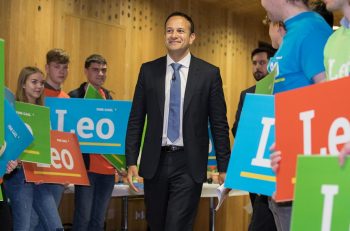
    As a younger, and perhaps wiser, Leo Varadkar once said: there is no messiah who will lead Fine Gael from the desert into the promised land. This did not prevent him from presenting a decidedly messianic image as he posed for the cameras following his decisive victory in the party’s leadership contest on 2 June. Since then politics and the media have obsessed over his choice for cabinet posts with one potential appointee after another scrambling for pole position beside the new leader to confirm their adoration for the man who holds their future in his hands. Soon forgotten was the uncomfortable truth that most of those among the party membership allowed to vote chose Simon Coveney from Carrigaline ahead of the man from Castleknock, and that Varadkar was elected through the over-whelming support of the parliamentary party and local councillors for the sole reason that they believe he is the most likely leader to ensure their re-election. The wider party it seems judged the candidates on policy, rather than geography or dare we suggest because the average blue shirt just is not ready yet for a gay man whose father comes from India as their particular cup of Barry’s tea. This is not to suggest that Fine Gael people are more likely to be homophobic or racist than any other group of political supporters but that they simply have not got their head around the rapid change in attitudes of a population with an average age of 38, which also happens to be Leo’s. For all this, Varadkar is as cautious and conservative as most in his party on both social and economic matters and is more likely to upset the wider LGBT community than endear himself to them. After all, he only came out as gay during the marriage equality referendum which many gay people saw as the culmination of decades of campaigning for their rights from which the young Leo had been silently absent. More importantly however, as Taoiseach, he is unlikely to deliver on a repeal of the eighth amendment which adequately meets the progressive demand for an end to church and State interference with reproductive rights or to tackle the huge range of discriminatory measures the State employs against women, children and minorities in health, education and social provision. There is little question that Varadkar will improve on the future prospects for his party colleagues and that they will go into the next election with greater expectations than if enda Kenny was still in charge. But that does not say much and neither does it take into account the harsh realities facing Fine Gael as it stumbles from one crisis to another while feeding from the life support provided by Fianna Fáil in government. Fianna Fáil is now looking at a general election next year and possibly ahead of the third budget it agreed to allow under the confidence and supply agreement which was negotiated by a less than enthusiastic Varadkar. His tendency to speak first and ask questions later will almost certainly cause some rocky moments over the coming months while his need to satisfy the many competing demands within his own ranks will also hinder any desire he may have to make innovative, not to mind radical, change. Varadkar will be really tested when it comes to the bigger issues facing the country and the first challenge he faces is how to deal with the ongoing and apparently unceasing crisis within the leadership of the Garda. He was among the first to criticise former commissioner, Martin Callinan, for describing the actions of whistleblower, Maurice McCabe as “disgusting”, and almost certainly precipitated the end of his long career in the force. Now he has to decide whether to allow the beleaguered Noirin O’Sullivan to remain in position. Varadkar will be happy to see the public service pay and pensions issue sorted before he takes full hold of the reins but the challenge posed by Brexit and its implications for the border and peace process would have been well outside his previous comfort zone. As to the insuperable health crisis as a medical doctor he might have been expected, when Minister for Health (2014-2016) to have led the delivery of the party’s plan for a universal health service to which he pays lip service, but there is a suspicion he ran out of ideas and little cause to think he will apply swift effective medicine as Taoiseach. Ultimately it will be his willingness to stand up to the vested private interests that sustain and feed the housing crisis, the rise in economic and tax inequality, precarious work and poverty that will test his imputed qualities as a radical young visionary. However, his party promotes the low tax, poor public service model that appeals to the very people he needs to survive in the cruel world of politics. Let’s call it Leo’s paradox. Frank Connolly

    Loading

    Read more

  • Posted in:

    If not zeal then logic

    It could not be clearer. The Irish Human Rights and Equality Commission Act 2014 says that public bodies must, when they are preparing strategic plans, assess and identify the human rights and equality issues that are relevant to their functions as policy maker, employer and service provider. Public bodies must also identify the policies and practices that they have in place or that they plan to put in place to address these issues. We can only assume they meant it when they enacted the legislation, two years ago now. The excitement could, therefore, hardly be contained as the Department of Education and skills was first out of the traps with its new statement of strategy. All other Government Departments are still in the process of finalising their own new statements of strategies. They lag behind education, hot off the press with its ‘Action Plan for Education 2016-2019’. The statement of strategy opens with a picture of a smiling minister Richard Bruton and his commitment that “we can work together with all the people who work in and depend on the education and training service to, collectively, make it into the best in Europe”. This ‘best in world’ stuff is cringe-inducing but, whatever, how did it manage the new public sector duty? It is worth setting it out in full. It comes under the less than promising subheading “ensuring equity”. Equity, it must be remembered, is about fairness, not the more particular, more ambitious equality, not even human rights. It goes like this… “As part of their public sector duty, public bodies are required to consider human rights and equality issues relevant to them. In preparing this document, such issues were considered and individual actions address matters specific to the education and training sector. Ensuring access to an equitable system is a driving force throughout the Department’s work”. That’s it. It feels like a crude two fingers to the legislation, to the Oireachtas that enacted it, and to anybody who had naively entertained expectations deriving from the legislation. Human Rights don’t even get another mention in the 64- page document. Equality gets a mention as it is part of the name of the Deis (Delivering Equality of Opportunity in Schools) initiative and, under Goal 2, where the statement of strategy complacently recites that “we have made considerable progress in advancing equity and equality of opportunity”, but does deign to acknowledge that “significant challenges remain if we are to ensure that children and young people from different backgrounds are adequately supported so that they can experience success in the education system”. Anything vaguely equality-related is squashed into Goal 2 of the strategy statement which is to improve the progress of learners at risk of educational disadvantage or learners with special education needs. Goal 2 has 18 actions. This compares with 35 actions under Goal 1 to improve the learning experience and success of learners, 29 actions under Goal 3 to help those delivering educational services to continuously improve, 37 actions under Goal 4 to build stronger bridges between education and the wider community, and 20 actions under Goal 5 to improve national planning and support services. The Irish Human Rights and Equality Commission has produced limited but clear guidance on implementing this public-sector duty. The steps required include: Undertake an assessment of human rights and equality issues that are relevant to its functions, to the services it provides and to its employees. The Department of Education and Skills Statement of Strategy demonstrates no evidence of such an analysis. Consult broadly with employees, managers, trade unions, individuals and communities accessing and using the services, and other key stakeholders, which may be affected by inequalities and human rights issues. The Department of Education and Skills received submissions from 600 individuals and groups but there is no evidence that any of these related to equality and human rights or the public-sector duty. Screen and analyse policies and programmes from a human rights and equality perspective, identifying which existing policies and programmes are particularly relevant. The Department of Education and Skills Statement of Strategy demonstrates no evidence of such screening or analysis. Develop action plans on human rights and equality with defined actions and responsibilities. The Department of Education and Skills Statement of Strategy demonstrates no evidence of such an action plan. So, what next? The Irish Human Rights and Equality Commission, in its guidance, states that where it “considers there are failures to fulfil the Public Sector Duty, it can invite a public body to carry out an equality and human rights review of the work of the organisation and prepare and implement an action plan”. Logically then, the only outstanding matter now is when will the Irish Human Rights and Equality Commission act? Niall Crowley

    Loading

    Read more

  • Posted in:

    Cometh the hour

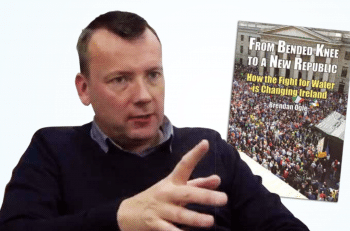
    ‘From Bended knee to a New Republic: How the fight for water is changing Ireland’ by Brendan Ogle, promises in its opening pages to take us on a journey “through the travails of a nation broken, sold and left in penury”. Ogle, unlike the many politicians and political parties he describes, fulfils this promise. The book brings you on a fascinating, inspiring, informative, and thoughtful journey through inequality in Ireland and “a nation’s fightback against it”. It should be clear from this that the book, just like the protest movement itself, is about much more than water. It comprehensively answers the question that many have asked: why was water the “issue that Irish people would take their first and biggest real stand against austerity?”. Ogle is the Education, Politics and Development organiser for the Unite trade union in Ireland and one of the founders of the Right2Water and Right2Change campaigns. The first quarter of the book provides detailed analysis of the political, economic, and social circumstances that gave rise to the Irish water protests which are “the biggest (per capita) and most peaceful protest movement for social change anywhere in the world”. These include the global water privatisation agenda, austerity, poverty and the health and housing crises. Neoliberalism is explored before an analysis of the self-evisceration of social democracy through Tony Blair’s ‘third way’ acceptance and implementation of neoliberalism, and its adoption by the Irish Labour Party. He suggests the Labour Party has become an “obstacle to progress toward a more equal Ireland, and is in fact an enabler of neoliberal inequality”. Ogle spends the rest of the book describing how the Right2Water campaign was organised and the challenges it faced in becoming a mass movement. He recounts how he and Dave Gibney, the other main organiser in Right2Water, withstood difficult negotiations with local communities who had been let down by trade unions in the past but had started this new movement in order to build trust and a strong working partnership with them. He writes about how ‘civil society’ organisations failed to offer much support to the movement. He describes the constant work required to build unity amongst the fractious left-wing parties that make up the ‘political pillar’ of the movement. We can read how he and others in the water movement which “could so easily have been just another failed campaign in a failed Republic”, actually developed the most successful mass-protest movement in modern Irish history. It is, therefore, an essential read for those looking to understand not just how and why the water movement developed in Ireland but for those seeking lessons of how to build successful social movements. A central purpose of the book is to set out the origins and purpose of the water movement, and to tell the story of the water activists, which, as Ogle rightly says, you won’t read about in the media or many other places. The book provides an important contribution to documenting Ireland’s recent socio-political history and geography, particularly the excluded voices and views in society which are too often ignored. The book documents how the movement was built from the grassroots up in working class communities like Edenmore in Coolock in Dublin and by “wonderful people” from all over Ireland “who were determined to make a difference”. It tells the inspiring story of water activists such as Karen Doyle, a “housewife and mother who also works part-time outside the home” from ‘Cobh says No’. She got involved in the water charges movement and formed one of the hundreds of ‘meter watch’ groups, which were the heart of the movement across the country, to obstruct water meters being installed. It is from such actions that a broader social movement was born. Ogle writes: “every week-day morning someone would rise about 4.00 to 5.00 am and find where the meter contractor vans were heading. Text alerts were sent so that by the time the vans arrived people like Karen were at estate entrances to protest. A caravan and trailer were procured and soup, tea and coffee produced every day for sustenance. Margaret Thatcher would have hated it. Society! People came from their homes, their individual isolated bolt holes, to start sharing stories about where it had all gone wrong, how their lives had been impacted by the breaking of a nation, which gave them the strength, the determination, to do something about it”. These groups, according to Ogle, faced problems from “some on the ultra-left” who saw the local groups “as a vehicle for advancing their own agenda, viewing people like Karen as potential recruits”. He describes how “people who got involved in a campaign out of genuine concern for their community and their country”, were hurt as they found themselves “the focal of bitter and personalised attacks”. He notes that in the past “many have walked away from the campaigns, surrendering them to the dogmatic ultra-left and the inevitable failure to deliver on their promise”. But not this time. Karen and many other community activists like her continued on and developed their own spaces and confidence to keep building a broad and inclusive movement. important in this was the support given by the Right2Water trade unions, and Unite in particular through its political economy education. It ran nine free ‘political economy’ courses for 150 ‘non-aligned’ community activists “with the objective of giving activists who were central to the growing water movement access to the type of information that would enable them to understand the political economic agenda behind water privatisation”. This was a very innovative approach which provided an important longer term empowering aspect to the movement. Ogle writes how “through the training we not only helped them connect with each other on a national level but showed how the tax and privatisation agenda are global issues…giving renewed energy as to how to challenge the neoliberal consensus”. Ogle persuasively tackles the critiques of the water movement in relation to water conservation. He highlights how people in the UK, which has

    Loading

    Read more

  • Posted in:

    Ross hits judicial soft spot

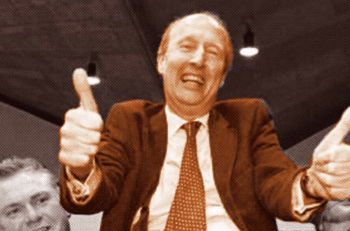
    There is this extraordinary conjunction of interest between the legal profession and parliament. Lawyers in Ireland play a very active part in the political system. In 2010 there were 16 barristers and solicitors in Dáil Eireann – ten percent of the total. There are strong historical associations between the professions of politics and the law. In Ireland’s case the association has been grandly embedded at least since the time of Daniel O’Connell, arguably the greatest Irish parliamentary figure and agitator a popular and crusading barrister whose campaign for Catholic emancipation earned him the sobriquet ‘the Liberator’, Radical nationalists following in O’Connell’s wake quite often, unfairly, depict his achievement of Catholic emancipation as being only of benefit to the Catholic middle class or the well-heeled lawyerly professionals. Wolfe tone and Padraig Pearse were also members of the legal profession. In more modern times lawyers have in many ways dominated the new state. The story of the first half of the Irish state (1916-1966) was in large part an economic failure – weak domestic industry and continued emigration. The safe and prestigious jobs were in medicine, the professions, banking, the civil service and the law. The meagreness of economic growth and wealth imbued these positions with an enviable mobility for those with social or class aspirations. A great many lawyers also gravitated towards politics. Traditionally the appointment of judges was a rather rarefied activity monopolised by the cabinet. In Ireland judges must have 12 years (10 for the District Court) experience as a barrister or solicitor. Interestingly, the US alone among common law countries has literally no requirements for appointment to its courts, though of course there is stringent scrutiny of supreme Court candidates by the legislature including a senate Judiciary Committee. Historically in Ireland, the whole thing had the feel of an insiders’ game. For example, there was a kind of informal, lawyers’ club within the cabinet when my father, the late Brian Lenihan senior, was in politics. My father, needless to add, was highly active, along with other cabinet-rank lawyers, when it came to the appointment of people as members of the judiciary. Friends and former colleagues of his in the bar library were constantly discussed as possible or actual appointments to the bench. In my father’s time Fianna Fáil and Fine Gael dominated the appointments with an occasional Labour party twist. The two big parties were careful enough to appoint supporters of the opposite political persuasion to create the impression that the process itself was fair and impartial. By the time i had been elected to the Dail in 1997 the appointment of judges had become an extraordinary example of indiscreet lobbying and jockeying for place and position. TDs were frequently canvassed to promote a particular individual. I even became involved myself and managed, along with others to get two or three lawyers appointed who I felt would be good people to be members of the judiciary. In her recent book on ‘the politics of Judicial selection in Ireland’, Jennifer Carroll MacNeill concludes of judicial appointments: “some systems are exclusively based on the preferences of the executive, some systems require approval of nominations by the legislature, some appoint judges according to a quota by different branches of the political system and some restrict the involvement of politicians to selecting among individuals who have been pre-screened by an independent body comprising judges and representatives of the legal profession”. For the last 20 years in Ireland, High Court, Court of appeal and supreme Court judges have been recommended by the Judicial appointments advisory Council and the Cabinet (ie the executive) makes the decision on advice from the minister for Justice and Attorney General and with the consent of the Taoiseach. In reality, of the ‘executive’ only the Taoiseach, minister for Justice and leaders of any coalition partner, are involved in the selection. Unlike in England and Wales (where the Prime minister selects the judge after nomination of one candidate by the Judicial appointments Commission) and unlike Israel (where the Judicial selection Committee selects the judge), the Irish government retains significant discretion to choose any person to fill a judicial vacancy. Reform has certainly been tame but efforts to curtail, control or otherwise reform the legal profession are often the subject of a cacophony of protest by the profession who are very adept at deploying well-orchestrated campaigns against hostile regulation of the profession. This is because unfortunately, according to Carroll MacNeill: “over the 20 years of its operation, the advisory board did not use the range of powers given to it to assess judicial candidates, was not provided with sufficient secretarial or professional supports and suffered from a substantial absence of process and Oireachtas oversight”. Worse, Carroll MacNeill says, the board made a “crippling“ change of strategy when it decided to change its process for recommending judges. Instead of performing a careful selection that would recommend the seven (or fewer) best candidates as provided in law, the board decided it would in the future simply approve all applicants deemed not to be explicitly “unsuitable”. The number of names recommended to government “increased substantially from about seven to roughly 20, 50 or 100 names for a High Court, Circuit Court or District Court vacancy respectively”. In Ireland this means the executive has almost free reign to appoint someone whose – real or perceived – politics they favour or, more pertinently, who favours theirs. Against this domestic background, Shane Ross is either very brave, or very foolish, to take on the task of reforming the country’s judiciary and how it regulates itself. His proposal to create a new body, composed mainly of non-lawyers, to guide the judges in their work, recruit appointees and register their financial interests is a welcome and well overdue piece of work. Ross is often accused by his opponents of coat-trailing a brand of opportunistic populism that is once off and designed to secure him maximum publicity. in the case of the judiciary however Shane Ross has been remarkably consistent.

    Loading

    Read more

  • Posted in:

    How maths will destroy capitalism

    The consumerism-generating-capitalism- it usefully loyal, generating-consumerism cycle that characterises the developed or ‘Northern’ world depends on inequality, even as it purveys certain equalities, and is the main obstacle to tackling climate change, the most serious long-term problem facing humanity. Capitalism is struggling to maintain itself. In one formal sense this is good for equality. A crucial weakness of capitalism (not sufficiently noted by the Left) is that by relentlessly pushing its ‘free’ market into every corner of life to seek profit, it puts a cash-price on everything,and it thereby becomes a great social leveller: status, is replaced by capital or money as the measure of societal eminence. As a result, other than the great inequalities of money, we now live in communities with a level of personal and legal equality that was totally unimaginable throughout human history or even 40 years ago – for gender, sexual orientation, race, ‘legitimacy’, nationality, and religion, for example. Capitalism eschews the personal inequalities which torpid caste-based civilisations emphasised. Only money matters now. But the crucial point is that the promotion of personal equality by capitalism also causes constantly growing agitation by workers for a just share of their social production as they now see themselves as equal to their bosses. In response to this growing agitation for equality, the capital-owning class must react, like any ruling-class or mafia, in two ways: one section of the exploited must violently be repressed, the other will be bribed to keep inside. England, as one of the biggest imperialist powers has done this regularly and systematically. It did it in the 1819 Peterloo massacre of demonstrating workers. It did it in the 1840s when famine starved a million people in ireland while massive amounts of food were being exported under British army guard to Liverpool. Towards 1850 when Chartist agitation for equality again became strong in england, instead of violence the Corn Laws were dropped to allow imports of cheap food as the ‘bribe’ to quieten agitation. Colonies were brutally plundered by England’s imperialism to deliver bribes to English workers. Friedrich Engels noted this in a letter from 1882 to Kautsky: “English workers gaily share the feast of England’s colonies”. Ireland at this time was used as one source of those bribes as part of the effort to maintain the English working-class comfortable enough to forgo dangerous agitation, even to join the imperial army. But the equality drive continued, Ireland demanded and won independence, and after two diverting world wars and the likes of the Jarrow march in the 1930s, in the 1970s and 1980s there again arose agitation among the English working-class against capitalism’s economic inequality – most noticeably the 1974 and 1985 miners’ strike and opposition to the poll tax from 1990, in spite of the material benefits to the working classes third world imports of cheap food and raw materials. There was also strong, often violent agitation by the colonies, following Ireland and Viet Nam‘s example, for national liberation, for the equality of races and nations. This new agitation was a dangerous crisis for capitalism, and as there were no further colonies to plunder, a new source of wealth, beyond cheap food and raw materials, had to be found. Thatcher’s capitalism achieved this: up to the 1970s colonies were generally not allowed to manufacture, this was reserved for the North so that for example India was forced to send its raw cotton to England and to buy back spun and woven goods. The new policy was that the ex-colonies and third world in general needed to get the national liberation they were increasingly demanding and could then develop manufacturing on their low wages to export the new agitation-quitening bribe of cheap manufactured goods back to England. Reagan and the North in general did the same. Ireland had become part of this group, exploiting not exploited. This new system worked well and subsists: a surfeit of cheap manufactures from the southern nations, often produced by children working in horrible conditions, as the North’s diminishing manufacturing drifts toward a financial economy where billionaires speculate to produce damaging bubbles and get bailed-out when a bubble bursts, as Thomas Piketty notes in ‘Capital in the 21st Century’. The class-struggle, previously within nations, has become global, between nations. The ‘bribes’ mentioned are not just cash incentives, there is an intrinsic turbocharge for the enthusiastic wealthy consumer. Consumerism thrives when a worker in the US or Ireland receives the equivalent of $15/hr while the worker in, for example, China producing equally-sophisticated manufactured goods is only paid $2/hour. Capitalists gloat at the classic opportunities to trade the spoils, the only issue is the ‘terms’ of trade. A worker in the US or Ireland can trade one hour’s labour, in a shopping mall, for several hours of equal-quality Chinese labour. This looks like a winning gambler cashing in the chips. The more you shop for consumer goods the more your profit grows as you indirectly exploit foreign workers. This is the economic basis of that particular ‘buzz’ element of our Consumerist consciousness. The incentive is inbuilt, the process stacked to the advantage of consumers in the North. It is the instinctive grasp of this situation by a worker who is comfortable with capitalism that matters. a worker might exchange 30 minutes labour at a routine retail job for the price of a pair of imported jeans. the cotton must be: planted-grown-harvested-spunwoven-dyed-cut-sewn,then zips-pockets-hems-buttons- belt-loops-rivets-labels applied, and the lot transported. The same is true, though it is less obvious, if both workers are on car-assembly lines in their own countries. The consumerist ‘buzz’ arises from an unequal worker-to-worker relationship, not worker-to-capitalist. In striking contrast shopping for manufactured goods before 1980 felt like the much cruder experience of being mugged by capitalists as the wages earned exchanged for a less than equal amount of labour because when a worker shopped, those workers who produced the manufactured goods were in the same economic area and so were paid the same wage rate (the missing labour-value of course expropriated as profit by capitalists). This is why shopping for the working

    Loading

    Read more

  • Posted in:

    Irexit

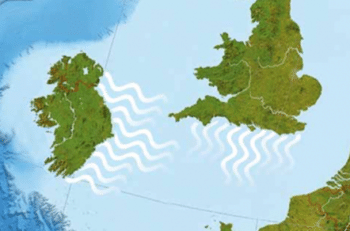
    Since the Brexit referendum in June I have been rapporteur of a Private Study Group of Irish economists and constitutional lawyers who have been examining what we should do when and if the UK leaves the EU. In August their report was sent to the Taoiseach, his Ministers and the Secretary-Generals of all Government Departments. It has been sent also to the EU embassies in Dublin, to UK Prime Minister Theresa May, her key Ministers and senior civil servants concerned with Brexit, and to a wide range of British Brexiteers whom my colleagues and I have got to know over the years. The report’s basic conclusion is that it is in the interest of the Irish people that Brexit should be accompanied by “Irexit” – Ireland exit. We applied to join the then EEC in 1961 because Britain and Northern Ireland did so. We joined simultaneously with the UK and Denmark in January 1973. Now that Britain and the North are leaving, we should do the same, for three principal reasons. The first is that Ireland is nowadays a loser, not a gainer, from EU membership. In 2014 we became a net contributor to the EU Budget for the first time, paying in €1.69bn and receiving €1.52bn. This means that in future any EU moneys that come to the Republic under the CAP, EU cohesion funds, research grants, support for community groups and the like, will be Irish taxpayers’ money coming back, employing some Brussels bureaucrats on the way. Henceforth the EU will no longer be the ‘cash cow’ most Irish people have regarded it as for decades, and which is the basis of much of our official and unofficial europhilia. A bonus would be that outside the EU Ireland can take back control of its sea-fishing waters. Eurostat’s estimates of the value of fish catches by non-Irish boats in Irish waters since 1973 are a many-times multiple of the EU cash we got over that time. The second reason why Irexit should go along with Brexit is that that is the only way of preventing the North-South border within Ireland becoming an EU external frontier, with new dimensions added to Partition, affecting trade, travel and different EU laws and legal standards as between Dublin and Belfast. For example without the UK as an EU Member alongside it, the Republic would be in a much weaker position to withstand pressure to adopt continental norms in EU crime and justice policy, which differ signi cantly from Anglo-Saxon ones in such areas as trial by jury, the presumption of innocence and habeas corpus. Such divergence would adversely affect good relations within Ireland as a whole and while it would not undermine the Peace Process, it would not help it either. If we stay in the EU while the UK leaves it would mean that for Irish reunification to come about at some future date the people of the North would have to rejoin an EU that Britain had long left, adopt the euro-currency, take on board a share of the €64bn of private bank debt which the ECB insisted that Irish taxpayers nance during the 2008-2010 currency crisis, and implement the further integration measures that are likely to be needed over the coming years if the Eurozone is to be held together. It would give 26 EU Governments in addition to the UK and the Republic a veto on eventual Irish reunification. Such a development should be unacceptable to all Irish nationalists. Another consideration is that if the South remains in the EU while the North leaves along with Britain, future Irish reunification would make the whole of Ireland part of an EU military bloc that is likely to come under greater Franco- German hegemony following Brexit. That potentially could be a security threat to Britain. This will surely change significantly the calculus of British State interest and give Britain a strategic reason for keeping the North inside the UK, an interest it has not got today. The third reason why most Irish people should now reassess their attitude to the EU is that the business case for Ireland remaining an EU member diminishes significantly if the UK leaves. Most foreign investment that comes here is geared to exporting to English-speaking markets, primarily the UK and USA, rather than to continental EU ones. Once the UK leaves the EU two-thirds of Irish exports will be going to countries that are outside it, as they are going today to countries outside the Eurozone, and three-quarters of our imports will be coming from outside. Outside also, Ireland’s 12.5% corporation tax rate would no longer be under EU threat. Of course our relations with the UK and the EU in the Brexit context are complicated by our membership of the Eurozone. Irish policy-makers abolished the national currency and joined the Eurozone in 1999 on the assumption that the UK would do so also and that by going first they would show how communautaire they were. It was an utterly irresponsible action in view of the fact that the Republic does most of its trade with countries that do not use the euro. With the pound sterling falling against the euro as the UK disengages from the EU, Ireland desperately needs an Irish pound that can fall with it, so maintaining its competitiveness in its principal export markets – the UK and America. That is why the Irish State urgently needs to get its own currency back. Economist Chris Johns noted in the Irish Times on 20 August that if the Irish pound existed today it would be worth some 10 percent more than the pound sterling. This was the level it reached in January 1994, when Irish industry was in crisis because of its overvalued exchange rate – explicitly then, implicitly today. That in turn precipitated the major devaluation which inaugurated our ‘Celtic Tiger’ years. Ireland needs to regain the freedom of being able to determine its own exchange rate. There is no legal way to

    Loading

    Read more

  • Posted in:

    Galway Sprawlway

    Around one hundred submissions were received by Galway’s City Council on its Draft Development Plan 2017-23 by the deadline of 5 October. Meanwhile, a number of well-known community and environmental activists in Galway City have come together to form a new alliance to promote a ‘Future Cities’ concept based on “regenerative urban development, ‘green’ living, smart technologies and a sustainable transport. They have a lot on their plate. It’s a planning and transportation mess with no visionary Messiah. In many small cities comparable in size to Galway, people are regenerating and humanising their urban environments by introducing woodlands, gardens, recreational parks and city-wide 24/7 cycling, walking and public bus or train systems. Yet here in Galway City we are now proposing to build the N6 ringroad that will cut through homes, villages, neighbourhoods, farmland, key wildlife habitats, a university campus and sports elds, and lead to further mindless urban sprawl of this, in so many ways, creative city. Then, having spent €700m on a new road, there will be no incentive or money left to introduce the Public Transport improvements being promised “after the road is built”. If Galway City is to have a sustainable future, the authorities should immediately bin a policy based on a discredited ‘predict and provide’ private car-based transportation model and instead should use the available €500-750m to construct a hierarchical transport model based on a ‘new mobility’ prioritising pedestrians, cyclists and users of public transport”. When the IDA first developed its business parks at Parkmore in the early 1970s there were very few businesses initially established out that far. So having only one main entrance avenue wasn’t a problem. In the intervening years the estate has exploded so it now accommodates many of the world’s leading medical device and IT manufacturers. With very little available public transport passing, let alone actually entering the estate: the sheer number of private cars coming in has now reached crisis point. Yet Galway Co Council actually gave permission for a new sub-standard entrance/exit point and junction giving the planning board no choice but to refuse permission. In September An Bord Pleanála duly reversed the permission because “its construction would endanger public safety by reason of traffic hazard”. This decision could, should, force debate about the much larger can of worms around Ireland’s lack of a ‘sustainable’ National Spatial Strategy’. The daily traffic chaos in Parkmore is a symptom of the much wider problem we have in historic spatial planning in Galway, with rapidly increasing numbers of people having to commute from their new homes in County Galway to their workplace in the city, by car. This phenomenon has become overwhelming over the past 40 years. Workers living in the city but working in Parkmore/Ballybrit have been failed by the lack of civic imagination that might have provided an adequate public transport system in the city. For a youthful and fashionable city, capital of ‘craic’, dubbed as progressive, and once crowned ‘the fastest growing city in Europe’ this is anachronistic. In its May 2014 Newsletter, the Western Development Commission – using an IDA case-study, stated that “of the 16,701 rural dwellers commuting to work within the gateway of Galway city, one quarter (25.6% or 4,285) commute to work in the IDA estates”. The first figure refers not just to people heading in to Ballybrit, Parkmore and Galway Technology Parks, but others who commute further still into the heart of Galway city, for work at GMIT, NUIG and UCHG, our largest city-centre employment nodes. As James Wickham said in his book ‘Gridlock’: “Car dependency is an issue for social policy. Car dependency exacerbates social exclusion, for those who do not have a car run the risk of being excluded from normal life. Their access to jobs is restricted, they find it difficult to move around the city, they are not full citizens”. There is a belief that transportation problems result from the antedeluvian planning policies of the 1980s and 1990s, both at local and national level. These intensi ed in Galway from the time Colin Buchanan and Partners published its ‘Galway Transportation and Planning Study’ in September 1999. This report together with its subsequent 2002 ‘Integration Study’ commissioned jointly by Galway City and County Councils, led to a situation in Galway, not dissimilar to that of Dublin, where availability of sufficient reasonably priced housing units in the city failed to keep up with growing public demand. This, combined during the madness of the Celtic Tiger years, with pressure being applied by county councillors and developers turned Galway’s surrounding towns, villages and particularly countryside into worker dormitories: for families that had been priced out of continuing to live in Galway city. The Galway County Development Plan of 2002, which integrated the recommendations from the Buchanan Report, facilitated development in places ringed around the city: Bearna, Moycullen, Claregalway, Tuam, Oran- more and Athenry. And everything in between. Responding to Galway County Council’s then- Draft Development Plan in July 2002, then City Manager John Tierney wrote to Donal O’Donoghue, then County Manager, expressing some concern over proposed policies which would continue to promote a wider spread of settlement, and not the concentration into the 38 towns, villages and proposed development at Ardaun that had been planned. He stated: “The cumulative effect of these policies/objectives all greatly undermines the ‘Galway Transport and Planning Study’ GTPS, any sustainable approach to a settlement structure and consequently any ability to promote a sustainable public transport system. It would exacerbate the current dependence on private vehicular transport and the consequent negative effects of this”. Tierney’s pleas went ignored, and widespread ‘one off’ housing development in County Galway continued unabated, with septic tanks mushrooming leading to water pollution, cryptosporidium, and a culture of lengthy commutes into once homely Galway City. So a long-term strategic policy for planning where people might be sustainably housed was scupperedd, due to the regime, the report and thousands of concomitant individual acts of planning anarchy, cumulatively undermining any regional strategy. The problem is now self-pepetuating and solution-less.

    Loading

    Read more

  • Posted in:

    Seeya print

    The recent Audit Bureau of Circulation (ABC) figures for newspaper sales for January-June 2016 show an alarming decrease for nearly all Irish newspaper titles, with the demise of the industry itself now, for many, inevitable. Of the national newspapers, The Irish Times dropped 5.5 percent compared to the first half of last year, The Irish Independent is down 6.4 percent, The Irish Examiner 6.7 percent and The Evening Herald 8.4 percent in the same period. Most daily tabloids are down, apart from the Irish Sun, which saw a rise of 4.6 percent year on year. The Sunday Independent dropped 6.7 percent year, The Sunday Business Post 3.5 percent, The Sunday Times 6.4 percent and The Sunday World 8.9 percent. The Irish Mail on Sunday fell by 7.2 percent while the Irish Sun on Sunday recorded the only rise in circulation at +9 percent. Overall, the circulation of daily print titles was 5.7 percent lower and of the Sundays 6.3 percent lower. Globally, the threat to newspapers is epidemic. In May 2016, the 121-year-old Tampa Bay Tribune, Florida, ceased publication; in March, the London Independent and Independent on Sunday ceased their print publications and November 2015 saw Russia’s only independent English-speaking title The Moscow Times end its daily edition in favour of a weekly format. In 2013, The Washington Post was sold to Amazon.com founder and chief executive Jeffrey P Bezos for $250m. In September 2010, the Chairman and Publisher of The New York Times announced to an International Newsroom Summit that: “We will stop printing the New York Times sometime in the future, date TBD”. The Guardian, whose web edition is the world’s second most popular English-language newspaper website – after the Daily Mail online, has shed 200 jobs and clocked up losses of £69m for the last financial year with falls in both print and digital revenue leading to an £8m fall in total turnover to £209.5m. Digital revenues were £81.9m, down almost £2m from the preceding year as Facebook and Google ate up the bulk of the money it had made from mobile advertising. Based on current trends, commentators have predicted that only the Sunday and weekend newspapers will survive in a culture immersed in Facebook, Twitter, Snapchat and Youtube and with the proliferation of citizen journalism offering free ‘news’ content. What New Media offer is ‘free’ news as it happens from an infinite number of sources around the globe; in the age of New Media, traditional values of accuracy, accountability and professionalism are at risk from unverifiable facts, unconfirmed sources and the constant need for instant news; and gossip. With daily newspapers, today’s news is essentially yesterday’s, or this morning’s at best. Newspapers have made a concerted effort to shift content towards analysis and commentary, but this hasn’t been enough. What the recent ABC gures don’t reveal is where these disenfranchised readers are migrating. The loss of newspaper revenue may be partly attributable to growing internet usage and online culture, but this does not necessarily mean those same readers are now reading news online. A decline of 10,000 readers for a national newspaper does not equate to an additional 10,000 people reading or accessing news online. Youtube, Facebook, Twitter and other social media account for most internet usage, so perhaps not all migrated readers/users will be regular perusers of the Guardian online edition. A ‘cornerstone of democracy’ for over 400 years is now in danger of imploding. Attempts by newspapers to embrace New Media by offering pay walls for access to online content have so far been largely unsuccessful (though the Guardiannow boasts 50,000 ‘subscribers’); cynics point to the obvious – there is simply too much ‘free’ news to be harnessed online. Print Media’s only hope is to reinvent their current business model and somehow embrace their biggest rivals. What that does for journalism is another story. Ken Phelan

    Loading

    Read more