Ireland

Random entry RSS

  • Posted in:

    Their daughters’ fathers

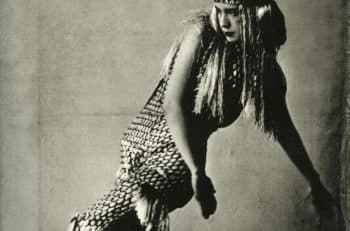
    Way back in 2004, I wrote an article for The Sunday Business Post, entitled ‘Play Boys, but few Play Women’ highlighting chronic gender imbalance in Irish Theatre, on the occasion of ‘Abbey One Hundred’, a virtually all-male programme celebrating the centenary the Abbey Theatre, (apart from one children’s play by Paula Meehan, and a shared run for Marina Carr’s ‘Portia Coughlan’ at the Peacock Theatre). That was before the dawn of social media, and my article, a lone voice in a sea of unquestioned misogyny, was received with resounding silence. Unfortunately, ‘his’ story has a habit of repeating itself, and more than a decade later, on October 28th, 2015 the Abbey Theatre proudly announced ‘Waking the Nation’, its – surprise, surprise – virtually all-male 1916 commemoration programme (apart from a lone monologue by Ali White entitled “Me, Mollser”, jutting out of the programme like Elizabeth O’Farrell’s incongruous little feet behind Patrick Pearse’s iconic 1916 surrender photograph). Nearly as bad was the playing of O’Farrell in both Jordan’s ‘Michael Collins’ and the recent ‘Rebellion’ series on RTE by men. This time, however, Twitter and Facebook ignited with rage at the outrageous gender imbalance, bringing an exciting counter-movement into being, with its own hashtag #WakingtheFeminists, abbreviated, wonderfully, to #WTF. Wasting no time on this occasion, Mná na hEireann, had a “storming of the Bastille” moment at the Abbey Theatre on November 12th, 2015, when over 30 female theatre professionals took to our national theatre’s stage, and the 450-seater auditorium over-owed with women demanding an end to this unacceptable gender imbalance, for ever. A contrite Fiach Mac Conaghail, director of the Abbey Theatre, sat in the auditorium and listened. After each of the 30+ women on stage had had their say, he stood up, looked up, and admitted: “I wasn’t thinking about gender balance. I did not look up. I failed to check my privilege. And I regret that”. If theatre holds up a mirror to society, this recurring gender imbalance at the Abbey Theatre is indeed a perfect reflection of Irish society, and the nature of Irish cultural ‘His’story – so far. We need look no further than to the iconic 1916 surrender photograph of Patrick Pearse for confirmation of this, with its dodgy silhouette of self-effacing inner city nurse Elizabeth O’Farrell who braved snipers to deliver the surrender order throughout Dublin’s rebel garrisons, only to be airbrushed out of the official surrender picture as published by The Daily Sketch. I was delighted to hear artist Jaki Irvine speak of Elizabeth O’Farrell and her 2013 book about the fearless nurse, ‘Days of Surrender’ (as yet unreviewed in Ireland), from the Abbey stage in its Theatre of Change symposium in January. Irvine is going on to set Elizabeth O’Farrell to music, along with her other female 1916 colleagues in her installation “If the Ground Should Open”, at the Irish Museum of Modern Art in September. Like Elizabeth O’Farrell who may indeed, as some claim, have deliberately taken a self-effacing step back when that 1916 Patrick Pearse surrender photograph was taken, making it easy for her little feet and large coat skirts to be airbrushed out of our Cúchulain- style national mythology, Lady Gregory (co-founder of the Abbey Theatre) did not actively seek recognition for co-authoring her iconic 1902 play ‘Cathleen Ni Houlihan’ with WB Yeats either. Similarly, a few decades later the self-effacing but fascinating George Yeats chan-nelled a myriad of voices to – yes – CO-AUTHOR ‘A Vision’ (1937), with her husband WB Yeats, but is rarely acknowledged as having done so. Like Elizabeth O’Farrell, the formidable George Yeats (about whom I am making the rst ever radio documentary, entitled ‘Georgie’s Vision’, funded by BAI Sound and Vision, for broadcast on RTE Lyric FM in Autumn 2016), took a step back, and went so far as to say “thank-you for leaving me out”. But – #WTF – is this shyness reason enough for the rest of us to facilitate, and hence perpetuate, the inaccurate masculinisation of, and erasure of women from Irish cultural history? Another important figure eclipsed by men is Lucia Joyce who could be Ireland’s answer to Camille Claudel, the well-regarded French sculptor who spent 30 years in an asylum (also Rodin’s lover and elder sister to poet, Claude Caudel). Lucia could not have been more different from her mother, Nora, whose entire raison d’être was her man, James Joyce. As well as his lover, cook, maid, and mother to his children, Nora was also James Joyce’s muse, most obviously inspiring Molly Bloom. Even in the Joyces’ modernist milieu, it was alright for a woman to be a muse, but not an artist herself, and certainly not an artist of the body (though in his masterpiece, ‘Ulysses’, James Joyce wrote the epic of the body). A modern young woman in 1920s Paris, Lucia expected her own career and identity, though she had grown up in weirdly close quarters with her unconventional family, and very much in the shadow of her father. When she protested “c’est moi qui est l’artiste”, alas, nobody listened to her. Tragically, Lucia Joyce (1907 – 1982), was never allowed to ful l her dream of being a professional modern dancer, despite her training with greats Emile Jacques-Dalcroze (founder of Eurhythmics); Raymond Duncan (brother of Isadora, who himself lived like a modern-day Ulysses in his Paris commune “Akademia Raymond Duncan”); Margaret Morris (grand-daughter of William Morris and founder of www.margaretmorrismovement.com); despite her seasons dancing with “Les Six de Rythme et Couleur”, and despite reviews like this one in the Paris Times: “Lucia Joyce is her father’s daughter. She has James Joyce’s enthusiasm, energy, and a not-yet-determined amount of his genius… When she reaches her full capacity for rhythmic dancing, James Joyce may yet be known as his daughter’s father”. Instead of being given the space to realise her ‘full capacity’, Lucia, who grew up immersed in iconoclastic counter culture and the avant-garde, found herself consigned to mental institutions – for life. Interestingly, after her father’s death in

    Loading

    Read more

  • Posted in:

    Mojocon no Mojo con

    MoJoCon – the Mobile Journalism Conference which debuted in Dublin last year – has its roots almost a decade ago, when Glen Mulcahy, then working with RTE Nuacht, began experimenting with the camera on his Nokia N93 smartphone. “Video quality was atrociously bad, photographs were tiny, 1Mb was seen as huge, it was very much in its infancy”, recalls Mulcahy, now RTE’s head of innovation. “We were experimenting with that around the time Reuters had deployed the same tools to their journalists in the UK to create content for websites”. A handful of stories was produced to an acceptable broadcast quality using the mobile devices, and Mulcahy started keeping track of other broadcasters who were doing the same.“I thought, we need to bring everyone together, talk about what we’re doing, and that was the birth of MoJoCon”. From those beginnings, and networks built up through Circom, the European Association of Regional Broadcasters, MoJoCon has evolved into a “leading international media conference focusing on mobile journalism, mobile content creation, mobile photography and new technology all in one event”. Mulcahy may be an advocate for new technology, but he doesn’t expect RTÉ reporters will be carrying smartphones and selfie sticks by the end of the decade. “People still expect a particular kind of look when they turn on the television. You can’t do sports coverage on mobile, for example – you need those broadcast cameras, powerful zoom, all those expensive things. That said, there is very interesting case study, a station in Luxembourg, Léman Bleu, uses mobile to create content for their TV news. I think they are very brave to go this early”. “You will still see cameramen, you will still see satellite trucks in five years time, not journalists with selfie sticks. There are times when mobile works, but mobile is not mature enough yet to do 100% of the work”. Where he does see openings for new technology to expand are in non— broadcast media outlets, from newspapers to independent pod-and video-casts. “There are a few case studies in the Irish Times where I was absolutely blown away by some of the stuff they were able to do. They also very cleverly decided to upskill all their press photographers who were interested in doing it into shooting video with their DSLR cameras. So you have a new aesthetic. You definitely have better, although not necessarily radically more expensive, cameras and you also have some of the journalists who responded and went out shooting stuff with their phones”. “You don’t need a broadcast-quality camera to produce content that going to be delivered (back) onto mobile phones. I’m more and more coming to the opinion that there is a mobile ecosystem where we create on the mobile phone, edit on mobile phone, and deliver to mobile phones”. New technologies, and the ability to produce programming and news quickly and cheaply, also have implications for how RTÉ covers different communities, Mulcahy believes. “In the UK, there’s been a concerted effort by the BBC over the last 12 to 18 months to try and encourage hyperlocal sites. There is a UK government initiative where you can get a modest fund to basically try and get it off the ground. So there’s more that the government here could do to encourage that level of local community content”. “This is a device that most people have in their pocket. Maybe not everyone has a top-of- the-line Android or whatever, but lots of people have smartphones that can do pretty decent video, reasonably decent video”. “There is potential to give community-group newsletters, the ones that get stuffed on A4 sheets through letterboxes, a mobile angle. We could really energise community activism at grass roots level by showing them what you can do with video on mobile”. Looking to the future, as technologies (and screens) merge, Mulcahy can see a point where RTÉ produces video and audio not just for broadcast, but for the web, and for web first. As technologies mature, there is no strict reason why, for example, a new report compiled during the mid-afternoon should have to wait until the Nine news to be seen, when it can be immediately streamed to desktop computers or phones. Gerard Cunningham

    Loading

    Read more

  • Posted in:

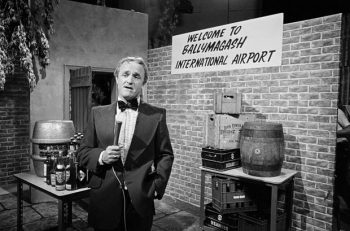
    The language of Ballymagash

    The Fianna Gael area rep was practisin’ his language, goin’ forward. He was glad you had asked the question but would you please let him finish. He didn’t interrupt you. Can you hear him at the back? He would have no hand, act or part in this coalition. That was a redline issue. Nothing was agreed until everything was agreed. There was not a scintilla of evidence that the scal space was what the other guy said. A lot done, more to be done. Together let’s take the next steps forward and Let’s Keep the Recovery Going. Your hard work is working. Ireland’s working again. Now let’s keep it working. Working for you. Working for him. Working for Work. He was Standing Up for Ireland’s Future and Standing up for working families. An Ireland for all. Building a better future. A future you can believe in. Change you can believe in. Belief you can change in. New sports facilities you can change in. Changing Ireland for a changing Ireland. Not the same old, same old. New roads. No potholes. Bringing no potholes to the hard-working people of this constituency. The way forward. The Straight Road is Shortest, he mused. The long man for the long road. An end to the road to the end, for all. Democracy, republicanism, government a health service for all. Let’s keep the wheels moving: Real Plan Better Future. Making 2016 a year to believe in. Your Future, Our Future. A future for our children. A future for our county. A future you can believe in for your community. Your community, your team, your future. He had a five-point plan, a three-point programme, a contract with the people, he wanted a charter for the people, ordinary people, ordinary working people, ordinary families. A voice for you, a voice for our young people, a voice for older people. A voice that will he heard. A voice that will be heard in Dublin. No way in the wide earthly world. A voice at the table. Rewarding work, real change not spare change. A people’s debate. The people’s party. The people’s person. The republican party. The people’s republican party. An Ireland serving the people. A convention inside a commission inside an inquiry, inside a tribunal. What did he bring to the table: Integrity, Courage, Experience. And a record of delivery. Delivering on local issues with a national impact. His record stands for itself. Vote for experience and common sense. Jobs, Education, Health. People Who Deliver. Delivery you can believe in. Active in the country. Active in the county. Activism you can count on. Difference you can rely on. County country. Core values. Going forwards not backwards. Help him to help you to help ourselves. In these serious times you need a serious candidate. Action speaks louder than words. Keeping it real. Bringing the Motorway to Molahiffe. Bringing the Luas to Listowel. Bringing the DART to Dingle. Vote 1, 2, 3 in order of your preference. Never merge, never go into coalition with Fine Fail. Identical. For (nearly) a hundred years.

    Loading

    Read more

  • Posted in:

    Bouquets to Boulders

    It is critical that the next Government have a credible and robust National Traveller and Roma Inclusion Strategy. This will depend on political will. The last number of months have been particularly difficult for Travellers and Traveller organisations. In October 2015 we witnessed the horrific deaths of 10 Travellers in a fire at a below-standard halting site in Carrickmines. There was a general outpouring of sympathy for the bereaved Traveller families which seemed to break through the barriers of negative stereotype. Soon, however, we were forced to watch the bouquets turn back into boulders as the local authority failed to implement its plans to accommodate the bereaved families due to objections from local residents. This unleashed shocking levels of anti-Traveller hate speech on the airwaves and on social media. Meanwhile the families were left to live on a car-park while they buried their loved ones. In November 2015 Traveller ethnicity was discussed in Dáil Eireann for the first time. The Government told the Dáil that Traveller ethnicity would be dealt with in their new National Traveller and Roma Inclusion Strategy. But we had to watch the Minister for Equality, who had promised to deliver on this issue, back down. He blamed ‘focus group led’ politics. This disappointment was followed in January this year with the spectacle of riot police evicting Travellers from a Traveller halting site in Dundalk. This was apparently for their own safety. Ministers refused to get involved in local authority operations. The Government was exposed as having no plan for Travellers and Roma. The last Government told the United Nations that poor education outcomes for Traveller children and third-world living conditions for Traveller children would be dealt with in the new National Traveller and Roma Inclusion Strategy. However, It succeeded in putting Traveller issues on hold, just long enough to get to the General Election. The week before the election Travellers and Traveller organisations were involved in a round of consultations with the Department of Justice and Equality on the National Traveller and Roma Inclusion Strategy. It was ironic that outside these consultations, in the real world of General Election campaigning, Traveller issues were barely mentioned. Considerable space in print, on the broadcast media and on Social Media is readily available to decry Travellers and to blame many of the ills of society on them. However, when it comes to political discourse the space available seems to shrink. Travellers and Traveller organisations have been engaging with the State for 30 years now. In this time there have been significant milestones. The 1995-Government-appointed Task Force on Travellers was the first to provide a comprehensive agenda of policy proposals for equality for Travellers based on a recognition of the distinct culture and identity of the Traveller community. The 1998 Employment Equality Act and the 2000 Equal Status Act introduced, for the first time, a system of redress for people experiencing discrimination in employment and in the provision of goods and services, including Travellers. In 2010 the First All-Ireland Traveller Health Study was published which acknowledged the critical role that living conditions play in determining unacceptably-poor Traveller health levels. What we have failed to see in the last 30 years is the implementation of policy in accommodation, health, education and employment. Many of the recommendations of the 1995 Task Force report remain to be implemented. There has been little tangible improvement in the standard of Traveller living conditions. Travellers and Roma represent a small percentage of the total population. It is not beyond our means to ensure equality and human rights for Traveller and Roma. We need leadership that Travellers can believe in. We need Government to commit to implementing a National Traveller and Roma Strategy that: 1. Provides safe, culturally-appropriate accommodation for all Travellers and Roma. 2. Supports positive action to enable labour-market participation and employment for Travellers and Roma. 3. Reinstates and grow resources to ensure participation by and outcomes for Travellers and Roma in culturally appropriate education at all levels. 4. Implements the recommendations of the All- Ireland Traveller Health Study. 5. Recognises the distinct ethnic identity of the Traveller community and addresses the practical implications of this in policy, programmes and services. 6. Addresses deprivation among Travellers and Roma in an integrated strategy for economic equality for these communities. 7. Funds Traveller and Roma organisations to give voice to the issues faced by their communities and to participate in decision-making that affects them. 8. Promotes a campaign of public education to combat racism and to stimulate a valuing of ethnic diversity. 9. Builds capacity in the public sector to respond effectively to cultural diversity and to implement the public-sector duty to promote and implement equality and human rights. Ronnie Fay Ronnie Fay is Director of Pavee Point

    Loading

    Read more

  • Posted in:

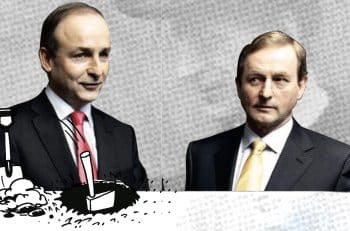
    FF won’t see coalition as an ideological issue and FG is glued to stability

    The most extraordinary coalition formed in Ireland was the first one, in 1948. It involved Fine Gael and a then-new party headed by Sean McBride, Clann na Poblachta. The Clann was a lively mixture of liberals, left-wingers and Republicans with a deep immersion in the IRA. The surprise with the Clann was that its youthful enthusiasm and vigorous campaigns against partition very nearly toppled De Valera from his then hegemony over Irish politics. McBride himself was a former IRA Chief of Staff who subsequently cut out a career for himself as an international eminence becoming a Nobel Prize laureate and founding member of Amnesty International – the campaigning global Human Rights body. Because of lingering republican bitterness against General Richard Mulcahy’s role in the civil war, Mulcahy, the Fine Gael leader, stood aside to facilitate a coalition with the Clann and its tooth and claw republican militants. John A Costello became Taoiseach in the coalition instead. The point of all of this is to illustrate that, from the very outset, coalition formation in Ireland has been a pragmatic business where big parties and small ones dispense with ideological or philosophical differences in order to provide an alternative government and run the country. Down the years few, if any, Fine Gael or Labour leaders worried too much about the differences of left and right when it came to forming a government designed to extract Fianna Fáil from prolonged periods in power. In 1989 Charles Haughey led Fianna Fáil for the first time ever into a coalition arrangement with the Progressive Democrats, stating cheerily: “Sure, it was only me that could have done it”. His party colleagues resisted it furiously believing non-participation in coalition an absolute core value for the party up to that point. The bitterness of doing this coalition was magnified by the presence of Des O’Malley and his new party – composed of individuals who had fought Haughey, then split from him to create their own party. For Haughey it was just another deal but for the Progressive Democrats, who claimed to be policy-focused, it was about taxation and other precious policy items, including a public Tribunal into the goings on in the Beef Industry. Haughey worked hard to save his own skin and persuade his ministerial colleagues of the merits of going into coalition. Apparently at one stage in the discussions around the cabinet table he held out his arms sideways demanding in relation to the opposition: “D0 you want to give them all of this?”. Shortly afterwards the new Taoiseach Albert Reynolds formed a coalition with the Labour Party which followed an election in 1992 which featured advertisements generated by Fianna Fáil scaremongering about a left-wing takeover of the country by Labour. This was no small tactic and involved giant billboards and full-page newspaper adverts in a bid to frighten voters in a move that was redolent of the ‘red scare’ tactics of the 1950s and 1960s. During the actual campaign my father, the late Brian Lenihan Senior. When all about him were these banner advertisements called for an alignment with Labour rather than the PDs. His rationale was that Labour were more compatible with FF than what he viewed as the “Thatcherite ” Progressive Democrats. He was dismissed by the party bosses during the campaign only to find himself instrumental, behind the scenes, after the election in putting the coalition deal with Labour together. Albert Reynolds, a businessman, proved to be very pragmatic when faced with the post-election numbers and getting back into power. My father had key relationships and friendships within the Labour Party and within the labour movement generally. These relationships and ability to communicate became vital to the formation of this government. When people set out to cross party divides there is a need for credible and dependable intermediaries who can give assurances on policy and how the share out of ministries will play out when the negotiations get real. This was my own experience when I set out, at the request of Bertie Ahern, to put in motion the process of having a coalition with the Green Party in 2007. In fact the groundwork had begun in the immediate aftermath of the 2002 election. Ahern was already entertaining doubts about the future sustainability of the PD coalition because of problems with both policy and numbers. I knew a number of the key figures in the Green Party, including Trevor Sargent and had been in university with both Eamon Ryan and John Gormley. Part of the reason for having a coalition with the Greens was a concern within the party about the right-of-centre nature of the PD coalition, as well as a fear that the party was already becoming too visibly identified with the building industry and big capital. It was also made easier by the overarching atmosphere of mainstreaming environmental or green issues. When the post-election numbers showed a Green coalition was necessary Bertie pressed the buttons and appointed a skilled and experienced team of negotiators so that his own ministers were locked into the items agreed with the Greens. The government itself worked well together though it has to be said it was much more difficult for the Greens to get the coalition deal past their activists than it was for Bertie to get it past his parliamentary party. Rural TDs were the most resistant regarding Green policies on farming incentives as tantamount to treason. In the event they overcame their difficulties. As with the previous Labour Coalition, outside of the main negotiations, a series of reliable and discreet intermediaries were on hand to smooth out any issues that arose in the talks. Ahern himself was a very accomplished negotiator. General Election 2016 has been dominated by speculation of a grand coalition between the once very dominant big parties of Fianna Fáil and Fine Gael. The fact that both parties combined now count for slightly less than 50% of the popular vote has hastened a frenzy of speculation about such a

    Loading

    Read more

  • Posted in:

    The life and Crimes of CJH

    There is something quaint about Conor Lenihan assessing the life of Charlie Haughey, the man who stole money from the fund for his father’s liver transplant and then fired his father as Tánaiste and Minister for Defence. Lenihan has pieced together a mixture of his own memories of the former Taoiseach and anecdotes that his father, Brian Lenihan senior, passed on to him. Because of this, the reader inevitably looks for evidence of personal bias on the part of this author and it is certainly a particular, personal work. This is a distraction because these characteristics import a significant source of new material, and new perspectives on old material. Nevertheless the media do not seem to have embraced Lenihan’s approach and strangely this book has not been reviewed in the mainstream press. The book is easy reading if patchy. Lenihan of course has a pedigree of grandson, son, brother and niece of TDs and, as a famously boisterous quidnunc he exploits it – all. Lenihan opens by admitting, nay boasting, that it is rare that an adult life is heavily influenced by an historical figure, but that his was, by Haughey. The moral compass of the book spins unpredictably. It often lionises Haughey but also assiduously maintains another Lenihan-centred narrative which actually surfaces only sporadically and peaks in intensity with the sacking of Lenihan senior and with the loss of his bid for Áras an Uachtaráin weeks later. The most poignant page in the book is the last one, the sole appendix, which reproduces the letter from Haughey requesting the resignation of Lenihan’s father. It begins “A Thánaiste, a Aire” and proceeds to threaten that if he does not resign that Haughey will request the President to terminate the appointment. An underpinning of authorial disdain is surely being implied. Lenihan reprises a lacklustre recitation of the Small Man’s biography: son of a Free Stater, Lieutenant in the FCA, North Dublin ward boss, marriage to Lemass’s daughter, reforming minister, arbiter of taste (here Lenihan is too kind). But consistent hypocrite supporting Archbishop McQuaid’s banning of Edna O’Brien’s ‘The Country Girls’. The man from TACA, the 1960s Christian Brothers’ Boy in mohair suits doing the social rounds in The Shelbourne, The Hibernian, Jammet’s, The Russell and Groome’s. So far, so well-known. Lenihan explains the realpolitik forcing Lemass to offer Haughey the Finance Ministry and Blaney the Agriculture Ministry leaving Lynch to see off Colley (59 votes to 19) and become Taoiseach. A brisk narrative on the Arms Crisis foreshadows Haughey’s first fall. Lenihan believes Lynch “knew much earlier than he insisted that weapons were to be purchased” but “backed off and decided to blame the entire fiasco on those ministers, and Captain Kelly”. Haughey, Blaney and Gibbons were “briefed at every step of the way, if not by Captain Kelly, then by the Army’s Head of Intelligence Colonel Michael Hefferon”. Still Lenihan is perplexed as to why “Lynch opted to put those involved on trial in the courts” and adds ‘my father always said that the main person pushing for a prosecution was George Colley”. Haughey’s return is well done. He enlisted Reynolds and his country and western caucus and was back as a Minister in Lynch’s government by 1975. Haughey’s pretensions rose ever greater: “Some preferred the Mercedes but Haughey felt the Jaguar cut a greater dash, with its leather seats and inlay”. Meanwhile back in the city Haughey’s constituency machinery cranked out cheques and Christmas turkeys. In summer there was a charity gymkhana (in aid of the Central Remedial Clinic!) with marquee and CJH in riding gear with Lady Valerie Goulding, silver trays and matching teapots on the lawns of Kinsealy. By 1979 he was leader of Fianna Fáil and Taoiseach. Lenihan notes (in a sentence that in fairness he appropriates from Haughey’s Wikipedia entry, that: “Within days of his becoming Taoiseach, Allied Irish Banks forgave Haughey £400,000 of a £1,000,000 debt. No reason was given for this. The Economist obituary on Haughey (24 June 2006) asserted that he had warned the bank ‘I can be a very troublesome adversary’”. Haughey’s 1980 Ard Fheis was “like a Baptist revival meeting rather than a political conference”. Then GUBU set in in 1982. Lenihan surely veers towards the unedifyingly bizarre as he reveals that a contact of his in the Tory party told him that Haughey was “the first person to compliment Mrs Thatcher on her legs” at the Anglo-Irish summit which spawned Lenihan senior typically ponderous invocation of “the totality of relationships”. Haughey’s interventionism over the liver transplant for Lenihan senior in the Mayo Clinic is narrated scrupulously with Haughey ordering Paul Kavanagh who fundraised €270,000, though “no more than €70,000 was spent”, to divert the balance to Haughey and his Charvet shirts (though Lenihan, being a Lenihan, is much too practical to care, or even mention, the fetish for haute couture). Lenihan recounts with palpable pleasure how Haughey survived the 1991 challenge from Reynolds (55 votes to 22). Haughey lived through his dissection by the Moriarty Tribunal and died of prostate cancer in 2006 before he could be prosecuted. Homely depictions of Lenihan’s mother and her friends debating the ethics and sexiness of early Haughey mingle with Lenihan’s recollection of how Brian Lenihan senior’s hopes that Fianna Fáil might not campaign against divorce were dashed by Haughey. Other anecdotal references sometimes, though not always, seem tailored to elevate the perspicacity of the author’s dad but also give the book a beguiling sense of Lenihanesque intimate authority – as when he reveals that he acted as an informal intermediary for Albert Reynolds in the early 1990s, though he was a working journalist. There is charming colour too as when for example he captures the private sides of De Valera and Lemass, or remembers a bottle of whiskey placed at Jack Lynch’s setting at a dinner in the late 1960s being consumed in the course of an evening. He reveals that his father and Ray Burke, of all people, agreed to fill out their ballot papers the same

    Loading

    Read more

  • Posted in:

    Revive Sex Offences Bill

    The Criminal Law (Sexual Offences) Bill 2015 had passed through the Seanad and was before the Dáil. However, unfortunately the Bill will not be passed through the Dáil before the 2016 General Election. It is now vital to ensure that it is restored to the Dáil at the same stage it had reached very early in the term of the incoming government. The Bill represented groundbreaking reform of sexual-offences law. The Bill contains welcome changes to criminal-evidence rules in sex-offence cases, for example by setting out precise criteria restricting disclosure of victims’ counselling records to the defence, a practice which currently causes great distress for victims. Other important changes protect child witnesses from being cross-examined in person by defendants in sex offence trials; and prevent judges and barristers from wearing wigs and gowns when a child witness is giving evidence in such trials. The sections that have received most attention are those dealing with prostitution law. These sections would criminalise the purchaser of sexual services (the client), while decriminalising the seller (the person engaged in prostitution). This change is based on a law introduced in Sweden in 1999. It would radically reform our deeply awed prostitution law, under which both prostitutes and clients are criminalised. By criminalising buyers of sex, it will pave the way for an approach to regulating prostitution that recognises the lived reality of those in prostitution, and that genuinely seeks to tackle sexual exploitation of women. Current Irish law focuses on prohibiting the visible manifestation of prostitution through criminalising offences of ‘loitering’ and ‘soliciting’. While these offences are gender-neutral, most prosecutions in practice are brought against women, who will typically be convicted of ‘soliciting’ and ordered to pay a ne (which many will go back to prostitution to pay). This model clearly has not succeeded in reducing the numbers of those engaged in prostitution; or in addressing the real exploitation experienced by many of these women. The Oireachtas Joint Committee on Justice, Defence and Equality recently conducted a review of prostitution law in recognition of the problems with our current law. We received 800 written submissions, 80% of which favoured the Swedish approach. These submissions were drawn from a broad cross-section of civil society, including trade unions, frontline medical workers, service providers and those working with migrant women. We heard evidence from Sweden that their law has been effective in reducing prostitution levels, and has had a positive normative effect on social attitudes to sexuality. The Committee also held a series of public hearings, with input from those both for and against the Swedish approach, and from those directly engaged in prostitution. We heard that women enter prostitution in Ireland at a young age, many under 18. Many people are trafficked into prostitution and the vast majority are subject to control by a third party, or pimped. The report of the Committee, published in 2013, concluded that prostitution is widely available across Ireland. It is highly organised, highly profitable, highly exploitative and largely controlled by organised crime interests. That is the actual reality of prostitution. Current Irish law has failed to tackle this. We unanimously recommended a radical change with the adoption of the Swedish approach to criminalise only the client, the purchaser of sex. This Swedish law is based on a view of prostitution as inherently exploitative, amounting to gender-based exploitation. Laws based on this approach have already been introduced in other countries, including Canada, Norway, Iceland and most recently Northern Ireland. The changes we recommended were supported by a wide range of organisations, including the Immigrant Council of Ireland, the National Women’s Council and the Turn Off the Red Light campaign. Ultimately, they were adopted by the Government and included in the 2015 Bill. The Bill was debated at length in the Seanad over December and January. The campaign for this Bill must now continue into the next Dáil. Its offer of important changes to sex-offences law generally, its provisions to decriminalise those engaged in selling sex and to criminalise those purchasing sex, and its promise to tackle sexual exploitation, particularly of children and those engaged in prostitution must be defended and realised without delay. Ivana Bacik

    Loading

    Read more

  • Posted in:

    Rape Disgrace

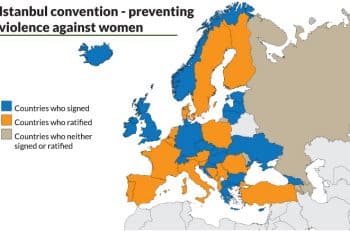
    We’re living in a “rape culture”, even though the term seems to annoy some people. So let’s just say we’re living in a culture in which rape is routinely trivialised, where victims are frequently blamed for its occurrence and their testimony is denied and ridiculed, and where the onus is placed on them to prevent rape from happening. Just under a third of female respondents to a recent survey among Trinity College Dublin students said they had experienced unwanted physical contact while at Trinity. A quarter of female students had been sexually assaulted, or had a “non-consensual sexual experience”. The Dublin Rape Crisis Centre (DRCC) has recorded a shocking increase of 36% in the number of victims of rape and sexual assault to the Sexual Assault Treatment Unit in the Rotunda Hospital in Dublin in 2015. Ellen O’Malley-Dunlop, CEO of DRCC, said: “The 36% increase in the number of victims accompanied to the Sexual Assault Treatment Unit in Dublin, for 2015 in comparison with 2014, is very concerning. We have yet to analyse these figures as to why there has been such an increase”. Surprisingly, 24% of callers were male and there has been a steady year-on-year increase in males using the Helpline since 2008 when the gure was 14%. There was an increase of 30% in first-time callers to the National 24-Hour Helpline in 2014 (the latest year for which statistics are available), compared with 2013 figures. Calls relating to adult rape showed an increase of 14% compared with 2013 figures. There was an increase of 71% in crisis appointments for recent rape and sexual assault delivered by therapists in 2014, compared with 2013 figures. Our statistics on sexual crime are shocking. It is now thirteen years since publication of the Sexual Abuse and Violence in Ireland Report (SAVI) detailing the prevalence of sexual violence in relation to age and gender for over 3,000 adults, it remains a very distressing document. So with a general election looming what’s to be done? Ratification of the Istanbul Convention would generate change. The convention deals with prevention, requiring us to put in place measures to challenge the gender stereotypes, roles and attitudes that promote this culture of violence against women. It obliges us to ensure that the Garda respond immediately to calls for assistance and that all victims have access to special protection measures during investigation and judicial proceedings. The convention crucially deals with protection, ensuring that the needs and safety of survivors are placed at the heart of all measures. It demands the setting up of specialised support services that provide medical assistance as well as psychological and legal counselling to survivors and their children. The convention also stipulates the number of refuges that are needed to adequately respond to women, that of one refuge place per 10,000 of population – we’re well behind this target right now. The Istanbul Convention provides the framework for structural and personal reforms and provides a mechanism to hold the Government to account. We need stronger legislation. Domestic violence should be a crime of itself, accompanied by appropriate sanctions that match the seriousness of the act. Within the proposed sexual-offences legislation, a definition of consent should be included. Consent should be freely given – an enthusiastic, clearly communicated and ongoing Yes. Right now one in ten victims of sexual crime in Ireland reports that crime. Of that one in ten, only 7% lead to a conviction. We urgently need sanctions that are effective, consistent, proportionate and dissuasive. The appallingly high attrition rates within our criminal justice system and send out a message to women that if they report a crime justice will be done. We must provide a supportive environment for women to continue through the system and seek justice. Setting up the new Garda unit – The Human Protective Services Bureau – was a great move but it requires increased personnel and financial resources to target domestic and sexual violence. Specialist units in each Garda Division should now be established to address domestic and sexual violence ,and ongoing training is required at all levels to develop an expertise within the force that both supports the victim and pursues perpetrators to arrest and conviction. We will only seriously address this issue when we shift the focus from women, from asking what did she do, why was she there at that time, why did she stay, and place the focus on men who perpetrate these crimes. We must break the malicious disbelief, victim-blaming and perpetrator-excusal that surrounds rape. We must restore funding to the organisations that help victims. We must shatter this culture of rape. Lorraine Courtney

    Loading

    Read more

  • Posted in:

    Election 2016

    In 2011 we wrote in this space, “You would think from our recent history of some of the most notoriously bad governance on the planet, that we would have learnt that our political classes need to be replaced. In fact, this election time we see no new ideas”. Sadly democracy in Ireland needs an overhaul every bit as much now as it did in 2011. Village is disappointed at the quality of politics, across the range. It’s easily diagnosed: Fine Gael is open to regressive policies and cronyism. However, at least on its own terms it deserves credit because it has consistently stuck to its agenda of (unimaginative) economic orthodoxy and because Enda Kenny has proved relatively competent, in the face of scepticism, including from this magazine. In 2011, we stated, “ Perhaps it is a unique merit of Fine Gael that if it is elected with a mandate, this time it may actually govern as it has campaigned. The electorate will be able to assess whether what it voted for was what it wanted”. This edition of Village explores at length the extent to which the coalition government delivered on its Programme for Government. It’s a fair test and it shows that, beyond promoting economic stability, the Government has been a disappointment. Labour certainly does not have the Fine Gael appeal of consistency. It never does what its manifestos promise. Worse, a number of its senior TDs have allowed themselves to appear smug and ideologically jaded or even, in Alan Kelly’s case, dangerous. Because of the elasticity of its conscience Labour has long attracted the wrong type of representatives. Fianna Fáil is tainted by its reckless past and the incoherence of its platform. It believes serving the people, parish and business in equal measure is viable. It has learnt little beyond the need to regulate the banks. Sinn Féin’s commitment to a Left agenda is unclear bearing in mind its defining preference for irredentist nationalism over ideology, its centrist pragmatism in the North and its willingness to coalesce with Fianna Fáil. Its performance at local-authority level is not impressive or particularly leftist. It is cultist, and ambivalent about democracy and transparency, and its leaders lie casually about its, and particularly its leader Gerry Adams’, past. Renua seems like a somehow unendearing chip off Fine Gael’s Christian Democratic block, with a penchant for propriety. The Independent Alliance (dubbed Shane Féin) is utterly incoherent of policy and membership. If ex-stockbroker Mr Ross and turfcutter Michael Fitzmaurice ever breathed an atom of the same political air, Village cannot imagine where it was. Village has a weakness for the Social Democrats, whose mild platform is essentially the same as Labour’s, though strangely more pro-business, but whose small membership is more prepossessing. Its antipathy to water taxes is expedient but regrettable. The radical Left offers the huge appeal of integrity and seriousness but its opposition to property taxes is inexcusable, and its focus on opposition to the loathed water taxes rather than a broader anti-inequality platform, including opposition to the iniquities of Nama, corruption and the resurrection of the developer classes has diverted its revolutionary ideology. The Green Party’s policies are often radical, and its agenda mature, but it is not hard-minded and it achieved so little in the last government that it is difficult to be enthusiastic. To the extent that we have not afforded space in this edition of Village to the policies and protagonists of most of these parties, it is because they simply don’t offer enough to justify it. Village believes equality of outcome, sustainability and accountability are the most important policies; and it is difficult to be optimistic about their immediate Irish prospects. Laboured machinations over the fiscal space are ephemeral, though most of the other media address little else. Reflecting the need for a vision of society as well as economy this edition focuses on the coalition’s delivery across a number of departments that promote equality, sustainability and accountability, though we do have articles by Constantin Gurdgiev, Michelle Murphy and Sinead Pentony on the iniquitous handling of the fragile economy. We consider Education, Health, Social Welfare, Environment including climate change, Small Firms policy, and Accountability. These departments make life worth living. We systematically assess whether they achieved the goals set by the Government for each of them when it took office. In the end the conclusion is that they have underperformed. And so therefore has the unimaginative, regressive and stolid Government behind them. Against this backdrop, we would again not presume to advise readers where to direct their votes. However, we can say the non-ideological, non-visionary parties of the pragmatic centre hold little appeal, even when mitigated by somewhat more thoughtful ones. A coalition of the parties of the Left, radical Left and the Greens would, as always, best promote Village’s agenda, if no doubt imperfectly.

    Loading

    Read more