Ireland

Random entry RSS

  • Posted in:

    Avoiding League Relegation

    In Ireland, North and South. In the last 50 years no pub or shop has changed its language from English to Irish. In recent years, in the last pockets of the Gaeltacht, the young people have been switching to English. Clearly, the time has come for the Gaelic League, Conradh na Gaeilge, to take its last, this time decisive, action to save Irish, our ancestral language, from becoming a revered dead language like Latin, and instead keep it for the future spoken, written and joked in by thousands. The Gaelic League’s original aim in its glory days when it nourished the mind of the Irish Revolution was to make Irish again the language of the entire nation. After Independence, as the League realised that this was not going to happen, its aim became to preserve the Gaeltacht and to ensure that through the schools system and its own classes many thousands in the rest of Ireland would be able to speak and write Irish. That last aim has succeeded and it is now time to reap the harvest and put it to use. Many individuals, North and South, in many different occupations are now able to speak and write Irish well, and because they are in many different occupations they possess the Irish language more fully than the merely rural Gaeltacht did. In many cases, North and South, these persons amount to families where Irish is the family language. The League must seek out, for a start, 1500 of these people from the general population North and South and the Gaeltacht remnants; people who would pledge to speak and write Irish with each other and, if they have children, as their family language. Each of them above the age of twelve would wear a discreet badge to identify themselves to others. That for a start. Then each year, the elected committee of this community, which might call itself Na Caomhnóirí (Guardians), would hold an all-Ireland rally to coincide with Oireachtas na Gaeilge. Spaced through-out the year. Four regional committees would organise provincial gatherings. At these various coming togethers, they would discuss and decide what joint ventures – publications etc, – they would engage in. Na Caomhnóirí would call for new applicants and hold an annual entrance examination as a big public event. That annual event would give the secondary Gaelscoileanna and the university courses in Irish a concrete and prestigious goal to aim at. The entrance exam would be held each year until the number of members would reach 10,000. In this way, whatever else happens, the future of Irish as a spoken and written language would be assured into the future – into the new civilisation which will succeed the disintegrating European civilisation. And in that achievement the Gaelscoileanna, as feeder schools, would have a concrete goal to aim at. Unless action along these lines is taken, the so-called Irish language movement will plough ahead without any concrete goal to aim at and with diminishing support from a State that has lost interest. Probably TG4 and Raidió na Gaeltachta would continue for a while to broadcast and Irish would be spoken occasionally in the Dáil and as a cúpla focal at formal dinners. Latin, too, has its news media on the internet, and English football results are broadcast on radio in Latin. At important ceremonies of the Vatican and of many universities formal Latin is spoken. But because Latin is not spoken and joked in every day by a substantial living community, it is reckoned to be a dead language. To save Irish from becoming that and the League from becoming a historical curiosity, it is necessary to act decisively now in the manner I have outlined. Desmond Fennell Dr Desmond Fennell’s latest book is his autobiography ‘About Being Normal: My Life in Abnormal Circumstances’ (Somerville Press).

    Loading

    Read more

  • Posted in:

    The Right to have Rights

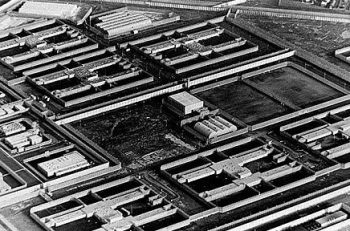
    Hannah Arendt’s famous phrase ‘the right to have rights’ was coined in her 1958 book ‘The Human Condition’. The condition of being stateless, of being a displaced person, which began its modern history in Europe with World War I, has been experienced since by untold millions who have had to listen to the claim that ‘human rights’ are universal and fundamental – but not for them. Once we had the glamorous figure of the cosmopolitan, the person who belonged to the world, the global community; that figure has been displaced by the refugee, who belongs nowhere, but is to be found everywhere in the paradigmatic settings of the modern and contemporary world – the prison camp, the internment zone, the refugee camp, the ghetto, the jail, the arena of suspension where people live in a place that is always outside the country that it is inside. Arendt pointed out that the creation of such places and conditions is a political decision, not just a terrible catastrophe. It is the prevailing form of the penal colony, the new home that we have built to house the theory of human rights. Since Arendt, and most especially in the indebted work of Giorgio Agamben, it has become clear that the concentration camp of the twentieth century was not some historical anomaly, but that it is actually one of the paradigm sites of Western modernity. The internment camp is a zone of suspension, of ‘rendition’, a place that is always outside the country it is inside – Guantanamo is the best-known example, although there many such places – our best- known example was The Maze in Northern Ireland. Those entrapped there expose the hollowness of any claim to universal human rights, to having rights just on the basis of being human. Arendt said it plainly: the refugee, the displaced person, has regularly been denied the right to have rights. The denial is a political decision. It takes its most popular form in the denial that there are any ‘political prisoners’ in the denying country, although enemy countries are full of them. Its political nature has been counterpointed more clearly since 1948, since the United Nations began its series of declarations of Human Rights, unabated since that date; rights of men, women, children, of minorities, of the disabled, of all indeed who can be characterised as having been ‘excluded’, which means that even the ‘poor’, a constituency which enlarges globally by the hour, faster than ever since the almost perpendicular rise of neo-liberalism in the decades before and after the financial crash. Reading these rights, as ‘declared’ (whatever that means), in that bland United Nations universalistic rhetoric, it is hard to know whether to laugh or cry. Such noble vacuities, such actual atrocities – produced by the same state systems that have prevailed since 1945. It was part of Arendt’s long argument, which began in 1943 with her essay “We Refugees” (about Jewish migrants who had become ‘stateless’, that condition in which they had no rights) that asked why European civilisation had so successfully produced the barbarism that made statelessness pandemic and human rights so unavailable to the millions of ‘displaced persons’ of World War II. Part of her answer was that this barbarism was so successful precisely because it was so concealed within or behind the declarations of universal rights and justice which the West, in the case of the American and the French Revolutions, had made central to the powerful ideology of what mutated into Western ‘freedom’. Arendt’s question then was: how could such an ideology be developed (as through the UN declarations) and simultaneously traduced (as in American foreign policy)? It is too feeble an explanation to put it down to hypocrisy. Hypocrisy on this scale occurs when the people who most sincerely believe in the peaceful principles are those who most regularly betray them in violent action. The British spent three centuries in perfecting their international reputation as hypocrites, a nation that believed itself to be peaceful even as it waged endless wars. Now that role has been assumed, largely, by the Americans. But, to achieve world domination is one thing; world hegemony is another. That’s what the World Wars were fought for. Arendt achieved notoriety with her reporting on the 1961 trial of the Nazi Adolf Eichmann, which was published in book form as ‘Eichmann in Jerusalem: A Report on the Banality of Evil’, where she developed the central figure of the ‘desk-murderer’, the bureaucrat who administered the death-camps. But her key point was that this was a show-trial, that pretended to be an example of universal justice triumphing over universal evil. Rather, it was in fact a national victory of the Israelis over their Nazi persecutors. In this exemplary instance, we are shown how the language of universalism can be used as a disguise for a state’s policies. The jurist who had the ambition to do that for a successful Nazi state, Carl Schmitt (1888-1985), described in his ‘Nomos of the Earth’ (1950), how the European system of international law had been replaced by an American one, with the UN as its legislature and the International Tribunal or Court as its executive. In effect, the language of universal rights was used to ratify the aims of American foreign policy; Nuremberg, Tokyo, Damascus, the Hague were, like the Moscow show trials of the 1930s, elaborate pretences that something objectively true was being defended from the current version of sectarian betrayal – war criminality, terrorism, the new terms of ‘war crime’ and its flourishing neighbourly companions, such as ‘ethnic cleansing’. Danilo Zolo has demonstrated in Victor’s Justice how the Kosovo war of 1999, that infamous intervention (to be followed by interventions in Iraq, Afghanistan , Libya and elsewhere, saving the ‘people’ of those countries for democracy, largely by killing and dispossessing them), with its International Court at the Hague, which could try anybody but Americans, is the most egregious example so far of how the language of universal rights has been perverted

    Loading

    Read more

  • Posted in:

    Capitalisteracy

    Ireland has a dreadful, inequitable, dangerously failing healthcare system. The State’s answer is the likes of healthy Ireland, which runs a public campaign that, in essence, throws the responsibility for health on to individuals – who seemingly just need help from an initiative to ‘empower and motivate them’. February saw the launching conference – hosted by the Broadcasting Authority of Ireland (BAI) at Facebook Ireland HQ – of a new network, Media Literacy Ireland (disclosure: I’m in it). From the conference stage there was lots of talk about empowerment and not much talk exploring from whom it might be necessary to take power away. There was even a speaker from healthy Ireland, lest the analogy be missed. Don’t be surprised, then, to encounter an Irish campaign in the next year or two imploring you to the media equivalent of ‘eat your vegetables, get some exercise, don’t smoke cigarettes’. Something along the lines of ‘read the Irish Times, trust in Miriam, don’t tweet fake news’. Or maybe not. Media Literacy Ireland potentially has some of the hallmarks of industry-friendly campaigns like Drink Aware and Gamble Aware, plus the involvement of a regulator, the BAI, which might like a campaign that implicitly justifies light-touch regulation abetted by ‘greater public awareness’. On the other hand – and credit to its organisers for this – Media Literacy Ireland has come into being as a genuine network of interested researchers, activists, community-media practitioners and others. And most of us in it are not disposed to frame the problem with Irish media as one of public credulousness, to be addressed by offering tips for spotting ‘extremism’ online. Regular readers will know my view: that media (like healthcare) have a capitalism problem, and that everything from fake news to clickbait to inadequate investigative resources to Denis O’Brien ows from that basic source. But you don’t have to agree with me and name the underlying problem as capitalism to understand that there are structural causes for crises such as the one that erupted recently over Government ‘advertorial’. “I believe the Government is attempting to exploit the difficulties many local and regional titles are facing to promote their party interests”, said no less a media critic than Fianna Fáil’s Timmy Dooley, the party’s spokesman on communications. (How sweetly old-fashioned that word ‘communications’ can sound as it grapples with the changing world.) Media literacy, if it is to be of any use, has to do more than implore us to look for the little ‘special feature’ tag on the top of a piece of paid corporate or government puffery, then to regard the ‘journalism’ below with due scepticism. It must mean understanding ‘the difficulties’ for all journalism that operates in the current market, especially one in which technological change has accelerated existing trends toward blurred lines, and in which advertisers have alternatives to local and regional newspapers when it comes to reaching eyeballs. If the most poignant aspect of that brief, quickly snowed-under ‘Ireland 2040’ crisis was the image of the Taoiseach issuing guidelines for labelling advertorial content – guidelines of which the most callow intern in a local newsroom should surely already be aware – we shouldn’t lose sight of the fact that media have been operating at the edges of such guidelines for decades, for the benefit of advertisers looking to buy a little ersatz editorial credibility. How can this fail to be a lesson about how fragile, at best, any such credibility has become ? As the media may or may not have told you, global research shows trust in media is in tatters – media are less trusted than governments, NGOs, businesses – and Irish people are at the mistrustful end of the distribution. In this context, media literacy can hardly consist of legacy media saying ‘trust us, not them’. What can be done ? (Yes, short of getting rid of capitalism.) Anyone who has worked in a newsroom knows what a frightening prospect it would be to try to earn the public’s trust with transparency and accountability about our editorial practices. On a daily basis, contingent and incomplete information is transformed into definitive statements of ringing certitude. That’s one sausage factory we don’t want you to see inside, especially since the work often consists of sticking our label on someone else’s meat. The irony is that the technology often over-simplistically blamed for creating the journalism crisis has long offered tools for remarkable transparency, tools that most journalists have chosen to use only in limited ways. What if hyperlinks in journalists’ stories led not to dull pages of cross-references or to Wikipedia, but rather to images of documents and notebook pages, audio of interviews, pictures of the journalist in the field ? It can be done and has been done, but the experiments in transparency of the early web – notably the extraordinary 1996 investigative series by the aptly named Gary Webb in the San Jose Mercury news, about the CIA’s involvement in the cocaine trade – have rarely been repeated, let alone built upon. Such transparency would foster media literacy without the onus being placed on the audience. Whether it would foster trust is, of course, a matter of what audiences thought of the practices revealed by transparency. Interactivity and social media mean we have some tools whereby that reaction could be tested and gauged. Dublin Institute of Technology, thankfully, is prepared to put its money where my media-literacy mouth is: it’s funding a project that will will use the Liberty, a student- produced ‘hyperlocal’ newspaper and website for Dublin’s Liberties area, to innovate in the area of journalistic transparency. We’ll employ social media as a forum for sharing ‘the story behind the story’, with tweets, Facebook updates, Youtube videos and Instagram posts that unveil aspects of the production of journalism, from notebook pages to editing history, from who-was-interviewed to who-refused. A doctoral-level researcher will be responsible for implementation, monitoring, community engagement and evaluation of this project, which should help readers to understand better the process of news construction, and help journalists-in-training become accustomed to

    Loading

    Read more

  • Posted in:

    The cost of costs

    Real justice requires access to justice, which requires effective access to courts, which requires that courts be accessible without the threat of prohibitive costs. Some 90%, or an even higher percentage, of people in Ireland have no realistic access to justice, due to the prohibitiveness of the costs associated with legal actions via the courts. The Irish system of access to justice is permeated with unfair procedures, unconstitutional laws, and conflicts of interests, which means that most court users in Ireland are vulnerable users. BalaNCiNG CONFliCTiNG CONSTiTUTiONal RiGHTS: The English rule (Loser pays rule) on legal costs does not balance two conflicting rights – (1) the property rights of winning litigants, and (2) the right of persons to have access to the courts, without being threatened by unpredictable and prohibitive legal costs. Notionally, proponents of the English rule claim that winners are entitled to be 100% vindicated, and so be in a position to cover all their legal costs. However, this is a very narrow view, which fails to assess the big-picture consequences: (a) winners are also threatened, up to the point of winning, and can be threatened as defendants, in circumstances where they have no chance of recovery of costs from penny-less plaintiffs. (b) the English rule creates all sorts of conflicts of interests and market distortions, which enormously inflate the costs payable. (c) wealthy litigants can threaten persons of lessor wealth, with adverse costs, such that the case is determined more often by issues of fear, rather than justice. (d) the state, and most government actors become unaccountable, as the decision makers are immune from costs (lumped ontaxpayers, often, with little transparency), but can pursue political goals, or engage in abuse of power, with no financial downside, and can still threaten all challengers with financial ruin; this inequality of arms, means that citizens are generally unable to challenge the unconstitutional laws and conduct of government. HeNCe, THe eNGliSH RUle iS NOT COMPaTiBle WiTH a Real CONSTiTUTiONal deMOCRaCy: Costs Allocation Rules incentivise Unfair Adjudication Rules which also incentivise Inefficiencies into the system. Because the government is allowed to intimidate its challengers with unlimited adverse costs, it then wants to maximise those costs, so as to bolster its threat and avoid oversight; High Legal Costs has been the default weapon of choice for all governments since the commencement of the state; the “Big Stick” is maintained to bounce its opponents out of the ring, and this has so far been achieved with little condemnation by international institutions, which have largely failed to recognise the stealth threat that prohibitive costs represents as a threat to the rule of law. The Big Stick undemocratically deters citizens and/or NGOs from challenging the government when it passes unconstitutional laws, or acts unconstitutionally – this allows the government to pander to its own electoral constituency while depriving less well represented persons access to rights protection, leading to violations of minority rights and individual rights. When populist demands call for adjudicative processes which affect specific rights of connected groups, QUANGOs are often created in order to parry off populist demands for accessible justice. The substitute QUANGO justice can rarely be as independent as courts, and the outcomes are often secretised, thus bypassing democratic oversight. Hence, the government passes unfair laws for legal costs adjudication, so as to frighten all challengers – this allows it to exercise power with minimum oversight. THe Need FOR CCOS (COSTS CaPPiNG ORdeRS) In the ex parte application by Dymphna Maher [2012], the applicant effectively sought an assurance from the High Court that any adverse costs would not be prohibitively expensive, if her lawsuit was subsequently deemed not to have fallen under the ambit of the special costs regime (related to some environmental cases). Judge Hedigan insisted that there was no legal authority to permit him to make the order sought by the applicant. However, he observed that: “[It was] very arguable that the absence of some legal provision permitting an applicant to bring such a motion, without exposure to an order for costs, acts in such a way as to nullify the State’s efforts to comply with its obligation to ensure that costs in certain planning matters are not prohibitive. As things stand, I have no power to change this”. This case along with 12 other cases was appealed to the Supreme Court (SC) on an ex parte basis – where only one of the parties is heard. The SC held that it could not provide such an assurance, on an ex parte basis, as the other side (the EPA) needed to be heard first. The SC decision in the Coffey case means, in effect, that any person seeing to access the courts in Ireland is threatened with financial ruin, even if just seeking a CCO. The court failed proportionately to balance the right of access to the courts as a right conflicting with the property rights of government, particularly in the context of the need for real separation of powers. The judicial sphere of power is rendered inaccessible to most citizens, when the loser-pays rule is applied to challenges to executive power, and so the judicial sphere of power is inappropriately diminished; this undermines the checks and balances necessary in a liberal democracy between the legislative, executive an judicial functions. SePaRaTiON OF POWeRS By dividing power between these traditional three spheres, the courts, the government, and the Oireachtas, we help to disperse power and make less probable the accumulation of power to one person, or a small elite, as often happens in what are referred to as illiberal democracies. Diagram 1, above, displays the traditional Montesquieu view of three spheres of power. However the (Montesquieu) tripartite division of power, is a poor reflection of reality. This is largely because it generally fails to engage with the level of real power held by each of the three spheres, in practice. A second flaw, is that there should really be five spheres of power, and not three; the people should be seen

    Loading

    Read more

  • Posted in:

    Some devils got him

    The Westminster terrorist attack on 22 March of last year, by lone attacker, Khalid Masood (52), who drove a car into pedestrians and fatally stabbed PC Keith Palmer, is not the first time that terrorists have selected the Palace of Westminster, and its surrounds, to perpetrate an act of violence. 39 years ago, on 30 March 1979, the Irish National Liberation Army (INLA) murdered Airey Neave, Conservative MP and Margaret Thatcher’s shadow secretary of state for Northern Ireland, in a devastating car bomb attack. Apart from reaffirming Thatcher’s determination to defeat Republican paramilitaries, Neave’s assassination robbed the Conservative Party of one of its most open-minded, albeit controversial, thinkers on Northern Ireland. By the standards of the day, Neave was a remarkable figure. On the one hand, he was a public figure: war-hero, writer, barrister and politician. He had escaped from Colditz, a Nazi prisoner of war camp during the Second World War; was the author of five semi-autobiographical books; established a practice at the bar; and was Conservative Party MP for Abington, 1953-1979. On the other hand, he was an elusive and secretive individual, retaining close links to the British Secret Intelligence Service throughout his adult life. During the Second World War he worked for MI9, a subsidiary of MI6, later holding the rank of commanding officer of the Intelligence School 9, Territorial Army (TA). Neave’s greatest contribution to political life came in the autumn of his career, following his promotion as shadow secretary of state for Northern Ireland in 1975. Neave’s appointment to Thatcher’s shadow cabinet, in the wake of her election as leader of the Conservative Party in February 1975, had important ramifications for the Conservative Party’s Northern Ireland policy. From the moment he took up his new shadow cabinet portfolio, until his murder by the INLA, Neave’s “first priority”, as he noted in April 1978, was to defeat Republican terrorism. Although often preoccupied by security-related issues, and despite misguided arguments to the contrary, Neave remained committed to finding a workable solution in the hope of ending direct rule in Northern Ireland. As a pragmatist, confronted by the political reality that the mainstream political parties in Northern Ireland could not agree on the terms of devolution, he instead championed reform of local government in Northern Ireland, as an interim measure. By initially supporting the establishment of his so-called ‘Council of State’, subsequently followed by a proposal to create one or more Regional Councils in Northern Ireland, Neave sought to end, as he phrased it in November 1977, `’civil servants’ paradise`’, which existed under direct rule. Unfortunately, Neave’s assassination by the INLA robbed him of the opportunity to implement his proposals to reform local government in Northern Ireland.   New archival material from Neave’s personal papers and the National Archives of the UK iliuminate the events of 30 March 1979. Neave commenced his working day, like any other. Following breakfast, he left his at at Westminster Gardens, got into his powder-blue Vauxhall Cavalier saloon, and made the short journey to the houses of Parliament, the Palace of Westminster. His morning was spent preparing for the forthcoming British general election (scheduled for 3 May) and dealing with day-to-day constituency matters. Following lunch, he decided to stop for the day and return home to spend time with his wife Diana. It was in the members’ lobby that Neave held his last conversations, chatting to colleagues before crossing to the members’ exit and taking the lift to the five- floor underground car-park to pick up his car. At 2.58p.m., an enormous explosion engulfed New Palace Yard. Soon after, as Neave’s sole biographer Paul Routledge wrote, smoke was seen billowing from the smouldering wreckage of a Vauxhall car on the ramp leading up from the MP’s underground car-park. It was a “haunting image”, with sheets of headed house of Commons writing paper “blowing gently in the breeze”, recalled Lord Lexden, Neave’s former political advisor on Northern Ireland. Police officers rushed to the scene and came upon an unidentifiable man, dressed in a black coat and striped trousers. Initially, the victim was believed to be Alan Lee Williams, a Labour MP. In fact, in the car lay sixty-three-year-old Neave. Surveying the burning wreckage, the mangled frame of the car and the glassless windows, it was apparent that some type of bomb had exploded. “He’s still alive! Clear the area!”, a policeman shouted. Within minutes, an ambulance crew arrived to find the still unidentified figure, who was breathing, slumped over the steering wheel, his face burned beyond recognition. A doctor, nurse and firefighters soon joined the entourage, before Neave, with his right leg blown off below the knee, was eventually freed after half an hour. He was quickly taken to Westminster Hospital where he underwent emergency surgery. It was too late. Neave died on the operating table. Thatcher received news of Neave’s murder while preparing for a party-political general-election broadcast at BBC headquarters. Her first thought was reportedly: “Please God, don’t let it be Airey”. When it was confirmed that Neave was indeed the victim Thatcher was described as “numb with shock”. Later that day she informed a BBC reporter that “… some devils got him and they must never, never, never be allowed to triumph, they must never prevail”. Following Neave’s murder, attention immediately turned to who had perpetrated this brutal crime. Initially, the Provisional Irish Republican Army (PIRA) claimed responsibility. In fact, the real perpetrators were the INLA. Formed in 1975, with a pledge to establish a “republican and socialist” state, the movement had previously been known as the People’s Liberation Army, having sprung up in late 1974, when the Official IRA attacked members of the newly formed Irish Republican Socialist Party (IRSP). At the time of Neave’s death, it was believed that the INLA had approximately 60 active members. The INLA basked in the publicity following Neave’s murder. A spokesperson for the terrorist organisation said that Neave’s assassination “had a tonic effect in Northern Ireland where there had been celebrations in Belfast,

    Loading

    Read more

  • Posted in:

    Lone Woulfe

    The Attorney-General, Séamus Woulfe, failed to disclose a “false” and “misleading” order made by the former Manager of Wicklow County Council (WCC) when he compiled a report for the Government on the controversial compulsory purchase of lands in 2013. Woulfe, who was a senior counsel at the time and a prominent member of Fine Gael, was asked by then environment minister, Phil Hogan, in early 2013 to carry out a review of the proposal by WCC to compulsorily purchase lands at the Three Trout Stream, at Charlesland near Greystones. In the course of his review, Woulfe was provided with substantial documentation by WCC, including a copy of two Manager’s orders setting out the reasons for, and putting into legal effect, the CPO. The Manager’s orders, dated November 2003 and November 2004, stated that the Council required the land for social housing as it only had an “existing land bank of 0.5 hectares in the Greystones area”. The orders were signed by then Wicklow County Manager, Eddie Sheehy. This statement was “false” and “misleading” according to submissions made by a barrister acting for Wicklow Councillor, Tommy Cullen and former Councillor Barry Nevin in their successful High Court defamation action against Sheehy and WCC last year. In her detailed judgment, Justice Marie Baker found that the Councillors had been defamed by Sheehy and the Council in a press release issued on the day the Woulfe report was published in April 2013. She found that the content of the release showed that Sheehy and the Council had acted with malice and improper purpose towards the Councillors. Woulfe had concluded that “almost all of the concerns raised by the Councillors” which led to his review were “not well founded or are misconceived”. This comment was repeated in a statement issued by Hogan and the Department of the Environment and in the press release issued by the Council following publication of the Woulfe report. However, the Council went further and accused the Councillors of wasting up to €200,000 in public monies by raising their “allegations” which prompted the commissioning by Hogan of the Woulfe review. Judge Baker found that the Woulfe report was “not evidence that the Councillors were wrong or acted in bad faith” in raising their concerns. She found that the Councillors had been wrongly accused of being responsible for “wasting money at a time when money was scarce” and awarded them damages of €20,000 each. She also said the claim that there was a €200,000 loss of public monies was an exaggeration on the part of the Council. Woulfe was paid €62,000 in fees for his work. In her judgment, Judge Baker also referred to the extensive documentation available to Woulfe for his review, but withheld from the Councillors, including the two Manager’s orders and various reports which confirmed that the Three Trout Stream lands were prone to flooding and unsuited to social housing. She specifically referenced the documents which proved that the Council owned a site of over 10 hectares (22 acres), zoned residential for housing and adjoining the Three Trout Stream lands. In his report, Woulfe also referred to the existing lands owned by the Council in the Greystones area. However, he did not point out the discrepancy between this fact and the statement in the Manager’s orders that the Council only had a landbank of 0.5 hectares in the area. The November 2004 order formed the legal basis for the CPO and the seizure of lands from the landowner and another local man who used the land to graze horses. Although Woulfe was called as a witness for Sheehy and WCC he was not asked about the incorrect assertion in the Manager’s orders. the plaintiffs only obtained copies of the orders after Woulfe had given his evidence. In his closing submission, Mark Harty SC, acting for the two politicians, said that the Manager’s order stating that the Council had a landbank of just 0.5 hectares in the area was “false” and “misleading”. “This unequivocal statement in an official statutory document was simply false. Certainly, it was misleading”, Harty submitted. “The situation is more serious given the core basis of the decision to confirm the CPO by an Bord Pleanála which is that it satisfied that the Council had established the need for housing and the need to buy land for housing”. It was also the basis for the State’s decision to seize the land from two citizens against their wishes. Judge Baker also raised questions about the conclusions made by Woulfe in his report, in particular in relation to his suggestion that “almost all of the concerns (of the two councillors) are not well founded or are misconceived”. Judge Baker said that “it was not true to say that on the information they had that the plaintiffs raised unnecessary or irresponsible concerns without cause”. The High Court judgment by Judge Baker overturned an earlier decision by the Circuit Court in April 2014 which dismissed the defamation claims. In January, Sinn Féin’s Mary Lou McDonald, asked the Housing and Environment minister, Eoghan Murphy, if he would now remove the Woulfe report and the statement issued by his predecessor Phil Hogan when it was published, from the Department’s website in light of the High Court judgment. The Sinn Féin deputy suggested that Woulfe did not “establish the fact of his statement that ‘almost all of the concerns [raised by the named members of Wicklow County Council] are not well founded or are misconceived’”. McDonald also called for the establishment of a new independent investigation into the CPO of the lands at Charlesland in 2004. Murphy replied: “The public statement of my predecessor and the associated report were not the subject of the High Court judgment…The case in question concerned a statement made in a press release issued by the Council on 23 April 2013. The plaintiffs brought proceedings against the Council claiming that the last paragraph of the press release was defamatory towards them. This paragraph stated that a delay in sanctioning a loan to purchase a

    Loading

    Read more

  • Posted in:

    It's different up here

    Justice is not a motif found emblazoned around Donegal. Its outing accounts for much in my home town of Bundoran and elsewhere in the county. In particular the power the late sean McEniff had over local governance is very unsettling – through politics and wealth. He was Fianna Fáil’s longest-serving councillor and perhaps its richest man. His hotel empire extended to ten hotels countrywide including the Skylon in Dublin and the Great Southern in Bundoran. Journalist Gemma O’Doherty and others have alleged that McEniff interfered with the Garda investigation into the death in 1977 of six-year-old Mary Boyle, but it is the power his empire wields over the slot machines that have for fifty years dominated and blighted once-elegant Bundoran that particularly concerns me here. McEniff’s empire traces its foundation to slot machines. McEniff was by far the largest slot machine operator in the town, and ignored the law: his slots would make big pay-outs, just enough to keep the key punters, most of them poor or old – or both, hooked. In 2009 Bundoran town council adopted a submission from the slot-machine operators – McEniff being the largest – to the Department of Justice – as its own submission. the submission had been adopted by the council on the same day at a special meeting which had only three councillors present. The quorum for any meeting was four councillors to be present, though nobody called halt. The submission said Bundoran’s 1,000 machines were “an integral part of the overall Bundoran product, both on and off the season, and a key reason why visitors continue to be attracted to the town”. Growing up in Bundoran, I remember from a young age the dangers of gaming machines. A friend of my mother came down from the North on the bus with her wages on a Friday and rushed up to play gaming machines in the town. By Sunday evening she had to ask my mum for money to get back home, after losing everything. The 2008 Department of Justice report on ‘regulating Gaming in Ireland’ states “the committee is aware of the type of gaming machine which accepts €500 notes. The Act of 1956 provides a maximum stake in gaming machines of 6d and a maximum prize of 10 shillings. The Act is not being enforced and that brings the law into disrepute”. The Garda Síochána, the Revenue and the Council have long since abjured responsibility for enforcing the gaming laws. A 1985 ‘Today Tonight’ programme on RTÉ focused on Law and Order in south Donegal, particularly Seán McEniff’s gaming. Donegal county council sued RTÉ for defamation for what it said about the inappropriate relationship between Donegal [county] council and the Garda but a legal settlement saw it agree to remove the programme, on the steps of the High Court. One of the last convictions for illegal gaming in Bundoran was in 2000 after Charlie Bird did the exposé on illegal gaming here. The solicitor for McEniffs Bundoran Limited said to the Judge at the time that “Charlie Bird should be prosecuted” as he had played an illegal gaming machine. Poor Sean died last year but his empire remains in the family. I recently objected in the District court to renewal of the gaming licence to McEniffs Bundoran Limited. The first Judge and McEniffs’ solicitor removed themselves from the case, the solicitor coming off record after I raised a concern of conflict of interest. I objected as a member of the Public, though I have had my travails with sean McEniff when I was Bundoran’s traffic warden. When I objected that gaming machines accept notes while the 1956 act maximum is 20 cent, the solicitor for the McEniffs Gerry McGovern did not deny it. Instead he just noted that revenue issued certificates and that gardaí and fire officers had no objections. “If there was a difficulty, the gardaí and revenue wouldn’t be long moving in”, he said. But that is the core of the problem. As to my objection that there were too many machines in Bundoran, Judge Denis McLoughlin said that would only be valid in case of a new application. McGovern said it was an application that had been renewed umpteen times and hadn’t been changed. And in Donegal it seems that is the main thing. The Revenue’s webpage states that it up to the District court to “limit the amount of the stakes and prizes and limiting the number of gaming machines”. But Judge McLoughlin was not interested. I have been before the District, circuit and High Courts on occasion, always representing myself. In 2012 in Donegal Circuit Court, Judge Keenan Johnston highlighted that as a lay litigant “She`d be entering the court with one hand tied behind her back”. The dysfunctionality of Donegal from policing to planning to electoral fraud to unemployment to paedophila is now well documented. Sometimes you feel fighting for justice here leaves you very much alone. Patricia McCafferty

    Loading

    Read more

  • Posted in:

    IR FU(EU)

    The nineteenth Six Nations tournament begins on February 3 but one man who won’t feature is Simon Zebo. It was announced in October that Zebo will be leaving Munster at the end of this season and moving to Paris to play for Racing 92 in the French Top 14 league. The announcement of his planned move abroad resulted in Zebo being excluded from the November Tests series, and now his exclusion from the Six Nations Squad. Joe Schmidt claimed at the official launch of this year’s championship that Zebo has been left out of the squad due to his form rather than the fact that he is about to leave the country, with prodigious Leinster young gun Jordan Larmour his preferred option as reserve. Larmour could well be a fullback great, but Zebo still has plenty to offer his national team as he is only 27 years old and in his prime. The IRFU has a policy, which the current Irish management helped to devise, of only selecting home-based players. This is in part to safeguard provincial rugby and as a way of preventing the top players accepting lucrative contracts with foreign teams. This policy has only come into play in recent years, in part due to the struggles Ireland had with Johnny Sexton during the 2014 and 2015 Six Nations Campaigns when he played for Racing 92 – Zebo’s home from June 2018. Sexton missed vital training sessions as he had to report back to Paris for the two rest-week periods during the Six Nations and to play club games in France: not ideal preparation despite the fact that Ireland was victorious in both of these campaigns. It is something Schmidt is wary of ever repeating. Zebo is Munster’s all-time leading try-scorer, and has become an established member of the Irish squad in recent years, scoring 9 tries in his 35 caps for Ireland. He played all but 5 minutes of the 2017 Six Nations Championship. There has been a clamour for Zebo to be brought back into the squad for the Six Nations but Joe Schmidt and the IRFU have stuck firm. There are a number of other players who ply their trade abroad who could easily be picked for the squad if the policy were to be scrapped, such as Donnacha Ryan at Racing 92, Tadhg Beirne at the Scarlets, Ian Madigan at Bristol and Marty Moore at Wasps. The policy appears to breach the legal requirement of Freedom of Movement and Residence for persons in the EU or, at the very least, its spirit. Freedom of movement and residence for persons in the EU is the cornerstone of the internal market and indeed of European Union citizenship, which originated in the Treaty of Maastricht in 1992. Today, the provisions governing the free movement of persons are laid down in Directive 2004/38/EC on the right of EU citizens and their family members to move and reside freely within the territory of the Member States. Restrictions are only permitted if they are a proportionate response to an inherent need in a sport. One need only look to how ludicrous it would be to impose the same restriction on soccer players to detect a lack of proportion. Zebo, and all the other players who could theoretically be picked by Ireland if the IRFU’s policy were to be changed, are being blocked from significant earning potential. While many people might not have too much sympathy for the players considering they are highly paid and get to enjoy sport for a living, it is worth noting that the Irish players will not receive match or training fees from the IRFU, but a Grand Slam win would see each of them receive a bonus of over €70,000. By excluding Zebo from the team due to his move to France, the IRFU are directly affecting his earning potential from winning, and also from additional sponsorship opportunities that come with being included in the national team. Remarkably, English players get a much better deal: they will earn £22,000 per game from match fees, training fees and image rights. This means that for any team member who appears in all five games will be guaranteed to be paid £110,000 each. The result is that Zebo has been ruled out of international consideration and has now sacrificed any dreams he may have had to represent Ireland in the 2019 World Cup in Japan. Ireland kick off this campaign against the French in Paris – a fixture we have only won three times in 46 years. A player of Zebo’s quality and skills could have been the key to unlocking the French defence. In fact we can expect a fourth win to be added come 3 February – due to the current state of the French team. In the long run the IRFU policy seems to serve Irish rugby well, irrespective of the EU Spirit. The top players are incentivised to stay in Ireland, their game time gets managed punctiliously and they are always made available by their clubs for training camps, no matter what time of year. Another benefit for Irish rugby is the Prodigal Son pardon that is bestowed upon anyone who returns to an Irish provincial team – they can be immediately included for the national side. This can act as a major incentive as there are examples where individuals came back to Irish teams much improved from the time spent away from home in a different environment learning from new coaches and strategies. Tommy Bowe developed immensely from his time in Wales, and look out for Tadhg Beirne once he leaves Scarlets for Munster next season. He appears to have slipped through the cracks for Leinster, he has been nominated for European Player of the Year and has dramatically enhanced his performance level due to the freedom he is allowed in the Scarlets team. Ireland look set to be the best placed team to push favourites England all the way in this year’s

    Loading

    Read more

  • Posted in:

    Villager February 2018

    Listen up around what they’re at Villager likes nothing more than a shafted preposition. Most of the articles that come in to this magazine are from academics writing ‘around’ their subjects. They go into Village’s file of death along with cover letters for CVs that sign off cheers. So he was thrilled to see the Irish Times say of Nama that is lending €384m to allow developers to “build out projects”. Zagantagonism It’s been a bad month for Rugby schools. Paddy Jackson, the Kiely’s set-to, the illicit publication of the letter from Eunan O’Carroll. And now Frank Armstrong. The editor and half the Champagne socialists/ environmentalists whose whimsies fill the pages of Village have been taken aback by young Armstrong and his piece in the current edition ripping apart Gonzaga College, alma mater to non-conformist and unbulliable egos of all sorts, from Ranelagh right as far as Bray. Hypocrisy on Equality Talking of which it was amusing to see Michael McDowell bemoaning inequality – “the rich getting far richer” in the Sunday Business Post where he ties down an, unpaid, column. When he had power he was largely an agent for liberalism – and inequality, even claiming the economy “demands inequality in some respects”. In 2004 he told the Eonomist Survey of Ireland that he “sees inequality as an inevitable part of the society of incentives that Ireland has, thankfully, become”. He was quoted by The Economist magazine as offering a robust defence of the gap between rich and poor in Ireland. And he told the Irish Catholic that “a dynamic liberal economy like ours demands flexibility and inequality in some respects to function”. It was such inequality “which provides incentives”. He said: “As far as I am concerned liberal politics and liberal economics go together. In a liberal society, equality of opportunity is an equal opportunity to become unequal. A society which legislates and controls in every way to create some sort of mathematical equality just doesn’t work”. In his pomp he believed: “Driven to a complete extreme, the current rights’ culture and equality notion would create a feudal society”. McDowell sat at the Cabinet table for a decade while the country was run – to disastrous long-term effect – in the interests of elites and cartels, including the legal one he still feeds off. McDowell pulled the plug on the Citizen Traveller campaign when it dared to be controversial. He delayed and censored the reports of his department’s own inspector of prisons, Judge Dermot Kinlan. Dodgy Donegal There is still no sign of a date for the High Court case being taken by Michael McLoone, former County Manager in Donegal, represented by barrister Michael McDowell, over a 2014 Village article titled ‘Dodgy Donegal Planning’, alleging improper behaviour in Donegal County Council’s treatment of planning matters. Nor is there any sign of the Department of the Environment’s report into the activities detailed in the impugned Village article, though it has been promised for years. Loughinisland threats Village has received correspondence from the Hawthorns, Ronnie and Hilary saying they will take legal action over the naming, in these pages, of Ronnie as chief suspect for the Loughinisland massacre in 1994 when six Catholics watching a world cup match were gunned down in a pub. The Hawthorns’ concern vacillates between defamation and privacy. But they seem to be having trouble getting anything beyond a few emails together. Colgan threats And Michael Colgan has apparently initiated proceedings against Village for “defamation of character”, though Village hasn’t been served with anything so we’re not really sure. Colgan alleges a recent editorial implied he was guilty of serious crimes and rape. Village claims it was accusing him of harassment. Unthreatening After all that hassle Villager often wonders if it isn’t better to just say nothing. Then you can become as popular as William and Kate, Royal heirs in waiting, who have literally never saidanything anyone can remember. Kith and Quinn Villager never gets cross, never raises his voice. But he hates those Quinns. Complaints by Sean Quinn jnr and his wife Karen Woods about a recent failure to pay some of their €100,000 annual living expenses should be seen in the context of a “scheme of misappropriation on a grand scale”, the High Court has been told. Some €10m has been extracted from a company in India “and we don’t know where that has gone”, Barry O’Donnell SC, for the special liquidators of Irish Bank Resolution Corporation, said. Documentation from India and Hong Kong showed “a scheme of misappropriation” was executed, over time and especially in 2010, at the instigation, and for the benefit, of members of the Quinn family. The transactions at issue “have never been explained” and while the family maintain they had no idea what was going on, that is “wholly implausible”, he said. This, and the fact Quinn and his wife are receiving close to €100,000 annually in living expenses, was of concern to the bank and it was “imperative” the matters were addressed. Villager absolutely begrudges them their 100k. If he had his way the radical left would have picketed the likes of the Quinns instead of faffing around harassing water-meter installers. And he wants to know where Peter Darragh Quinn, a nephew of the bankrupt former billionaire, on the run five years after an arrest warrant was issued for him, is. Ireland biggest environmental mess by a landslide In July 2008, the Court of Justice of the European Union (CJEU) ruled that Ireland had failed to carry out a proper assessment for the 70 turbine Derrybrien wind farm which was built in the early 2000s. The Government has yet to carry out the assessment on the site. The construction work on the wind farm led to a 2km landslide in October 2003, which the Commission itself has called “environmentally devastating”. The incident caused 450,000 cubic meters of peat to slide down the mountainside, which was washed into the local river systems. The European Commission has now requested that the

    Loading

    Read more