Ireland

Random entry RSS

  • Posted in:

    Discovering Casement

    It is today widely believed that between Casement’s arrest and execution in 1916 the Black Diaries now held in the UK National Archives were clandestinely shown to in uential persons in order to disarm appeals for his reprieve. This belief was once again articulated by law professor Sean McConville on 2 June, 1916 at a Casement event in London when he stated to a TV audience of millions “…the diaries were circulated in London … Blackwell … was circulating these diaries at a time when Casement’s fate had not nally been decided …”. The original sources of this belief, however, are the books written by Rene MacColl BL, Reid, Roger Sawyer, Brian Inglis and Séamus Ó Síocháin. These volumes comprise more than 2,000 pages and at an average of two years of research for each study, we have around ten years research. Strangely, in these 2,000 pages there is not a single verifiable instance recorded of the diaries in the National Archives being shown to anyone in that period. How can this be? It is not credible that these authors of research overlooked this crucial aspect after ten years. If they found instances of the diaries being shown in that period, then it seems they withheld that vital information from their readers. Since this is not credible, we must assume that none of them found any instance of the diaries being shown in that period. It is well attested that typescript pages were circulated in that period and that a large quantity of these eventually found their way to Singleton-Gates who published them in Paris in 1959. But Casement did not type those pages. What would constitute a proof of authenticity of the diaries held in the National Archives? There are no witnesses to Casement’s authorship and there have been no rigorous and impartial scientific tests. The only evidence that has been adduced in favour of authenticity is a resemblance in handwriting. The attempts at corroboration in July 1916 are not evidence of authorship. But perhaps the question about authenticity is a false trail. In the period from 25 April to 3 August the British authorities claimed to be in possession of the five bound volumes now held in the UK National Archives. However, there is no verifiable record that these volumes were shown to anyone in that period. Rather than show the diaries, the Intelligence chiefs had decided to prepare typescript pages and to show these to influential persons, journalists, editors, politicians, churchmen and others. They told these persons that the typescript pages were authentic copies of original diaries written by Casement. They failed to provide any proof that the typescript pages were copies of anything written by anyone. The proof which they did not provide would have been exhibition of the bound volume diaries now in the UK National Archives. No explanation has ever been proposed for this failure. Today there are five bound volumes in the UK National Archives. Their existence today does not prove their existence in the period 25 April to 3 August 1916. That the bound volume diaries were not shown in that period means there was some impediment to showing them. The protagonists – Blackwell, Thomson, Hall, Smith and others – had the strongest of motives for showing the bound volume diaries which they said had been discovered but they did not do so. The impediment certainly existed and it was such that these powerful men neither jointly nor singly could overcome it. Therefore it was out-with their joint power to show the bound volume diaries in that period. This circumstance indicates that the impediment could not have been overcome by anyone in England at that time – not even by the monarch. In this regard these powerful men had touched the limit of theirhuman power. The question is therefore not about forgery or authenticity but about the material existence of the bound volume diaries at that time. The absence of verifiable evidence that the bound volume diaries existed before August 3, 1916 means that questions about authenticity are meaningless. What first requires to be proved is their existence in that period before August 3. Those who claim the typescripts were true copies have now had 100 years to produce evidence of the existence of the bound volumes in that period. That they have not produced the necessary evidence indicates that they too have been unable to overcome the impediment which defeated their powerful predecessors, Thomson, Smith, Hall etc. In these circumstances an impartial court of law would decide to act as if the bound volume diaries did not exist at that timeand would dismiss a case for their authenticity as being un-tryable. The case for the typescripts being copies at that time could not be tested or proved without verifiable independent evidence that the bound volumes existed before August 3. Thus the case in favour of the material existence of the bound volume diaries before August 3 rests entirely on the word of Thomson, Hall, Blackwell, Smith and others and these are the people who at that time were circulating typescripts which depicted Casement as “addicted to the grossest sodomitical practices”. These persons can only be considered as hostile witnesses by virtue of their uncontested behaviour. There are no neutral witnesses who testified to seeing at that time any of the bound-volume diaries now in the UK National Archives. Absence of proof of existence of the bound volumes at that time entails that no proof of their authenticity can be derived. That no proof of authenticity can be derived entails that – until such proof of existence is provided – the veracity or falsity of the typescripts cannot be considered. Ei incumbit probatio qui dicit, non qui negat; the onus of proof rests on the accuser, not on the defence. If questions about authenticity are meaningless due to lack of conclusive evidence after 100 years, claims favouring authenticity do not rest upon verifiable facts or upon independent testimony. Therefore such claims rest upon

    Loading

    Read more

  • Posted in:

    Áras Attracta lesson: rights-based model

    On 4 January 2016 I found myself in a court-residents. The review group recommended a move to a room in Castlebar, Co. Mayo. One man and ve women were on trial, charged with assault alleged to have occurred in Áras Attracta. Sitting in the courtroom my hope was to use this experience as part of my own catharsis, having lived through physical abuse in Áras Attracta which is the HSE-run residential centre in Swinford, County Mayo where 96 men and women with intellectual disabilities live. It featured of course in a recent exposé by RTÉ’s Prime Time programme. Bodily integrity, in the context of receiving support for personal care, brings an unspoken vulnerability. Fear is ever-present. Dignity and respect should be basic imperatives. Those of us involved in the rhetoric of human rights and the independent-living movement must remember that our sisters and brothers with learning disabilities are uniquely susceptible to abuse. The material captured on the hidden camera placed by Prime Time’s undercover reporter showed staff shouting, pushing, force-feeding and dragging residents across the floor. The footage was used in evidence in the case by the State prosecutor. The five staff, including nurses and care workers, were found guilty of assault. All but one avoided jail terms. Four were sentenced to community service orders in lieu of prison terms. The fifth was given a prison term of four months which is currently under appeal. The protracted saga of Áras Attracta is a reminder of the slow pace of the State’s apparatus. Two years on from Prime Time’s exposure of what was happening in Áras Attracta an independent review group published the ‘What Matters Most’ report in August with thirteen recommendations and an action plan for all congregated settings. The most pertinent of these was to “accelerate the process of supporting people to move into community living, avoiding transitional arrangements”. The HSE has committed to implementing this and claims that “individual needs assessments have been completed for all residents to identify their future support requirements to live a successful life in the community”. The independent report stated there was “widespread institutional conditioning and control” of people living in Áras Attracta. It found that this was generally imposed for the convenience of staff and management and the model of service was structured to suit staffing constraints rather than the needs and aspirations of residents. The review group recommended a move to a rights-based social model of service delivery in one of its overarching recommendations for Áras Attracta. Most service-providers for people with disabilities are state-funded. They remain institutions where power and control exerted over us and people’s right to independence and choice is denied. The report tells those of us who have to have relationships with service providers nothing new. It con rms unspoken realities. There have been a series of HIQA reports on these services that back up this analysis. The inertia in implementing recommendations from these reports coupled with the lack of rights-based legislation further demonstrates state inertia when it comes to people with disabilities. The Áras Attracta situation merely highlighted the insidious practices that take place in residential institutions. Often there is an inference that somehow people who are abused brought it on ourselves. In the context of Áras Attracta, what was considered, or diagnosed as challenging behaviour could better be described as very challenging circumstances for the residents. There are still over 2,700 people living in congregated settings throughout the country. Residential settings echo a discredited previous era. We suspect, we fear and we know. However, still they continue. Twenty-seven people currently living in Áras Attracta are now waiting to move into new supported accommodation. The Minister for people with disabilities, Finian McGrath, has announced that the Government has provided a dedicated €100m capital fund to facilitate de-congregation over the period 2016-2021. €20m has been provided for 2016 and Áras Attracta has been prioritised to receive funding in this first phase. Action is now needed, not just another report or political promise that will become redundant as time passes and nothing changes. The kernel of the ‘What Matters Most’ report is in the overaching recommendation for Áras Attracta that “The voices of the residents need to be facilitated, listened to and promoted”. Why would you need to make such a recommendation? What has gone so badly wrong that this has to be one of only three overarching recommendations. Fostering the independent voice of the people accessing services, attending to their preferences, and ensuring people know their rights and have access to advocacy services should have been a given. These are the voices that must now determine the future. Rosaleen McDonagh

    Loading

    Read more

  • Posted in:

    Nay to the Mayor Yayers

    In any discussion about Mayoral governance’ in Dublin there are assumptions: firstly, that it is a good thing, that it will solve lots of problems in the city; and second, that the mayor should be directly elected. We usually hear the paraphrased quote – ‘who do I ring if I want to talk to Dublin?’. We want to be able to identify who runs the place. We want someone to be running the place. Directly-elected mayors give us that. The ‘direct’ in direct election, a bit like in direct democracy, is a ‘Yay’-word. It is seen as an unarguable good. Who could not be in favour of giving people a direct say in, a direct link to, who runs the city? These assumptions ignore the relationship between central government and city government and what competencies are appropriate for the mayor, what geographical area the mayor might rule over, and the central issue of funding. They also ignore the fact that we can and do have strong political leaders who are not directly elected. There are broadly three models for city governance. One is the Council-Manager system we currently have – where the mayor has no executive powers. There’s an assumption that it is a bad thing. It certainly isn’t very democratic: it is not responsive to voters’ wishes and there are no clear links between the vote in local elections and local government policy. It’s also not very transparent – though that might be due to the absence of real media reporting of city government. It in turn might be a function of the lack of clarity in decision-making. The second model is the directly-elected mayor or Mayor-Council system. It is used in London, some other European cities, such as Rome, and about half the big US cities, including New York and Chicago. Probably because our nearest neighbour and biggest influencers adopted and use it, we naturally assume it is the one for us. But within this system, things aren’t uniform. They can be strongly mayoral or weakly mayoral – so the Council’s control of the legislative and financial functions can vary considerably. There is a third model. It is a Council system. The elected councillors appoint a mayor, who has executive functions. As with the directly-elected mayor, depending on rules, the mayor’s power can vary quite significantly. The system is quite common, used in many northern European cities, such as Amsterdam, Berlin, Stockholm and Paris. So which works best? Well I’m not an expert in local government, but even the literature doesn’t have a clear conclusion. So the short answer is, we don’t know. But I am interested in the functioning of central government, and we can think of the two models, the directly and indirectly-elected executive mayors as functional equivalents to the presidential and parliamentary systems at the national level. And there is a long debate in political science about the relative success of the two systems at delivering democratic stability, human development, and a range of other indicators of a country’s success. So which should we choose if we are to be guided by the relative performance of presidential or parliamentary systems? The presidential system, which is the system analogous to directly-elected mayor, has some advantages. Candidates are required to present a vision to the public. It puts power in the hands of one person, on the basis of popular election. That means the presidential system is clearer and appears fairer. We all know who we vote for; and the person who gets most votes becomes mayor. Unlike in parliamentary systems, there is no messing about with coalition-building based on backroom deals that aren’t transparent and over which the voters have little control. Much of the debate in parliamentary elections is about who will coalesce with whom, a debate that could be avoided in presidential-style systems. Instead the rival candidates for mayor could debate the issues facing Dubliners. The presidential system also weakens the power of parties. Many people dislike parties, and regard them as gatekeepers of political ambition. With a presidential system new leaders can emerge without having to be sanctioned by a party. This is much less likely in a parliamentary system. And at a time when people complain that government is unresponsive to their needs, and lacks leadership, the mayor could have clear lines of power to deal with the big problems. A suitably empowered mayor might be able to deal with the housing crisis in a way that the local authorities, minister and agencies can’t. The parliamentary system, that is the indirectly-elected mayor, however, has some advantages of its own. One might seem a weak one, but it might be important. We are used to parliamentarianism – it’s in our political culture. Political culture governs how we behave and are expected to behave. It changes slowly and doesn’t always respond to institutional changes – perhaps not at all, or perhaps not in predictable ways. This is important because picking systems that we are used to means we are less likely to get nasty surprises. A stronger argument in favour of parliamentarianism is the way it divides power. Politics is meant to do at least two things. It should solve collective action problems: those that make us collectively better off if we are guided to behave in certain ways than if we were left to act individually. The classic example is fishing. Individually we have an incentive to extract as many fish as we possibly can from the seas. We would over fish, making us collectively worse off when fish stocks are depleted. So we are made better off being forced to restrict our fishing. Politics is therefore also a mechanism for the resolution of conflicts, such as the fishing one. In parliamentary systems the mechanism for the resolution of conflict is negotiation, and parties representing different interests compromise, strike deals and build consensus, embracing a wide range of views in the decision. This manifests itself in coalitions, with a formal opposition offering alternative policies. In presidential systems conflict

    Loading

    Read more

  • Posted in:

    Adamned if he does, adamned if he doesn’t

    The news that serial non-litigator Gerry Adams is to sue over allegations he sanctioned the murder of IRA informer Denis Donaldson, cannot surprise. Contrary to what has become the received wisdom, the former security force agent in the IRA did not tell BBC Northern Ireland’s ‘Spotlight’ programme on September 20th that Gerry Adams sanctioned the killing of Denis Donaldson in 2006. His allegation was much more tentative. Despite this, media outlets have run with the allegation that the decision to carry out the killing was agreed by Adams, and that the IRA carried it out. An example is the Irish Independent headline: ‘Gerry Adams sanctioned the killing of British spy, claims former IRA man’. This is based on a section of the programme, where reporter Jennifer O’Leary is interviewing ‘Martin’, a former IRA man and police agent. A transcript reads: Jennifer O’Leary: “Martin also said he told his Special Branch handlers what he had learned about the murder”. Martin: “Not too long after Denis was murdered I was told by a member of the IRA, an active member of the IRA, that the IRA had killed Denis, and not anybody else. I gave that information to the Special Branch.”. Jennifer O’Leary: “What was your handlers’ reaction to that information?”. Martin: “They were just totally mute. There wasn’t any acknowledgement of what I’d said. The subject was changed to something else”. Jennifer O’Leary: “Are you surprised?”. Martin: “No. I think they knew themselves. You see I just think you know they and the whole status quo had seen Denis’ death as internal housekeeping and they were happy enough to put up with it. I believe they acted on some information and didn’t act on other information because it was too politically sensitive to do so”. Jennifer O’Leary: “Martin believes that the shooting of Denis Donaldson was sanctioned by the man at the top of the Republican movement, Gerry Adams. Spotlight understands that by 2006 Gerry Adams had stepped aside from the IRA Army Council but Martin claims that Adams was consulted on all matters”. Martin: “I know from my experience in the IRA that murders have to be approved by the leadership and they have to be given approval by the leadership of the IRA, the political leadership of the IRA and the military leadership of the IRA”. Jennifer O’Leary: “Who are you specifically referring to?”. Martin: “Gerry Adams. He gives the final say”. Note: there is nothing indicating this IRA man had first-hand knowledge of Adams’ approving the killing. Note also: the final line is “He gives the final say”. Not “He gave the final say”. What we may call the alleged allegation runs contrary to the Real IRA’s claim of responsibility for the murder in 2009. After the programme, a former Real IRA army council member spoke to journalist Suzanne Breen of the Belfast Telegraph, and reiterated the claim. Breen is a trenchant critic of Adams and the mainstream IRA, so the claim must be taken seriously. Unfortunately, Donaldson was cavalier about his own safety. Some time after he was unmasked in 2005, he went to a cottage in Donegal that had been a safe house for the INLA and IRA for years. It was secluded, so killers could stake it out if necessary. It was near a main road, in an area with a lot of holiday homes, so escape was easy and strangers didn’t stand out. Donaldson had been an informer since at least the mid-1980s. Two groups had particular grudges: families and friends of those killed as alleged informers, people not as well-connected as Donaldson; and families and friends of those IRA members killed or imprisoned because he may have betrayed them. Crucially, the IRA did not need to kill him. He no longer had their protection, and there were plenty of others willing to do it. The killing was similar to that of Dungannon taxi driver Barney McDonald in 2002. In both cases a shotgun was used, making forensics difficult. The current story took off because there is a media obsession with Adams, who is a safety-valve for Sinn Féin’s opponents in politics and the media. It must be said that he has left himself open by seeming ridiculous with his denials of IRA membership. Martin McGuinness receives nothing like the same treatment, despite his admitting having held high rank in the IRA. As Deputy First Minister, McGuinness is central to the political process in the North. The DUP perceive him as a ‘moderniser’ in Sinn Féin. So a media campaign against him might damage the political process. The episode of ‘Spotlight’ is available on the BBC I-player until October 19th. The relevant section can be watched beginning at 51 minutes. Anton McCabe

    Loading

    Read more

  • Posted in:

    Done gall

    Former County Manager of Donegal, Michael McLoone, is continuing with his High Court proceedings for defamation against Village. In 2014 the magazine printed allegations which it claims were both true and contained in an affidavit opened in court proceedings, by former Donegal senior planner, Gerard Convie, an employee of Donegal County Council for 24 years. McLoone claims he has been massively defamed. Meanwhile Convie’s allegations are being assessed by a senior counsel appointed by the Department of the Environment. Convie has consistently, in court and elsewhere, claimed that during his tenure there was bullying and intimidation within the council – of planners who sought to make decisions based exclusively on the planning merits of particular applications. He claims one councillor constantly referred to him as a “wee shit from the North”. In the opened affidavit, Convie alleges McLoone: 1. Recommended permissions that breached the Donegal County Development Plan to an extent that was almost systemic 2. Submitted planning applications to Donegal County Council on behalf of friends and associates 3. Dealt with planning applications from submission to decision, including some from friends, family and associates 4. Ignored the recommendations of planners 5. Destroyed the recommendations of other planners 6. Submitted fraudulent correspondence to the planning department 7. Forged signatures 8. Improperly interfered as described in a number of planning applications 9. Was close to a number of leading architects and developers in Donegal, including the head of the largest ‘architectural’ practice in Donegal, with whom he holidayed but the relationship with whom was undeclared. Convie made a number of complaints dating from 2006. He had a list of 20 “suspect cases” in the County. As he later reverted to private practice he claimed to have discovered many more, perhaps hundreds, “a cesspit”. In 2006 he complained to the Standards in Public Office Commission (which ruled the complaints out of time). That same year the Council sued Convie for his allegations, but dropped the proceedings after a fractious four years, without any damages or costs award. In another case McLoone won damages from a local newspaper which had printed some of the allegations but which did not fight the case in a full hearing. Following complaints from Convie after the Greens got into government Environment Minister, John Gormley, announced ‘planning reviews’ in 2010, not of corruption but of bad practice – in seven local authorities including Donegal. Convie’s case studies comprised all the material for the review in Donegal. But when the new Fine Gael and Labour government took over they very quickly dropped the independent inquiries. A lazy 2012 internal review by the Department of the Environment stated of Donegal – according to Minister Jan O’Sullivan in the Dáil, that: “… the complainant [Convie] has failed at any stage to produce evidence of wrong-doing in Donegal Council’s planning department”. Convie felt this left him in an invidious position and he successfully sued. In the High Court Order, all the conclusions by the Minister were withdrawn and an apology issued. Counsel on behalf of the current Donegal County Manager, Seamus Neeley, objected to the decision as it did not know why the case had been settled, though Convie’s barrister noted that the Council was a notice party that had played no active part in the case. There appear to have been no ramifications for the civil servants who concluded that Convie’s complaint did not constitute “evidence”, less still for the ‘progressive’ Minister who accepted the conclusions. The government was forced to reinstate the planning enquiries and found maladministration but not any sort of corruption in the cases outside Donegal. After the ‘RTÉ Investigates’ programme which apparently uncovered examples of corruption in planning last year, the government sheepishly announced a package of ‘radical’ planning measures which included the belated publication of the independent review which uncovered considerable evidence of malpractice throughout the planning system and includes 29 recommendations to improve “standards of transparency, consistency and accountability” which the Department says it will implement. The Convie file was referred to the Attorney General for direction and in the end senior counsel, Rory Mulcahy SC, was appointed to look into it. Convie by all accounts engaged with Mulcahy over the issues which were the subject of the complaints, but has now withdrawn from the process. Mulcahy has spoken to the Council and informed Convie that he would be seeking to interview other relevant parties. He is around half way through the exercise. In February this year Alan Kelly, the then Minister for the Environment, claimed, “this independent process underway remains the priority of the Minister, his Department and his officials”. However, though in general content with the process – which being non-statutory is precariously ‘open-ended’, Convie has some particular concerns. He considers the Minister changed the terms of reference for Mulcahy by re-inserting a confidentiality clause, which unlike an earlier version omitted to state that the provision would continue in force “notwithstanding the termination of this contract by either party for any reason”. In the end the Minister partially reinstated the term relating to the confidentiality of his work. Moreover Convie wants the process to embrace An Bord Pleanála to which he claims improper representations were made. He claims that in the 1990s he bid on a site in Magheraroarty, Co Donegal, never trying to hide anything. His bid was accepted by the owner but on reflection Convie says he felt it was far too much land which his family could not afford. He was approached by a builder in Donegal, Patrick J Doherty, and was delighted when he agreed to take the land and Convie bought a site from him. This posed potential conflicts of interest for Convie. However at all stages of the multifarious transactions, Convie made the necessary declarations of involvement in the land. Doherty made a pre-planning application to determine the attitude of the planning office to the development of the site. As the relevant planning official was on leave [and Convie was dealing with his work as well as his own] he says

    Loading

    Read more

  • Posted in:

    Braced for Brexit

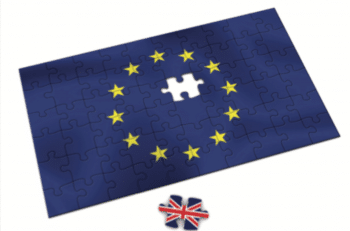
    Back in the 1960s I once stood on the plinth of Nelson’s column in Trafalgar Square, London, between Landseer’s lions, at a Connolly Association rally against anti-Catholic discrimination by the Northern Ireland Stormont regime. Lots of people were waving tricolours. Forty years later I spoke again in the same spot, at an anti-EU rally organised by the Democracy Movement, one of Britain’s EU-critical bodies, before a sea of little Union Jacks. I smiled to myself. Here were the English discovering the drawbacks of being ruled by foreigners, by people they did not elect, and how EU laws had come to have primacy over those of their own Parliament. They were reacting against losing their democracy and national independence. British Euroscepticism is largely English nationalism. The political psychology of the governing élites in England and Ireland is very different, not least in their attitudes to the EU. The lack of self-confidence of the Irish élite is shown by their continual anxiety to be seen as ‘good Europeans”’. Hence for example Enda Kenny’s boast that our recent modest economic improvement has “restored our reputation in Europe”. I was at the EU summit in Gothenburg, Sweden, a few days after Irish voters rejected the EU’s Treaty of Nice in 2001. The then Taoiseach, Bertie Ahern, was virtually beating his breast there as he explained apologetically to the international media how Irish voters were mistaken, but they would have a chance to change their minds in a second referendum – which of course duly happened. By contrast England’s governing élite has the psychology of a ruling power. For centuries they backed the second strongest powers of Europe against the strongest, thereby preventing any one power dominating the continent. When the EU came along after World War II they joined it in the hope of either prising France and Germany apart or else of being co-opted by the Franco-Germans as an equal partner to run ‘Europe’ as a triumvirate. Both hopes have proved illusory. Hence English disillusion with the EU. They never shared the Euro-federalist visions of the continentals – something that former Commission President Jacques Delors expressed when he said in 1993: “We’re not here to make a single market – that doesn’t interest me – but to make a political union”. Prime Minister Cameron wants to stick with the EU. But most of his party and large swathes of British public opinion see the EU as a low-growth economic area mired in recession, with a dysfunctional currency and high unemployment. They want to regain their freedom of action, especially over trade, by leaving. They want to develop trade and investment links with the five continents and the far-flung English-speaking world. The obvious power imbalance between the two sides would make it extraordinary if the “Leave” people were to prevail over the “Remain-Ins” in the Brexit referendum. On the one side are the British Government, the American Government, the German and 25 other EU Governments, Wall Street, the CBI, the TUC, the British Labour Party, the Brussels Commission, the European Movement, most EU-based High Finance and Transnational Corporations, plus in Ireland all the parties in the Oireachtas. On the other side is a diverse and sometimes quarrelsome range of groups and individuals on the Left, Right and Centre of British affairs, united only by their desire to get back their right to make their own laws, control their own borders and that their Government should decide independently its relations with other countries. It would be unrealistic though to think that a “Remain-in” vote in June will decisively settle the matter. It is likely merely to delay the inevitable divorce, for the interests of the continentals and the island Britons are just too fundamentally opposed. And what of the Celtic fringe? Contrary to the received wisdom there could well be a substantial “Leave” vote in those areas too. If the UK as a whole votes to leave, will Scotland want to break away from the rest of the UK in order to remain in the EU, abolish sterling and adopt the euro – that being a requirement for all newly acceding States to the EU? It is very doubtful. The Irish media have not yet picked up on one big downside for Irish people of the deal David Cameron concluded in Brussels before he launched his referendum. This is the implication of the EU agreement that if the UK votes to remain, new immigrants to the UK are liable to have lower social benefits for some years than those already there. It will be impossible under EU law to differentiate between Irish immigrants on the one hand and non-Irish ones on the other. This means that new Irish immigrants to Britain or the North must face cuts in social bene ts too if the “Remain” side wins. This proposal will not affect Irish people already settled in the UK, but solidarity with their fellow countrymen and women should still cause lots of them to vote Leave. If a booming British economy, freed of EU regulation, becomes the Singapore of Europe outside the EU, which is perfectly possible, it can only benefit Ireland economically. Lurid scenarios are being painted of the consequences of Britain leaving the EU while Ireland remains in it. If Brexit happens some uncertainty is inevitable for a year or two, but it will not be the end of the world. Free trade will continue between Ireland and the UK under all realistic “Leave” scenarios, so there will be no customs posts on the North-South border within Ireland, no passport controls or anything like that. Such claims are simply scaremongering, part of “Project Fear”. What of Northern Ireland in the event of Brexit? Over the past decade the UK has paid over £150 billion to the EU budget – far more than it has got back. It sends £350 million to Brussels every week. This is some ten times the Northern Ireland schools budget. EU subsidies to the North in the form of

    Loading

    Read more

  • Posted in:

    The Irish Times won its struggle for trust on the Centenary

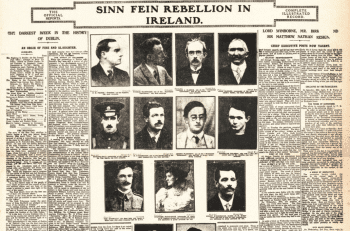
    The Irish Times has had a mixed 1916 commemoration. Even its own audiences seem hardwired to expect a certain bias from the newspaper of reference, but one particular decision – or probably a non-decision no one ever thought to check for unfortunate implications – certainly didn’t help. For its 1916 anniversary issue the paper produced a replica cover from 100 years ago, but decided to cut the original banner headline: ‘Sinn Fein Rebellion In Ireland’. The page-two explanation – that broadsheets aren’t what they used to be, and the resized 2016 dimensions (half the size of the 1916 original) meant the original would no longer t in its entirety and, although it had been shrunk somewhat, any further reduction in print size would render it unreadable, and something had to go… convinced some, but left others unimpressed. If space was the only issue, then why leave two mastheads on the front page, one modern and one vintage? Assuming the plausible explanation that it was a design decision, and nothing more, the online row it generated speaks much about the perceived trust issues the paper has with its audience. Irish Times journalists are prone to complain that their paper is often held to a higher standard than others, and that may be the case, but it is also a backhanded compliment. Its readers expect more from it, and are therefore more inclined to complain when it does not live up to expectations. The Irish imes garners complaints because what the Irish Times says matters to its in a way that most other newspapers do not. Being an opinion leader comes with a price. Twitter media accounts come in two avours. There are those that engage, joining in conversations with followers over the stories of the day, even on occasion adding their contributions to the joke of the day on the medium, and there are those that broadcast, casting their bread upon the waters for others to consume, but never acknowledging that the audience is talking back. Irish Times’ editor Kevin O’Sullivan falls into the latter category. His twitter stream is a list of links to articles he finds it worth highlighting, mostly from his own publication, occasionally from farther afield. While it is assumed that O’Sullivan curates his own Twitter account, he does not engage with his followers online, or share his thoughts on the news of the day, beyond a brief “interesting” or “scintillating” appended to a story link. And since he does not share his thoughts in detail, the only insight into the thinking of the man helming the paper of record derives from the stories he deems worthy of sharing. Irish Times 1916 coverage, as highlighted by its editor in the period from Patrick’s Day to the end of Easter Week, was colourful and varied, with thinkpieces by regular and occasional columnists (Fintan O’Toole on Shaw and Casement; Niall O’Dowd on the American input to rebellion; though oddly, no one expurgating the German contribution). Beyond this, the Irish Times chose to reproduce a letter from Francis Sheehy-Skef ngton to Thomas MacDonagh making a case for pacifism, an offbeat Q&A by cynical Frank McNally: “To question the Rising is to be found guilty of unIrish activity”, Eunan O’Halpin was mean about the Proclamation (“a speech not a Proclamation”), atheist Donald Clarke goaded that it didn’t need to be atheistic, and Miriam Lord wished fervently that we could hold an Easter party every year. Diarmuid Ferriter appeared here and there with as usual more good history than acute insight. Some ideas that sounded like cringe-inducing embarrassments, such as the new proclamations created by schoolkids, generated genuine wonder. What does it say of a modern nation if children are calling for an end to homelessness while ministers hide behind constitutional guarantees of private property? On the new-media side, a particular highlight must be the Irish Times’ Women’s Podcast on Margaret Skinnider, volunteer, sniper, school- teacher, trade unionist, and would-be hotel bomber (of the Shelbourne – the newspaper’s readers may have pondered that it might as well have been the Irish Times itself). The Irish Times has even produced a book called unexcitingly the ‘Irish Times Book of the 1916 Rising’. And then there was its own 2016 Proclamation, with dodgy prose: “First among our values is the belief that every citizen must have both [sic] the legal, civic [sic] and political rights necessary for full citizenship”, but a progressive core: “we commit our governments to a continuing process of reducing inequality”. If schoolchildren came out with a simple vision of an Ireland where no one is homeless, the Irish Times’ editorial proclamation for 2016, attempting to cherish all its children equally, had the look of a family Christmas tree, with everyone adding their favourite bauble to the decorations until it became top-heavy, over-owing with good wishes, inclusiveness, and a feelgood spirit that made it look like an out-of-shape heavyweight next to the Spartan declaration of a century ago. Perhaps a little like the Irish Times itself. Gerard Cunningham

    Loading

    Read more

  • Posted in:

    Hands off civil society

    The UN’s Secretary General, Ban Ki Moon, has called civil society “the oxygen of democracy” but its space is shrinking. This may be jargon, but it is inspired by a serious threat to democracy – the undermining of basic rights: freedom of expression, freedom of association, and the right to peaceful assembly. Civicus grandly describes itself as the ‘World Alliance for Citizen Participation’. It is more down to earth when highlighting failures to address this shrinking civil society space. In recent months environmental and land-rights activists have been assassinated in Honduras and South Africa. Civil society organisations in Egypt are being prevented from receiving funds from foreign sources. In India the police have repeatedly sought the arrest of a couple who criticised Prime Minister Narendra Modi for his role as Gujarat chief minister during the Gujarat riots in 2002 in which at least 790 muslims (and 250 Hindus) died. The police have confiscated their passports and blocked their bank accounts and their homes have been raided. A woman human-rights defender has been arbitrarily detained in Bahrain with her 15-month-old son. A new law in Jordan is imposing arbitrary conditions on the formation of civil society organisations. An activist opposing a hydropower dam in Cambodia has been given a suspended sentence. That is disturbing and unacceptable. However, some will argue that only happens elsewhere. But civil society space is shrinking in Ireland too: different means, same intent. Civil society organisations here are strangled with cuts and encumbered with ever greater levels of bureaucracy such as charity regulation, lobbying legislation and tendering demands; and are spending too high a proportion of their time reporting on endless indicators. For example our long-standing local not-for-profit development companies providing programmes to tackle unemployment and social exclusion suffered reductions in funding from €84.7m in 2008 to €48m in 2014 and have been required to submit detailed competitive tenders. Most got through the process but some didn’t. Those that did are now bogged down in an indicator-dominated programme. The environmental pillar of social partnership has been under severe pressure due to reductions in funding arising from cutbacks in the environment fund and Department of Finance obstruction. The Minister for the Environment implied he was considering removing An Taisce, the largest environmental NGO, which has been critical of him, from the list of bodies consulted over big planning applications. Organisations are bound into service-provision contracts that preclude criticism of the state. The structures for engagement with the State have been dismantled. There is an evident hostility to and a demonisation of protest and dissent. We can’t stand aloof in Ireland from this global attack on democracy and ostensibly valued freedoms. Locally, as internationally, those in power do not want these organisations giving voice to and mobilising dissent to a model of development that impoverishes, generates inequality and destroys the planet we live on. Civicus are seeking to foster greater coordination between civil society organisations to face down these threats. Civicus and Human Rights Watch hosted a meeting of regional and international civil society organisations to explore the agenda for a campaign on these issues. They identified the need to develop a new positive narrative about the contribution of civil society to national life. This seemingly basic step was prioritised in the face of what was described as ongoing stigmatisation and vilification of civil society organisations. A second step was to inform the general public about the nature, causes, and extent of restrictions on civil society activists and organisations. A third step was to broaden the debate beyond advocacy organisations and those working on civil and political rights. They noted that restrictions are increasingly applied to anti-poverty and development-focused organisations. Civicus are seeking inputs on how best to develop this global campaign. The International Civil Society Centre is the “global action platform” for international civil society organisations (ICSOs). It works to support the “world’s leading ICSOs in maximising their impact for a sustainable and more equitable world”. It is also initiating a process of consultation on a ‘Civic Charter’ which it will launch in October 2016 as a means of building international solidarity for civil society organisations. Some key directions have been suggested, including the need for new ideas for collective advocacy to reverse repressive legislation targeting civil society organisations, the adoption of progressive institutional frameworks for civil society engagement with Governments, and the recruitment of eminent persons to demand the release of unjustly imprisoned civil society activists. Civil society in Ireland should prioritise the re-appropriation of civil society space. It must participate in these global campaigns and aim to get international demands tailored to address how civil society is specifically being eroded here. As we face increasingly intractable inequalities and irreversible climate change it is a political imperative. Niall Crowley

    Loading

    Read more

  • Posted in:

    Independence in a Vassal State

    In his 1976 poem, ‘A Part of Speech’, Joseph Brodsky says Russian narratives of the future and of history are informed by language, not facts. “… and when “the future” is uttered, swarms of mice rush out of the Russian language and gnaw a piece of ripened memory which is twice as hole-ridden as real cheese”. Current events in Ireland import his observations to our own milieu. March and April mark the peak of the Centennial celebrations season in Ireland – the months of remembering, interpreting and occasionally re-writing the already troubled historical narratives of the nation to reflect the distant 1916 Easter Rising. The ripened memory is hole-ridden by interpretations and narrations, though the factual history of the event could easily be explained in simple timelines. Thus the focus of many analysts has drifted from the original Easter Rebellion to the future. The culmination of this was a rather simple, yet far-reaching, observation by President Michael D Higgins that modern Ireland is a society that has yet to achieve the core perceived objectives of the Rising: the story of Ireland is still being told. This notion of Irish sovereign incompleteness, one hundred years from the Rising, is an important and complex one. To some, extracting relevance from the Rising means projecting historical myopia into an evolving future: the ideal of national independence defined by physical boundaries. Nationalist rhetoric, historically apt, but backward-looking, has been one of the significant themes in the Centenary. For others, including myself, relevance is less about the ideals of the original Rebellion, and more about the nature of the Irish state and its elites within the context of the modern reality, framed forcefully by the memory of the Global Financial Crisis. Put simply, irrespective of the wishes of the 1916 leaders and the generations of Irish national leaders who followed them today’s Ireland is, economically-speaking, a vassal state, dependent on fortunes, choices and policies determined well beyond our shores. Perhaps the saddest part of this truth is that this state of affairs is the direct outcome of the willful co-opting of Irish elites by our external masters: the technocracies of Europe and the Multinational Corporations. As in 1916, today Ireland has little control over its own destiny. And just as in 1916, there is only a small minority of the Irish people willing to confront this reality. No matter what the Irish President declares about the ‘Irish story’ being a continuing saga, we are subjects of the world order that our leaders, aided by the silent majority of us, have not the will to alter. Still less the capacity. Over the hundred years that separate the Easter Rebellion and today, Ireland has travelled an impressive path of economic growth – a path that is still new but which is celebrated today as our major achievement. However, attributing the economic success of today to the struggle for independence in the past is a false narrative. Apart from the fact that on average Irish citizens were doing well before the Rising, asserting Ireland’s economic independence from the UK required a period of painful and exceptionally protracted misery that stretched from the Rebellion into the early 1970s. When we finally did get growth to ourish, we squandered its fruits. And though we have growth it has not yielded independence. The economic renaissance after 1973, attributed to TK Whitaker-promoted economic openness and FDI-focused development, did not mark meaningful economic sovereignty for the country. Rather it represented a shift in Irish economic dependency from reluctant participation in UK-centric trade, investment and labour markets to an enthusiastic embrace of the EU as an opportunity for the beggarthy-neighbour model of tax arbitrage policies and to comprehensive prostration to corporate markets, first represented by the ‘civilised’ foreign direct investors, lately – by the blackmail-wielding bondholders and vultures. The overall outcome was belated prosperity, but also atrophying leadership. Economic growth came with policy de a- tion through Social Partnership, the perceived and real demands of FDI, and reliance on the importation of social, cultural and economic ideas (and institutions) from the EU. A nation once subjugated to the UK found itself subjugated to a virulent blend of nationalism and religion and, finally, to yet another set of hegemonies.By the end of the 1990s, the Irish model of commerce, traditionally defined by the triumvirate of the local councilor, local priest and local bank manager presiding over economic resources gave way to the Social Partnership model where those three agents were supplemented by a motley crew of social and business groups and state bureaucrats whose sole preoccupation was to make sure that the wishes of the MNCs and Brussels were not trampled by mere local selfishness. The fruits of 100 years of striving for independence is an economic culture of dependency. Which, in cold and impersonal language of economic statistics, looks like this: In 2014, Ireland spent more than the EU and euro-area average as a percentage of GNP – 0.87-0.88% – on social housing, against the Euro area’s roughly 0.72%. In return, we got a spiralling homelessness crisis and a ratcheting length and duration of social housing queues. We posted the second highest GDP per capita figure, based on EU purchasing power parity, but only average (for the euro area) levels of actual real individual consumption. We got the fastest growing economy in the EU, with OECD-topping investment figures. But we also have average or below average growth rates in construction spending (+3.1% in the first nine months of 2015 compared to the same period of 2014) and our companies’ investments in machinery and equipment was down almost 18%. In fact, January- September 2015, total investment growth, excluding intellectual property – domain of smoke and mirrors generated by the tax-shifting MNCs – was down 9.5%, just as official total investment figures for the economy were up 26.8%. Consider the following simple exercise. We used to believe that the true state of the Irish economy was described by our Gross National Product (GNP) because, unlike GDP, it ‘accounts’ for profit

    Loading

    Read more