• Posted in:

    Áras Attracta lesson: rights-based model

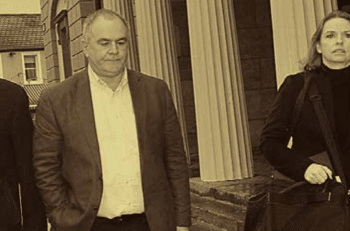
    On 4 January 2016 I found myself in a court-residents. The review group recommended a move to a room in Castlebar, Co. Mayo. One man and ve women were on trial, charged with assault alleged to have occurred in Áras Attracta. Sitting in the courtroom my hope was to use this experience as part of my own catharsis, having lived through physical abuse in Áras Attracta which is the HSE-run residential centre in Swinford, County Mayo where 96 men and women with intellectual disabilities live. It featured of course in a recent exposé by RTÉ’s Prime Time programme. Bodily integrity, in the context of receiving support for personal care, brings an unspoken vulnerability. Fear is ever-present. Dignity and respect should be basic imperatives. Those of us involved in the rhetoric of human rights and the independent-living movement must remember that our sisters and brothers with learning disabilities are uniquely susceptible to abuse. The material captured on the hidden camera placed by Prime Time’s undercover reporter showed staff shouting, pushing, force-feeding and dragging residents across the floor. The footage was used in evidence in the case by the State prosecutor. The five staff, including nurses and care workers, were found guilty of assault. All but one avoided jail terms. Four were sentenced to community service orders in lieu of prison terms. The fifth was given a prison term of four months which is currently under appeal. The protracted saga of Áras Attracta is a reminder of the slow pace of the State’s apparatus. Two years on from Prime Time’s exposure of what was happening in Áras Attracta an independent review group published the ‘What Matters Most’ report in August with thirteen recommendations and an action plan for all congregated settings. The most pertinent of these was to “accelerate the process of supporting people to move into community living, avoiding transitional arrangements”. The HSE has committed to implementing this and claims that “individual needs assessments have been completed for all residents to identify their future support requirements to live a successful life in the community”. The independent report stated there was “widespread institutional conditioning and control” of people living in Áras Attracta. It found that this was generally imposed for the convenience of staff and management and the model of service was structured to suit staffing constraints rather than the needs and aspirations of residents. The review group recommended a move to a rights-based social model of service delivery in one of its overarching recommendations for Áras Attracta. Most service-providers for people with disabilities are state-funded. They remain institutions where power and control exerted over us and people’s right to independence and choice is denied. The report tells those of us who have to have relationships with service providers nothing new. It con rms unspoken realities. There have been a series of HIQA reports on these services that back up this analysis. The inertia in implementing recommendations from these reports coupled with the lack of rights-based legislation further demonstrates state inertia when it comes to people with disabilities. The Áras Attracta situation merely highlighted the insidious practices that take place in residential institutions. Often there is an inference that somehow people who are abused brought it on ourselves. In the context of Áras Attracta, what was considered, or diagnosed as challenging behaviour could better be described as very challenging circumstances for the residents. There are still over 2,700 people living in congregated settings throughout the country. Residential settings echo a discredited previous era. We suspect, we fear and we know. However, still they continue. Twenty-seven people currently living in Áras Attracta are now waiting to move into new supported accommodation. The Minister for people with disabilities, Finian McGrath, has announced that the Government has provided a dedicated €100m capital fund to facilitate de-congregation over the period 2016-2021. €20m has been provided for 2016 and Áras Attracta has been prioritised to receive funding in this first phase. Action is now needed, not just another report or political promise that will become redundant as time passes and nothing changes. The kernel of the ‘What Matters Most’ report is in the overaching recommendation for Áras Attracta that “The voices of the residents need to be facilitated, listened to and promoted”. Why would you need to make such a recommendation? What has gone so badly wrong that this has to be one of only three overarching recommendations. Fostering the independent voice of the people accessing services, attending to their preferences, and ensuring people know their rights and have access to advocacy services should have been a given. These are the voices that must now determine the future. Rosaleen McDonagh

    Loading

    Read more

  • Posted in:

    Election Times

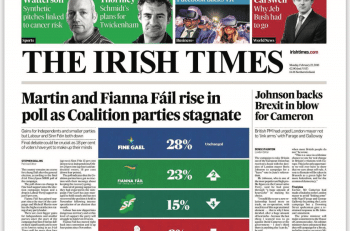
    The story of an election is much more than a few headlines, but the Irish Times front pages mercifully, if languidly, devoid of the kind of blatantly partisan positioning seen elsewhere, provide in hindsight a neat narrative of the campaign, with the slow realisation that Fine Gael was in trouble, the lack of a clear alternative emerging, and of course, “events, dear boy”. While its columnists and editorials may have declaimed preferences in the run-up to the general election, the Irish Times‘ front page generally affected a more neutral stance, certainly by comparison with the anti-Sinn Féin headlines which dominated the Irish Independent and its Sunday sister during the February campaign. The ‘newspaper of reference’ (formerly “of “record”) began the month in ‘phoney war’ mode, leading on Monday 1 February with coalition plans to “target home buyers and parents in poll pledges”. On the Tuesday, with still no election date declared, the story was “Taoiseach prepares Fine Gael ministers for election”. Perhaps ominously, on both days the below- the-fold story concerned the revelations regarding “Grace” a young woman with intellectual disabilities abused while in HSE care in a foster home. The story would feature again several times during the month and, by the end of the campaign, would threaten to inculpate Michael Noonan. Wednesday’s paper finally brought the official election notice, leading with Fine Gael ministers outlining their election promises, but the shine was short lived. Thursday, and the first election poll, brought “disappointing news for Coalition parties”. Much of the remainder of the campaign was spent trying to push back against those low poll numbers, which stubbornly refused to rise. By the first weekend, Fine Gael had announced a “tax U-turn to hit voters earning €100K” (the top 10% of all earners, though Irish Times readers would be better paid than the average). The election narrative was dominated at first by Fine Gael (at least on the front page) but it changed dramatically in the second week. The murderous Regency Hotel rampage called attention to cuts in Garda numbers and resources and Fine Gael, which prides itself as a law and order party, found itself on the back foot. At one point Sinn Féin’s Mary Lou McDonald attacked the government for being soft on crime during an RTÉ radio debate. By the end of the week, the lead story that Garda “may be issued with new weapons” helped to restore marginally Frances Fitzgerald’s battered image, but you know you (we?) are in trouble when Sinn Féin are attacking you from the right on crime. Meanwhile, bubbling below the fold, the news was no better. Lowry, Drumm and Luas strikes festered, and the Times awarded the first TV debate to Micheál Martin. Week Three began with Labour striking out to create a separate identity, promising “an abortion vote in any new deal” – definitely a plus for liberal Irish Times readers. Smaller parties got their first acknowledgement the following day, as the lead reported they did best in the previous night’s debate. For the rest of the week, it was almost as if the Irish Times tired of the “boring” election campaign, with more conventional “newsy” lead stories on an HSE inquiry into baby deaths, welfare benefits for migrants, and Brexit. Week Four began with the writing on the wall, summarised in a single Monday headline “Martin and FF rise in polls as Coalition stagnate”. Tuesday the paper reported Kenny and Martin had “equal backing in race for Taoiseach”, and the final TV debate failed to resolve anything for this hard-to-please newspaper as “leaders fail to land killer punch”, before Kenny’s “last-ditch call for vote in favour of stability.” Below the fold on the same day, the first mention of Sinn Féin in a front-page headline volunteered no favours: “Canvasser for Adams owns hay shed where ‘Slab’ Murphy cash was found”. ‘Slab’ was also the subject of one of the few passionate editorial columns (now perhaps self-deprecatingly titled “the Irish Times view”). Others quite reasonably despaired of the “short election, short of vision”. But while front pages covered national trends, debates and polls, and columnists inside the paper from Una Mullally (who, surprisingly for someone with a political agenda, gave up interest) to Breda O’Brien (vote for people of conscience, if you know what I mean) via Fintan O’Toole (who in the end detected an unlikely victory for social democracy) and Noel Whelan (who again somehow spotted the Fianna Fáil revolution implausibly early) ventilated partisan viewpoints, perhaps the most concise reportage on what happened on election day was by religious affairs correspondent Patsy McGarry, who on the day of the count reported from the north inner city, less than ten minutes from Tara St in a neighbourhood where few read the Irish Times, and fewer would share its editorial concerns: one, a hooded man, was picking up rubbish and putting it in a black plastic bag.“I didn’t vote. I don’t have a voting card. I was abroad for five years. It’s not important at all”. Gerard Cunningham

    Loading

    Read more

  • Posted in:

    Religious advertising and broadcasting are mishandled and illegal

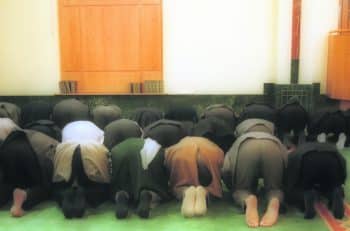
    In March 2003, the Minister for Communications, Mr Dermot Ahern, invited expressions of interest in the cause of religious advertising on RTE. Many of the submissions had the appearance of being orchestrated, and shared the same view: if advertising tarot cards is OK, why not religion? The outcome of the consultation process was that the Minister decided to leave well enough alone. The context of Minister Ahern’s review of religious advertising – the Broadcasting Authority Act, 1960 and the Radio and Television Act, 1988 – was too narrow. The Constitution is paramount. In 1972, the people removed the recognition by the State of several denominations and the special position of the Roman Catholic Church. Consequently, the State is, in theory, essentially neutral as and between all belief systems. Of course we know this is not the case, but it is a reasonable goal. Statute law relating to equality between gender, religion, etc, is another constraint. Civilised standards of decency and social policy oblige the state to be even-handed or better in the treatment of law-abiding minorities. This requirement was taken to the extreme in the Supreme Court judgement in the McKenna case which assured equal radio and TV representation of antigovernment view in referenda. Neutrality and equality would have been better guides than the legislation for the review. The present position At present broadcasters cannot take paid advertising from any religion or group of religious interests, even if it only to create awareness of innocuous and inoffensive matter such as newspapers, magazines, events or campaigns. An example of this absurdity is the rejection of a harmless advertisement for Veritas, the Catholic publisher, this Christmas. However, the paid religious- advertising impediment is regularly circumvented through the editorial control of unpaid ads and propaganda about religious themes, which are a charge against broadcasters’ revenues. The most controversial is the Angelus which was introduced at the behest of the Episcopal bully, John Charles McQuaid, some 50 years ago. It is broadcast at peak time at considerable opportunity cost to the broadcaster and those who pay it. There’s also Newsround’s TV coverage of religious processions, the merits of Padre Pio, Opus Dei, etc. Like all advertisements, nothing is challenged; they are all of the ‘soft sell’ kind. Editorial discretion comes from persons ranging from those broadly supportive of religion, through to closet zealots. Because of its Constitutional obligation to respect religion, the State cannot easily facilitate unfettered criticism of religion. There is tension between this and other Constitutional imperatives not to endow religion, not to discriminate or make any disabilities on grounds of religious belief or unbelief, or the religious status of a person, and the right to freedom of expression. Conundrums which must be faced. In facilitating or supporting organised religion in any way, it is time the Irish State faced several conundrums which it and the mainstream media have not faced to date. They are all the more pressing now: Have institutional religions, which enjoy charitable tax status, the right to subvert the civil law, for example, by secretly marrying persons under the lawful age or acquiescing in the genital mutilation of infants? Have religious institutions the right to subvert public norms, such as the equality of the genders? Have religious institutions the right to undermine personal self-assuredness, contrary to the best interests of individuals and society, through fatalism and dependence on miraculous intercessions or cures? The Campaign to separate Church and State would prefer if religions did not have these rights, nevertheless we respect the right of others to differ, but only on condition that none of them is allowed to dip their hands into the State purse to benefit their institution. This is merely another expression of the Constitutional prohibition of the endowment of religion by the State. If the State believes that taxes should be used in support of religious endeavour, there is the German remedy: levy a discretionary religious income tax for these purposes. At present RTE – unlike commercial broadcasters – provides religious services, usually weekly. These facilitate the needs of house- or hospital-bound members of a few denominations, enabling them to join in a communion of worship. The facility does not extend to the growing number of immigrants – many with a foreign tongue – who are geographically scattered and who follow Islam, Hinduism, or Christian ‘hot gospel’ or ‘bible-hall’ sects. The Irish Times (8th December) claims that there are now over 360 migrant-led churches. The current, free-broadcast, religious programming restricted to a few favoured Christian religions is discriminatory and seems to be contrary to the Constitution and The Equal Status Act, 2000. Uncritically presented religious editorial material advocating religious beliefs can constitute endowment of religion by the State where the broadcaster receives mandatory licence fees. It is inappropriate and should not be permitted. It is also objectionable if broadcast from any station taking commercial advertising; in a liberal society it is unfair to require the general public to subsidise religious propaganda through such revenue. Suggested Reform The present system of free, religious broadcasting must be reformed so that it is subject to critical and balanced editorial control and conforms to Constitutional and Statute law. The absolute prohibition on religious advertising is contrary to the Constitutional entitlement to freedom of expression by religious and by humanist groups. The obvious solution is to regulate it in an open fashion. All religious advertising should be vetted by a body beyond reproach and accountable, to ensure that no element of public policy or law is breached. Religious advertising should be carried at commercial rates. Religious advertising of an editorial kind needs to carry a rubric identifying it. This has been done, to some extent by RTE TV. Within this framework, broadcasting stations wholly financed by churches and established primarily for the promotion of denominational purposes, would, if subject to public order and morality, be lawful. Free broadcasting of religious ceremonies generally aimed at the sick, or infirm, or scattered minority denominations and humanist groups, if done in moderation

    Loading

    Read more