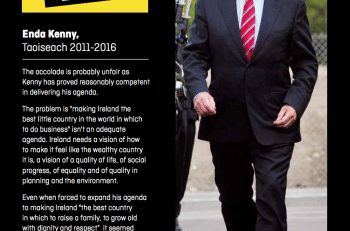
taoiseach

Random entry RSS

  • Posted in:

    FF won’t see coalition as an ideological issue and FG is glued to stability

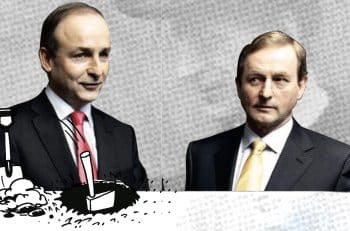
    The most extraordinary coalition formed in Ireland was the first one, in 1948. It involved Fine Gael and a then-new party headed by Sean McBride, Clann na Poblachta. The Clann was a lively mixture of liberals, left-wingers and Republicans with a deep immersion in the IRA. The surprise with the Clann was that its youthful enthusiasm and vigorous campaigns against partition very nearly toppled De Valera from his then hegemony over Irish politics. McBride himself was a former IRA Chief of Staff who subsequently cut out a career for himself as an international eminence becoming a Nobel Prize laureate and founding member of Amnesty International – the campaigning global Human Rights body. Because of lingering republican bitterness against General Richard Mulcahy’s role in the civil war, Mulcahy, the Fine Gael leader, stood aside to facilitate a coalition with the Clann and its tooth and claw republican militants. John A Costello became Taoiseach in the coalition instead. The point of all of this is to illustrate that, from the very outset, coalition formation in Ireland has been a pragmatic business where big parties and small ones dispense with ideological or philosophical differences in order to provide an alternative government and run the country. Down the years few, if any, Fine Gael or Labour leaders worried too much about the differences of left and right when it came to forming a government designed to extract Fianna Fáil from prolonged periods in power. In 1989 Charles Haughey led Fianna Fáil for the first time ever into a coalition arrangement with the Progressive Democrats, stating cheerily: “Sure, it was only me that could have done it”. His party colleagues resisted it furiously believing non-participation in coalition an absolute core value for the party up to that point. The bitterness of doing this coalition was magnified by the presence of Des O’Malley and his new party – composed of individuals who had fought Haughey, then split from him to create their own party. For Haughey it was just another deal but for the Progressive Democrats, who claimed to be policy-focused, it was about taxation and other precious policy items, including a public Tribunal into the goings on in the Beef Industry. Haughey worked hard to save his own skin and persuade his ministerial colleagues of the merits of going into coalition. Apparently at one stage in the discussions around the cabinet table he held out his arms sideways demanding in relation to the opposition: “D0 you want to give them all of this?”. Shortly afterwards the new Taoiseach Albert Reynolds formed a coalition with the Labour Party which followed an election in 1992 which featured advertisements generated by Fianna Fáil scaremongering about a left-wing takeover of the country by Labour. This was no small tactic and involved giant billboards and full-page newspaper adverts in a bid to frighten voters in a move that was redolent of the ‘red scare’ tactics of the 1950s and 1960s. During the actual campaign my father, the late Brian Lenihan Senior. When all about him were these banner advertisements called for an alignment with Labour rather than the PDs. His rationale was that Labour were more compatible with FF than what he viewed as the “Thatcherite ” Progressive Democrats. He was dismissed by the party bosses during the campaign only to find himself instrumental, behind the scenes, after the election in putting the coalition deal with Labour together. Albert Reynolds, a businessman, proved to be very pragmatic when faced with the post-election numbers and getting back into power. My father had key relationships and friendships within the Labour Party and within the labour movement generally. These relationships and ability to communicate became vital to the formation of this government. When people set out to cross party divides there is a need for credible and dependable intermediaries who can give assurances on policy and how the share out of ministries will play out when the negotiations get real. This was my own experience when I set out, at the request of Bertie Ahern, to put in motion the process of having a coalition with the Green Party in 2007. In fact the groundwork had begun in the immediate aftermath of the 2002 election. Ahern was already entertaining doubts about the future sustainability of the PD coalition because of problems with both policy and numbers. I knew a number of the key figures in the Green Party, including Trevor Sargent and had been in university with both Eamon Ryan and John Gormley. Part of the reason for having a coalition with the Greens was a concern within the party about the right-of-centre nature of the PD coalition, as well as a fear that the party was already becoming too visibly identified with the building industry and big capital. It was also made easier by the overarching atmosphere of mainstreaming environmental or green issues. When the post-election numbers showed a Green coalition was necessary Bertie pressed the buttons and appointed a skilled and experienced team of negotiators so that his own ministers were locked into the items agreed with the Greens. The government itself worked well together though it has to be said it was much more difficult for the Greens to get the coalition deal past their activists than it was for Bertie to get it past his parliamentary party. Rural TDs were the most resistant regarding Green policies on farming incentives as tantamount to treason. In the event they overcame their difficulties. As with the previous Labour Coalition, outside of the main negotiations, a series of reliable and discreet intermediaries were on hand to smooth out any issues that arose in the talks. Ahern himself was a very accomplished negotiator. General Election 2016 has been dominated by speculation of a grand coalition between the once very dominant big parties of Fianna Fáil and Fine Gael. The fact that both parties combined now count for slightly less than 50% of the popular vote has hastened a frenzy of speculation about such a

    Loading

    Read more

  • Posted in:

    The life and Crimes of CJH

    There is something quaint about Conor Lenihan assessing the life of Charlie Haughey, the man who stole money from the fund for his father’s liver transplant and then fired his father as Tánaiste and Minister for Defence. Lenihan has pieced together a mixture of his own memories of the former Taoiseach and anecdotes that his father, Brian Lenihan senior, passed on to him. Because of this, the reader inevitably looks for evidence of personal bias on the part of this author and it is certainly a particular, personal work. This is a distraction because these characteristics import a significant source of new material, and new perspectives on old material. Nevertheless the media do not seem to have embraced Lenihan’s approach and strangely this book has not been reviewed in the mainstream press. The book is easy reading if patchy. Lenihan of course has a pedigree of grandson, son, brother and niece of TDs and, as a famously boisterous quidnunc he exploits it – all. Lenihan opens by admitting, nay boasting, that it is rare that an adult life is heavily influenced by an historical figure, but that his was, by Haughey. The moral compass of the book spins unpredictably. It often lionises Haughey but also assiduously maintains another Lenihan-centred narrative which actually surfaces only sporadically and peaks in intensity with the sacking of Lenihan senior and with the loss of his bid for Áras an Uachtaráin weeks later. The most poignant page in the book is the last one, the sole appendix, which reproduces the letter from Haughey requesting the resignation of Lenihan’s father. It begins “A Thánaiste, a Aire” and proceeds to threaten that if he does not resign that Haughey will request the President to terminate the appointment. An underpinning of authorial disdain is surely being implied. Lenihan reprises a lacklustre recitation of the Small Man’s biography: son of a Free Stater, Lieutenant in the FCA, North Dublin ward boss, marriage to Lemass’s daughter, reforming minister, arbiter of taste (here Lenihan is too kind). But consistent hypocrite supporting Archbishop McQuaid’s banning of Edna O’Brien’s ‘The Country Girls’. The man from TACA, the 1960s Christian Brothers’ Boy in mohair suits doing the social rounds in The Shelbourne, The Hibernian, Jammet’s, The Russell and Groome’s. So far, so well-known. Lenihan explains the realpolitik forcing Lemass to offer Haughey the Finance Ministry and Blaney the Agriculture Ministry leaving Lynch to see off Colley (59 votes to 19) and become Taoiseach. A brisk narrative on the Arms Crisis foreshadows Haughey’s first fall. Lenihan believes Lynch “knew much earlier than he insisted that weapons were to be purchased” but “backed off and decided to blame the entire fiasco on those ministers, and Captain Kelly”. Haughey, Blaney and Gibbons were “briefed at every step of the way, if not by Captain Kelly, then by the Army’s Head of Intelligence Colonel Michael Hefferon”. Still Lenihan is perplexed as to why “Lynch opted to put those involved on trial in the courts” and adds ‘my father always said that the main person pushing for a prosecution was George Colley”. Haughey’s return is well done. He enlisted Reynolds and his country and western caucus and was back as a Minister in Lynch’s government by 1975. Haughey’s pretensions rose ever greater: “Some preferred the Mercedes but Haughey felt the Jaguar cut a greater dash, with its leather seats and inlay”. Meanwhile back in the city Haughey’s constituency machinery cranked out cheques and Christmas turkeys. In summer there was a charity gymkhana (in aid of the Central Remedial Clinic!) with marquee and CJH in riding gear with Lady Valerie Goulding, silver trays and matching teapots on the lawns of Kinsealy. By 1979 he was leader of Fianna Fáil and Taoiseach. Lenihan notes (in a sentence that in fairness he appropriates from Haughey’s Wikipedia entry, that: “Within days of his becoming Taoiseach, Allied Irish Banks forgave Haughey £400,000 of a £1,000,000 debt. No reason was given for this. The Economist obituary on Haughey (24 June 2006) asserted that he had warned the bank ‘I can be a very troublesome adversary’”. Haughey’s 1980 Ard Fheis was “like a Baptist revival meeting rather than a political conference”. Then GUBU set in in 1982. Lenihan surely veers towards the unedifyingly bizarre as he reveals that a contact of his in the Tory party told him that Haughey was “the first person to compliment Mrs Thatcher on her legs” at the Anglo-Irish summit which spawned Lenihan senior typically ponderous invocation of “the totality of relationships”. Haughey’s interventionism over the liver transplant for Lenihan senior in the Mayo Clinic is narrated scrupulously with Haughey ordering Paul Kavanagh who fundraised €270,000, though “no more than €70,000 was spent”, to divert the balance to Haughey and his Charvet shirts (though Lenihan, being a Lenihan, is much too practical to care, or even mention, the fetish for haute couture). Lenihan recounts with palpable pleasure how Haughey survived the 1991 challenge from Reynolds (55 votes to 22). Haughey lived through his dissection by the Moriarty Tribunal and died of prostate cancer in 2006 before he could be prosecuted. Homely depictions of Lenihan’s mother and her friends debating the ethics and sexiness of early Haughey mingle with Lenihan’s recollection of how Brian Lenihan senior’s hopes that Fianna Fáil might not campaign against divorce were dashed by Haughey. Other anecdotal references sometimes, though not always, seem tailored to elevate the perspicacity of the author’s dad but also give the book a beguiling sense of Lenihanesque intimate authority – as when he reveals that he acted as an informal intermediary for Albert Reynolds in the early 1990s, though he was a working journalist. There is charming colour too as when for example he captures the private sides of De Valera and Lemass, or remembers a bottle of whiskey placed at Jack Lynch’s setting at a dinner in the late 1960s being consumed in the course of an evening. He reveals that his father and Ray Burke, of all people, agreed to fill out their ballot papers the same

    Loading

    Read more

  • Posted in:

    Villager February 2016

    Electi On Right, Villager thinks there’ll be a hung Dáil. Fine Gael and Fianna Fáil will struggle to work out whether they should coalesce, risking their exposure as ideological charlatans and the long-term growth of Sinn Féin. Another election within a year. The prognosis is tentative since around here there is no worse crime than a discredited prediction. Quite a bit at stake In which spirit… so Bernie Sanders and Donald Trump come out punching from New Hampshire and it’s cockle-warming to see the Bush and Clinton dynasties with their inequality-indulgent ideas formed a generation ago, in serious trouble, even if it does signal the return of the Angry White Man, and his supporters. Sanders’ agenda, of course, has obvious appeal in the right-on Village while Trump is dangerous in an old-fashioned FASCIST way. Assuming for the sake of mischief a Sanders-Trump election-off, for Villager the victor can regrettably (and terminally) only be Trump. Sanders is too ugly and Trump too rich for any other upshot. So what happens then? The only force in global volatility that is more unhinged than Trump is Islamic State whose principal religio-geo-strategic goal is dooms-day precipitated by a battle in Syrian city of Dabiq, near Aleppo. It is here, the Prophet reportedly said, that the armies of Rome (ie the West) will set up their camp. The armies of Islam will meet them, and Dabiq will be Rome’s Waterloo. After its battle in Dabiq the caliphate, already in 2016 nicely ensconced under Abu Bakr al-Baghdadi, will expand and sack Istanbul. An anti-Messiah will come and kill a vast number of the caliphate’s ghters, until just 5,000 remain, cornered in Jerusalem. Then Jesus (Jesus!) – the second-most-revered prophet in Islam – will return to Earth, whack the anti-Messiah, and lead the Muslims to victory. After a series of domestic putsches and foreign-policy cataclysms Villager foresees an insurgent Trump, toupée to the sun on a white charger leading the Crusaders into battle at Dabiq. He will lose but be revealed as the Anti-Messiah before final wipe-out at Jerusalem. It is not clear whether the Donald will consider the big new status recompense for the loserism. Jesus and Mohammed will together sort out the souls and the Bushes’ and Clintons’ Wall Street millions will be useless to them. Hello you Former Anglo CEO, David Drumm, is to wing his way back from breaking rocks in a Federal penitentiary, with Fintan O’Toole’s misplaced endorsement for a man incarcerated in the lucre-lionising country to which he has fled, blowing up a tail wind. Drumm has announced that he hopes to wear a tag rather than go to prison here. Villager has an idea. How about wewear the tag and he gives us back the money? Valentine wishes The words ”My heart is, and always will be, yours” from ‘Sense And Sensibility’ have been voted the most romantic line from romantic literature, film and TV drama. They are uttered by Edward Ferrars to Elinor Dashwood in director Ang Lee’s 1995 screen version of Jane Austen’s classic novel with Emma Thompson’s Oscar-winning screenplay,. It was the top choice of 2,000 inane British women who were polled for the cliché-blind TV channel ‘Drama’. Villager resolves to try it out on Mrs Villager. The scene in the 1997 epic ‘Titanic’ where a frozen, fearful and (Villager was happy to note) doomed Jack, played by Leonardo DiCaprio, tells his effervescent Rose played by Kate Winslet, ”promise me you’ll survive” (inevitably) came third. Bliss and the insolvent luxury-car company ‘Former Model’ Glenda Gilson opened up to ‘VIP’ in a February cover photoshoot about her life a year since marrying ‘Rob McNaughton’. The cover (Villager claims never to get beyond it) gushes: “After 18 months of wedded bliss the gorgeous star of Xposé reveals that staying in is her new going out”. Admittedly the former vainquese of bearded developer Johnny Ronan has a lot to stay in from. Gilson mystifyingly fails to mention that during her blissful year she was barred from acting as a company director for five years. Glenda and her brother Damien were in charge of Gilson Motor Company Ltd until 2011 when it was wound up by the High Court for failing to pay €141,937 to the Revenue. Judge Paul Gilligan said Glenda was “deceived” by her sibling in the “improper way he ran the affairs of the business” which traded in high value vehicles and operated a car parking and valeting service at Sir John Rogerson’s Quay. Some of the money is owed to Ronan, who has – in other news – expressed the view that NAMA operates on the spiffing principle of Arbeit Macht Frei. you get the Tsar you deserve Ronan and his former business partner in Treasury Holdings, Richard Barrett, are back in business and back in the media, as if they had never cavorted malignly around boomtown threatening all-comers (Barrett once said he “had his foot on the throat” of poor Chicago-nurtured Garrett Kelleher) and in the end cost us all a packet. Barrett was even allowed to drawlingly pontificate on the Marian Finucane radio programme, about his vision for social housing something he has in the past been very reluctant to provide in Treasury schemes. He told Marian, always agog at a bit of developer vim, “There is an enormous humanitarian crisis of epic proportions which is causing a great deal of human suffering. It is proportionally much larger than the Syrian refugee crisis” with up to 300,000 people on the housing list. Barrett also tells a provocative anecdote of a local authority renting “a house at €8000 a month on one of Dublin’s two best roads to house a homeless mother with four children, costing the state a fortune”. But, intriguingly, he has the answer: “I have formed a series of investment companies, (in Housing, Social Housing, Health Care, Renewable Energy) [all, for some reason, called Bartra]. We will build these facilities renting them to the Irish Government”. He sees it as a sort of “social

    Loading

    Read more

  • Posted in:

    Review: Faith in Politics by John Bruton

    John Bruton (Taoiseach 1994-7, Minister for Finance 1981-2, 1986-7) has a book out. His publisher, Currach Press, suggested journalists might like to interview the lively former Taoiseach. I signed up and an appointment was arranged. The morning of our interview the man from Currach texted to say Bruton was concerned it should be primarily about the book and then half an hour later to say there was bad news, Bruton would not do it and he would not say why. I said I’d do it by email and was mostly interested in the book. Currach said they would get back to him. But I heard no more. Rude. Maybe he was worried I’d ask him about Cherrywood. In 2006 Bruton told the Mahon (Planning) Tribunal that a donation of £2,500 to him as party leader was received from Monarch Properties in November 1992, during the general election campaign. At that time I was campaigning against a make-or-break rezoning scheme being pursued by Monarch for 234 acres in Cherrywood, Co Dublin. Most Fine Gael County Councillors had not supported the rezoning in 1992 but they would vote for it in 1993: in addition to Bruton, nine out of the 12 FG Councillors who would talk to their party’s internal Inquiry in 2000 admitted receiving money from Monarch or Frank Dunlop (or both) in the 1991-1993 period when I was concerned with the Cherrywood vote. Monarch’s boss, Phil Monahan, had told me he was paying Councillors for rezonings and that many of the Fine Gaelers would vote against it in 1992 but in favour (when it really counted) in 1993. Monarch was duly found by the tribunal to have obtained the rezoning corruptly. During the 1997 general election campaign, the party received a further cheque for £3,800 from Monarch Properties. Later Bruton said he had not tried to “whip” Fine Gael Councillors on 78-member Dublin County Council though he had pressured his 19 party councillors to act coherently when he met them in September 1993: Councillor Mary Muldoon told him that acting coherently would require the minority of non-rezoners moving to back the majority of rezoners. The Council rezoned the Monarch lands shortly afterwards, in November 1993. According to leaflets we produced at the time FG voted 7:7 on the up-zoning in 1992. By 1993 their vote was 12:5 in favour. Why did so many change their minds? The torpid tribunal never asked. Frank Dunlop informed the planning tribunal that he had told Bruton about demands for a £250,000 bribe made to him by a Fine Gael councillor, Tom Hand, to rezone the Quarryvale development. Dunlop testified that Bruton replied, “There are no angels in the world or in Fine Gael”. Bruton vehemently denied this but, following further inculpatory evidence at the Tribunal, returned and conceded that “it gradually came back to me”, that Dunlop, “did say to me something about a councillor looking for money”. He acknowledged that he did not investigate the matter because he had found the story told to him by Dunlop “exceptionally hard to believe”. Anyway the book: Faith and Politics: I couldn’t really see the connection. Bruton is is an intellectual by Irish political standards but he’s wrong to endorse GK Chesterton’s illogical comment that “When a man stops believing in God he doesn’t believe in nothing, he believes in anything”. It is good to see an assiduous Christian Democrat recognise that freedom is no alternative to ethics, as it says nothing about how we should treat one another. He’s right the Rising probably held back a 32-County consensual Republic, and that support for “our gallant [Axis] Allies in Europe” weakened our case for independence, at the 1919 Paris Peace Conference. He’s right that the obligation on Northern MLAs to declare themselves Nationalist or Unionist is now holding back a new politics that transcends history. He’s wrong to even contemplate that we can burn all the fossil fuels left in the world. I hadn’t realised how consistently the EU had emphasised the need for economic and monetary union and (as far back as the 1971 Werner report) that it would involve EU involvement in domestic economic policy. It’s interesting that a man of Bruton’s experience considers a third party in coalition can mitigate tensions. Sometimes he is demonstrably illogical as where he claims that 30 minutes daily spent on religion in schools has not reduced Irish educational attainment because we have been doing it for generations and the reductions are only recent; but then claims that teaching Irish, which we have also been doing for generations, has reduced educational attainment. Some of his articles seem hastily put together, like the ill-thought- through views on ‘waste’ and the half-baked views on Ireland’s “strengths and weaknesses”. And more generally it’s unwise for an ex-Taoiseach to preach the need for Irish people to do more with less when he has a public-sector pension of €141,849 and, perhaps because he’s getting a six-figure salary as president of the IFSC, to obtusely advocate reining in regulation of the banks. Michael Smith

    Loading

    Read more