Village Magazine

Random entry RSS

  • Posted in:

    Adamned if he does, adamned if he doesn’t

    The news that serial non-litigator Gerry Adams is to sue over allegations he sanctioned the murder of IRA informer Denis Donaldson, cannot surprise. Contrary to what has become the received wisdom, the former security force agent in the IRA did not tell BBC Northern Ireland’s ‘Spotlight’ programme on September 20th that Gerry Adams sanctioned the killing of Denis Donaldson in 2006. His allegation was much more tentative. Despite this, media outlets have run with the allegation that the decision to carry out the killing was agreed by Adams, and that the IRA carried it out. An example is the Irish Independent headline: ‘Gerry Adams sanctioned the killing of British spy, claims former IRA man’. This is based on a section of the programme, where reporter Jennifer O’Leary is interviewing ‘Martin’, a former IRA man and police agent. A transcript reads: Jennifer O’Leary: “Martin also said he told his Special Branch handlers what he had learned about the murder”. Martin: “Not too long after Denis was murdered I was told by a member of the IRA, an active member of the IRA, that the IRA had killed Denis, and not anybody else. I gave that information to the Special Branch.”. Jennifer O’Leary: “What was your handlers’ reaction to that information?”. Martin: “They were just totally mute. There wasn’t any acknowledgement of what I’d said. The subject was changed to something else”. Jennifer O’Leary: “Are you surprised?”. Martin: “No. I think they knew themselves. You see I just think you know they and the whole status quo had seen Denis’ death as internal housekeeping and they were happy enough to put up with it. I believe they acted on some information and didn’t act on other information because it was too politically sensitive to do so”. Jennifer O’Leary: “Martin believes that the shooting of Denis Donaldson was sanctioned by the man at the top of the Republican movement, Gerry Adams. Spotlight understands that by 2006 Gerry Adams had stepped aside from the IRA Army Council but Martin claims that Adams was consulted on all matters”. Martin: “I know from my experience in the IRA that murders have to be approved by the leadership and they have to be given approval by the leadership of the IRA, the political leadership of the IRA and the military leadership of the IRA”. Jennifer O’Leary: “Who are you specifically referring to?”. Martin: “Gerry Adams. He gives the final say”. Note: there is nothing indicating this IRA man had first-hand knowledge of Adams’ approving the killing. Note also: the final line is “He gives the final say”. Not “He gave the final say”. What we may call the alleged allegation runs contrary to the Real IRA’s claim of responsibility for the murder in 2009. After the programme, a former Real IRA army council member spoke to journalist Suzanne Breen of the Belfast Telegraph, and reiterated the claim. Breen is a trenchant critic of Adams and the mainstream IRA, so the claim must be taken seriously. Unfortunately, Donaldson was cavalier about his own safety. Some time after he was unmasked in 2005, he went to a cottage in Donegal that had been a safe house for the INLA and IRA for years. It was secluded, so killers could stake it out if necessary. It was near a main road, in an area with a lot of holiday homes, so escape was easy and strangers didn’t stand out. Donaldson had been an informer since at least the mid-1980s. Two groups had particular grudges: families and friends of those killed as alleged informers, people not as well-connected as Donaldson; and families and friends of those IRA members killed or imprisoned because he may have betrayed them. Crucially, the IRA did not need to kill him. He no longer had their protection, and there were plenty of others willing to do it. The killing was similar to that of Dungannon taxi driver Barney McDonald in 2002. In both cases a shotgun was used, making forensics difficult. The current story took off because there is a media obsession with Adams, who is a safety-valve for Sinn Féin’s opponents in politics and the media. It must be said that he has left himself open by seeming ridiculous with his denials of IRA membership. Martin McGuinness receives nothing like the same treatment, despite his admitting having held high rank in the IRA. As Deputy First Minister, McGuinness is central to the political process in the North. The DUP perceive him as a ‘moderniser’ in Sinn Féin. So a media campaign against him might damage the political process. The episode of ‘Spotlight’ is available on the BBC I-player until October 19th. The relevant section can be watched beginning at 51 minutes. Anton McCabe

    Loading

    Read more

  • Posted in:

    Done gall

    Former County Manager of Donegal, Michael McLoone, is continuing with his High Court proceedings for defamation against Village. In 2014 the magazine printed allegations which it claims were both true and contained in an affidavit opened in court proceedings, by former Donegal senior planner, Gerard Convie, an employee of Donegal County Council for 24 years. McLoone claims he has been massively defamed. Meanwhile Convie’s allegations are being assessed by a senior counsel appointed by the Department of the Environment. Convie has consistently, in court and elsewhere, claimed that during his tenure there was bullying and intimidation within the council – of planners who sought to make decisions based exclusively on the planning merits of particular applications. He claims one councillor constantly referred to him as a “wee shit from the North”. In the opened affidavit, Convie alleges McLoone: 1. Recommended permissions that breached the Donegal County Development Plan to an extent that was almost systemic 2. Submitted planning applications to Donegal County Council on behalf of friends and associates 3. Dealt with planning applications from submission to decision, including some from friends, family and associates 4. Ignored the recommendations of planners 5. Destroyed the recommendations of other planners 6. Submitted fraudulent correspondence to the planning department 7. Forged signatures 8. Improperly interfered as described in a number of planning applications 9. Was close to a number of leading architects and developers in Donegal, including the head of the largest ‘architectural’ practice in Donegal, with whom he holidayed but the relationship with whom was undeclared. Convie made a number of complaints dating from 2006. He had a list of 20 “suspect cases” in the County. As he later reverted to private practice he claimed to have discovered many more, perhaps hundreds, “a cesspit”. In 2006 he complained to the Standards in Public Office Commission (which ruled the complaints out of time). That same year the Council sued Convie for his allegations, but dropped the proceedings after a fractious four years, without any damages or costs award. In another case McLoone won damages from a local newspaper which had printed some of the allegations but which did not fight the case in a full hearing. Following complaints from Convie after the Greens got into government Environment Minister, John Gormley, announced ‘planning reviews’ in 2010, not of corruption but of bad practice – in seven local authorities including Donegal. Convie’s case studies comprised all the material for the review in Donegal. But when the new Fine Gael and Labour government took over they very quickly dropped the independent inquiries. A lazy 2012 internal review by the Department of the Environment stated of Donegal – according to Minister Jan O’Sullivan in the Dáil, that: “… the complainant [Convie] has failed at any stage to produce evidence of wrong-doing in Donegal Council’s planning department”. Convie felt this left him in an invidious position and he successfully sued. In the High Court Order, all the conclusions by the Minister were withdrawn and an apology issued. Counsel on behalf of the current Donegal County Manager, Seamus Neeley, objected to the decision as it did not know why the case had been settled, though Convie’s barrister noted that the Council was a notice party that had played no active part in the case. There appear to have been no ramifications for the civil servants who concluded that Convie’s complaint did not constitute “evidence”, less still for the ‘progressive’ Minister who accepted the conclusions. The government was forced to reinstate the planning enquiries and found maladministration but not any sort of corruption in the cases outside Donegal. After the ‘RTÉ Investigates’ programme which apparently uncovered examples of corruption in planning last year, the government sheepishly announced a package of ‘radical’ planning measures which included the belated publication of the independent review which uncovered considerable evidence of malpractice throughout the planning system and includes 29 recommendations to improve “standards of transparency, consistency and accountability” which the Department says it will implement. The Convie file was referred to the Attorney General for direction and in the end senior counsel, Rory Mulcahy SC, was appointed to look into it. Convie by all accounts engaged with Mulcahy over the issues which were the subject of the complaints, but has now withdrawn from the process. Mulcahy has spoken to the Council and informed Convie that he would be seeking to interview other relevant parties. He is around half way through the exercise. In February this year Alan Kelly, the then Minister for the Environment, claimed, “this independent process underway remains the priority of the Minister, his Department and his officials”. However, though in general content with the process – which being non-statutory is precariously ‘open-ended’, Convie has some particular concerns. He considers the Minister changed the terms of reference for Mulcahy by re-inserting a confidentiality clause, which unlike an earlier version omitted to state that the provision would continue in force “notwithstanding the termination of this contract by either party for any reason”. In the end the Minister partially reinstated the term relating to the confidentiality of his work. Moreover Convie wants the process to embrace An Bord Pleanála to which he claims improper representations were made. He claims that in the 1990s he bid on a site in Magheraroarty, Co Donegal, never trying to hide anything. His bid was accepted by the owner but on reflection Convie says he felt it was far too much land which his family could not afford. He was approached by a builder in Donegal, Patrick J Doherty, and was delighted when he agreed to take the land and Convie bought a site from him. This posed potential conflicts of interest for Convie. However at all stages of the multifarious transactions, Convie made the necessary declarations of involvement in the land. Doherty made a pre-planning application to determine the attitude of the planning office to the development of the site. As the relevant planning official was on leave [and Convie was dealing with his work as well as his own] he says

    Loading

    Read more

  • Posted in:

    Braced for Brexit

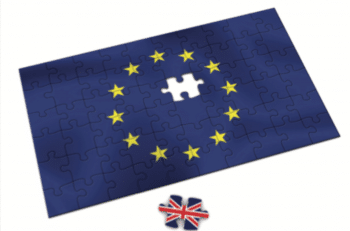
    Back in the 1960s I once stood on the plinth of Nelson’s column in Trafalgar Square, London, between Landseer’s lions, at a Connolly Association rally against anti-Catholic discrimination by the Northern Ireland Stormont regime. Lots of people were waving tricolours. Forty years later I spoke again in the same spot, at an anti-EU rally organised by the Democracy Movement, one of Britain’s EU-critical bodies, before a sea of little Union Jacks. I smiled to myself. Here were the English discovering the drawbacks of being ruled by foreigners, by people they did not elect, and how EU laws had come to have primacy over those of their own Parliament. They were reacting against losing their democracy and national independence. British Euroscepticism is largely English nationalism. The political psychology of the governing élites in England and Ireland is very different, not least in their attitudes to the EU. The lack of self-confidence of the Irish élite is shown by their continual anxiety to be seen as ‘good Europeans”’. Hence for example Enda Kenny’s boast that our recent modest economic improvement has “restored our reputation in Europe”. I was at the EU summit in Gothenburg, Sweden, a few days after Irish voters rejected the EU’s Treaty of Nice in 2001. The then Taoiseach, Bertie Ahern, was virtually beating his breast there as he explained apologetically to the international media how Irish voters were mistaken, but they would have a chance to change their minds in a second referendum – which of course duly happened. By contrast England’s governing élite has the psychology of a ruling power. For centuries they backed the second strongest powers of Europe against the strongest, thereby preventing any one power dominating the continent. When the EU came along after World War II they joined it in the hope of either prising France and Germany apart or else of being co-opted by the Franco-Germans as an equal partner to run ‘Europe’ as a triumvirate. Both hopes have proved illusory. Hence English disillusion with the EU. They never shared the Euro-federalist visions of the continentals – something that former Commission President Jacques Delors expressed when he said in 1993: “We’re not here to make a single market – that doesn’t interest me – but to make a political union”. Prime Minister Cameron wants to stick with the EU. But most of his party and large swathes of British public opinion see the EU as a low-growth economic area mired in recession, with a dysfunctional currency and high unemployment. They want to regain their freedom of action, especially over trade, by leaving. They want to develop trade and investment links with the five continents and the far-flung English-speaking world. The obvious power imbalance between the two sides would make it extraordinary if the “Leave” people were to prevail over the “Remain-Ins” in the Brexit referendum. On the one side are the British Government, the American Government, the German and 25 other EU Governments, Wall Street, the CBI, the TUC, the British Labour Party, the Brussels Commission, the European Movement, most EU-based High Finance and Transnational Corporations, plus in Ireland all the parties in the Oireachtas. On the other side is a diverse and sometimes quarrelsome range of groups and individuals on the Left, Right and Centre of British affairs, united only by their desire to get back their right to make their own laws, control their own borders and that their Government should decide independently its relations with other countries. It would be unrealistic though to think that a “Remain-in” vote in June will decisively settle the matter. It is likely merely to delay the inevitable divorce, for the interests of the continentals and the island Britons are just too fundamentally opposed. And what of the Celtic fringe? Contrary to the received wisdom there could well be a substantial “Leave” vote in those areas too. If the UK as a whole votes to leave, will Scotland want to break away from the rest of the UK in order to remain in the EU, abolish sterling and adopt the euro – that being a requirement for all newly acceding States to the EU? It is very doubtful. The Irish media have not yet picked up on one big downside for Irish people of the deal David Cameron concluded in Brussels before he launched his referendum. This is the implication of the EU agreement that if the UK votes to remain, new immigrants to the UK are liable to have lower social benefits for some years than those already there. It will be impossible under EU law to differentiate between Irish immigrants on the one hand and non-Irish ones on the other. This means that new Irish immigrants to Britain or the North must face cuts in social bene ts too if the “Remain” side wins. This proposal will not affect Irish people already settled in the UK, but solidarity with their fellow countrymen and women should still cause lots of them to vote Leave. If a booming British economy, freed of EU regulation, becomes the Singapore of Europe outside the EU, which is perfectly possible, it can only benefit Ireland economically. Lurid scenarios are being painted of the consequences of Britain leaving the EU while Ireland remains in it. If Brexit happens some uncertainty is inevitable for a year or two, but it will not be the end of the world. Free trade will continue between Ireland and the UK under all realistic “Leave” scenarios, so there will be no customs posts on the North-South border within Ireland, no passport controls or anything like that. Such claims are simply scaremongering, part of “Project Fear”. What of Northern Ireland in the event of Brexit? Over the past decade the UK has paid over £150 billion to the EU budget – far more than it has got back. It sends £350 million to Brussels every week. This is some ten times the Northern Ireland schools budget. EU subsidies to the North in the form of

    Loading

    Read more

  • Posted in:

    We’re deluding ourselves – note my words

    If you’re looking for a chirpy, upbeat assessment of how humanity will, in the nick of time, get its clappy act together to tackle dangerous climate change, then Kevin Anderson is probably not the person you need to talk to. Professor of Energy and Climate Change at the University of Manchester and deputy Director of the Tyndall Centre for Climate Change Research, Anderson is one of the world’s best known and most in uential – and outspoken – climate specialists. On a recent working visit to Ireland, he ripped into any complacent notion that the Paris Agreement signed up to by almost 200 nations, including Ireland, last December meant that we could all relax a little in the knowledge that our politicians, guided by the best scientific advice, are nally getting on top of this crisis. Some of his most devastating critique is reserved for the IPCC itself or, more specifically, the wishful thinking that underpins many of its model projections. He fleshed this out late last year in a commentary piece published in Nature Geoscience, where he took apart some egregiously fanciful assumptions. “The complete set of 400 IPCC scenarios for a 50% or better chance of 2°C assume either an ability to travel back in time or the successful and large-scale uptake of speculative negative emission technologies. A significant proportion of the scenarios are dependent on both time travel and geo-engineering”, wrote Anderson. He repeated this point forcefully during his presentation at the Royal Irish Academy in Dublin, to the obvious discomfort of the representative of Ireland’s Environment Protection Agency, who found himself trying to explain how completely untested technologies could, somehow, be massively deployed to remove upwards of ten billiontonnes of carbon dioxide (CO2) from the air every year, liquefy it and pipe it into vast underground storage where it would have to remain securely for at least the next 1,000 years. Village sat down with Professor Anderson for an in-depth interview in Dublin. First question: what about our recent steps, such as the new Climate Act – does Anderson think Ireland is grasping the nettle of climate change? “I think certainly not; what Ireland has signed up to in the recent Paris Agreement, and particularly when you think that Ireland is one of the wealthier countries in the world, isn’t anywhere near what is necessary to meet its (Paris) commitments”. While the same can be said for the UK and much of Europe, Anderson stresses that “Ireland is a particularly wealthy nation, and it has wonderful renewable (energy) potential; it also has a very educated workforce. It has all that is necessary to make the rapid transition to a low-carbon energy system and indeed a much-lower-carbon agriculture system – at the moment, it is choosing to do very little in that direction”. So what about the view propounded by Irish politicians from Enda Kenny to Simon Coveney, that climate action is something we can kick down the road for another five or ten years, while concentrating on economic development instead? “That view completely, and I would say, deliberately misunderstands the science”, he retorts. “It’s the emissions that we put into the atmosphere now that really matters…these build up every single day in the atmosphere”. As for the oft-quoted argument that Ireland’s emissions are a small fraction of the global total, Anderson replies that every sector, from aviation and shipping to countries large and small, makes the argument that it only contributes a small share of the global total, but every percent is equally important. He is scathing of Ireland’s major expansion of its ruminant-based agriculture sector, believing the argument that if we don’t produce vast amount of beef and dairy products here, someone elsewhere will do it less efficiently, is bogus. “The climate does not care about (emissions) efficiency, it only cares about absolute levels of emissions, so if you are going to look at Ireland you have to look at these absolute levels”. Measuring ‘efficiency’ of CO2 per kilo of beef or ton of dairy produce is not, he argues, the right way to think about it. “If you are really concerned about feeding the world, then you measure it in terms of the CO2 per useful calorie you produce – that will almost certainly mean you will have to move away from the types of agriculture that have innately very high green-house-gas emissions”. Anderson describes the types of measurements being deployed to promote the ‘Origin Green’ image of Irish agriculture as “inappropriate and misleading”. A staunch public defender of agricultural emissions is retired UCD meteorologist, Professor Ray Bates, who has repeatedly argued against an ‘over-alarmist’ response to climate change that might, in some way, curtail our beef and diary sectors. Bates’ principal argument is that ‘climate sensitivity’ to CO2 may be on the lower end of the scale. Anderson is unimpressed. “I think it would be a foolish mistake to go down the ‘let’s keep our ngers crossed that climate sensitivity is on the low end’ dead-end, despite the fact that by far and away the majority of scientists think it’s likely to be on the middle to the upper end of the (sensitivity) spectrum”. What’s at stake, after all, is the habitability of the entire planet, and who would want to leave that to the toss of a coin?”. Anderson knows only too well the appetite among politicians, policy-makers and parts of the media for people who are prepared to down-play the risks and urgency, but believes that only by acting now in line with the scientific advice can potentially disastrous and irreversible damages be avoided. Quite how close we already are to the point of no return, no one can say for certain, but there is growing consensus that +1.5C, rather than +2C, should be the upper limit before really dire consequences become locked in. The findings emerging from climate science pose “fundamental questions about how we have framed modern society, the whole concept of economic growth, of progress – all of the things that have served us very

    Loading

    Read more

  • Posted in:

    Telling the story of Easter 1916

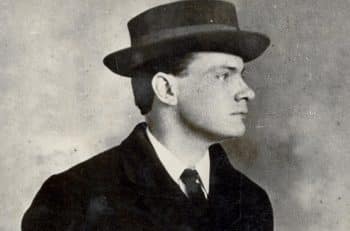
    Patrick Pearse loved his students not wisely but too well, if you know what I mean – what with writing poems about kissing them on the mouth and relocating his school from the healthy hustle-bustle of Ranelagh to dark woodlands in Rathfarnham. Oh, and his students didn’t necessarily reciprocate the affection: a teenage James Joyce dropped out of Pearse’s UCD Irish-language lessons because the teacher was an ideological bore. That’s just a sample of the titbits you’d pick up from Colm Tóibín’s long essay on 1916 in the London Review of Books, arguably this season’s archetypal commemorative/explanatory text from Ireland’s media/ intellectual establishment. Whether you regard it as barrel-scraping to discredit the Rising or an exemplary eye for the telling detail is a matter of taste – if you’re like me, you might reckon it’s a bit of both – but one can’t help but notice the contrast between Tóibín’s forensic litany of Fenian foibles and failings and his breezy flypast of, say, World War I. In the writer’s brief telling, the war was on the verge of Bringing Us All Together, something Pearse and the boyos couldn’t abide and wouldn’t permit: “Britain was merely the supposed enemy. The population of the two countries spoke the same language after all, and had the same education system. Many Irish people moved back and forth between Ireland and England seeking work; many in Ireland also had family in England. While most in the south of Ireland actively or tacitly supported Home Rule, Home Rule was postponed until the war ended. It looked as though the two islands were going to join forces in the war effort. (More than 200,000 Irishmen eventually volunteered in the First World War. Although conscription was threatened in Ireland, it was never actually introduced.)” Recall that Tóibín is addressing, in part, an international audience that may be getting its first substantial account of the Rising, that his article is billed as “Colm Tóibín tells the story of Easter 1916”; this audience will hear nothing from him of the consequences for Home Rule of the Ulster crisis, of Irish carnage in the war, nor of the massive, life-saving popular movement that arose in part from the Rising to resist conscription in Ireland, conscription that was not merely ‘threatened’, but introduced in legislation. Some contexts are, it seems, more worthy of contextualising than others. As the brilliant blogger Richard McAleavey writes: “Questions about whether Pádraig Pearse, say, was a fanatic, or a repressed paedophile even, are intended to psychopathologise any kind of radical political action or thought. They are intended to draw attention away from consideration of the real material conditions and political considerations that produced the Rising, lest they might be used to draw the wrong kind of parallels in the present”. Material conditions? In 17,000 words, Colm Tóibín’s only mention of Dublin’s infamous slums is in a quote from arch-revisionist historian David Fitzpatrick, who says the rebels must have staged the ght in the midst of the city’s poor to ensure maximum casualties among them – as though it were the rebels who loaded the shells into the Helga’s guns, or the rebels who went house to house in North King Street murdering young men. These and other aspects of, shall we say, imperial ‘agency’ have been largely neglected throughout recent commemoration and coverage, in favour of relentless scrutiny of the Rising’s leaders. Just below the achingly familiar debate about the Easter Rising – was it an act of visionary heroism or an act of perverse terrorism? – there lurks a more interesting series of questions about its relationship to what came after. And those are the questions that can lead us beyond dry argument and actually help us understand who commemorates what in the Ireland of 2016, and how those commemorations have played out and continue to play out in the state and corporate media. Thus you can be on either side of the heroism/terrorism split and still hold (tightly or otherwise) any of the following views: (1) the state(s) in which we reside today can be understood as a direct and roughly intentional outcome of the Rising and its guiding lights; OR (2) Ireland over the last century has been a fumbling, contingent, contradictory and ultimately limited effort to fulfil the Republic of 1916; OR (3) the Irish revolution launched at Easter 1916 was firmly defeated in the Treaty and thereafter by an elite that concealed its continuity with the ancien régime behind reluctant memorials to supposed revolutionary heroes. (There are other positional alternatives and variations on all points of the political spectrum but these seem to me to be the major tendencies.) Official and media Ireland prefers to hold and host tiresome debates about the Rising itself (Kevin Myers? Bob Geldof? Really?) rather than any really clear exploration of where we live today in relation to it. Positions number 1 and 2 are generally implied rather than directly stated, with a little frisson of excitement when the likes of Michael D. Higgins suggests that the truth may lean further towards 2 than 1 – a sort of “a lot done, more to do” view of a Republic that still awaits its full and complete child-cherishing achievement. In mainstream media, position 3 – that there was a successful counter-revolution – is almost unthinkable, or at least unspeakable, residing outside the realm of acceptable discussion. And yet it seems to me that it lurks with influence on both the right and left wings of Irish politics. The more or less overt Redmondism of John Bruton and other conservatives – often more Redmondite than Redmond himself – contains an implied celebration of the ‘restoration’ of constitutionalism in Ireland, coloured by regret over militant republicanism’s recrudescence in the Northern Troubles, but not reliant on that regret for its critique of the rebels of 1916-21. The left-wing, pro-Rising version of position 3, alleging that there was a successful counter-revolution in Ireland, is more openly and interestingly embraced. Important gures on

    Loading

    Read more

  • Posted in:

    Paean to culturally rich, politically limited patriots

    The paperback version of ‘Handbook of the Irish Revival’ was recently launched at Notre Dame’s O’Connell House, to coincide with their St Patrick’s day festivities and, of course, the commemoration of the 1916 Rising. The volume, an anthology of Irish Cultural and Political Writings 1891-1922, is beautifully produced by Abbey Theatre Press with the look and feel of a hardback though it is very reasonably priced at just €15. As the Abbey director-turned publisher, Fiach Mac Conghail, reveals in his introduction, the book arose from the ‘Theatre of Memory’ Symposium in 2014. During the concluding session Declan Kiberd lamented the fact that so few of the original writings of the Irish Revival were readily accessible. It’s to Mac Conghail’s enduring credit that he rose to the challenge by facilitating Kiberd and his co-editor PJ Mathews. Kiberd, though not a professional historian, has emerged as one of the most authoritative voices on the 1916 Rising, providing us with the clearest insights into the complex and sometimes confused intellectual world of the revolutionaries. He has always contended that for Romantics like Pearse and MacDonagh, both keenly interested in English literature, the Rising was a piece of theatre that could only end in their own deaths. Pearse who was described by one of his admirers as a “bit of a pose” may have been comfortable with the bizarre pageantry of the GPO, but he lacked the skills of a military commander. A prolific writer in both English and Irish, he features regularly in the anthology. It’s a digest of essays and articles, pamphlets, songs and poetry – most of them no more than two pages long – from the great names such as Yeats, Synge, Joyce and some of the lesser known but also influential. Each of the chapters is accompanied by an introduction in much larger font. Indeed, the overall design of the book makes it very appealing. No sooner have you read one chapter than you immediately want more. It’s a book for the serious academic or the ordinary punter who wishes to dip into writings of the period to get a avour of the zeitgeist. As you read it you get the sense, as the introduction states, that these were men and women who “lived intensely in the present moment; took ideas more seriously than their own careers; and contributed brilliantly to debate”. That selflessness, brilliance and intensity is perhaps best reflected in the writings of Connolly, whose prose can hardly contain his obvious passion. Take for an example this sentence from his 1897 essay ‘Erin’s Hope’: “Recognise the right of all to an equal opportunity to develop to their fullest capacity all the powers and capabilities inherent in them by guaranteeing to all our countrymen and women, the weak as well as the strong, the simple as well as the cunning, the honest equally with the unscrupulous, the fullest, and most abundant human life intelligently-organised society can confer upon any of its members”. What it lacks in Orwellian precision it makes up for it in its obvious fervour. This passage is taken from the chapter entitled ‘Militarism and Modernism’ whose introduction identifies the reason for the cultural and political malaise that would soon envelop the new state. “Militarism began to trump modernism”, the authors observe- the men of the the Rising, war of independence and the civil war were better suited to military affairs then forging a modern democratic state: “Mass suffrage came to many areas but soon declined into mere electoralism, as political leaders whose consciousness had been formed more through soldiering than through cultural action, offered ever more dogmatic, ever less thoughtful analyses”. It is easy to ‘idealise the idealists’ at this remove, but it would be foolish to forget that our new State was governed for its first fifty years by the men – the women were written out – of 1916. Socially and economically our new state was illiberal and stagnant, a failed state dominated by the Catholic church. So while this book shows that those who inspired the Rising may have been enlightened, it could also be argued that they were in many ways obstructions to progress. The new State was patriarchal, consigning women to the home and discriminating against them in the workplace. It must have been a disappointment to the women who had campaigned for universal suffrage such as Eva Gore Booth. In her poem ‘Women’s Rights’ from 1906 she portrays male dominance as contravening the natural order: Men have got their towers and walls, We have cliffs and waterfalls. Oh, whatever men may do, Ours is the gold air and the blue. Men have got their pomp and pride – All the green world is on our side’. The new State’s attitude to the Rising has been at times ambivalent. We have moved swiftly from commemoration to revisionism back to celebration. We have also moved from isolated nationalism to become the most globalised country in the world, without pausing for breath or even adequate reflection. The transformation has been staggering. Ireland, the country that its citizens wanted to leave, and whose citizens emigrated in droves, is now a favoured destination for migrants. From the end of the Second World War up the start of the 1960s we were the only state in Europe that experienced population decline. Now one in eight people is a non-national in a population that has grown steadily. This new Ireland is closer to Boston than Berlin and has, as perhaps might be expected, even turned its back on some British virtues. The British tried with some success to introduce a system of planning for urban and rural areas. One only has to contrast the British countryside with its beautifully planned towns and villages with the free-for-all in Ireland, to know that independence embraces the freedom to make a mess of things. And though there are many who wouldn’t change a thing, this strain of individualism is unhealthy in a State that is not just unplanned but saw t to

    Loading

    Read more

  • Posted in:

    Our key witness is unwell

    The portentous Latin quoted Quis custodiet ipsos custodes? “who is watching the watchers?” jumps to mind in any consideration of the conduct of the Law Society of Ireland in its treatment of one-time member, solicitor Colm Murphy since it appears to show that the Law Society itself does not adhere to the standards that it imposes on its members. Readers may remember serial articles that appeared in this magazine before (see Village February/March 2014, June/July 2014, October 2014, April 2015 and December 2015) detailing how Kenmare-based Murphy was struck off from the Roll of Solicitors in 2009 on the back of complaints from another solicitor, Fergus Appelbe. Murphy took a case against the Law Society which failed to investigate Appelbe until last year when he was finally restricted as to how he can practise. Appelbe is a former member of the Law Society Conveyancing Committee and was the subject of two ‘Today Tonight’ investigations in 1997/8 into his conduct. He and his various companies are now also in overwhelming debt – to a sum in excess of €100m much of which will inevitably have to be borne by the State. The principal reason that Colm Murphy was struck off was for breaching an undertaking allegedly given to the High Court. The only evidence against him was that of a Solicitor of the Law Society, Linda Kirwan, who has subsequently admitted that she was not even in Court on the day in question. It was only after Murphy was struck off that she admitted, on af davit and in a letter to Murphy in 2010, that she was not in fact in the court when the supposed undertaking was made. No such undertaking is recorded in the order from the court issued on the day in question and the hapless Murphy had denied its existence for ten years, but Kirwan was believed.   Another contributing factor was that the Society relied on a forged document presented by Frank Fallon who subsequently got two seven year jail terms for fraud and forgery. Colm Murphy always believed that the Law Society realised that the document was forged some time after embarking on the proceedings against him and simply failed to inform the Courts of this. Documentation received under the Data Protection Act and seen by Village show that it was in fact much more sinister. On the day Joan O’Neill of the Law Society was maintaining in Court that Murphy had somehow cheated Fallon she sent the documents in relation to the land Fallon was wrongfully claiming to the rightful owner and thus she could not have believed the position she was maintaining before the Court. O’Neill subsequently swore that she had got the documents for Frank Fallon, had given them to him, and that was the end of the matter. Of course the documents seen prove that she had not done this but rather had given the documents to the person who was entitled to them. This action taken by Joan O’Neill and the Law Society and their maintaining of the position in relation to the forged document presented by Fallon prompted scathing comments from the then President of the High Court about Colm Murphy based on the fact that Colm Murphy had, we now know rightfully, stated that the document was a forgery. It seems that Colm Murphy sued the Society for defamation and abuse of power in 2004. Colm Murphy served the Summons on the Law Society and it seems that on receipt of the document Joan O’Neill wrote to John Elliot, Director of the Law Society’s Regulation Department, saying that “It is my view that Mr Murphy should not be a Solicitor. Linda Kirwan shares this”. The Supreme Court has ordered that Colm Murphy is entitled to a full trial on all the matters. O’Neill’s explanation of what has happened was eagerly awaited but it seems that the Law Society is now maintaining that O’Neill is “not medically fit to participate in these proceedings”. Colm Murphy had maintained since 2011 that the then High Court President had said he was entitled to a plenary hearing (full hearing of all matters). The Law Society went before Judge Hanna and denied that this was intended or indicated. It also maintained this position in it’s submission to the Supreme Court. A memo from the Law Society’s external solicitor shows that it was aware in June 2011 that “the President of the High Court made it clear that these matters should proceed to plenary hearing”. However, the Law Society has managed to frustrate this so far. Whatever happened to its elusive one-time motto “veritas vincet” (“Truth shall prevail”)? The Law Society seems to be trying to keep the real story here from even its own Council and has told its members not to contact Colm Murphy. You can see why. Michael Smith

    Loading

    Read more

  • Posted in:

    Independent Living

    2016 marks another anniversary, the 20th anniversary of a ‘Strategy for Equality’. This was the report of the Commission on the Status of People with Disabilities. Their task was to establish what life was like for people with disabilities in Ireland and to prepare a roadmap to equality for people with disabilities. Before deciding on the appropriateness of any celebrations, it is timely to ask a question: has Ireland become more equal for people with disabilities? The Commission took what it described at the time as “the unusual step” of consulting with people about their ‘lived’ experiences. It reported that people with disabilities experienced outdated social and economic policies and public attitudes, and pointed to “justifiable anger” felt by people with disabilities and their families. In the intervening years a multitude of laws and policies have been introduced but the question remains. Let me state it again: has Ireland become more equal for people with disabilities? A cursory look at the Strategy and subsequent developments would suggest that quite a lot has been achieved on many of its recommendations. A National Disability Authority (NDA) has been established, a Disability Act was passed into law, a National Advocacy Service was established, and a swathe of legislation was brought into force on equality, assisted decision-making and education. However, if you dig a little deeper, there is a different story to be told. Most of these measures were poorly thought out or half-implemented. The Disability Act 2005 created little by way of the rights-based legislation envisaged. Instead it provided a basic right to a person with disabilities to an assessment of need. However, no rights to services follow on from that assessment. Even this limited ‘right’ to an assessment has been only partly commenced and currently just caters for children. The Strategy envisaged an independent advocate for people with disabilities. In 2007 the Citizens Information Act was passed. This provided for “Personal Advocates” with statutory and wide-ranging powers. Four years later a limited non-statutory service called the National Advocacy Service was commenced. A total of 35 advocates operate across a country where there are an estimated 600,000 people with disabilities. The Education for People with Special Educational Needs Act 2004 has been stalled indefinitely. This means that children in mainstream schools struggle to get educational supports. Successive Governments have failed to address the issue of the cost of disability. Many of the manifestos for the recent election used the term “cost of disability” to describe plans to give people an extra ten euro on their welfare payment. This is a regrettable approach. Cost of Disability demands than an increase in welfare payments. It requires a genuine recognition that having a disability can be expensive and moving to alleviate that additional expense. The Strategy recommended that the Department of Environment develop a policy with “the right of people with disabilities to live as independently as possible” as its aim. In 2011 the ‘Congregated Settings’ report was published by the HSE, the agency responsible for care services. This was premised on moving people with disabilities back into the community. Progress on this ambition has been unacceptably poor. The Fine Gael manifesto for the recent election includes a target for 1/3 of residents to move back into the community by 2021, three years after the initial deadline for moving all residents. This is an acknowledgement that the policy has failed and that a generation of people will probably die in institutions. The Strategy stated that ful lment through relationships and sexuality is a basic right. Since 1993, the criminal law has cast a legal shadow over sex and people with disabilities, particularly those with intellectual disabilities or mental illness. The law has provided an easy excuse to opt-out of providing sex education that would strengthen their ability to protect themselves and possibly open the door to a ful-filling, intimate relationship. This is a bleak landscape, but it’s not all negative. We are beginning to win the ideological battle. Concepts of person-centredness, independent living and autonomy are creeping into the parlance of the body politic. The battle now must be to get our partially commenced legislation fully implemented. This will involve resources in many cases and a change in culture in others. Any marking of this 20th anniversary of the ‘Strategy for Equality’ must reflect that not much has changed and must pose the challenge to find the political will for equality. We have all the tools at our disposal. Sarah Lennon Sarah Lennon is Training and Development Of cer with Inclusion Ireland

    Loading

    Read more

  • Posted in:

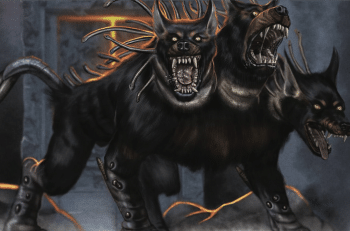
    Cerberus conflicts are biggest financial and political issue facing NI Executive

    An investigation by BBC’s ‘Spotlight’ programme broadcase on, 29th February, into the sale of NAMA’s huge property portfolio in Northern Ireland has revived an embarrassing issue for the outgoing government. Village readers will recall how distressed commercial and residential properties, previously valued at £4.5 billion, were sold to US vulture fund Cerberus, for just £1.2 billion in April 2014. An article in December documented how the sale was now the subject of investigations in the US and the UK and by the Law Society and the Stormont finance committee in Northern Ireland. At the centre of the controversy is former NAMA official, Ronnie Hanna, who resigned as the agency’s Head of Asset Recovery six months after the sale of the portfolio known as ‘Project Eagle’. Hanna was named in the Dáil by independent TD, Mick Wallace, as one of a small group of people who met multi-billion-dollar-backed US investment funds to promote the sale of the portfolio, accompanied by Frank Cushnahan, a former member of NAMA’s Northern Ireland Advisory Committee. It was also sensationally claimed at the Stormont hearings in September last that Cushnahan; Belfast accountant, David Watters; former partner in Tughan’s solicitors, John Coulter; property developer, Andrew Creighton; and former DUP leader, Peter Robinson, were to receive substantial sums from the Project Eagle sale. All denied the allegations. Cushnahan and Coulter, along with US law firm Brown Rudnick, were to take €15 million in fee payments from another US investment fund, Pimco, if its bid for the property portfolio was successful. Pimco withdrew from the process in early 2014 after its compliance officers advised that such payments would be illegal, under US law. In March 2014, NAMA informed finance minister, Michael Noonan, of the dodgy fee arrangements being offered in connection with what is the largest ever disposal of public assets in the history of the state. Instead of calling an immediate halt to the bidding process the finance minister advised NAMA to plough ahead with the sale. Noonan seemed implicitly to consider that the ethical problems were at the other end, in Belfast. And that the Belfast office didn’t really reflect on the Dublin office. The problem for Noonan and NAMA is that if Hanna is involved in wrongdoing that brings the culpability right back into the Dublin office and the remit of the Irish government. Cushnahan and Coulter then encouraged Cerberus to enter the race in the clear expectation that fee payments would be made if its bid was successful. The Spotlight programme revealed that Cushnahan misled his former colleagues in NAMA by continuing secretly to work on the Cerberus deal without their knowledge. Cushnahan confirmed in a clandestinely recorded discussion last year with Belfast property developer, John Miskelly and accountant David Gray, associate of Waters, that he was due to get a “ fixer’s fee” from the Cerberus deal. He said that he and Coulter had done “all the work on the deal” but his role was kept secret because of objections from NAMA to his involvement. Cushnahan said that Coulter moved £6 million into a holding account for him so he could be paid. During the recorded discussion, reference is made to assistance provided by Ronnie Hanna to distressed developers. There is also a description of how Peter Robinson’s son Gareth advised Miskelly to go to Cushnahan about his NAMA-controlled debts. Miskelly confirmed to the BBC that the recordings were an accurate reflection of the lunch meeting with Cushnahan and part of an effort by him to expose the financial misconduct surrounding the sale of the Project Eagle portfolio which is under investigation by the US Securities and Exchange Commission and the National Crime Agency in Britain. Miskelly claims he has handed evidence of wrongdoing to both. Cerberus has denied any wrongdoing in respect of the purchase, while refusing to provide answers to detailed queries due to the ongoing criminal inquiries. Similarly, Cushnahan; Hanna who runs a private consultancy in Belfast; and Robinson, have declined to comment further. Robinson surprised many when he announced his retirement as first minister as hearings into the Project Eagle sale were taking place last Autumn. Village documented in January how Gerry Adams had in effect telegraphed Robinson on his need – in the context of ethical issues relating to the NAMA debacle of which Adams was apprised – to reinstitute the then suspended Northern Executive. Robinson and former finance minister, Sammy Wilson, were involved in discussions with Noonan and NAMA to try to minimise the exposure to personal guarantees of a number of prominent developers in Belfast and across the North in respect of their debts taken on by the agency. Last year, it emerged that Robinson held meetings with former US president Dan Quayle, chairman of Cerberus, and had discussions on the sale with Noonan, without disclosing them to his deputy first minister, Martin McGuinness. It now transpires that Cushnahan was on three sides of the deal having worked for NAMA, some of the bidders as well as for the distressed developers. The latest explosive revelations prompted Sinn Féin leader, Gerry Adams, to repeat a call for a Commission of Investigation into the NAMA sale. Frank Connolly

    Loading

    Read more