Village Magazine

Random entry RSS

  • Posted in:

    Post-election 2016

    The general election was tedious and it’s not really clear what message it purveys. The electorate seemed jaded and the politicians delivered no memorable new policies, apart from Renua’s utterly regressive at tax proposal. Village believes that elections should be all about ideas, ideology, policy (and how best to implement them). In these terms the election and its participants were a two-out-of-ten failure. Commentators from the equally idea-free media have interpreted the results in heterogeneous ways. Every sort of theory and cleverality was deployed to describe the drearily and precariously hung Dail: a triumph of democracy, a triumph of social democracy, the end of the civil war, the end/beginning of the beginning/end of the civil war. The perennial smart view that the electorate has failed the parties got several outings. If the second-rate sages had been able to they would have loved to interpret it as a triumph of angry white men. They couldn’t. Some saw it as a victory for the small parties and independents. But the Social Democrats did not increase, Renua was wiped out, the Greens gained only two seats in an era of climate-apocalypse. The People Before Profit/ Anti-Austerity Alliance finished up with only one more seat than they had before the election, and Direct Democracy did not gure. Before the election these were the only small parties. The truth is that this election was a triumph of the interchangeable FF/FG (FG/FF) duopoly, though its trajectory has been definitively defined as downward. Ideology is what political parties apply when they run out of policies. Since most of the parties’ manifestos are short and the events to which policies must be applied are unpredictable it is reasonable to expect that your candidate will have an ideology to guide her. Village for example favours an agenda of equality of outcome, sustainability and accountability. The ideology is comprehensive, it provides a solution for any situation, and a template against which policy formulation can be benchmarked. Candidates shouldn’t have to reflect Village’s ideology, but they’d be better having some sort of one. Neither civil-war party has an ideology. It is impossible to know what they will do once elected. How, therefore, could anyone who does not live under a stone be enthusiastic about a government of FF and FG? FF is a conservative party that believes in so little that it surrendered its entire ethos to a culture of provincialism and cronyism, last time it was in government. It believes in no more now so, though it is touting a centre-left agenda there is every danger it will return to populism, short-termism and promoting the only agenda it understands – the interests of the people its representatives actually know – a cronyist populism that always finishes up favouring those who shout loudest. It is naïve to think of FF as Micheál Martin and when it is the movement it has always known itself to be, of Eamon OCuív, of Barry Cowen, of Pat ‘the Cope’ Gallagher; and tens of marginally more presentable sons and daughters of best-forgotten FF dynasts. Kevin O’Keeffe, son of Ned O’Keeffe, anyone? FG is a conservative party currently dressed up as a Christian Democrat party. The ethos is exible enough that under Garret FitzGerald it was in effect Social Democrat. In its latest incarnation it has been right of centre, at a time when most people want fairness and an improvement in services. It failed to deliver an agenda of accountability and its representatives seem to believe in little beyond sound money, ‘Europe’ and law and order. Having once appeared to be purer than FF it is now tainted by the Moriarty Tribunal report and a perceived ongoing proximity to Denis O’Brien, Ireland’s richest man, as well as by its large number of low-grade County Councillors, whose corruption record is a hairsbreadth from as bad as FF’s. Though essentially conservative, both FF and FG contain some social democrats and liberals in their midst. These aberrations and those who vote for them are delaying the day a real Social Democratic party with coherent left-of-centre platform can become a force that could anchor a government. On the other hand it is clear that more people than is desirable voted FG in 2011 to get FF out and then FF in 2016 to get FG out. These people need to acknowledge that they are forces forconservativism. The incarnation of this is the dangerously articulate Éamon Dunphy who apparently voted FF in 2016 because he really believes in People Before Profit (or Sinn Féin. It isn’t clear). Anyone who thinks that FF was the solution to our problems in 2016 is part of the problem. So what next? FF and FG should merge as a conservative party though even coalition is for the moment some way off. FF is tactically sharper than FG and FG is in retreat so it is likely FF will tantalise FG to weaken and demoralise it during this Dáil. Nevertheless the (non-)ideological compatibility of the parties has been exposed and will generate its own momentum. While allowing this momentum its space the Left of all hues must use the logic of the momentum against FF and FG, and social democrats must colonise some of the space the dinosaur parties have occupied for tragically long.

    Loading

    Read more

  • Posted in:

    Democracy and war

    DEMOCRACY AT HOME General Election 2016 has thrown up an utterly unpredictable result with Fianna Fáil in the ascendant. At the time of writing the consequences of the vote including who will survive as leaders, who will be in government and who will lead the government could not be less predictable and, without resorting to metaphysics, will reflect only opaquely the will of the people. Yet we carry on as if this did not reflect in any way on the integrity of our democracy. DEMOCRACY ABROAD The Brexit referendum should have been framed on whether the UK will be in the EU, in EFTA, or independent. But, as always in these islands, the third option, the middle one, has been omitted. The outcome, therefore, is bound to be inaccurate. And given the divisive nature of the in-or-out, stay-or-leave question, it is highly likely that the ‘leave’ option will win. In a three-option poll, the ‘leave’ option will probably lose. On 20th Dec last year, Spain went to the polls… and two months later, Spanish politicians are still arguing about who should be in government. But this is par for the course. As happens in so many democracies, open and transparent elections are followed by closed and opaque discussions, as various parties wheel and deal behind closed doors, trying to concoct a majority coalition. In 2013, Germany’s four parties took 67 days to sort something out. In 2010/11, Belgium’s dozen took 451 days! Will Ireland have the same sort of uncertainty? Democracy is for everybody, not just a majority. Conflict zones like Syria and Ukraine need inclusive governance, governments of national unity. Inter alia, this should mean that elections are preferential and proportional; that power is shared in both joint presidencies and all-party coalition cabinets; while the third ingredient is preferential voting and collective responsibility in parliament. Sadly, while we preach at least some of these ideals abroad, we practice the very opposite at home: majority rule in the Dáil and the Commons, and divisive majority voting both in parliaments and national referendums. Before the Scottish referendum of 2014, it was widely assumed that ‘devo-max’, the middle option for maximum devolution, would get about 60 per cent. The ballot, however, included only the two other options, status quo and independence. The result, therefore, was a highly inaccurate nonsense. There are times, as with the election victory of Aung San Suu Kyi in Myanmar, or our own recent referendum on same sex marriage, when democracy is wonderful. On other occasions, as in the Balkans, it was downright dangerous: the 1990 elections there were little more than sectarian headcounts and “all the wars in the former Yugoslavia started with a referendum”. (Oslo- bodjenje, Sarajevo’s main newspaper, 7.2.1999.) It must also be remembered that Napoleon became the Emperor by a popular vote, one in which he, literally, dictated the question. Hitler, too, came to power ‘democratically’. In the 1924 elections, the National Socialists won just 14 seats but, in the wake of the great depression, this rose to 107 (17.6%). The subsequent history consisted of weighted majority votes in parliament (like the Enabling Act of 1933), simple majority votes in referendums in which, again, the dictator di tated the question, and war. DEMOCRACY AND WAR The focus of this article is Westminster’s democracy and the decision to go to war in Syria. Would the outcome of the debate on bombing in Syria have been different if the chosen methodology of decision-making in parliament were not majority voting? In other words, would the House have made a different decision if the procedures had allowed for a more pluralist decision-making methodology? First of all, a little background. In 2002, in the UN Security Council debate on Iraq, Resolution 1441, both France and Germany objected to the phrase “serious consequences” in Clause 13. Yet both voted in favour of that resolution. The outcome, described as “unanimous”, was (not the but) a cause of war, of the invasion of Iraq on 20.3.2003, and of the sorry story since, not least in Syria. But that outcome – 15-nil – was not unanimous! France and Germany did indeed object to the above clause, and perhaps would have objected to other paragraphs if but the procedures had catered for such criticisms. Maybe other Council members, one or other of the ten temporary non-veto powers, which at the time included Ireland, might have had policy proposals worthy of consideration. Unfortunately, binary voting means questions are dichotomous. So countries vote in favour, perhaps because the resolution is better than nothing, perhaps because of the need for international solidarity, we don’t know. There is the main resolution; there may be amendments to this clause or that, or even perhaps a wrecking amendment; but everything is yes-or-no; it is this methodology which is at fault. Majority voting was, yes, a cause of war. A MORE INCLUSIVE PROCEDURE A more accurate methodology would allow the UK and USA to propose one draft Resolution 1441; option A. If France and Germany objected to Clause 13 or whatever, they could propose an alternative wording, even if only for this one clause, whence their preference would be a slightly revised but nevertheless complete package, option B. Syria, then a temporary member of Council, might have preferred another complete package, option C. Ireland could have preferred a more obviously neutral option D, and so on. Naturally enough, countries might seek to come together in groups to favour this or that option but the first principle would remain: everything should be on the table, (computer screen and dedicated web-page). The subsequent debate would allow for questions, clarifications, composites and even new proposals (although of course, at any one time, any one country could sponsor only one motion). At various stages, participating countries could express their preferences, so to indicate where the eventual consensus might lie. Then, at the end of the debate, all concerned would cast their preferences on a final (short) list of about five options. The winning outcome,

    Loading

    Read more

  • Posted in:

    Party climate poopers

    To say that environmental issues didn’t have much of an impact on Election 2016 would be a bit like observing that feminism hasn’t exactly been the defining feature of Donald Trump’s exciting US presidential run. The topic was completely ignored in the botched opening Leaders’ Debate on TV3, and again, on RTÉ’s seven-way debate the following week. The Green Party had fallen foul of an internal RTÉ decision to exclude it from a slot among the extended parties. This telling ruling was upheld in the High Court, and sure enough, RTÉ’s Claire Byrne steered the seven leaders through two long hours of questions and answers without a mention of anything remotely environmental. Ironically, the same journalist had dramatically dashed in an Air Corps helicopter only a few weeks earlier to interview some of the latest victims of this winter’s extreme flooding event. This dramatic fare, with long shots of ruined farms and submerged houses, interspersed with heart-rending stories of loss and struggle, is understandably grist for RTÉ’s current affairs mill. It is standard training in journalism to ask the five Ws – who, what, where, when – and why. We are getting lots of who, what, where and when from our media on flooding disasters and other climate- fuelled events, but precious little time is being devoted to that all important final W: why. And the ‘why’ is of course climate change. This vast topic made it into the last few min-includes lots of easy utes of the nal leaders’ debate, where just the savings, by 2020 four main parties were involved. Presenter Miriam O’Callaghan admitted in her introduction to it that it hadn’t featured at all in the campaign up to that point – the media weren’t asking and the politicians sure as hell weren’t going to bring it up spontaneously. O’Callaghan lobbed the climate grenade into the reluctant lap of outgoing Taoiseach, Enda Kenny, who – shocked that there might be an Idea in play – took fright and ubbed his lines. First off, he announced that the EU’s 2020 targets (20% emissions reduction versus 2005) “are targets we cannot reach”. Fair enough. And why, prime minister, would that be? “We have a chance with the abolition of milk quotas to expand greatly the capacity of our national herd…to increase our dairy herd by 50%”. Having fessed up to the fact that Ireland has chosen not to meet its 2020 targets, Kenny then went on to make the following quite extraordinary statement: “The targets that are set for 2030 are dif cult targets, but we will meet them”. The targets he is referring to are for a massive 40% cut in emissions. Given our inability to hit 20%, which includes lots of easy savings, the idea that we can escalate to an infinitely tougher 40% target in just one more decade suggests, to the cynical, that Kenny knows for certain that he will be long gone before the fantasy 40% emissions cuts by 2030 are exposed as a sham. So, the world’s greatest existential threat, according to Mr Kenny, is a distant second to pushing the agri- industrial expansionist agenda on behalf of the IFA and the food PLCs it so often appears to speak on behalf of. These same transnational organisations offshore their tax affairs to ensure the Irish Exchequer gets as little as possible. Glanbia, for example, routed its €40 million profits in 2014 via brass-plate companies with no employees in Luxembourg in order to cut its Irish tax bill to a paltry €200,000, or an effective tax rate of 0.5%. These patriotic enterprises represent, in the view of our Taoiseach, so vital a national interest as to set aside all other considerations to ensure their burger and baby milk powder export operations are in no way impacted by binding international emissions targets. To be fair to Mr Kenny, when asked to choose between agricultural expansion and climate chaos, the three other major party leaders also waffled and equivocated in equal measure, all fearful of riling up the assorted special interest groups that maintain such an effective lock on Irish environmental policy. Both Micheál Martin and Joan Burton did try to point out that the transport sector is on an equally ruinous trajectory, but the clear instruction that O’Callaghan pursued single-mindedly was to pitch climate policy in Ireland as either pro- or anti-farmer. This obsessive focus on agriculture seems to be a rut that RTÉ’s PrimeTime has dug for itself, as reflected in its paltry two efforts at covering climate change since 2009, which have lurched from cack-handed to catastrophic. Having attracted a slew of written complaints, the BAI will rule in the coming weeks on whether PrimeTime’s most recent ‘climate debate’, in early December, was in breach of broadcasting regulations. While climate and environmental issues were squeezed to the periphery of both the media and political framing of Election 2016, there was sufficient to be gleaned from the assorted party manifestos to suggest that whatever coalition is eventually assembled to lead the 32nd Dáil might represent a step forward on the hugely underachieving FG/Labour coalition, and the woeful Alan Kelly in particular. While Labour’s stewardship of the Environment ministry was a huge failure, the loss of outgoing Energy Minister, Alex White is a genuine setback, as he is regarded as one of the few politicians with the brains to truly understand climate change, and the guts to speak publicly on it. Not that it in any way helped his own political cause. The obliteration of Renua signals that the Irish public is in no mood to return to the simple-minded moral certainties of the 1980s. For the Green Party, turning a 2.8% national share of vote into two seats was an impressive achievement; whether such slender representation can really add a green hue to the new Dáil remains to be seen. While both Labour and the Green Party have plenty of useful things to say about addressing climate change and moving Ireland towards decarbonisation, given that the two

    Loading

    Read more

  • Posted in:

    (Good)gers and Cattle TB

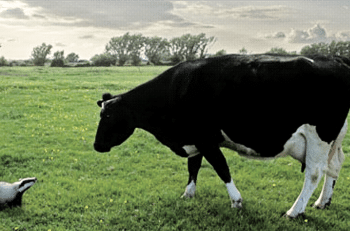
    Sometimes farmers find difficulty sleeping at nights. Random, gnawing thoughts drift into our heads as we doze off. Are badgers prowling around the farmyard? Are they sniffing the cattle? Is TB being transmitted? New research will allow us to sleep more easily. A project led by district conservation of cer Enda Mullen, with Trinity College Dublin (TCD) and the Department of Agriculture, spent three years tracking badgers in the Wicklow countryside. 40 badgers from twelve social groups had radio collars fixed around their necks. Then enthuastiac National Parks and Wildlife Service (NPWS) staff and volunteers from TCD plotted the 12,500 movements of the badgers as they made their ways through the countryside. We usually find TB in cattle in the lungs.The conventional wisdom states that badgers transmit TB to cattle via aerosol – direct breathing close to a cow. A badger may be lured into a farmyard by the presence of spilled grain, and come in contact with livestock housed in sheds. But this study proved otherwise. Badgers tended to avoid farmyards – and particularly farmyards with cattle. If they visited farmyards at all, they tended to frequent equestrian, and disused, farmyards. But most badgers kept away even from these. A single individual badger (which the researchers christened Violet) seemed to like a trip to the horses, but most other badgers kept well away from all livestock, and even were shy of visiting disused farmyards. A second study undertaken by Declan O Mahony in Northern Ireland confirmed that badgers avoid cattle. Declan works with the Agri-Food and Biosciences Institute in Belfast, and his approach was slightly different. He affixed proximity collars on 58 cattle and 11 badgers in a TB hotspot in Northern Ireland. If the badgers and cattle came within 2 metres of each other (enough distance to share a breath), the collars would emit a pulse. This would be plotted via GPS. In addition, motion sensor cameras were positioned all over the farmyards to video anything which moved. The results were amazing. There were over 350,000 interactions between cattle and cattle. There were 11,774 interactions between badger and badger. Clearly, you hang out with your own species. And there were no interactions between cattle and badgers. Zero. So is TB being transmitted by badgers? And if so, how? The researchers looked at water troughs. But badgers and cattle did not use water troughs concurrently. In fact, badgers rarely used water troughs at all. So the researchers turned their attention to the farmyards. They recorded 500,000 hours of video at farmyards in a mammoth undertaking, and analysed the results. The visiting animals recorded mostly were feral cats, some of which were in poor health. Farm cats play an important role in rodent control, but can also be carriers of TB, and any animal in poor condition is more susceptible to disease. Mice and rats were also seen on camera, and very rarely an individual badger (perhaps a cousin of Violets) turned up at a meal shed for a few min-utes. Most other badgers kept away – and all badgers avoided the cattle sheds. Cattle are large, sometimes dangerous, and often scarily frisky. It seems that the badgers have known this all along, and are keeping well away from them. Instead of scapegoating the badger,we need to increase bio security measures on our feed sheds. And thanks to this hard work and wonderful research, we can settle down to sweet dreams and sleep without worries. Now – did I feed the farm cats? Donna Mullen

    Loading

    Read more

  • Posted in:

    Their daughters’ fathers

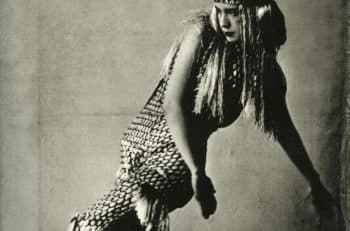
    Way back in 2004, I wrote an article for The Sunday Business Post, entitled ‘Play Boys, but few Play Women’ highlighting chronic gender imbalance in Irish Theatre, on the occasion of ‘Abbey One Hundred’, a virtually all-male programme celebrating the centenary the Abbey Theatre, (apart from one children’s play by Paula Meehan, and a shared run for Marina Carr’s ‘Portia Coughlan’ at the Peacock Theatre). That was before the dawn of social media, and my article, a lone voice in a sea of unquestioned misogyny, was received with resounding silence. Unfortunately, ‘his’ story has a habit of repeating itself, and more than a decade later, on October 28th, 2015 the Abbey Theatre proudly announced ‘Waking the Nation’, its – surprise, surprise – virtually all-male 1916 commemoration programme (apart from a lone monologue by Ali White entitled “Me, Mollser”, jutting out of the programme like Elizabeth O’Farrell’s incongruous little feet behind Patrick Pearse’s iconic 1916 surrender photograph). Nearly as bad was the playing of O’Farrell in both Jordan’s ‘Michael Collins’ and the recent ‘Rebellion’ series on RTE by men. This time, however, Twitter and Facebook ignited with rage at the outrageous gender imbalance, bringing an exciting counter-movement into being, with its own hashtag #WakingtheFeminists, abbreviated, wonderfully, to #WTF. Wasting no time on this occasion, Mná na hEireann, had a “storming of the Bastille” moment at the Abbey Theatre on November 12th, 2015, when over 30 female theatre professionals took to our national theatre’s stage, and the 450-seater auditorium over-owed with women demanding an end to this unacceptable gender imbalance, for ever. A contrite Fiach Mac Conaghail, director of the Abbey Theatre, sat in the auditorium and listened. After each of the 30+ women on stage had had their say, he stood up, looked up, and admitted: “I wasn’t thinking about gender balance. I did not look up. I failed to check my privilege. And I regret that”. If theatre holds up a mirror to society, this recurring gender imbalance at the Abbey Theatre is indeed a perfect reflection of Irish society, and the nature of Irish cultural ‘His’story – so far. We need look no further than to the iconic 1916 surrender photograph of Patrick Pearse for confirmation of this, with its dodgy silhouette of self-effacing inner city nurse Elizabeth O’Farrell who braved snipers to deliver the surrender order throughout Dublin’s rebel garrisons, only to be airbrushed out of the official surrender picture as published by The Daily Sketch. I was delighted to hear artist Jaki Irvine speak of Elizabeth O’Farrell and her 2013 book about the fearless nurse, ‘Days of Surrender’ (as yet unreviewed in Ireland), from the Abbey stage in its Theatre of Change symposium in January. Irvine is going on to set Elizabeth O’Farrell to music, along with her other female 1916 colleagues in her installation “If the Ground Should Open”, at the Irish Museum of Modern Art in September. Like Elizabeth O’Farrell who may indeed, as some claim, have deliberately taken a self-effacing step back when that 1916 Patrick Pearse surrender photograph was taken, making it easy for her little feet and large coat skirts to be airbrushed out of our Cúchulain- style national mythology, Lady Gregory (co-founder of the Abbey Theatre) did not actively seek recognition for co-authoring her iconic 1902 play ‘Cathleen Ni Houlihan’ with WB Yeats either. Similarly, a few decades later the self-effacing but fascinating George Yeats chan-nelled a myriad of voices to – yes – CO-AUTHOR ‘A Vision’ (1937), with her husband WB Yeats, but is rarely acknowledged as having done so. Like Elizabeth O’Farrell, the formidable George Yeats (about whom I am making the rst ever radio documentary, entitled ‘Georgie’s Vision’, funded by BAI Sound and Vision, for broadcast on RTE Lyric FM in Autumn 2016), took a step back, and went so far as to say “thank-you for leaving me out”. But – #WTF – is this shyness reason enough for the rest of us to facilitate, and hence perpetuate, the inaccurate masculinisation of, and erasure of women from Irish cultural history? Another important figure eclipsed by men is Lucia Joyce who could be Ireland’s answer to Camille Claudel, the well-regarded French sculptor who spent 30 years in an asylum (also Rodin’s lover and elder sister to poet, Claude Caudel). Lucia could not have been more different from her mother, Nora, whose entire raison d’être was her man, James Joyce. As well as his lover, cook, maid, and mother to his children, Nora was also James Joyce’s muse, most obviously inspiring Molly Bloom. Even in the Joyces’ modernist milieu, it was alright for a woman to be a muse, but not an artist herself, and certainly not an artist of the body (though in his masterpiece, ‘Ulysses’, James Joyce wrote the epic of the body). A modern young woman in 1920s Paris, Lucia expected her own career and identity, though she had grown up in weirdly close quarters with her unconventional family, and very much in the shadow of her father. When she protested “c’est moi qui est l’artiste”, alas, nobody listened to her. Tragically, Lucia Joyce (1907 – 1982), was never allowed to ful l her dream of being a professional modern dancer, despite her training with greats Emile Jacques-Dalcroze (founder of Eurhythmics); Raymond Duncan (brother of Isadora, who himself lived like a modern-day Ulysses in his Paris commune “Akademia Raymond Duncan”); Margaret Morris (grand-daughter of William Morris and founder of www.margaretmorrismovement.com); despite her seasons dancing with “Les Six de Rythme et Couleur”, and despite reviews like this one in the Paris Times: “Lucia Joyce is her father’s daughter. She has James Joyce’s enthusiasm, energy, and a not-yet-determined amount of his genius… When she reaches her full capacity for rhythmic dancing, James Joyce may yet be known as his daughter’s father”. Instead of being given the space to realise her ‘full capacity’, Lucia, who grew up immersed in iconoclastic counter culture and the avant-garde, found herself consigned to mental institutions – for life. Interestingly, after her father’s death in

    Loading

    Read more

  • Posted in:

    Mojocon no Mojo con

    MoJoCon – the Mobile Journalism Conference which debuted in Dublin last year – has its roots almost a decade ago, when Glen Mulcahy, then working with RTE Nuacht, began experimenting with the camera on his Nokia N93 smartphone. “Video quality was atrociously bad, photographs were tiny, 1Mb was seen as huge, it was very much in its infancy”, recalls Mulcahy, now RTE’s head of innovation. “We were experimenting with that around the time Reuters had deployed the same tools to their journalists in the UK to create content for websites”. A handful of stories was produced to an acceptable broadcast quality using the mobile devices, and Mulcahy started keeping track of other broadcasters who were doing the same.“I thought, we need to bring everyone together, talk about what we’re doing, and that was the birth of MoJoCon”. From those beginnings, and networks built up through Circom, the European Association of Regional Broadcasters, MoJoCon has evolved into a “leading international media conference focusing on mobile journalism, mobile content creation, mobile photography and new technology all in one event”. Mulcahy may be an advocate for new technology, but he doesn’t expect RTÉ reporters will be carrying smartphones and selfie sticks by the end of the decade. “People still expect a particular kind of look when they turn on the television. You can’t do sports coverage on mobile, for example – you need those broadcast cameras, powerful zoom, all those expensive things. That said, there is very interesting case study, a station in Luxembourg, Léman Bleu, uses mobile to create content for their TV news. I think they are very brave to go this early”. “You will still see cameramen, you will still see satellite trucks in five years time, not journalists with selfie sticks. There are times when mobile works, but mobile is not mature enough yet to do 100% of the work”. Where he does see openings for new technology to expand are in non— broadcast media outlets, from newspapers to independent pod-and video-casts. “There are a few case studies in the Irish Times where I was absolutely blown away by some of the stuff they were able to do. They also very cleverly decided to upskill all their press photographers who were interested in doing it into shooting video with their DSLR cameras. So you have a new aesthetic. You definitely have better, although not necessarily radically more expensive, cameras and you also have some of the journalists who responded and went out shooting stuff with their phones”. “You don’t need a broadcast-quality camera to produce content that going to be delivered (back) onto mobile phones. I’m more and more coming to the opinion that there is a mobile ecosystem where we create on the mobile phone, edit on mobile phone, and deliver to mobile phones”. New technologies, and the ability to produce programming and news quickly and cheaply, also have implications for how RTÉ covers different communities, Mulcahy believes. “In the UK, there’s been a concerted effort by the BBC over the last 12 to 18 months to try and encourage hyperlocal sites. There is a UK government initiative where you can get a modest fund to basically try and get it off the ground. So there’s more that the government here could do to encourage that level of local community content”. “This is a device that most people have in their pocket. Maybe not everyone has a top-of- the-line Android or whatever, but lots of people have smartphones that can do pretty decent video, reasonably decent video”. “There is potential to give community-group newsletters, the ones that get stuffed on A4 sheets through letterboxes, a mobile angle. We could really energise community activism at grass roots level by showing them what you can do with video on mobile”. Looking to the future, as technologies (and screens) merge, Mulcahy can see a point where RTÉ produces video and audio not just for broadcast, but for the web, and for web first. As technologies mature, there is no strict reason why, for example, a new report compiled during the mid-afternoon should have to wait until the Nine news to be seen, when it can be immediately streamed to desktop computers or phones. Gerard Cunningham

    Loading

    Read more

  • Posted in:

    Election Times

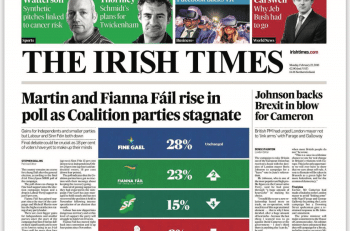
    The story of an election is much more than a few headlines, but the Irish Times front pages mercifully, if languidly, devoid of the kind of blatantly partisan positioning seen elsewhere, provide in hindsight a neat narrative of the campaign, with the slow realisation that Fine Gael was in trouble, the lack of a clear alternative emerging, and of course, “events, dear boy”. While its columnists and editorials may have declaimed preferences in the run-up to the general election, the Irish Times‘ front page generally affected a more neutral stance, certainly by comparison with the anti-Sinn Féin headlines which dominated the Irish Independent and its Sunday sister during the February campaign. The ‘newspaper of reference’ (formerly “of “record”) began the month in ‘phoney war’ mode, leading on Monday 1 February with coalition plans to “target home buyers and parents in poll pledges”. On the Tuesday, with still no election date declared, the story was “Taoiseach prepares Fine Gael ministers for election”. Perhaps ominously, on both days the below- the-fold story concerned the revelations regarding “Grace” a young woman with intellectual disabilities abused while in HSE care in a foster home. The story would feature again several times during the month and, by the end of the campaign, would threaten to inculpate Michael Noonan. Wednesday’s paper finally brought the official election notice, leading with Fine Gael ministers outlining their election promises, but the shine was short lived. Thursday, and the first election poll, brought “disappointing news for Coalition parties”. Much of the remainder of the campaign was spent trying to push back against those low poll numbers, which stubbornly refused to rise. By the first weekend, Fine Gael had announced a “tax U-turn to hit voters earning €100K” (the top 10% of all earners, though Irish Times readers would be better paid than the average). The election narrative was dominated at first by Fine Gael (at least on the front page) but it changed dramatically in the second week. The murderous Regency Hotel rampage called attention to cuts in Garda numbers and resources and Fine Gael, which prides itself as a law and order party, found itself on the back foot. At one point Sinn Féin’s Mary Lou McDonald attacked the government for being soft on crime during an RTÉ radio debate. By the end of the week, the lead story that Garda “may be issued with new weapons” helped to restore marginally Frances Fitzgerald’s battered image, but you know you (we?) are in trouble when Sinn Féin are attacking you from the right on crime. Meanwhile, bubbling below the fold, the news was no better. Lowry, Drumm and Luas strikes festered, and the Times awarded the first TV debate to Micheál Martin. Week Three began with Labour striking out to create a separate identity, promising “an abortion vote in any new deal” – definitely a plus for liberal Irish Times readers. Smaller parties got their first acknowledgement the following day, as the lead reported they did best in the previous night’s debate. For the rest of the week, it was almost as if the Irish Times tired of the “boring” election campaign, with more conventional “newsy” lead stories on an HSE inquiry into baby deaths, welfare benefits for migrants, and Brexit. Week Four began with the writing on the wall, summarised in a single Monday headline “Martin and FF rise in polls as Coalition stagnate”. Tuesday the paper reported Kenny and Martin had “equal backing in race for Taoiseach”, and the final TV debate failed to resolve anything for this hard-to-please newspaper as “leaders fail to land killer punch”, before Kenny’s “last-ditch call for vote in favour of stability.” Below the fold on the same day, the first mention of Sinn Féin in a front-page headline volunteered no favours: “Canvasser for Adams owns hay shed where ‘Slab’ Murphy cash was found”. ‘Slab’ was also the subject of one of the few passionate editorial columns (now perhaps self-deprecatingly titled “the Irish Times view”). Others quite reasonably despaired of the “short election, short of vision”. But while front pages covered national trends, debates and polls, and columnists inside the paper from Una Mullally (who, surprisingly for someone with a political agenda, gave up interest) to Breda O’Brien (vote for people of conscience, if you know what I mean) via Fintan O’Toole (who in the end detected an unlikely victory for social democracy) and Noel Whelan (who again somehow spotted the Fianna Fáil revolution implausibly early) ventilated partisan viewpoints, perhaps the most concise reportage on what happened on election day was by religious affairs correspondent Patsy McGarry, who on the day of the count reported from the north inner city, less than ten minutes from Tara St in a neighbourhood where few read the Irish Times, and fewer would share its editorial concerns: one, a hooded man, was picking up rubbish and putting it in a black plastic bag.“I didn’t vote. I don’t have a voting card. I was abroad for five years. It’s not important at all”. Gerard Cunningham

    Loading

    Read more

  • Posted in:

    Challenging the status quo with renewed vigour

    Village is now eleven years old and has been published by Ormond Quay Publications since 2008. From its foundation in 2004, Village has been one of the few local publications that systematically criticised the thrust of the direction of the economy and society. The twenty-year reigning economic orthodoxies have finally been thrown out even if policy-makers and, depressingly, many voters are playing catch-up. A leftist analysis could not be more timely as we risk repeating our past recklessnesses. Mores are changing, though short-termism and materialism remain ascendant in Ireland. Village Magazine does not dance to the ephemeral thrum of pragmatism, it stands for transcendent principles. Its motifs are equality of out-come, sustainability and accountability and because these ideas are timeless it has no intention of changing or confounding them. It promotes in its columns, as a badge in every edition makes clear, the fair distribution of resources, welfare, respect and opportunity in society by: the analysis and investigation of inequalities, unsustainable development, corruption, and the media’s role in their perpetuation; and by acute cultural analysis. In historical and international terms its analysis is mainstream radical left. For example egalitarians will favour high taxes to fund services, and will be broadly in favour of property taxes, whatever the mood of campaigners ‘on the ground’. It embraces controversy and attempts to take on the powerful and the furtive. This edition reprises many such articles: including features on Ansbacher, Donegal Planning, Denis O’Brien and the legal profession. Village aims to be ideological, investigative, news-breaking and even, without pretentiousness, culturally challenging. It assumes the best and the most of its readers. It aims to be sharp. Humour is not entirely beyond it. It blithely excludes certain pre-occupations including sport, weather, sex and road news. There is a stringent editorial filter. Neo-liberal, intolerant or ad hoc worldviews are typically relegated to the humour pages, or to well-flagged opinion pieces. But mostly Village aims to be inclusive. It is a forum for perspectives and voices not easily found elsewhere, including those of community activists, social-sector employees, environmentalists and NGOs generally. It aspires to the highest standards of journalism including hard-mindedness, risk-taking, bravery, constancy and – which is unusual in contemporary media, elegance. There is a danger of preaching to converts and Village makes a special effort not to rant or succumb to lazy prolix. We ask our contributors to address the principal arguments levied against them by their ideological and practical antagonists. And the aim certainly is not to be self-righteous or unforgiving. It will always be a battle for a magazine like Village that eschews a glossy approach and that does not champion the commercial. There is renewed energy and time for expansion of this magazine’s ambition and impact. We are aware that Village is dense but, in the era of ISIS, climate change and runaway inequality, we do not really apologise for the intensity of the information. We aim to make many of our articles evidence-rich one-stop-shops for the issues covered. We are now changing the design, that has been largely undisturbed for seven years to make it more user-friendly. This will take a number of editions to complete. The design is intended to be logical and clear; and to set off strong images. We have swapped a yellow-and-black theme for the red masthead. We include more infographics and ‘cheat sheets’, a new curved font, more use of full-page photos. We will publish more long-format articles. We hope more ads will leaven the effect of denseness. The website will be reinvigorated and its design mirror the print version’s. We will not be changing the substance or the editorial direction of the magazine. We will continue to publish articles that are issues rather than personality focused and avoid trite click bait, trivia, gossip and cheap objectifying images of semi-clad women (and men). We will market Village as “challenging” since that is important and a rarity. It will be styled Ireland’s only political and cultural magazine. We are grateful for your support over the years and welcome ideas on how we can improve. And Village wishes a Happy Christmas to all its readers!

    Loading

    Read more