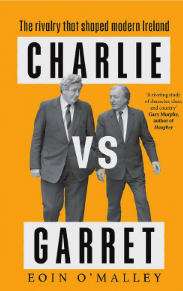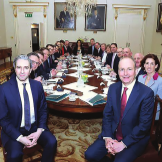
A new book examining the battles between Charles Haughey of Fianna Fáil and Garret FitzGerald of Fine Gael overlooks the contrasting approaches they took in dealing with Britain’s covert intelligence services. While FitzGerald was happy to dance with Her Majesty’s diplomats and spooks, Haughey always recoiled.
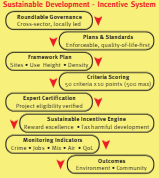
There is friction in Cabinet between Minister for Finance, Paschal Donohoe who is generally reassuringly sceptical of new tax expenditures for developers and prefers targeted, time-limited or “activation” taxes; Fianna Fáil can’t help itself from championing subsidies/reliefs alongside state delivery.Meanwhile VAT on apartments is to be cut to 9% and the Help to Buy scheme extended. It’s all utterly unradical in the fact of a recognised crisis of quantity and an untold crisis of quality.
warm but steely politician with a cultural hinterland and proud of her big family and Council-estate roots; a Republican who’s not backing down on Hamas, equality, the environment or anything else
Dublin City Council must not sell out the public domain of a vulnerable community off St Stephen’s Green to facilitate RCSI branding, but defer to elected representatives and finally assert the public interest
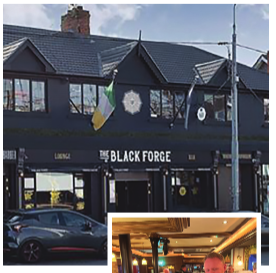
Immigrant-student employees at Conor McGregor’s pub speak out about dubious legality of their employment and being allowed to work more than 20 hours in term time
Nobody cares about SIPO, least of all RTÉ and the Irish Times, as evidenced by coverage of its hearings, especially the recent one finding FF’s Meath Cathaoirleach, Tommy Reilly, attended meetings that yielded his son a €3.7m book profit.
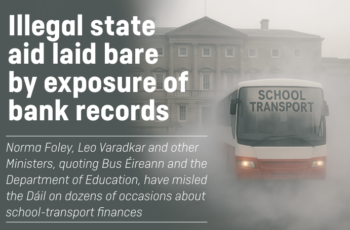
Norma Foley, Leo Varadkar and other Ministers, quoting Bus Éireann and the Department of Education, have misled the Dáil on dozens of occasions about school-transport finances
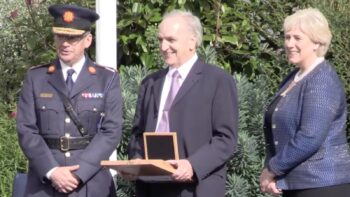
By Michael Smith published in partnership with the Ditch A former garda who was accused by his wife of serious domestic abuse and of holding a gun to her head at their family home in Donegal was awarded a Scott Medal at a ceremony attended by then acting justice minister and presidential candidate, Heather Humphreys, in September 2021. Former Detective Garda Noel McMahon resigned from the Garda in 2004 after the Morris Tribunal found that he was involved in planting “hoax bombs” and ammunition across the North-West in the early 1990s He and a senior Garda colleague then claimed these as IRA explosives-finds to advance their careers. McMahon purchased illicit drugs which were then placed in the premises of publican Frank Shortt in Quigley’s Point, in County Donegal in October 1994 before a large force of gardaí raided the nightclub. Shortt was charged with allowing his premises to be used for the sale of illegal drugs and, in 1995, was wrongly imprisoned for three years. He later obtained a miscarriage-of-justice certificate and substantial damages from the State. Judge Freddie Morris found that Noel McMahon had lied during his evidence to the tribunal. McMahon faced dismissal from the Garda before he resigned in July, 2004. At the Morris Tribunal hearings, Sheenagh McMahon described how she was subjected to serious abuse by her garda husband who threatened her with his official firearm at their home in Buncrana in 1995. “He put a gun to my head and he told me he would blow my brains out,” she told the Morris tribunal in March 2003 as she recounted the years of abuse she suffered at the hands of her husband. She said that she was wrongfully arrested after Noel McMahon produced a false court Safety Order made against her in 1999 and that her children were placed in care as a result of his actions. She later regained custody of her children and obtained an apology and damages from the State in 2018 over her wrongful arrest. In the apology, lawyers for the State, the Garda, the Minister for Justice and Noel McMahon said in open court that: “The Defendants concede liability on the basis that they accept that the Plaintiff was wrongfully arrested and detained on 30th June, 1999 by reason of the arresting Garda executing a Safety Order produced by the Plaintiff’s husband which in fact had never been issued by the District Court”. Ms McMahon was awarded €20,000 in damages. She refused an offer of an additional €5000 if she would agree to the apology not being read out in court. In its final report, the Morris Tribunal stated that Noel McMahon had threatened a garda colleague with a loaded gun in Buncrana garda station in 1992 and that “nothing was ever done about this incident”. In September 2021, Heather Humphreys, acting Minister for Justice, attended the ceremony during which serving and retired members, including McMahon, were awarded the Scott Medal for bravery during the rescue of businessman, Don Tidey in 1983, after his kidnapping by members of the IRA. Ms Humphreys and Commissioner Drew Harris, with Noel McMahon standing between them, were photographed along with other recipients of the award. The former minister and Fine Gael presidential candidate told those present: “Your actions on that day were truly heroic. You performed your duty as garda members and for that we are thankful. You are honoured with this exceptional award”.
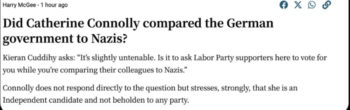
By Michael Smith If Éirígí were saying it now, the story might have some credence. They are not. Even in 2018, they absolutely did not say she was “a member” The Irish Times’ Ursula Ní Shionnain story is not journalism. It is character assassination. The trick turns on a single verb. In the article itself, the headline reads: “Éirígí said Ursula Ní Shionnain still member in 2018 when employed by Catherine Connolly in Leinster House” https://www.irishtimes.com/politics/2025/10/02/eirigi-says-ursula-ni-shionnain-still-member-in-2018-when-employed-by-catherine-connolly-in-leinster-house/. But in the social preview — the snippet readers see when they share the link — it has: “Éirígí says Ursula Ní Shionnáin still member…”. That one word — ‘says‘ — transforms a stale fragment into a live scandal. If Éirígí were saying it now, the story might have some credence. It might be a real thing that Ursula Ní Shionnain could agree with or deny. They are not. Even in 2018, they absolutely did not say she was “a member”. All that exists is one phrase, describing a painting by “our own Ursula Ní Shionnain.” That is Éirígí claiming her symbolically, because she had been a member who had served time. It is not evidence of membership. Yet the Irish Times translated it into “still a member” without bothering to investigate if — as a matter of fact — she indeed had still been a member and projected it in the present tense. A non-story dressed up as something, even a scandal. The preview matters. The Irish Times boasts millions of monthly users of its stale and boring take on the world. And it is part of a wider pattern. Consider what happened to Catherine Connolly in the presidential debate. She had been meticulous: she did not compare Germans to Nazis. She used the word parallel, not “comparison”. Even the centrists in ‘The Rest in Politics’ did a feature in the last week on Germany, which is rearming against a background where the AfD is vying for first place in the polls. She avoided the word Nazi altogether. She knows Germany: she studied the language, lived there, and points simoly to the obvious fact that Germany today is the most striking case of rapid rearmament in Europe. Careful, informed, serious. Kieran Cuddihy’s question was loaded from the start: he asked if she was comparing the Labour Party’s German allies in the SPD to Nazis. Fair enough perhaps, Cuddihy was fairly even-handed and it was just a question. Where it got murky was when Harry McGee reported in the Irish Times that Connolly “did not directly respond”. That was false. Where it got murky was when Harry McGee reported in the Irish Times that Connolly “did not directly respond”. That was false. Village called it out on Twitter on 29 September: “Except that it is untrue that @CatherineGalway ‘did not directly respond to the question’. Connolly expressly denied she’d compared Germans to Nazis. Correction needed.” Twelve hours later, uncorrected, Village’s Twitter account sharpened the charge: “At the time it appeared like an inept mistake … 12 hours on and uncorrected … it begins to look like an untruth — the sort of smear @paulmurphy_TD has referred to and the Irish Times has been at pains to deny. @CatherineGalway traduced”. Two or three days later the piece was furtively changed. No acknowledgement of the mistake. No correction. Just the abject amendment. Th pattern is obvious. In one case, the Times twists tense to make Éirígí “say” something they’re not. In the other, it has Connolly ducking a question she in fact answered directly. Both distortions serve the same function: to smear someone more radical than the unserious Irish Times, to police the boundaries of political respectability. The Irish Times once styled itself the paper of record. It retains the smugness such a status would command but it can’t be bothered meeting the standard,. Record-keeping built on sly verbs, on false denials, on half-truths repeated until they pass for fact — that is not even journalism. It is, when in campaign mood, a paper of smear. A paper of tense little lies. Biased.