admin

  • Posted in:

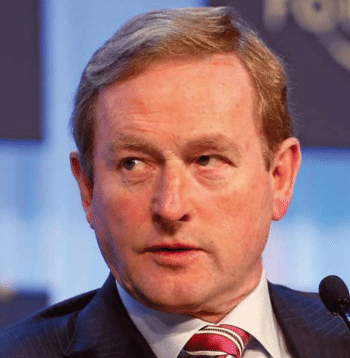
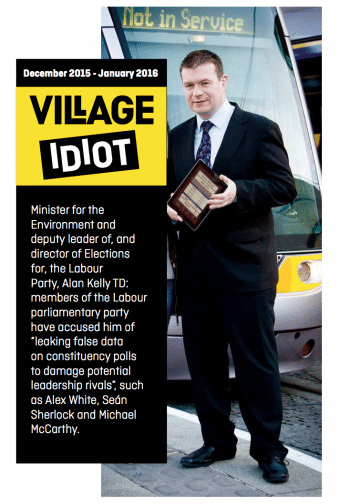
    Enda Kenny: not so lite now

    He merits opprobrium for his broken promise to fix the health system, the failure to deal with a deepening housing crisis and the widening of the income divide between the richest and most vulnerable during these past few years

    Loading

    Read more

  • Posted in:

    A player mayor

    In 1991 I was elected as a councillor onto Dublin City Council. Before we took our seats on the new City Council we were deferentially issued with robes to wear for the formal first meeting. As a councillor my robes were green and blue. Councillors first elected in their ward were referred to as aldermen and wore the same robes but with an extra yellow strip indicating their gorgeous ascendancy. However, as I walked into my first meeting in Council Chamber I spied someone wearing bright purple robes. This was Frank Feely, the unelected City Manager, whose self-chosen robes summed up the anti-democratic nature of local government in Ireland since the 1920s. Not only did he get to chose his own spiffing robes, but he, and all other unelected city officials then and now boast pre-eminent powers over decisions locally that affect our lives. Name the last four mayors of Dublin. It shouldn’t be difficult: you only have to go back four years. In fact, because of the limited power and tenure, it is unfair to ask: even aficionados will admit that it would be too much knowledge. A year ago I tweeted that the “Dublin Mayor idea will die a slow painful death by committee. Bad for Dublin, bad for Ireland”. Unless there is a change of heart by Fingal councillors this may well be the outcome. Apparently they aren’t enthusiastic about a directly elected mayor, and have the power to block the proposal. They may well decline, given that their status depends on the status quo. Had the Green Party’s proposals for a directly elected mayor for Dublin come to fruition we would have had a mayor for all of Dublin directly elected by the people of Dublin next May, rather than the Fine Gael proposals that at best will result in a mayoral election in five years time. The blame again slumbers at Phil Hogan’s door for setting up a process that seems doomed to fail, unless there is a change of heart. Even his master plan for local government reform “Putting People First” contains a breath-taking anti-urban bias as he proposes giving Dublin City equal powers to Westmeath on regional issues. It seems clear that, although Phil Hogan is Minister for the Environment, he is wholeheartedly Fine Gael TD for the Carlow-Kilkenny constituency, and doesn’t want to devolve power to Dublin or other cities. Currently national government decide on the important issues that cities should be deciding, and councillors are mostly left to sort out issues of administration, maladministration and zoning. The legislation introduced by the Green Party in the last Government provided for a mayor who would co-ordinate water, waste, transport and planning policies. Time and again, we return to the legacy of bad planning decisions across the country. The people of Dublin are still picking up the tab for mad rezoning decisions that took place in Dublin County Council in the 1980s. Councillors were allowed rezone land without any sense of responsibility and without a mayor who had the bigger picture about what the city might be. It doesn’t have to be this way: a mayor can have serious powers for strategy, policy and implementation – as well as to set a tone and man a bully pulpit. The challenge in Dublin is that the current divide and conquer approach of four different local authorities with four different agendas, managers and mayors elected on a revolving basis is confusing and dysfunctional. Henry Kissinger asked who would he talk to if he wanted to talk to Europe. We need someone to talk to when we want to talk to Dublin. We need someone who has a strong, coherent vision for Dublin. Of course elected mayors can be kicked out in a vote on their performance, effecting significant accountability. All across the world, strong cities have directly elected, strategic, accountable mayors. Georges Frêche one of the most colourful and controversial voices in the south of France was mayor of Montpellier for 27 years. Under his mayoralty the city thrived. That is why most French people when asked say they would like to live in Montpellier. Barcelona would not be the same without the legacy of Pasqual Maragall, who transformed that city from industrial backwater to hosting the 1992 Olympics. He made the city tick, and work effectively because he was a strong and dynamic civil leader who united the city and brought the Games to Barcelona. We all remember the scenes at the diving events, where the divers competed with the city as a backdrop. That was no accident, it happened because there was a strong mayor. Against the odds though we have had some great mayors in Dublin city. I have strong memories of Carmencita Hederman and her fantastic contribution to the city during its Millennium year. Half way through the millennium year, she was replaced by the more prosaic Ben Briscoe, followed by Seán Haughey. Under the current system this cannot happen. It gives the permanent government of Managers, of John Tierneys and Owen Keegans, who serve seven years, the upper hand, and diminishes the role of elected representatives. In many places, a city’s lifeblood – its economy, cultural life and sense of place – is channelled through its mayor’s office. One only has to look at Shirley Clarke Franklin in Atlanta, Martin O’Malley in Baltimore. I can easily recall – dating remarkably back to 1977 – the last four mayors of New York City – Ed Koch, David Dinkins, Rudolph Giuliani and Michael Bloomberg. Dublin too needs mayors who represent a vision, and leave a legacy. And are remembered. Ciaran Cuffe

    Loading

    Read more

  • Posted in:

    No civilisation in this jungle

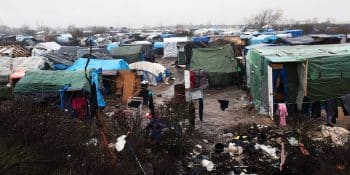
    Hundreds of people line up in a queue as soon as the doors of the van open, each hoping to get a pair of warm trousers. It is a cold November day in Calais, but some of them are wearing just shorts and slippers. In the queue I recognise a Syrian man that I met in the refugee camp on the Greek island of Lesbos just three months ago. He is so thin that it is hard to find him a slim enough pair. But what strikes me even more is his eyes – their sadness and exhaustion – that seem to reflect the cumulation of hardships of the past months, starting in his home country, and now continuing in Europe. That moment of hope and relief, when the overcrowded flimsy rubber dinghy he was on reached the shores of Europe, has now turned into hopelessness at being stuck in one of the worst makeshift refugee camps in Europe, the Calais camp, also known as the Jungle. It’s not a jungle though: it’s more of a disaster zone. Shabby tents and improvised shelters made out of pallets reach as far as the eye can see. The site is far from ideal for camping, the less so during this chilly rain; the sandy ground has become just muddy. Some parts of the camp are exposed to a heavy wind, and people are looking for help to fix their collapsed shelters. There is no electricity. Sanitation is severely inadequate. No more than 40 toilets are currently serving over 6,000 inhabitants – one for every 150, while the UNHCR recommendation is one toilet per 20 users. With only three taps in the camp, there are not many opportunities to wash hands. Litter is everywhere, and some areas are covered with human extracts. At one of the two refuse points of the camp I meet representatives of the Médecins Sans Frontières, who have come to collect the rubbish. They remind me to be careful what I touch due to the threat of scabies and other infectious diseases. A recent investigation by the University of Birmingham, supported by the Médecins du Monde, further highlights detrimental health situations in the camp including the prevalence of ‘white asbestos’, sometimes used to weigh down tenting. As food in the camp cannot be stored safely, much of it carries infective amounts of pathogenic bacteria, causing diarrhoea and vomiting. Several water storage units exhibit levels of bacteria exceeding the EU safety standards, too. The lack of washing facilities prevents the effective treatment of scabies, lice and bedbugs. Many here are suffering from mental illnesses. The makeshift hospital in the camp has the capacity of treating only up to 90 patients a day and there is a constant shortage of medical supplies. It is especially hard to provide treatment for long-term medical conditions such as tuberculosis. Many patients also come in with serious injuries, often resulting from unsafe conditions in the camp, or failed attempts to cross the border. I meet a young boy who has a broken arm, after a failed attempt to jump an England-bound train – a typical case. The United Nations High Commission for Refugees (UNHCR) has continually expressed about the reception conditions for refugees and migrants in Calais, stressing that security measures alone are unlikely to be effective, and urging the French authorities to relocate the refugees to proper reception facilities in the Nord Pas de Calais region and further afield. Some relief is expected from the proposed EU- supported refugee centre, that is expected to be opened in Calais in 2016. It will reportedly be equipped to deal with 1,500 persons. Another alternative would be to involve experienced non-governmental aid organisations such as the Red Cross to act as auxiliaries for the public authorities in the humanitarian field. Charities and voluntary organisations offer an invaluable contribution to the current European challenge, but they cannot be expected to supersede the responsibilities of European governments. Of course, permanent aid mechanisms will be required for as long as the conflicts causing the crisis, sometimes exacerbated by Western military interventions, are allowed to continue. Naiim Sherzai is standing at the exit of the camp, watching the trucks headed for British ports. Sherzai, who comes from the Helmand province in Afghanistan, is a former translator for the British forces, and had to leave the country because of the threat of the Taliban. He now wants to seek asylum in the UK, and ultimately to bring his wife and two children there. He asks whether we could recommend him any legal ways to enter the UK. But in Calais, there are no such routes available for a refugee. Lack of alternatives drives many to desperate acts, trying to hide in the trucks headed for the ferries or the Eurotunnel, or cutting the fence to hide in the trains. At least 16 people have died this year trying to get across the Channel. Tear gas fills the camp regularly as the police tries to drive out refugees from the proximity of the trucks entering the port of Calais. Although the tightened security measures and border controls have decreased the numbers of those who try to leave, groups of refugees lunge for their freedom every night. The rest, like Sherzai, find themselves lost – the road ahead blocked, but with no turning back either. In the jungle. In limbo. Johanna Kaprio

    Loading

    Read more

  • Posted in:

    UNrealistic

    At the end of last September, under the shadow of the glimmering New York skyline overhead, the world celebrated the dawn of a new era. The UN Summit on the Sustainable Development Goals (SDGs) concluded with a massive party in Central Park, graced by the presence of superstars such as Ed Sheerin and Beyonce. The party was sponsored by Gucci, Citi, Unilever, Google and others. Many of their super-rich executives could well have been watching the party from their high-rise apartments in that most elegant part of the planet. Some people had paid upwards of $10,000 for VIP passes to the party. All proceeds went to charity, of course. There was no whiff of a world on the brink of collapse, threatened environmental destruction and violent extremism, the one that had been so eloquently articulated by Pope Francis in his landmark address to the UN General Assembly the previous day. The gap between the optimistic, almost euphoric atmosphere in some UN quarters and the pessimistic, almost despairing perspectives of others, including Pope Francis, was palpable at the Summit. On the one hand, famous business moguls, UN officials and many states, including Ireland, lined up to hail the goals as a new beginning. On the other hand, many wondered whether yet more goals would make any difference at all or even whether they would take us in the wrong direction altogether. Whatever your perspective, the SDGs are now a universally agreed UN document. For the most part, they set out important objectives for the world, 17 in all. They point to all the critical areas of human development that must be addressed if we are to tackle inequality, poverty and environmental destruction. They set 167 indicators of progress which are to be monitored and followed up annually. Importantly, for the first time ever, they promise to “leave no-one behind” and put a deadline of 2030 on achieving that goal. While as individual objectives the SDGs are desirable, as a global policy framework they are deeply flawed in at least four ways. Firstly, the sheer number of goals agreed and the lack of real interconnection between them has turned them into a shopping list. Everything becomes equally important. Yet the truth is that global imperatives exist. There are critical enablers which everyone needs to address alongside second-level priorities, which can be reached only on condition the first are being achieved. So the SDGs create a kind of policy fog in which it is hard to see the wood from the trees. Secondly, despite years of debate, the goals fail to resolve the decades old conundrum of sustainable development. This is the fact that ‘economic’, ‘social’ and ‘environmental’ dimensions do not really sit side by side or form interlocking circles. The ‘economic’ and the ‘social’, in reality, are dependent on the ‘environmental’. We need to move away from the inadequate cliche of interlocking circles to a ‘doughnut’ model as put forward by Oxfam. There is no overarching agreement in the SDGs that we need to move towards a world which lives within planetary boundaries. This is a real opportunity lost. Thirdly, however worthy the SDGs are, they are weak voluntary initiatives rather than an international treaty. Of course, voluntary initiatives have an important role in setting norms, but they only thrive when the environment is conducive to their realisation and are matched by strong implementation measures. The goals are debilitated by dysfunctional power structures, which render them a side-show, if not quite irrelevant to the main drivers of power. Unfortunately, important policies are being actively promoted by the same states that signed up to the SDGs and whose actions elsewhere directly contradict many of the goals. One alarming example is the emerging rules on global trade and investment, epitomised by the Transatlantic Trade and Investment Partnership (TTIP), which is being negotiated between the EU and USA. Controversial proposals within TTIP include Investor State Dispute Settlement mechanisms. These will effectively facilitate MultiNational Corporations to circumvent domestic court systems and sue sovereign states through a confidential arbitration mechanism in challenging governments for introducing regulations that in multinational businesses’ view harms their interests or profit margins. This raises concerns about the state’s right to regulate on a wide range of public policies, including extreme poverty and environmental standards. SDGs do not even enter into these negotiations. Another example is continued state subsidies and investments in fossil fuels. If remaining below the agreed 2°C-increase target for global temperatures is to be possible, a basic pre-requisite for the SDGs, 80% of known remaining fossil fuels need to remain under ground. Yet in 2014 the global economy missed the decarbonisation target needed to limit global warming to 2°C for the sixth year running. Fourthly, the respective roles of the state and the private sector in SDG development and implementation is deeply concerning. The visibility of the private sector and the pledges made in New York reflect the way that major corporations have managed to skew the agenda. One official pledge made by MasterCard at the SDG Private Sector Forum to bring 500 million people in the developing world into the credit market, thus enabling them to achieve Goal 8, is indicative of this. A pick-and-mix approach to the SDGs is already evident, facilitating corporations to use them to their marketing advantage while not addressing basic human rights and issues such as lack of accountability. The UN appears to have already relinquished control of its own message about the SDGs to the corporate sector through its ‘Global Goals’ campaign. This was launched during the Summit. In signing a licensing agreement for the Goals with key sponsors such as Gucci, Citi and others, it effectively delivered the SDGs, a key global public good, into private ownership. A clause in the campaign agreement means that those who use the goals’ branding must do so in ways which do not damage the partner brands. Technically speaking, therefore, if an NGO such as Trócaire or Christian Aid, draws attention to the systemic problems of corporate power whilst using the goals’ branding, they are in breach of the licence. Though it

    Loading

    Read more

  • Posted in:

    Review: Faith in Politics by John Bruton

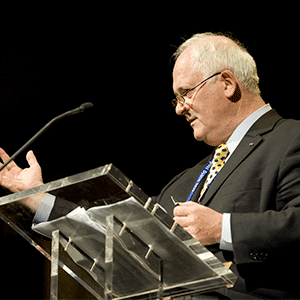
    John Bruton (Taoiseach 1994-7, Minister for Finance 1981-2, 1986-7) has a book out. His publisher, Currach Press, suggested journalists might like to interview the lively former Taoiseach. I signed up and an appointment was arranged. The morning of our interview the man from Currach texted to say Bruton was concerned it should be primarily about the book and then half an hour later to say there was bad news, Bruton would not do it and he would not say why. I said I’d do it by email and was mostly interested in the book. Currach said they would get back to him. But I heard no more. Rude. Maybe he was worried I’d ask him about Cherrywood. In 2006 Bruton told the Mahon (Planning) Tribunal that a donation of £2,500 to him as party leader was received from Monarch Properties in November 1992, during the general election campaign. At that time I was campaigning against a make-or-break rezoning scheme being pursued by Monarch for 234 acres in Cherrywood, Co Dublin. Most Fine Gael County Councillors had not supported the rezoning in 1992 but they would vote for it in 1993: in addition to Bruton, nine out of the 12 FG Councillors who would talk to their party’s internal Inquiry in 2000 admitted receiving money from Monarch or Frank Dunlop (or both) in the 1991-1993 period when I was concerned with the Cherrywood vote. Monarch’s boss, Phil Monahan, had told me he was paying Councillors for rezonings and that many of the Fine Gaelers would vote against it in 1992 but in favour (when it really counted) in 1993. Monarch was duly found by the tribunal to have obtained the rezoning corruptly. During the 1997 general election campaign, the party received a further cheque for £3,800 from Monarch Properties. Later Bruton said he had not tried to “whip” Fine Gael Councillors on 78-member Dublin County Council though he had pressured his 19 party councillors to act coherently when he met them in September 1993: Councillor Mary Muldoon told him that acting coherently would require the minority of non-rezoners moving to back the majority of rezoners. The Council rezoned the Monarch lands shortly afterwards, in November 1993. According to leaflets we produced at the time FG voted 7:7 on the up-zoning in 1992. By 1993 their vote was 12:5 in favour. Why did so many change their minds? The torpid tribunal never asked. Frank Dunlop informed the planning tribunal that he had told Bruton about demands for a £250,000 bribe made to him by a Fine Gael councillor, Tom Hand, to rezone the Quarryvale development. Dunlop testified that Bruton replied, “There are no angels in the world or in Fine Gael”. Bruton vehemently denied this but, following further inculpatory evidence at the Tribunal, returned and conceded that “it gradually came back to me”, that Dunlop, “did say to me something about a councillor looking for money”. He acknowledged that he did not investigate the matter because he had found the story told to him by Dunlop “exceptionally hard to believe”. Anyway the book: Faith and Politics: I couldn’t really see the connection. Bruton is is an intellectual by Irish political standards but he’s wrong to endorse GK Chesterton’s illogical comment that “When a man stops believing in God he doesn’t believe in nothing, he believes in anything”. It is good to see an assiduous Christian Democrat recognise that freedom is no alternative to ethics, as it says nothing about how we should treat one another. He’s right the Rising probably held back a 32-County consensual Republic, and that support for “our gallant [Axis] Allies in Europe” weakened our case for independence, at the 1919 Paris Peace Conference. He’s right that the obligation on Northern MLAs to declare themselves Nationalist or Unionist is now holding back a new politics that transcends history. He’s wrong to even contemplate that we can burn all the fossil fuels left in the world. I hadn’t realised how consistently the EU had emphasised the need for economic and monetary union and (as far back as the 1971 Werner report) that it would involve EU involvement in domestic economic policy. It’s interesting that a man of Bruton’s experience considers a third party in coalition can mitigate tensions. Sometimes he is demonstrably illogical as where he claims that 30 minutes daily spent on religion in schools has not reduced Irish educational attainment because we have been doing it for generations and the reductions are only recent; but then claims that teaching Irish, which we have also been doing for generations, has reduced educational attainment. Some of his articles seem hastily put together, like the ill-thought- through views on ‘waste’ and the half-baked views on Ireland’s “strengths and weaknesses”. And more generally it’s unwise for an ex-Taoiseach to preach the need for Irish people to do more with less when he has a public-sector pension of €141,849 and, perhaps because he’s getting a six-figure salary as president of the IFSC, to obtusely advocate reining in regulation of the banks. Michael Smith

    Loading

    Read more

  • Posted in:

    Skewed Irish Times asylum coverage

    The received narrative in a democracy is that there is an inherent adversarial relationship between politicians and civil servants on one side and journalists on the other. The job of the diligent journalist is to pursue transparency by scrutinising policy; they should hold government to account through critical engagement in order to arrive at the truth, or at least an approximation of the truth. The citizen is then properly informed on government policy by the journalist acting in the public interest as a watchdog on power. Well, that’s the theory at least. In Ireland and elsewhere however an incestuous nexus between media and government exists. Journalists frequently rely on anonymous sources—who are often Cabinet members and senior civil servants—to the detriment of real transparency and accountability. One story that illustrates this point well is coverage over the past year in the Irish Times of attempted reforms of the Direct Provision system and, more recently, the governmental response to the so-called ‘migrant’ crisis. Following months of protest in Direct Provision centres last summer, the Minister for Justice set up a working group, chaired by retired High Court Justice Bryan McMahon, to look into reform of the system. The group was an ‘independent’ vehicle comprising members from various NGOs and representatives from the relevant state departments including the Department of Justice (DoJ). A week after the announcement of the group, an article by Conor Lally headlined ‘Asylum claims increase for the first time in over a decade’ was published in the Irish Times. The article, apparently sourced from the DoJ, reported – accurately but well before official statistics were due to be announced – a 40% year-on-year increase in asylum applications. Lally, who is the Irish Times’ crime correspondent, had not written about statistics on asylum since 2006. In December of that year, Lally delivered another article, headlined ‘Asylum claims up 45% in first rise since 2000’. In this second piece, which again included accurate statistics before their official publication, Lally allowed anonymity to a “senior justice source” who said that “the fact the Republic was regarded internationally as recovering from its recessionary years may be a contributory factor for some of the increase”. In other words, the implication is, the increase in asylum-seeker numbers is down to crafty economic migrants falsely claiming asylum in Ireland to take advantage of our growing economy. At the time of the article, a number of “senior justice” officials were involved in the working group. The DoJ, in an attempt to limit the potential reforms being discussed by the group, had an incentive to push the narrative that the increasing numbers of asylum claims were due to an influx of ‘economic migrants’. Was Lally’s senior source involved in negotiations on the working group at the time? We may never know because Lally granted him or her anonymity for no clear reason except, perhaps, in the source’s interest. Fast forward to June 2015. Barring a couple of contentious resignations, the working group successfully completed its task and produced a report which called for minor reforms of Ireland’s Direct Provision and asylum systems. On the morning after the report was delivered to government, the front page of the Irish Times featured a story entitled ‘Minister Raises Concerns over Immigration Spike’. This article, by Fiach Kelly, was based entirely on anonymous sources. Before covering the McMahon report, Kelly gave his source prominence to say that “an estimated 700 migrants had entered the country in the space of one month”. Unlike for Lally’s statistics, there is no evidence to back up this ‘700’ figure. When he finally mentions the working group report, Kelly quotes “concern in the Coalition” that improving Direct Provision could make Ireland “a destination country for immigrants”. As a journalist, Kelly has a duty to ensure his reporting is in the public interest. It is not clear that the public interest is best served by granting anonymity to senior government sources so that they can engender and promote, using unverified figures, a concocted anxiety about welfare-seeking migrating hordes. It’s not clear if the public interest is served by contrasting the release of a long-awaited report with anonymous ‘concern’ that any change to the status quo would lead to increased immigration by people “who are in essence illegal immigrants”, as another anonymous source said in the article. What is clear, though, is that some within government and the DoJ had an interest in controlling, directing and containing the immediate political and media discourse surrounding the publication of the McMahon report. Kelly’s article allowed his sources to do that; in effect he let certain figures distort the release of the report under cover of anonymity. The intricate and incestuous nexus between government and media in this instance, you could say, trumped the democratic theory, and the imaginary adversarial relationship which we are told exists. After the release of the report, events in the Mediterranean and beyond overshadowed any Direct Provision reforms. The huge numbers of refugees arriving in Europe suddenly became big news after a number of tragedies including the death of three-year-old Aylan Kurdi in September. The EU slowly moved towards a response, finally agreeing to two refugee-relocation programmes in addition to a previous resettlement programme. Ireland agreed to take in around 4,000 under these programmes, and the government set up the Irish Refugee Protection Programme (IRPP), led by the DoJ, to deal with the logistics. The Irish Times’ coverage of the ‘migrant’ crisis on the fringes of Europe has been good. If you want to find out what’s happening in Serbia or on the Greek island of Lesbos, the Times will inform you. However, their coverage of the IRPP leaves a lot to be desired. The government is setting up, as part of the IRPP, a series of Emergency Reception and Orientation Centres (EROCs) to host and process the relocated refugees yet to arrive. Kitty Holland has produced some excellent reports on the first orientation centre (for resettled, as opposed to relocated, refugees), the Hazel Hotel in Monastarevin,

    Loading

    Read more

  • Posted in:

    Legal affairs

    Village is loth to get into the salaciousness that drives the professional classes in decadent Dublin. Nevertheless the integrity of the judiciary, and indeed the perception of that integrity, has to be beyond doubt and a story unfortunately came our way which challenged it, anonymously, and was accompanied by affidavits submitted for in camera family proceedings. A bankrupt developer with an alpha personality and omega ethics alleged in the affidavits, which he was never allowed to open in court, that Irish High Court and Supreme Court judgments against him were tainted with bias because the lead Supreme Court judge in his case had an alleged affair affair with the High Court Judge who determined the matter originally, and that the Supreme Court judge anyway had shown in dealings with him in the judge’s former life as a barrister, that he despised him. The developer’s affidavits are clumsily drafted and he is careless as to whether the relationship may have continued at times when the Supreme Court judge heard the action – on occasion fudging the tenses about the timing of the relationship. Nevertheless as a matter of fact the relationship had ended by the time of the Supreme Court hearing, even if it had subsisted, insignificantly and irrelevantly, during the High Court hearing. The High Court judgment was persuasively damning of the developer personally, finding he had deliberately and fraudulently failed to make certain disclosures and misled the court and his ex-wife. The developer claimed he had been in the process of preparing disclosures when a settlement was reached that obviated the necessity for him to make the disclosures. But the High Court, on the facts, said there was no evidence of this. He had engaged in litigation misconduct. The appeal was fast-tracked to the Supreme Court but took four years to be heard. At the last minute, the Supreme Court panel of judges was apparently changed, with the particular Supreme Court justice who had allegedly had the affair stepping in to replace a judge who had been originally listed to sit. The developer claims to have been wrong-footed by the change between the judges and would have aimed to pre-empt the Supreme Court judge sitting on the matter had he known he intended to do so. He claims he had already advised his solicitor of the potential for the judge being compromised. His legal team noted that day one of a two-day appeal was already over, and they didn’t dare question the judicial etiquette. The Supreme Court upheld all the High Court’s substantive reasoning. When the judge endorsed his alleged former lover’s strong judgment without – according to the developer – “canvassing” all the developer’s fundamental grounds, the developer sought redress on grounds that there was a reasonable suspicion of objective or apprehended bias. Justice must not just be done but be seen to be done, was the cry. However, these days thankfully an alleged affair between judges that may have been finished for years does not constitute, or rather does not necessarily constitute, a reason for the appellate judge to refuse to hear an appeal of his former lover’s judgment. For obvious reasons the developer had difficulty getting any Irish lawyers to take on his prurient case. In the end he sought help from UK barristers but ultimately the Official Assignee in Bankruptcy successfully objected to the developer taking a judicial-bias challenge because he was bankrupt and therefore lacked the standing to take the case. The Assignee in Bankruptcy took the reasonable stance that even if the judgments were overturned it would not be appropriate for the Assignee, who alone could take the decision do so, to refight the substantive issues of fraud, failed disclosure etc on the part of the dubious developer. Even if the unsubstantiated allegation of bias could be proved, it would achieve nothing, for the case was not worth re-running. Michael Smith

    Loading

    Read more

  • Posted in:

    Planning in Donegal

    Gerard Convie is a man who wears sober ties and measures his words. He worked for the County Council in Donegal, once Ireland’s most beautiful and wildest county, as a senior planner for nearly 24 years. He has claimed that during his tenure in the Council planning irregularities were perpetrated by named officials at the highest level in the Council. He claims these included former Manager Michael McLoone – who has initiated defamation proceedings against Village magazine (though we’ve heard nothing in a year) – as well as named county councillors. Convie had a list of more than 20 “suspect cases” in the County, a ‘cesspit’. Two years ago the government initiated a review of his allegations. Then a Minister dismissed them as lacking substance and closed it down. Convie claimed this made him look bad and sued. And got a payout and – in September – , the appointment of a senior lawyer, Rory Mulcahy to look into his allegations. The ‘review’ [by god is this not an Inquiry or Tribunal] is non-statutory ie makey-uppy and Minister Alan Kelly has reserved the right for himself or his successor not to publish its findings. So he has provided in surprisingly hazily- drafted terms for review of “all written allegations received in the Department in relation to certain planning matters n [sic] respect of Donegal County Council”. Originally the terms contained a confidentiality clause but following further correspondence this seemed to disappear. In November, Convie expressed his concern that his evidence may be shared beyond the ‘review” and said he considered the change may represent “bad faith” and even “affect my continued cooperation with the exercise”. The terms also fail to make it clear if it will address impropriety ie corruption or just ‘bad practice’’ie incompetence though if it does not address impropriety it’s possible that Convie will feel slighted and have another payday.

    Loading

    Read more

  • Posted in:

    Review 2015 in Village

    January The Minister for Health, Leo Varadkar, reveals he is gay to a receptive Miriam O’Callaghan, becoming the first openly-gay government minister in Ireland. The Irish economy is not some kind of exemplar, says President Michael D Higgins, controversially but magnificently. Mahon tribunal reverses its finding of corruption against Ray Burke because the tribunal never revealed that whistleblower, James Gogarty, had made unsupportable allegations against the likes of Nora Owen, TD, and Supreme Court justice, Seamus Henchy. Nobody names the lax lawyers, who permitted it, or demands return of their fees. SIPTU’s Jack O’Connor sets out principles for a Charter for parties on the Left.   February 13 men aged 50-70 to appear before the bank inquiry; no women. Gardai arrest Paul Murphy, TD, along with three other anti-austerity activists and politicians, leading to public speculation about “political policing”. Former Fianna Fáil minister Pat Carey reveals his homosexuality publicly. The Irish Times announces the reintroduction of a paywall for its website, beginning on February 23. Michael D Higgins gives us another poem. March Solicitor Brian O’Donnell barricades himself into his Palace in Killiney with help from the ironically titled Land League. The Sunday Independent reports that O’Donnell scion, Blaise, didn’t know how rich his parents had made him. Contrariwise, The Mail reports Blaise got a €156m London office block from Dad. Ireland’s rugby year peaks with Six Nations Championship. Belfast County Court finds Asher’s Bakery guilty of discrimination for refusing to bake an ‘Eric’n’Ernie’ cake bearing a pro-gay-marraige slogan. april Joan Burton proposes a cap on the property tax when the freeze on increases start to register, at the end of the year. Minister Alan Kelly to allow builders of one-off houses to opt out of the usual building-control certification requirements. John Fitzgerald writes that borrowing to fund the bank bailout costs around €1bn a year, a small fraction of the total fiscal adjustment of €30bn since 2008. Gerry Adams tells CBS he never pulled a trigger, ordered a murder or set off a bomb during the war in the North. Ed Moloney, of course, disputes this. May A smug Jeremy Paxman, on the verge of retirement, lays into British Labour leader, Ed Miliband, on Newsnight and is overheard at end asking “are you ok, Ed?”. Miliband says “yeah” and wonders if Paxman is himself ok. Broadcaster and political editor of the TV3 television channel, Ursula Halligan, publicly declared her homosexuality and her support for a ‘yes’ vote for marriage for homosexuals and lesbians in the Constitutional marriage equality referendum. Competition Authority finally getting serious over CRH. Mary Harney promised investigation a political generation ago. Broadcasters Bill O’Herlihy and Derek Davis died. Charles, Prince of Wales, and his wife visited the west of Ireland, including Mullaghmore, County Sligo, where his great-uncle, Lord Mountbatten, was murdered by an IRA bomb in 1979. Referendum on two amendments to the Constitution – the 34th (marriage equality) wins; and the 35th (presidential election voting) loses. NY Times and Guardian, Village and Broadsheet. ie publish the Dáil Record of Catherine Murphy’s allegations about Denis O’Brien’s banking arrangments. The Irish Times, Independent, Mail, Sunday Business Post wait for clarification from the courts. June Strong, clear clarification from High Court on the unambiguous existence of the privilege for Dail utterances. Binchy J as predicted clarifies that he never intended, nor could it have been intended, his comments would apply to reporting of utterances in the Dail. Exciting dream team of Catherine Murphy, Stephen Donnelly and Roisin Shortall to form Social Democrat party. RTE tells Atheist Ireland it will reconsider the title of the Angelus Ireland’s poorest kids hit by lone-parent payment cut. “We are not God,” acknowledges Pope Francis, and we shouldn’t “trample his creation underfoot.” The average American woman now weighs 166 pounds — as much as the average 1960s man. Dutch government ordered by court to cut carbon emissions in landmark ruling. Central bank Governor Patrick Honohan explains “the bank guarantee should not have included subordinated debt nor existing senior-term debt”. Joan Burton slams social welfare fraudsters for “giving two fingers to their neighbours”. July The hottest month in history Brian Cowen scathingly tells the banking inquiry his ‘friends and colleagues’ were private people not bankers though doesn’t explain relaptionship with Fintan Drury, or golf. Media consider performance a triumph. Greece votes no to bailout plan but government imposes it anyway. Yanis Varoufakis resigns as Greek Finance Minister. august IS destroys 200 year old temple in Palymyra, Syria. September INBS, Michael Fingleton appears before Oireachtas banking inquiry but is let off hook Radical socialist Jeremy Corbyn elected leader of British Labour Party. October Five adults and five child Travellers die after fire at Carrickmines, Residents object to rehousing of the survivors nearby. Budget will reduce USC but is light on plans for investment. The Archbishop of Dublin, Diarmuid Martin tells a synod of bishops in Rome that Irish people “struggle to understand abstract moral principles” and that the recent debate about same-sex marriage in Ireland has been conducted by lay people in language that traditionally belongs to the Roman Catholic Church: ‘equality, compassion, respect and tolerance’”. November Judge Brian Cregan announces he does not have the legal powers necessary to conduct his inquiry into write-off sales of loans by IBRC do not allow him to. 130 people murdered by IS in Paris. Peter Robinson says he will resign as First Minister. Former Minister Pat Carey resigns after improper media leaks about alleged paedophilia. December IFA President Eddie Downey declares he has been thrown under a bus by his colleagues after it was revealed he received €147,000 annually and CEO, Pat Smith, half a million annually, from often impoverished farmers. David Cameron announces Britain’s intention to bomb IS in Syria.

    Loading

    Read more

  • Posted in:

    Profile: Treasury Holdings and Johnny Ronan

    The Treasury boys are back.  Without Treasury. Great.  Richard Barrett is reported to be deploying two billion euro of investment in property and Johnny Ronan has paid Nama back and is back in business all  over town.  He’s even found time to make reference to Nazi slogans in pinpointing the injustice done to him by Nama and to get the Banking Inquiry to pull its criticism of him, lest he perhaps injunct it from publishing. The Irish Times misreported in September 2015 (and has still not corrected the error) that Treasury had “exited Nama” but in fact Treasury went bankrupt owing €2.7bn, €1.7bn to Nama alone.  This suggests they cost the country around €7oom. Johnny Ronan may have bought out his personal loans but Treasury benefited from the socialised capitalism for market losers that is the bankruptcy regime.  No swaggering market icon, Treasury. Treasury  – Johnny Ronan and Richard Barrett, inspired awe and respect in financial, political and media circles but I have had reason to be circumspect, myself, over the years. Johnny is an accountant whose father was a wealthy pig farmer in Tipperary and whose cousin is Vita Cortex’s Jack Ronan. Richard comes from a family of Ballina millers. They were at school together in Castleknock College. Treasury once had little Dublin at their feet. I first met Richard and Johnny in the mid-nineties when they were developing the Hilton (subsequently Westin) Hotel on Dublin’s College Green. I was opposing their plan for the biggest destruction of listed buildings in Dublin since the 1960s. After they got their permission from An Bord Pleanála, an academic advised us that they should clearly have carried out an Environmental Impact Assessment (EIA) because of the significant “nature, size and location” of the ‘project’. We decided the scheme was unsustainable and uncivilised, Treasury’s attitude cocky and the planning authorities’ flouting of the law on EIA outrageous – so we would attack their scheme in the courts. Treasury, it was said, were vicious, and were involved in twenty-six other sets of litigation around town. An Taisce, which I had been representing, didn’t want the risk of a devastating legal-costs order, we didn’t want the inevitable PR storm to blow away vulnerable individuals and we didn’t want personal legal liability for costs, so we formed a company. We had little time so we got a pre-formed ‘shelf’ company, the chivalric-sounding, “Lancefort’. After 47 appearances in the High-Court and six days in the Supreme Court, Lancefort lost its case on the primary ground that, although it was okay to litigate through a company that had not even existed at the time of the Bord Pleanála decision which it was challenging, the protagonists in the company, primarily I, should have raised the need for an EIA before An Bord Pleanála. The chief justice Ronan Keane seemed to imply I had known of the point at the time, even though I did not, and there was no evidence to that effect. Usually the Supreme Court is very careful not to invent or infer false facts. Furthermore European law clearly states it is the obligation of the authorities to conduct the EIA. The Lancefort decision is generally, by academics and practitioners, accepted as wrongly-decided. Since that time – 1997 – EIA (and its plan-focused counterpart (SEA)) has taken off as a tool for residents and environmentalists in assessing the impact of what is being imposed on them – if only because it often requires photomontages of the proposed schene and an indication that the developer fully considered the alternatives. During the campaign we were assailed by Treasury and their PR team – and I guess since Johnny Ronan reckoned we cost them 6m Euro, we were fair game. Irish Times environment correspondent, Frank McDonald, is sometimes one of the most acute and courageous commentators on these matters. But he was close to Richard Barrett – as well as to some of us in the campaigning sector, and he wrote several damaging reports including pieces misrepresenting our European Law stance in a way that was likely to annoy Irish judges, mis-stating the numbers of listed/historic buildings on the site and giving extraordinary coverage to the supporters of the scheme – including a fawning profile of the ‘conservation’ architect who was writing off the value of some of the buildings to the benefit of Treasury, in an interview under the headline “Keeper of the Past”. When we lost the case Frank McDonald in the Irish Times quoted Richard Barrett saying “his [ie my] house is gone” and that “I” faced legal costs of £1m. In fact we were always going to escape the costs of the case because the company was a separate vehicle from its directors, which at various stages included, apart from me, heritage activists Garret Kelly, Ian Lumley, Tony Lowes and in the end my gamey brother. Nonetheless Lancefort finished up comprehensively liquidated. Treasury later boasted that “certain opponents of ours have underestimated our ability to cause legal havoc to their detriment”. Probably true. At one stage when the publicity was bad and the case looked fragile, we had discussions with Johnny Ronan about settling our case and it appears some of our lawyers got further with instructions we gave them than we had understood. We were then skewered by Matt Cooper in the Sunday Tribune and Cliodhna Ó’Donoghue, editor of the property section of the Irish Independent, in aggressive but not entirely unfair features that made it sound like we were seeking money for ourselves rather than building-conservation causes (which we were not). We had discussed a wide range of possible resolutions ‘without prejudice’ and got nowhere close to agreeing any of them. It emerged a little later that Cliodhna Ó’Donoghue was the beneficiary of a glittering Italian trip paid for by Treasury in 1998, an extravaganza involving a Pavarotti performance I seem to recall. I was invited by current affairs magazine, Magill, to write about all this for a new ‘rant’ column it was

    Loading

    Read more