Kevin Kiely

  • Posted in:

    The life and Crimes of CJH

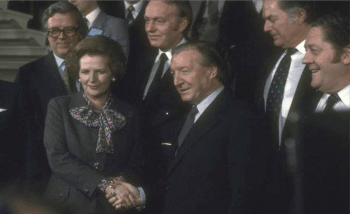
    There is something quaint about Conor Lenihan assessing the life of Charlie Haughey, the man who stole money from the fund for his father’s liver transplant and then fired his father as Tánaiste and Minister for Defence. Lenihan has pieced together a mixture of his own memories of the former Taoiseach and anecdotes that his father, Brian Lenihan senior, passed on to him. Because of this, the reader inevitably looks for evidence of personal bias on the part of this author and it is certainly a particular, personal work. This is a distraction because these characteristics import a significant source of new material, and new perspectives on old material. Nevertheless the media do not seem to have embraced Lenihan’s approach and strangely this book has not been reviewed in the mainstream press. The book is easy reading if patchy. Lenihan of course has a pedigree of grandson, son, brother and niece of TDs and, as a famously boisterous quidnunc he exploits it – all. Lenihan opens by admitting, nay boasting, that it is rare that an adult life is heavily influenced by an historical figure, but that his was, by Haughey. The moral compass of the book spins unpredictably. It often lionises Haughey but also assiduously maintains another Lenihan-centred narrative which actually surfaces only sporadically and peaks in intensity with the sacking of Lenihan senior and with the loss of his bid for Áras an Uachtaráin weeks later. The most poignant page in the book is the last one, the sole appendix, which reproduces the letter from Haughey requesting the resignation of Lenihan’s father. It begins “A Thánaiste, a Aire” and proceeds to threaten that if he does not resign that Haughey will request the President to terminate the appointment. An underpinning of authorial disdain is surely being implied. Lenihan reprises a lacklustre recitation of the Small Man’s biography: son of a Free Stater, Lieutenant in the FCA, North Dublin ward boss, marriage to Lemass’s daughter, reforming minister, arbiter of taste (here Lenihan is too kind). But consistent hypocrite supporting Archbishop McQuaid’s banning of Edna O’Brien’s ‘The Country Girls’. The man from TACA, the 1960s Christian Brothers’ Boy in mohair suits doing the social rounds in The Shelbourne, The Hibernian, Jammet’s, The Russell and Groome’s. So far, so well-known. Lenihan explains the realpolitik forcing Lemass to offer Haughey the Finance Ministry and Blaney the Agriculture Ministry leaving Lynch to see off Colley (59 votes to 19) and become Taoiseach. A brisk narrative on the Arms Crisis foreshadows Haughey’s first fall. Lenihan believes Lynch “knew much earlier than he insisted that weapons were to be purchased” but “backed off and decided to blame the entire fiasco on those ministers, and Captain Kelly”. Haughey, Blaney and Gibbons were “briefed at every step of the way, if not by Captain Kelly, then by the Army’s Head of Intelligence Colonel Michael Hefferon”. Still Lenihan is perplexed as to why “Lynch opted to put those involved on trial in the courts” and adds ‘my father always said that the main person pushing for a prosecution was George Colley”. Haughey’s return is well done. He enlisted Reynolds and his country and western caucus and was back as a Minister in Lynch’s government by 1975. Haughey’s pretensions rose ever greater: “Some preferred the Mercedes but Haughey felt the Jaguar cut a greater dash, with its leather seats and inlay”. Meanwhile back in the city Haughey’s constituency machinery cranked out cheques and Christmas turkeys. In summer there was a charity gymkhana (in aid of the Central Remedial Clinic!) with marquee and CJH in riding gear with Lady Valerie Goulding, silver trays and matching teapots on the lawns of Kinsealy. By 1979 he was leader of Fianna Fáil and Taoiseach. Lenihan notes (in a sentence that in fairness he appropriates from Haughey’s Wikipedia entry, that: “Within days of his becoming Taoiseach, Allied Irish Banks forgave Haughey £400,000 of a £1,000,000 debt. No reason was given for this. The Economist obituary on Haughey (24 June 2006) asserted that he had warned the bank ‘I can be a very troublesome adversary’”. Haughey’s 1980 Ard Fheis was “like a Baptist revival meeting rather than a political conference”. Then GUBU set in in 1982. Lenihan surely veers towards the unedifyingly bizarre as he reveals that a contact of his in the Tory party told him that Haughey was “the first person to compliment Mrs Thatcher on her legs” at the Anglo-Irish summit which spawned Lenihan senior typically ponderous invocation of “the totality of relationships”. Haughey’s interventionism over the liver transplant for Lenihan senior in the Mayo Clinic is narrated scrupulously with Haughey ordering Paul Kavanagh who fundraised €270,000, though “no more than €70,000 was spent”, to divert the balance to Haughey and his Charvet shirts (though Lenihan, being a Lenihan, is much too practical to care, or even mention, the fetish for haute couture). Lenihan recounts with palpable pleasure how Haughey survived the 1991 challenge from Reynolds (55 votes to 22). Haughey lived through his dissection by the Moriarty Tribunal and died of prostate cancer in 2006 before he could be prosecuted. Homely depictions of Lenihan’s mother and her friends debating the ethics and sexiness of early Haughey mingle with Lenihan’s recollection of how Brian Lenihan senior’s hopes that Fianna Fáil might not campaign against divorce were dashed by Haughey. Other anecdotal references sometimes, though not always, seem tailored to elevate the perspicacity of the author’s dad but also give the book a beguiling sense of Lenihanesque intimate authority – as when he reveals that he acted as an informal intermediary for Albert Reynolds in the early 1990s, though he was a working journalist. There is charming colour too as when for example he captures the private sides of De Valera and Lemass, or remembers a bottle of whiskey placed at Jack Lynch’s setting at a dinner in the late 1960s being consumed in the course of an evening. He reveals that his father and Ray Burke, of all people, agreed to fill out their ballot papers the same

    Loading

    Read more

  • Posted in:

    Are you content, or angry?

    Will the 2016 election bury the idea that the left-right divide is the key one in politics? For most of the 20th century choices facing voters in Europe were to go for parties that said they’d tax more and spend the fruits on public services (the left) or those who would provide fewer public services and aim to take less in tax (the right). What we might consider the centre has shifted about a bit. From the 1950s to the 1970s most, even the right, agreed to tax and spend more. From the 1980s the centre shifted right. All this time most parties were identifiable on this left-right dimension. Voters too could usually identify themselves on this scale. If you were working class you tended to vote left, if you were middle class you tended to vote right. Sometimes the middle classes who worked in the public sector would vote left, and sometimes the left was too left or the right too right for their ‘natural’ group to support it fully. Then there was a convergence on the right, and so in the UK the Labour Party became New Labour, and essentially became a right-wing party. In Ireland wily Fianna Fáil’s shifting policies offer a good barometer of which direction the ‘centre’ is going. In the last decade, particularly since the Great Recession in 2008, left and right have become less meaningful as an explanation of what divides the parties. While Bernie Sanders and Donald Trump appear to have little in common, they are both appealing to voters concerned about the same crisis. Those voters are demographically very similar (white and working class). While Trump and Sanders interpret the crisis in different ways – one a crisis of capitalism, the other a crisis of border control among other things – they agree in many ways. They both rail against a corrupt political and business elite, they both claim to represent the ordinary worker, they agree on protectionism in trade. More than anything they are both angry. They represent the frustrated in life. It is this emotion that may be the main denominator in elections. Rather than left-right, parties can be distinguished by whether they are angry at the establishment or are part of it. If we look at the rise of UKIP we can see that the party’s support comes at the expense of what Labour might have thought its core supporters – the working class. Labour was (and perhaps still is) seen as a part of the metropolitan elite. The party divide in Ireland was always hard to understand. There wasn’t a strong left-right divide, but it was Fianna Fáil’s genius that it could simultaneously portray itself as a party of the ordinary man AND be the main party of government. Bertie Ahern used to talk about the government as if it were some third party, not the organisation he was leading. In this election Fianna Fáil still likes to portray itself as the party of the worker, painting Fine Gael as a party of the rich. But it’s not angry. It’s a part of the establishment. Labour is trying to sound as if it represents the frustrated. Its ‘Standing up for Ireland’ slogan is designed to pit it on the side of the ordinary against some elite, but it is not plausible, having campaigned to deliver Labour’s way not Frankfurt’s way in 2011. It has for some time been a party that gets much of it support from the middle classes. And Fine Gael is happily appealing to those in Irish society who are content. The other side are the frustrated: people who feel unfulfilled and unable to do anything about it. It’s a toss-up whether the parties representing them will be on the left or right, but in Ireland they tend to be on the left. Shane Ross and his alliance of independents position themselves as anti-establishment rather than obviously left or right. Renua will attract some of the angry on the right, who perhaps see Ireland as being ruled by a liberal elite. Sinn Féin pitches based on the premise that there is a cartel of bankers and politicians who rule Ireland for their own interests, a proposition shared by the alphabet soup parties on the left. This is made more plausible by the banking crisis. Sinn Féin talks of a two-tier recovery “that benefits [the government] and their friends at the top, not the majority of hard-working, fair-minded Irish citizens”. These are sentiments that one could hear a Le Pen, a Trump or UKIP venting as readily as an Alexis Tsipras or Pablo Iglesias. The main difference distinguishing left and right internationally, which no Irish parties have focussed on, is immigration. It’s to Sinn Féin’s credit that it never used immigration, especially given it is a populist nationalist party. Many young working class men hold views that make them ripe for anti-immigrant politics but Sinn Féin’s nationalism (and Ireland’s history of emigration) makes it dif cult to be an anti-immigrant party. But parties can’t be anti-establishment forever. What happens when the parties representing the frustrated get into power? They usually disappoint. Eoin O’Malley Eoin O’Malley is the director of the MSc. in Public Policy at Dublin City University

    Loading

    Read more

  • Posted in:

    Let’s despatch the Eighth

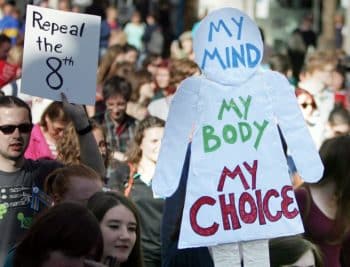
    One morning recently I woke up to abusive tweets. “What is it with lesbians hating unborn babies?? Please explain!”. “Why so many lesbians pushing abortion when they should never really need one??!!!”. As a long-time feminist campaigner and Convenor of the Coalition to Repeal the Eighth Amendment, vulgar interactions from anti-choice supporters are inescapable. I’m too long in the activist tooth to let them bother me (much), but this latest batch does make me wonder. Why is “lesbian” used as a term of abuse, and what has it got to do with “hating” babies, or women, or men, or indeed anything else? I’d like to tweet back (but I don’t): “Look here, you with the vituperative tweet finger, I’m a feminist, lesbian, radical Irish grannie (of two, so far), and I’m pro-choice because I believe in equality, in human rights, in justice, and in a world where all women, everywhere, including my daughter and my granddaughter, have the right to make decisions for ourselves about our bodies and our reproductive lives. It’s a national issue, it’s global and it’s also very personal. So there!”. The Coalition to Repeal the Eighth Amendment was set up in recognition of evident and popular demand for change. Our members include trade unions, pro-choice and feminist groups, human-rights organisations and many other NGOs and groups. The next year or so will be vitally important in advancing this issue. It has become a real election issue. If political soundings are to be believed, we can expect a “national conversation” after the election in the form of a Citizens’ Convention, followed by a referendum. It is hard to exaggerate the ‘chilling’ impact of the Eighth Amendment on women, on doctors in preventing them from working in the best interests of their patients, and on our society as a whole. What does it say about respect for women and our capacity to make our own decisions about our lives? What does it say about respect for human rights principles? Successive Governments have ignored robust criticism of the Eight Amendment from UN and other international human rights bodies. Even as I write, there’s a woman setting off from Sligo or Kerry or Wexford or Dublin on that dismal journey to the UK for an abortion she can’t obtain here with the support of her partner, her family, her friends, her GP. There’s another woman getting off the plane on her lonely trek back, and another desperately trying to find the money or the vital travel documents, or whatever else she needs to go abroad for an abortion. Every day, at least ten women are forced to go through this exhausting and demeaning process because the law and the health services fail to provide for women’s full reproductive needs and rights. We have no idea how many more women are in tears and desperate because they don’t have the resources of money, travel papers, childcare, time off work, good enough health and capacity, or whatever it is they would need to be able to make the journey. We predicted the direct and dangerous implications of the Eighth Amendment for women when it was introduced into the Constitution in 1983. We have learned with terrible sadness and anger of women dying. We have had to bear unwilling witness to innumerable personal tragedies dragged through the Courts and exposed in the media. As women, the Eighth Amendment ensures that our human rights are consistently breached during pregnancy by making a dangerous, unworkable distinction between our lives and our health. It denies us life-saving treatment such as chemotherapy. It forces us to remain pregnant against our will, even in cases of rape, incest and where a fatal foetal abnormality has been diagnosed. The Eighth Amendment puts our health at risk, denying us options even when the outcomes are clearly long-term and debilitating. It discriminates against poor and marginalised women and all those who cannot travel abroad for an abortion. Disgracefully, it criminalises women for the ‘procurement’ of an abortion, including women who obtain the abortion pill, the safest and most straightforward means of abortion. It criminalises medical professionals who assist women to do so. It places punitively strict parameters around the crucial information that reproductive health services can provide. It’s clear that the Eighth Amendment no longer reflects public opinion, with poll after poll showing strong support for its repeal. While we certainly don’t underestimate the amount of work to be done, our members are committed to the battle ahead. With public support we will campaign vigorously for repeal of the Eighth Amendment. In 2016, we don’t think that’s too much to ask. Do you? Ailbhe Smyth Ailbhe Smyth is Convenor of the Coalition to Repeal the Eighth Amendment

    Loading

    Read more

  • Posted in:

    UN scrutinises Children’s rights

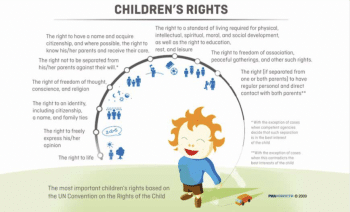
    For the first time in a decade, the Irish government defended its record on children’s rights before the United Nations in Geneva, on 14th January 2016. Poverty and homelessness, the rights of children in direct provision, the rights of Traveller and Roma Children and education issues were dominant themes, raised from different perspectives. The UN Committee on the Rights of the Child also asked about the incorporation of children’s rights into Irish law, the duty to hear children in legal proceedings, complaints and monitoring mechanisms, and the child’s right to identity in the context of surrogacy. Child protection was an important focal point throughout the discussions and the UN Committee members asked a range of questions about the extent of services and supports available to protect children from harm and to support families. Children’s rights in healthcare – obesity, smoking, alcohol and mental health – were queried. The rights of children with disabilities and in alternative care, in detention and in the immigration system were all scrutinised. The hearing was part of the process of monitoring implementation of the Convention on the Rights of the Child, a treaty binding on Ireland since 1992. The government delegation was led by Minister for Children and Youth Affairs, Dr James Reilly, TD. It was a measure of the political importance of the process that the Minister was accompanied by a large delegation of civil servants and officials from all major government departments. The hearing is an important opportunity to put pressure on Government in a public, international forum. For many of the non-governmental organisations present like the Children’s Rights Alliance, – and for the Ombudsman for Children – this is the culmination of a decade of advocacy. The Irish Human Rights and Equality Commission participates in all UN treaty-monitoring hearings. The Convention on the Rights of the Child is a particularly wide-ranging treaty, making both its implementation and its monitoring challenging. Mainstream issues of education and health sit alongside the concerns of children who are especially vulnerable or whose rights are breached by their particular circumstances. Guidelines ensure that all matters of importance are covered in the six-hour dialogue with the Government delegation. The hearing is a probing, constructive dialogue, rather than an adversarial process. The Government delegation is obliged to provide information in almost immediate response to detailed questioning from the Committee members. Answers demonstrated that the Government delegation was well prepared and few questions threw them off guard. Responses were generally succinct and direct although the Committee regularly interrupted if answers were too long-winded or off-point, creating genuine accountability. Civil society representatives were able to clarify any issues with the responses given by Government. They were able to point out that the status of the School Admissions Bill 2015, presented by Government, was at best uncertain, for example. When the Committee asked about the legislative amendments required to address the issue of school discrimination to protect school ethos, the Government’s commitment to change the Equal Status Act was welcomed, if with some surprise. The Committee’s rapporteurs were clearly well informed and able to convey with authority their understanding of the Irish context. Their probing questions sought clarity about the true state of child poverty, questioned why children in direct provision could complain to the Committee on the Rights of the Child but not to the Ombudsman for Children and wondered why many of the Government’s policies in this area remained on the shelf, and why law reform takes so long. A contrasting style emerged between some civil servants and the Minister, who on occasion brought humility and humanity to issues like child poverty and homelessness. Overall, with the many advances made on constitutional reform, the cabinet-level Ministry, family-law reform and the removal of children from adult prison, the Government can be satisfied that it avoided the worst criticism. At the same time, there is little doubt that the impact of austerity on children and the particular suffering of very vulnerable children will loom large when the Committee completes its analysis of Ireland’s children’s rights record. For those who work with and for children, the Committee’s Concluding Observations will provide a blueprint for children’s rights advocacy and activism in the years to come. Given the impact that such Concluding Observations have had on Ireland’s children’s rights record to date, this is clearly where children’s rights advocacy can make a difference. Ursula Kilkelly Ursula Kilkelly is Professor of Law in the School of Law, University College Cork.

    Loading

    Read more

  • Posted in:

    Revive Sex Offences Bill

    The Criminal Law (Sexual Offences) Bill 2015 had passed through the Seanad and was before the Dáil. However, unfortunately the Bill will not be passed through the Dáil before the 2016 General Election. It is now vital to ensure that it is restored to the Dáil at the same stage it had reached very early in the term of the incoming government. The Bill represented groundbreaking reform of sexual-offences law. The Bill contains welcome changes to criminal-evidence rules in sex-offence cases, for example by setting out precise criteria restricting disclosure of victims’ counselling records to the defence, a practice which currently causes great distress for victims. Other important changes protect child witnesses from being cross-examined in person by defendants in sex offence trials; and prevent judges and barristers from wearing wigs and gowns when a child witness is giving evidence in such trials. The sections that have received most attention are those dealing with prostitution law. These sections would criminalise the purchaser of sexual services (the client), while decriminalising the seller (the person engaged in prostitution). This change is based on a law introduced in Sweden in 1999. It would radically reform our deeply awed prostitution law, under which both prostitutes and clients are criminalised. By criminalising buyers of sex, it will pave the way for an approach to regulating prostitution that recognises the lived reality of those in prostitution, and that genuinely seeks to tackle sexual exploitation of women. Current Irish law focuses on prohibiting the visible manifestation of prostitution through criminalising offences of ‘loitering’ and ‘soliciting’. While these offences are gender-neutral, most prosecutions in practice are brought against women, who will typically be convicted of ‘soliciting’ and ordered to pay a ne (which many will go back to prostitution to pay). This model clearly has not succeeded in reducing the numbers of those engaged in prostitution; or in addressing the real exploitation experienced by many of these women. The Oireachtas Joint Committee on Justice, Defence and Equality recently conducted a review of prostitution law in recognition of the problems with our current law. We received 800 written submissions, 80% of which favoured the Swedish approach. These submissions were drawn from a broad cross-section of civil society, including trade unions, frontline medical workers, service providers and those working with migrant women. We heard evidence from Sweden that their law has been effective in reducing prostitution levels, and has had a positive normative effect on social attitudes to sexuality. The Committee also held a series of public hearings, with input from those both for and against the Swedish approach, and from those directly engaged in prostitution. We heard that women enter prostitution in Ireland at a young age, many under 18. Many people are trafficked into prostitution and the vast majority are subject to control by a third party, or pimped. The report of the Committee, published in 2013, concluded that prostitution is widely available across Ireland. It is highly organised, highly profitable, highly exploitative and largely controlled by organised crime interests. That is the actual reality of prostitution. Current Irish law has failed to tackle this. We unanimously recommended a radical change with the adoption of the Swedish approach to criminalise only the client, the purchaser of sex. This Swedish law is based on a view of prostitution as inherently exploitative, amounting to gender-based exploitation. Laws based on this approach have already been introduced in other countries, including Canada, Norway, Iceland and most recently Northern Ireland. The changes we recommended were supported by a wide range of organisations, including the Immigrant Council of Ireland, the National Women’s Council and the Turn Off the Red Light campaign. Ultimately, they were adopted by the Government and included in the 2015 Bill. The Bill was debated at length in the Seanad over December and January. The campaign for this Bill must now continue into the next Dáil. Its offer of important changes to sex-offences law generally, its provisions to decriminalise those engaged in selling sex and to criminalise those purchasing sex, and its promise to tackle sexual exploitation, particularly of children and those engaged in prostitution must be defended and realised without delay. Ivana Bacik

    Loading

    Read more

  • Posted in:

    Rape Disgrace

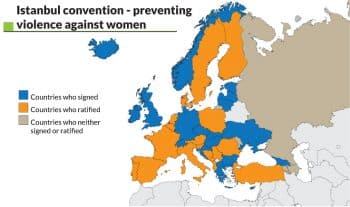
    We’re living in a “rape culture”, even though the term seems to annoy some people. So let’s just say we’re living in a culture in which rape is routinely trivialised, where victims are frequently blamed for its occurrence and their testimony is denied and ridiculed, and where the onus is placed on them to prevent rape from happening. Just under a third of female respondents to a recent survey among Trinity College Dublin students said they had experienced unwanted physical contact while at Trinity. A quarter of female students had been sexually assaulted, or had a “non-consensual sexual experience”. The Dublin Rape Crisis Centre (DRCC) has recorded a shocking increase of 36% in the number of victims of rape and sexual assault to the Sexual Assault Treatment Unit in the Rotunda Hospital in Dublin in 2015. Ellen O’Malley-Dunlop, CEO of DRCC, said: “The 36% increase in the number of victims accompanied to the Sexual Assault Treatment Unit in Dublin, for 2015 in comparison with 2014, is very concerning. We have yet to analyse these figures as to why there has been such an increase”. Surprisingly, 24% of callers were male and there has been a steady year-on-year increase in males using the Helpline since 2008 when the gure was 14%. There was an increase of 30% in first-time callers to the National 24-Hour Helpline in 2014 (the latest year for which statistics are available), compared with 2013 figures. Calls relating to adult rape showed an increase of 14% compared with 2013 figures. There was an increase of 71% in crisis appointments for recent rape and sexual assault delivered by therapists in 2014, compared with 2013 figures. Our statistics on sexual crime are shocking. It is now thirteen years since publication of the Sexual Abuse and Violence in Ireland Report (SAVI) detailing the prevalence of sexual violence in relation to age and gender for over 3,000 adults, it remains a very distressing document. So with a general election looming what’s to be done? Ratification of the Istanbul Convention would generate change. The convention deals with prevention, requiring us to put in place measures to challenge the gender stereotypes, roles and attitudes that promote this culture of violence against women. It obliges us to ensure that the Garda respond immediately to calls for assistance and that all victims have access to special protection measures during investigation and judicial proceedings. The convention crucially deals with protection, ensuring that the needs and safety of survivors are placed at the heart of all measures. It demands the setting up of specialised support services that provide medical assistance as well as psychological and legal counselling to survivors and their children. The convention also stipulates the number of refuges that are needed to adequately respond to women, that of one refuge place per 10,000 of population – we’re well behind this target right now. The Istanbul Convention provides the framework for structural and personal reforms and provides a mechanism to hold the Government to account. We need stronger legislation. Domestic violence should be a crime of itself, accompanied by appropriate sanctions that match the seriousness of the act. Within the proposed sexual-offences legislation, a definition of consent should be included. Consent should be freely given – an enthusiastic, clearly communicated and ongoing Yes. Right now one in ten victims of sexual crime in Ireland reports that crime. Of that one in ten, only 7% lead to a conviction. We urgently need sanctions that are effective, consistent, proportionate and dissuasive. The appallingly high attrition rates within our criminal justice system and send out a message to women that if they report a crime justice will be done. We must provide a supportive environment for women to continue through the system and seek justice. Setting up the new Garda unit – The Human Protective Services Bureau – was a great move but it requires increased personnel and financial resources to target domestic and sexual violence. Specialist units in each Garda Division should now be established to address domestic and sexual violence ,and ongoing training is required at all levels to develop an expertise within the force that both supports the victim and pursues perpetrators to arrest and conviction. We will only seriously address this issue when we shift the focus from women, from asking what did she do, why was she there at that time, why did she stay, and place the focus on men who perpetrate these crimes. We must break the malicious disbelief, victim-blaming and perpetrator-excusal that surrounds rape. We must restore funding to the organisations that help victims. We must shatter this culture of rape. Lorraine Courtney

    Loading

    Read more

  • Posted in:

    Maybe Equality

    The Government would be happy to go to the polls wrapped in the mantle of a ‘Yes Equality’ Government. The Government delivered on the marriage equality referendum. We had the referendum to beat all referendums and same sex couples can now get married, their relationships affirmed as equal. This was a remarkable achievement. Eamon Gilmore called it “the civil rights issue of this generation”. However, is it enough for Fine Gael and Labour to don the mantle of a ‘Yes Equality’ Government in search of a vote? Aodhán O’Riordáin, Minister of State at the Department of Justice and Equality, tried to keep the feeling warm. A month after the referendum he declared the report of the working group on direct provision for asylum-seekers, set up by his Department, as another “Yes Equality moment”. This sorely diminished the mantle and, indeed, any correlative right to don the mantle. The recommendations of this report were far from any ideal for equality and human rights. The report essentially permitted continuation of this inhumane direct provision system for receiving and accommodating asylum-seekers. Only those asylum-seekers serving five years or more in the system were to be released. The mantle has since been further sullied as even the limited recommendations have not been implemented. Direct Provision is not the only serious human rights violation that this Government has countenanced. RTE’s Prime Time exposed the gross abuse of people with disabilities living in Áras Attracta. Political disapproval owed yet action was absent. The Government ignored the 2011 Congregated Settings Report that recommended that “people with disabilities living in congregated settings move to community settings within seven years”. It ignored the costed submission of the HSE, made in 2015, seeking some €250m to implement the report. Whenever it came to money, this Government evinced little interest in donning the ‘Yes Equality’ mantle. The treatment of the Traveller community reflected a rejection of equality and human rights by the Government. There was an extraordinary disinvestment in the Traveller community. The education budget specifically allocated to Travellers was reduced by 87% and the accommodation budget by 85%. This happened despite significant educational inequality for Travellers and the scandalous, often dangerous, living conditions they continue to endure. The tragedy of ten lives lost in the fire on the temporary Traveller halting site in Carrick-mines was not unpredictable. Even tragedy, however, failed to secure any reinvestment in the Traveller community. People with disability fared badly. Their prospects for independent living receded. The Mobility Allowance and the Motorised Transport Grant for people with disabilities were cut. The Minister for Health and Children axed these schemes in 2013 because criteria governing the schemes were found to be in breach of the Equal Status Act in a case heard by the Equality Tribunal in 2008. The Minister did not have to axe the scheme. He promised the issues would be resolved quickly but some people with disabilities remain on the schemes found to be discriminatory and no new scheme has been provided for the many others now precluded from access to these vital supports. The schemes were central to participation in society and to ensuring people do not become trapped in their own homes. Lone parents didn’t fine it was a ‘Yes Equality’ Government. Changes to the One Parent Family Payment caused stress and hardship for many families, that are much more likely to experience poverty and social exclusion than others. 63% of them experienced enforced deprivation in 2013. The Government effectively ended access to the One Parent Family Payment in 2015 for lone parents whose youngest child is seven or over. The financial losses for working lone parents are so significant that they are likely to give up part-time employment. Trans people, on the other hand, did get some of the ‘Yes Equality’ treatment. Legislation secured legal recognition for them in the gender with which they identified. This was on foot of legal action taken by Lydia Foy to assert her rights. The legislation, despite its failure to respond adequately to young Trans people, compares well with the most progressive approaches to the rights of Trans people at a European level. The legislation to ensure 30% of all candidates of each party in national elections are women is progressive. There was a touch of the ‘Yes Equality’ about this. It did not cost money but it is clear that it is causing some significant pain in male bastions. The same commitment did not extend to private-sector boardrooms, despite proposals from the European Commission for a 40% quota of the under-represented gender on corporate boards. And that ‘Yes Equality’ feeling drained away with the failure so far to address women’s reproductive rights by repealing the iniquitous Eight Amendment to the Constitution that has put women’s lives and health at risk. This Government did inject some of the resources cut by the previous Government from the budgets of the Equality Authority and the Irish Human Rights Commission back into the equality and human rights infrastructure. Nothing, however, is ever straightforward when it comes to this Government and equality and human rights. The additional resources were only made available to a new, merged body, the Irish Human Rights and Equality Commission. It seems this potential ‘Yes Equality’ moment was actually more about sweeping equality under the human rights rug. Equality and human rights re ect two very different traditions. Equality is focused on achieving outcomes of equality for the different groups that make up society. Human rights are about minimum standards to be enjoyed by all individuals in society. In merging the two traditions there is much talk of the logic of equality being a human right. When equality is limited to being a human right it is confined to formal equality. Formal equality is only about equal treatment and non-discrimination. Not about outcomes. A merger of the Equality Authority and the Irish Human Rights Commission, based on such an understanding of the relationship between human rights and equality, diminishes any capacity for or drive towards the more substantive forms of equality that so many groups in our society aspire to and

    Loading

    Read more

  • Posted in:

    Villager February 2016

    Electi On Right, Villager thinks there’ll be a hung Dáil. Fine Gael and Fianna Fáil will struggle to work out whether they should coalesce, risking their exposure as ideological charlatans and the long-term growth of Sinn Féin. Another election within a year. The prognosis is tentative since around here there is no worse crime than a discredited prediction. Quite a bit at stake In which spirit… so Bernie Sanders and Donald Trump come out punching from New Hampshire and it’s cockle-warming to see the Bush and Clinton dynasties with their inequality-indulgent ideas formed a generation ago, in serious trouble, even if it does signal the return of the Angry White Man, and his supporters. Sanders’ agenda, of course, has obvious appeal in the right-on Village while Trump is dangerous in an old-fashioned FASCIST way. Assuming for the sake of mischief a Sanders-Trump election-off, for Villager the victor can regrettably (and terminally) only be Trump. Sanders is too ugly and Trump too rich for any other upshot. So what happens then? The only force in global volatility that is more unhinged than Trump is Islamic State whose principal religio-geo-strategic goal is dooms-day precipitated by a battle in Syrian city of Dabiq, near Aleppo. It is here, the Prophet reportedly said, that the armies of Rome (ie the West) will set up their camp. The armies of Islam will meet them, and Dabiq will be Rome’s Waterloo. After its battle in Dabiq the caliphate, already in 2016 nicely ensconced under Abu Bakr al-Baghdadi, will expand and sack Istanbul. An anti-Messiah will come and kill a vast number of the caliphate’s ghters, until just 5,000 remain, cornered in Jerusalem. Then Jesus (Jesus!) – the second-most-revered prophet in Islam – will return to Earth, whack the anti-Messiah, and lead the Muslims to victory. After a series of domestic putsches and foreign-policy cataclysms Villager foresees an insurgent Trump, toupée to the sun on a white charger leading the Crusaders into battle at Dabiq. He will lose but be revealed as the Anti-Messiah before final wipe-out at Jerusalem. It is not clear whether the Donald will consider the big new status recompense for the loserism. Jesus and Mohammed will together sort out the souls and the Bushes’ and Clintons’ Wall Street millions will be useless to them. Hello you Former Anglo CEO, David Drumm, is to wing his way back from breaking rocks in a Federal penitentiary, with Fintan O’Toole’s misplaced endorsement for a man incarcerated in the lucre-lionising country to which he has fled, blowing up a tail wind. Drumm has announced that he hopes to wear a tag rather than go to prison here. Villager has an idea. How about wewear the tag and he gives us back the money? Valentine wishes The words ”My heart is, and always will be, yours” from ‘Sense And Sensibility’ have been voted the most romantic line from romantic literature, film and TV drama. They are uttered by Edward Ferrars to Elinor Dashwood in director Ang Lee’s 1995 screen version of Jane Austen’s classic novel with Emma Thompson’s Oscar-winning screenplay,. It was the top choice of 2,000 inane British women who were polled for the cliché-blind TV channel ‘Drama’. Villager resolves to try it out on Mrs Villager. The scene in the 1997 epic ‘Titanic’ where a frozen, fearful and (Villager was happy to note) doomed Jack, played by Leonardo DiCaprio, tells his effervescent Rose played by Kate Winslet, ”promise me you’ll survive” (inevitably) came third. Bliss and the insolvent luxury-car company ‘Former Model’ Glenda Gilson opened up to ‘VIP’ in a February cover photoshoot about her life a year since marrying ‘Rob McNaughton’. The cover (Villager claims never to get beyond it) gushes: “After 18 months of wedded bliss the gorgeous star of Xposé reveals that staying in is her new going out”. Admittedly the former vainquese of bearded developer Johnny Ronan has a lot to stay in from. Gilson mystifyingly fails to mention that during her blissful year she was barred from acting as a company director for five years. Glenda and her brother Damien were in charge of Gilson Motor Company Ltd until 2011 when it was wound up by the High Court for failing to pay €141,937 to the Revenue. Judge Paul Gilligan said Glenda was “deceived” by her sibling in the “improper way he ran the affairs of the business” which traded in high value vehicles and operated a car parking and valeting service at Sir John Rogerson’s Quay. Some of the money is owed to Ronan, who has – in other news – expressed the view that NAMA operates on the spiffing principle of Arbeit Macht Frei. you get the Tsar you deserve Ronan and his former business partner in Treasury Holdings, Richard Barrett, are back in business and back in the media, as if they had never cavorted malignly around boomtown threatening all-comers (Barrett once said he “had his foot on the throat” of poor Chicago-nurtured Garrett Kelleher) and in the end cost us all a packet. Barrett was even allowed to drawlingly pontificate on the Marian Finucane radio programme, about his vision for social housing something he has in the past been very reluctant to provide in Treasury schemes. He told Marian, always agog at a bit of developer vim, “There is an enormous humanitarian crisis of epic proportions which is causing a great deal of human suffering. It is proportionally much larger than the Syrian refugee crisis” with up to 300,000 people on the housing list. Barrett also tells a provocative anecdote of a local authority renting “a house at €8000 a month on one of Dublin’s two best roads to house a homeless mother with four children, costing the state a fortune”. But, intriguingly, he has the answer: “I have formed a series of investment companies, (in Housing, Social Housing, Health Care, Renewable Energy) [all, for some reason, called Bartra]. We will build these facilities renting them to the Irish Government”. He sees it as a sort of “social

    Loading

    Read more

  • Posted in:

    Election 2016

    In 2011 we wrote in this space, “You would think from our recent history of some of the most notoriously bad governance on the planet, that we would have learnt that our political classes need to be replaced. In fact, this election time we see no new ideas”. Sadly democracy in Ireland needs an overhaul every bit as much now as it did in 2011. Village is disappointed at the quality of politics, across the range. It’s easily diagnosed: Fine Gael is open to regressive policies and cronyism. However, at least on its own terms it deserves credit because it has consistently stuck to its agenda of (unimaginative) economic orthodoxy and because Enda Kenny has proved relatively competent, in the face of scepticism, including from this magazine. In 2011, we stated, “ Perhaps it is a unique merit of Fine Gael that if it is elected with a mandate, this time it may actually govern as it has campaigned. The electorate will be able to assess whether what it voted for was what it wanted”. This edition of Village explores at length the extent to which the coalition government delivered on its Programme for Government. It’s a fair test and it shows that, beyond promoting economic stability, the Government has been a disappointment. Labour certainly does not have the Fine Gael appeal of consistency. It never does what its manifestos promise. Worse, a number of its senior TDs have allowed themselves to appear smug and ideologically jaded or even, in Alan Kelly’s case, dangerous. Because of the elasticity of its conscience Labour has long attracted the wrong type of representatives. Fianna Fáil is tainted by its reckless past and the incoherence of its platform. It believes serving the people, parish and business in equal measure is viable. It has learnt little beyond the need to regulate the banks. Sinn Féin’s commitment to a Left agenda is unclear bearing in mind its defining preference for irredentist nationalism over ideology, its centrist pragmatism in the North and its willingness to coalesce with Fianna Fáil. Its performance at local-authority level is not impressive or particularly leftist. It is cultist, and ambivalent about democracy and transparency, and its leaders lie casually about its, and particularly its leader Gerry Adams’, past. Renua seems like a somehow unendearing chip off Fine Gael’s Christian Democratic block, with a penchant for propriety. The Independent Alliance (dubbed Shane Féin) is utterly incoherent of policy and membership. If ex-stockbroker Mr Ross and turfcutter Michael Fitzmaurice ever breathed an atom of the same political air, Village cannot imagine where it was. Village has a weakness for the Social Democrats, whose mild platform is essentially the same as Labour’s, though strangely more pro-business, but whose small membership is more prepossessing. Its antipathy to water taxes is expedient but regrettable. The radical Left offers the huge appeal of integrity and seriousness but its opposition to property taxes is inexcusable, and its focus on opposition to the loathed water taxes rather than a broader anti-inequality platform, including opposition to the iniquities of Nama, corruption and the resurrection of the developer classes has diverted its revolutionary ideology. The Green Party’s policies are often radical, and its agenda mature, but it is not hard-minded and it achieved so little in the last government that it is difficult to be enthusiastic. To the extent that we have not afforded space in this edition of Village to the policies and protagonists of most of these parties, it is because they simply don’t offer enough to justify it. Village believes equality of outcome, sustainability and accountability are the most important policies; and it is difficult to be optimistic about their immediate Irish prospects. Laboured machinations over the fiscal space are ephemeral, though most of the other media address little else. Reflecting the need for a vision of society as well as economy this edition focuses on the coalition’s delivery across a number of departments that promote equality, sustainability and accountability, though we do have articles by Constantin Gurdgiev, Michelle Murphy and Sinead Pentony on the iniquitous handling of the fragile economy. We consider Education, Health, Social Welfare, Environment including climate change, Small Firms policy, and Accountability. These departments make life worth living. We systematically assess whether they achieved the goals set by the Government for each of them when it took office. In the end the conclusion is that they have underperformed. And so therefore has the unimaginative, regressive and stolid Government behind them. Against this backdrop, we would again not presume to advise readers where to direct their votes. However, we can say the non-ideological, non-visionary parties of the pragmatic centre hold little appeal, even when mitigated by somewhat more thoughtful ones. A coalition of the parties of the Left, radical Left and the Greens would, as always, best promote Village’s agenda, if no doubt imperfectly.

    Loading

    Read more

  • Posted in:

    Band Aid

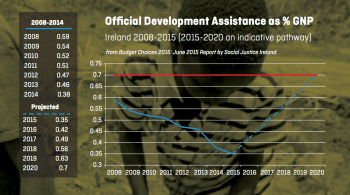
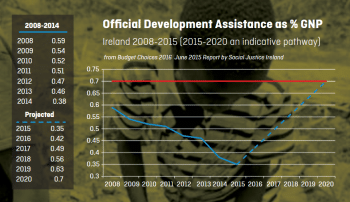
    62 people now own the same wealth as the poorest 3.6 billion people. 1% owns more than 99%. The gaps are widening. Talk of overseas aid may seem like trying to use a sticking plaster to plug a haemorrhage. In a world of trickle up economies with ever growing needs driven by conflict and climate, aid remains critical. Despite the critiques of aid in the past decade, without it, many of the Least Developed Countries, would collapse. This Government is not without achievements in Official Development Assistance (ODA). Following the financial crash in 2009, the aid budget was an easy target and was slashed by 30% in the 2010 budget. Those affected by cuts in the aid budget are not visible and certainly won’t arrive at Leinster House on their tractors. Several Irish NGOs were also downsized and their aid programmes closed as a result. Following that significant cut, however, the aid budget was stabilised at around €600m. This was made possible by cross-party support and opinion polls which showed the tacit support of the public. Over 80% of people in Ireland regularly state they are in favour of aid. They may not raise it on the doorsteps, but they see it as the right thing to do. On the other hand, all OECD countries are committed to giving 0.7% of Gross National Income (GNI) in ODA and we have failed to reach this target. The commitment is a long-standing gold standard in international development and one which many countries had been close to achieving before the financial crash. In 2009, Ireland was giving 0.59% of GNI in ODA. The target, as a percentage, is set up to be cyclical. Countries will give according to their means as their economy expands and contracts. The commitment to reach the 0.7% target was in the Programme for Government of the current Government, with a target date of 2015. However, there has been no real commitment. The economy is now growing yet the aid budget has remained at. We increasingly and significantly lag behind the OECD target. Our aid provision now stands at 0.38% of GNI, the same as in the early 2000s. A new commitment to reaching the target within the life time of the next government is essential. Significant improvements have been made in the quality of Ireland’s aid programme over the lifespan of the current Government. International trends reflect shifts towards concessional lending and private-sector engagement. However, Ireland’s aid programme has become more poverty-focused. This is both in country focus, with one of the highest rates of funds going to Least Developed Countries, and in the types of programmes it funds. The aid programme has bucked the international trend of skewing aid to serve the needs of the donor country and has remained highly poverty-focused. ‘One World, One Future’, the Irish Aid policy, was launched in 2013 following a public consultation. It sets out Ireland’s priorities in overseas development. The commitment to addressing hunger is clear. The current Government spearheaded the drive to address hunger globally and led on international initiatives such as ‘Zero Hunger’ at the UN. It has become a leader in this area and ensured that this initiative was central to the new Sustainable Development Goals signed in New York last September. Questions have been asked, however, about the involvement of Irish Aid in the corporate- backed Global Alliance for Climate Smart Agriculture, which has received much criticism from global civil society, and attempts to link this to the hunger agenda. The biggest gap, however, is the failure to embed the priorities for development in all government departments. While both the Irish Aid Policy, and the ‘Global Island’ policy, the core foreign policy statement, boast commitments to development and human rights as a “whole of government effort”, little has been done to implement it. This incoherence is stark. As Ban Ki Moon, the UN Secretary General said during his visit to Ireland last May: “One cannot be a leader on hunger, without also being a leader on climate change”. Coherence demands that our commitment on global hunger is matched by a commitment to funding programmes for climate adaptation and resilience matched with equal effort to reduce our own emissions. Aid remains essential. However, if aid is to be effective it requires commitment as well as joined-up thinking across all policy areas. This challenge must be addressed by the next Government. Lorna Gold Lorna Gold is Head of Policy and Advocacy with Trócaire

    Loading

    Read more

  • Posted in:

    The Government’s not that interested in the North

    The outgoing government is showing the same lack of vision on the North as it has shown generally. In 2011, the Programme for Government had a total of 120 words on the North in its 64 pages. Significantly, 45 of these were on security: “The threat from dissident paramilitary groups cannot be underestimated. We will foster the continuing strong relationships between An Garda Síochána and the Police Service of Northern Ireland to deal with this threat and we will also ensure the necessary resources to deal with these groups”. That reflected the belief that the Good Friday and St Andrew’s Agreements solved the political problems. The North is a security issue, to be contained. Any continuing violence is pathological in nature, rather than the result of from political failures. It neatly mirrors the knee-jerk reaction of much of the Fine Gael heartland, innately fearful of violent Republicanism. It reflected shifts in the Labour Party. At the time the Programme was drawn up, Labour was dominated by former Workers Party members, who had come to the party via Democratic Left. The Workers Party had been largely financed from robberies and extortion carried out by Official IRA members in the North. There is, of course, no indication any of those who became Labour TDs had any knowledge of these activities. However, media reports made them increasingly embarrassing in the South. When Democratic Left collapsed into the Labour Party, it abandoned its Northern organisation. It also further diminished interest in the North: while the SDLP is theoretically a sister party, the connection is increasingly distant. Certainly, both government parties have an innate hostility to Sinn Féin, which does not assist relationships with a Northern Executive where Sinn Féin is the second largest party. Enda Kenny is certainly on the Nationalist wing of Fine Gael – which sees Sinn Féin as betraying the legacy of 1916. However, the Taoiseach has never indicated the North was among his political priorities. Since the Programme for Government was drawn up, there have been three Progress Reports and one Statement of Government Priorities. In three, the North has barely featured – except as a security issue. The 2015 Report marked a departure, with no security concerns mentioned. It did not, however, reflect any greater engagement. The Coalition has made little impact on the North, except involvement in drawing up the Belfast Agreement and its successor, the Stormont Agreement, which brought Southern-style austerity to the North. On an optimistic note, there has also been ongoing growth in Cross-Border sharing of services. This has improved the quality of life of many, particularly those, on either side, who close to the Border. There are questions about some Cross-Border projects. The Coalition has promised up to £400million for the A5 project: the North’s largest-ever road project, a dual carriageway from Newbuildings, Co Derry, to the Monaghan Tyrone Border. The project has been controversial, with the North’s High Court quashing planning permission, and the planning process has restarted. No part of the existing A5 is among the 50 busiest stretches of road in the North, and a part of the proposed route was submerged during December’s floods. While the Coalition is generally perceived as hostile to Sinn Féin, Sinn Féin sees the A5 as a flagship project: the SDLP is doing its best to be as vocal in support. Northern nationalists generally perceive the Coalition parties as indifferent or hostile to them. This is accompanied by amnesia regarding the great majority of the Northern IRA having supported the Treaty in 1922: and Fine Gael’s amnesia regarding the 1922 Provisional Government organising military attacks on the Northern state. Northern nationalists, to the extent that they engage with Southern politics, tend to see Fianna Fail as their party. The SDLP is theoretically a sister party of Labour in the Socialist International: officially, it seeks support from the three big Dail parties: in practice, it was always closer to Fianna Fail, and many would now like to become Fianna Fail’s Northern organisation. While Sinn Féin’s ministers in the North have a working relationship with the Coalition, the party feel it is hostile, and drags its feet on some Cross-Border initiatives so as not to give prominence to Martin McGuinness. On balance, Unionist parties would prefer the return of the Coalition. A DUP source told Village it had no particular problems with the Coalition. “They were sufficiently wrapped up in their own problems”, the source said. “In talks, they have been sufficiently anti-Shinner that it is useful”. However, the source felt the two big Southern parties have only slight differences on the North, though was surprised at the anti-Sinn Féin vehemence of some Fianna Fáilers. Ulster Unionists lean very much towards Fine Gael, some hoping to develop relations. However, no party feels a re-elected Kenny government would take any Northern initiative.

    Loading

    Read more